GIVING IS THE GOOD LIFE

Giving is more than a noble and compassionate act. It’s a giant lever positioned on the fulcrum of this world, allowing us to move mountains in the next world. When we die, we will see at last the incredible, eternal results of our giving.

Because we give, eternity will be different—for others and for us and our families. Giving away our money, possessions, time, and talents is a sacred opportunity to make a great and eternal difference. And it’s also our opportunity to enter into living the good life now.

The following story is extracted from Randy Alcorn’s book “Giving is the Good Life”

When he was young, Matt McPherson sought the Lord’s direction for his life. Matt built archery bows and asked God for the wisdom to build the best bows in the world. He developed the single-cam bow and now owns one of the world’s largest archery bow companies.

Matt started other business ventures, including McPherson Guitars, which he began with his father. Their goal is to make money to impact the world. They now fully support more than seven hundred missionaries worldwide.

Matt’s story is another one that makes me thank God for furthering His Kingdom by not calling some people to spend their lives as pastors or missionaries. There are millions of faithful business and professional people, including musicians, artists, and athletes, spread across the world. If Matt has fully funded seven hundred missionaries, how many tens of thousands of other missionaries have been able to go do their work because believers in secular vocations have faithfully used their gifts and passions to build businesses that generously send and support them? And while supporting missionaries, they themselves serve Christ in the unique mission fields of their businesses and neighborhoods.

Matt McPherson says, “When I’m dying, I’m not going to be wishing I’d bought myself something else. I’m going to be thinking, ‘I wish I would have done more for Christ.’”

I think Matt is exactly right. When we enter Christ’s presence, we’ll see with eternity’s clarity.

We’re called God’s servants, and we’re told it’s required of us that we “prove faithful” (1 Corinthians 4:2). So while we still have our earthly lives to live, why not sharpen our long-distance vision and grab hold of the good life now?

Why not make what will be most important to us when we die most important to us now?

Why not spend the rest of our lives closing the gap between what we are giving and what we will one day wish we’d given?

If you want help to start/build a kingdom business then can I suggest you consider purchasing my book on Amazon. It is available as an ebook or trade paperback edition.

TIMING OF THE RAPTURE

It should not be surprising to us when an Old Testament account has a now and prophetic future meaning like the Exodus account of the blood over the door posts of the Passover Lamb. We know now that was to be a picture of Jesus, the Passover Lamb. The conquest of Jericho is one of these stories. One has to ask what purpose would God have to give Joshua such a crazy battle plan unless it was to be a picture of a future event. As you will see it bears many parallels to the last seven years of the 70th week of Daniel.

The Pattern of Seven Events is an essential and critical prophetic construction for the 70th week of Daniel, the last seven years before Jesus returns to first rapture the Saints and to pour out His wrath upon an unrepentant world.

The pattern of seven events is the “roadmap” of the 70th Week of Daniel allowing Christians to know where they are in each of the seven years and what to anticipate next, what the timing of those events will be, and most importantly how to “overcome” during the trials that are to come. This pattern of seven events is given by Jesus in the Gospels, Matthew, Mark, and Luke, in Joshua, Judges, Psalms, Daniel, Ezekiel, and in Revelation with the letters to the Seven Churches, and the Seven Seals. It is also in the meaning and order of the Feasts of the Lord. God gives us these numerous accounts so that we know He is in control of all that unfolds including the great tribulation that Christians will experience during this time.

THE RAPTURE

If we read the Conquest of Jericho account closely we’ll notice that the timing of the Rapture is given:

And when they make a long blast with the ram’s horn, when you hear the sound of the trumpet, then all the people shall shout with a great shout, and the wall of the city will fall down flat, and the people shall go up,Joshua 6:5

This passage bears an amazing similarity to Paul’s accounts of the Rapture: “For the Lord, Himself will descend from heaven with a shout, with the voice of the archangel and with the trumpet of God, and the dead in Christ will rise first. Then we who are alive and remain will be caught up together with them in the clouds to meet the Lord in the air.” 1 Thessalonians 4:16-17).

The “last trumpet” is the final “long blast with a ram’s horn” on Yom Teruah just like the quote above from the Jericho Account. This is truly amazing. At the breaking of the Seventh Seal, Jesus will blow the trumpet of God and a great shout will go out. The dead in Christ will rise first, and, as the Jericho Account states, “the people will go up.” Just as in the seven-day battle of Jericho, the “symbolic Rapture” occurs after encircling the city for six days (six seals), at the very end of the Sixth Year of the 70th Week of Daniel, the Rapture will occur at the seventh seal (encircling the city seven times). The saints will be gathered together by the angels to our Lord and will enter a Sabbath rest in Heaven.

If you need further teaching materials on the pattern of seven events I have posted many posts and Nelson Walters videos on this topic. Do a search. You can also go to Nelson’s YouTube video channel.

WHY LIVE ETERNALLY NOW?

Why should you be living eternally now? All believers will appear before the judgment seat of Christ and whilst our eternal destiny is safe what we have done will affect our rewards. For Christians that are raised in the first resurrection and are raptured with the living Saints, it is generally agreed that we will face the judgment seat of Christ during the time (Isaiah 34:8, Isaiah 61:2, Isaiah 63:4) we are in heaven before returning to earth with Jesus. If you disagree, keep in mind that these are not my words, but God’s. Jesus, speaking to both believers and unbelievers, said, “I tell you, on the day of judgment people will give account for every careless word they speak, for by your words you will be justified, and by your words, you will be condemned.” Matthew 12:36-37. Also, Paul said, “For we must all appear before the judgment seat of Christ, so that each one may receive what is due for what he has done in the body, whether good or evil” 2 Corinthians 5:10

There are two different judgments in God’s Word: the judgment of faith, and the judgment of works. The judgment of faith relates to our eternal salvation, while the judgment of works relates to our eternal rewards.

For Christians, salvation took place in a moment in the past. It was free, it can’t be lost, it is the same for all Christians, and it is solely based on a faith that is ours by the grace of God alone. By contrast, future rewards are earned (by God’s grace), can be lost, differ among Christians, and are based on our efforts.

Salvation is about God’s work for us. Conversely, rewards are a matter of our work for God. When it comes to salvation, our work for God is no substitute for God’s work for us. God saves us because of Christ’s work, not ours. Likewise, when it comes to rewards, God rewards us for our work, not Christ’s. (Our good works are empowered by the Holy Spirit; nevertheless, we need to submit to Him so God refers to it as our work.)

Let me be sure this is perfectly clear. Christ paid the price for all of our sins, once and for all (Hebrews 10:12-18). If we have trusted Him for that provision, we will not pay the eternal price, the second death. He has fully forgiven our sins, and we are completely secure in Christ’s love (Psalm 103:8-18; Romans 8:31-39). Our salvation is sure, and we will not undergo the judgment of condemnation (John 5:24; Romans 8:1).

But although the forgiveness of our sins has every bearing on our eternal destination, it has no automatic and effortless effect on our eternal rewards, apart from the fact that God’s sanctifying work comes out of our salvation, and therefore we should expect that the Holy Spirit’s presence in our lives should lead us to do good works that God will reward. But we must choose to do the works He prompts us to do. Neither does it mean our choices have no consequences in eternity. Forgiven people can still lose their rewards or forfeit eternal positions of responsibility they could have had if they’d served Christ consistently and faithfully before death.

Trust in Christ, lean on Him, and draw upon Him for power, for apart from Him we can do nothing. But if we hope to receive a reward, we must still do the necessary work. As our forefathers put it, to wear the crown we must first bear the cross.

Just as there are eternal consequences to our faith, so there are eternal consequences to our works.

What we do with our resources—including our time, money, and possessions—will matter not just twenty minutes, twenty days, or twenty years from now. It will matter twenty trillion years from now.

Though Paul insists we are saved by faith, not works (Titus 3:5), he also clearly states that the choices we make and the things we do have eternal implications, and that we will each answer to God for the works we have done in this life:

If anyone builds on this foundation [Christ] using gold, silver, costly stones, wood, hay or straw, their work will be shown for what it is, because the Day will bring it to light. It will be revealed with fire, and the fire will test the quality of each person’s work. If what has been built survives, the builder will receive a reward. If it is burned up, the builder will suffer loss but yet will be saved—even though only as one escaping through the flames. (1 Corinthians 3:12-15)

Those believers who have been less faithful and obedient in their walk with Christ will not suffer loss of salvation! But they will suffer loss of the reward that would have been theirs had they been more Christ-centered and faithful in their service to Jesus.

What 1 Corinthians 3 says is so sobering that a temporary loss doesn’t seem likely.  This loss of rewards appears permanent, for while we will all serve God in our resurrected bodies on His New Earth, there appears to be a finality to the fact that after death comes judgment (Hebrews 9:27). If there are any future judgments for our service to God on the New Earth, we are not told about them in Scripture. Of course, we should anticipate for our future service He will say to all of his children, “Well done!” And yet, despite Scripture’s silence on this, I think it’s very possible that God, who is by nature a rewarder ( ), may continue to reward His people for faithful service on the New Earth. That resonates with me, and I don’t see anything unbiblical about it. It fully fits His nature as a Father who takes joy in saying “Well done” to His devoted children.

Earning Our Full Reward

First Corinthians isn’t the only passage that speaks of losing reward. The apostle John wrote, “Watch yourselves, so that you may not lose what we have worked for, but may win a full reward” (2 John 1:8, ESV).

To win a full reward would be glorious, wouldn’t it?  But surely all of us will regret some of our decisions on that day when we “suffer loss” or “lose what we have worked for.” Anticipating standing before the judgment seat of Christ should motivate us to follow Him wholeheartedly and generate in us a proper fear of God.

All of us will be full of joy in Heaven, but those who served Him faithfully, particularly in the midst of adversity, will have been made, by God’s grace, into larger vessels. They won’t be fuller of joy, but they will have a greater capacity, and their fullness will accordingly contain even more joy. (Hence the special place in Revelation given to the martyrs.) There won’t be envy or regret, because of our new natures, and all will be full of joy, yet there will be true continuity and eternal consequence so that what we do—not just what we believe—in this life affects the next.

Maybe one way to say it is that the “loss” of rewards is in some sense permanent, but the “suffering” of that loss will be temporary. God will do away with the suffering (Revelation 21:4), but that is after the judgment, after we give an account to the Lord. The suffering of regret will be there at the judgment (how could it not be?) before entrance to the eternal state, but then comes the learning and purifying and eternal rejoicing. Perhaps we’ll offer a short, entirely sincere, “I regret my lack of faith and faithfulness,” expressing this to our God who graciously forgives. Then, with that forever behind us, we move on to eternal joy.

But there will be no ongoing suffering, for all our regrets about our past will be overshadowed by God’s grace. Yet if there were no reckoning, no “suffering loss” then the 1 Corinthians 3 passage would be meaningless (which is exactly what most teaching on the subject reduces it to). Some will object that this is a sort of Protestant purgatory, just shorter in duration than languishing in the flames of Catholic purgatory. But the suffering is not in the eternal state, only in a temporal judgment, and judgment must involve the negative as well as positive or it too is meaningless. The biblical statements of “giving an account” and that include “works done in the body, whether good or evil” are unmistakable in that regard. (Doing the evil will clearly have taken away from the rewards that would have come from doing good.)

Consequences without Condemnation

Since all who know Jesus go to the intermediate Heaven immediately when we die, it appears that whenever this judgment happens, it will be after we get there. So, while God will one day wipe away every tear from our eyes (Revelation 21:4), it seems likely that when we must give an account for our lives, there will be, for a time, some regrets and tears and a sense of that loss Scripture speaks of.

I realize this is hard to grasp. I am just trying to be true to all God’s Word says, instead of choosing only parts of it. This may sound like a sort of condemnation and punishment, but we are assured this isn’t the case, for “There is no condemnation for those who are in Christ Jesus” (Romans 8:1).

Ephesians 1:7 says, “In him [Jesus] we have redemption through his blood, the forgiveness of sins, in accordance with the riches of God’s grace”. The Bible teaches not only forgiveness of our sins but also consequences for our choices. These consequences apply despite our forgiveness. Forgiveness means that God eliminates our eternal condemnation; we will not be ultimately punished for our sins, but there may be immediate consequences in this world due to our sins. Forgiven people can still contract AIDS, go to jail for drunk driving, or suffer the death penalty, for example. A murderer or drug dealer can be fully redeemed and forgiven, and may still spend the rest of his life in prison. He may lose his family as well as his freedom. After all, the thief on the cross remained there despite his confession of faith.

In Heaven, God appears to say that while all our sins will be forgiven and there will be no ongoing shame or regrets, nevertheless at the judgment seat an initial and temporary sense of shame, regret and sorrow seems likely, though one that will soon be swallowed up by eternal grace and joy.

Prepared for Good Works

One of the most often quoted passages in Scripture states, “For it is by grace you have been saved, through faith—and this is not from yourselves, it is the gift of God— not by works, so that no one can boast” (Ephesians 2:8-9).

It’s a wonderful truth, but verse 10 immediately follows with more truth about works: “For we are God’s handiwork, created in Christ Jesus to do good works, which God prepared in advance for us to do.” God has prepared a lifetime of good works and we will give an account to Him for whether or not we have done them.

Surely each of these passages and others like them implies that while we will be fully forgiven in Christ and be forever totally cleansed and purified by His redemptive work, we will nonetheless be held accountable for what we have and haven’t done in this life.

It seems reasonable we won’t be joyful at the very moment we have to give an account for our sins, the careless words we have spoken, and all the wood, hay, and straw of our lives that will be consumed in the fire, that could have instead been gold and silver and precious stones. And at the same time, we will find great pleasure in the rewards God has given us, and we will celebrate the rewards He gives to others.

Embracing Paradox

But how does this all fit with the truth about the forgiveness of our sins? I think of the example of Charles Spurgeon, who didn’t try to reconcile every paradox or apparent contradiction in the Bible. Speaking of the truths of God’s sovereignty and human responsibility—which I also believe to be applicable to the truths of complete forgiveness and accountability at the judgment Spurgeon said this:

These two truths, I do not believe, can ever be welded into one upon any human anvil, but one they shall be in eternity: they are two lines that are so nearly parallel, that the mind that shall pursue them farthest, will never discover that they converge; but they do converge, and they will meet somewhere in eternity, close to the throne of God, whence all truth doth spring.

Spurgeon also wrote, “Those who will only believe what they can reconcile will necessarily disbelieve much of divine revelation.” Our desire for logical consistency, as we understand it, can become our God. Then we, not Scripture and not God, become our own ultimate authority. We end up ignoring, rejecting or twisting Scripture that doesn’t fit our chosen theology.

On the contrary, our theology should reflect Scripture itself, and wherever Scripture teaches apparently contradictory ideas, our theology should embrace those same ideas, rather than resort to a consistency that rejects part of God’s revealed Word.

Certainly, any and all of our regrets about our past will be overshadowed by God’s grace, which is the good news of the Gospel. There is comfort in 1 Corinthians 4:5, which says God “will bring to light the things now hidden in darkness and will disclose the purposes of the heart. Then each one will receive his commendation from God.” God will apparently find something to reward “each one” for. This makes sense, for no one can truly be born again without having demonstrated some fruit for which God can reward us.

Let’s Live in Light of Eternity Now

All of this argues for cultivating an eternal perspective in which we seek to live each day in light of eternity—not out of dread, yet with the right kind of fear of God and heartfelt love that desires to please our Lord and Savior.

In his book When Christ Comes, Max Lucado writes, “You can be certain you won’t regret any sacrifice you made for the kingdom. The hours of service for Christ? You won’t regret them. The money you gave? You’d give it a thousand times over. The times you helped the poor and loved the lost? You’d do it again. . . . You’d change the diapers, fix the cars, prepare the lessons, repair the roofs. One look into the faces of the ones you love, and you’d do it all again.”

An eternal perspective isn’t something we have to wait until Heaven to have. So I’ve often given readers and listeners this advice: live now the way that you will one day wish you would have. Don’t postpone obedience, holiness, purity, drawing close to God, and serving others.

Five minutes after we die, we’ll know exactly how we should have lived—it will be too late to go back and change anything. God has given us His Word so we don’t have to wait until we die to know how we should have lived. There’s no second chance for the unbeliever—but also no second chance for the believer! Just as missionary C. T. Studd said, “Only one life, ’twill soon be past; only what’s done for Christ will last.”

You and I have one life on this fallen earth in which to follow Jesus and invest in Heaven. Let’s not miss the opportunity. God will one day take away all our sorrows, but why go into eternity with regrets? Here’s a prayer for us: May what will be most important to us five minutes after we die become most important to us now.

Let me add KNOW YOUR WHY:

  1. To bring glory to God
  2. To know God’s will for your life
  3. God wants to use me to bring people into His Kingdom

Adapted from the article: “Will We Have Regrets at the Judgment Seat of Christ?”  December 5, 2022 by  Randy Alcorn http://www.patheos.com

Living Eternally Now is available o Amazon or from me direct: ron@bakb.com.au

TEST ALL THINGS BY GOD’S WORD

For Christians, all of life is the enterprise through which we glorify God and enjoy Him forever. The means by which we do that is simple: we must know who this God is and how we can enjoy Him forever. This is only derived from a robust understanding and application of Scripture and understanding the role of the Holy Spirit in our lives. Thus, when we are faced with whatever progressive ideals might creep in, the principle is one whereby we test all things according to Scripture empowered by the Holy Spirit.

I am convinced many within the broader church have been pressed into the mold of a system of thought the broader culture adopts (i.e. progressivism), and the foremost institution this has been accomplished through is education. Generations of children have come and gone through this institution, which with the adoption of evolution has rejected any involvement of God in science and now education, as a result, society is largely secular. God’s values have been jettisoned and the progressives now dominate our educational establishments and parliament.

How do we solve this dilemma? The answer is surprisingly simple but unflatteringly naïve to the world, and even many professing Christians. The Word of God must be re-established as the foundation for all of life. Everything else is subservient to it and must align with it. In other words, we live consistently to the message we proclaim, from the seemingly mundane choices we make in entertainment, to how we spend our money, raise and teach our children, and how we do church, which means getting back to church as outlined in the Book of Acts, house churches that make disciples, and more. Only then will we be salt and light in the world. Only then will the Holy Spirit truly lead believers and the fruit of the spirit will be evident in their lives: love, joy, peace patience, faith, gentleness, goodness, kindness, and self-control. The ministry gifts, all nine will be evident including miracles, words of knowledge, and discerning of spirits.

The Gospel will then be unstoppable. “And this gospel of the kingdom will be proclaimed throughout the whole world as a testimony to all nations, and then the end will come.Matthew 24:14

GOG IS THE ANTICHRIST

We are fast approaching the time when the Antichrist will appear on the scene so it is important we search the scriptures to find out what God wants us to know about this entity who dominates the last three and a half years of world history prior to Jesus’ return to destroy him, the false prophet, and their army at the Battle of Armageddon.

We read a lot about Gog an “end times” despotic leader in Ezekiel and it is obvious that he is the Antichrist of Revelation. However, there is an earlier Gog prophecy that is in an extremely unlikely place, the Balaam Oracles in Numbers 22-24. It is important to know therefore that AGAG in the Balaam Oracles is GOG. The manuscript evidence is clear in both the Septuagint and the Samaritan Pentateuch the translation is Gog, not Agag. Listen to Travis and Nelson explain why it is Agag in most of the English Bible translations and yet no Agag in history fits with the prophesied events in the Balaam Oracles.

MARK OF THE BEAST – UNFORGIVABLE SIN

Why is the mark of the Beast the unforgivable sin? Rev. 14:9-10 is clear about the eternal fate of those that take the mark of the Beast.

And another angel, a third, followed them, saying with a loud voice, “If anyone worships the beast and its image and receives a mark on his forehead or on his hand, he also will drink the wine of God’s wrath, poured full strength into the cup of his anger, and he will be tormented with fire and sulfur in the presence of the holy angels and in the presence of the Lamb. And the smoke of their torment goes up forever and ever, and they have no rest, day or night, these worshipers of the beast and its image, and whoever receives the mark of its name.” Revelation 14:9-11

Sadly, well-respected Bible teachers such as John McArthur have come out and contradicted the Biblical account and said that people who take the mark of the Beast will be able to repent and receive the redemption offered by Jesus Christ. This questions the inerrancy of the Bible and what if the mark of the Beast is not just a microchip but transforms the person and makes them a hybrid like the Nephilim. Jesus said that the last days will be like the days of Noah when the Nephilim were on the earth. In Rev. 9 what does it mean that death will flee from them? Also, Rev 16:2 when those with the mark have loathsome sores but cannot die. Could the mark of the Beast produce a genetic transformation? Perhaps the recipients are promised eternal life by receiving the Beast’s demonic “DNA”? Listen to what Nelson and Doug have to say about this possibility.

THREE PILLARS OF EVOLUTION DEMOLISHED

Jerry Bergman is a well-known creationist author who has extensively published over many decades and who has taught at several universities. He has taught biology, biochemistry, anatomy and physiology, genetics, and other courses for over 40 years. He has over 1,700 publications in both scholarly and popular science journals and monographs.

The three pillars of evolution identified by Bergman are abiogenesis (aka chemical evolution), natural and sexual selection, and mutations. The author of this book finds all three of these pillars defective as evidence for evolution.

Bergman has examined claims of abiogenesis, the nature of mutations, and the explanatory power of natural selection. As in the title of this book, he has thoroughly demolished them. The monopoly of the theory of evolution, in academia, is all the more irresponsible. In fact, it is puzzling.

Naturalistic origin of life assumed, not demonstrated

Bergman is especially critical of Miller–Urey ‘chemical soup’ explanations for the putative abiogenesis of life, not so much because they are grossly inadequate, but because they are not even seriously examined.

“Producing even simple amino acids and functional proteins requires highly laboratory-controlled experiments. Even under these ideal conditions, the very conditions hypothesized to create amino acids also rapidly destroy proteins” (p. 60).

Finally, ‘chemical soup’ experiments very much confuse the issue. Forming the building blocks of life, by abiogenesis, is the trivial part. The hard part is accounting for the information content necessary for even the most rudimentary form of life. Evolutionistic origin-of-life hypotheses do not even begin to do this!

Most ‘neutral mutations’ are not neutral after all

The next pillar of evolution, examined by Bergman, is that of mutations. The term ‘neutral mutation’ refers to a mutation that neither enhances nor reduces the fitness of the organism bearing it. Evolutionary orthodoxy long held that most mutations are neutral. Bergman challenges this and shows that most ‘neutral’ mutations are mildly deleterious. This creates a new problem for evolution. ‘Neutral’ mutations are not innocent, as previously believed. They do not kill the bearer outright, but, because their harm is subtle, they accumulate with other ‘neutral’ mutations in the genome. Bergman warns, “Even mutations that have ‘little effect’ on health can accumulate both in somatic and germ cells, eventually causing major damage” (p. 120)

Natural selection—an amorphous and misleading term

The third pillar of evolution is identified as natural selection. Bergman has a way with analogies. He compares the claims of natural selection with the statement, “The man is rich because he has money.” Others have characterized the natural selection explanation as a ‘survival of the survivors’ statement.

One must make a clear distinction between the arrival of the fittest and the survival of the fittest. The two, though often conflated, are most certainly not the same. The confusion goes back to the very beginning, as pointed out by Bergman:

“Darwin … portrayed natural selection as equivalent to artificial breeding, thereby making it more difficult to refute natural selection by arguing that it was a real physical force. Claiming that nature does the selecting avoids the requirement of discussing the actual factors involved in the causation events attributed to natural selection. Such obfuscation may have been excusable in Charles Darwin’s day, but is inexcusable in ours” (p. 165).

Natural selection does not even have theoretical explanatory power in many cases. Bergman comments: “Human life consists of many activities that are mentally pleasurable, none of which natural selection convincingly explains. Walking in forests, listening to music, creating poems, doing scientific research, aesthetic enjoyment of nature, and myriads of other activities are often not related to survival, or adaptation in a Darwinian sense. Some writers have struggled in vain to explain the existence by natural selection of our human ability to create music and art, all of which involve extremely complex body and brain systems” (p. 213).

Get the book from Creation Ministries: http://www.creation.com

LOCUSTS FROM THE ABYSS

The Bible is amazing. All of the fulfilled prophecies should inspire you to get into God’s Word to discover what is coming next. There are over 2000 prophecies concerning Jesus’ second coming and the major prophecy that seemed impossible before it happened, the rebirth of the nation of Israel in 1948, happened over 70 years ago now. The prophesied last seven years before Jesus does return to set up His Millennial Kingdom is fast approaching.

Stone carvings identical to the weird demonic creatures seen coming out of the Abyss in Revelation 9’s depiction of the Fifth Trumpet were found in Ancient Babel. These carvings are identical to the Bible’s description which is a thousand years later. What does this mean? How did the people of Babel (Sumerians) see these same creatures and what will happen at the Fifth Trumpet when these things come out of the Bottomless Pit? Watch this Nelson Walters video of an interview with Pastor Doug Hamp to find out the details and see the carvings.

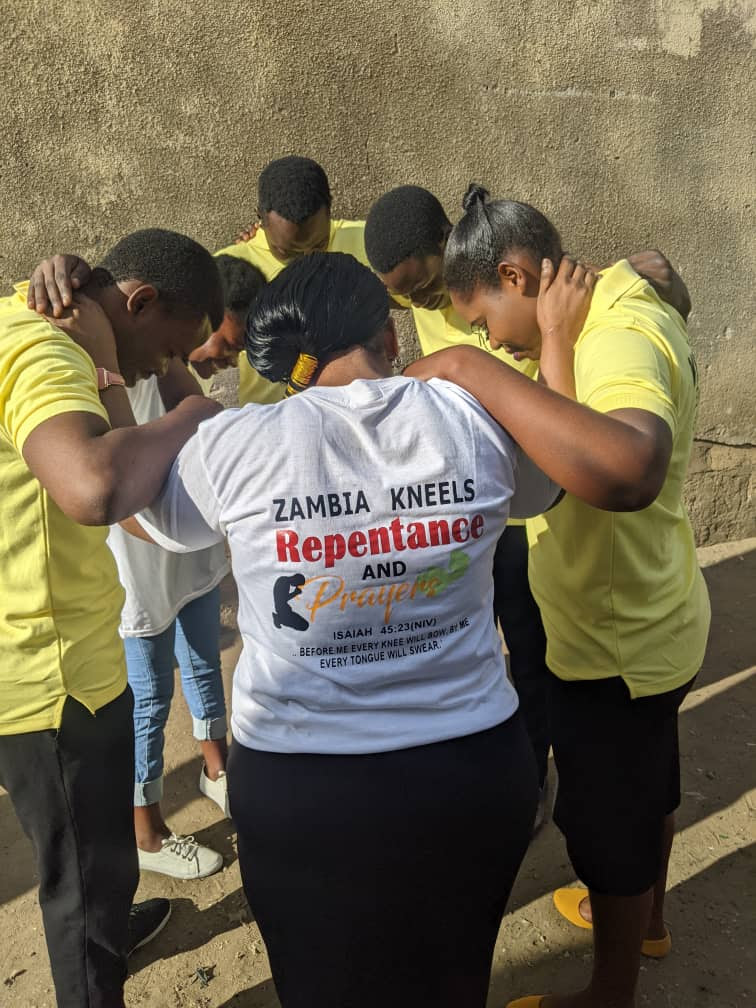
PRAYING EFFECTIVE PRAYERS

The following excellent article on prayer is taken from “Your circumstances are not guidance” by Duncan Edward Pile which appeared in http://www.patheos.com on August 29, 2022. Heed Duncan’s advice it will change your life.

How do you know if your circumstances are from God? The church of my youth taught that if you prayed about something and gave the outcome into God’s hands, saying ‘thy will be done’, whatever happened would be God’s will.

If a person asked God for a blessing, the failure of that blessing to arrive would be interpreted by the spiritual leaders of my youth as an answer to prayer, the answer being ‘no’. This approach is not in line with the teachings of Jesus.

‘Very truly I tell you, my Father will give you whatever you ask in my name…ask and you will receive, that your joy may be full.’ John 16:22-24

As well as filling us with joy at the goodness of God, receiving from him also brings the Father glory.

‘And I will do whatever you ask in my name, so that the Father may be glorified in the Son.’ John 14:13,

If receiving from God brings him glory and fills us with joy, why would we be wary of expecting it?

One of the ways in which I am most richly assured of the loving nature of God is in specific answers to specific prayers. I believe the Christian life can be a journey into increasing discernment, powerful prayer, and the direct intervention of God through the leading and might of the Holy Spirit. That has certainly been my story. The Lord guides us, leads us, and is faithful. He wants to get involved in the details and circumstances of our lives.

Increasing answers to prayer

For me, the key to seeing prayers answered is to discern the will of God before you make a request. The Holy Spirit involves us in bringing his will to pass, leading our prayers, and filling us with the authority to speak powerful, effective words. We are his hands and feet, his church. God does not bypass his children in order to make his will manifest.

“The prayer of a righteous person is powerful and effective. Elijah was a human being, even as we are. He prayed earnestly that it would not rain, and it did not rain on the land for three and a half years. Again he prayed, and the heavens gave rain, and the earth produced its crops.James 5:16-18,

The will of God is enacted through the prayers and actions of those who walk closely with the Holy Spirit and follow his leading.

Jesus taught his disciples how to pray, and his instruction carried none of the fatalism I see in so much of the Evangelical movement, which seems to pray as if tossing a coin into a wishing well, singing ‘Ke sera sera, whatever will be will be.’

Jesus told his disciples to pray ‘Thy will be done, on Earth as in Heaven.’ Or in other words, we pray that God’s will be as perfectly and completely performed here on Earth (in our lives and circumstances) as it is in Heaven, where the Lord reigns supreme. The powerful prayer of a person in tune with the Lord starts with discerning God’s will, embodying the emotion and power of the Holy Spirit as he pours might through us, and giving voice to what we feel and perceive.

Once we learn to follow his leading we can pray in power, and that Spirit-led prayer is incredibly effective, cutting through resistance and genuinely changing things on a practical level. I have seen extraordinary answers to prayer throughout my adult life, praying in exactly this way. I’ve known intercessory prayer where the emotions of God flood through me and I’m left huddled and groaning, crying out with the compassion of God. I’ve smashed through resistance and barriers in the Spirit, going to battle on someone else’s behalf. The same is true of every person I know who walks closely with the Holy Spirit. We lend him our bodies, emotions, and voices, and pray as led. We are spiritual beings, praying Spirit-led prayers.

The enemy of faith

The difference between habitually answered and unanswered prayer is a life of faith versus a life of uncertainty.

“If any of you lacks wisdom, you should ask God, who gives generously to all without finding fault, and it will be given to you. But when you ask, you must believe and not doubt, because the one who doubts is like a wave of the sea, blown and tossed by the wind. That person should not expect to receive anything from the Lord. Such a person is double-minded and unstable in all they do.James 1:5-8

The instruction to believe and not doubt is not about mental discipline. To free ourselves from instability, double-mindedness, and spiritual ineffectiveness, we must have a clear, singular belief that God is good. He is not the author of suffering.

“Don’t be deceived, my dear brothers and sisters. Every good and perfect gift is from above, coming down from the Father of the heavenly lights, who does not change like shifting shadows.James 1:16-17,

God does not change. His intentions towards us don’t shift. He is the author of love, joy, and peace, and is committed to bringing each of us to a place of genuine wholeness. Naturally, this is a lifelong quest, but it is essential to understand the trajectory, and that our ultimate destiny is glory. ,

“And we all, who with unveiled faces contemplate the Lord’s glory, are being transformed into his image with ever-increasing glory, which comes from the Lord, who is the Spirit.2 Corinthians 3:18

“But as it is written, what no eye has not seen, nor ear heard, nor have entered into the heart of man, the things which God has prepared for those who love Him.1 Corinthians 2:9,

Once we’ve established a heartfelt belief in God’s unrelenting goodness towards us, and his commitment to bless our lives, we are ready to ask for the gifts and blessings he promises in his word. When our hearts and minds are singular, we are ready to receive.

To recap – the two key ingredients to praying in the will of God (and seeing that will come to pass) are knowing the goodness of God and learning to be led by the Spirit. To pray without the knowledge of God’s unchanging love is to build a house without a foundation; to pray without the knowledge of God’s will through the Holy Spirit is to waste oxygen. To pray ‘thy will be done’, while considering that might express itself through either blessing or suffering, is to be utterly deceived. To pray in the Spirit, led and empowered by God, and standing on the sure foundation of a knowledge of his unchanging goodness and compassion towards us, is to enter the miraculous. The person who prays in this way lives a life of effectiveness, influence, and spiritual power.

I return to the teachings I was offered in my youth. Praying for something and ‘offering it to God’ is no guarantee of an outcome God desires. It is in fact, a guarantee of unanswered prayer because such a prayer is riddled with uncertainty and doubt. That person will receive nothing from the Lord.

Progressive Christianity is no closer to the truth of this than the most conservative, Calvinistic congregation, in my opinion. From what I read here on Patheos (and elsewhere), they too are in the business of keeping the Holy Spirit at a distance and offering weak apologetics for unanswered prayers.

I don’t want to sound like a broken record, but for me, this remains the greatest blind spot in the ongoing Evangelical/Progressive debate. Both groups minimise the power of the Christian life, reducing the role of the Holy Spirit and embracing Christian fatalism. I pray that our hearts will be turned to the Lord and that we have the humility to accept that the life of faith is lived in the tangible power of the Spirit, who leads us in discernible ways and leads us to prayers that transform the world around us.

Lead us, Lord, I pray. Humble us, Lord, I ask. Bring us back to the spiritual power and authority all believers are called to. Amen.

VALUES WORTH DEFENDING

Read what Konstantin Kisin an immigrant from Russia to England says about what he sees as the biggest threat to the country he has grown to love over the past 25 years. It is extracted from his new book “An Immigrant’s Love Letter to the West, by Konstantin Kisin”. 

I can still remember the day I arrived in the UK with a wonderful sense of promise and expectation. Twenty-five years on, that feeling of freedom has never gone away. Nor has my adopted country ever disappointed me. Despite all the ups and downs, it has always been wonderful to me. That’s why I’ve written this love letter to Western civilisation. In short, Britain – and the West in general – saved me from a terrible fate. Now, as people seek to destroy it, I want to save it in return.” [p. 26]
Konstantin Kisin was born in Russia and immigrated to England on his own as a child of eleven; sent there by his parents who knew his life would be much better there than in newly post-Soviet Russia. He has since become a prominent British comedian, social commentator, and podcaster, who has stood up to censorious mobs in his own field of comedy and lived, indeed, thrived to tell the tale. He describes himself as a political centrist and does not fit easily into either of the major British political parties. Kristin claims:

  • The biggest threat to the West is internal, especially accusations that Western institutions and heritage are intrinsically and irredeemably racist, sexist, and oppressive
  • ‘Woke’ ideology sees free speech as a threat to diversity, because ‘woke’ diversity is really uniformity of thinking about gender, sexuality, and race relations
  • To control the meaning of words is to control public debate
  • The ideological activism of the media has encouraged widespread distrust not only in the media but in other authorities, like science.
  • The prosperity and political freedom of the West has allowed people to live healthier, longer, and freer than ever in human history – the Christian and Enlightenment values upon which this is built are worth defending.

Several chapters should be required reading for all switched-on citizens, particularly the section on why people have lost trust in our institutions, which is a tour de force and worth the price of the book [96-104]. Kisin’s book is an especially ideal read for young people because it is written in a very engaging and non-technical style. For an engaging and honest introduction to what is good and bad in the modern West, and why it is worth defending against its critics, An Immigrant’s Love Letter to the West will be hard to surpass.