Jonathan Cahn has been called the prophetic voice of his generation and is known for unlocking the deep mysteries and revelations of God’s Word. He leads Hope of the World, a worldwide ministry of outreach of God’s Word to all nations, and His love and compassion to the world’s most needy.
There exists an ancient mystery that lies behind the events of the modern world. An ancient object created over 2000 years ago (Altar of Pergamon) that is altering the course of world history? It is referenced in Revelation as Satan’s throne. It is the secret behind the events of our age, the past, present, and the future?
“‘I know where you dwell, where Satan’s throne is. Yet you hold fast my name, and you did not deny my faith even in the days of Antipas my faithful witness, who was killed among you, where Satan dwells.” Revelation 2:13
Could it lie behind the greatest calamities of the modern world . . .
· The rise of Adolf Hitler and the Third Reich · World War I · The Holocaust · World War II · The spread of Marxism · The rise of the Soviet Union · Nuclear war · The near end of the world · What is yet to come, even a new world order · And much, much more . . .
And where is it bringing the world?Who is the dark angel?And what are the unseen forces at work and moving behind the events of the modern world?
In what may be his most stunning and monumental book yet,The Altar of Pergamon: The Mystery of the Dark Angel and the Future of the World, #1 New York Times Bestselling Author Jonathan Cahn opens up the ancient mystery that has affected and is affecting everyone on earth . . . even you!
Are the Two Witnesses of Revelation about to appear? While many view this as a distant mystery, biblical timelines and feast cycles suggest their arrival could be much sooner than we think—possibly within the next 24 months.
In this deep dive, Nelson Walters examines the identity and timing of these two figures. We move past “Bible trivia” to explore why their appearance is the final alarm clock before the Antichrist. We’ll analyze the evidence for a second-half tribulation ministry, the “signature” powers that point to Moses and Elijah, and the stunning mathematical convergence of the year 2030 across Daniel, Ezekiel, and Hosea.
Nelson also look at specific dates on the Hebrew calendar, including the significance of Passover 2028 and how it aligns with the 1,260-day ministry of the witnesses and the return of Jesus on Yom Kippur 2031. I think this is an extremely good study of end times scriptures. Let me know what you think, I appreciate feedback as no doubt all bloggers do.
Historians often claim humanity stretches back 100,000 years or more—but does the evidence support that? Written records only reach the late third millennium BC, and the earliest dates wobble by centuries depending on assumptions about carbon dating and Egyptian chronology.
What if secular history actually compresses into a biblical timeline after Noah’s Flood? From population growth to the pyramids to China’s mythical rulers, Doctor Carter explains why history can’t go back as far as we’ve been told—and why the Bible’s ‘warts and all’ record stands uniquely trustworthy. 📖
As CMI played a large part in me finding 1. God exists, 2. Salvation through Jesus Christ sacrifice on the Cross and 3. Baptism and being born again by the Holy Spirit. He is my counsellor, teacher, comforter, and helper and without Him it is impossible to live the Christian life.. I suggest people subscribe to Creation magazine visit: https://creation.com/123cm. Incidentally, all three steps are critical to salvation and sanctification.
80,000 fill Texas Stadium in Call to Contend for the Christian. As we draw closer to the end and witness the rise of strong delusions and growing hostility toward the Faith the significance of the 80,000 who gathered for ACCESS shows the power of God to change lives.
That is why 80,000 people filling the AT&T Stadium in Texas in response to an Atlanta church’s call to prayer and repentance is no small matter. The 2819 Church event, called ACCESS, is an upsized annual gathering built on smaller power-hour-of-prayer ACCESS programs the church hosts every month. ACCESS, the church states, exists to bring Christians together to pray, look to the cross, contend for the faith and prepare for Christ’s return.
2819 founder and lead Pastor Philip Anthony Mitchell told Fox News that people responded because it’s a critical time in American history. He said the pendulum of faith “can either swing towards what is complete spiritual decadence or towards revival.” He continued, “I do believe the generation we’re living in right now is searching for truth; I think there is a hunger for spirituality, and I think that what we’re seeing right now is God stirring up faith in this generation.
“My team and I are doing the best to shepherd what we think is a move of God.” When answering a question about what he means by Contend, the title of his first book, Mitchell said, “Jesus Christ is arguably the most influential person in the history of the world.” He said that Jesus’s teachings and the teachings of the Word of God, wherever they flourish, have an opportunity to produce human flourishing in every stage of life. That book title takes its commanding tone from Jude 1:3-4, where Jude appeals to Christians to contend for the faith: “For certain people have crept in unnoticed who long ago were designated for this condemnation, ungodly people, who pervert the grace of our God into sensuality and deny our only Master and Lord, Jesus Christ.”
Mitchell told Fox, “I believe that message fell on deaf ears in the East, where the faith was born, and suffered the consequence of their indifference. I have simply repackaged that message for our generation and am saying that we need to contend for biblical truth.”
This applies, he added, “to every sphere of influence in the culture, but also in the heart, and if we don’t do that, it will be our children and grandchildren that will suffer the consequence of our indifference.”
The Warning Written in the Ruins of Christian Turkey
What convinced Mitchell was Turkey’s early Christian sites, which he said broke his heart. There was no semblance of Christianity in what was once a Christian stronghold. If that can happen there, it can happen in the United States. That experience placed a burden on his heart for the West and prompted the book, about which he wrote, “Mosques stood where houses of Christian worship had once been.”
“What remained of the early Church had been absorbed into the noise of everyday life. Tourist guides led groups through what was once holy ground, treating it like any other historical site. The only Gospel proclamation that lingered was the memory of it.” “With each stop, an indelible imprint was made in my heart. My eyes were opening to a revelation I had overlooked for years — I was touring the ruins of significant biblical sites in a predominantly Islamic nation where Christianity once flourished as the dominant belief system.” Looking out over Istanbul, formerly Constantinople, Mitchell said that he instantly burst into tears. His grief was both physical and spiritual.
As Mitchell states, “I was watching the end result of the gradual erosion of Christian influence, the creation of a vacuum, and the filling of that vacuum by another religion—a social pattern that has spread westward into Africa, into Europe, and is now encroaching on the West.” “This may mean little to many of us who still enjoy our religious comforts (for now), but we should be awakened by the sufferings of our brothers and sisters being persecuted for the Faith in regions of the world formerly dominated by Christianity.”
Mitchell notes in his book, “Jude’s charge is just as urgent today — if not more so — as we draw closer to the end and witness the rise of strong delusions and growing hostility toward the Faith.” Hence the significance of the 80,000 who gathered for ACCESS. That includes 2819 Church’s call to repentance, the feverish urgency for prayer, and the command, which comes straight from Jude, the brother of James, to contend for the faith.
Pastor Philip Anthony Mitchell of 2819 Church sits down for an exclusive conversation on The Big Tigger Morning Show on V-103 The People’s Station to discuss his debut book, Contend: Standing Boldly for Biblical Truth While Winning the War Within. In this powerful interview, Pastor Mitchell opens up about the message behind Contend, the importance of standing firm in faith, the internal battles believers face, and why biblical truth matters now more than ever. With Contend set for release on October 13, 2026, this conversation gives viewers a deeper look at the purpose, conviction, and personal journey behind the book.
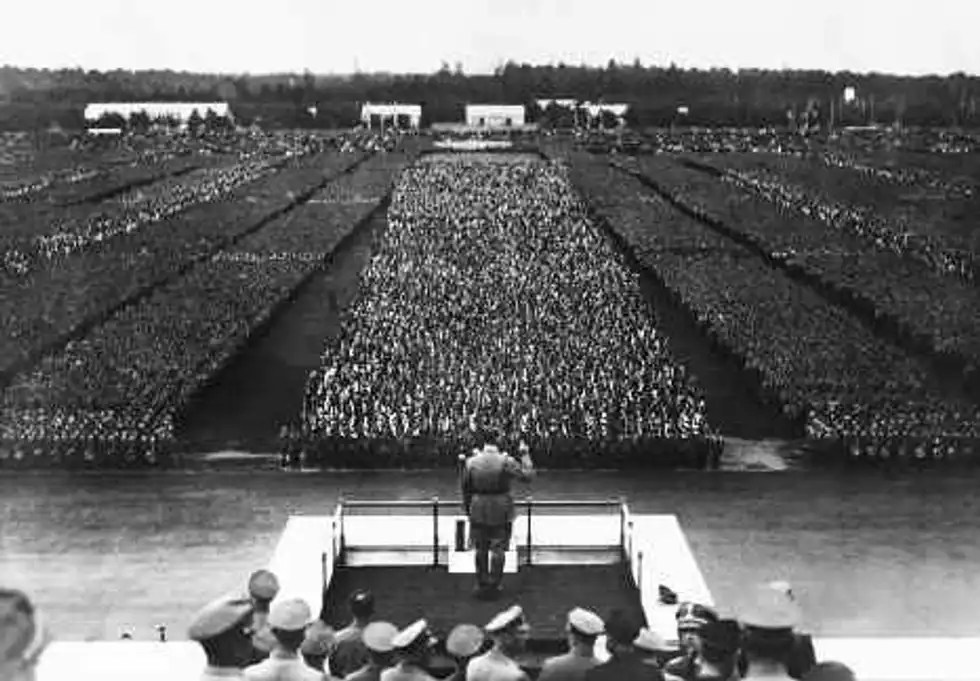
Berlin’s Pergamon Museum will reopen mid 2027 as lengthy restoration of the Throne of Satan moves forward! Jonathan Cahn has revealed in his book, The Altar of Pergamon: The Mystery of the Dark Angel and the Future of the World that from the time when this altar was uncovered in 1870’s it has been the centre of Satanic desecration and destruction. It featured in Hitler’s rise to power and the Holocaust. Stalin was in possession of the altar during his reign of terror. What is going to happen when Satan’s throne is revealed again in 2027? What might it bring to the world? Jonathan Cahn reveals it.
Hitler addressing rally at Nuremberg in front of a reproduction of the Altar of Pergamon
Pergamon’s most prominent feature was the Great Altar of Zeus, which some scholars suggest could be the “throne” referred to in Revelation. This altar, with its imposing structure and intricate friezes, symbolized the pervasive influence of paganism and idolatry in the region.
“I know where you live, where Satan’s throne is. Yet you hold fast to My name and have not denied your faith in Me, even in the days when My faithful witness, Antipas, was killed among you, where Satan dwells” (Revelation 2:13).
The West thought it had outgrown Christianity. But in its search for meaning, morality and salvation, it may have simply turned politics into a substitute faith.
There is something wonderfully ironic about the West’s latest flirtation with communism. For decades, Western intellectuals have been busy throwing Christianity out of the public square. Religion, we were told, was primitive. The Bible was an embarrassing relic. And churches were dusty museums for people who still believed in sin, salvation and something called “eternal life”. And yet, having evicted Christianity, the West has discovered that human beings still seem to want meaning.
People also want justice. And they want belonging. They want morality. They want a cause greater than themselves. They want to know who the good guys are, who the bad guys are and what the point of their existence might be. Secular humanism had a go at filling the void left by the abandonment of Christianity. But it turns out that telling everyone to become an autonomous individual who lives to consume consumables and post content on social media before returning to dust wasn’t quite enough.
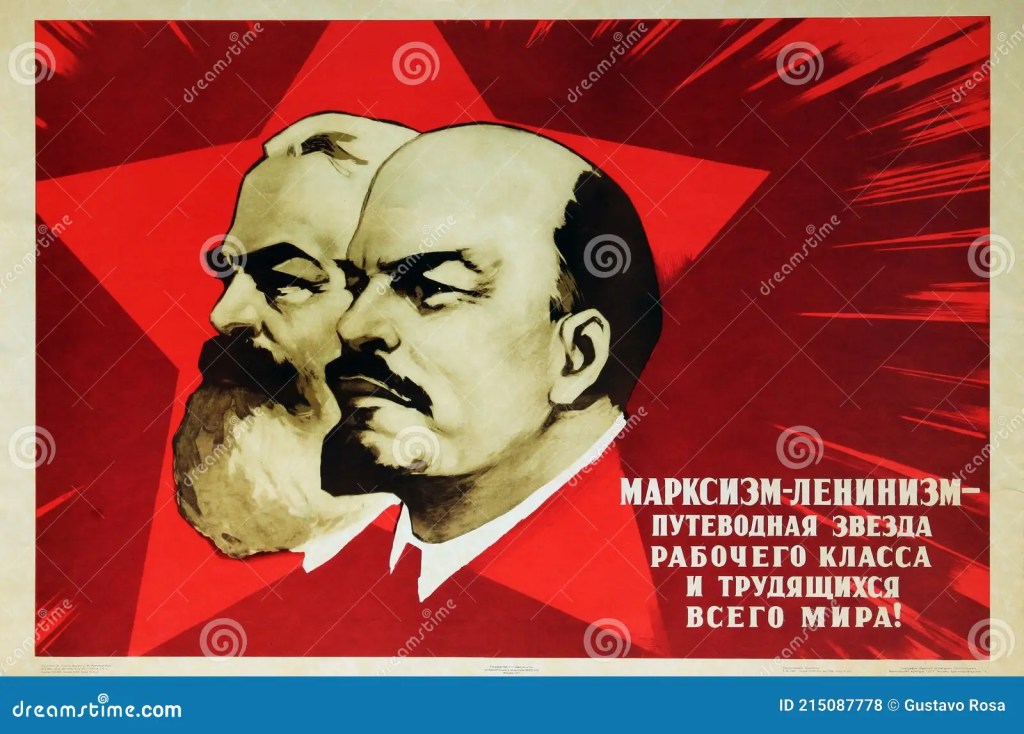
Enter Karl Marx. Not necessarily the Marx of gulags, bread queues and secret police. That Marx remains somewhat difficult to put on a university tote bag. Rather, it is Marxism as a moral framework that has become fashionable again: the language of oppressors and oppressed, exploitation and liberation, privilege and victimhood, systemic injustice and revolutionary transformation. And this tells us something important about what happens when a society rejects Christianity without abandoning its appetite for a religious explanation of the world. It doesn’t necessarily become less religious. It just becomes religious about politics.
The rejection of Christianity has left a vacuum
Christianity didn’t merely tell Westerners to attend church on Sunday. or centuries, it provided answers to some rather large questions. What is a human being? Why does every person have value? What is justice? Why should I love my neighbour? Why is greed wrong? What is sin? What is the purpose of life? And perhaps most inconveniently: what if I am part of the problem?
Modern secular culture has increasingly rejected Christianity’s answers. But the questions haven’t gone away. Human beings remain incurably interested in meaning. We still want a story that explains why the world is broken, who is responsible and how it can be fixed. Nature abhors a vacuum. So does the human soul.
Marxism provides a remarkably convenient replacement story
Christianity says the world is fallen. Human beings are capable of selfishness, cruelty and injustice. The problem isn’t merely “out there”. It is also inside us. Christianity offers a story of sin, redemption and ultimate restoration. Marxism offers an alternate story. The world is unjust because certain groups possess power over others. Society is divided between oppressors and oppressed. History is moving towards liberation. The existing order must be transformed. You don’t need to believe in God. You simply need to believe in History. And History, in this version, has a plan. That makes Marxism rather more than an economic theory. It becomes a story about human existence. There is a Fall. There are villains. There are victims. There is a struggle. There is redemption. And eventually, if everyone behaves themselves, paradise. The only noticeable difference is that heaven has been relocated from eternity to Earth, and the pearly gates have been replaced by a government department.
Sin doesn’t disappear. It gets reassigned.
Christianity has a particularly annoying doctrine called sin. It says the problem isn’t simply that society is badly organised. The problem is us. That is, shall we say, psychologically inconvenient. It means the wealthy man might be greedy. But it also means the poor man might be greedy. The conservative might be selfish. But the progressive might also be selfish. And the revolutionary might become a tyrant. In other words, nobody gets to escape the diagnosis. Modern political ideologies can offer a much more comfortable arrangement. Instead of asking, “What is wrong with me?” you can ask: “Who is oppressing me?” Suddenly, the moral problem is conveniently located somewhere else. Capitalism can become the villain. Or colonialism. Or racism. Or patriarchy. Or inequality. These are not imaginary issues. Societies can contain genuine injustice, exploitation and discrimination. The interesting question is what happens when political categories begin performing the role that “sin” once performed. You have the guilty. You have the innocent. You have confession. You have repentance. You have moral purity. You have heretics. And you have people explaining on social media why someone else’s disagreement proves they are a terrible person. The theology has changed, but the human instinct hasn’t.
Secular liberalism has a meaning problem
This helps explain why revolutionary politics can appeal particularly strongly to people who feel alienated. Liberal democracy is deliberately boring about ultimate meaning. It says you are free to pursue your own conception of the good life, provided you respect other people’s rights. That’s a pretty sensible political arrangement. But it isn’t exactly the stuff of epic poetry. Nobody wakes up at 7 a.m. thinking: Today I shall bravely defend my right to choose between drinking Coke, Diet Coke or Vanilla Coke. Revolutionary movements offer something more intoxicating. They say: You have a mission. You are not merely going to work, paying rent and scrolling through TikTok until death eventually finds you. You are part of a historic struggle. Your life means something. Your actions contribute to the liberation of humanity. That is an enormously powerful psychological proposition. And it is very close to what religion has historically offered.
Politics can replace the community that religion once supplied
There is another problem. Churches didn’t simply provide doctrines. They provided fellowship. Churches gave individuals somewhere to go, something to do and a community to belong to. They provided rituals, relationships, responsibilities and a shared story. As religious participation declines, people can become increasingly detached from those traditional communities. Politics is increasingly providing a substitute. There are meetings, marches, slogans, symbols, chants and causes. There are people who are “with us” and people who are “against us”. You can even celebrate the occasional conversion when someone comes over to your side. The secular activist may insist he has escaped religion. But in actuality, he has simply joined a movement with its own doctrine, saints, sinners, rituals, commandments and apocalyptic predictions. But please don’t call it a religion. That would be offensive.
And so politics becomes theology
This may be the deepest irony of all. The secular West thought it was escaping religion.Instead, it may simply have secularised some of religion’s functions. The language changes. God becomes History. Sin becomes systemic oppression. Salvation becomes liberation. The church becomes the movement. The sermon becomes the rally. The heretic becomes the person who asks awkward questions. Or who watches News24! And heaven becomes the perfect society that is always just one revolution away. There is nothing inherently wrong with wanting justice. Nor is criticism of capitalism, inequality or social injustice evidence of communism. The point is something more fundamental. Human beings cannot easily live without a story about what is wrong with the world and what would make it right. Christianity supplied one. Modern secularism removed it. Something had to fill the space. And communism — or various descendants of Marxist thought — has proved remarkably willing to apply for the vacancy. Perhaps that is why the modern West’s renewed fascination with revolutionary politics is less mysterious than it first appears. We didn’t stop believing. We simply changed the object of our belief. And after spending half a century insisting that religion was nothing more than humanity’s desperate search for meaning, we may be discovering an awkward truth: Take away God, and humanity doesn’t necessarily stop looking for salvation. It just looks for a government powerful enough to promise it. A final warning… There is one final irony worth considering. The socialist West may discover that its new secular faith is poorly equipped to withstand a much older and more confident religious worldview: Islamism. A political culture that treats its own Christian inheritance as embarrassing, regards national borders as morally suspect and struggles to distinguish tolerance from surrender may find it difficult to resist a movement that has no such reservations about its own beliefs. High immigration levels make the challenge more consequential, while the woke instincts of some Western socialist governments can discourage honest scrutiny of illiberal religious movements. Socialism promises liberation. But what happens when those it seeks to liberate have no interest in its progressive creed? History suggests that abandoning your convictions doesn’t guarantee that everyone else will abandon theirs. Far from it.
Journalists use loaded language, selective quotes and misleading headlines to shape public opinion, using a controversial report about James and Joanna Howe as a case study.
It’s been a few weeks since the media declared all-out war on James and Joanna Howe. Compare what James said with what made it into the article. Kaplan quotes him as saying, “consent is not even a freaking thing for me” and “I just don’t do consent”. But she leaves out the two lines where he explains what he means: “I do marriage, man”, and his description of marriage as “the only consent that works”. Leave those lines out, and James sounds like a man who’d force himself onto his wife. AllSides calls this bias by omission.
Now read the headline again: “‘I don’t give a f***’: Husband’s wild consent claim sparks fury.” It invites readers to assume James doesn’t care whether his wife consents to sex. But that’s not at all what he said. Moments earlier, Joanna had warned him on air that his words would be clipped and used against him. “I don’t give a f***” was his reply. In other words, he didn’t care how critics would misrepresent him. News.com.au stripped the line of its context and made it the headline. AllSides calls this sensationalism.
The Story They Chose Not to Tell
The subtlest technique of all — because it’s invisible on the page — is story choice. Joanna Howe has given news.com.au no shortage of newsworthy material, from helping draft pro-life legislation that passed South Australia’s upper house, to organising petitions that drew tens of thousands of signatures, to running one of the country’s largest social media advertising campaigns.
Indeed, on the very day Kaplan’s article went up, the Howes were preparing for a thousands-strong rally outside New South Wales Parliament, where MPs would vote the next day on banning sex-selective abortion. Why wasn’t that the story? Instead, James’s out-of-context podcast quotes were served up as the “news”.
For those of us who are reading God’s Word daily we understand that God told us that spiritual warfare would increase exponentially as we approach the time of Jesus return to restore righteousness and defeat his arch enemy Satan. Note: “you will be hated by all nations for my name’s sake.”
“Then they will deliver you up to tribulation and put you to death, and you will be hated by all nations for my name’s sake. And then many will fall away and betray one another and hate one another. And many false prophets will arise and lead many astray. And because lawlessness will be increased, the love of many will grow cold. But the one who endures to the end will be saved. And this gospel of the kingdom will be proclaimed throughout the whole world as a testimony to all nations, and then the end will come.” Matthew 24:9-14
Keep in focus, next on God’s agenda for planet Earth is Jesus Millennial Kingdom. To be prepared to rule and reign with Jesus with a rod of iron go to http://www.millennialkingdom.net.
Swimming royalty Stephanie Rice is being hammered over a caption stating she resigned from her job after hearing from God. On Instagram, the former Australian Olympian made a clear argument about how God directed the decision. Critics weren’t interested and chose to flood her post with mockery instead. This testimony by Rice demonstrates that God is real and He answers our prayers. She reveals that acknowledging and obeying God is the only way to live a truly successful life not only now but for eternity.
Haters Gonna Hate
One user ironically accused Rice of being “tone deaf.” That person then added, “To just quit a high-paying job because ‘God told me so’ is so arrogant. You quit your job because you could.” Another wrote, “This is so silly. Read the Bible because it sounds like you have been deceived.”
Facebook’s Christian-hating trolls were worse. Someone commented, “It’s not God talking to you. It’s called Schizophrenia.” In another example, someone left an essay-length comment, lecturing Rice about privilege and being a public figure. The person told Rice to choose her words more wisely because they could encourage people to be reckless. At least two people wrote “oh, dear,” while others took Rice to task for allegedly making God her business partner. The pile-on included: “clearly lost the plot”, “you’re making it up. You need mental help”, “cooked”, “such crap”, and “Freak”.
Legacy media were just as glib. They appeared to ditch due diligence by skipping Rice’s 6 October video explaining how God had directed her to resign. The Daily Mail, Nine, and News.com.au ignored that reel. They ran the criticisms and the Instagram carousel image Rice had posted on 13 October. Titled “A Career Change,” her offending post, in part, read, “I was offered to become CEO, my dream position… but God asked me to resign. I obeyed.” Of the three, The Daily Mail was the most dishonestly jarring. Their headline read: “Fears for Stephanie Rice as her followers think she has been brainwashed after moving to Dubai and finding God: ‘Poor girl’.”
Clear Reasoning
Ignored by The Daily Mail, Rice said in her two-part 6 October Instagram video explanation, “So how do I know that it was God who asked me to resign from my job and not the voice in my head?” “1. He spoke through a story I’d already lived. 2. He confirmed it again while journaling. 3. He gave me a vision which I have held onto in this waiting season.” Rice then recalled the story, stating, “Well, back in February before I resigned, I was on a prayer walk. God reminded me of a key decision I made when I was fourteen. “I don’t think about this often, at all. So I know it was God, for starters.” She said, “I was training with this specific swimming coach at the time that I never really gelled with. When I started with him as a thirteen-year-old, I was ranked sixth in Australia.” Despite improvements and six gold medals at age 14, Rice recalled that she knew deep down she needed a new coach in order to go further. Even then, she said that people thought she was crazy.
As Rice explained, “I just knew that if I wanted to achieve my goal, I had to make this change.” She moved to the new coach and, under his leadership, broke records, earned an Order of Australia medal and became a celebrated three-time gold-winning Olympic swimmer. “My life,” she said, “changed forever. I tell you that story because it was such a confirmation for me that even though this decision won’t make sense to many people, the only way to get me to my ultimate goal was to resign from my job. “I’m 100% confident that I heard God correctly, and I know this is the start of an amazing testimony.”
Biblical Wisdom
Rice told Instagram followers she knew many were in a difficult season of waiting. She encouraged them to remember the song, “Look at what the Lord can do.” On Friday, Rice acknowledged the criticisms, saying that people don’t get it. She then responded with class by referencing James. With her NLT Study Bible open, Rice said, “I’m reading James 1 today, and it’s talking all about wisdom. The reason I thought I’d share this is because so many people have seen that God asked me to resign from my job earlier this year.” “There are a lot of people that have been commenting on my posts like ‘that’s stupid,’ and I’m like, you don’t get it. “In James it says, ‘If you need wisdom, ask our generous God, and he will give it to you.’ It is like a declaration. He will answer that prayer, and I love that because it goes on in the commentary to explain that God’s wisdom goes beyond common sense.” “Whether you can see it now or not, in time you can look back and say, ‘Thank you, Jesus. I’m so glad you made the call because I wouldn’t have come this way.’” Rice then declared, “I love this about the Bible; I was so encouraged. I flip the page, and I’m reading the rest of James 1, and it says, ‘God blesses those who patiently endure testing and temptation. Afterwards, they will receive the crown of life that God has promised to those who love Him.’”
The widely criticised Instagram post was part of her announcing that she had created a new account using her married name. Rice wrote, “Feels like the perfect time to start a fresh account, in my new name, and with a new commitment to sharing the journey God is taking me on. “I pray that my story would give you hope that God has the power to turn lives around, to restore what’s been broken and bless you above what you’ve asked, thought or even imagined.” “Probably part crazy to be walking away from 140,000 people,” she added, “but honestly I’d rather start again knowing the people joining now want to be a part of the story God’s writing, not the one that’s already been written, even if that’s just a small amount.”
Adapted from an article by Rod Lampard in The Daily Declaration 20/10/2026
God shows us with the seven churches and the seven seals what unfolds in the last seven years prior to Jesus return to rescue His nation Israel and to initiate His Millennial Kingdom, the final 1000 years before God destroys the Cosmos and creates a new Heaven and new Earth where only the righteous dwell (Revelation 21 & 22). Make sure you go to http://www.millennialkingdom.net to prepare to rule and reign with Jesus during His Millennial reign.
“Then I saw a new heaven and a new earth, for the first heaven and the first earth had passed away, and the sea was no more. And I saw the holy city, new Jerusalem, coming down out of heaven from God, prepared as a bride adorned for her husband. And I heard a loud voice from the throne saying, “Behold, the dwelling place of God is with man.” Revelation 21:1-3
I believe that Biblical prophecy shows us that the seven churches and the seven seals reveal what is unfolding in the churches and in the world in each of the last seven years. The sixth church and the sixth seal reveal that the rapture takes place at the end of the sixth year which means that the wrath of God poured out on an unrepentant Earth lasts for one year (in fact one year and 10 days as it takes place the year before a Jubilee year).
To the sixth church, the church of Philadelphia God says, “Because you have kept my word about patient endurance, I will keep you from the hour of trial that is coming on the whole world, to try those who dwell on the earth.” Rev. 3:10
Moreover, it is at the sixth seal we see the celestial signs that appear before the great day of the Lord and God says, “Fall on us and hide us from the face of him who is seated on the throne, and from the wrath of the Lamb, for the great day of their wrath has come, and who can stand?” Rev. 6:16
It is then that the wrath of God begins to pour out on an unrepentant world with the terrible trumpet and bowl judgements.
“The first angel blew his trumpet, and there followed hail and fire, mixed with blood, and these were thrown upon the earth. And a third of the earth was burned up, and a third of the trees were burned up, and all green grass was burned up.“ Rev. 8:7
There is a seventh church, the church of Laodicea that is left on the Earth to face the wrath of God. What does God say to it? “I know your works: you are neither cold nor hot. Would that you were either cold or hot! So, because you are lukewarm, and neither hot nor cold, I will spit you out of my mouth. For you say, ‘I’m rich; I have become wealthy and need nothing,’ and you don’t realise that you are wretched, pitiful, poor, blind, and naked.“Rev. 3:15-16
Jesus’ words to the church in Laodicea are severe but they are also spoken to people he deeply loves.
“As many as I love, I rebuke and discipline,” he tells them (Revelation 3:19). His stern warnings are not a sign that these Laodiceans were outside the Church. Quite the opposite: Hebrews 12:5–6 affirms that while the Lord’s discipline is hard to hear, he disciplines “the one he loves and punishes every son he receives.” These believers belong to him, and that is precisely why he will not leave them as they are. Hence, He also says to them, “Behold, I stand at the door and knock. If anyone hears my voice and opens the door, I will come in to him and eat with him, and he with me. The one who conquers, I will grant him to sit with me on my throne, as I also conquered and sat down with my Father on his throne. He who has an ear, let him hear what the Spirit says to the churches.’”Rev. 3:20-22
Many belonging to the Laodicean church will be powerful witnesses during the time God pours out His wrath upon the Earth. God will protect them from His wrath with a seal on their forehead, but many will be martyrs at the hands of the Antichrist.
“Then from the smoke came locusts on the earth, and they were given power like the power of scorpions of the earth. They were told not to harm the grass of the earth or any green plant or any tree, but only those people who do not have the seal of God on their foreheads. They were allowed to torment them for five months, but not to kill them, and their torment was like the torment of a scorpion when it stings someone. And in those days people will seek death and will not find it. They will long to die, but death will flee from them.” Rev. 9:3-6
This video explores the background behind Yeshua Ben David, leader of the Gan Eden political movement, and the religious language surrounding his rise in Israel. From the Temple and Sanhedrin to interfaith unity and “Garden of Eden” imagery, this story raises serious biblical questions. Are we simply watching unusual politics, or something Christians were warned to watch for?
A party called “Gan Eden” wants to turn Israel into paradise. Its chairman Yeshua Ben David dreams of priestly service in the Temple, sees the Knesset as the Sanhedrin, and is running as a candidate for the office of Prime Minister. Even by Israeli electoral standards, the latest candidacy is extraordinary: a party called “Gan Eden” — literally “Garden of Eden,” or Paradise or Heaven in English — led by a man named Yeshua Ben David, meaning “Jesus, Son of David,” wants to politically renew and save Israel. He dreams of priestly service in the Temple, regards the Knesset as a kind of Sanhedrin, and promises nothing less than a state that is to become a “paradise.” Welcome to the Israeli election campaign, where sometimes the canvassing is not just for seats, but for salvation…
He is a prominent political leader who founded and heads the Gan Eden Party. He is a significant focal point in the current national and spiritual discourse in Israel, through the combination of a free economic approach with a deep connection to Jewish heritage. His public efforts focus on building bridges between the various sectors and presenting a political framework of peace based on security. Over the years, he has developed a fundamental plan to address core social problems, while emphasizing governmental transparency and empowering the individual in order to reduce gaps.
Full Name: Jesus Israel Son of David, date of birth 21.05.1988 | Thursday, Sivan, 5748, City of residence: Jerusalem, Role – Chairman of the Gan Eden Party. Profession: Thinker and politician, Interests: Spiritual, political and social. Watch this space.