
There seem to be many paradoxes in Scripture. Not in the sense that the Bible contradicts itself, but that the Bible proclaims truth that makes no sense to those who are not in Christ. Even for believers, we’re struck by the unfathomable workings of a God who makes all things work together for good to those who love Him.
For instance, Scripture proclaims that, for the Christian, to lose is to gain. We read that to be humble is to be exalted. Perhaps most amazingly, the Bible proclaims that Christ’s victory over the grave means that to die is to live and to live abundantly. But what I’m sure confuses many, in or out of the church, is this concept Paul writes about in 2 Corinthians 12:9-10, where he makes the case for how our weakness is our strength. It’s interesting, especially given the fact that weakness is often considered a grave flaw, and something meant to be hidden.
“ But he said to me, “My grace is sufficient for you, for my power is made perfect in weakness. Therefore I will boast all the more gladly of my weaknesses, so that the power of Christ may rest upon me. For the sake of Christ, then, I am content with weaknesses, insults, hardships, persecutions, and calamities. For when I am weak, then I am strong.” 2 Corinthians 12:9-10
How are we expected to boast about our weaknesses? We are far weaker than we ever care to admit. It is in ignoring our weaknesses that our lives become harder. In fact, Christianity only makes sense when you’ve reached the end of yourself.” Think about it — it is the proud who most believe they have no need for God. The plague of thinking, “I can do it,” has hurt countless relationships. But Christianity declares this profound truth that what often makes Christianity most understandable is rooted in the fact that we need help. We need saving. Why? Because we are weak and helpless.
James 1:9 tells us, “Let every person be quick to hear, slow to speak, slow to anger,” we shrink back in shame as we reflect on the fact that, more often than not, we’re actually slow to hear, quick to speak, and quick to resort to anger.
And if you take a step even further back, it becomes clear just how quickly we fail in many other areas of life — especially when compared to how Scripture calls us to live. We often covet, lie, steal, and cheat. We may not be as heinous as a murderer, yet murder occurs frequently in our hearts.
Thankfully the Bible provides stories such as David and Bathsheba: Scripture tells us that David is a man after God’s own heart, and yet David not only sleeps with Bathsheba and gets her pregnant but he tries to cover it up and when that is unsuccessful he conspires to kill Uriah, Bathsheba’s husband.
“In the morning David wrote a letter to Joab and sent it with Uriah. 15 In it he wrote, “Put Uriah out in front where the fighting is fiercest. Then withdraw from him so he will be struck down and die.” 2 Samuel 11:14-15
Though David made a horrible decision, he took responsibility and had remorse for his actions. He earnestly sought God’s forgiveness. David penned Psalm 51, “A Contrite Sinners Prayer for Pardon,” after his sin of adultery with Bathsheba and the murder of Uriah. In this Psalm, David brokenheartedly confesses his sin and asks for God’s forgiveness and restoration. David never stopped worshipping God.
Jealousy is such a blinding emotion that consumes us easily, and our hearts are hardened toward those we feel have wronged us. Scripture says to “bear with one another in love,” forgive “seventy times seven,” and “value others above” ourselves, but how often do those commands actually take priority in our lives?
Suddenly, when the world is crashing down around us, and we can’t seem to get anything right, we realize: “Wow, I truly am weak.” And it’s not just the rude awakening of becoming aware of said weaknesses that hurt, but the harsh reality of the fact that the world is quick to use them against us. Far too commonly, weakness is abused in the machinations of manipulation and mockery. And if the world was all we had to turn to, we’d likely find ourselves wondering: what’s the point of it all?
But thanks be to God because He does not define us by these weaknesses. Indeed, Psalm 103 declares, “The Lord works righteousness and justice for all who are oppressed. … The Lord is merciful and gracious, slow to anger and abounding in steadfast love. … He does not deal with us according to our sins, nor repay us according to our iniquities.” Don’t you see? We may struggle, fail, or feel dismayed, but our God does not treat us as weak, failing sinners. He treats us as forgiven and free children of His promise!
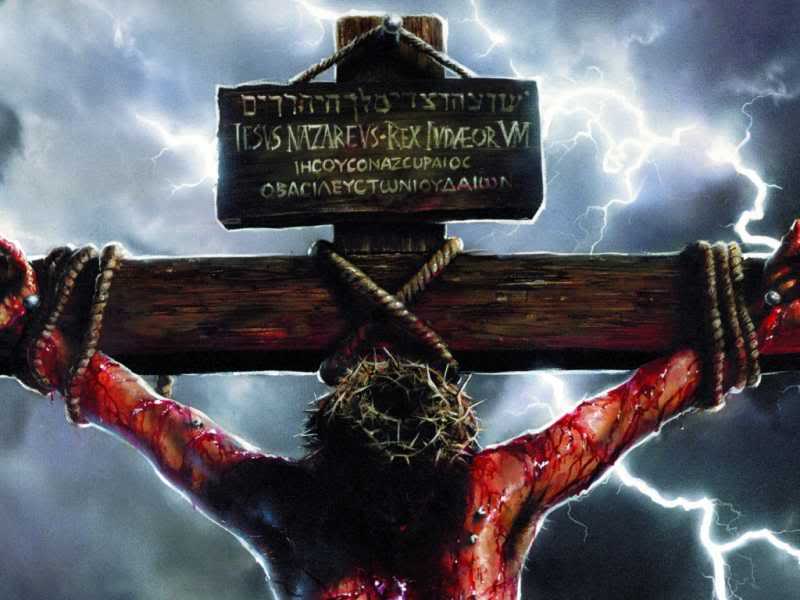
Perhaps among several seemingly paradoxical yet joyous truths in Scripture is this understanding of our weakness being our strength, for it is in embracing our weaknesses that we can see Christ’s strength. And this strength resides within us, for Galatians 2:20a states, “I have been crucified with Christ. It is no longer I who live, but Christ who lives in me.” By the power of the Holy Spirit, we are new creations, and yet we still fail Him daily grieving the Holy Spirit. And yet, He never fails us. We neglect time with Him and time in His word, yet He never leaves us nor forsakes us. We made it necessary for God to send His Son to die on the cross, yet He has loved us with an everlasting love that leads us into eternity with Him. We take blessings for granted, yet He never stops blessing us. How astounding and unfathomable, this God we serve. May we never tire of singing His due praises, just as He never tires of holding us in His embrace of sovereign grace.
Adapted from an article in The Washington Stand 19/07/2024: Embracing Weakness Allows Us to Understand Our Strength Is Found in Christ by Sarah Halliday


 LIVING ETERNAL NOW