In 1980, Mount St. Helens (in Washington State, USA) erupted, blasting the top and side off the mountain. Then, as volcanoes do, it began to rebuild. In 1992, samples of new volcanic rock—KNOWN to be only about 10 years old—were dated using standard radiometric dating techniques (3 samples from the same rock, 350,000 years, 900,000 years, and 2,800,000 years). The results were eye-opening. Radiometric dating is not all it’s cracked up to be! In fact, it’s fair to ask: “Can radiometric dates be trusted at all?” Join geologist Dr Tas Walker for a discussion of the Mount St. Helens eruption and its aftermath, the fundamental flaws in radiometric dating methods, and the relevance of the age of the earth to people’s view of the world.
TIMESTAMPS ⌛ 00:00 Teaser 00:40 Introduction: What’s the deal with Mount St. Helens? 02:33 Dating rocks from Mount St. Helens 04:34 Assumptions underlie radiometric dating 05:57 Three samples, three dates: 350,000 – 2.8 million years 07:36 Story-telling accompanies radiometric dating 11:10 How can we get ACCURATE dates? 12:29 How were the Mount St. Helens dates received? Handling objections 17:05 Carbon dating gives good evidence for a YOUNG earth! 18:37 The only way to be sure of the age of something 19:58 Different kinds of radiometric dating 21:19 Radiometric dating seems so SCIENTIFIC – How can it not be right? 23:00 What to do when the dates don’t fit the expectations 27:56 Is it okay to publish dates/perspectives that don’t match existing expectations? 31:51 The age of the earth is a critical part of people’s worldview 33:38 So, what do long-age geologists think of Mount St. Helens? 35:55 Other lessons from Mount St. Helens: 36:09 → Geologic layers can be deposited rapidly 36:59 → Erosion can happen rapidly 38:02 Geologists are now more accepting of catastrophism, but won’t let go of long ages 39:17 In conclusion: The age of the earth matters to both the biblical and the naturalistic worldviews
In Exodus 20:8–10, God gave the children of Israel the fourth commandment: work for six days and then on the seventh day, take a Sabbath rest. He could have given the command without providing a reason for the command, as he did in the first and the fifth through the tenth commandments and other times when he commanded a Sabbath rest. Or he could have given a different reason for the Sabbath command (e.g., so their animals could rest, to avoid death for disobedience, to humble their souls, to remember their exodus from slavery in Egypt, or simply because he is the Lord. But as in the second and third commands in Exodus 20, God gave a reason for the Sabbath command. The Israelites should work six days and rest on the seventh, “For in six days the Lord made heaven and earth, the sea, and all that is in them, and rested on the seventh day. Therefore the Lord blessed the Sabbath day and made it holy.” And he repeated that reason in Exodus 31:15–17.
In Exodus 20:11, God used the same Hebrew word for “days”11 (yamim, the plural form of yom [day]) that he used in verse nine, showing that God’s days of creation in Genesis 1 were the same kind of days (the same length) as the days of the week for the Israelites. It is doubtful if any faithful Jew ever interpreted it any other way until the idea of millions of years started to take control of people’s minds about two centuries ago.
We should note that if God really created over the course of millions of years (as most Christians around the world today believe), he could have clearly indicated that in the Hebrew. He could have used the Hebrew word dor (דּוֹר), which is translated in English Bibles as time, period, or generation.12 Or he could have borrowed an Aramaic word, as he did in the books of Nehemiah and Daniel, such as zeman (זְמָ֑ן) or iddan (עִדָּן), which are translated as season, time, or period.13 Or he could have used some phrase such as “after many days,”14 “after some years,”15 “after thousands of ten thousand years,”16 or “after years of many generations.”17 But instead, God used the only Hebrew word, yom (יוֹם), which means a literal, 24-hour day, and it means that (or the light portion of a literal, 24-hour day, in contrast to night) in the majority of the 2,320 times it is used in the Old Testament.
One more point for this discussion: Exodus 20:8–11 clearly implies that the days of Genesis 1 (and therefore the events on those six days) are in sequential order, just as the days of a human week are. Sunday always comes before Monday, which always comes before Tuesday, etc. So, in Genesis 1, God created the earth completely covered with water and then he created light (day 1), then the expanse (firmament) to separate the water into two parts (day 2), and then the dry land and all kinds of land plants (day 3). After that, he created the heavenly bodies to serve as timekeepers for man (day 4), then the sea creatures and birds and other flying creatures (day 5), then all the kinds of land animals and, finally, the first man and woman to be the progenitors of mankind (day 6). Given that truth, we can readily see the many contradictions between the order of creation and the order of events in the evolution story.18 We cannot remove those contradictions no matter where we might try to fit millions of years.
It is clear: God created everything in the beginning in six literal, sequential, 24-hour days. The events on those days were not normal but were unique and supernatural as God spoke things into existence (Genesis 1:3, 6, 9, 11, 14, 20, 24, 26; Psalm 33:6–9). He didn’t speak and then wait millions of years for things to happen. But the days were normal days (approximately 24 hours), just like our days, “all the days” of Adam’s 930 years of life (Genesis 5:5), and “all the days” of Noah’s 950 years of life (Genesis 9:29).
No Place to Put the Millions of Years
So, we can’t spread the millions of years over “figurative” or “symbolic” creation “days” (ages), as in the day-age view. And because God equated the human workweek with his creation week, there is no basis for saying that, in Genesis 1, long stretches of time (millions of years) transpired between the literal days, as in the “day-gap-day” view of John Lennox.
But we also can’t fit millions of years before the six literal days, as in the old gap theory, the more recent “promised land” view of John Sailhamer, the view of John Lennox, or the “analogical day” view of C. John Collins. Nor can we fit the millions of years before Genesis 1:1, as in the “cosmic temple view” of John Walton and others. There was no time before the six days, because notice what God said he created in those six days: the heaven,20 the earth, the sea, and all that is in them. He didn’t make anything before the six days. He made everything during those six days. But when did God make the earth according to Genesis 1? He made it in verse 1, not in verse 3, which is where many Christians try to say that the six days begin. So, combining Exodus 20:11 with Genesis 1:1 unmistakably informs us that the six days begin in Genesis 1:1, not in 1:3.
There simply is no place to put millions of years of geological and cosmological time into or before Genesis 1—not in the days, between the days, or before the days of creation. Exodus 20:11 completely rules out those interpretations. There are many biblical, historical, philosophical, and scientific reasons to reject the millions of years, but Exodus 20:11 is a very important biblical reason. Another very important reason that nearly all old-earth proponents ignore is the problem of accepting millions of years of animal predation, death, disease, extinction, and other natural evils. This is seriously incompatible with the Bible’s teaching regarding the original “very good” creation, regarding God’s curse on the whole creation when Adam sinned, and regarding the future removal of the curse on creation when Jesus comes again to create a new heaven and earth.
Evasions of Exodus 20:11
As I said at the beginning, I have found in my reading and experience that most Christians who accept millions of years have not thought very carefully, if at all, about what Exodus 20:11 says in relation to the question of the age of the creation.
To see the truth and importance of Exodus 20:11 more assuredly, let’s now consider how some influential Christian scholars who accept the millions of years have handled this verse.
Through his 1955 book, The Christian View of Science and Scripture, Baptist theologian Bernard Ramm moved many to accept millions of years as he advocated the day-age view of Genesis 1. This is all he said about verse 11 in the fourth commandment: “The argument against the [day-age, progressive-creation] theory on the grounds of Exodus 20:11 is not at all significant. The verse simply means that the human week of seven days takes its rise from the divine week of seven creative epochs.”24 Following the scientific consensus by faith, he had already interpreted the days of Genesis 1 as “epochs.” Then he used this to silence Exodus 20:11. This is not a sound interpretation of Scripture, for he ignored God’s own commentary.
Millard Erickson’s Christian Theology is widely used in seminaries in English and other languages. In his first edition in 1983, he showed no awareness of recent young-earth creationist literature, gave a shallow treatment of the view, and undogmatically leaned toward the day-age view of Genesis 1. But his only mention of Exodus 20:8–11 was not in his chapter on creation but in the chapter on Christology regarding Jesus’ view on keeping the Sabbath. In spite of saying in his 1983 first edition that the subject of creation warranted further study, his third edition in 2013 showed no improvement on his awareness of young-earth literature or our biblical and scientific arguments, and he still ignored Exodus 20:8–11.25
In his book, Genesis in Space and Time, the great apologist Francis Schaeffer devoted merely a single paragraph to the question of the length of the creation days and said he did not know how long they were (p. 57). His book makes no reference to Exodus 20:8–11.
Gleason Archer was a leading evangelical Old Testament scholar in the twentieth century. In an article defending the day-age view, he stated about Exodus 20:11 in regard to the six days of Genesis 1, “By no means does this [verse] demonstrate that 24-hour intervals were involved in the first six ‘days,’ any more than the eight-day celebration of the Feast of Tabernacles proves that the wilderness wanderings under Moses occupied only eight days.” This argument fails because Leviticus 23:33–43 does not connect the number of days of the feast to the number of years Israel wandered in the wilderness. Rather those verses link the command for the Israelites to dwell in booths during the feast with the fact that they dwelt in tents in the wilderness after they left Egypt.
Another influential, twentieth-century Old Testament scholar was E. J. Young. In his Studies in Genesis One, he says that the first chapter of the Bible is a “straightforward trustworthy history.” He asserts that Exodus 20:8–11 tells us the days of creation were “consecutive” and “chronological.” But he says the Bible does not tell us how long the days were and how old the earth is, thereby leaving the door open to the acceptance of millions of years as secular geologists claim.27 It is no surprise then that his son, Davis Young, went on to get his PhD in geology and teach for decades at Calvin College, convincing many students and evangelical theologians to believe in millions of years.
The late John Sailhamer is another prominent evangelical Old Testament professor who has had an impact on many, including John Piper, to accept millions of years. In Genesis Unbound, he argues that Genesis 1:1 refers to the creation of nearly everything over the course of millions of years. But verses 2–31 describe the creation of the promised land (which he equated with the garden of Eden) and the creatures in, above, and around the promised land. He said that Exodus 20:8–11 refers to six literal days of “preparing the [earth’s] sky, the land, and the sea,” but not the earth and universe. His novel interpretation of Genesis is seriously flawed.
The highly respected British apologist John Lennox and well-known Old Testament professor C. John Collins try to evade the implications of Exodus 20:11 by saying that God’s work is different from man’s work. True, unlike man’s work, God’s work in Genesis 1 is supernatural, out-of-nothing, and not repeated, and God doesn’t get tired. But Exodus 20:8–11 is not comparing and contrasting man’s work and God’s work. Rather, the commandment is equating man’s week with God’s week of creation. Lennox and Collins have missed the point completely.
Wayne Grudem is arguably the most influential evangelical theologian in the world as a result of his many helpful writings, especially his Systematic Theology, which is translated into more than 12 major languages. He tries to get around Exodus 20:11 by saying that in the very next verse “‘day’ means ‘a period of time’”—so, since yom is used non-literally in the context, it therefore is not necessarily literal in verse 11. But two points expose the fallacy of this argument. First, yamim (plural of yom and used in 20:8–12) always means literal days everywhere else in the Old Testament. Second, in 20:12 it is not the word “days” (yamim) that is non-literal (figurative). Rather, it is the verb “may be long” (ESV, or “may be prolonged” as in NASB) that is used figuratively. In other words, verse 12 does not mean that if Israelites would keep the Sabbath, they would have longer days (say, 36-hour days) but that they would have many more (literal, 24-hour) days in the promised land to which they were going. Their disobedience would shorten their time of prosperity and residence in the promised land. Their obedience to God would enable them to stay and thrive as a nation in the land for a long time. Verse 12 simply does not say or imply that the six days referred to in Exodus 20:11 are figurative of long periods of time rather than being literal days.
In A Biblical Case for an Old Earth, David Snoke says, “It may sound trite to say that ‘with the Lord one day is as a thousand years’ (2 Peter 3:8; see also Ps. 90:4), but we do well to remember that God’s timing is not always our time.” It is indeed trite and irrelevant. Peter is referring to the second coming of Christ, not defining the length of the days in Genesis 1 or Exodus 20:8–11. Moses’ words in Psalm 90:4 are (in the context of 90:1–3) referring to the eternal nature of God, not defining the days of creation. The rest of Snoke’s argument quotes Leviticus 25:2–11 to say that “the Sabbath law was clearly not restricted to periods of seven twenty-four-hour days. Leviticus 25 gives the Sabbath year law, as well as the Jubilee law, which was a Sabbath of Sabbath years, a period of seven times seven years.”34 Of course Scripture speaks of more than one kind of Sabbath. But those Sabbath years are literal years, just like the Sabbath day of Exodus 20:11 is literal. Furthermore, in Exodus 20:11, the question is not how to interpret “Sabbath” but “day.” And the Israelites did not have or take the liberty of deciding whether they would work six literal days before a Sabbath rest or work six long, indefinite periods of time and then rest a seventh long, indefinite period of time. Leviticus 25 is as irrelevant to the correct meaning of Exodus 20:11 as is 2 Peter 3:8 and Psalm 90:4.
John Walton is a famous Old Testament scholar at Wheaton College. His influence in the church is growing in America as well as in other countries. In his book, The Lost World of Genesis One, he argues that God didn’t create anything in Genesis 1—it is not an account of material origins. Rather, he says, it is a description of God giving or assigning function to a preexisting creation. Everything was created before Genesis 1:1, and the Bible is silent about when and how God created. So, he contends, we can accept whatever the scientific majority says is true about the origin and history of the creation. His brief comments about Exodus 20:11 focus completely on persuading his readers that “made” (asah, עָשָׂה) means “gave function to” or “assigned function to” something that was made earlier. Walton’s view fails on so many points. He assumes cosmological, geological, and biological evolution over millions of years are proven scientific facts, which they are not. He assumes that all Ancient Near-Eastern cultures had the same worldview and that ancient Israelites shared that view, which they did not. And then he uses the ancient pagan thinking as the grid through which he interprets Genesis 1–11. Furthermore, Genesis 1 does not say that God transformed the preexisting creation to become a cosmic temple in which to reside. In fact, Isaiah 66:1–2 says,
Thus says the Lord: “Heaven is my throne, and the earth is my footstool; what is the house that you would build for me, and what is the place of my rest? All these things my hand has made, and so all these things came to be, declares the Lord. But this is the one to whom I will look: he who is humble and contrite in spirit and trembles at my word.”
Walton and others using the same hermeneutical approach are “trembling at” (believing) the words of scientists, rather than humbly trembling at (believing) the Word of God.
Furthermore, Genesis 1:14 says that the sun, moon, and stars were to serve a function—for man to measure time (literal days, years, and seasons). God assigns a function for Adam and Eve—to rule over the creation (1:28). But God doesn’t assign a function for the firmament (made on day 2), or for sea creatures, birds, or land animals (made on days 5 and 6). And Genesis 1 says nothing about the creation functioning as a cosmic temple at the end of day 6. But also, if God really created the sun, moon, and stars to exist for billions of years before man (as Walton believes), then for most of their existence, they did not fulfill the purpose for which he created them. Or are we to think that, for billions of years, the heavenly bodies also did not function to separate the day and night until God gave them that function just before he created Adam and Eve? Isaiah 45:12 and 18 says that God created the earth to be inhabited by man. So, if God really created the earth 4.5 billion years before man, it did not fulfill the purpose to which God created it. What kind of God declares purposes like this and then waits billions of years to fulfill it? Not the God revealed in Scripture. Neither Genesis 1 nor Exodus 20:11 says or even suggests, “For in six days, God gave function to the heavens and the earth and the sea and all that is in them which he had made before the six days.”
Finally, I want to comment on Hugh Ross’ handling of Exodus 20:11, because so many Christian leaders and scholars have endorsed his work that promotes the acceptance of the big bang, billions of years, death before the fall, and a local flood of Noah. Ross tries to neutralize this verse with two points. First, he says that of the five passages addressing the Sabbath command, three make no connection to God’s creation week and man’s week. But that doesn’t tell us anything about the meaning of Exodus 20:11 (and 31:17) which does make that connection. The fact that God gives more than one reason (or no reason) for keeping the Sabbath, does not negate the reason he gives in Exodus 20:11 and 31:17.
He then says, “For the remaining two passages, the ‘proof’ would hold only if neither the word for ‘day’ nor the word for ‘Sabbath’ were ever used with reference to any time period other than 24 hours.” Relying on Archer’s fallacious argument about the Feast of Tabernacles (noted above), Ross says there is more than one kind of Sabbath (e.g., a Sabbath day, a Sabbath year), just as in his many writings he contends that yom (“day”) doesn’t always mean a literal day, which young-earth creationists have always acknowledged. And so he says, “day” and “sabbath” in Exodus 20:11 can be understood to allow Christians to insert billions of years into Genesis 1.
But sound Bible interpretation is not done by looking up all the possible meanings of a word and then picking the one we want to insert into the verse(s) we are studying. That is eisegesis (reading into Scripture our opinion or belief), not exegesis (reading out of Scripture what God wants us to understand, do, or believe). No, we correctly interpret the Bible by looking at the context around the word in the verse(s) we are studying and by considering other verses that relate directly to that verse. When we do that, it is obvious biblically that the days of Genesis 1 and Exodus 20:8–11 are literal, normal, 24-hour days.
Conclusion
More attempts to ignore or evade the clear truth of Exodus 20:11 could be discussed. But the failed attempts discussed here reinforce the obviously correct interpretation. God made everything in the beginning in six literal, normal days just like ours.
It should also be noted that nobody has any trouble understanding the other nine commandments (although everyone has trouble obeying all of them). So, why all the convoluted arguments in order to explain away the obvious meaning of Exodus 20:11? Because these Christians have allowed the scientific consensus (i.e., the majority view of geologists and astrophysicists) about the age of creation to control their interpretation of God’s Word. The fallible opinions of sinful human beings (who don’t know everything, who make mistakes requiring revisions of their textbooks, and who weren’t there to observe the origin and history of the creation) have trumped the inerrant Word of our eternal, omnipresent, omniscient, infallible Creator in their mind.
If God really created over millions of years, then Exodus 20:8–11 could not be more misleading. Conversely, if God did create in six literal days, he could not be more clear in this commandment and in Genesis 1.
Exodus 20:11 stands as an insurmountable stone wall against any attempt to fit millions of years anywhere into Genesis 1, either in the days, between the days, or before the days of creation. And Scripture is clear that those literal days of creation were just a little more than 6,000 years ago
This is such an important topic as a Cosmos that is billions of years old undermines the authority of God’s Word. For me now, fulfilled prophecy, just of Jesus first coming to earth is sufficient proof of the inerrancy of the Scriptures. Nevertheless, I did pharmacy at Sydney University and evolution was the stumbling block for me to doubt the Scriptures. It was not until the age of 46 that I attended a Creation Ministries weekend conference that I realised that evolution does not explain the origin of you and me and the Cosmos. I was General Manager of Abbott Laboratories Hospital Products Division at the time and the only thing that got me along to the conference was Professor John Rendle-Short who at the time was Foundation Professor and Head of the Department of Child Health at the University of Queensland, Brisbane, Australia. was on the program. He was also Chairman of Creation Ministries. I knew Prof. Rendle-Short as he was doing work for the Paediatric Division of Abbott Laboratories. I admired the man and if he was talking about creation versus evolution I wanted to hear what he had to say. Well! I came away from that conference annoyed with myself and our educational establishment for believing such nonsense. There is no scientific plausible mechanism that can explain how we go from “goo to you”. Natural selection only works with what is already there it does not create anything new and mutations all go in the wrong direction they lose information. They do not generate complex new information that is required for the functioning of anything, let alone a human brain that can create all of the technology we have today.
Whilst there are billions of dead things buried catastrophically all over the world, because the world had excepted Lyle’s and Darwin’s slow gradual change (uniformitarianism) and evolution which need billions of years, the worldwide flood of Noah’s day had been put into the myths and fables bin.
What about today with all the technology that we have is the Earth really 4.5 billion years old? How can we measure age with certainty? What about radiometric dating methods—don’t they prove millions and billions of years? Does the age of the Earth even matter? Dr Mark Harwood discusses these topics and more, focusing especially on why an old Earth sits in conflict with the Bible, while also providing evidence for a younger age of the Earth.
⏳ TIMESTAMPS ⌛ 0:00 Introduction 0:48 Mark’s story: How origins affected his faith (An old Earth undermines the Gospel narrative) 11:11 How do we determine the age of something? (You can’t measure age!) 13:32 The dripping tap example (Dating methods rely on assumptions!) 16:17 Radiometric dates aren’t definitive – assumptions rule 19:51 The importance of witness testimony 23:36 The importance of worldview / starting assumptions 26:24 So, how old is the Earth? 28:58 Evidence from radiometric dating / rocks 36:04 Evidence from sedimentation / erosion 37:41 Evidence from our solar system 40:09 Evidence from Earth’s population 41:43 Evidence from carbon-14 in fossils 43:28 Summary: You can’t measure age! (Everything depends on your assumptions!) 46:29 An old Earth calls God’s character into question 48:47 An old Earth calls the inerrancy of Scripture into question 50:38 Conclusion: Three reasons the age of the Earth matters to a Christian
When physicist Dr Russell Humphreys was still at Sandia National Laboratories (he now works full-time for the Institute for Creation Research), he and Dr John Baumgardner (still with Los Alamos National Laboratory) were both convinced that they knew the direction in which to look for a definitive answer to the puzzle of why radiometric dating consistently gives ages of millions and billions of years.
picture – Linear accelerator used in radiometric dating.
Others had tried to find an answer in geological processes—e.g. the pattern was caused by the way the magma was emplaced or how it crystallized. This is indeed the answer in some cases.2,3 But Drs Humphreys and Baumgardner realized that in other cases there were many independent lines of evidence that suggested that huge amounts of radioactive decay had indeed taken place. (These include the variety of elements used in ‘standard’ radioisotope dating, mature uranium radiohalos and fission track dating.) It would be hard to imagine that geologic processes alone could explain all these. Rather, there was likely to be an answer that concerned the nuclear decay processes themselves.
From the eyewitness testimony of God’s Word, the billions of years that such vast amounts of radioactive processes would normally suggest had not taken place. So it was clear that the assumption of a constant, slow decay process was wrong. There must have been speeded-up decay, perhaps in a huge burst associated with Creation Week and/or a separate burst at the time of the Flood.
There is now powerful confirmatory evidence that at least one episode of drastically accelerated decay has indeed been the case, building on the work of Dr Robert Gentry on helium retention in zircons. The landmark RATE paper,4 though technical, can be summarized as follows:
When uranium decays to lead, a by-product of this process is the formation of helium, a very light, inert gas, which readily escapes from rock.
Certain crystals called zircons, obtained from drilling into very deep granites, contain uranium which has partly decayed into lead.
By measuring the amount of uranium and ‘radiogenic lead’ in these crystals, one can calculate that, if the decay rate has been constant, about 1.5 billion years must have passed. (This is consistent with the geologic ‘age’ assigned to the granites in which these zircons are found.)
However, there is a significant proportion of helium from that ‘1.5 billion years of decay’ still inside the zircons. This is, at first glance, surprising for long-agers, because of the ease with which one would expect helium (with its tiny, light, unreactive atoms) to escape from the spaces within the crystal structure. There should surely be hardly any left, because with such a slow buildup, it should be seeping out continually and not accumulating.
Drawing any conclusions from the above depends, of course, on actually measuring the rate at which helium leaks out of zircons. This is what one of the RATE papers reports on. The samples were sent (without any hint that it was a creationist project) to a world-class expert on helium diffusion from minerals to measure these rates. The consistent answer: the helium does indeed seep out quickly over a wide range of temperatures. In fact, the results show that because of all the helium still in the zircons, these crystals (and since this is Precambrian basement granite, by implication the whole earth) could not be older than 14,000 years. In other words, in only a few thousand years, 1.5 billion years’ worth (at today’s rates) of radioactive decay has taken place. Interestingly, the data have since been refined and updated to give a date of 5,680 (± 2,000) years.
The paper looks at the various avenues a long-ager might take by which to wriggle out of these powerful implications, but there seems to be little hope for them unless they can show that the techniques used to obtain the results were seriously flawed.
The Bible clearly tells us that God created a mature universe: Adam was a man, not a baby, the trees and plants mature and on day six Adam could see all of the stars in heaven. God tells us that He stretched out the heavens at creation on day four. The Cosmos could only have been created by a being outside of His creation with miraculous powers.
Big Bang from nothing does not explain the complex ordered universe that is so evident, it is certainly not good science.
Taken from an article by Dr. Carl Weiland “Radiometric dating breakthroughs” http://www.creation.com
4. Humphreys, D.et al., Helium diffusion rates support accelerated nuclear decay, icr.org, 16 October 2003. Return to text.
Dr Catchpoole has a B.Ag.Sc. (Hons) from the University of Adelaide, and was awarded his Ph.D. by the University of New England (NSW).
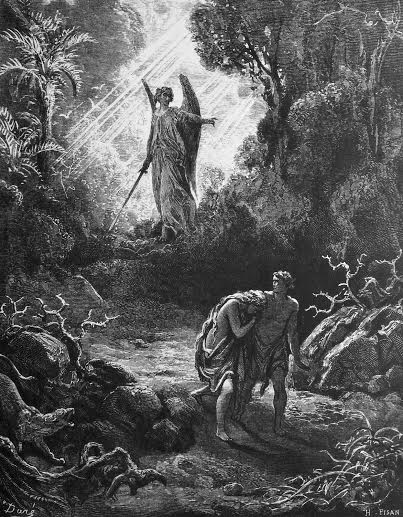
“When did I realise that the earth could be no older than about 6,000 years.? The exact moment that turned my thinking around was when a simple image was put up, of Eden with layers of fossil bones in the earth beneath Adam and Eve. This showed the stark implications for Christianity if e.g. dinosaur fossils were millions of years old. That would mean there was not only death before the Fall; many fossils also show evidence of suffering, bloodshed and violence, and diseases like bone cancer. Yet after Adam and Eve were created, God called everything He had made “very good” (Genesis 1:31). I realised that it made no sense for God to have looked at tumorous dinosaur bones on Day 6, then call this very good, knowing that cancer would cause such enormous future human misery.
The Eden-on-bones scenario also raised a fundamental doctrinal issue. If we put the shedding of blood before sin, then why did God in Jesus shed blood because of sin? (Genesis 3:21, Hebrews 9:22, 10:4–10) I could see that my compromising of God’s Word by believing the secular millions of years completely destroyed the whole basis for the Atonement (1 Corinthians 15:21–22)1.
Evolutionary geneticists have themselves realised that mutations accumulate so quickly (about 60–100 per person per generation), that the human species should have become extinct at least ten times over. Evolutionary geneticist Alexey Kondrashov asks, “Why have we not died 100 times over?*
That presumes we’ve been here for the 100,000+ years of the evolutionary timeline. It’s not a problem in the Bible’s 6,000-year timeline, with only about 200 generations since Adam. We’re still going downhill fast (Romans 8:19–22), but it’s understandable we haven’t gone extinct—there simply hasn’t been enough time.
The importance of the age of the earth in presenting the gospel message is demonstrated by the following testimony of an aboriginal man.
“I’ve been locked up in every jail in Queensland, so I’ve had the Gospel preached to me more times than I can count. But I ain’t never heard the Gospel like this. Just think … we [Aboriginal people] haven’t been here 60,000 years like they tell us; we come from Noah just 4,500 years ago, and Adam 6,000 years ago—along with everyone else alive today— that’s powerful! So Christ died for everyone—whitefella and blackfella!“
*Kondrashov, A., Contamination of the genome by very slightly deleterious mutations: why have we not died 100 times over? J. Theoretical Biology 175:583–594, 1995.
Extract from article in the latest Creation magazine from CMI (www.creation.com) Creation magazine interviews former CMI speaker/scientist Dr David Catchpoole
Dr Russell Humphreys says, “The age of the world is a critical issue for understanding the Bible and its history, and the idea of evolution over billions of years cannot tolerate a short timescale.
In his book and video, Evidence for a Young World, Dr. Humphreys reveals that there is a great deal of evidence for the short timescale given in the Bible: galaxies wind themselves up too fast, comets disintegrate too quickly, not enough mud on the seafloor, not enough sodium in the sea, the earth’s magnetic field is decaying too fast , biological materials (found in dinosaur bones) decay too fast, too much helium in minerals, and toomuch carbon -14 in deep geologic strata. The book and video, Evidence for a Young World are available from http://www.creation.com. In it, he is bold enough to claim “scientific evidence for a young world is the best support for the Bible’s history”.
Particle Beam accelerator at Sandia National Laboratories where Dr Humphreys was the first experimenter to use it in the mid 1980’s
In this post we will look at Dr Humphreys thoughts and predictions on Magnetic Field Decay.
The earth has a strong magnetic field and all agree that it is generated by electric current. In addition, basic electromagnetic physics says that once a current is set up, it should decay steadily. Dr Humphrey’s explains that the data supports this. “The energy of the electric current has been steadily decaying. The amount of current (in amperes) has decayed with a 1600 – year half-life. However, the magnetic field intensity varies from place to place and has sometimes behaved erratically. Archaeomagnetic measurements (magnetisations of bricks and pottery) show that the field intensity has been decaying steadily for the past 1000 years. Working backward even only 30,000 years, the electric current would have been strong enough to melt the earth! So, as Russell explains, evolutionists have tried to come up with a self-generating dynamo to keep the field going for billions of years. “Although they have used supercomputers and large laboratory experiments, they have not come up with anything more than sophisticated ‘hand waving’.
One criticism of creation science is that it makes no successful predictions. This not true, Dr. Humphreys has made a number of successful predictions that shook the scientific establishment. In particular, his predictions of the magnetic fields of the ‘gas giants’ Uranus and Neptune were proved correct by the Voyager 2 spacecraft when it flew by in 1986 contrary to all the evolutionary predictions. Likewise, his prediction of the magnetic field of Mercury was confirmed by the Messenger probe in 2012.
If you are not already getting the Creation magazine (www.creation.com) then can I suggest you do. The content of this article is taken from the article in the latest edition “Physicist staunchly defends Biblical Creation” Jonathan Sarfati chats with Dr Russell Humphreys.
Two chrono genealogies in the Bible give us an age for the earth. CMI explain this well in this short video.
How old does the Bible say the earth is? Can we trust biblical chronology, and how close to an exact ‘age’ can we get? Is the Greek translation of the Old Testament a better record of the Bible’s history? These questions can be answered, but we have to think through the issues. This episode features Lita Cosner and Dr. Rob Carter. I suggest you tell your family and friends to check out Creation Talk for more great videos.
The dwarf planet Ceres is the largest body in the solar system’s asteroid belt, between the orbits of Mars and Jupiter. Recently, NASA’s Dawn spacecraft made detailed fly-over inspections of Ceres and beamed back data that shocked many scientists.
Ceres shows clear signs of being very geologically active.1 For such a small body—only 1.28% the mass of our moon—Ceres has long-age-believing planetary scientists shaking their heads in wonder. One can almost hear them asking, “Are you Cerious!?”
The dwarf planet Ceres
The mystery for evolutionists is how Ceres, which they believe to be very old, can still be so hot inside.
Ceres is too far away from large planets to receive an influx of energy from gravitational effects/tidal heating, and radioactive decay can’t provide the heat over billions of years either.
Secularists believe that planetary bodies were originally molten and gradually cooled. They predicted that Ceres, a miniature world floating alone in the coldness of space, and believed to be the same age as the solar system, would have become frozen and inactive eons ago.
It appears that tiny Ceres, with its lively, hot interior, is no more than a few thousand years old. This is consistent with the Bible’s record that God formed the earth first, around 6,000 years ago.
Many Christians try to reconcile the biblical age with the secular ages because there is such a massive disparity between the two – six thousand years and billions of years. Because it is has become such a controversial issue most Bible Colleges have retreated from dealing with the subject and yet it is such a critical issue to belief in God’s Word. This CMI video does an excellent job of showing how simply it can be shown that the evidence in the rock layers supports a massive catastrophic event in the past that totally changed the earth’s topography and buried millions of things quickly (many are relevantly intact) in rock layers all over the earth. Suddenly, the billions of years have vanished and so has evolution. The Bible describes such an event and most civilisations around the world have such an event (Flood story) recorded in their history.
Americans who identify as Christian but do not profess to know Christ personally as Savior — now comprise 54 percent of the U.S. population.
Sadly, a Biblical world view is held by a declining number in denominational churches:
20% of those who attend evangelical Protestant churches.
16% of those who attend charismatic or Pentecostal churches .
8% of those who attend Protestant churches.
1%of those that attendCatholicchurches
GeorgeBarna, research director at the Cultural Research Center based at Arizona Christian University, went on to explain that the dominant values in the United States today are acceptance, comfort, control, entertainment, entitlement, experiences, expression, freedom, and happiness. Those contemporary values highlight the profound contrast from previous eras in which a more widely accepted biblical worldview yielded civic duty, hard work, humility, faith, family, moderation and the rule of law.
Education at government schools and universities has been hostile to a biblical worldview ever since Darwinian evolution replaced biblical creation as the explanation for the existence of the Cosmos and more specifically Earth.
The age of the earth is a momentous issue. The Bible clearly teaches a young earth and fortunately the evidence supporting the Biblical view is now strong. Ministries such as Creation Ministries, Creation Research Institute, Answers in Genesis, all with a strong team of PhD scientists with distinguished careers are doing a great job. I am most familiar with CMI http://www.creation.com and can strongly recommend it as a source of information and resources.
Why is the age of the earth such a critical issue? You can’t have death and suffering before mankind which is the case with evolution.
God’s Word tells us there was no death prior to THE FALL. Adam and Eve’s SIN (rebellion against God – disobeyed His commandment not to eat of the fruit of the Tree of Good and Evil. The consequences of doing so was death (spiritual then physical).
Two important creation issues you need to make yourself familiar with are:
1.The role Noah’s Floodin determining the age of the earth.It was a devastating worldwide flood that totally changed the geomorphology of this planet. It also buried billions of dead things quickly all over the world. What do we find? Billions of dead things in the fossil record, many intact demonstrating rapid burial, along with fossil fuel (oil) in abundance.
2. Genetic Entropy demonstrates that the human genome is deteriorating due to the accumulation of mutations. It has been irreversibly deteriorating since THE FALL and the rate of deterioration is such that human race is headed for extinction. The work of distinguished geneticist Dr John Sanford (invented the gene gun) and author of the book Genetic Entropy & The Mystery of the Genome has shown that the rate of deterioration is such that man could not have been on this earth longer than 6,000 years. Evolution cannot explain how complex information was formed in the genome in the first place and it has no answers on how to keep it there. Life is not going up, up up. It is going down, down, down.


/https://public-media.smithsonianmag.com/filer/c0/91/c091f2fa-5e4a-4152-93d9-27080e2734f9/38496497805_6ab62d436d_o.jpg)

 LIVING ETERNAL NOW