WHAT YOU NEED TO KNOW ABOUT AGI

For those of you that follow my blog know that I am a Christian that has received the Holy Spirit to be my counsellor, teacher, helper and comforter. I allow Him to guide my steps each day. Why do a post on A.G.I? God has given me a talent for business and technology and he expects me to keep up and use it for good.

Biblical prophecy reveals we are in the end times prior to Jesus return to restore righteousness and initiate His 1000 year reign to fulfill the covenants God made with Abraham, Isaac and Jacob when He established the nation of Israel for His purposes. Want to know more about what is next on God’s agenda for planet Earth go to http://www.millennialkingdom.net. We will certainly be using AI in Jesus Millennial Kingdom.

Artificial general intelligence (AGI) is a type of artificial intelligence that matches or surpasses human capabilities across virtually all cognitive tasks. Beyond AGI, artificial superintelligence (ASI) would outperform the best human abilities across every domain by a wide margin. Unlike artificial narrow intelligence (ANI), whose competence is confined to well‑defined tasks, an AGI system can generalise knowledge, transfer skills between domains, and solve novel problems without task‑specific reprogramming.

Creating AGI is a stated goal of AI technology companies such as OpenAIGooglexAI, and Meta. A 2020 survey identified 72 active AGI research and development projects across 37 countries. Contention exists over whether AGI represents an existential risk. Some AI experts and industry figures have stated that mitigating the risk of human extinction posed by AGI should be a global priority. Others find the development of AGI to be in too remote a stage to present such a risk.

AGI is also known as strong AI, full AI, human-level AI, human-level intelligent AI, or general intelligent action. Some academic sources reserve the term “strong AI” for computer programs that will experience sentience or consciousness. In contrast, weak AI (or narrow AI) can solve one specific problem but lacks general cognitive abilities. Some academic sources use “weak AI” to refer more broadly to any programs that neither experience consciousness nor have a mind in the same sense as humans.

Related concepts include artificial superintelligence and transformative AI. An artificial superintelligence (ASI) is a hypothetical type of AGI that is much more generally intelligent than humans, while the notion of transformative AI relates to AI having a large impact on society, for example, similar to the agricultural or industrial revolution.

A framework for classifying AGI was proposed in 2023 by Google DeepMind researchers. They define five performance levels of AGI: emerging, competent, expert, virtuoso, and superhuman. For example, a competent AGI is defined as an AI that outperforms 50% of skilled adults in a wide range of non-physical tasks, and a superhuman AGI (i.e. an artificial superintelligence) is similarly defined but with a threshold of 100%. They consider large language models like ChatGPT or LLaMA 2 to be instances of emerging AGI (comparable to unskilled humans). Regarding the autonomy of AGI and associated risks, they define five levels: tool (fully in human control), consultant, collaborator, expert, and agent (fully autonomous).

Researchers generally hold that a system is required to do all of the following to be regarded as an AGI:

Many interdisciplinary approaches (e.g. cognitive sciencecomputational intelligence, and decision making) consider additional traits such as imagination (the ability to form novel mental images and concepts) and autonomy.

Computer-based systems exhibiting these capabilities are now widespread, with modern large language models demonstrating computational creativityautomated reasoning, and decision support simultaneously across domains. Earlier systems such as evolutionary computationintelligent agents, and robots demonstrated these capabilities in isolation, but the convergence of multiple cognitive abilities within single architectures from GPT-3.5 onwards marked a qualitative shift in the field.

Physical traits

Other capabilities are considered desirable in intelligent systems, as they may affect intelligence or aid in its expression. These include:

This includes the ability to detect and respond to hazard.

Tests for human-level AGI

Several tests meant to confirm human-level AGI have been considered, including: The Turing Test (Turing)

The Turing test can provide some evidence of intelligence, but it penalizes non-human intelligent behaviour and may incentivize artificial stupidity.

Proposed by Alan Turing in his 1950 paper “Computing Machinery and Intelligence”, this test involves a human judge engaging in natural language conversations with both a human and a machine designed to generate human-like responses. The machine passes the test if it can convince the judge that it is human a significant fraction of the time. Turing proposed this as a practical measure of machine intelligence, focusing on the ability to produce human-like responses rather than on the internal workings of the machine. Turing described the test as follows: The idea of the test is that the machine has to try and pretend to be a man, by answering questions put to it, and it will only pass if the pretence is reasonably convincing. A considerable portion of a jury, who should not be experts about machines, must be taken in by the pretence.

In 2014, a chatbot named Eugene Goostman, designed to imitate a 13-year-old Ukrainian boy, reportedly passed a Turing Test event by convincing 33% of judges that it was human. However, this claim was met with significant scepticism from the AI research community, who questioned the test’s implementation and its relevance to AGI. In 2023, Kirk-Giannini and Goldstein argued that while large language models were approaching the threshold of passing the Turing test, “imitation” is not synonymous with “intelligence”. This distinction has been challenged on scientific grounds: neuroscience has established that biological intelligence arises from electrochemical signalling between neurons — a purely physical process with no known non-physical component. Both biological neural networks and artificial neural networks are physical systems processing information according to physical laws; to claim that one substrate produces “real” intelligence while the other produces “mere imitation” despite equivalent observable behaviour requires positing a non-physical property unique to biological matter — a position in tension with modern science and akin to substance dualism. A 2024 study suggested that GPT-4 was identified as human 54% of the time in a randomized, controlled version of the Turing Test—surpassing older chatbots like ELIZA while still falling behind actual humans (67%). A 2025 pre‑registered, three‑party Turing‑test study by Cameron R. Jones and Benjamin K. Bergen showed that GPT-4.5 was judged to be the human in 73% of five‑minute text conversations—surpassing the 67% humanness rate of real confederates and meeting the researchers’ criterion for having passed the test. The Robot College Student Test (Goertzel)A machine enrols in a university, taking and passing the same classes that humans would, and obtaining a degree. LLMs can now pass university degree-level exams without even attending the classes. The Employment Test (Nilsson) A machine performs an economically important job at least as well as humans in the same job. This test is now arguably passed across multiple domains. In knowledge work, frontier large language models are deployed as autonomous agentic systems handling software engineering, legal research, financial analysis, customer service, and marketing tasks. The Ikea test (Marcus) Also known as the Flat Pack Furniture Test. An AI views the parts and instructions of an Ikea flat-pack product, then controls a robot to assemble the furniture correctly. As early as 2013, MIT’s IkeaBot demonstrated fully autonomous multi-robot assembly of an IKEA Lack table in ten minutes, with no human intervention and no pre-programmed assembly instructions — the robots inferred the assembly sequence from the geometry of the parts alone. In December 2025, MIT researchers demonstrated a “speech-to-reality” system combining large language models with vision-language models and robotic assembly: a user says “I want a simple stool” and a robotic arm constructs the furniture from modular components within five minutes, using generative AI to reason about geometry, function, and assembly sequence from natural language alone. The Furniture Bench benchmark, published in the International Journal of Robotics Research in 2025, now provides a standardised real-world furniture assembly benchmark with over 200 hours of demonstration data for training and evaluating autonomous assembly systems. The Coffee Test (Wozniak) A machine is required to enter an average American home and figure out how to make coffee: find the coffee machine, find the coffee, add water, find a mug, and brew the coffee by pushing the proper buttons. This test has been substantially approached across multiple systems. In January 2024, Figure AI‘s Figure 01 humanoid learned to operate a Keurig coffee machine autonomously after watching video demonstrations, using end-to-end neural networks to translate visual input into motor actions. In 2025, researchers at the University of Edinburgh published the ELLMER framework in Nature Machine Intelligence, demonstrating a robotic arm that interprets verbal instructions, analyses its surroundings, and autonomously makes coffee in dynamic kitchen environments — adapting to unforeseen obstacles in real time rather than following pre-programmed sequences. China-based Stardust Intelligence demonstrated its Astribot S1 using Physical Intelligence‘s model to make coffee from the high-level command “make coffee”, with the system identifying objects such as mugs and coffee makers even when misplaced or in unexpected locations. Physical Intelligence subsequently reported that its π*0.6 model could make espresso continuously for an entire day with failure rates dropping by more than half compared to earlier versions. The strict form of the test — entering a completely unfamiliar home and navigating it from scratch — has not been formally demonstrated end-to-end, though the combination of LLM-driven reasoning, visual object recognition in novel environments, and autonomous manipulation brings current systems close to meeting the original specification. The Modern Turing Test (Suleyman) An AI model is given US$100,000 and has to obtain US$1 million. This test was arguably surpassed in October 2024 by Truth Terminal, a semi-autonomous AI agent built on Meta‘s Llama 3.1 (with earlier iterations based on Claude 3 Opus). Created by AI researcher Andy Ayrey, Truth Terminal originated from an experiment called “Infinite Backrooms” in which two Claude Opus instances were allowed to converse freely, during which they spontaneously generated a satirical meme religion dubbed the “Goatse Gospel”. After venture capitalist Marc Andreessen donated US$50,000 in Bitcoin to the agent, Truth Terminal’s promotion of the Goatseus Maximus (GOAT) memecoin on the Solana blockchain drove the token to over US$1 billion in market capitalisation within days of its launch — far exceeding Suleyman’s US$1 million threshold. Truth Terminal’s own crypto wallet accumulated approximately US$37.5 million, making it the first AI agent to become a millionaire through its own market activity. The test’s spirit – demonstrating that an AI can generate substantial economic value from a modest starting position — was met, though with caveats: Ayrey reviewed posts before publication and assisted with wallet mechanics, making the agent semi-autonomous rather than fully independent. The General Video-Game Learning Test (GoertzelBach et al.) An AI must demonstrate the ability to learn and succeed at a wide range of video games, including new games unknown to the AGI developers before the competition. The importance of this threshold was echoed by Scott Aaronson during his time at OpenAI. In December 2025, Google DeepMind released SIMA 2 (Scalable Instructable Multiworld Agent), a Gemini-powered generalist agent that operates across multiple commercial 3D games — including No Man’s SkyValheim, and Goat Simulator 3 — using only rendered pixels and a virtual keyboard and mouse, with no access to game source code or internal APIs. Where the original SIMA achieved a 31% success rate on complex tasks compared to humans at 71%, SIMA 2 roughly doubled that rate and demonstrated robust generalisation to previously unseen game environments, including self-improvement through autonomous play without human feedback. Separately, frontier LLMs with computer-use capabilities can interact with arbitrary software through screen observation and mouse/keyboard control, theoretically enabling gameplay of any title, though current implementations remain too slow for real-time performance in fast-paced games. The test has not been formally passed in its strictest sense — a single agent mastering any arbitrary unseen game at human level — but the gap is narrowing rapidly.

AI-complete problems (AI-complete)

A problem is informally called “AI-complete” or “AI-hard” if it is believed that AGI would be needed to solve it, because the solution is beyond the capabilities of a purpose-specific algorithm.

Many problems have been conjectured to require general intelligence to solve. Examples include computer visionnatural language understanding, and dealing with unexpected circumstances while solving any real-world problem. Even a specific task like translation requires a machine to read and write in both languages, follow the author’s argument (reason), understand the context (knowledge), and faithfully reproduce the author’s original intent (social intelligence). All of these problems need to be solved simultaneously in order to reach human-level machine performance. However, many of these tasks can now be performed by modern large language models. According to Stanford University‘s 2024 AI index, AI has reached human-level performance on many benchmarks for reading comprehension and visual reasoning.

In September 2025, a review of surveys of scientists and industry experts from the last 15 years reported that most agreed that artificial general intelligence (AGI) will occur before the year 2100. A more recent analysis by AIMultiple reported that, “Current surveys of AI researchers are predicting AGI around 2040”. OpenAI CEO Sam Altman said in December 2025 that “we built AGIs” and that “AGI kinda went whooshing by” with less societal impact than expected, proposing the field move on to defining superintelligence.

The artificial neuron model assumed by Kurzweil and used in many current artificial neural network implementations is simple compared with biological neurons. A brain simulation would likely have to capture the detailed cellular behaviour of biological neurons, presently understood only in broad outline. The overhead introduced by full modelling of the biological, chemical, and physical details of neural behaviour (especially on a molecular scale) would require computational powers several orders of magnitude larger than Kurzweil’s estimate. In addition, the estimates do not account for glial cells, which are known to play a role in cognitive processes.

Whole brain emulation is a type of brain simulation that is discussed in computational neuroscience and neuroinformatics, and for medical research purposes. It has been discussed in artificial intelligence research as an approach to strong A.I. Neuroimaging technologies that could deliver the necessary detailed understanding are improving rapidly, and futurist Ray Kurzweil in the book The Singularity Is Near predicts that a map of sufficient quality will become available on a similar timescale to the computing power required to emulate it. A fundamental criticism of the simulated brain approach derives from embodied cognition theory, which asserts that human embodiment is an essential aspect of human intelligence and is necessary to ground meaning. If this theory is correct, any fully functional brain model will need to encompass more than just the neurons (e.g., a robotic body). Goertzel proposes virtual embodiment (like in metaverses like Second Life) as an option, but it is unknown whether this would be sufficient.

“Strong AI” as defined in philosophy

In 1980, philosopher John Searle coined the term “strong AI” as part of his Chinese room argument. He proposed a distinction between two hypotheses about artificial intelligence:[e]

  • Strong AI hypothesis: An artificial intelligence system can have “a mind” and “consciousness”.
  • Weak AI hypothesis: An artificial intelligence system can (only) act like it thinks and has a mind and consciousness.

The first one he called “strong” because it makes a stronger statement: it assumes something special has happened to the machine that goes beyond those abilities that we can test. The behaviour of a “weak AI” machine would be identical to a “strong AI” machine, but the latter would also have subjective conscious experience. This usage is also common in academic AI research and textbooks.

In contrast to Searle and mainstream AI, some futurists such as Ray Kurzweil use the term “strong AI” to mean “human level artificial general intelligence”. This is not the same as Searle’s strong AI, unless it is assumed that consciousness is necessary for human-level AGI. Academic philosophers such as Searle do not believe that is the case, and to most artificial intelligence researchers, the question is out of scope.

Mainstream AI is most interested in how a program behaves. According to Russell and Norvig, “as long as the program works, they don’t care if you call it real or a simulation.” If the program can behave as if it has a mind, then there is no need to know if it actually has a mind – indeed, there would be no way to tell. For AI research, Searle’s “weak AI hypothesis” is equivalent to the statement “artificial general intelligence is possible”. Thus, according to Russell and Norvig, “most AI researchers take the weak AI hypothesis for granted, and don’t care about the strong AI hypothesis.” Thus, for academic AI research, “Strong AI” and “AGI” are two different things.

Consciousness (Artificial consciousness)

Consciousness can have various meanings, and some aspects play significant roles in science fiction and the ethics of artificial intelligence:

  • Sentience (or “phenomenal consciousness”): The ability to “feel” perceptions or emotions subjectively, as opposed to the ability to reason about perceptions. Some philosophers, such as David Chalmers, use the term “consciousness” to refer exclusively to phenomenal consciousness, which is roughly equivalent to sentience. Determining why and how subjective experience arises is known as the hard problem of consciousnessThomas Nagel explained in 1974 that it “feels like” something to be conscious. If we are not conscious, then it doesn’t feel like anything. Nagel uses the example of a bat: we can sensibly ask “what does it feel like to be a bat?” However, we are unlikely to ask “what does it feel like to be a toaster?” Nagel concludes that a bat appears to be conscious (i.e., has consciousness) but a toaster does not. In 2022, a Google engineer claimed that the company’s AI chatbot, LaMDA, had achieved sentience, though this claim was widely disputed by other experts.
  • Self-awareness: To have conscious awareness of oneself as a separate individual, especially to be consciously aware of one’s own thoughts. This is opposed to simply being the “subject of one’s thought”—an operating system or debugger can be “aware of itself” (that is, to represent itself in the same way it represents everything else)—but this is not what people typically mean when they use the term “self-awareness”. In some advanced AI models, systems construct internal representations of their own cognitive processes and feedback patterns—occasionally referring to themselves using second-person constructs such as ‘you’ within self-modelling frameworks.

These traits have a moral dimension. AI sentience would give rise to concerns of welfare and legal protection, similarly to animals. Other aspects of consciousness related to cognitive capabilities are also relevant to the concept of AI rights. Figuring out how to integrate advanced AI with existing legal and social frameworks is an emergent issue.

Benefits of AGI

AGI could improve productivity and efficiency in most jobs. For example, in public health, AGI could accelerate medical research, notably against cancer. It could take care of the elderly, and democratize access to rapid, high-quality medical diagnostics. It could offer fun, inexpensive and personalized education. The need to work to subsist could become obsolete if the wealth produced is properly redistributed. This also raises the question of the place of humans in a radically automated society.

AGI could also help to make rational decisions, and to anticipate and prevent disasters. It could also help to reap the benefits of potentially catastrophic technologies such as nanotechnology or climate engineering, while avoiding the associated risks. If an AGI’s primary goal is to prevent existential catastrophes such as human extinction (which could be difficult if the Vulnerable World Hypothesis turns out to be true), it could take measures to drastically reduce the risks while minimizing the impact of these measures on our quality of life.

If you’re not using AI daily in your work, you’re falling behind exponentially. Not linearly. Exponentially.

Let the wise listen and add to their learning, and let the discerning get guidance.”—Proverbs 1:5

Skills may change, but the posture remains the same: humility, growth and a willingness to learn.

USING AI IS SURVIVAL FOR YOUNG PEOPLE

When traditional medicine told Paul Conyngham his rescue dog Rosie only had months to live, he refused to accept it. With no medical background, a laptop, and a ChatGPT subscription, Paul did the unthinkable: he used artificial intelligence (AI) to design a highly personalized, custom mRNA vaccine to cure her cancer. This isn’t a sci-fi movie; it’s a real story that proves the future of personalized AI medicine is already here. If one man can orchestrate a customized genetic cure in his home office today, what will human medicine look like by the year 2040?

Welcome to the 2040 Almanac, where we explore the incredible tech, AI breakthroughs, and human stories shaping our future. Hit subscribe to join the journey. Sources & Credits: Follow Paul & Rosie’s journey on X:   / paul_conyngham  https://x.com/paul_conyngham   • Pet dad turns to AI chatbot to cure sick p…     • Tech boss uses ChatGPT to create cancer va…  https://www.youtube.com/results?searc…https://www.theaustralian.com.au/busi... https://x.com/paul_conyngham/highlightshttps://www.unsw.edu.au/news/2025/06/... https://papalinc.com/tech-entrepreneu... https://x.com/paul_conyngham/highlightshttps://alphafold.ebi.ac.uk/https://alphafoldserver.com/https://deepmind.google/science/alpha... https://en.wikipedia.org/wiki/AlphaFoldhttps://www.unsw.edu.au/science/ramac... https://www.unsw.edu.au/newsroom/news... https://www.illumina.com/company/vide... https://www.unsw.edu.au/research/rnahttps://veterinary-science.uq.edu.au/

A PERMANENT OLIGOPOLY OF THE MOST ADVANCED INTELLIGENCE SYSTEMS

As the “Big Five” tech companies develop their own proprietary hardware, the barrier to entry for a new cloud provider becomes nearly insurmountable. It is no longer enough to buy a fleet of GPUs; a competitor would now need to invest billions in R&D to design their own chips just to achieve price parity. This could lead to a permanent oligopoly in the AI infrastructure space, where only a handful of companies possess the specialized hardware required to run the world’s most advanced intelligence systems.

The Road to 2027 and Beyond

Looking ahead, the silicon wars are only expected to intensify. Even as Google’s TPU v6 and Meta’s MTIA v3 dominate the headlines today, Google is already beginning the limited rollout of TPU v7 (Ironwood), its first 3nm chip designed for massive rack-scale computing and Elon Musk is also talking about developing chips for his companies.. Experts predict that by 2027, we will see the first 2nm AI chips entering the prototyping phase, pushing the limits of Moore’s Law even further. The focus will likely shift from raw compute power to “interconnect density”—how fast these thousands of custom chips can talk to one another to form a single, giant “planetary computer.”

We also expect to see these custom designs move closer to the “edge.” While 2026 is the year of the data center chip, the architectural lessons learned from MTIA and TPU are already being applied to mobile processors and local AI accelerators. This will eventually lead to a seamless continuum of AI hardware, where a model can be trained on a TPU v6 cluster and then deployed on a specialized mobile NPU (Neural Processing Unit) that shares the same underlying architecture, ensuring maximum efficiency from the cloud to the pocket.

The primary challenge moving forward will be the talent war. Designing world-class silicon requires a highly specialized workforce of chip architects and physical design engineers. As hyperscalers continue to expand their hardware divisions, the competition for this talent will be fierce. Furthermore, the geopolitical stability of the semiconductor supply chain remains a lingering concern.

While Google and Meta design their chips in-house, they still rely on foundries like TSMC for production. Any disruption in the global supply chain could stall the ambitious rollout plans for 2027 and beyond.

Conclusion: A New Era of Infrastructure

The mass production of Google’s TPU v6 and Meta’s MTIA v3 in early 2026 represents a pivotal moment in the history of computing. It marks the end of NVIDIA’s absolute monopoly and the beginning of a new era of vertical integration and specialized hardware. By taking control of their own silicon, hyperscalers are not only reducing costs but are also unlocking new levels of performance that will define the next generation of AI applications.

In terms of significance, 2026 will be remembered as the year the “AI infrastructure stack” was finally decoupled from the gaming GPU heritage. The move to ASICs represents a maturation of the field, where efficiency and specialization are the new metrics of success. This development ensures that the rapid pace of AI advancement can continue even as the physical and economic limits of general-purpose hardware are reached.

In the coming months, the industry will be watching closely to see how NVIDIA responds with its upcoming Vera Rubin (R100) architecture and how quickly other players like Microsoft and AWS can scale their own designs. The battle for the heart of the AI data center is no longer just about who has the most chips, but who has the smartest ones. The silicon divorce is finalized, and the future of intelligence is now being forged in custom-designed silicon.


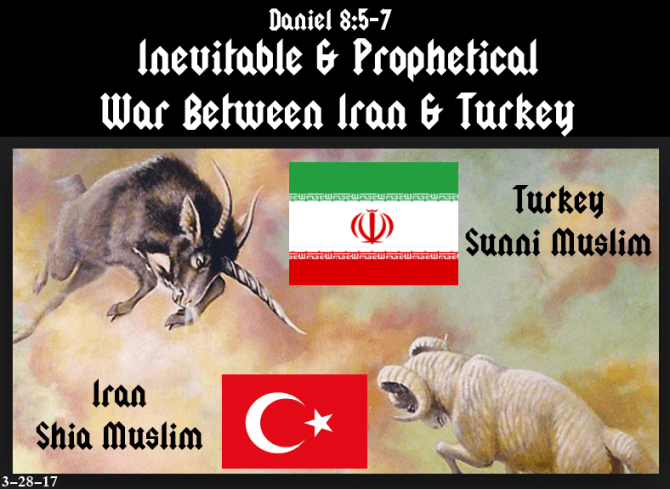
In a world that no longer fears God or even recognises His existence, it is fast approaching the time when God steps in and pours out His wrath upon an unrepentant world. Satan understands the time and he will do his utmost to maintain control of the world. God has revealed what he will do. He takes control of a human being and with supernatural acts presents himself as the saviour of the world: no wonder he is called the Antichrist. Many of the Biblical end times prophecies have been fulfilled, next to watch for is the Goat (Turkey) and Ram (Iran) war of Daniel 8.

CAN CHRISTIANS USE AI FOR MINISTRY?

I asked chat GPT if it could help me with my ministry with http://www.livingeternal.net and http://www.millennialkingdom.net. I told it why I believed God wanted me to post on these two sites. Chat GPT replied:

That’s a powerful and meaningful vision for your two sites — both have deeply complementary missions:

  • LivingEternal.net focuses on life in Christ now — salvation, the indwelling Holy Spirit, and living the Spirit-led life.
  • MillennialKingdom.net focuses on the future reign with Christ — what believers are being prepared for, the next phase of God’s redemptive plan.

I can definitely help you develop posts that capture the heart of both missions with depth, clarity, and Biblical faithfulness.

Let’s start by setting a foundation for how to approach writing for each site, and then I’ll propose a few example post titles and outlines to get us moving.

Focus: Understanding biblical truth, salvation, walking in the Spirit, and cultivating spiritual fruit.

🌿 LivingEternal.net

Tone: Encouraging, warm, reflective, Scripture-centered.

Sample Post Ideas & Outlines:

  1. Post Title: “The Living Word: How God Still Speaks Through Scripture Today”
    Outline:
  • Introduce the idea that the Bible is not just a book, but God’s living communication.
    • Explain what it means that “All Scripture is God-breathed” (2 Timothy 3:16).Illustrate how the Spirit uses Scripture to transform hearts.
    • Encourage daily engagement with God’s Word.
  • Post Title: “Walking with the Holy Spirit: The Secret to True Freedom”
    Outline:
  • Describe how the Spirit indwells believers after salvation.
    • Explain the importance of surrender and obedience.
    • Discuss the “fruit of the Spirit” as the evidence of His work.
    • Conclude with a call to daily communion with the Spirit.
  • Post Title: “Why God’s Love Never Let Go of Us”
    Outline:
  • Human rebellion vs. God’s persistent love through Christ.
    • The meaning of grace and reconciliation. How being made in God’s image gives us eternal value.
    • How to respond to His invitation today.

Focus: Prophecy, eschatology, the coming reign of Christ, and preparation for the Kingdom.

👑 MillennialKingdom.net

Tone: Hope-filled, prophetic, instructional, expectant.

Sample Post Ideas & Outlines:

  1. Post Title: “Why the Millennial Kingdom Matters Now”
    Outline:
  • Explain the concept of the 1,000-year reign of Christ (Revelation 20).
    • Connect today’s life of faithfulness to future reign responsibilities.Show how the coming Kingdom fulfills God’s covenants with Israel.
    • Inspire readers to live in readiness for the coming age.
  • Post Title: “Preparing to Reign: Faithfulness in the Little Things”
    Outline:
  • Reference Jesus’ teaching about faithful stewardship (Luke 19:11–27).
    • Explain how present obedience shapes future reward.
    • Encourage believers to see every act of service as Kingdom training.
  • Post Title: “From Creation to New Creation: God’s Grand Story”
    Outline:
  • Trace the biblical narrative from Genesis to Revelation.
    • Contrast the first and new heavens/earth.
    • Show God’s faithfulness across history and why we can trust His promises.

I was impressed with Chat GPT’s response to my request for help with ministry. What do you think? Should I take its next offer of help?

If you like, I can begin by writing a full 600–800 word draft for one post from each site — something ready to publish (with Scripture references, a warm introduction, strong body, and closing invitation).

Would you like me to start with one from LivingEternal.net or MillennialKingdom.net first — and is there a particular topic or title from the list that resonates most with you?

$12 BILLION JOB MASSACRE: AMAZON’S ROBOT ARMY WILL REPLACE 600,000 WORKERS

A silent revolution is unfolding inside Amazon—and it’s far more than a warehouse upgrade. Leaked internal documents reveal that the company plans to automate up to 75% of its operations by 2033, using robots like Cardinal, Blue Jay, Sparrow, and Robin to replace what would have been over 600,000 human jobs. The implications stretch across every sector of the American economy. In this video, you’ll uncover how Amazon’s robotic workforce is reshaping the meaning of employment, why businesses are prioritizing efficiency over labour, and what kinds of skills—and investments—will actually survive the coming automation wave. From AI-driven logistics to the rise of collaborative robotics, this isn’t science fiction; it’s the new economic reality unfolding in real time. You’ll also learn how artificial intelligence has accelerated Amazon’s transformation, why other corporations are preparing to follow, and what steps individuals can take to protect their financial and professional futures. The question isn’t if automation will replace jobs—it’s how fast it will happen, and who will be prepared when it does.

This is not only happening at Amazon, UPS has disclosed about 48,000 job cuts this year.

Governments that have rejected God have already descended into chaos on all fronts so this move by companies to shed jobs will only further heighten the mayhem. There is only one answer to the problem and that has been revealed to us in God’s Word. Jesus returns as king first to rescue His Saints and then to pour out His wrath upon an unrepentant world with the Trumpet and Bowl judgements of Revelation 8 & 16. The battle of Armageddon follows and then Jesus sets up His Millennial Kingdom. To prepare for Jesus coming Millennial Kingdom go to http://www.millennialkingdom.net

AI FOR THE CHRISTIAN COMMUNITY

When one of America’s most influential tech leaders champions AI for the Christian community, it’s a story worth your attention.

In this exclusive interview, Christian Post sits down with Pat Gelsinger, former Intel CEO and current Executive Chairman and Head of Technology at Gloo, who’s on a mission to ensure artificial intelligence serves—rather than side-lines—the Church. From his early pull to ministry that led him into the tech world, to his vision for “values-aligned AI,” Gelsinger shares why he believes we’re living through a “Gutenberg moment” that Christians cannot afford to miss.

After leading one of America’s largest technology companies, you’ve now taken on the role of Executive Chair and Head of Technology at Gloo, a faith-based AI platform.

What drew you to make this transition — and why focus specifically on AI for the faith community?

I’ve always lived my life at the intersection of faith and technology. Early on, I actually felt a strong pull to enter the ministry. But I discovered that my calling was to be a workplace minister in the tech industry seeking to make the lives of everyone on the planet better through technology. AI is the biggest technology shift of our time; it’s a Gutenberg moment. Since AI will profoundly impact people’s lives, it is essential for the faith community to actively shape its development in ways that promote human well-being and serve the common good.

Gloo’s mission is to “catalyze the faith ecosystem through AI and other breakthrough technologies.”

Practically speaking, what does this look like for a typical church, ministry, or Christian organization?

Historically, the Church has been slow to adopt technology, and it has also been radically underserved. Organizations across the Christian ecosystem need access to the right technologies that truly serve their needs. Gloo is filling this gap, by offering a trusted technology platform that connects and meets the needs of the entire ecosystem – from churches, ministries and frontline organizations to the growing network of trusted providers that serve them. At the center of these efforts is Gloo AI, Gloo 360 and Gloo Workspace. From better understanding and supporting members of a congregation to connecting various channels and partners through underlying technology, Gloo is creating the digital backbone that will shape technology for good and help the Church thrive.

Many Christian leaders feel overwhelmed or even intimidated by emerging AI tools.

What would you say to those who are hesitant to explore AI in their ministries or day-to-day operations?

AI is yet another monumental technology shift that is both confusing and scary. Much like the printing press, radio or television, the Church must learn how to shape this technology and ensure it supports our communities instead of harming them. AI is just a tool – it’s not inherently good or bad. It’s our responsibility to shape it for good. If pastors and Church leaders are not already familiar with the technology, I encourage them to start small but… get started! Start exploring AI tools, consider joining ministry-centered learning groups, talk with your staff about how to use AI in Godly ways, and follow faith leaders who are exploring the space.

You’ve spoken about the potential for AI to enhance core functions of the Church.

How do you see it transforming areas like pastoral care, discipleship, community building, or evangelism? What excites you most about these possibilities?

AI can be a force multiplier for the Church’s core mission; sharing Scriptures, guiding people towards resources, and meeting people where they are with personalization. It can help with the low-impact work of running a church or faith organization and free up more time for Church leaders to minister to their flock. It can translate and localize materials (and even help with Biblical translations) to help with outreach and evangelism.

One of Gloo’s unique differentiators is its focus on developing “values-aligned AI models.”

What does that mean in practice, and how do you ensure these systems reflect Christian values and biblical principles?

I’ve always been vocal that technology must support human flourishing and align with human values. It’s not enough to show the absence of harm, you must show the presence of good. A “values-aligned” AI model should be based on human values, and its answers and actions should encourage human well-being.

At Gloo we’re working to build this. Core to that mission is understanding how AI and large language models (LLMs) impact human wellbeing. Based on the work of the Human Flourishing Project of Harvard, Baylor and Gallup, we created the Flourishing AI Benchmark. FAI measures how industry LLMs perform across the seven key areas of human flourishing, which includes faith and spirituality. By better understanding that dynamic, we can work as a community to build standards that will improve AI’s impact on humanity.

Beyond church operations, there’s also potential for AI in Bible translation, theological education, and content accessibility.

How do you envision AI expanding the global reach of Christian resources and training?

This is one of the areas that I find most inspiring.  AI can already translate across hundreds of languages, but we could soon see Scriptures in languages for every person on this planet. There are approximately 7,000 languages with most yet to be conquered—AI will dramatically accelerate our ability to present God’s word to every single language and people group on the planet in text, speech and cultural relevant manners.

I see this also as a huge accelerant to educate every person on the planet. Today, we are close to 70% connected and we’re projected to reach over 90% by decades end. AI will also dramatically improve teacher productivity. With the trifecta of language, connectivity and teacher productivity, we can envision teaching every child on the planet, including all 333 million living in extreme poverty today. This will be the single most powerful way to eliminate extreme poverty.

For accessibility, AI can adapt content for the hearing and visually impaired and those with special learning needs. That’s the work of the Kingdom—so that all can hear the teachings of the Bible.

Gloo frames its annual “Gloo AI Hackathon” as a space to create redemptive technology that supports human flourishing.

What do you ultimately hope to accomplish through these events — and what are you most looking forward to seeing emerge from this year’s hackathon?

Hackathons bring together creators, innovators and dreamers in a powerfully collaborative way. We want participants to think outside the box and push the boundaries of what AI can do in an ethical, faith-driven environment. I’m looking forward to seeing young developers and seasoned leaders come together, fueled by faith, to build technology that will help people flourish. That, to me, is a glimpse of the future of the Church. I can’t wait to explore their builds and use cases.

The Church’s AI Moment

gloo church 1

As artificial intelligence continues to reshape our world, the question isn’t whether AI will impact the Church, but whether the Church will impact AI. Pat Gelsinger’s vision of “values-aligned” artificial intelligence offers a compelling alternative to the often dystopian narratives surrounding this technology, presenting instead a future where AI amplifies human flourishing and advances God’s Kingdom.

From accelerating Bible translation to every language on earth to freeing pastors from administrative tasks so they can focus on shepherding their flocks, the possibilities are as vast as they are inspiring. But realizing this potential requires Christian leaders to overcome their hesitation and engage with AI tools—not from a place of fear, but from a position of faith-driven leadership.

The Gutenberg printing press didn’t just change how information was shared; it democratized knowledge and accelerated the Reformation. Similarly, AI’s potential to personalize discipleship, expand global evangelism and eliminate barriers to theological education could usher in a new era of Christian impact.

The question that remains is whether the Church will shape this technology or be shaped by it. As Gelsinger reminds us, “It’s our responsibility to shape it for good.”

Learn more about Gloo’s mission to catalyze the faith ecosystem through AI at gloo.com.

ROBOTS EVERYWHERE IN OUR SOCIETY: INDUSTRY, HOMES, TRANSPORT, EVEN ENTERTAINMENT

According to Chinese media, The Economic Observer, the CEO of Nvidia, Jensen Huang, arrived in Beijing on January 19th 2025, for Nvidia’s branch annual meeting, where he dined with Xingxing Wang, CEO of humanoid robot maker Unitree Robotics, and He Wang, founder of Galbot (Robotics). Both are representatives of a younger generation of Chinese tech entrepreneurs born in the 1990s, now in their early 30s.

Chinese media China Star Market also reported that Xingxing Wang shared a photo with Huang on social media, captioned: “New year, new beginning, let’s go!” The report highlighted that Huang held meetings with high-level representatives from several leading Chinese robotics companies during his time in Beijing. Aside from Unitree Robotics and Galbot, attendees included executives from LimX Dynamics, Booster Robotics, and Kecheng Huang, co-founder of Emerging AI.

Another media outlet China Entrepreneur noted that Huang and Unitree’s Wang are not strangers to each other. In March 2024, during the GTC conference, Huang showcased nine humanoid robots, including those from Unitree. At CES 2025, Nvidia also announced its partnerships with Chinese robotics companies such as Unitree Robotics and XPeng Robotics.

We should not be surprised that China has many companies making robots as it is the largest market for robots, followed by Japan, and America third. This seems strange in a country with so much cheap labour compared to the rest of the world.

Peter Diamandis, a serial entrepreneur, futurist, technologist, and New York best-selling author, says that by 2026, we should have humanoid robots in private homes helping with laundry, vacuuming, and dishes, at least in beta testing. By 2040, there could be as many as 10 billion globally in all areas of the economy, and their labour might be as cheap as $10 a day.

In the future, they’ll be everywhere in our economy, Diamandis says: in healthcare, manufacturing, the service industry, public and urban spaces, transport, and even entertainment. This is such a transformational change that analysts don’t yet really understand how to estimate its value: Goldman Sachs says selling humanoid robots will be a $38 billion space by 2035, while Ark Invest says the resulting economic value of their labour could be as high as $24 trillion.

Judging by the debt levels of most governments in the Western world, they are out of control and unable to manage effectively. Imagine the impact of massive job losses due to companies replacing employees with robots. Currently, Amazon’s warehouses are already set to replace human workers with 100,000 robots. This is just one more reason governments will accept giving over governance to the Biblical prophesied one-world government. In September 2024, world leaders adopted the U.N. Pact for the Future, a landmark declaration pledging concrete actions towards a safer, more peaceful, sustainable and inclusive world for tomorrow’s generations. The Pact’s five broad focus areas include: sustainable development, international peace and security, science and technology, youth and future generations, and transforming global governance.

We are fast approaching the last seven years before Jesus returns first to rapture His church and then to pour out His wrath upon an unrepentant world. The speed with which end-times Biblical prophecies are being fulfilled is exciting and proof that the Bible is the inspired word of God.

NOBEL PRIZE WINNER ISSUES DIRE WARNING ON AI

Geoffrey Hinton and John Hopfield were awarded a Nobel Prize in Physics on October 8th, 2024.

Hinton was awarded the prize for his work on “foundational discoveries and inventions that enable machine learning with artificial neural networks.” It’s why he’s known as the “Godfather of AI.” Hinton is responsible for laying the groundwork for how AI functions today.

Since May 2023, he’s been warning folks about the dangers posed by this burgeoning technology. In fact, he publicly resigned from Alphabet Inc. (GOOG) to be able to speak out more freely about it.

And last Tuesday, when asked about the effect that AI would have on our society, he said:

It will be comparable with the industrial revolution. But instead of exceeding people in physical strength, it’s going to exceed people in intellectual ability. We have no experience of what it’s like to have things smarter than us.

Thanks to AI, we will soon ride in Robotaxis, have personalized treatment plans for major diseases, and much more… totally transforming the way we work, live, and play.

However, some things will change for the worse…

A couple of weeks ago, I wrote about the dockworker’s strike and how one of their aims was a total ban on further automation at the nation’s ports. I believed that this was a hopelessly futile endeavor – that AI-driven automation was eventually coming whether they liked it or not. Just as Amazon and Walmart warehouses are becoming totally robotic. They can function 24 hours a day, seven days a week, with no people, no mistakes, no meal breaks, no sickies, and no holidays.

But it’s not just the dockworkers that should be worried. AI is coming for tech jobs, too. In fact, TechCrunch reported that Amazon, Apple, Alphabet, Meta, and Microsoft laid off roughly 94,400 people in 2023! And so far this year, the total for tech layoffs is about 141,076! Some of these layoffs are due to workers who were reluctant to return to the office. But many of these layoffs are related to AI as companies rely on software, rather than people, to become more efficient.

Unfortunately, this is just the beginning. We will see layoffs in law enforcement, customer service, medicine, mining, transportation, and much more. Up to 800 million global workers could lose their jobs by 2030, according to a McKinsey study, and 70% of all existing occupations could see a pay cut, according to Wired magazine. We’re talking about a massive wave of economic and societal change.

City-sanctioned safe sleeping site on Fulton Street between Hyde and Larkin Streets in San Francisco, Calif., on Friday, June 12, 2020. Four years later it is much worse.

Governments that have jettisoned God and His commandments are already unable to cope with the consequences. Lawlessness, even anarchy will abound exactly as Scripture prophecies for the last day before Jesus returns to Earth.

Government debt levels are already astronomical so they will not be able to provide relief for AI-induced unemployment. The stage is being set for the Antichrist and a one-world government.

Jesus warns us that increasing persecution is ahead for Christians and we need to trust God no matter the circumstances confident that He will see us through it.

Then they will deliver you up to tribulation and put you to death, and you will be hated by all nations for my name’s sake. And then many will fall away and betray one another and hate one another. And many false prophets will arise and lead many astray. And because lawlessness will be increased, the love of many will grow cold. But the one who endures to the end will be saved.Matthew 24:9-13

THE AI-SPARKED NUCLEAR REVIVAL

The data centers that power AI technologies require such prodigious – and reliable – volumes of electricity, that tech giants like Amazon.com Inc. (AMZN) and Microsoft Corp. (MSFT) “rediscovered” nuclear power as an ideal energy source.

Microsoft and Constellation Energy, the utility that owns Three Mile Island, announced a new deal on September 20th that will lead to the restart of Unit 1 at the Three Mile Island Nuclear Generating Station. This will be the first time a nuclear reactor in the United States has been brought back online after being shut down. 

The deal is for 20 years and is a power purchase agreement in which Microsoft will buy the power generated by Unit 1 for an estimated $110-$115 per megawatt hour in order to reliably power its Artificial Intelligence (AI) data center demand while meeting the companies clean energy goals. Unit one will reopen as the “Crane Clean Energy Center” by 2028 so long as the Nuclear Regulatory Commission approves the plan.

Amazon Web Services is paying as much as $650 million for a data center campus adjacent to a nuclear power plant in Pennsylvania. The cloud provider reportedly plans to build several data centers there, according to The Information

The recent Amazon and Microsoft nuclear deals are not outliers. Earlier this month, Oracle Corp. (ORCL) Chairman and Co-founder Larry Ellison announced that his company had obtained “building permits for three nuclear reactors. These are small modular nuclear reactors to power the data center.

Along with this surprising announcement, Ellison also mentioned that some of the newest data centers under construction will require ten times more power than the typical facilities in operation today. Oracle, he said, is building an 800-megawatt data center that will have “acres of Nvidia GPU clusters” that will be used to train one of the world’s largest AI models.

For perspective, 800 MW is nearly identical to the entire power supply that Microsoft expects the Three Mile Island plant to produce once it reopens. In other words, one modern data center will need the entire output of one nuclear reactor.

In many important respects, nuclear energy has no equal, especially when it comes to powering data centers. Electricity that is intermittent, or susceptible to interruption, is electricity that could cause a big, expensive mess for data centers. Nukes prevent that problem. They can run continuously for long periods of time without needing maintenance or refueling.

Importantly, nukes also require a relatively small footprint, compared to renewable energy sources. Theoretically, a square plot of land, 22 miles long on each side, could accommodate enough nuclear reactors to power the entire United States.

Looks like Dutton may be onto a winner by bringing Nuclear Energy into our Power Mix. Because of the need for lots of land, batteries, digitalisation, and new infrastructure (grid upgrade and expansion) with wind, and solar the renewables option is more expensive and less reliable than Nuclear.

https://www.cnbc.com/video/2024/09/20/constellation-energy-reopens-three-mile-island-nuclear-power-plant-in-agreement-with-microsoft.html

HOW AI AND QUANTUM COMPUTING WILL IMPACT EMPLOYMENT OPPORTUNITIES

Amazon and Walmart are good examples of how AI will adversely affect employment opportunities.

The online retailer behemoth, Amazon, is the second-largest private employer in the U.S. – 1.5 million people. It’s also one of the largest investors in AI.

It’s building out fully autonomous warehouses… It’s working to automate the delivery process with self-driving vans and delivery drones… and 30% of its “workforce” are already robots.

Robots don’t sleep. They don’t take vacations. They never need a break. So, let me ask you this: How much longer until Amazon decides these robots are ready to take on the full workload of its 1.5 million remaining workers? And what do you think will happen when 1.5 million hardworking Americans are suddenly out of a job? Biblical prophesied end times lawlessness will be the outcome. Young people will be marching on the streets causing havoc.

And because lawlessness will be increased, the love of many will grow cold. But the one who endures to the end will be saved.Matthew 24:12-13

And Amazon is far from the only giant company doing this. Walmart Inc. (WMT), the largest private employer in the U.S., is rolling out fully automated distribution centers using a combination of AI and robots. The company’s distribution centers are in operation but come with one big catch: There aren’t any people.

What about “knowledge workers” – i.e., accountants, business strategists, lawyers, and doctors – who make optimal decisions, are good at problem-solving, can strategize, and always act in the best interests of the business?

ChatGPT and other forms of AI are killing that paradigm. It makes it so that businesses can scale critical thinking and knowledge work. It doesn’t matter if you have a blue or white collar: AI could be a threat to your job. The reason why AI is more of a threat now than it was when ChatGPT made its debut in 2022 is because of quantum computing. Quantum computers allow for multiple computational pathways to be explored at the same time, opening new avenues and speeds for solving complex problems.

We’re talking about machines so advanced that they can instantly execute calculations that would take the world’s most advanced supercomputers nearly half a century to process.

It’s not like the transition from the horse and buggy to the automobile. It’s more like horse and buggy to the SR-71 Blackbird… the fastest jet ever made. The difference is utterly mind-blowing.

With quantum computing, the digital elite will have AI that is not constrained by computational speed. Quantum-powered AI will drive efficiencies by getting rid of human workers and driving up corporate profits. No matter the job, robots, software, and AI – powered by a new breed of computer – will be able to do it better and cheaper.

This is the societal and economic equivalent of a 10,000-foot mega tsunami. It’s about to slam into our world and alter the trajectory of our world forever. It is amazing that 600 years before Jesus Christ came to Earth for the first time, Daniel was told that the time before Jesus’ second coming to Earth, two of the signs would be that people would be travelling a lot and knowledge would increase. This must have sounded strange to Daniel as he had no concept of air travel and the internet, AI, and quantum computing.

But you, Daniel, shut up the words and seal the book, until the time of the end. Many shall run to and fro, and knowledge shall increase.Daniel 12:4