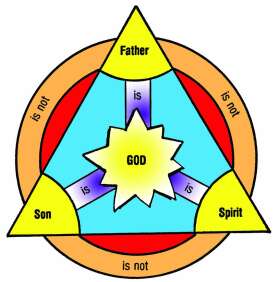
What happens to Western civilisation when it rejects its Christian and Jewish foundations? This a great video from Greg Sheridan. In this wide-ranging conversation at the Institute of Public Affairs, Greg Sheridan joins John Roskam to discuss his book How Christians Can Succeed Today: Reclaiming the Genius of the Early Church. This is the third book in a trilogy on the Christian faith: 1. God is Good For You, 2. Christians: The Urgent Case for Jesus in Our World, 3. How Christians Can Succeed Today: Reclaiming the Genius of the Early Church. Greg did not realise it but the trilogy covers the Trinity – 1. God the Father, 2. Jesus and 3. The Holy Spirit.
Sheridan argues that the early Christians faced a far more hostile culture than Christians in the modern West, yet transformed that culture through courage, clarity, conviction, and faith. “You will never lose if you never give up.”
He explores what their example means today for Christians, conservatives, and anyone concerned about the future of Western civilisation.
The discussion covers:
Why Sheridan believes “everything good in Western civilisation” comes from the Christian and Jewish tradition
What the early church can teach modern Christians
Why the West has become increasingly hostile to Christianity
The rise of a new paganism in modern culture
Signs of Christian revival among younger generations
Whether Australia is still a Christian country
Why Sheridan takes a measured view of Donald Trump
This is a conversation about faith, culture, civilisation, and whether renewal is still possible. Greg is a great communicator. You will enjoy and benefit from the information he shares.
The risen Lord instructed His disciples: “And now I am sending down to you what the Father had promised. Stay in the city then until you are clothed from on high” (Luke 24:49).
The disciples gathered in the Upper Room and waited for the fulfilment of the Lord’s promise. This occurred on Pentecost day. The promise must have seemed mysterious to them. Yet we know that the Lord spoke about His intention no less than three times during the Last Supper discourse. The Lord said that He would send them an Advocate, a helper: “But the Advocate, the Holy Spirit, whom the Father will send in my name, will teach you everything and remind you of all that I have said to you” (John 14:26).
The promise was that they would receive the Holy Spirit. His presence, among other things, would strengthen and deepen their faith and understanding of it. This reminds us that an important role of the Holy Spirit in the Christian life is to enlighten the mind, guiding it in the way of truth.
“But when the Spirit of Truth comes, he will lead you to the complete truth since he will not be speaking as from himself but will say only what he has learned.”John 16:12–13
It is the Holy Spirit that produces the fruit of the Spirit in our lives: love, joy, peace, patience, kindness, goodness, faithfulness, gentleness, and self-control.
“But I say, walk by the Spirit, and you will not gratify the desires of the flesh… But the fruit of the Spirit is love, joy, peace, patience, kindness, goodness, faithfulness, gentleness, self-control; against such things there is no law.” Galatians 5:16, 22-23
It is the Holy Spirit that provides the gifts of the Spirit for ministry: wisdom, knowledge, faith, healing, miracles, prophecy, distinguishing between spirits, speaking in tongues, interpretation of tongues,
“Now there are varieties of gifts, but the same Spirit; and there are varieties of service, but the same Lord; and there are varieties of activities, but it is the same God who empowers them all in everyone. “For to one is given through the Spirit the utterance of wisdom, and to another the utterance of knowledge according to the same Spirit, to another faith by the same Spirit, to another gifts of healing by the one Spirit, to another the working of miracles, to another prophecy, to another the ability to distinguish between spirits, to another various kinds of tongues, to another the interpretation of tongues.: 1 Corinthians 12: 4, 8-10
As we walk in the Holy Spirit and not according to our own strivings, we will fulfil His plan for our lives.
“If we live by the Spirit, let us also keep in step with the Spirit.” Galatians 5:25
“All things have been handed over to me by my Father, and no one knows the Son except the Father, and no one knows the Father except the Son and anyone to whom the Son chooses to reveal him. Come to me, all who labour and are heavily laden, and I will give you rest. Take my yoke upon you, and learn from me, for I am gentle and lowly in heart, and you will find rest for your souls. For my yoke is easy, and my burden is light.”Matthew 11:28-30
What an amazing Scripture: Jesus says, all things have been handed over to Him by His Father and Jesus makes the decision as to who will get to know our Heavenly Father (anyone to whom the Son chooses to reveal Him). Also, look at the invitation Jesus gives us:
Come to Me
Recover your life
Real rest
Walk with Me and work with Me
Watch how I do it
Keep company with Me
I feel odd about writing this, but it looks like Jesus wants to hang out with us. At the same time, I am reminded of the Scripture: “The fear of the LORD is the beginning of wisdom; all those who practice it have a good understanding.” Psalms 111:10. A healthy respect, knowing Jesus is God, is required.
Also, understanding the role of the Holy Spirit as our counsellor, teacher, comforter, and helper is important in understanding our relationship with Jesus, our Lord and Saviour. Jesus made it possible for our Heavenly Father to send the Holy Spirit to indwell our spirit. Without the Holy Spirit it is impossible to live the Christian life. If we allow Him to guide our steps each and every day, we will be in a good relationship with Jesus and our Heavenly Father. The apostle Paul gives us good advice:
“Rejoice always, pray without ceasing, give thanks in all circumstances; for this is the will of God in Christ Jesus for you. Do not quench the Spirit. Do not despise prophecies, but test everything; hold fast what is good. Abstain from every form of evil.” 1 Thessalonians 5:16-22
“And do not grieve the Holy Spirit of God, by whom you were sealed for the day of redemption.” Ephesians 4:30
There seem to be many paradoxes in Scripture. Not in the sense that the Bible contradicts itself, but that the Bible proclaims truth that makes no sense to those who are not in Christ. Even for believers, we’re struck by the unfathomable workings of a God who makes all things work together for good to those who love Him.
For instance, Scripture proclaims that, for the Christian, to lose is to gain. We read that to be humble is to be exalted. Perhaps most amazingly, the Bible proclaims that Christ’s victory over the grave means that to die is to live and to live abundantly. But what I’m sure confuses many, in or out of the church, is this concept Paul writes about in 2 Corinthians 12:9-10, where he makes the case for how our weakness is our strength. It’s interesting, especially given the fact that weakness is often considered a grave flaw, and something meant to be hidden.
“ But he said to me, “My grace is sufficient for you, for my power is made perfect in weakness. Therefore I will boast all the more gladly of my weaknesses, so that the power of Christ may rest upon me. For the sake of Christ, then, I am content with weaknesses, insults, hardships, persecutions, and calamities. For when I am weak, then I am strong.”2 Corinthians 12:9-10
How are we expected to boast about our weaknesses? We are far weaker than we ever care to admit. It is in ignoring our weaknesses that our lives become harder. In fact, Christianity only makes sense when you’ve reached the end of yourself.” Think about it — it is the proud who most believe they have no need for God. The plague of thinking, “I can do it,” has hurt countless relationships. But Christianity declares this profound truth that what often makes Christianity most understandable is rooted in the fact that we need help. We need saving. Why? Because we are weak and helpless.
James 1:9 tells us, “Let every person be quick to hear, slow to speak, slow to anger,” we shrink back in shame as we reflect on the fact that, more often than not, we’re actually slow to hear, quick to speak, and quick to resort to anger.
And if you take a step even further back, it becomes clear just how quickly we fail in many other areas of life — especially when compared to how Scripture calls us to live. We often covet, lie, steal, and cheat. We may not be as heinous as a murderer, yet murder occurs frequently in our hearts.
Thankfully the Bible provides stories such as David and Bathsheba: Scripture tells us that David is a man after God’s own heart, and yet David not only sleeps with Bathsheba and gets her pregnant but he tries to cover it up and when that is unsuccessful he conspires to kill Uriah, Bathsheba’s husband.
“In the morning David wrote a letter to Joab and sent it with Uriah. 15 In it he wrote, “Put Uriah out in front where the fighting is fiercest. Then withdraw from him so he will be struck down and die.”2 Samuel 11:14-15
Though David made a horrible decision, he took responsibility and had remorse for his actions. He earnestly sought God’s forgiveness. David penned Psalm 51, “A Contrite Sinners Prayer for Pardon,” after his sin of adultery with Bathsheba and the murder of Uriah. In this Psalm, David brokenheartedly confesses his sin and asks for God’s forgiveness and restoration. David never stopped worshipping God.
Jealousy is such a blinding emotion that consumes us easily, and our hearts are hardened toward those we feel have wronged us. Scripture says to “bear with one another in love,” forgive “seventy times seven,” and “value others above” ourselves, but how often do those commands actually take priority in our lives?
Suddenly, when the world is crashing down around us, and we can’t seem to get anything right, we realize: “Wow, I truly am weak.” And it’s not just the rude awakening of becoming aware of said weaknesses that hurt, but the harsh reality of the fact that the world is quick to use them against us. Far too commonly, weakness is abused in the machinations of manipulation and mockery. And if the world was all we had to turn to, we’d likely find ourselves wondering: what’s the point of it all?
But thanks be to God because He does not define us by these weaknesses. Indeed, Psalm 103 declares, “The Lord works righteousness and justice for all who are oppressed. … The Lord is merciful and gracious, slow to anger and abounding in steadfast love. … He does not deal with us according to our sins, nor repay us according to our iniquities.” Don’t you see? We may struggle, fail, or feel dismayed, but our God does not treat us as weak, failing sinners. He treats us as forgiven and free children of His promise!
Perhaps among several seemingly paradoxical yet joyous truths in Scripture is this understanding of our weakness being our strength, for it is in embracing our weaknesses that we can see Christ’s strength. And this strength resides within us, for Galatians 2:20a states, “I have been crucified with Christ. It is no longer I who live, but Christ who lives in me.” By the power of the Holy Spirit, we are new creations, and yet we still fail Him daily grieving the Holy Spirit. And yet, He never fails us. We neglect time with Him and time in His word, yet He never leaves us nor forsakes us. We made it necessary for God to send His Son to die on the cross, yet He has loved us with an everlasting love that leads us into eternity with Him. We take blessings for granted, yet He never stops blessing us. How astounding and unfathomable, this God we serve. May we never tire of singing His due praises, just as He never tires of holding us in His embrace of sovereign grace.
Adapted from an article in The Washington Stand 19/07/2024: Embracing Weakness Allows Us to Understand Our Strength Is Found in Christ by Sarah Halliday
This is part 2 of my review of Martyn Isles’s book WHO AM I? Solving the identity puzzle. If you have not read my first post I suggest you do. It refers to the serious error of all humans being immortal.
This post will deal with the serious omission from Martyn’s book and that is the role the Holy Spirit played in Adam’s life and now plays in believers’ lives.
When God breathed life into Adam he became a living creature.
“then the Lord God formed the man of dust from the ground and breathed into his nostrils the breath of life, and the man became a living creature.” Genesis 2:7
Proverbs 20:27 tells us that the “spirit of a man” is the lamp of the Lord. A lamp requires oil to function. The Holy Spirit is the oil required to make the lamp of the Lord function. Hence, Adam received from God the Holy Spirit so Adam’s spirit could function as the lamp of the Lord. Adam was then able to function in the spiritual dimension and communicate with God as he did in the Garden of Eden.
“The spirit of man is the lamp of the Lord, searching all his innermost parts.” Proverbs 20:27
What was immediately lost in The Fall is the Holy Spirit departed Adam and Eve’s spirits so they and we as their descendants are no longer able to communicate directly with God.
The good news is that when we accept Jesus as our Lord and Saviour our Heavenly Father will send the Holy Spirit to once again indwell our spirit to be our helper, our counselor, teacher, and comforter.
“If you love me, you will keep my commandments. And I will ask the Father, and he will give you another Helper, to be with you forever, even the Spirit of truth, whom the world cannot receive because it neither sees him nor knows him. You know him, for he dwells with you and will be in you.” John 14:15-17
“But the Helper, the Holy Spirit, whom the Father will send in my name,He will teach you all things and bring to your remembrance all that I have said to you.“John 14:26
“Nevertheless, I tell you the truth: it is to your advantage that I go away, for if I do not go away, the Helper will not come to you. But if I go, I will send him to you.“John 16:7
“When the Spirit of truth comes, he will guide you into all the truth, for he will not speak on his own authority, but whatever he hears he will speak, and he will declare to you the things that are to come. He will glorify me, for he will take what is mine and declare it to you. All that the Father has is mine; therefore I said that he will take what is mine and declare it to you.” John 16:13-15
“Therefore I want you to understand that no one speaking in the Spirit of God ever says “Jesus is accursed!” andno one can say “Jesus is Lord” except in the Holy Spirit.” 1 Corinthians 12:3
“And do not grieve the Holy Spirit of God, by whom you were sealed for the day of redemption.” Ephesians 4:30
“Do not quench the Spirit.Do not despise prophecies, but test everything; hold fast what is good.” 1 Thessalonians 5:19-20
The Holy Spirit produces the fruit of the spirit in our lives: love, joy, peace, patience, faithfulness, gentleness, goodness, kindness, and self-control. He is also the one who provides the gifts for ministry.
“But the fruit of the Spirit is love, joy, peace, patience, kindness, goodness, faithfulness, gentleness, self-control; against such things there is no law.“ Galatians 5:22-23
“Now there are varieties of gifts, but the same Spirit; and there are varieties of service, but the same Lord; and there are varieties of activities, but it is the same God who empowers them all in everyone.” 1 Corinthians 12:4-6
“For to one is given through the Spirit the utterance of wisdom, and to another the utterance of knowledge according to the same Spirit, to another faith by the same Spirit, to another gifts of healing by the one Spirit, to another the working of miracles, to another prophecy, to another the ability to distinguish between spirits, to another various kinds of tongues, to another the interpretation of tongues. All these are empowered by one and the same Spirit, who apportions to each one individually as he wills.” 1 Corinthians 12:8-11
Jesus told His disciples not to do anything until the Holy Spirit came to indwell their spirits at Pentecost. It was only then that they were empowered to live the Christian life. Likewise for us, unless we have received the Holy Spirit we cannot live the Christian life, it is impossible.
The story of the song, “I Have Decided to Follow Jesus” is covered in the Book by Dr. P.P. Job “Why God Why“. This story is incredible and shares the results of someone 100% sold out to Jesus Christ, truly born again by the Holy Spirit. You cannot live the Christian life in your own strength. The faith expressed by this man is the faith that will be needed during the coming prophesied tribulation Christians will endure during the last seven years (Daniel 9:24-27) of Daniel’s 70 Weeks Prophecy. The time prior to Jesus’ return, first to rapture the Saints and pour out His wrath on the earth with the Trumpet and Bowl judgements. Both occur after the sixth seal at the trumpet blast that opens the seventh seal.
May everyone who hears this story be inspired to go and do likewise.
Here is a comment from a person from this tribe in North East India, Javies Phaltual:
Hi! Thanks for sharing the story behind the song. First, let me correct you. The missionaries came to North East India, not North India. I am from that region and a descendant of one of the head hunter tribes. But, thanks to the missionaries we are no more head hunters, but fishers of men. It was Watkin R. Roberts who bought the gospel to our tribe. Today, the Wales that sent out such a large group of missionaries have very few numbers of Christians and most of their young generations are lost in the bright darkness of this world. So, join me in your prayers that the gospel be revived again in Wales.
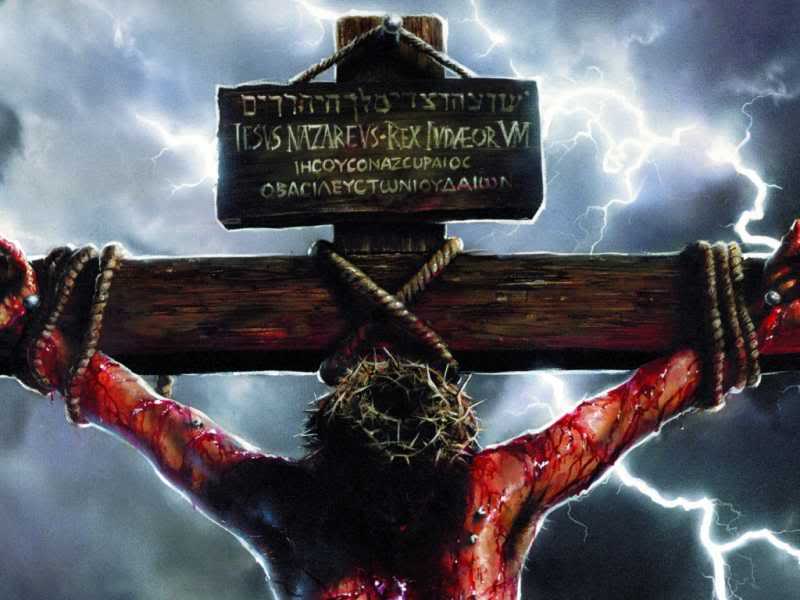
Jesus said the most important thing that He accomplished on The Cross was to enable our Heavenly Father to send the third person of the Trinity, the Holy Spirit, to indwell our spirit to be our counsellor, teacher, and comforter. When we are baptized, we die to ourselves. and are born again by the Holy Spirit. Without the Holy Spirit, it is impossible to live a Christian life.
It’s the Holy Spirit who does a work of renewal inside us. He breaks the power of canceled sin and sets the sinner free. He delivers us from the slavery of our habits and perfects us. David says it well:
“The LORD will fulfill his purpose for me; your steadfast love, O LORD, endures forever. Do not forsake the work of your hands.” Psalms 138:8
The Holy Spirit changes our lives for the better, He produces these fine attributes in our lives:
“But the fruit of the Spirit is love, joy, peace, patience, kindness, goodness, faithfulness, gentleness, self-control; against such things, there is no law. And those who belong to Christ Jesus have crucified the flesh with its passions and desires. If we live by the Spirit, let us also keep in step with the Spirit.” Galatians 5:22-25
He provides the gifts for service and ministry
“Now there are varieties of gifts, but the same Spirit; and there are varieties of service, but the same Lord; and there are varieties of activities, but it is the same God who empowers them all in everyone.” 1 Corinthians 12:4-6
“For to one is given through the Spirit the utterance of wisdom, and to another the utterance of knowledge according to the same Spirit, to another faith by the same Spirit, to another gifts of healing by the one Spirit, to another the working of miracles, to another prophecy, to another the ability to distinguish between spirits, to another various kinds of tongues, to another the interpretation of tongues. All these are empowered by one and the same Spirit, who apportions to each one individually as he wills.” 1 Corinthians 12:8-11
Have you repented of your sins, and of your rejection of God and His values? Have you rejected Jesus’ amazing offer of forgiveness of sins? If you have you do not know the wonderful presence of the Holy Spirit in your life to enable you to live life as your Creator God intended from the beginning.
Sadly, many people including me have grieved the Holy Spirit and quenched His work in their lives. It is so easy to ignore the Holy Spirit. Every day, we need to say as Jesus did when He was on earth, not my will but your will be done in my life today.
“Father, if you are willing, remove this cup from me. Nevertheless, not my will, but yours, be done.” And there appeared to him an angel from heaven, strengthening him.” Luke 22:42
For through him (Jesus) we (Jew and gentile) both have access in one Spirit to the Father.” Ephesians 2:18
We regain access to our Heavenly Father through Jesus coming to earth and becoming man so He could pay the debt for our rebellion. He died in our place so that we might have eternal life. I hope you realize the enormity of what Jesus has accomplished on your behalf. Jesus made it possible for our Heavenly Father to send the third person of the Trinity, the Holy Spirit to indwell every believer’s spirit.
“The spirit of man is the lamp of the Lord, searching all his innermost parts.”Proverbs 20:27
It is important to note from this Scripture that our spirit is the lamp of the Lord. Like any lamp, it requires oil, which for us is the Holy Spirit, to function correctly. When Adam and Eve sinned, death was the penalty. Spiritual death occurred immediately when the Holy Spirit departed their spirits, and physical death followed 900 years later. It was only after God’s first judgment of mankind (the worldwide flood of Noah’s day) that God limited man’s lifespan to 120 years.
Considering the enormous price Jesus paid in order for our Heavenly Father to restore our relationship with Him by sending the Holy Spirit to indwell every believer’s spirit to be our counselor, teacher, and comforter, surely we must treat Him with all the respect and honour He deserves.
“And do not grieve the Holy Spirit of God, by whom you were sealed for the day of redemption.” Ephesians 4:30
When non-Christians reject Jesus, it simply puts another nail in their coffin and brings them one step closer to judgment, punishment, and the second death in the Lake of Fire. The Lord would have saved their soul, but time and time again they refused to repent. In so doing, “they exchanged the truth of God for a lie” (Romans 1:25).
“But as for the cowardly, the faithless, the detestable, as for murderers, the sexually immoral, sorcerers, idolaters, and all liars, their portion will be in the lake that burns with fire and sulfur, which is the second death.” Revelation 21:8
But Christians are equally guilty of sin because we too grieve the one Person who can enable us to believe the Gospel, love God, follow Christ, and serve others with godly compassion. Without the Holy Spirit, none of those things would be possible. We would be helpless and hopeless, lost, dazed, and confused. We would have no clue how to be forgiven of our sins or how to please the Lord.
Thankfully, “God made us alive with Christ even when we were dead in transgressions – it is by grace you have been saved” (Ephesians 2:5). So now what? Well, one thing is very clear. We were not saved so that we could go on deliberately sinning against the Lord. As the Apostle Paul wrote, “shall we go on sinning so that grace may increase? By no means! We died to sin; how can we live in it any longer?” Romans 6:1-2
Christians face a variety of temptations regarding the use of our bodies, the meditation of our hearts, and the words we choose to utter. Since the Holy Spirit lives within every believer, it is essential that we diligently seek to please the Spirit rather than give into the desires of our sinful nature.
For example, Scripture instructs us: “flee from sexual immorality”. All other sins a man commits are outside his body, but he who sins sexually sins against his own body.
“Or do you not know that your body is a temple of the Holy Spirit, who is in you, whom you have received from God? You are not your own; you were bought at a price. Therefore, honor God with your body”1 Corinthians 6:18-20
If you want to mess up everything in your walk with Christ, then engage in sexual immorality. Have sex outside of marriage. Fill your mind with sexual images and lustful thoughts. Give into temptation rather than resisting it. And commit the one sin that is against your own body, which is a temple of the Holy Spirit. Obviously, this is the opposite of what God calls us to do as followers of Christ.
Scripture also warns believers to be careful with the thoughts and attitudes that they choose to entertain. Paul wrote:
“Do not let any unwholesome talk come out of your mouths, but only what is helpful for building others up according to their needs, that it may benefit those who listen. And do not grieve the Holy Spirit of God, with whom you were sealed for the day of redemption. Get rid of all bitterness, rage and anger, brawling and slander, along with every form of malice. Be kind and compassionate to one another, forgiving each other, just as in Christ God forgave you” Ephesians 4:29-32
When we violate any of these instructions for holy living, we grieve the Holy Spirit. Our mind comes under attack and the joy of the Lord greatly diminishes in our heart. We lose our peace. We become impatient and self-centered. We hold grudges, and we speak poorly about others.
All of these attitudes and behaviors flow from our sinful nature, (Romans 7:18) and all of them grieve the Holy Spirit. He is always pure, perfect, and gentle. When we push Him away with our sins, our life of discipleship gets put on hold. We backslide, even if only for a matter of minutes until we confess our sins to God and turn away from them.
And of course, sometimes our sinful attitudes persist much longer than a few minutes. Is it any wonder that everyone who seeks to follow Christ finds our calling as believers so incredibly challenging? Sadly, some who begin the journey with Jesus do not fully repent of their sin and acknowledge Him as Lord. They invariably give up and once again pursue deliberate sin. Unbelief is the biggest sin because it prevents a person from being saved, redeemed, forgiven, born again, and justified. The Holy Spirit only indwells those who are trusting the Savior to forgive their sins, which in turn produces a heart that longs to do God’s will.
Everything gets messed up when non-Christians reject Christ, and when believers give in to sinful desires and temptation. So, what is the solution for followers of Christ?
“Live by the Spirit, and you will not gratify the desires of the sinful nature. For the sinful nature desires what is contrary to the Spirit, and the Spirit what is contrary to the sinful nature. They are in conflict with each other so you do not do what you want. But if you are led by the Spirit, you are not under the law” Galatians 5:16-18
Grieving the Holy Spirit messes up everything, whereas confessing our sins to the Lord and seeking to do His will is the path to peace and righteous living. If you love God then you will be willing to be led by the Holy Spirit. So, are you a follower of Christ and have the Holy Spirit to guide your every step? If not, would you like to be? If you would then listen to this presentation by Ray Comfort.
Why should you be living eternally now? All believers will appear before the judgment seat of Christ and whilst our eternal destiny is safe what we have done will affect our rewards. For Christians that are raised in the first resurrection and are raptured with the living Saints, it is generally agreed that we will face the judgment seat of Christ during the time (Isaiah 34:8, Isaiah 61:2, Isaiah 63:4) we are in heaven before returning to earth with Jesus. If you disagree, keep in mind that these are not my words, but God’s. Jesus, speaking to both believers and unbelievers, said, “I tell you, on the day of judgment people will give account for every careless word they speak, for by your words you will be justified, and by your words, you will be condemned.” Matthew 12:36-37. Also, Paul said, “For we must all appear before the judgment seat of Christ, so that each one may receive what is due for what he has done in the body, whether good or evil”2 Corinthians 5:10
There are two different judgments in God’s Word: the judgment of faith, and the judgment of works. The judgment of faith relates to our eternal salvation, while the judgment of works relates to our eternal rewards.
For Christians, salvation took place in a moment in the past. It was free, it can’t be lost, it is the same for all Christians, and it is solely based on a faith that is ours by the grace of God alone. By contrast, future rewards are earned (by God’s grace), can be lost, differ among Christians, and are based on our efforts.
Salvation is about God’s work for us. Conversely, rewards are a matter of our work for God. When it comes to salvation, our work for God is no substitute for God’s work for us. God saves us because of Christ’s work, not ours. Likewise, when it comes to rewards, God rewards us for our work, not Christ’s. (Our good works are empowered by the Holy Spirit; nevertheless, we need to submit to Him so God refers to it as our work.)
Let me be sure this is perfectly clear. Christ paid the price for all of our sins, once and for all (Hebrews10:12-18). If we have trusted Him for that provision, we will not pay the eternal price, the second death. He has fully forgiven our sins, and we are completely secure in Christ’s love (Psalm 103:8-18; Romans 8:31-39). Our salvation is sure, and we will not undergo the judgment of condemnation (John 5:24; Romans 8:1).
But although the forgiveness of our sins has every bearing on our eternal destination, it has no automatic and effortless effect on our eternal rewards, apart from the fact that God’s sanctifying work comes out of our salvation, and therefore we should expect that the Holy Spirit’s presence in our lives should lead us to do good works that God will reward. But we must choose to do the works He prompts us to do. Neither does it mean our choices have no consequences in eternity. Forgiven people can still lose their rewards or forfeit eternal positions of responsibility they could have had if they’d served Christ consistently and faithfully before death.
Trust in Christ, lean on Him, and draw upon Him for power, for apart from Him we can do nothing. But if we hope to receive a reward, we must still do the necessary work. As our forefathers put it, to wear the crown we must first bear the cross.
Just as there are eternal consequences to our faith, so there are eternal consequences to our works.
What we do with our resources—including our time, money, and possessions—will matter not just twenty minutes, twenty days, or twenty years from now. It will matter twenty trillion years from now.
Though Paul insists we are saved by faith, not works (Titus 3:5), he also clearly states that the choices we make and the things we do have eternal implications, and that we will each answer to God for the works we have done in this life:
If anyone builds on this foundation [Christ] using gold, silver, costly stones, wood, hay or straw, their work will be shown for what it is, because the Day will bring it to light. It will be revealed with fire, and the fire will test the quality of each person’s work. If what has been built survives, the builder will receive a reward. If it is burned up, the builder will suffer loss but yet will be saved—even though only as one escaping through the flames. (1 Corinthians 3:12-15)
Those believers who have been less faithful and obedient in their walk with Christ will not suffer loss of salvation! But they will suffer loss of the reward that would have been theirs had they been more Christ-centered and faithful in their service to Jesus.
What 1 Corinthians 3 says is so sobering that a temporary loss doesn’t seem likely. This loss of rewards appears permanent, for while we will all serve God in our resurrected bodies on His New Earth, there appears to be a finality to the fact that after death comes judgment (Hebrews 9:27). If there are any future judgments for our service to God on the New Earth, we are not told about them in Scripture. Of course, we should anticipate for our future service He will say to all of his children, “Well done!” And yet, despite Scripture’s silence on this, I think it’s very possible that God, who is by nature a rewarder (), may continue to reward His people for faithful service on the New Earth. That resonates with me, and I don’t see anything unbiblical about it. It fully fits His nature as a Father who takes joy in saying “Well done” to His devoted children.
Earning Our Full Reward
First Corinthians isn’t the only passage that speaks of losing reward. The apostle John wrote, “Watch yourselves, so that you may not lose what we have worked for, but may win a full reward” (2 John 1:8, ESV).
To win a full reward would be glorious, wouldn’t it? But surely all of us will regret some of our decisions on that day when we “suffer loss” or “lose what we have worked for.” Anticipating standing before the judgment seat of Christ should motivate us to follow Him wholeheartedly and generate in us a proper fear of God.
All of us will be full of joy in Heaven, but those who served Him faithfully, particularly in the midst of adversity, will have been made, by God’s grace, into larger vessels. They won’t be fuller of joy, but they will have a greater capacity, and their fullness will accordingly contain even more joy. (Hence the special place in Revelation given to the martyrs.) There won’t be envy or regret, because of our new natures, and all will be full of joy, yet there will be true continuity and eternal consequence so that what we do—not just what we believe—in this life affects the next.
Maybe one way to say it is that the “loss” of rewards is in some sense permanent, but the “suffering” of that loss will be temporary. God will do away with the suffering (Revelation 21:4), but that is after the judgment, after we give an account to the Lord. The suffering of regret will be there at the judgment (how could it not be?) before entrance to the eternal state, but then comes the learning and purifying and eternal rejoicing. Perhaps we’ll offer a short, entirely sincere, “I regret my lack of faith and faithfulness,” expressing this to our God who graciously forgives. Then, with that forever behind us, we move on to eternal joy.
But there will be no ongoing suffering, for all our regrets about our past will be overshadowed by God’s grace. Yet if there were no reckoning, no “suffering loss” then the 1 Corinthians 3 passage would be meaningless (which is exactly what most teaching on the subject reduces it to). Some will object that this is a sort of Protestant purgatory, just shorter in duration than languishing in the flames of Catholic purgatory. But the suffering is not in the eternal state, only in a temporal judgment, and judgment must involve the negative as well as positive or it too is meaningless. The biblical statements of “giving an account” and that include “works done in the body, whether good or evil” are unmistakable in that regard. (Doing the evil will clearly have taken away from the rewards that would have come from doing good.)
Consequences without Condemnation
Since all who know Jesus go to the intermediate Heaven immediately when we die, it appears that whenever this judgment happens, it will be after we get there. So, while God will one day wipe away every tear from our eyes (Revelation 21:4), it seems likely that when we must give an account for our lives, there will be, for a time, some regrets and tears and a sense of that loss Scripture speaks of.
I realize this is hard to grasp. I am just trying to be true to all God’s Word says, instead of choosing only parts of it. This may sound like a sort of condemnation and punishment, but we are assured this isn’t the case, for “There is no condemnation for those who are in Christ Jesus” (Romans 8:1).
Ephesians 1:7 says, “In him [Jesus] we have redemption through his blood, the forgiveness of sins, in accordance with the riches of God’s grace”. The Bible teaches not only forgiveness of our sins but also consequences for our choices. These consequences apply despite our forgiveness. Forgiveness means that God eliminates our eternal condemnation; we will not be ultimately punished for our sins, but there may be immediate consequences in this world due to our sins. Forgiven people can still contract AIDS, go to jail for drunk driving, or suffer the death penalty, for example. A murderer or drug dealer can be fully redeemed and forgiven, and may still spend the rest of his life in prison. He may lose his family as well as his freedom. After all, the thief on the cross remained there despite his confession of faith.
In Heaven, God appears to say that while all our sins will be forgiven and there will be no ongoing shame or regrets, nevertheless at the judgment seat an initial and temporary sense of shame, regret and sorrow seems likely, though one that will soon be swallowed up by eternal grace and joy.
Prepared for Good Works
One of the most often quoted passages in Scripture states, “For it is by grace you have been saved, through faith—and this is not from yourselves, it is the gift of God— not by works, so that no one can boast” (Ephesians 2:8-9).
It’s a wonderful truth, but verse 10 immediately follows with more truth about works: “For we are God’s handiwork, created in Christ Jesus to do good works, which God prepared in advance for us to do.” God has prepared a lifetime of good works and we will give an account to Him for whether or not we have done them.
Surely each of these passages and others like them implies that while we will be fully forgiven in Christ and be forever totally cleansed and purified by His redemptive work, we will nonetheless be held accountable for what we have and haven’t done in this life.
It seems reasonable we won’t be joyful at the very moment we have to give an account for our sins, the careless words we have spoken, and all the wood, hay, and straw of our lives that will be consumed in the fire, that could have instead been gold and silver and precious stones. And at the same time, we will find great pleasure in the rewards God has given us, and we will celebrate the rewards He gives to others.
Embracing Paradox
But how does this all fit with the truth about the forgiveness of our sins? I think of the example of Charles Spurgeon, who didn’t try to reconcile every paradox or apparent contradiction in the Bible. Speaking of the truths of God’s sovereignty and human responsibility—which I also believe to be applicable to the truths of complete forgiveness and accountability at the judgment Spurgeon said this:
“These two truths, I do not believe, can ever be welded into one upon any human anvil, but one they shall bein eternity: they are two lines that are so nearly parallel, that the mind that shall pursue them farthest, will never discover that they converge; but they do converge, and they will meet somewhere in eternity, close to the throne of God, whence all truth doth spring.“
Spurgeon also wrote, “Those who will only believe what they can reconcile will necessarily disbelieve much of divine revelation.” Our desire for logical consistency, as we understand it, can become our God. Then we, not Scripture and not God, become our own ultimate authority. We end up ignoring, rejecting or twisting Scripture that doesn’t fit our chosen theology.
On the contrary, our theology should reflect Scripture itself, and wherever Scripture teaches apparently contradictory ideas, our theology should embrace those same ideas, rather than resort to a consistency that rejects part of God’s revealed Word.
Certainly, any and all of our regrets about our past will be overshadowed by God’s grace, which is the good news of the Gospel. There is comfort in 1 Corinthians 4:5, which says God “will bring to light the things now hidden in darkness and will disclose the purposes of the heart. Then each one will receive his commendation from God.” God will apparently find something to reward “each one” for. This makes sense, for no one can truly be born again without having demonstrated some fruit for which God can reward us.
Let’s Live in Light of Eternity Now
All of this argues for cultivating an eternal perspective in which we seek to live each day in light of eternity—not out of dread, yet with the right kind of fear of God and heartfelt love that desires to please our Lord and Savior.
In his book When Christ Comes, Max Lucado writes, “You can be certain you won’t regret any sacrifice you made for the kingdom. The hours of service for Christ? You won’t regret them. The money you gave? You’d give it a thousand times over. The times you helped the poor and loved the lost? You’d do it again. . . . You’d change the diapers, fix the cars, prepare the lessons, repair the roofs. One look into the faces of the ones you love, and you’d do it all again.”
An eternal perspective isn’t something we have to wait until Heaven to have. So I’ve often given readers and listeners this advice: live now the way that you will one day wish you would have. Don’t postpone obedience, holiness, purity, drawing close to God, and serving others.
Five minutes after we die, we’ll know exactly how we should have lived—it will be too late to go back and change anything. God has given us His Word so we don’t have to wait until we die to know how we should have lived. There’s no second chance for the unbeliever—but also no second chance for the believer! Just as missionary C. T. Studd said, “Only one life, ’twill soon be past; only what’s done for Christ will last.”
You and I have one life on this fallen earth in which to follow Jesus and invest in Heaven. Let’s not miss the opportunity. God will one day take away all our sorrows, but why go into eternity with regrets? Here’s a prayer for us: May what will be most important to us five minutes after we die become most important to us now.
Let me add KNOW YOUR WHY:
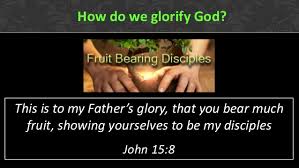
To bring glory to God
To know God’s will for your life
God wants to use me to bring people into His Kingdom
Adapted from the article: “Will We Have Regrets at the Judgment Seat of Christ?” December 5, 2022 by Randy Alcorn http://www.patheos.com
Living Eternally Now is available o Amazon or from me direct: ron@bakb.com.au
For Christians, all of life is the enterprise through which we glorify God and enjoy Him forever. The means by which we do that is simple: we must know who this God is and how we can enjoy Him forever. This is only derived from a robust understanding and application of Scripture and understanding the role of the Holy Spirit in our lives. Thus, when we are faced with whatever progressive ideals might creep in, the principle is one whereby we test all things according to Scripture empowered by the Holy Spirit.
I am convinced many within the broader church have been pressed into the mold of a system of thought the broader culture adopts (i.e. progressivism), and the foremost institution this has been accomplished through is education. Generations of children have come and gone through this institution, which with the adoption of evolution has rejected any involvement of God in science and now education, as a result, society is largely secular. God’s values have been jettisoned and the progressives now dominate our educational establishments and parliament.
How do we solve this dilemma? The answer is surprisingly simple but unflatteringly naïve to the world, and even many professing Christians. The Word of God must be re-established as the foundation for all of life. Everything else is subservient to it and must align with it. In other words, we live consistently to the message we proclaim, from the seemingly mundane choices we make in entertainment, to how we spend our money, raise and teach our children, and how we do church, which means getting back to church as outlined in the Book of Acts, house churches that make disciples, and more. Only then will we be salt and light in the world. Only then will the Holy Spirit truly lead believers and the fruit of the spirit will be evident in their lives: love, joy, peace patience, faith, gentleness, goodness, kindness, and self-control. The ministry gifts, all nine will be evident including miracles, words of knowledge, and discerning of spirits.
The Gospel will then be unstoppable. “And this gospel of the kingdom will be proclaimed throughout the whole world as a testimony to all nations, and then the end will come.” Matthew 24:14




 LIVING ETERNAL NOW