What happens to Western civilisation when it rejects its Christian and Jewish foundations? This a great video from Greg Sheridan. In this wide-ranging conversation at the Institute of Public Affairs, Greg Sheridan joins John Roskam to discuss his book How Christians Can Succeed Today: Reclaiming the Genius of the Early Church. This is the third book in a trilogy on the Christian faith: 1. God is Good For You, 2. Christians: The Urgent Case for Jesus in Our World, 3. How Christians Can Succeed Today: Reclaiming the Genius of the Early Church. Greg did not realise it but the trilogy covers the Trinity – 1. God the Father, 2. Jesus and 3. The Holy Spirit.
Sheridan argues that the early Christians faced a far more hostile culture than Christians in the modern West, yet transformed that culture through courage, clarity, conviction, and faith. “You will never lose if you never give up.”
He explores what their example means today for Christians, conservatives, and anyone concerned about the future of Western civilisation.
The discussion covers:
Why Sheridan believes “everything good in Western civilisation” comes from the Christian and Jewish tradition
What the early church can teach modern Christians
Why the West has become increasingly hostile to Christianity
The rise of a new paganism in modern culture
Signs of Christian revival among younger generations
Whether Australia is still a Christian country
Why Sheridan takes a measured view of Donald Trump
This is a conversation about faith, culture, civilisation, and whether renewal is still possible. Greg is a great communicator. You will enjoy and benefit from the information he shares.
Since Martyn’s short stint at Answers in Genesis many of us have been wondering what God has next in store for Martyn. It had to be connected to evangelising with a focus on young people because that is the talent God has given him.
Well now we know: Martyn Iles is set to Launch Two New Digital Platforms to Reclaim the Cross and Reimagine Christian Education. At the Crux and Proto are two initiatives designed to proclaim Christ and shape young minds with gospel-centred education.
“At the Crux” is designed to meet growing cultural curiosity about Christianity with a renewed focus on the gospel.
Speaking directly to a generation disillusioned with empty ideologies, Iles said the time had come to stop “simply opening conversations” and instead “bring them all the way to the cross.”
The announcement comes amid what Iles describes as a “resurgence of Christian interest.” Whether that looks like Joe Rogan going to church, Jordan Peterson promoting the Bible, or Donald Trump punctuating “a press conference with, ‘We love you, God’”, for many, “Christianity is interesting again” and is not limited to high-profile political or media figures, but particularly to young men.
At the Crux: Meeting the Moment
The name, “At the Crux”, has been deliberately chosen and crafted to carry three layers of meaning, with three promises:
A promise of clarity. As in the phrase, “the ‘crux’ of the issue”, the word also signifies something of foundational importance, yet expressed simply and clearly.
A promise of relevance. Finally, in being ‘at’ the crux, Iles determines that the new platform will be ‘at’ a decisive moment.
A promise of the gospel. In Latin, crux means “cross,” pointing directly to Christianity’s central and always-relevant message.
In earlier seasons, Iles was best known for his widely viewed series “The Truth of It” and “Living in Babylon”, which tackled modern culture through a biblical lens. Those efforts drew strong audiences and made Iles a familiar name among Australian and international Christians. Now, with At the Crux, he intends to be even more explicit in gospel proclamation.
“I want to take up the curiosity that’s simmering out there – not just to answer people’s questions – but to bring them all the way to the cross,” he said.
The initiative reflects what Iles sees as a God-given moment: to speak into our modern culture not with the “wisdom of man,” but with the clarity and conviction of Christ crucified.
Proto: Reimagining Christian Education
In addition to At the Crux, Iles and his team have unveiled a second major project – “Proto”, a comprehensive Christian education platform designed to equip children from ages 5 to 18 with a robust biblical worldview.
Built in partnership with experienced educators, software engineers and policy experts, Proto promises a cutting-edge app experience tailored for Christian families. It aims to support parents and educators – whether homeschooling or using other educational models – with tools to instil faith, knowledge, and critical thinking from a Christian foundation.
Key features under development include:
Bespoke Christian curriculum aligned to international academic standards
Substantive and age-appropriate content across core subjects
Leading Christian educators as content creators
Advanced AI-powered assessments and personalised progress tracking
Parental controls and content safety features
Free foundational content with extended features available through subscription
Community tools to foster local connection among Christian families
Ultimately, the team behind Proto plans to offer not only worldview training but also full-spectrum academic coverage – integrating humanities, sciences and electives into a Christ-centred education model.
Iles leads both initiatives as Chief Executive Officer, bringing years of experience in Christian advocacy, law and digital content. Formerly the Managing Director of the Australian Christian Lobby, which grew by more than 400% during his tenure, he is known more recently for serving in executive leadership with the US-based Answers in Genesis apologetics ministry.
Iles has announced that he is joined by a distinguished team of co-founders, including:
David Cook, Chief Technology Officer, is a Silicon Valley veteran who helped build Apple iTunes and contributed to platforms like Netflix and YouTube. Converted six years ago, Cook now devotes his technical expertise to Christian mission.
Dr Paul Henderson, Chief Education Officer, is a global education expert who has advised prime ministers, authored national curricula, and holds advanced degrees from Cambridge, Aberdeen, and other leading institutions.
José Ziebarth, Chief Product Officer, is the former Head of Privacy at Facebook and an anti-corruption and de-bureaucratisation reformer in Brazil’s government. Once an atheist, he became a Christian seven years ago and now home-educates his three sons with his wife.
“These projects are ambitious—but they’re timely, strategic, and already underway”, Martyn revealed.
“Early support has been encouraging, and we’re praying for provision to fully launch At the Cruxand accelerate the build of the new platform.”
At a time when biblical truth is often sidelined or diluted, Iles aims for At the Crux and Proto to fulfil a dual commitment: to proclaim Christ crucified and to raise up the next generation in truth.
Those who want to financially support Ilies’ efforts to present Christianity’s centuries-old core claim in a new format can do so here.
There seem to be many paradoxes in Scripture. Not in the sense that the Bible contradicts itself, but that the Bible proclaims truth that makes no sense to those who are not in Christ. Even for believers, we’re struck by the unfathomable workings of a God who makes all things work together for good to those who love Him.
For instance, Scripture proclaims that, for the Christian, to lose is to gain. We read that to be humble is to be exalted. Perhaps most amazingly, the Bible proclaims that Christ’s victory over the grave means that to die is to live and to live abundantly. But what I’m sure confuses many, in or out of the church, is this concept Paul writes about in 2 Corinthians 12:9-10, where he makes the case for how our weakness is our strength. It’s interesting, especially given the fact that weakness is often considered a grave flaw, and something meant to be hidden.
“ But he said to me, “My grace is sufficient for you, for my power is made perfect in weakness. Therefore I will boast all the more gladly of my weaknesses, so that the power of Christ may rest upon me. For the sake of Christ, then, I am content with weaknesses, insults, hardships, persecutions, and calamities. For when I am weak, then I am strong.”2 Corinthians 12:9-10
How are we expected to boast about our weaknesses? We are far weaker than we ever care to admit. It is in ignoring our weaknesses that our lives become harder. In fact, Christianity only makes sense when you’ve reached the end of yourself.” Think about it — it is the proud who most believe they have no need for God. The plague of thinking, “I can do it,” has hurt countless relationships. But Christianity declares this profound truth that what often makes Christianity most understandable is rooted in the fact that we need help. We need saving. Why? Because we are weak and helpless.
James 1:9 tells us, “Let every person be quick to hear, slow to speak, slow to anger,” we shrink back in shame as we reflect on the fact that, more often than not, we’re actually slow to hear, quick to speak, and quick to resort to anger.
And if you take a step even further back, it becomes clear just how quickly we fail in many other areas of life — especially when compared to how Scripture calls us to live. We often covet, lie, steal, and cheat. We may not be as heinous as a murderer, yet murder occurs frequently in our hearts.
Thankfully the Bible provides stories such as David and Bathsheba: Scripture tells us that David is a man after God’s own heart, and yet David not only sleeps with Bathsheba and gets her pregnant but he tries to cover it up and when that is unsuccessful he conspires to kill Uriah, Bathsheba’s husband.
“In the morning David wrote a letter to Joab and sent it with Uriah. 15 In it he wrote, “Put Uriah out in front where the fighting is fiercest. Then withdraw from him so he will be struck down and die.”2 Samuel 11:14-15
Though David made a horrible decision, he took responsibility and had remorse for his actions. He earnestly sought God’s forgiveness. David penned Psalm 51, “A Contrite Sinners Prayer for Pardon,” after his sin of adultery with Bathsheba and the murder of Uriah. In this Psalm, David brokenheartedly confesses his sin and asks for God’s forgiveness and restoration. David never stopped worshipping God.
Jealousy is such a blinding emotion that consumes us easily, and our hearts are hardened toward those we feel have wronged us. Scripture says to “bear with one another in love,” forgive “seventy times seven,” and “value others above” ourselves, but how often do those commands actually take priority in our lives?
Suddenly, when the world is crashing down around us, and we can’t seem to get anything right, we realize: “Wow, I truly am weak.” And it’s not just the rude awakening of becoming aware of said weaknesses that hurt, but the harsh reality of the fact that the world is quick to use them against us. Far too commonly, weakness is abused in the machinations of manipulation and mockery. And if the world was all we had to turn to, we’d likely find ourselves wondering: what’s the point of it all?
But thanks be to God because He does not define us by these weaknesses. Indeed, Psalm 103 declares, “The Lord works righteousness and justice for all who are oppressed. … The Lord is merciful and gracious, slow to anger and abounding in steadfast love. … He does not deal with us according to our sins, nor repay us according to our iniquities.” Don’t you see? We may struggle, fail, or feel dismayed, but our God does not treat us as weak, failing sinners. He treats us as forgiven and free children of His promise!
Perhaps among several seemingly paradoxical yet joyous truths in Scripture is this understanding of our weakness being our strength, for it is in embracing our weaknesses that we can see Christ’s strength. And this strength resides within us, for Galatians 2:20a states, “I have been crucified with Christ. It is no longer I who live, but Christ who lives in me.” By the power of the Holy Spirit, we are new creations, and yet we still fail Him daily grieving the Holy Spirit. And yet, He never fails us. We neglect time with Him and time in His word, yet He never leaves us nor forsakes us. We made it necessary for God to send His Son to die on the cross, yet He has loved us with an everlasting love that leads us into eternity with Him. We take blessings for granted, yet He never stops blessing us. How astounding and unfathomable, this God we serve. May we never tire of singing His due praises, just as He never tires of holding us in His embrace of sovereign grace.
Adapted from an article in The Washington Stand 19/07/2024: Embracing Weakness Allows Us to Understand Our Strength Is Found in Christ by Sarah Halliday
Our God is awesome! Thanks be to God! He gives us the victory through our Lord Jesus Christ.
“But thanks be to God, who gives us the victory through our Lord Jesus Christ. Therefore, my beloved brothers, be steadfast, immovable, always abounding in the work of the Lord, knowing that in the Lord your labor is not in vain.“1 Corinthians 15:57-58
Scripture defines us as those who are “more than conquerors” in the trials of life.
“No, in all these things we are more than conquerors through him who loved us. For I am sure that neither death nor life, nor angels nor rulers, nor things present nor things to come, nor powers, nor height nor depth, nor anything else in all creation, will be able to separate us from the love of God in Christ Jesus our Lord.” Romans 8:37-39
We are victorious because we are precious in the sight of a holy, majestic, and loving God. To be a Christian and serve Him who is worthy is the highest calling anyone can receive. We are deemed “a royal priesthood, a holy nation,” and “God’s special possession.” In this identity, we are to “declare the praises of Him who called” us “out of darkness into His wonderful light.”
“But you are a chosen race, a royal priesthood, a holy nation, a people for his own possession, that you may proclaim the excellencies of him who called you out of darkness into his marvelous light. Once you were not a people, but now you are God’s people; once you had not received mercy, but now you have received mercy.” 1 Peter 2:9-10
A mind centered on Christ explains why we exist, where we came from, and where we are going. A mind fixed on Christ allows us to respond to anything we should face.
Why would anyone want to keep the wonderful truth of Christ to themselves? May we be bold and courageous so we are His army — a Kingdom — that reflects a zeal for the Lord and a passion to share His truth and proclaim His name boldly.
God sets a limit on evil and suffering in your life. In Job’s life, Satan could do only so much for so long. God determined the limits. And since life continues after death, your suffering can last only the tiniest fraction of your true eternal lifetime. Rest in the knowledge that everything that comes into your life—yes, even evil and suffering—is Father-filtered.
Here and now, God offers you the comfort of His presence. He promises in Hebrews 13:5, “Never will I leave you; never will I forsake you.”
Suffering is temporary. It could last far longer.
If you are God’s child, then your suffering cannot outlast your lifetime. Knowing that suffering will one day end gives us strength to endure this day. Though we don’t know exactly when, we do know for sure that either by our deaths or by Christ’s return, our suffering will end. From before the beginning, God drew the line in eternity’s sand to say to His children, “This much and no more, then endless joy.”
“For this light momentary affliction is preparing for us an eternal weight of glory beyond all comparison, as we look not to the things that are seen but to the things that are unseen. For the things that are seen are transient, but the things that are unseen are eternal.” 2 Corinthians 4:17-18
In 2 Corinthians 4:17–18 Paul speaks of relative weights. He calls our present evils and sufferings “light and momentary.” When we face a lengthy period of great adversity, though it hardly seems momentary, in fact, it is. In eternity, people in God’s presence will fully agree with Paul that their earthly sufferings were unworthy to be compared with eternal glory.
Suffering can produce some desirable good. It can make us better people, and it can reveal God’s character in ways that bring Him glory and bring us good.
As a young Christian, I believed that going to Heaven instead of Hell was all that mattered. But as I read the Bible, I saw that to be called according to God’s purpose is to be conformed to the character of Christ. God’s purpose for our suffering is Christlikeness. That is our highest calling. If God answered all our prayers to be delivered from evil and suffering, then He would be delivering us from Christlikeness. But Christlikeness is something to long for, not to be delivered from.
Whether suffering brings us to Christlikeness depends, to some degree, upon our willingness to submit to God, to trust Him, and to draw our strength from Him. Suffering will come whether we allow it to make us Christlike or not—but if we don’t our suffering is wasted.
God can see all the ultimate results of suffering; we can see only some. When we see more, in His presence, we will forever praise Him for it. He calls upon us to trust Him and begin that praise now.
Suffering and weeping are real and profound, but for God’s children, they are temporary. Eternal joy is on its way.
God promises that the eternal ending will break forth in such glorious happiness that all present suffering will pale in comparison. All who know Jesus will have a happy ending. We just haven’t seen it yet.
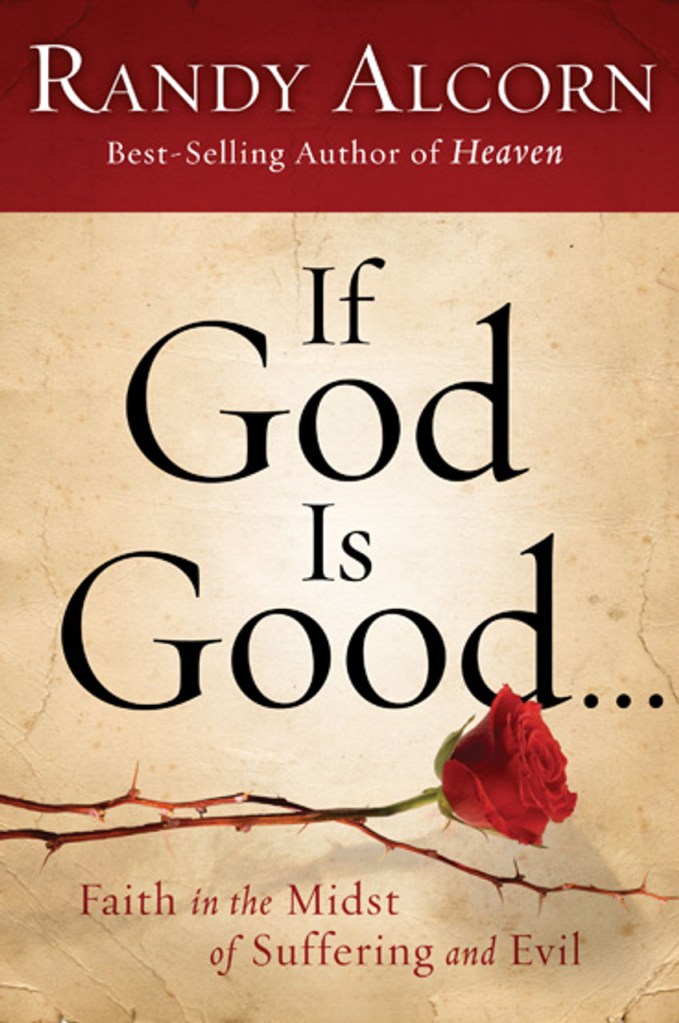
This article was adapted from Randy Alcorn’s book If God Is Good.
For through him (Jesus) we (Jew and gentile) both have access in one Spirit to the Father.” Ephesians 2:18
We regain access to our Heavenly Father through Jesus coming to earth and becoming man so He could pay the debt for our rebellion. He died in our place so that we might have eternal life. I hope you realize the enormity of what Jesus has accomplished on your behalf. Jesus made it possible for our Heavenly Father to send the third person of the Trinity, the Holy Spirit to indwell every believer’s spirit.
“The spirit of man is the lamp of the Lord, searching all his innermost parts.”Proverbs 20:27
It is important to note from this Scripture that our spirit is the lamp of the Lord. Like any lamp, it requires oil, which for us is the Holy Spirit, to function correctly. When Adam and Eve sinned, death was the penalty. Spiritual death occurred immediately when the Holy Spirit departed their spirits, and physical death followed 900 years later. It was only after God’s first judgment of mankind (the worldwide flood of Noah’s day) that God limited man’s lifespan to 120 years.
Considering the enormous price Jesus paid in order for our Heavenly Father to restore our relationship with Him by sending the Holy Spirit to indwell every believer’s spirit to be our counselor, teacher, and comforter, surely we must treat Him with all the respect and honour He deserves.
“And do not grieve the Holy Spirit of God, by whom you were sealed for the day of redemption.” Ephesians 4:30
When non-Christians reject Jesus, it simply puts another nail in their coffin and brings them one step closer to judgment, punishment, and the second death in the Lake of Fire. The Lord would have saved their soul, but time and time again they refused to repent. In so doing, “they exchanged the truth of God for a lie” (Romans 1:25).
“But as for the cowardly, the faithless, the detestable, as for murderers, the sexually immoral, sorcerers, idolaters, and all liars, their portion will be in the lake that burns with fire and sulfur, which is the second death.” Revelation 21:8
But Christians are equally guilty of sin because we too grieve the one Person who can enable us to believe the Gospel, love God, follow Christ, and serve others with godly compassion. Without the Holy Spirit, none of those things would be possible. We would be helpless and hopeless, lost, dazed, and confused. We would have no clue how to be forgiven of our sins or how to please the Lord.
Thankfully, “God made us alive with Christ even when we were dead in transgressions – it is by grace you have been saved” (Ephesians 2:5). So now what? Well, one thing is very clear. We were not saved so that we could go on deliberately sinning against the Lord. As the Apostle Paul wrote, “shall we go on sinning so that grace may increase? By no means! We died to sin; how can we live in it any longer?” Romans 6:1-2
Christians face a variety of temptations regarding the use of our bodies, the meditation of our hearts, and the words we choose to utter. Since the Holy Spirit lives within every believer, it is essential that we diligently seek to please the Spirit rather than give into the desires of our sinful nature.
For example, Scripture instructs us: “flee from sexual immorality”. All other sins a man commits are outside his body, but he who sins sexually sins against his own body.
“Or do you not know that your body is a temple of the Holy Spirit, who is in you, whom you have received from God? You are not your own; you were bought at a price. Therefore, honor God with your body”1 Corinthians 6:18-20
If you want to mess up everything in your walk with Christ, then engage in sexual immorality. Have sex outside of marriage. Fill your mind with sexual images and lustful thoughts. Give into temptation rather than resisting it. And commit the one sin that is against your own body, which is a temple of the Holy Spirit. Obviously, this is the opposite of what God calls us to do as followers of Christ.
Scripture also warns believers to be careful with the thoughts and attitudes that they choose to entertain. Paul wrote:
“Do not let any unwholesome talk come out of your mouths, but only what is helpful for building others up according to their needs, that it may benefit those who listen. And do not grieve the Holy Spirit of God, with whom you were sealed for the day of redemption. Get rid of all bitterness, rage and anger, brawling and slander, along with every form of malice. Be kind and compassionate to one another, forgiving each other, just as in Christ God forgave you” Ephesians 4:29-32
When we violate any of these instructions for holy living, we grieve the Holy Spirit. Our mind comes under attack and the joy of the Lord greatly diminishes in our heart. We lose our peace. We become impatient and self-centered. We hold grudges, and we speak poorly about others.
All of these attitudes and behaviors flow from our sinful nature, (Romans 7:18) and all of them grieve the Holy Spirit. He is always pure, perfect, and gentle. When we push Him away with our sins, our life of discipleship gets put on hold. We backslide, even if only for a matter of minutes until we confess our sins to God and turn away from them.
And of course, sometimes our sinful attitudes persist much longer than a few minutes. Is it any wonder that everyone who seeks to follow Christ finds our calling as believers so incredibly challenging? Sadly, some who begin the journey with Jesus do not fully repent of their sin and acknowledge Him as Lord. They invariably give up and once again pursue deliberate sin. Unbelief is the biggest sin because it prevents a person from being saved, redeemed, forgiven, born again, and justified. The Holy Spirit only indwells those who are trusting the Savior to forgive their sins, which in turn produces a heart that longs to do God’s will.
Everything gets messed up when non-Christians reject Christ, and when believers give in to sinful desires and temptation. So, what is the solution for followers of Christ?
“Live by the Spirit, and you will not gratify the desires of the sinful nature. For the sinful nature desires what is contrary to the Spirit, and the Spirit what is contrary to the sinful nature. They are in conflict with each other so you do not do what you want. But if you are led by the Spirit, you are not under the law” Galatians 5:16-18
Grieving the Holy Spirit messes up everything, whereas confessing our sins to the Lord and seeking to do His will is the path to peace and righteous living. If you love God then you will be willing to be led by the Holy Spirit. So, are you a follower of Christ and have the Holy Spirit to guide your every step? If not, would you like to be? If you would then listen to this presentation by Ray Comfort.
Why should you be living eternally now? All believers will appear before the judgment seat of Christ and whilst our eternal destiny is safe what we have done will affect our rewards. For Christians that are raised in the first resurrection and are raptured with the living Saints, it is generally agreed that we will face the judgment seat of Christ during the time (Isaiah 34:8, Isaiah 61:2, Isaiah 63:4) we are in heaven before returning to earth with Jesus. If you disagree, keep in mind that these are not my words, but God’s. Jesus, speaking to both believers and unbelievers, said, “I tell you, on the day of judgment people will give account for every careless word they speak, for by your words you will be justified, and by your words, you will be condemned.” Matthew 12:36-37. Also, Paul said, “For we must all appear before the judgment seat of Christ, so that each one may receive what is due for what he has done in the body, whether good or evil”2 Corinthians 5:10
There are two different judgments in God’s Word: the judgment of faith, and the judgment of works. The judgment of faith relates to our eternal salvation, while the judgment of works relates to our eternal rewards.
For Christians, salvation took place in a moment in the past. It was free, it can’t be lost, it is the same for all Christians, and it is solely based on a faith that is ours by the grace of God alone. By contrast, future rewards are earned (by God’s grace), can be lost, differ among Christians, and are based on our efforts.
Salvation is about God’s work for us. Conversely, rewards are a matter of our work for God. When it comes to salvation, our work for God is no substitute for God’s work for us. God saves us because of Christ’s work, not ours. Likewise, when it comes to rewards, God rewards us for our work, not Christ’s. (Our good works are empowered by the Holy Spirit; nevertheless, we need to submit to Him so God refers to it as our work.)
Let me be sure this is perfectly clear. Christ paid the price for all of our sins, once and for all (Hebrews10:12-18). If we have trusted Him for that provision, we will not pay the eternal price, the second death. He has fully forgiven our sins, and we are completely secure in Christ’s love (Psalm 103:8-18; Romans 8:31-39). Our salvation is sure, and we will not undergo the judgment of condemnation (John 5:24; Romans 8:1).
But although the forgiveness of our sins has every bearing on our eternal destination, it has no automatic and effortless effect on our eternal rewards, apart from the fact that God’s sanctifying work comes out of our salvation, and therefore we should expect that the Holy Spirit’s presence in our lives should lead us to do good works that God will reward. But we must choose to do the works He prompts us to do. Neither does it mean our choices have no consequences in eternity. Forgiven people can still lose their rewards or forfeit eternal positions of responsibility they could have had if they’d served Christ consistently and faithfully before death.
Trust in Christ, lean on Him, and draw upon Him for power, for apart from Him we can do nothing. But if we hope to receive a reward, we must still do the necessary work. As our forefathers put it, to wear the crown we must first bear the cross.
Just as there are eternal consequences to our faith, so there are eternal consequences to our works.
What we do with our resources—including our time, money, and possessions—will matter not just twenty minutes, twenty days, or twenty years from now. It will matter twenty trillion years from now.
Though Paul insists we are saved by faith, not works (Titus 3:5), he also clearly states that the choices we make and the things we do have eternal implications, and that we will each answer to God for the works we have done in this life:
If anyone builds on this foundation [Christ] using gold, silver, costly stones, wood, hay or straw, their work will be shown for what it is, because the Day will bring it to light. It will be revealed with fire, and the fire will test the quality of each person’s work. If what has been built survives, the builder will receive a reward. If it is burned up, the builder will suffer loss but yet will be saved—even though only as one escaping through the flames. (1 Corinthians 3:12-15)
Those believers who have been less faithful and obedient in their walk with Christ will not suffer loss of salvation! But they will suffer loss of the reward that would have been theirs had they been more Christ-centered and faithful in their service to Jesus.
What 1 Corinthians 3 says is so sobering that a temporary loss doesn’t seem likely. This loss of rewards appears permanent, for while we will all serve God in our resurrected bodies on His New Earth, there appears to be a finality to the fact that after death comes judgment (Hebrews 9:27). If there are any future judgments for our service to God on the New Earth, we are not told about them in Scripture. Of course, we should anticipate for our future service He will say to all of his children, “Well done!” And yet, despite Scripture’s silence on this, I think it’s very possible that God, who is by nature a rewarder (), may continue to reward His people for faithful service on the New Earth. That resonates with me, and I don’t see anything unbiblical about it. It fully fits His nature as a Father who takes joy in saying “Well done” to His devoted children.
Earning Our Full Reward
First Corinthians isn’t the only passage that speaks of losing reward. The apostle John wrote, “Watch yourselves, so that you may not lose what we have worked for, but may win a full reward” (2 John 1:8, ESV).
To win a full reward would be glorious, wouldn’t it? But surely all of us will regret some of our decisions on that day when we “suffer loss” or “lose what we have worked for.” Anticipating standing before the judgment seat of Christ should motivate us to follow Him wholeheartedly and generate in us a proper fear of God.
All of us will be full of joy in Heaven, but those who served Him faithfully, particularly in the midst of adversity, will have been made, by God’s grace, into larger vessels. They won’t be fuller of joy, but they will have a greater capacity, and their fullness will accordingly contain even more joy. (Hence the special place in Revelation given to the martyrs.) There won’t be envy or regret, because of our new natures, and all will be full of joy, yet there will be true continuity and eternal consequence so that what we do—not just what we believe—in this life affects the next.
Maybe one way to say it is that the “loss” of rewards is in some sense permanent, but the “suffering” of that loss will be temporary. God will do away with the suffering (Revelation 21:4), but that is after the judgment, after we give an account to the Lord. The suffering of regret will be there at the judgment (how could it not be?) before entrance to the eternal state, but then comes the learning and purifying and eternal rejoicing. Perhaps we’ll offer a short, entirely sincere, “I regret my lack of faith and faithfulness,” expressing this to our God who graciously forgives. Then, with that forever behind us, we move on to eternal joy.
But there will be no ongoing suffering, for all our regrets about our past will be overshadowed by God’s grace. Yet if there were no reckoning, no “suffering loss” then the 1 Corinthians 3 passage would be meaningless (which is exactly what most teaching on the subject reduces it to). Some will object that this is a sort of Protestant purgatory, just shorter in duration than languishing in the flames of Catholic purgatory. But the suffering is not in the eternal state, only in a temporal judgment, and judgment must involve the negative as well as positive or it too is meaningless. The biblical statements of “giving an account” and that include “works done in the body, whether good or evil” are unmistakable in that regard. (Doing the evil will clearly have taken away from the rewards that would have come from doing good.)
Consequences without Condemnation
Since all who know Jesus go to the intermediate Heaven immediately when we die, it appears that whenever this judgment happens, it will be after we get there. So, while God will one day wipe away every tear from our eyes (Revelation 21:4), it seems likely that when we must give an account for our lives, there will be, for a time, some regrets and tears and a sense of that loss Scripture speaks of.
I realize this is hard to grasp. I am just trying to be true to all God’s Word says, instead of choosing only parts of it. This may sound like a sort of condemnation and punishment, but we are assured this isn’t the case, for “There is no condemnation for those who are in Christ Jesus” (Romans 8:1).
Ephesians 1:7 says, “In him [Jesus] we have redemption through his blood, the forgiveness of sins, in accordance with the riches of God’s grace”. The Bible teaches not only forgiveness of our sins but also consequences for our choices. These consequences apply despite our forgiveness. Forgiveness means that God eliminates our eternal condemnation; we will not be ultimately punished for our sins, but there may be immediate consequences in this world due to our sins. Forgiven people can still contract AIDS, go to jail for drunk driving, or suffer the death penalty, for example. A murderer or drug dealer can be fully redeemed and forgiven, and may still spend the rest of his life in prison. He may lose his family as well as his freedom. After all, the thief on the cross remained there despite his confession of faith.
In Heaven, God appears to say that while all our sins will be forgiven and there will be no ongoing shame or regrets, nevertheless at the judgment seat an initial and temporary sense of shame, regret and sorrow seems likely, though one that will soon be swallowed up by eternal grace and joy.
Prepared for Good Works
One of the most often quoted passages in Scripture states, “For it is by grace you have been saved, through faith—and this is not from yourselves, it is the gift of God— not by works, so that no one can boast” (Ephesians 2:8-9).
It’s a wonderful truth, but verse 10 immediately follows with more truth about works: “For we are God’s handiwork, created in Christ Jesus to do good works, which God prepared in advance for us to do.” God has prepared a lifetime of good works and we will give an account to Him for whether or not we have done them.
Surely each of these passages and others like them implies that while we will be fully forgiven in Christ and be forever totally cleansed and purified by His redemptive work, we will nonetheless be held accountable for what we have and haven’t done in this life.
It seems reasonable we won’t be joyful at the very moment we have to give an account for our sins, the careless words we have spoken, and all the wood, hay, and straw of our lives that will be consumed in the fire, that could have instead been gold and silver and precious stones. And at the same time, we will find great pleasure in the rewards God has given us, and we will celebrate the rewards He gives to others.
Embracing Paradox
But how does this all fit with the truth about the forgiveness of our sins? I think of the example of Charles Spurgeon, who didn’t try to reconcile every paradox or apparent contradiction in the Bible. Speaking of the truths of God’s sovereignty and human responsibility—which I also believe to be applicable to the truths of complete forgiveness and accountability at the judgment Spurgeon said this:
“These two truths, I do not believe, can ever be welded into one upon any human anvil, but one they shall bein eternity: they are two lines that are so nearly parallel, that the mind that shall pursue them farthest, will never discover that they converge; but they do converge, and they will meet somewhere in eternity, close to the throne of God, whence all truth doth spring.“
Spurgeon also wrote, “Those who will only believe what they can reconcile will necessarily disbelieve much of divine revelation.” Our desire for logical consistency, as we understand it, can become our God. Then we, not Scripture and not God, become our own ultimate authority. We end up ignoring, rejecting or twisting Scripture that doesn’t fit our chosen theology.
On the contrary, our theology should reflect Scripture itself, and wherever Scripture teaches apparently contradictory ideas, our theology should embrace those same ideas, rather than resort to a consistency that rejects part of God’s revealed Word.
Certainly, any and all of our regrets about our past will be overshadowed by God’s grace, which is the good news of the Gospel. There is comfort in 1 Corinthians 4:5, which says God “will bring to light the things now hidden in darkness and will disclose the purposes of the heart. Then each one will receive his commendation from God.” God will apparently find something to reward “each one” for. This makes sense, for no one can truly be born again without having demonstrated some fruit for which God can reward us.
Let’s Live in Light of Eternity Now
All of this argues for cultivating an eternal perspective in which we seek to live each day in light of eternity—not out of dread, yet with the right kind of fear of God and heartfelt love that desires to please our Lord and Savior.
In his book When Christ Comes, Max Lucado writes, “You can be certain you won’t regret any sacrifice you made for the kingdom. The hours of service for Christ? You won’t regret them. The money you gave? You’d give it a thousand times over. The times you helped the poor and loved the lost? You’d do it again. . . . You’d change the diapers, fix the cars, prepare the lessons, repair the roofs. One look into the faces of the ones you love, and you’d do it all again.”
An eternal perspective isn’t something we have to wait until Heaven to have. So I’ve often given readers and listeners this advice: live now the way that you will one day wish you would have. Don’t postpone obedience, holiness, purity, drawing close to God, and serving others.
Five minutes after we die, we’ll know exactly how we should have lived—it will be too late to go back and change anything. God has given us His Word so we don’t have to wait until we die to know how we should have lived. There’s no second chance for the unbeliever—but also no second chance for the believer! Just as missionary C. T. Studd said, “Only one life, ’twill soon be past; only what’s done for Christ will last.”
You and I have one life on this fallen earth in which to follow Jesus and invest in Heaven. Let’s not miss the opportunity. God will one day take away all our sorrows, but why go into eternity with regrets? Here’s a prayer for us: May what will be most important to us five minutes after we die become most important to us now.
Let me add KNOW YOUR WHY:
To bring glory to God
To know God’s will for your life
God wants to use me to bring people into His Kingdom
Adapted from the article: “Will We Have Regrets at the Judgment Seat of Christ?” December 5, 2022 by Randy Alcorn http://www.patheos.com
Living Eternally Now is available o Amazon or from me direct: ron@bakb.com.au
Jesus fiercely guarded the integrity of the word of God against limiting or misleading religious traditions, does he not also do so today? He is the same yesterday, today, and forever, and I do not see him growing tired of that which motivated him on Earth.
“Jesus replied, ‘And why do you break the command of God for the sake of your tradition? For God said, “Honour your father and mother” and “Anyone who curses their father or mother is to be put to death.” But you say that if anyone declares that what might have been used to help their father or mother is “devoted to God,” they are not to “honour their father or mother” with it. Thus you nullify the word of God for the sake of your tradition.’Matthew 15:3-6
The Pharisees were nullifying (reducing to nothing) the word of God, replacing its life-giving truths with traditions of their own invention. There is a difference in God’s eyes between the teacher and the taught. The Bible is clear that when we become teachers, we take on a new level of spiritual accountability. When we become shepherds, we answer to the Great Shepherd, who jealously guards his sheep. When we teach untruths from the pulpit and replace the word of God with powerless traditions, we harm the children of God, and God is protective of his children
Many Christians have become hopelessly compromised by insidious traditions which nullify the word of God – misleading ideas which have an appearance of humility but confuse us about the very nature of God. Let me present a single, simple example – something I hope most believers can get on board with. I’ll present the word of God first, and the tradition second.
“Do your best to present yourself to God as one approved, a worker who has no need to be ashamed, rightly handling the word of truth.” 2 Timothy 2:15
“Very truly I tell you, whoever believes in me will do the works I have been doing, and they will do even greater things than these because I am going to the Father. And I will do whatever you ask in my name, so that the Father may be glorified in the Son.” John 14, 12-13:
Jesus was speaking to his disciples from the heart, in the knowledge that the cross awaited. Contextually, he is talking about his miracles, urging his disciples to believe in him as the Son of God because of the works he has done in their sight. Caught up in the Spirit, he prophesies that those who believe in him, including believers down through the ages, will perform the same, and even greater miracles. In the power and effectiveness of his children, Father God will be glorified. What a glorious promise!
How many churches believe and teach what Jesus promised we will do and how many churches are seeing their members operating in the power of the Holy Spirit with all nine gifts of the Spirit (1 Corinth. 12:4-11) including healing.
We lower our expectations of God, reducing his incredible promises to match our experience. By doing so, we lose our hold on faith, because we are no longer clinging to his word – our grip has been transferred instead to the tradition, and we are well adrift of the truth. Once we drift from the truth of God’s active, compassionate, interventionist love, and the promises of his miraculous provision, deliverance, and healing, we lose sight of who God is altogether. We paint a lesser picture and worship it instead.
Pretend actors-for-Jesus can quote Scripture, but their desires haven’t changed. They merely feel good that they now have religion, too. Their faith is not a central transforming reality; it’s an add-on to enhance their lives. They believe in a god made in their own image, not the true God of the Bible. They worship a cosmic genie who meets their needs and gives them what they want. They may call themselves servants of Christ. But in fact, they are masters, calling the shots, claiming what they want to claim and believing what they want to believe, and expecting God to come through for them. And when He doesn’t, they either blame Him for not being good or blame themselves and others for not having enough faith to get their way.
“Not everyone who says to me, ‘Lord, Lord,’ will enter the kingdom of heaven, but the one who does the will of my Father who is in heaven. On that day many will say to me, ‘Lord, Lord, did we not prophesy in your name, and cast out demons in your name, and do many mighty works in your name?’ And then will I declare to them, ‘I never knew you; depart from me, you workers of lawlessness.’Matthew 7:21-22
How different from the biblical description of us as slaves of Jesus Christ! Yes, the original word is best-translated slaves, not servants, and describes those who are sold out to His ownership and committed to doing whatever He calls them to do, including dying on His behalf should He so desire.
“Live as people who are free, not using your freedom as a cover-up for evil, but living as slaves (servants) of God.” 1 Peter 2:16
We are also called children of the King, and there is a time when we will enjoy all the privileges of royalty. But now is not that time! Presently we experience some royal kingdom privileges, including constant and unhindered access to the One who sits on the throne. We can “come boldly before the throne of grace,” as Hebrews says. God’s Holy Spirit dwells within us. He has promised to provide what we need to serve Him (Matthew 6:25-32). But when it comes to enjoying all the material provisions living in the King’s mansion provides, we are not yet there.
We are still on foreign soil—hostile soil—where people are fighting against God’s kingdom. We are not just tourists or palace-dwellers; we are “strangers and exiles on the earth,” who are “seeking a homeland” (Hebrews 11:13-14), and longing for “a better country, that is, a heavenly one”.
“But as it is, they desire a better country, that is, a heavenly one. Therefore God is not ashamed to be called their God, for he has prepared for them a city.” Hebrews 11:16
God has prepared a heavenly Jerusalem which John saw coming down from heaven onto the new earth which the Saints will inhabit after the White Throne judgement.
“Then I saw a new heaven and a new earth, for the first heaven and the first earth had passed away, and the sea was no more. And I saw the holy city, new Jerusalem, coming down out of heaven from God, prepared as a bride adorned for her husband. And I heard a loud voice from the throne saying, “Behold, the dwelling place of God is with man. He will dwell with them, and they will be his people, and God himself will be with them as their God.” Revelation 21:1-3
What we need in our churches today are fewer actors and more sold-out followers of Jesus—converted people living lives centered on Jesus, the King of kings.
God is raising up leaders that are truly sold out to His purposes of making disciples. Find and connect with these leaders.
“Therefore go and make disciples of all nations, baptizing them in the name of the Father and of the Son and of the Holy Spirit, and teaching them to obey everything I have commanded you. And surely I am with you always, to the very end of the age” (Matthew 28:19-20, NIV).
“The Kingdom of God is not going to be advanced by our churches becoming filled with men but by men in our churches becoming filled with God.” —Duncan Campbell
Taken from another great article, Our Mission: Make More Disciples and Fewer Performers JULY 7, 2022 by RANDY ALCORN
According to Gallup polls, the so-called American church is in decline. However, -Roger Olson, a scholar with a Ph.D. in religious studies who has studied American religious life (especially Christianity in all its expressions) for many years says that what is really happening is that new expressions of Christianity are popping up that are flying “under the radar” of critics who claim “the American churches” are losing members. People are flocking from many of the old, so-called “mainline” churches and many are attending new collective expressions of Christianity that may or may not be called “churches.” Throughout the South and Midwest thousands of “cowboy churches” are popping up. Most of them do not belong to any denomination or are only very loosely affiliated with, for example, a local Baptist association of churches. There are literally thousands of immigrant churches that are hardly noticed by the bean-counters. For example, the Redeemed Christian Church of God of Nigeria has at least seven hundred congregations in the U.S. I am told that many of these congregations are large and growing not only through immigration but also through evangelism and people leaving other churches to attend these.
Churches that are truly born again, Bible-believing churches are not in decline because they are empowered by the Holy Spirit and are doing what God has called them to do. They have a Biblical worldview and therefore know Jesus is returning to this planet in the not too distant future first to remove His Saints and then to pour out His wrath on an unrepentant lawless world and they are acting accordingly.
They also know what Jesus said about the time before His return. It will be a time of great tribulation for Christians as God deals with the rebellion both in the heavenly and earthly realms. Satan and His demons are finally cast out of heaven and Satan enters the Antichrist and increases persecution first Jews and then of the Saints.
“You were blameless in your ways from the day you were created till wickedness was found in you. Through your widespread trade you were filled with violence, and you sinned. So I drove you in disgrace from the mount of God, and I expelled you, guardian cherub, from among the fiery stones.” Ezekiel 28:15-16
Now war arose in heaven, Michael and his angels fighting against the dragon. And the dragon and his angels fought back, but he was defeated, and there was no longer any place for them in heaven. And the great dragon was thrown down, that ancient serpent, who is called the devil and Satan, the deceiver of the whole world—he was thrown down to the earth, and his angels were thrown down with him. And I heard a loud voice in heaven, saying, “Now the salvation and the power and the kingdom of our God and the authority of his Christ have come, for the accuser of our brothers has been thrown down, who accuses them day and night before our God.” Revelation 12:7-10
“Therefore, rejoice, O heavens and you who dwell in them! But woe to you, O earth and sea, for the devil has come down to you in great wrath because he knows that his time is short!”Revelation 12:12
“And when the dragon saw that he had been thrown down to the earth, he pursued the woman who had given birth to the male child. But the woman was given the two wings of the great eagle so that she might fly from the serpent into the wilderness, to the place where she is to be nourished for a time, and times, and half a time.” Revelation 12:13-14
“Then the dragon became furious with the woman and went off to make war on the rest of her offspring, on those who keep the commandments of God and hold to the testimony of Jesus.” Revelation 12:17




 LIVING ETERNAL NOW