
What should Christians think about AI? Artificial Intelligence is reshaping culture, business, education, and even the way we think about human identity. In this roundtable conversation, Sean McDowell talks with 3 Biola professors to explore how believers can navigate the rapidly changing world of AI with wisdom and clarity. This is an intriguing conversation that I am sure you will appreciate and learn from.
Category Archives: Christian World View
WHY IT IS IMPORTANT TO DEAL WITH MILLIONS OF YEARS
Some things should make Christians angry. In this powerful presentation, Ken Ham challenges believers to reclaim righteous anger, stand firm on the authority of Scripture, and boldly confront the lies of modern culture. Genesis 1 to 11 provides the foundation of the true history of this world and answers to the most troubling questions humans can raise, such as why there is death and suffering in the world.
God has raised up two ministries to cope with Satan’s most successful strategy (evolution), so make sure you connect with and support Answers in Genesis, http://www.answersingenesis.org and Creation Ministries International, http://www.creation.com.
GOD IS LOOSENING SATAN’S HOLD ON THE U.S.A.
In November, Trump was elected President of the USA largely on the basis of putting God back in His rightful place (In God We Trust). In December, The Wall Street Journal reported that Bible sales were up 22% while sales of other books were essentially flat. In fact, in 2019, 9.7 million copies of the Bible were sold in America. Last year, that number approached 14 million, with most sales driven by “first-time buyers.”

Then there is football, with Ohio State players preaching to students last summer and on national television after winning the national championship, Boise State head coach Spencer Danielson praising Jesus at the Fiesta Bowl, and Baltimore Ravens head coach John Harbaugh leading his team in the Lord’s Prayer, God-talk on and off the field has been conspicuous this season.
Or consider the “moment” God is having among secular thought leaders. Richard Dawkins and Elon Musk, recognizing the importance of Christianity to the West, have labeled themselves “cultural Christians.” Former New Atheist Ayaan Hirsi Ali experienced and defended a conversion to the Christian faith, as did her husband, well-known historian and Hoover Institute fellow Niall Ferguson. Former atheist and popular historian Tom Holland’s bestselling book has changed the narrative about the positive role Christianity has played in making the Western world. Psychologist and author Jordan Peterson often references Scripture and just released a 500-page book attempting to draw lessons and meaning from the Old Testament. And, of course, podcaster Joe Rogan recently interviewed Christian apologist Wesley Huff for his 14 million subscribers.
Justin Brierley, co-host of the “Unbelievable” podcast and author of The Surprising Rebirth of Belief in God, thinks we are seeing something significant:
[T]hey say God moves in mysterious ways. I see signs that he is moving in the minds and hearts of secular intellectuals. Many of them are recognizing that secular humanism has failed and, against all their expectations, seem to be on the verge of embracing faith instead.
Brierley thinks this “wider turning of the secular tide in the West,” is a result of secularism’s failed predictions. A couple of decades ago, the New Atheists promised a rational utopia in the wake of religious decline. Instead, we got a crisis of meaning, widespread “confusion, a mental health crisis in the young, and the culture wars.” Now, a “New Theist” movement has sprung up, and even those not converting to Christ have toned down the anti-Christian rhetoric. Some are even suggesting that faith is good for the world.
Still, Brierley cautions that what we’re seeing is far from a revival. Many of the “cultural Christians” of our moment are not believers, nor are they claiming to be. There’s a big difference between regarding Christianity as a “useful fiction,” able to restore vigor and cohesion to the West, and submitting to it as the ultimate truth that demands our allegiance and devotion. For the millions of new Bible owners, the difference is between looking for sage advice and looking for God. Neither a better world nor a better you is what Christianity fundamentally offers.
Though a “vibe shift” in favor of religion is welcome, and cultural Christianity is genuinely a good thing, Christ does not claim to be “useful.” He claims to be the risen Son of God and King of kings, before whom every knee must bow. Those hoping to make Him “useful” overlook that the West did not become a great civilization because people believed Christianity offered good advice, but because they believed it was true. Anyone who tries to use the God of the Bible to some earthly end will only be repeating the blunder of Mainline Protestantism, not doing something genuinely new or important.
At the same time, the truth about Christ is compelling. Thus, the renewed interest in this cultural moment can be welcomed and celebrated. Secularism has failed to satisfy the human soul or build the utopia that was promised. But Christ will not fail, not in this world nor in the age to come. Our task is to point insistently to the full and glorious truth of His rule and reign.
We can direct the curious to resources like The Bible Project, or Graeme Goldsworthy’s classic book, According to Plan, both of which explain what the Bible is and what it teaches. Proven apologetic classics like C.S. Lewis’ Mere Christianity are incredibly helpful resources for those willing to give God a new look. Most importantly, the Church must be the Church, with the Word faithfully taught and lived. After all, we know that God’s Word will not return void, and He is at work through His people in this and every cultural moment.
TEST ALL THINGS BY GOD’S WORD
For Christians, all of life is the enterprise through which we glorify God and enjoy Him forever. The means by which we do that is simple: we must know who this God is and how we can enjoy Him forever. This is only derived from a robust understanding and application of Scripture and understanding the role of the Holy Spirit in our lives. Thus, when we are faced with whatever progressive ideals might creep in, the principle is one whereby we test all things according to Scripture empowered by the Holy Spirit.
I am convinced many within the broader church have been pressed into the mold of a system of thought the broader culture adopts (i.e. progressivism), and the foremost institution this has been accomplished through is education. Generations of children have come and gone through this institution, which with the adoption of evolution has rejected any involvement of God in science and now education, as a result, society is largely secular. God’s values have been jettisoned and the progressives now dominate our educational establishments and parliament.
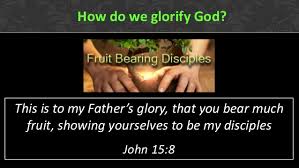
How do we solve this dilemma? The answer is surprisingly simple but unflatteringly naïve to the world, and even many professing Christians. The Word of God must be re-established as the foundation for all of life. Everything else is subservient to it and must align with it. In other words, we live consistently to the message we proclaim, from the seemingly mundane choices we make in entertainment, to how we spend our money, raise and teach our children, and how we do church, which means getting back to church as outlined in the Book of Acts, house churches that make disciples, and more. Only then will we be salt and light in the world. Only then will the Holy Spirit truly lead believers and the fruit of the spirit will be evident in their lives: love, joy, peace patience, faith, gentleness, goodness, kindness, and self-control. The ministry gifts, all nine will be evident including miracles, words of knowledge, and discerning of spirits.
The Gospel will then be unstoppable. “And this gospel of the kingdom will be proclaimed throughout the whole world as a testimony to all nations, and then the end will come.” Matthew 24:14
CHRISTIANS CANNOT COUNSEL TRANSGENDER YOUTH
The recent U.S. Executive Order on Advancing Equality for Lesbian, Gay, Bisexual, Transgender, Queer, and Intersex Individuals calls on the administration to “safeguard LGBTQI+ youth from dangerous practices like so-called ‘conversion therapy’—efforts to suppress or change an individual’s sexual orientation, gender identity, or gender expression.” It contends that conversion therapy is a “discredited practice that research indicates can cause significant harm, including higher rates of suicide-related thoughts and behaviors by LGBTQI+ youth.” Biden also directed the Federal Trade Commission to determine “whether so-called conversion therapy constitutes an unfair or deceptive act or practice, and to issue such consumer warnings or notices as may be appropriate.”
In my recent post on SELLING THE TRANSGENDER STORY, I showed a very appealing video that attempts to sell the transgender agenda as a positive step forward whereby we are told that tens of thousands of children out there identify as transgender. We are also told that Ryland and the Whittington family is a typical ‘American family’. As well, we are told that gender and sexuality are different. All three claims are false. If you have not viewed this video can I suggest you do. It was posted five days ago.
God and his commandments have been rejected by the majority of people as they were by the people of Noah’s Day bringing God’s judgement upon them. Jesus warned us that the world would reject God and His values prior to His return. Persecution of active Christians (living out their faith) will be considered just.
Is the church preparing Christians for this escalating persecution?
This is another appealing video selling Ryland’s transgender conversion beginning at age 3.
AMERICAN ADHERENCE TO BIBLICAL CHRISTIANITY FADES IN CHURCHES
By Leonardo Blair, Senior Features Reporter, ChristianityToday, Thursday, April 28, 2022
Parents of preteens, children younger than 13, “are in a state of spiritual distress” as American adherence to biblical Christianity fades in churches, and a “tragic crash” is coming as a result of the situation, according to new data from the Cultural Research Center at Arizona Christian University and the American Worldview Inventory 2022.
“While the warning signs are identifiable and unmistakable, it appears that parents, as well as their support system (i.e., churches, extended family, and parachurch ministries), are too distracted or disinterested to acknowledge and address the parenting crisis. It seems that a tragic crash is in store,” said George Barna, director of research at the Cultural Research Center at Arizona Christian, in a release earlier this month.
“Parents, to whom the Bible assigns the primary responsibility for shaping the worldview of their children, are called to equip youngsters to grow up in a relationship with and service to God. That requires the intentional and consistent development of a biblical worldview in the minds and hearts of children since every person’s worldview begins developing before their second birthday,” Barna explained.
“Yet parents are not devoted to biblical worldview development in their children partly because they do not possess a biblical worldview to pass on to their progeny. The CRC research reveals that a paltry 2% of the parents of preteens — children in the worldview development window — have a biblical worldview.”
A big reason for the lack of a biblical worldview in parents today is syncretism. This ideology is described as “the worldview that merges otherwise incompatible philosophies of life into a made-to-order worldview that incorporates enough biblical elements to be minimally Christian in nature.”
Under the sway of syncretism, according to Barna, the American Church has failed to contend earnestly for the Christian faith.
“The American Church has lowered the entry bar so much that it is difficult to identify any beliefs that disqualify one from claiming to be Christian. The parents of children under the age of 13 are a stellar example of this Christian nominalism that is widely accepted as spiritually normal and healthy,” he said.
“Indeed, a worldview is comprised of a unified series of beliefs that then determine behavior. The alarm bell has not been rung because there is no single belief, or even limited series of identified beliefs, that are acknowledged as undermining Christianity or disqualifying an amenable adult from being considered a disciple of Jesus.”
Barna suggested that one explanation for the current crisis of faith is that the American Church is measuring the wrong indicators of faith.
“By emphasizing measures such as church attendance and participation in prayer, the emphasis is placed upon the quantity rather than the quality of spiritual activity, and on overt participation rather than core developmental efforts,” he noted.
“In other words, the emphasis is placed upon breadth rather than depth. But even more significantly, the spiritual warning signs have been misinterpreted. By looking for glaring deficiencies in the lives of self-described Christians, leaders have ignored the importance of numerous, less noticeable deficiencies. Their conclusion is that nobody is perfect, so while there are some identifiable spiritual and lifestyle defects among parents, they are not sufficiently disturbing to constitute a crisis or require a concerted call to action.”
Church leaders, explained Barna, have largely ignored the crisis of faith in the Christian community because indicators like church attendance, Bible sales and donations “have remained sufficiently robust to feel reassured.”
Barna noted that while some commentators on the effect of syncretism on the American Church might minimize it as a “rough patch,” emerging data on children shows a different picture.
“The disinterest and even disrespect many children show to their elders is partially a reaction to the lack of authenticity and integrity they experience in the presence of parents, teachers, pastors, and other cultural leaders. Children sometimes feel compelled to ignore adults whose talk and walk are inconsistent,” he said.
“When children are exposed to teaching — through words or actions, whether formal or informal — that are contradictory, they naturally conclude that the Christian faith is inherently contradictory and therefore may not be what they are seeking as a life philosophy,” Barna adds. “Young people may be interested in and intrigued by Bible stories, but unless the underlying life principles are both identified and exemplified, children are likely to miss out on those life changing truths.”
He suggested that the reason most Christians aren’t alarmed by the crisis of faith and parenting could be that the rest of the culture is syncretistic as well.
Data published by ACU last year shows that of an estimated 176 million American adults who identify as Christian, just 6%, or 15 million of them, actually hold a biblical worldview.
The study shows, in general, that while a majority of America’s self-identified Christians, including many who identify as Evangelical, believe that God is all-powerful, all-knowing and is the Creator of the universe, more than half reject a number of biblical teachings and principles, including the existence of the Holy Spirit.
Strong majorities also errantly believe that all religious faiths are of equal value, people are basically good, and that people can use acts of goodness to earn their way into Heaven.
The study further showed that majorities don’t believe in moral absolutes; consider feelings, experience, or the input of friends and family as their most trusted sources of moral guidance; and say that having faith matters more than which faith you pursue.

According to Barna, “If ever there was a time when our nation was desperate for a grassroots spiritual revival led by the remnant in the pews who still revere God, Jesus Christ, the Bible, and truth, now is that time.”
However, the Bible reveals that Jesus told His disciples that in the end times just before He returns to this earth there would be a great falling away in the church. This is just one of the many end times Jesus gave us so we would not be caught off guard.
“And then many will fall away and betray one another and hate one another. And many false prophets will arise and lead many astray. And because lawlessness (SIN) will be increased, the love of many will grow cold.” Matthew 24:10-12
DEALING WITH CONTROVERSIAL TOPICS LIKE ABORTION

Do you struggle with knowing what to say and how to say it when a controversial topic such as abortion comes up?
“Challenging Conversations”, hosted by author and Christian worldview expert Jason Jimenez ia a conversational podcast designed to help Christians overcome their fears and learn to respectfully engage people of a different view or belief system. You will gain insight as Jason and his guests get into deep conversations about the Christain faith and discuss how Christians ought to be defending the Gospel as they speak the truth in love to those around them.
Click on the link below to hear Jason on How to defend the unborn.
https://player.edifi.app/episodes/Why-Are-You-Pro-Life-How-to-Defend-the-Unborn/4391984
CHRISTIAN WORLDVIEW
Kristin Kobes Du Mez is a professor of history and gender studies at the increasingly liberal Calvin University, so she’s ostensibly an academic scholar, a trained historian. She is the author of Jesus and John Wayne: How White Evangelicals Corrupted a Faith and Fractured a Nation. It was published on June 23, 2020.
In the book, Du Mez argues — and read this slowly — that “white evangelicalism is characterized by patriarchy, toxic masculinity, authoritarianism, nationalism, anti-gay sentiment, Islamophobia and indifference to Black people’s lives and rights.”

The claims that “scholars” like Du Mez, Gushee, and Jacob Allan Cook are making are so cynical and unbiblical, not to mention corrosive to constructive discourse, that they merit attention and correction.
Because a Christian worldview is not and has never been about “whiteness.” It’s about being faithful to God’s Word in all of life. And we shouldn’t let any progressive, elitist academic tell us otherwise.
Du Mez is not the first, it began with David Gushee, professor of Christian ethics at Mercer University and senior columnist for Baptist News Global, publishing a piece called “The deconstruction of American evangelicalism.” Now, that title alone should raise your eyebrows.
In his article, he highlights a rogue’s gallery of recent authors (Du Mez, Jemar Tisby, Samuel Perry, Andrew Whitehead, Beth Allison Barr) and their newly published books (The Color of Compromise, Taking America Back for God, etc.), contributing to this “deconstruction.”
Arguably, each of these books makes the same, progressive, new-but-old argument, just from a different intersectional lens, depending on the book: “You (white) Christians think you are being biblical, but really you’re just a bunch of bigots.”
But Gushee makes a point to pay special attention to a book by a former student of his, Jacob Allan Cook. In Cook’s new book, Worldview Theory, Whiteness, and the Future of Evangelical Faith, Gushee exclaims that:
“Cook shows quite powerfully that what white evangelicals have labeled ‘the Christian worldview’ bears a striking resemblance to ‘whiteness,’ that is, white-centered and white-hegemonic ways of viewing and arranging the world and responding to human difference. In other words, all those worldview conferences and seminars really may have been about teaching us how to think like white people, not like Christian people.”
That’s right. Your Christian worldview isn’t actually a Christian worldview. It’s just whiteness.
This type of thinking, and pseudo-scholarship, is running rampant in some evangelical circles. They functionally deny Sola Scripture (by Scripture alone). They are sociologists and historians masquerading as theologians.
A Christian worldview, when applied correctly, both
1. interprets and challenges the culture, calling it to repentance, and
2. convicts the Christian when they, too, are out of line.
The newly formed Center for Biblical Worldview at the Family Research Council defines it like this: “We believe a person exhibits a biblical worldview when their beliefs and actions are aligned with the Bible, acknowledging its truth and applicability to every area of life.”
Dr. Andrew Walker, professor of ethics at Southern Baptist Theological Seminary, in his pushback on Du Mez, said it well:
“It is astonishing to me the incredulity of scholars who are unable (or unwilling) to understand that individuals might hold a good faith conviction due to honest biblical interpretation, and not out of some ulterior motive to protect one’s power or privilege.”
OUR JOB AND KNOWING IT IS SPIRITUAL WARFARE
Jesus tells us that in the “last days” before He returns to rule and reign there will be false apostles, deceitful workmen, disguising themselves as apostles of Christ. They are under the power of Satan and we know he disguises himself as an angel of light. So it is no surprise that his servants, also, disguise themselves as servants of righteousness.
“For such men are false apostles, deceitful workmen, disguising themselves as apostles of Christ. And no wonder, for even Satan disguises himself as an angel of light. So it is no surprise if his servants, also, disguise themselves as servants of righteousness.” 2 Corinthians 11-15
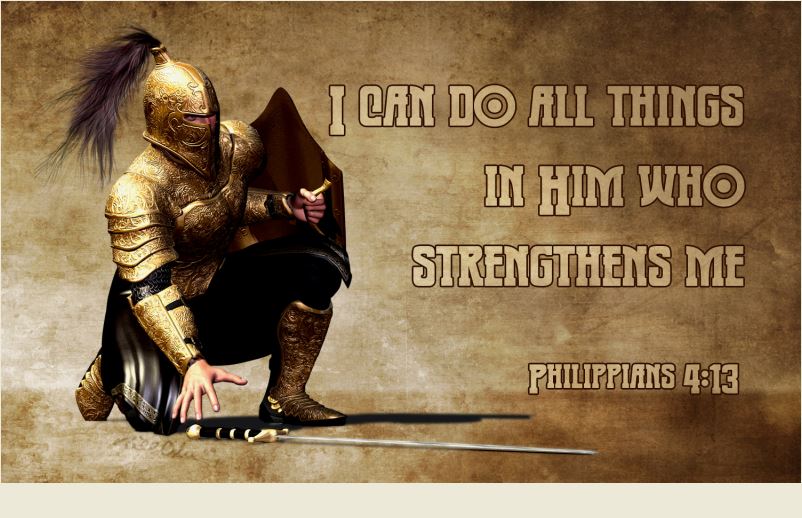
We need to recognise that the true battle is in the heavenly places and it is against the spiritual forces of evil which is why we are told to put on the full armour of God daily.
“For we do not wrestle against flesh and blood, but against the rulers, against the authorities, against the cosmic powers over this present darkness, against the spiritual forces of evil in the heavenly places.” Ephesians 6:12
“Stand therefore, having fastened on the belt of truth, and having put on the breastplate of righteousness, and, as shoes for your feet, having put on the readiness given by the gospel of peace. In all circumstances take up the shield of faith, with which you can extinguish all the flaming darts of the evil one; and take the helmet of salvation, and the sword of the Spirit, which is the word of God, praying at all times in the Spirit, with all prayer and supplication. To that end, keep alert with all perseverance, making supplication for all the saints,” Ephesians 6:14-18
Our job with the lost is preach the Good News as directed by the Holy Spirit knowing they cannot understand the word of God without the Spirit of God
“For those who live according to the flesh set their minds on the things of the flesh, but those who live according to the Spirit set their minds on the things of the Spirit. For to set the mind on the flesh is death, but to set the mind on the Spirit is life and peace. For the mind that is set on the flesh is hostile to God, for it does not submit to God’s law; indeed, it cannot. Those who are in the flesh cannot please God.” Romans 8:5-8
We are also called to love them, pray for them and return good for evil but also to be sensitive to what the Holy Spirit may be doing in their lives. The Holy Spirit may prompt you to use one of the nine Holy Spirit gifts that He expects us to operate in. He distributes them according to His will.
“Love your enemies, and do good, and lend, expecting nothing in return, and your reward will be great, and you will be sons of the Most High, for He is kind to the ungrateful and the evil. Be merciful, even as your Father is merciful.” Luke 6:35-36
“God also bore witness by signs and wonders and various miracles and by gifts of the Holy Spirit distributed according to His will.“ Hebrews 2:4
More on CHRISTIANS: The Urgent Case for Jesus in our World
In this Direct interview, John Anderson (former Deputy Prime Minister of Australia) is joined by Greg Sheridan, widely-respected foreign editor for The Australian. . They discuss the Christian foundations of Western civilisation and the profound importance of religion at a societal, cultural and individual level. They delve into the deep rationality that often undergirds Christian faith, and question the capacity of atheistic philosophies to truly nourish the human soul. Greg Sheridan is one of Australia’s most influential national security commentators, who is active across print media, television and radio and also writes extensively on culture. He has written eight books. His latest, Christians: The Urgent Case for Jesus in Our World is a compelling argument for the modern relevance and importance of the New Testament. As foreign editor of The Australian, he specialises in Asia. He has interviewed Presidents and Prime Ministers across the world.
 LIVING ETERNAL NOW