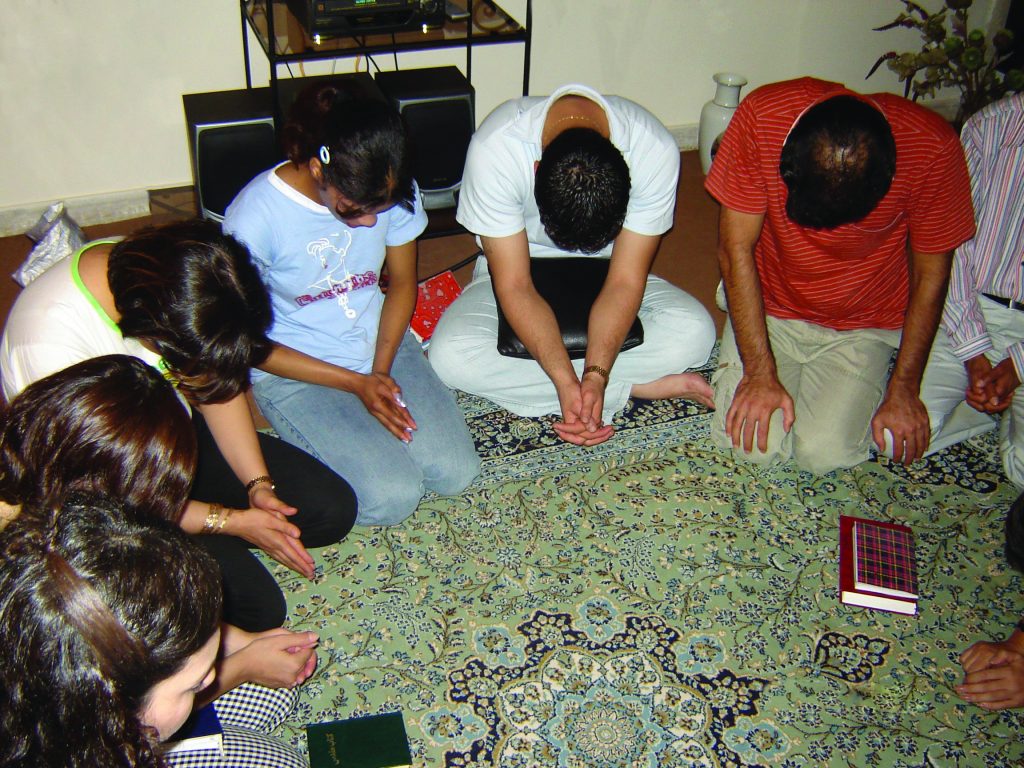
WHAT GOD IS DOING IN IRAN

This post follows my earlier post “What is God Doing in Iran?“. If you have not read it, I suggest you do so before reading this one. There is no doubt that God is converting Iranians supernaturally through dreams and visions and the movement is now widespread. I mentioned the following Scripture in the previous post as this  prophecy about Elam (Iran) in Jeremiah 49:34–39 is fairly unique. It foretells both judgment (the sword, dispersion, destruction of leadership) and restoration “in the latter days.” This is one of the few places where Elam specifically receives that kind of dual prophecy.

I will terrify Elam (Iran) before their enemies and before those who seek their life. I will bring disaster upon them, my fierce anger, declares the Lord. I will send the sword after them, until I have consumed them, and I will set my throne in Elam and destroy their king and officials, declares the Lord. “But in the latter days I will restore the fortunes of Elam, declares the Lord.” Jeremiah 49:37-39

 Jesus is appearing to many Iranians in visions and dreams resulting in many converts to Christianity. Reports have indeed circulated widely, especially from missionaries, Iranian Christian networks, and ministries that serve believers from Muslim backgrounds.

What’s known with reasonable confidence is this:

  • Christianity has grown rapidly in Iran over the past two decades — one of the fastest growth rates in the world, despite official restrictions and persecution.
  • Many Iranian converts—both inside Iran and in the diaspora—personally testify that their first awareness of Jesus came through a dream or vision.
  • These stories are hard to verify scientifically, but they are consistent across numerous independent testimonies, including from former Muslims who later joined underground churches.

From a theological standpoint:

  • Scripture records God sometimes revealing Himself through dreams and visions (e.g., to Daniel, Cornelius, and Paul).
  • Many Christians understand these modern experiences as ways God personally draws people in regions where the Gospel is suppressed and other means of hearing about Christ are restricted.
  • Others are more cautious, viewing such accounts as sincere experiences best tested against Scripture and the message of the Gospel itself.

In simple terms:
Yes — numerous reliable witnesses describe such encounters among Iranians, and the resulting conversions are widely documented. Whether one sees that as “Jesus personally appearing” or as God using visions to awaken faith, the movement toward Christianity in Iran is real, large, and ongoing.

 Growth & Scale of the Underground Church

  • Estimates vary, but most credible sources place the number of Christian converts from Islam in Iran between 300,000 and 3 million. This movement is regarded as one of the fastest-growing in the Middle East. (buzzbeatmedia.com)
  • The U.S. State Department, academic studies, and the World Watch List provide more conservative figures:
  • Between 250,000 and 300,000 ethnic Christians remain in Iran, largely from recognized Armenian and Assyrian communities. (buzzbeatmedia.com)
  • Open Doors estimated about 800,000 Christians in total for 2026. (opendoors.org.au)
  • Iran Alive Ministries, an evangelical network, puts the number of Muslim-background believers around 2 million and suggests the real figure may be even higher. (mbcpathway.com)

2. Nature & Dynamics of the Movement

  • House churches are the core expression of the movement—small, unregistered gatherings that meet in private homes. These meet without legal protection and face relentless surveillance and risk. (buzzbeatmedia.com)
  • Digital evangelism plays a pivotal role. Converts often come to faith through satellite TV programsencrypted messaging apps, and online Bible studies—tools that offer relative safety and privacy. (terreneglobe.com)

3. Dreams & Visions: A Common Testimony

  • Numerous testimonies report Iranians encountering Jesus through dreams or visions—often described as deeply personal and transformative experiences. (aquinas.ac)
  • A survey referenced on social media notes that 25–27% of Muslim-to-Christian converts in the Middle East cite dreams or visions, with the figure rising to 40% in Iran. (x.com)

4. Persecution & Government Response

  • The Iranian regime views the movement as a serious threat, frequently prosecuting converts and targeting underground leaders. Arrests of Christians have increased dramatically—up sixfold between 2024 and 2025 in Tehran alone. (religionnews.com)
  • Despite the dangers, the underground church remains resilient, continuing to expand through digital discipleship tools, mentorship, and discreet gatherings. (transformiran.com)

Summary Table

TopicInsight
Scale of MovementEstimates range between 500,000 to 3 million believers, including converts
Form of ChurchPredominantly underground house churches and online platforms
Dreams & VisionsUp to 40% of Iranian converts cite visions of Jesus as catalyst
Government PersecutionLegal repression and arrests are increasing, yet the church persists

In short: While precise numbers are hard to verify, the evidence points to a significant movement of Persians discovering faith despite persecution. The prevalence of dreams and visions in these conversions echoes patterns seen throughout Scripture—miraculous, personal encounters that awaken faith where traditional evangelism struggles to penetrate. Hallelujah!

IRAN’S IS EXPERIENCING A SPIRITUAL REVOLUTION

On Monday, June 23, Israeli missiles tore through the gates of Evin Prison, sending concrete and steel flying into the afternoon sky. For 45 years, those gates had swallowed Iran’s finest minds, bravest souls and most faithful hearts.

Since 1979, Evin Prison has served as the beating heart of Iran’s persecution machine. In its cells, tens of thousands of Christians have faced extreme torture, solitary confinement and death for the crime of following Jesus. The names of eight pastors who were martyred within its walls are whispered in house churches across the nation like prayers of remembrance. The regime designed Evin to permanently break spirits and minds, to make examples of those who dared believe in something beyond the ayatollahs’ iron grip.

Every cell in Evin is meant to send a message: this is what happens to those who choose light over darkness, who call for freedom over tyranny. Yet the ayatollahs’ greatest miscalculation was believing they could kill what they couldn’t understand. The harder they squeezed, the more their revolution slipped through their fingers.

The numbers tell an impossible story. Over the past couple of decades, despite facing perhaps the world’s most systematic Christian persecution, Iran has become home to the fastest-growing church on earth. Conservative estimates suggest more than one million Iranians have converted to Christianity, transforming from a few hundred believers before 1979 to a movement that now dwarfs the regime’s own support. While the government demands adherence to Islam through violence and law, 50,000 of Iran’s 75,000 mosques have closed their doors due to empty “pews.” The people have voted with their feet, and they have chosen Jesus.

Violence in the name of Islam has caused widespread disillusionment with the regime. When your government promises paradise but delivers poverty, corruption and oppression, people begin searching for something real. Many have found it in the underground house churches, where believers risk everything gathering in small apartments, singing softly so neighbours cannot hear, studying Bibles that could cost them their freedom and even their lives. The same happened in China when Mao persecuted Christians., the house church movement grew with miracles abounding.

The regime’s persecution of Christians has transformed Christianity into something they never anticipated: the ultimate form of resistance. When everything else fails, when politics offers no hope and economics promise only poverty, faith becomes both hope and rebellion. Iranian women share the Gospel with strangers in bazaars. Taxi drivers turn their cars into mobile prayer meetings. Students risk expulsion to attend house churches. They do this knowing the consequences, knowing that Evin Prison waits for those most effective in spreading the faith.

No wonder God brings persecution so He can truly grow His church. These Christians are totally dependent upon and trust God regardless of their circumstances. Can this be said of the church in the west?