Recent developments in creationist cosmology offer an elegant explanation of the distant starlight question which is consistent with the Genesis account of creation and is based on recent astronomical observations and Einstein’s General Relativity equations. Whilst a detailed explanation of this new cosmology is beyond the scope of this Feedback article, it is explained more fully in Harnett’s article “Has dark matter really been proven?” http://www.creation.com
This article provides a framework for understanding the answer to the distant starlight question. The key elements are time dilation, the recent observations showing that we live in a galactocentric universe, and the Scriptural references to God ‘stretching out the heavens’ on Day 4 of the Creation Week.
An experimentally verified prediction of Einstein’s General Relativity Theory is a phenomenon called gravitational time dilation. It has long been established that gravity affects the rate at which time flows in any particular location in the universe.
Another mechanism for time dilation is a rapid acceleration of the fabric of space in an expanding universe. This is explained more fully in Hartnett’s article referenced above.
We live in a galactocentric universe: Standard Big Bang theory has it that the universe has neither a centre nor an edge which is an assumption, called the Cosmological Principle, designed to avoid the earth being a special place. If the Earth was special in any way, it would imply design and thus a Designer which flies in the face of atheistic evolutionary belief. When Edwin Hubble discovered the redshift in the spectra of stars and galaxies and interpreted them as distance (known as the Hubble Law), he was horrified at the implication that the Earth could be in a special place. He wrote: ‘Such a condition [red shifts] would imply that we occupy a unique position in the universe … But the unwelcome supposition of a favoured location must be avoided at all costs … [and] is intolerable … moreover, it represents a discrepancy with the theory because the theory postulates homogeneity.’1
Recent surveys3,4 have measured the galactic redshift for around 250,000 galaxies and have revealed an over abundance of galaxies at certain redshifts in which the data departs from the expected theoretical distribution in a series of large spikes. A straightforward interpretation of this data is that the galaxies are distributed with a spherical shell-like symmetry with the Milky Way galaxy at or near the centre! Such a result is entirely consistent with the biblical picture but is at odds with standard big bang beliefs and is not consistent with the Cosmological Principle.
In at least 11 places, the Scriptures speak of God ‘stretching out the heavens’ (e.g. Job 9:8, Isaiah 40:22 and 42:5, Jeremiah 10:12, Zechariah 12:1) and in Genesis 1:15 the words ‘And it was so.’ are recorded in connection with the events of Day 4 of Creation Week, implying the completion of the events described on that Day. It is a reasonable conclusion to draw that God stretched out the heavens to the vast extent of the observable universe in just one 24 hour day and then ceased the action of ‘stretching out’. This is more rational than the inflation fudge of big bangers discussed above. That is, where the universe just happened to expand much faster than light, although there is no known physical cause for starting or stopping this superluminal expansion.
We should also note that God created the Earth first before the sun, moon and stars (and by inference the planets etc) so it would seem reasonable to assume the universe was stretched out with the Earth at or very near its centre. Furthermore, Psalm 147:4 and Isaiah 40:26 imply that there is a finite number of stars in the universe. So, the Bible seems to teach that we live in a finite universe that has, at the very least, our Milky Way galaxy at its centre.
We now have the keys to understanding how starlight can reach us from such vast distances in just a few thousand years of Earth time. The days of the Creation Week were recorded from the point of view of an observer on the earth so the time reference in Genesis is Earth time. On Day 4, as God commenced stretching out the heavens, the mass of the universe (presumably including the ‘waters above’ which were separated out on Day 2) would have been confined to a much smaller volume of space than is the case today. Assuming the Hartnett–Carmeli theory is correct, the Universe rapidly expanded with massive time dilation as a result of very rapid acceleration of the fabric of space on Day 4. By the end of Day 4, when God completed his work of creating the sun, moon and stars, and had stretched out the heavens to their vast extent, billions of years of cosmic time could have elapsed at the outer edges of the cosmos in just one 24 hour earth day. There would have been more than enough time for the light from distant stars to have reached the earth so that when Adam gazed at the night sky on that sixth night he would have seen much the same as what we see today.
6,000 years have passed since the Creation Week. If the models outlined above are correct, the light we see today from any star that is greater than 6,000 light years away from the earth will have originated on Day 4 itself. This would include most of the visible stars, all of which are part of the Milky Way galaxy. We are effectively looking at God’s creative activity on Day 4 as we gaze into the universe!
So what do we make of supernova 1987A? At 170,000 light years away we are looking at an event that occurred on Day 4 but whose light did not reach us until 1987.
Is an exploding star consistent with a perfect creation? God said that the stars were created to be for signs and seasons (Genesis 1:14) and God foreknew all that would happen right from the very beginning. What to us seems to be destruction is actually just a physical process which does not necessarily denote any lack of perfection in the original creation. Importantly, there is no loss of biblical life involved (the creatures affected by death brought about by the Fall were those the Bible calls נֶפֶשׁ חַיָּה (nephesh chayyāh)).6
Another excellent resource on the light travel dilemma is previewed in the video below.
Part 1 explains that the cause of the universe is supernatural and cannot be explained by natural events. The word of God brought the universe into existence from something that is not visible, something, unlike ordinary visible/tangible matter and energy. This is consistent with the scientific conclusion that the matter and energy that comprise the universe cannot be eternal. Thus, the cause of the universe must be supernatural.
2. There are potential explanations anyway.
Christian astrophysicists have proposed various explanations as to how God might have created things in such a way that even Adam and Eve would have been able to see distant starlight. This section is a bit technical, but we have tried to make it as easy as possible to understand. The ideas are mind-stretching because they seem to conflict with our everyday experience of the world.
Time dilation models
Einstein is famous for discovering that time is not constant but is affected by movement (speed) and gravitational forces. This is known as Special Relativity and General Relativity, respectively. When an object moves very fast, time for that object slows down, or even stops at the speed of light. Also, when an object is in the presence of a massive object, which provides a strong gravitational attraction, time slows down. These effects are measurable and thus have been verified by experiment. They are so real that GPS satellites, which depend on precision clocks for global positioning calculations, must have their on-board clocks adjusted for the lesser gravity (being up in the sky) and for the speed of movement of the satellite.
Now we can try to imagine God creating the universe, “stretching out the heavens” (Psalm 104:2) on Day 4 of Creation Week. This would entail massive gravitational forces and enormous differences in speeds, both of which would change the time ‘out there’ compared to planet Earth. Thus, in one Earth day (Day 4) an enormous amount of time could transpire ‘out there’ allowing ample time for the light to travel to Earth. Various models have been proposed based on these ideas
New Model
Well, this is not so new; it goes back to Einstein’s era. Einstein’s findings of time changing with motion means that the speed of light (c) cannot be measured in one direction. It can only be measured for the round trip (two-way speed). This gives the average speed, but we cannot know if the speed is the same in both directions.
Einstein assumed that the speed of light in all directions was the same (called the synchrony convention) but he realized that it was an assumption without proof.
God calls us to humbly submit to Him and His Word.
Physicists have been wracking their brains ever since Einstein to try to figure out how to measure the speed of light in one direction. For example, we might want to fire a laser beam at the moon and measure how long it takes to get there. However, we need to place a clock on the moon that is telling the same time as a clock on Earth. That is a problem because as we fly the clock to the moon, the time changes on the clock! Putting it another way, the only way the observer on the moon can know when the light beam is sent from Earth is to be sent a message, which then travels at the speed of light. It all becomes totally circular!
There has been quite some discussion about this in recent times, including from secularists—that the speed of light might not be the same in all directions.
So, what if the speed of light towards us was infinite and the speed away from us was c/2? That would give an average speed of c, which we measure. There is no way that we can know that this is not so. And that would mean that light from distant stars would reach Earth the instant that they were created. No problem!
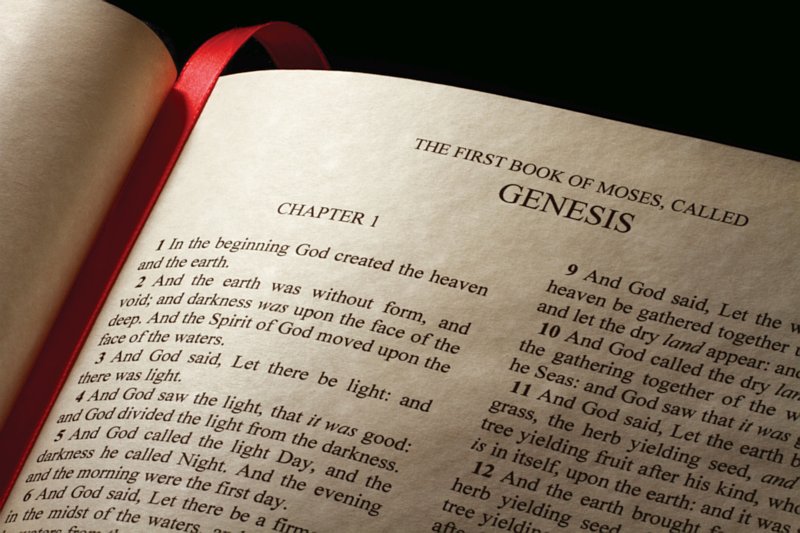
Throughout the account in Genesis 1, the Bible says that God spoke things into existence—eight times, “And God said … ”. And after He spoke, it is often concluded with, “and it was so”. The New Testament tells us,
“By faith we understand that the universe was created by the word of God, so that what is seen was not made out of things that are visible.” (Hebrews 11:3)
The word of God brought the universe into existence from something that is not visible, something, unlike ordinary visible/tangible matter and energy. This is consistent with the scientific conclusion that the matter and energy that comprise the universe cannot be eternal. Thus, the cause of the universe must be supernatural.
And so the Bible describes the Word of God as powerful:
“So shall my word be that goes out from my mouth; it shall not return to me empty, but it shall accomplish that which I purpose, and shall succeed in the thing for which I sent it.” (Isaiah 55:11)
The New Testament tells us that this agency of God, the Word by which He created everything, was none other than the Lord Jesus Christ:
In the beginning was the Word, and the Word was with God, and the Word was God. He was in the beginning with God. All things were made through him, and without him was not anything made that was made. (John 1:1–3)
Genesis 2 tells us that God made the first man and woman. He took dust and made the man, Adam (Genesis 2:7), and took his rib and fashioned the woman, Eve, the mother of all.
I have never had anyone demand that I explain to them how God made a man from dust. And yet there is this demand that we explain how God could have created the stars such that we can see the light from distant stars.
Distant star cluster
The Genesis account makes it clear that the creation of the heavenly bodies was just as miraculous as the creation of the first people:
And God said, “Let there be lights … And God made the two great lights—the greater light to rule the day and the lesser light to rule the night—and the stars.” (Genesis 1:14–16).
Was this any less a miracle than the creation of the man from dust? And yet there is a demand for a naturalistic explanation for how God did this! This seems to me to be quite inconsistent and unreasonable to demand such a thing as a condition of believing the Bible’s account, especially the timeframe.
It’s also interesting that the timeframe of six days with the seventh day of rest—the basis of our 7-day week (Exodus 20:11)—underlines the miraculous nature of God’s actions. And that is part of the problem for those who don’t or won’t believe the timeframe, such as theistic evolutionists and long-age creationists. When they refuse to believe the timeframe, they then tend to think of ‘creation’ in a naturalistic way, over billions of years. And then secular ideas of how things came to be take precedence over the Bible’s clear account. Thus the miraculous nature of Creation Week takes a back seat and so we have this demand for a naturalistic explanation for how we can see distant starlight.
The bottom line: Creation Week involved a series of miracles, one after the other. Thus, these are things for which we can provide no natural explanation. We do not know how God could speak the stars into existence, and thus we cannot know how He created things in such a way that we can see the light from celestial objects millions and billions of light-years distant.
In other words, the question tacitly denies the supernatural nature of the Creation Week events. In doing so it robs God of His omnipotence and limits Him to work only in ways that we can understand. This results in a very diminished view of God. In effect, those who do this are constructing a god compatible with their own limited understanding, which is a form of idolatry.
Astronomer Danny Faulkner describes his solution to the light travel-time problem, then discusses many of the issues with Big Bang cosmology. Dr Danny Faulkner received his PhD in astronomy from Indiana University. He is distinguished Professor Emeritus at the University of South Carolina-Lancaster, where he taught astronomy and physics for over 26 years. Since January, 2013, he has been the staff astronomer at Answers in Genesis in northern Kentucky. For more information on Dr. Faulkner, please go to https://bit.ly/3kGkcFV
This 20 minute video segment is from “Beyond Is Genesis History? Vol 3 : Bible & Stars,” where they explore the universe, the Tower of Babel, the Hebrew text, and the history of interpretation of Genesis, and much more! Check it out on their website: https://bit.ly/BIGH-3
“Thus says God, the Lord, who created the heavens and stretched them out?” Isaiah 42:5


 LIVING ETERNAL NOW