
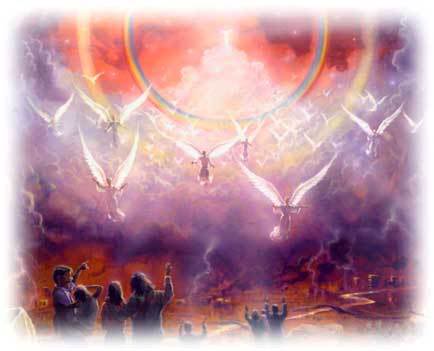
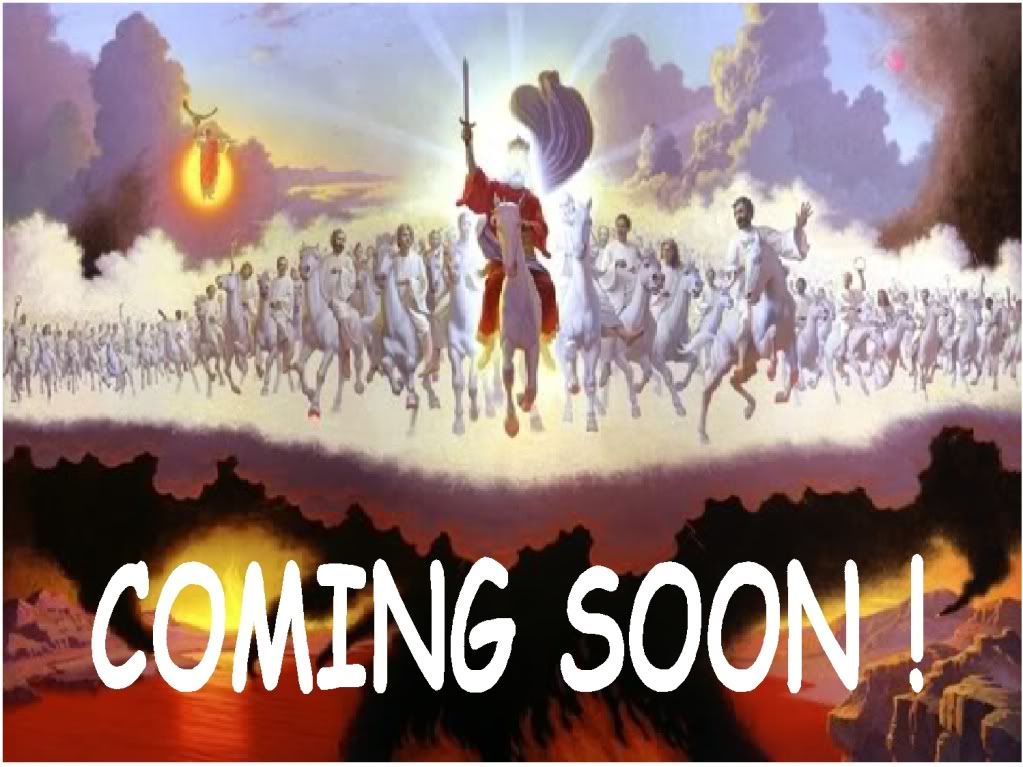
The phrase “Day of the Lord” usually identifies events that take place at the end of history (Isaiah 7:18-25) and is often closely associated with the phrase “that day.” One key to understanding these phrases is to note that they always identify a period during which God personally intervenes in history, directly or indirectly, to accomplish some specific aspect of His plan particularly Jesus second coming and a time when God will pour out His wrath upon the unrepentant as He did with Noah’s flood.
“But watch yourselves lest your hearts be weighed down with dissipation and drunkenness and cares of this life, and that day come upon you suddenly like a trap. For it will come upon all who dwell on the face of the whole earth.“ Luke 21:34-35
“For as in those days before the flood they were eating and drinking, marrying and giving in marriage, until the day when Noah entered the ark, and they were unaware until the flood came and swept them all away, so will be the coming of the Son of Man.“ Matthew 24:38-39
“But know this, that if the master of the house had known in what part of the night the thief was coming, he would have stayed awake and would not have let his house be broken into. Therefore you also must be ready, for the Son of Man is coming at an hour you do not expect.” Matthew 24:43-44
“But the day of the Lord will come like a thief, and then the heavens will pass away with a roar, and the heavenly bodies will be burned up and dissolved, and the earth and the works that are done on it will be exposed. Since all these things are thus to be dissolved, what sort of people ought you to be in lives of holiness and godliness, waiting for and hastening the coming of the day of God, because of which the heavens will be set on fire and dissolved, and the heavenly bodies will melt as they burn!” 2 Peter 3:10-12
“For they are demonic spirits, performing signs, who go abroad to the kings of the whole world, to assemble them for battle on the great day of God the Almighty. (“Behold, I am coming like a thief!” Revelation 16:14-15
The Old Testament passages dealing with the day of the Lord often convey a sense of imminence, nearness, and expectation: “Wail, for the day of the Lord is near!” (Isaiah 13:6); “For the day is near, even the day of the Lord is near” (Ezekiel 30:3); “Let all who live in the land tremble, for the day of the Lord is coming. It is close at hand” (Joel 2:1); “Multitudes, multitudes in the valley of decision! For the day of the Lord is near in the valley of decision” (Joel 3:14); “Be silent before the Lord God! For the day of the Lord is near” (Zephaniah 1:7). This is because the Old Testament passages referring to the day of the Lord often speak of both a near and a far fulfillment, as does much of Old Testament prophecy. Some Old Testament passages that refer to the day of the Lord describe historical judgments that have already been fulfilled in some sense (Isaiah 13:6-22; Ezekiel 30:2-19; Joel 1:15, 3:14; Amos 5:18-20; Zephaniah 1:14-18), while others refer to divine judgments that will take place toward the end of the age (Joel 2:30-32; Zechariah 14:1; Malachi 4:1, 5).
The New Testament passages call it a day of “wrath,” a day of “visitation,” and the “great day of God Almighty” (Revelation 16:14) and refers to a still future fulfillment when God’s wrath is poured out on unbelieving Israel (Isaiah 22; Jeremiah 30:1-17; Joel 1-2; Amos 5; Zephaniah 1) and on the unbelieving world (Ezekiel 38–39; Zechariah 14). The Scriptures indicate that “the Day of the Lord” will come quickly, like a thief in the night (Zephaniah 1:14-15; 1 Thessalonians 5:2), and therefore Christians must be watchful and ready for the coming of Christ at any moment.
Besides being a time of judgment, it will also be a time of salvation as God will deliver the remnant of Israel, fulfilling His promise that “all of Israel will be saved” (Romans 11:26), forgiving their sins and restoring His chosen people to the land He promised to Abraham (Isaiah 10:27; Jeremiah 30:19-31, 40; Micah 4; Zechariah 13). The final outcome of the day of the Lord will be that “the arrogance of man will be brought low and the pride of men humbled; the Lord alone will be exalted in that day” (Isaiah 2:17). The ultimate or final fulfillment of the prophecies concerning the day of the Lord will come at the end of history when God, with wondrous power, will punish evil and fulfill all His promises.
Much of the above comes from the website: http://www.gotquestions.org. It is a great place to go for answers to Biblical questions.


 LIVING ETERNAL NOW