The thought of powering our cars, trucks, trains, and even planes with the most abundant element in the universe, whose byproduct is just water, sounds like the solution to greatly reducing global carbon emissions. Hydrogen seems perfect on the surface. It stores three times as much energy per unit of mass as gasoline. When it is combined with air, the energy released can power a vehicle, and it combines with oxygen to produce water.
Hydrogen is produced from water. About 70 million tons of hydrogen are produced each year, primarily used for ammonia fertilizer. And 96% of hydrogen production is made by a process known as steam-methane reformation. This process uses energy created by natural gas, coal, and oil to produce hydrogen. The industry produces 830 million metric tons of carbon dioxide yearly to produce this “clean” hydrogen fuel.
If we have to burn massive amounts of carbon-based fuel to put hydrogen in our cars, we aren’t helping the environment. We are only displacing where the carbon emissions take place, not whether or not they happen in the first place.
It is no different than fueling our electric vehicles with electricity produced from coal, natural gas, or oil. It is nonsensical to think that we are helping the environment.
Currently, 4% of hydrogen production is produced using electrolysis which uses electricity to split the hydrogen out of the water. However, the costs are four times higher than steam-methane reformation. To put things in perspective, it takes about 50–55 kilowatt hours of electricity to produce a single kilogram of hydrogen fuel. That’s the equivalent of about two days of electricity consumption for an average home in America. Two days of an entire household’s energy consumption just to produce one kilogram that provides enough fuel to travel 70 miles. Also, its volume is a problem It takes up a lot of space, so we can only carry about 5–6 kilograms of hydrogen in our tank. The other tricky nuance is that hydrogen molecules are so tiny, that they easily leak out of most containers.
Without billions of dollars in subsidies, hydrogen just doesn’t make economic sense; and because of where the energy comes from in the production of hydrogen – mainly fossil fuels – it doesn’t even make environmental sense.
For hydrogen fuel cells to be both environmentally sustainable and economical, the world must address how it produces baseload power. This is the kind of power required to manufacture the 70 million tons of hydrogen produced every year.
The most desirable technology to achieve this is nuclear fusion technology but it is still a long way off. Nuclear fusion is the same process that powers the sun and other stars and is widely seen as the holy grail of clean energy. Experts have worked for decades to master the highly complex process on Earth, and if they do, fusion could generate enormous amounts of energy with tiny inputs of fuel and emit zero planet-warming carbon in the process. In the meantime, nuclear fission providing carbon-free emissions with limited radioactive waste is a sustainable energy production strategy and one we should all be using. Both Small Modular Nuclear Reactors and Large-Scale Reactors are the way forward and progressive countries are already pursuing that strategy.
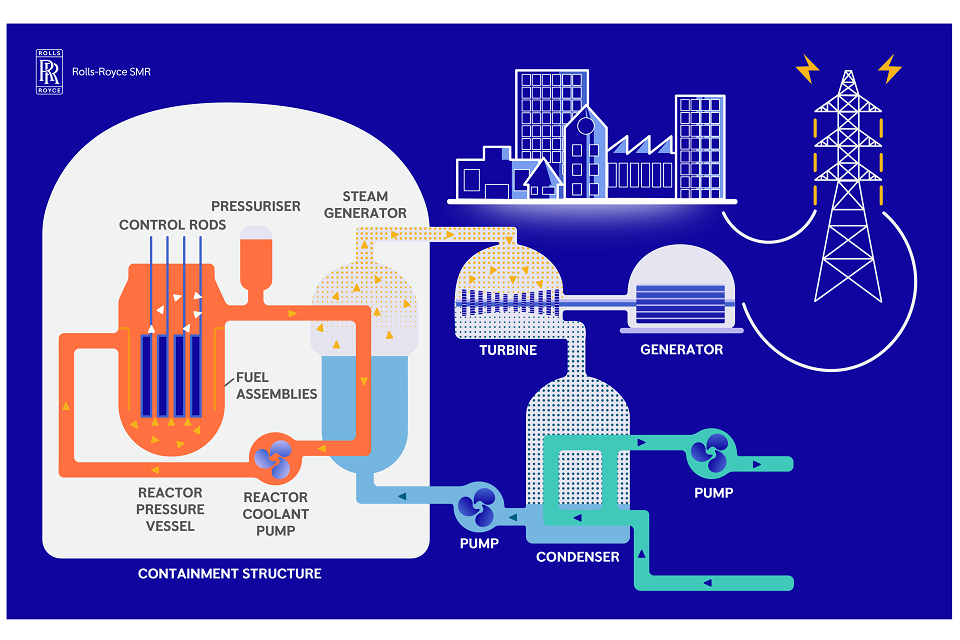
Rolls-Royce SMR was successful in the Swedish nuclear selection process 12th June 2024. It has won a place on Vattenfall’s shortlist of just two SMR companies competing to potentially deploy a fleet of small modular reactors (SMRs) in Sweden.
Vattenfall, the Swedish multinational power company, has announced the shortlist of two SMR vendors as part of its plans to meet the rising electricity demand, adding nuclear capacity and helping Sweden achieve its goal of creating a fossil-free economy by 2045. The other successful SMR wasGE Hitachi’s BWRX-300.
This selection follows a thorough assessment process in which Rolls-Royce SMR had the opportunity to present a fundamentally different approach to building nuclear projects and a modularisation strategy focused on risk reduction to Vattenfall, an experienced and technically respected energy utility.
Rolls-Royce SMR CEO, Chris Cholerton, said: “We are delighted to be one of the two SMR technologies selected by Vattenfall for further evaluation in Sweden. Success in reaching the final two, in such a fiercely competitive process, reflects the benefits of our integrated power station design, our approach to modularisation, and our use of proven nuclear technology.
“Rolls-Royce SMR is the fastest and most affordable way of bringing new nuclear power online and we are excited to work with utilities and industrial customers around the globe, to unlock sustainable sources of low-cost, low-carbon electricity for decades to come.”
Vattenfall’s focus will be deployment at the Ringhals nuclear site with a project that, at the earliest, is operational in the first half of the 2030s, with assessments for SMR and large-scale reactors ongoing.
Sweden has said it needs an additional 100-250 TWh of electricity production over the next 25 years and Vattenfall is poised to play a critical role in the country’s energy transition, including integrating new nuclear capacity into the energy mix.
Rolls-Royce SMR is on track to complete Step 2 and immediately enter Step 3 of the Generic Design Assessment by the UK nuclear industry’s independent regulators this summer. This will be the most important regulatory milestone to date – confirming Rolls-Royce SMR’s first-mover advantage as the leading technology in Europe.
Great article: Nuclear resistance casts Australia as energy laggard nation by Judith Sloan in The Weekend Australian
Judged by the reaction to my column last week, many readers share my concerns about the planned transition of the energy system outlined by Energy Minister Chris Bowen. It’s already clear that the vision of an electricity grid powered almost entirely by renewable energy by the end of the decade and linked by many kilometres of new transmission lines is unachievable.
As for the proposition that electricity prices will fall, it’s similarly clear that the modelling on which this appealing idea was based is fundamentally flawed. In particular, the work undertaken by the CSIRO bizarrely assumes all the capital costs of transmission and distribution associated with the transition are simply written off at the end of the decade. The reality is the investors will continue to earn guaranteed returns on these investments and these will feed into higher consumer prices.
It’s anyone’s guess what Bowen will be up to in 2030 but it’s odds-on to a dollar that he won’t be the climate change and energy minister. But the point is that the fate of the electricity grid, and energy generation more broadly, is too important to be left to day-to-day politics; it requires careful planning and implementation by those who really understand how the system works.
Sadly, the leadership and staff of the Australian Energy Market Operator appear to be incapable of this task given the faulty and impractical Integrated System Plans the agency releases. The incompetence of state government ministers and bureaucrats, in combination with starry-eyed fantasies of renewable energy zones, simply adds to the developing nightmare.
The features of the failing transition are obvious already. Snowy 2.0 is behind schedule and now it is predicted that the pumped-hydro project alone will cost $10bn – the original estimate was $2bn. Many billions of dollars for additional transmission will also be needed.
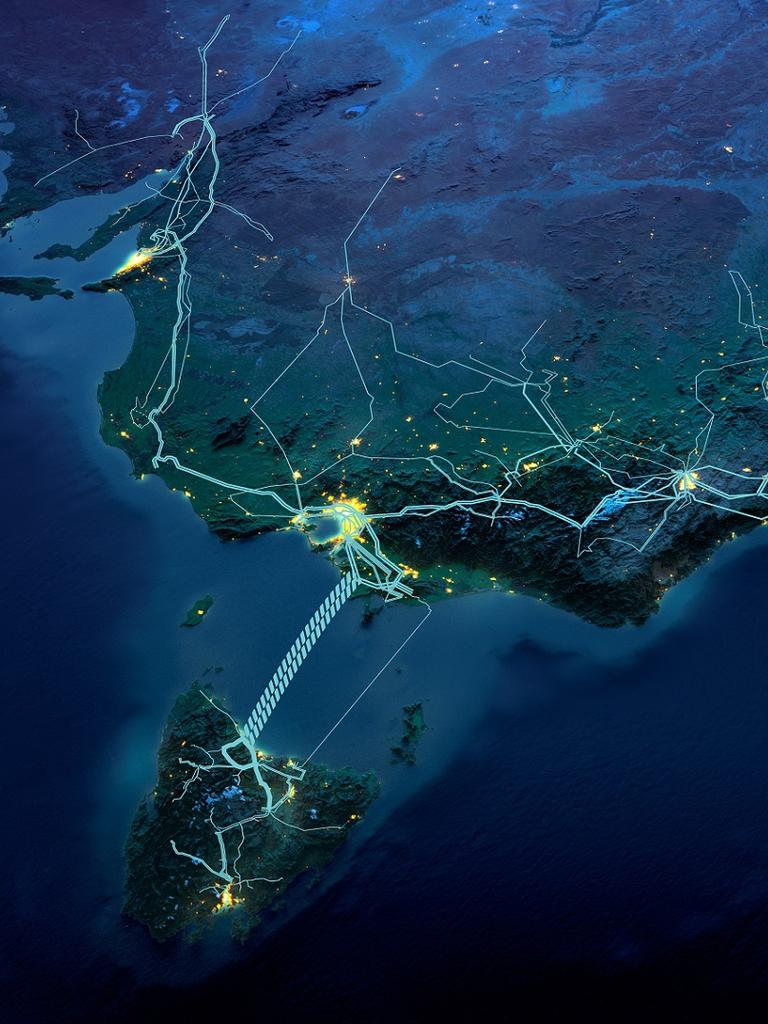
The Marinus Link between Tasmania and Victoria increasingly looks unlikely to go ahead as its cost blows out from $3.1bn to $5.5bn and the fiscally fragile Tasmanian government baulks at bearing the higher figure. Absent this link, the slew of renewable energy projects in Tasmania envisaged as part of the transition is unlikely to proceed. This setback also exposes Victoria’s energy transmission plans.
As for Queensland’s energy transition plans, the inclusion of two large-scale pumped-hydro projects increasingly looks absurd, both in terms of costs and feasibility. There is strong local opposition to the project outside Mackay. The only upside to Queensland’s plan is the intention to keep its (relatively new) coal-fired plants going until renewable energy plus storage can provide guaranteed electricity.
One of the most worrying aspects of this unfolding tragedy is Bowen’s closed mind when it comes to other options to achieve a reliable and affordable grid as well as meeting decarbonisation goals. His muted objection to gas is part of the problem and the fact this energy source is not part of the national security mechanism, the capacity mechanism to provide back-up power to the grid in the event of power shortfalls, is close to incomprehensible.
Bowen’s fierce and ongoing opposition to nuclear power as the greenest form of 24/7 generation simply beggars belief.His unfounded assertion that nuclear is simply too expensive must be tested by the market on the basis of the government lifting the completely unjustified ban on nuclear power.
There are more and more countries that beg to differ with Bowen’s assertion. France, Sweden, Finland, Britain, Canada, South Korea, the US, and others are all ramping up investments in nuclear energy. If nuclear power is too expensive, it’s news to these economic powerhouses. We really run the risk of being left at the starting gate unless we make this shift.
The turning point for Labor should have been the signing of the AUKUS deal and its commitment to the use of nuclear-powered submarines. As part of this agreement, we are required to ramp up the nuclear-related workforce substantially and deal with the waste on our shores. It is the perfect correlate to the establishment of a domestic nuclear power industry.
The lessons being learned by other countries will prove useful and should allow us to short-circuit some of the lengthy delays that have plagued the nuclear industry. Indeed, there is clear evidence that the high expense of nuclear has been partly the result of massive over-regulation and a tendency for heel-dragging by the authorities. The comparison between the US and Canadian regulators is telling in this context, with the Canadian regulator being much more efficient and cooperative.
There are several technology choices we could make, including simply using the tried-and-true ones. The South Koreans, for instance, are finalising several plants using the current principal technology. In Australia, these plants could be easily located where coal-fired plants exist or have existed: the sources of water and their proximity to transmission lines make them perfect sites.
There is also the option of providing a pilot site for TerraPower, the new form of nuclear generation promoted by Bill Gates.
Work is proceeding in Wyoming, US; the plant will generate 350 megawatts to 500MW. While the cost of this plant is estimated to be $US4bn ($6.2bn), the expectation is the next ones could cost as little as $US1bn. This form of nuclear generation doesn’t require significant amounts of water or auxiliary power. Interestingly, there was fierce bidding to have the plant located at the various possible sites.
If it were not for Bowen’s, and Labor’s, ingrained opposition to nuclear power that has little justification in the current climate, it could be exciting times for the electricity industry in Australia.
Small modular reactors will also likely be part of the mix; after all, we currently have them floating around the oceans. The Canadians have made a major commitment to their development and Rolls-Royce is working day and night to achieve SMRs as a commercial option for that company. In time, Australia may simply be able to buy them off the shelf.
Of course, the renewable energy industrial complex is likely to arc up because the most sensible thing to do, if decarbonisation is the paramount concern, is simply to go with nuclear and forget short-lived, unreliable intermittent wind and solar, even with the fanciful addition of batteries.
In the short term, it is possible to make nuclear and renewable energy complementary. But as the turbines and panels reach the end of their short lives, it won’t make much sense to replace the landscape-scarring installations. But the key now is to get on with it.



 LIVING ETERNAL NOW