This article is adapted from an article by Michael Robinson. He has spent more than four decades as an investigative journalist uncovering the story behind massive tech trends.
A massive energy crisis is here … and it’s all because of artificial intelligence. It is one of the reasons why solar and wind (intermittent renewables) are not adequate for maintaining supply. Nuclear is considered the best option to stabilise the energy mix.
On average, just one new AI data center currently requires the same amount of electricity as 750,000 homes. That’s more than the population of cities like Seattle, Detroit, and Denver.
Nearly 3,000 more of them are on the way. No wonder Tirias Research forecasts that, by 2028, data center power consumption will be 212 times what it was in 2023.
This boom in AI data centers will push America’s power grid to the brink. According to the New York Times, the world is “poised to add the equivalent of Japan’s annual electricity demand to grids each year” over the next decade.
It could bring AI screeching to a halt … Let alone affect regular people as utility bills skyrocket — even as they face planned blackouts to conserve energy … and prolonged outages because of creaky infrastructure.
Fortunately, Meta announced yesterday a request for proposals from nuclear power developers who would help the company add 1 to 4 gigawatts of electricity generating capacity in the U.S. According to Axios, Meta is willing to share costs early in the cycle and will commit to buying power once the reactors are up and running.
The hitch? Applicants have to move fast. Initial proposals are due February 7, 2025, and Meta wants the power plants to begin operation in the early 2030s.
Microsoft has signed a deal with one of the most infamous nuclear power facilities in the US as it looks for more ways to ensure the demand for AI computing is met.
The legacy of the Three Mile Island (TMI) nuclear plant has long been shaped by the 1979 Unit 2 meltdown, which had a profound effect on public perceptions of nuclear energy. What a lot of people don’t know is that Unit 1 was not only unaffected, but continued to operate safely and reliably for decades.
Now, in a major new step, Constellation has signed its largest power purchase agreement with Microsoft, leading to the planned restoration and restart of TMI Unit 1 under the name Crane Clean Energy Center (CCEC). The project is expected to bring 835 megawatts of carbon-free power to the grid, create 3,400 jobs, and contribute over $3 billion in taxes.
Considering this move in the USA it will be interesting to learn how Microsoft plans to power their new data centers in Australia.
Microsoft will invest A$5 billion ($3.2 billion) in Australia to expand its cloud computing and AI infrastructure over the next two years, in what the US company described as its largest investment in the country in four decades. Announced as part of Prime Minister Anthony Albanese’s visit to the US this week, the investment will help Microsoft grow its data centers across Canberra, Sydney, and Melbourne by 45% – from 20 sites up to 29.
The following video shows that power constraints are the major problem facing Data Centre growth.
The thought of powering our cars, trucks, trains, and even planes with the most abundant element in the universe, whose byproduct is just water, sounds like the solution to greatly reducing global carbon emissions. Hydrogen seems perfect on the surface. It stores three times as much energy per unit of mass as gasoline. When it is combined with air, the energy released can power a vehicle, and it combines with oxygen to produce water.
Hydrogen is produced from water. About 70 million tons of hydrogen are produced each year, primarily used for ammonia fertilizer. And 96% of hydrogen production is made by a process known as steam-methane reformation. This process uses energy created by natural gas, coal, and oil to produce hydrogen. The industry produces 830 million metric tons of carbon dioxide yearly to produce this “clean” hydrogen fuel.
If we have to burn massive amounts of carbon-based fuel to put hydrogen in our cars, we aren’t helping the environment. We are only displacing where the carbon emissions take place, not whether or not they happen in the first place.
It is no different than fueling our electric vehicles with electricity produced from coal, natural gas, or oil. It is nonsensical to think that we are helping the environment.
Currently, 4% of hydrogen production is produced using electrolysis which uses electricity to split the hydrogen out of the water. However, the costs are four times higher than steam-methane reformation. To put things in perspective, it takes about 50–55 kilowatt hours of electricity to produce a single kilogram of hydrogen fuel. That’s the equivalent of about two days of electricity consumption for an average home in America. Two days of an entire household’s energy consumption just to produce one kilogram that provides enough fuel to travel 70 miles. Also, its volume is a problem It takes up a lot of space, so we can only carry about 5–6 kilograms of hydrogen in our tank. The other tricky nuance is that hydrogen molecules are so tiny, that they easily leak out of most containers.
Without billions of dollars in subsidies, hydrogen just doesn’t make economic sense; and because of where the energy comes from in the production of hydrogen – mainly fossil fuels – it doesn’t even make environmental sense.
For hydrogen fuel cells to be both environmentally sustainable and economical, the world must address how it produces baseload power. This is the kind of power required to manufacture the 70 million tons of hydrogen produced every year.
The most desirable technology to achieve this is nuclear fusion technology but it is still a long way off. Nuclear fusion is the same process that powers the sun and other stars and is widely seen as the holy grail of clean energy. Experts have worked for decades to master the highly complex process on Earth, and if they do, fusion could generate enormous amounts of energy with tiny inputs of fuel and emit zero planet-warming carbon in the process. In the meantime, nuclear fission providing carbon-free emissions with limited radioactive waste is a sustainable energy production strategy and one we should all be using. Both Small Modular Nuclear Reactors and Large-Scale Reactors are the way forward and progressive countries are already pursuing that strategy.
Rolls-Royce SMR was successful in the Swedish nuclear selection process 12th June 2024. It has won a place on Vattenfall’s shortlist of just two SMR companies competing to potentially deploy a fleet of small modular reactors (SMRs) in Sweden.
Vattenfall, the Swedish multinational power company, has announced the shortlist of two SMR vendors as part of its plans to meet the rising electricity demand, adding nuclear capacity and helping Sweden achieve its goal of creating a fossil-free economy by 2045. The other successful SMR wasGE Hitachi’s BWRX-300.
This selection follows a thorough assessment process in which Rolls-Royce SMR had the opportunity to present a fundamentally different approach to building nuclear projects and a modularisation strategy focused on risk reduction to Vattenfall, an experienced and technically respected energy utility.
Rolls-Royce SMR CEO, Chris Cholerton, said: “We are delighted to be one of the two SMR technologies selected by Vattenfall for further evaluation in Sweden. Success in reaching the final two, in such a fiercely competitive process, reflects the benefits of our integrated power station design, our approach to modularisation, and our use of proven nuclear technology.
“Rolls-Royce SMR is the fastest and most affordable way of bringing new nuclear power online and we are excited to work with utilities and industrial customers around the globe, to unlock sustainable sources of low-cost, low-carbon electricity for decades to come.”
Vattenfall’s focus will be deployment at the Ringhals nuclear site with a project that, at the earliest, is operational in the first half of the 2030s, with assessments for SMR and large-scale reactors ongoing.
Sweden has said it needs an additional 100-250 TWh of electricity production over the next 25 years and Vattenfall is poised to play a critical role in the country’s energy transition, including integrating new nuclear capacity into the energy mix.
Rolls-Royce SMR is on track to complete Step 2 and immediately enter Step 3 of the Generic Design Assessment by the UK nuclear industry’s independent regulators this summer. This will be the most important regulatory milestone to date – confirming Rolls-Royce SMR’s first-mover advantage as the leading technology in Europe.
Nuclear energy is one of the key technologies going forward because it is virtually emission-free and produces a huge amount of reliable energy. Unfortunately, there are public perception problems related to safety, waste management, and costs. The fact that modern nuclear technology is a major improvement over older nuclear technologies is often ignored and the poor image of nuclear power perpetuates. Nuclear innovation is important, and emerging technology milestones must be more frequently communicated to the public. One such option is Thorium Molten Salt Reactors (TMSR), which dates from the 1960s. TMSR has experienced a resurgence of interest to be considered a new technology today. The video below demonstrates its many benefits, particularly safety and cost.
Based on the available literature the overall finding is that TMSR concepts will provide clean, safe, and cost-effective energy for sustainable development. One question, therefore, is why TSMR was not further developed in the 1960’s? In short, Hyman Rickover, de facto head of the US nuclear program, wanted the plutonium from uranium-powered nuclear plants to make bombs. Hence, Thorium Molten Reactors (TMSR) were not allocated funds for further development.
In Jesus’ coming Millennial Kingdom, people like Hyman Rickover will not be allowed to stifle projects like TSMR, which will be a significant benefit to mankind.
“The Extinction Rebellion types who like gluing themselves to roads are right about one thing. It makes no logical sense to rail against coal and gas like Bowen does and yet export it to major ‘polluters’ like China and India. If you truly believe that CO2 will cause a climate catastrophe or global ‘boiling’ then why would you extract and export the stuff to be used by others, while investing $billions (perhaps $trillions) in solar panels and windmills imported from China in particular who has burnt our carbon to make the panels and windmills?
“And why would you cover thousands of square kilometres of our arable land and wildlife habitat with solar panels, windmills, and transmission corridors Doesn’t this mean we are actually paying China to pollute and destroy our wildlife and the planet? And if you don’t believe that the planet is going to boil then why spend all that money on Chinese imports when we could just burn the carbon ourselves in our own power stations? Doesn’t this seem mad? The logic of Labor is so conflicted that we are willing to impoverish ourselves for nothing. Indeed it is mad.”
“Bowen asserts that an SMR (small modular reactor) would cost $5 billion. Well, that means we could build at least 4 SMRs that would be hooked to the existing grid and generate at least 1GWh of electricity on 24/7 basis for 60-80 years! Bowen has not been keeping up with what Rolls Royce SMR is doing.
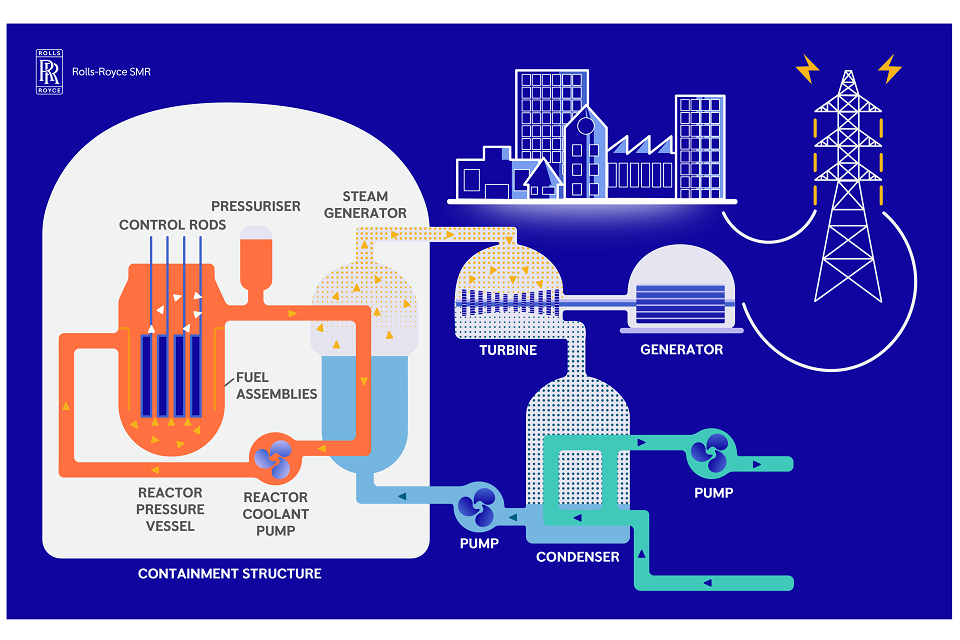
Rolls-Royce SMR will move away from the high cost and high-risk complex construction programme principles into predictable factory-built commodities. Approximately 90% of manufacturing and assembly activities are carried out in factory conditions, helping to maintain an extremely high-quality product – reducing on-site disruption and supporting international roll out.
“An equivalent solar farm would need to have a theoretical output of 3+GW and would need replacing at least 4 times in addition to the $20+billion for rewiring. These are your figures – nuclear is a bargain.”
SMALL MODULAR NUCLEAR REACTORS ARE THE WAY TO GO FOR AUSTRALIA AND THE REST OF THE WORLD. If that is the case then I suggest you look at investing in the two companies that look set to dominate this market. BWX Technologies and Rolls-Royce SMR Ltd. Westinghouse is also developing the “eVinci” Small Micro Reactor so it may be worth your while following its progress.
Whilst my calling is to alert the world to what God has next for this world – Jesus Millennial Kingdom, I could not resist bringing this opportunity to the followers of http://www.livingeternal.net. God has given me a talent for business and I am sure that Jesus will use me in business during His Millennial reign in some capacity. What about you, have you ever thought about how Jesus may use you during His Millennial reign on this earth? Remember, the curse has not been lifted, people are still born and die and Jesus and the Saints need to rule with a rod of iron. Remember, also that Satan is bound for most of the thousand years but when he is released he is still able to raise an army, their number like the sand of the sea, to come against Jesus and the Saints.
What is next on God’s agenda is not the new heaven and the new earth where only the righteous dwell.
Team Biden is still intent on getting 100% hydrocarbon-free electricity by 2035. It wants to eliminate fossil fuels throughout the US economy by 2050: no coal or natural gas for electricity generation; no gasoline or diesel for vehicles; no natural gas for manufacturing, heating, cooking, or other needs.
America’s electricity demand would soar from 2.7 billion megawatt-hours per year (the fossil fuel portion of total US electricity) to almost 7.5 billion MWh by 2050. Substantial additional generation would be required to constantly recharge backup batteries for windless, sunless periods. Corn-based ethanol demand would disappear, but biofuel crops would have to replace petrochemical feedstocks for paints, plastics, pharmaceuticals, cosmetics, cell phones, wind turbine blades, and countless other products.
This is just for the USA. Extrapolate these demands to the rest of a fossil-fuel-free developed world … to China and India … and to poor countries determined to take their rightful places among Earth’s healthy and prosperous people – clean, green energy requirements become monumental, incomprehensible.
We’re certainly looking at tens of thousands of offshore wind turbines, millions of onshore turbines, billions of photovoltaic solar panels, billions of vehicle and backup battery modules, and tens of thousands of miles of new transmission lines. Hundreds of millions of acres of US farmland, scenic areas, and wildlife habitats would be affected – blanketed with enormous industrial facilities, biofuel operations, and power lines.
Add in the enormous and unprecedented mining, processing, and manufacturing required to make all these energy-inefficient technologies – mostly outside the United States – and the land use, habitat loss, and toxic pollution would gravely threaten people, wildlife, and the planet.
Let’s take a closer look, now just from a US perspective, but knowing these are global concerns.
Indiana’s Fowler Ridge wind turbines
Solar power. 72,000 high-tech sun-tracking solar panels at Nevada’s sunny Nellis Air Force Base cover 140 acres but generate only 32,000 MWh per year. That’s 33% of rated capacity; 0.0004% of 2050 US electricity needs. Low-tech stationary panels have far lower efficiency and generating capacity, especially in more northern latitudes. Meeting 2050 US electricity needs would require Nevada sunshine and nearly 235,000 Nellis systems on 33,000,000 acres (equal to Alabama).
Triple that acreage for low-tech stationary panels in less sunny areas. For reference, Dominion Energy alone is planning 490 square miles of panels (8 times Washington, DC) just in Virginia, just for Virginia. Then add all the transmission lines.
Wind power. 355 turbines at Indiana’s Fowler Ridge industrial wind facility cover 50,000 acres (120 acres/turbine) and generate electricity just over 25% of the time. Even at just 50 acres per turbine, meeting 2050 US power needs would require 2 million 1.8-MW wind turbines, on 99,000,000 acres (equal to California), if they generate electricity 25% of the year.
But the more turbines (or solar panels) we need, the more we have to put them in sub-optimal areas, where they might work 15% of the year. The more we install, the more they reduce wind flow for the others. And some of the best US wind zones are along the Canada-to-Texas flyway for migrating birds – which would mean the massive, unsustainable slaughter of cranes, raptors, other birds, and bats.
Go offshore, and even President Biden’s call for 30,000 MW of electricity (2,500 monster 12-MW turbines) wouldn’t meet New York State’s peak summertime electricity needs.
Biofuels and wood pellets. America already grows corn in an area larger than Iowa, to meet current ethanol quotas. Keep-fossil-fuels-in-the-ground lobbyists need to calculate how many acres of soybeans, canola, and other biofuel crops would be needed to replace today’s petrochemical feedstocks; how much water, fertilizer, labor, and fuel would be needed to grow harvest and process them; and how much acreage would have to be taken from food production or converted from bee and wildlife habitat.
Climate activists also approve of cutting down thousands of acres of North American hardwood forests – nearly 300,000,000 trees per year – and turning them into wood pellets, which are hauled by truck and cargo ship to England’s Drax Power Plant. There they are burned to generate electricity so that the UK can “meet its renewable fuel targets.” And that’s just one “carbon-neutral” power plant. That’s one year to slash and burn the fuel, and fifty years to regrow replacement trees. This is not green, sustainable energy.
Organic farming. Environmentalists dream of converting all US (and even all global) agriculture to 100% organic. That would further reduce wildlife habitats – dramatically – especially if we are to simultaneously eliminate world hunger … and replace petrochemicals organically.
Organic farms require up to 30% more land to achieve the same yields as conventional agriculture, and most of the land needed to make that happen is now forests, wildflower fields, and grasslands. Organic farmers (and consumers) also reject synthetic fertilizers, which means more land would have to be devoted to raising animals for their manure unless human wastes are used. More lost wildlife habitat.
They reject modern chemical pesticides that prevent billions of tons of food from being eaten or ruined but utilize toxic copper, sulfur, and nicotine-based pesticides. They even reject biotechnology (genetic engineering) that creates crops that are blight-resistant, require less water, permit no-till farming, need fewer pesticide treatments, and bring much higher yields per acre. Translation: even less wildlife habitat
There are alternatives, of course. Government mandates and overseers could require that “average” American families live in 640-square-foot apartments, slash their energy use, ride only bicycles or public transportation, and fly only once every few years. They could also switch us to “no-obesity” diets.
Indeed, “scientists” are again saying we “common folks” could “reduce our carbon footprints” by eating less beef and chicken, and more insect protein, ground-up bugs – or roasted bumblebees. Or we could just reduce the number of “cancerous, parasitic” humans. (Perhaps beginning with wannabe overseers?)
It is interesting to consider what Jesus will do in the Millennium to provide power for the world. I would suggest nuclear fusion will finally be perfected for use as a power source. Cars will be powered by hydrogen or batteries. It will be interesting to see which of these technologies will be the most efficient.
Man’s time of ruling this planet under the influence of Satan and his demons is coming to an end. Satan and his minions will be bound in the abyss for a thousand years and Jesus and the Saints will rule the nations.
“The one who conquers and who keeps my works until the end, to him I will give authority over the nations, and he will rule them with a rod of iron… even as I myself have received authority from my Father.” Revelation 2:26-27
“From his mouth comes a sharp sword with which to strike down the nations, and He will rule them with a rod of iron.” Revelation 19:15
“She gave birth to a male child, One who is to rule all the nations with a rod of iron, but her child was caught up to God and to his throne,” Revelation 12:5




 LIVING ETERNAL NOW