
After more than two centuries of living off “golden soil and wealth for toil”, feeding itself and millions of people overseas, Australia is facing an agricultural Armageddon that is fast approaching. My last post was “Australia Has Abandoned Its Christian Foundations” and now we are facing food shortages.
Overseas, severe drought and freeze damage push U.S. winter wheat to historic lows, threatening yields, commodity prices, and the broader agricultural supply chain. Ukraine is a key producer and exporter of food staples, such as wheat and maize. Some 90% of its wheat exports went to Africa and Asia between 2016 and 2021, supporting food security in some of the most disadvantaged regions of the world. The global food supply remains insecure as the war and Russia’s blockage of the Black Sea ports reduces Ukraine’s ability to export grain and foodstuff to the global market.
For so long, as Australian farmers have fed and clothed the nation, there has been so much abundance, allowing for seemingly ever-increasing exports of excess food and fibre, with always rising value, that along with mining have formed the foundation of the economy. Such bounty has given rise to the boast that we feed 80 million people.
But despite high prices for exports and recent strong rains boosting crops, the reality is our agricultural production, as opposed to value, particularly in the national Murray-Darling Basin food bowl, is flatlining.
What’s more, population growth, agricultural water shortages and the alienation of arable land have combined to raise the spectre that Australia could become a net importer in some areas of basic foods during the next decade.
Based on figures from the Australian Bureau of Statistics and the Australian Bureau of Agricultural and Resource Economics and Sciences, the projected shortfalls for basic food production on annual per capita consumption by 2040 include 47 per cent for pork, 40 per cent for butter, 21 per cent for eggs, 16 per cent for apples, 15 per cent for chicken, 14 per cent for rice and 7 per cent for cheese.
There are even less conservative estimates that suggest Australia could become a net importer of food and fibre by 2037.
Famines along with earthquakes are two of the end times signs given by Jesus in the Olivet Discourse. I have written on earthquakes in recent posts as a result of recent severe earthquake activity in Venezuela and Columbia.
“For nation will rise against nation, and kingdom against kingdom, and there will be famines and earthquakes in various places. All these are but the beginning of the birth pains.” Matthew 24:7
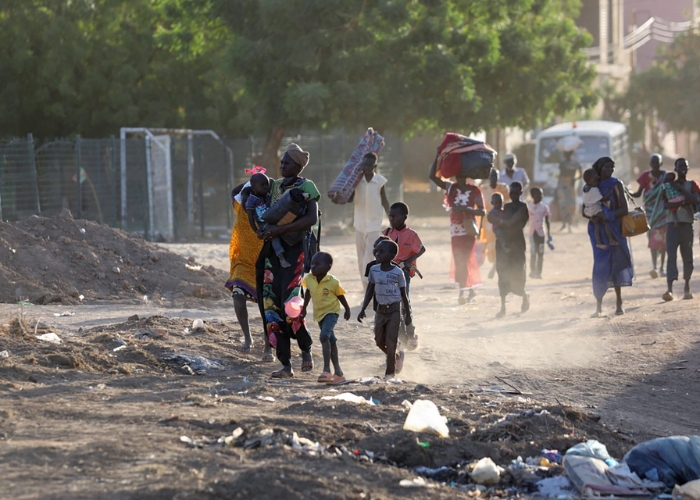
Hunger is at crisis levels in countries across the globe – but where is food insecurity highest? According to the latest UN Hunger Hotspots (June-November 2026), the countries most at risk of hunger are:
- Countries with highest concern: Nigeria, Palestine, Sudan, Somalia, South Sudan and Yemen
- Countries with very high concern: Afghanistan, Democratic Republic of the Congo, Haiti
- Other hunger hotspots: Lebanon, Madagascar, Mali, Myanmar

