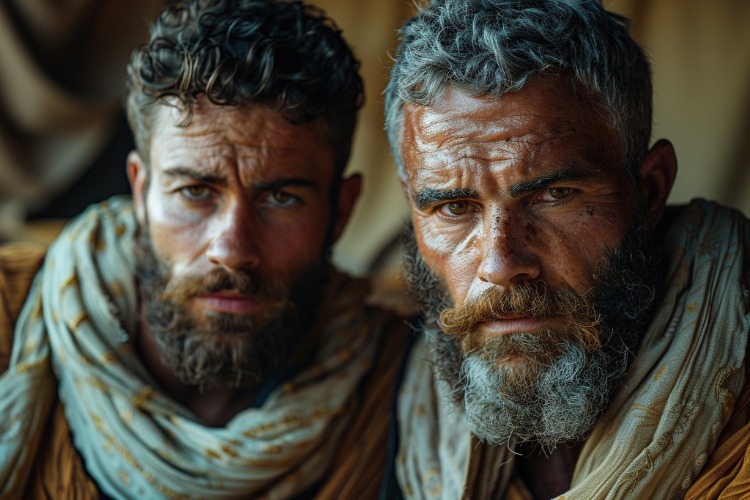
“Come, let us bow down in worship, let us kneel before the Lord our Maker.” Psalm 95:6
Psalm 95 begins as a shout of joyful praise — ‘Come, let us sing for joy to the Lord; let us shout aloud to the Rock of our salvation’ — and then shifts in verse 6 to a different posture: kneeling, bowing. The movement from celebration to reverence is not contradiction; it is the full arc of authentic worship. You cannot indefinitely sustain only one or the other.
‘Bow down’ — kāraʿ — to kneel, to bend at the knee, used for submission before royalty. ‘Worship’ — shāḥāh — to bow down, to prostrate oneself in reverence. ‘Our Maker’ — ʿōśēnû — the one who made us, the creator to whom we owe existence. The basis for kneeling is not fear of punishment but the recognition of who he is and who we are in relation to him. The psalm then pivots to warning: don’t harden your hearts as at Meribah. The first act of disobedience in the wilderness was a failure of trust; the pathway to it was a hardened heart. Worship — genuine, reverent, consistent — keeps the heart soft.
Worship is the expression of love, reverence, and surrender toward God. It’s not limited to singing or praying—those are just forms of it. At its core, worship is about orientation: turning your heart, mind, and life toward the One you believe is worthy.
Humans are wired for worship. We all place something at the center of our lives—career, relationships, pleasure, money, status. Worshiping God is choosing to center life on something eternal, unchanging, and greater than ourselves.
Worship, then, is not just about God’s worthiness—it’s about our need for meaning, grounding, and direction.
The essence of worship
Recognition of God — acknowledging God’s character: holy, loving, just, powerful.
Response to God — gratitude, obedience, trust, praise.
Relationship with God — worship is relational, not mechanical.
Alignment of life — living in a way that reflects God’s values.
Worship is both internal (heart, mind, affection) and external (actions, words, choices).
God is the ultimate reality—the Creator, Sustainer, and moral centre of the universe. Worship is a natural response to greatness.
People worship because they feel thankful: for life, forgiveness, guidance, hope, or simply God’s presence.
Worship is often described as an act of love. “We love because He first loved us” is a common Christian framing.
Worship shapes character. It reorients priorities, calms the mind, strengthens resilience, and fosters humility.
Many scriptures command worship—not as domination, but as a path to flourishing. Worship aligns people with what is believed to be ultimate truth.
Humans naturally give their devotion to something—success, relationships, pleasure, power. Worshiping God is choosing who or what defines you.
Worship is a Lifestyle:
Prayer — conversation with God
Service — helping others
Obedience — living according to God’s teachings
Praise — spoken or sung adoration
Sacrifice — giving up something valuable for a higher purpose
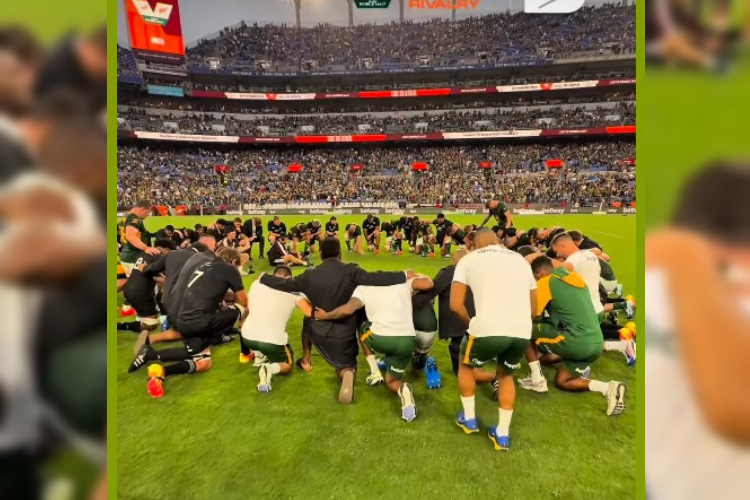
All Blacks and Springboks Kneel in Prayer as injured Ardie Savea recounts encounter with God. They prayed to our Heavenly Father who sent His only son Jesus to Earth to provide the means of our restoration back into a right relationship with Him.
Isaiah prophesied Jesus first coming as a suffering servant but the religious leaders of the day only wanted the Messiah who would come as a conquering king to defeat their enemies. As there are 2000 prophecies of Jesus second coming as a conquering king and His coming Millennial reign it is no wonder their focus was on those prophecies. Let us look at Isaiah’s prophecy of Jesus first coming to Earth as the suffering servant.
“Surely he has borne our griefs and carried our sorrows; yet we esteemed him stricken, smitten by God, and afflicted. But he was pierced for our transgressions; he was crushed for our iniquities; upon him was the chastisement that brought us peace, and with his wounds we are healed. All we like sheep have gone astray; we have turned—every one—to his own way; and the Lord has laid on him the iniquity of us all. He was oppressed, and he was afflicted, yet he opened not his mouth; like a lamb that is led to the slaughter, and like a sheep that before its shearers is silent, so he opened not his mouth. By oppression and judgment he was taken away; and as for his generation, who considered that he was cut off out of the land of the living, stricken for the transgression of my people? And they made his grave with the wicked and with a rich man in his death, although he had done no violence, and there was no deceit in his mouth. Yet it was the will of the Lord to crush him; he has put him to grief; when his soul makes an offering for guilt, he shall see his offspring; he shall prolong his days; the will of the Lord shall prosper in his hand. Out of the anguish of his soul he shall see and be satisfied; by his knowledge shall the righteous one, my servant, make many to be accounted righteous, and he shall bear their iniquities. Therefore I will divide him a portion with the many, and he shall divide the spoil with the strong, because he poured out his soul to death and was numbered with the transgressors; yet he bore the sin of many, and makes intercession for the transgressors.” Isaiah 53:4-12
Is it any wonder that Jesus said, “I am the way, the truth and the life, no one comes to the Father except through me.” John 14:6
All Blacks and Springboks players united in prayer after their Baltimore clash, while Christian captain Siya Kolisi and Ardie Savea continue to testify openly about Jesus. Four Tests, one series, everything on the line. When the final whistle went in Baltimore, the All Blacks and Springboks came together in a huddle, arm in arm, a mark of respect after one of the great rivalries in world rugby delivered another classic. New Zealand’s All Blacks and the South African Springboks have marked the close of their new Rugby test series with prayer. Side by side, both teams stood and knelt together with heads bowed after SA beat NZ 43-28 in the United States city of Baltimore.
While mainstream coverage was spread thin, South Africa’s public broadcaster acknowledged the prayer, as did Christian sports outreach platform Jesus My Goal (JMC).
Is He, forgiving and good, abounding in love to all who call on Him? If not you are praying to the wrong God.
“You, Lord, are forgiving and good, abounding in love to all who call to you.” Psalm 86:5
David understood, Psalm 86 is David’s personal prayer — intimate, urgent, confessional. He is in genuine trouble (v.7: ‘in the day of my trouble I will call to , for you will answer me’). And before he brings his specific requests, he grounds his prayer in theology: who is God? His prayer is built on the character of the one he’s praying to.
Three attributes are named in this verse: forgiving (sallāh — ready to pardon, disposed toward forgiveness), good (tōb — inherently beneficial, genuinely favourable), and abounding in love (rav-hesed — rich in covenant love, overflowing with faithful commitment). The word ‘abounding’ is rav — great, abundant, much, full. God’s love is not merely present; it is in excess. And it is ‘to all who call’ — not to those who have earned it, not to those with a sufficiently impressive prayer life, but to all who call. Calling is the only criterion. You don’t have to be worthy of the love; you just have to be willing to call.
You need to understand who you are praying to as David did, only then will you experience real answers to your prayers just as David did. I am sure the answers were not always what David wanted but they were always what he truly needed.
I found this video to be exceptional. I learnt so much more about why God orchestrated this meeting on Mt Transfiguration: who was there, the timing, the context is so important, and what was achieved. There was an important legal reason (Deuteronomy 19:15), a prophetic reason (Malachi 4:4-6), an emotional reason, and God the Father confirmed who Jesus is: This is My beloved So Listen to Him!” (Mark 9:7) and finally Peter was able to give this amazing declaration:
“For we did not follow cleverly devised myths when we made known to you the power and coming of our Lord Jesus Christ, but we were eyewitnesses of his majesty. For when he received honor and glory from God the Father, and the voice was borne to him by the Majestic Glory, “This is my beloved Son, with whom I am well pleased,” we ourselves heard this very voice borne from heaven, for we were with him on the holy mountain. And we have the prophetic word more fully confirmed, to which you will do well to pay attention as to a lamp shining in a dark place, until the day dawns and the morning star rises in your hearts, knowing this first of all, that no prophecy of Scripture comes from someone’s own interpretation. For no prophecy was ever produced by the will of man, but men spoke from God as they were carried along by the Holy Spirit.”
Is there life beyond earth? Are UFOs real? Do aliens exist? Have extraterrestrials visited the earth? What’s real and what is not? Does the Bible speak of it? And what does it all mean? For the first time, Jonathan Cahn addresses it and opens it up – and reveals the existence of actual aliens on earth!
Polls reveal that 40% of people believe aliens exist and more recently that number is increasing. Perhaps because of the number of video games and movies being produced with aliens and extra-terrestrials.
This is another video that shows we are in the Biblical prophesied end times prior to Jesus return to restore righteousness and usher in His Millennial Kingdom. If you want to be prepared to rule and reign with Jesus in His Millennial Kingdom go to http://www.millennialkingdom.net.
Fasting is older than the Law of Moses, older than the priesthood, and older than the Temple—yet most believers today treat it as a forgotten or optional discipline. It isn’t a hunger strike directed at heaven, a way to prove your willpower, or a technique to bend God’s arm.
In this video, Behind the Scripture traces the profound, beautiful, and hidden biblical theology of fasting from the ground up. It challenged me which is why I posted it, and it will probably challenge you. They explore the true Hebrew roots of what fasting means, the moments of national crisis in Israel, the corrections of the prophets, and how Jesus elevated the practice into a posture of holy longing for the Christian life. Fasting attracts God not because of your hunger—but because of what that hunger represents.
If this video opens something up in your faith, please consider subscribing to Behind the Scripture, leaving a comment with your thoughts, and sharing it with someone who is seeking a deeper relationship with God.
“In the same way, let your light shine before others, that they may see your good deeds and glorify your Father in heaven.” Matthew 5:16
The story behind this verse (Matthew 5:14–16) is the ‘salt and light’ teaching from the Sermon on the Mount. Jesus says ‘you are the light of the world‘ (plural) — not will be, not should try to be, but already are by virtue of being His. A lamp is not lit and then hidden; the very purpose of its light is to illuminate what is around it. The hiding of light is a denial of its function. The critical detail is the purpose clause: ‘that they may see your good deeds and glorify your Father in heaven.’
The goal of visible faithfulness is not personal reputation — it is God’s glorification. The people who see your life should be moved, not to admire you, but to worship God.
This means the character of your public faithfulness matters: it should be genuinely good, genuinely other-serving, and genuinely uninterested in credit.
Reflection:
What does ‘letting your light shine‘ look like in your specific community, workplace, neighborhood, or family? What specific good deeds has God positioned you to do where you are?
There is a tension between not doing good to be seen, “Beware of practicing your righteousness before other people in order to be seen by them, for then you will have no reward from your Father who is in heaven”. Matthew 6:1and doing good so others can see. “In the same way, let your light shine before others, so that they may see your good works and give glory to your Father who is in heaven.” Matthew 5:16.
What would someone who observed your daily life for a week conclude about your Father in heaven? Would they see something worth glorifying?
Action Steps:
Do one anonymous good deed today. Find a way to do something genuinely good in a way that cannot come back to you as credit. Practice good deeds that only God can see. When you do good and someone notices, give God the credit. The next time someone thanks you for something kind, generous, or helpful, let God into the conversation. I’m just trying to follow Jesus.
joinsanctuary.com for more good teaching like this one.
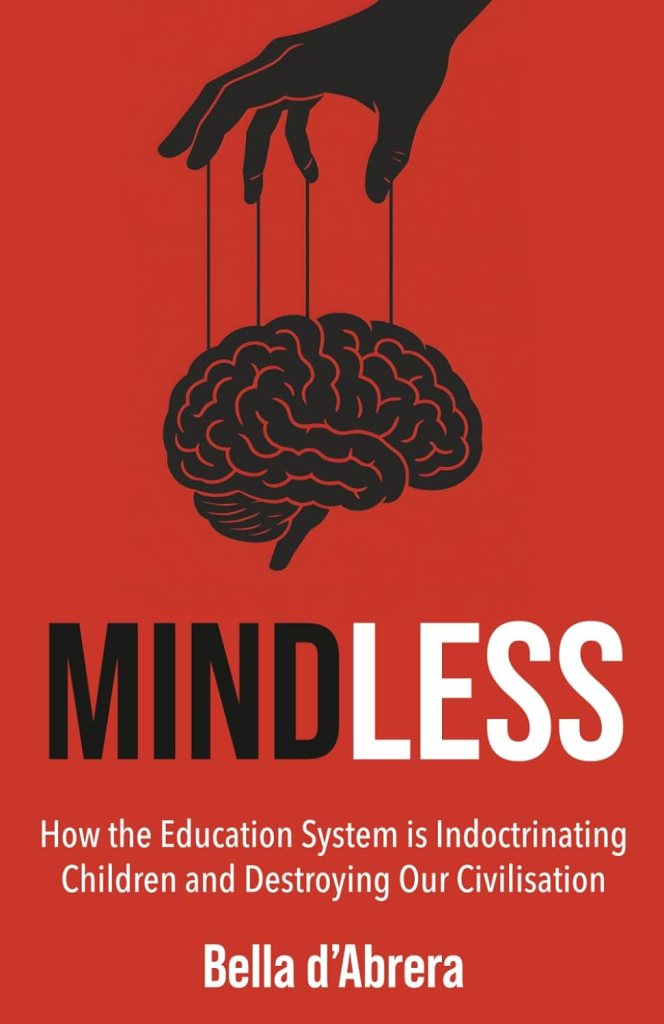
This book Mindless: How the Education System is Indoctrinating Children and Destroying Our Civilisation by d’Abrera, Bella (Wyborn Press, 2026) has 270 pages devoted to showing how the rot has set into Western education (looking primarily at Australia, America and England), d’Abrera asks, ‘What is to be done?’ She looks at how America is leading the way here, with Australia and the UK lagging well behind.
She notes how Washington, under Trump, “turned off the money tap”. For example, it “began freezing billions of dollars in federal research grants in response to what it described as ‘institutional antisemitism’ and entrenched ideological bias on campus.” (p. 273)
She offers various examples of this, and then writes: Whatever one thinks of Trump, the freeze has exposed a reality. Supposedly, sovereign institutions have long been propped up by federal support, and Washington can hold them to account if it chooses…
Ultimately, it appears that ‘what is to be done?’ cannot be left to the universities themselves. The solution, therefore, lies outside the system. And in this respect, America is leading the way. There, individuals with dedication, energy, and awareness of how precarious things have become, are establishing new universities. Their aim is simple: to restore the university to its true purpose and ensure that they are not beholden to the state. (pp. 274-275)
Hillsdale College in Michigan is one such example of this, as is the University of Austin in Texas. Things are tougher in this regard in England, but Australia has had some success in creating new educational institutions, including Campion College in Sydney, Alphacrucis University College in Melbourne, and St John Henry Newman College in Queensland.
And the corruption in schools, and not just in higher education, can also be challenged. Thus, the rise and rise of things like homeschooling, private schooling, Christian education, charter schools, and so on. School choice, as in the voucher system, is an important way forward.
She says this about the situation in America: Down in Texas and Arizona, school choice legislation has expanded dramatically, making it possible for parents to send their children to charter or private schools with state-backed vouchers. Vouchers are essentially public grant money which gives families the genuine freedom to decide where their children are educated, and to take them out of the ideologically captured public system.
Vouchers don’t just give parents freedom to choose, they open up an immense range of choices. Parents can send their children to one of seventy-five Chesterton schools, whose curriculum is everything that today’s state system is not. Children are immersed in Homer, Dante and Shakespeare. Where government schools strip away the arts, Chesterton insists every child must paint, sing, and perform. There is no climate change anxiety, no gender confusion, and no racial tensions. (pp. 280-281)
She goes on to discuss the importance of parents in schooling: To reclaim education, they must first reclaim their role as parents. It is mothers and fathers who bring children into the world, who give them their moral and spiritual formation, not the state. They must start to recognise the ideological dangers that the system is posing to their offspring and become far less trusting. It is time for parents to stop outsourcing authority and for the family, that building block of society, to reclaim the child. This means rejecting the Rousseau-inspired deception that only experts can raise children, which has permeated Western culture, and which has to some extent, given parents licence to abnegate responsibility. (p. 283)
d’Abrera closes her book this way: Where we go from here will decide whether the Western mind survives. If children continued to be subjected to mass conditioning while being denied the chance to flourish in truth, beauty, reason, and reality, then Western Civilisation itself will not endure. The closing of the Western mind is not merely an educational crisis, but a civilisational one. We are teetering on the edge, but it is not too late. Our survival won’t depend on the rising generation now rebelling against the system, whose minds remain open enough to chart a course out of the ideological doldrums into which we have drifted. (p. 285)
Another great book is by Stefanik, Elise, Poisoned Ivies: The Inside Account of the Academic and Moral Rot at America’s Elite Universities (Threshold Editions, 2026)
It is wonderful to see efforts to turn our world back to God however God’s Word declares that we are already in the end times prior to Jesus return to restore righteousness. Sadly, we know that God allows Satan to do His utmost with the Antichrist and the False Prophet having 3 1/2 years to rule this world. However, during this time God pours out His wrath upon the Earth with the Trumpet and Bowl judgements. We are called to persevere and not deny His Word during this time but to fulfill all that He has called us to do.
As many of my followers know I turn 90 this year. I hope that this post about Caleb will inspire older people that if you are walking with God obeying His commands, then age is not a barrier. God will empower you to do all that He gives you to do.
In our modern culture, age is often viewed as a season of withdrawal. We talk of “fading away” or “passing the baton”. However, the kingdom of God operates on a different timeline. In Scripture, later life is not a decline; it is a time of spiritual authority, clarity, and legacy.
From Moses beginning his primary calling at 80, to Anna the prophetess encountering the Messiah at 84, the pattern is consistent: calling does not retire. Perhaps the most striking example of this ‘senior strength’ is found in the life of Caleb.
At 40 years old, Caleb stood at the edge of the Promised Land. While ten other spies saw giants and fortified walls, Caleb saw opportunity, grounded in God’s faithfulness. His report was simple: “We are well able to overcome it” (Numbers 13:30).
But then came the delay. Because of the nation’s unbelief, Caleb spent the next 45 years wandering in the wilderness. He had been right, yet he had to wait. He had faith, yet he had to walk through the same dust and heat as the doubters.
What did Caleb do during those four decades? Numbers 32:12 provides the answer: he followed the Lord wholeheartedly. He did not allow the ‘wilderness years’ to embitter him, nor the delay to diminish his vision.
When he re-emerges in Joshua 14, he is 85 years old — and his spirit is unchanged. He famously declares: “Now give me this mountain” (Joshua 14:12). Caleb did not ask for a peaceful valley or an easy retirement. He asked for the hill country — the very place where the giants lived; the very giants the nation had feared 45 years earlier. His faith was resilient, unwavering and unmovable. He refused to let go of hope in God’s promise.
This remains our invitation today. Whether we are praying for revival in Australia, sharing the gospel with those God brings across our path, or waiting on a long-delayed promise, we are called to remain steady — to persevere.
Like Caleb, we may find ourselves in seasons of waiting where the reality around us does not yet appear to reflect the promise. Yet, through the blood of Yeshua, your past does not disqualify you, and God is not limited by your age. Your ‘later years’ can be your most impactful ones. The wilderness is not the end of the story; it is the training ground for the mountain.
The goal remains the same: to follow the Lord wholeheartedly, trusting that he who promised is faithful and he will do it (1 Thessalonians 5:24).
I love John Lennox. He is a gem, a gift to the Christian world of teaching.
This video is Professor John Lennox on the subject of God, AI, and the end of history. Largely it is about understanding the book of Revelation in an age of intelligent machines. For those that do not have time to watch the video I have reproduced most of the content below.
“I’m your host, Dr. Peter Saunders. I’m the chief executive of ICMDA, which is the International Christian Medical and Dental Association. And this webinar is brought to you tonight in combination with the Forum of Christian Leaders as well. ICMDA brings together about 60,000 Christian doctors and dentists from over 100 affiliated movements.
So John, it’s a pleasure to have you here. John is professor of mathematics emeritus at Oxford University and fellow in mathematics and philosophy of science at Green Templeton College Oxford. As we know John has debated a number of prominent atheists including Richard Dawkins, Christopher Hitchens and Peter Singer. But tonight we are exploring a question that sits at the intersection of theology, technology, and human identity. How should Christians think about artificial intelligence in the light of scripture? And particularly in the light of the book of Revelation, we live in a moment of extraordinary technological acceleration. AI is now diagnosing disease. Is it shaping economies, influencing behaviour, and increasingly mediating how power is exercised in all spheres? And for many Christians, this raises urgent questions. Are these developments morally neutral tools? Do they echo biblical warnings? Or are we in danger of reading tomorrow’s headlines too quickly into ancient prophecy? So, our guest, Professor John Lennox, has spent decades helping believers think clearly at the interface of science, philosophy, and faith. And in his recent book, God, AI, and the End of History, he brings that same clarity to one of the most understood, misunderstood, and often sensationalized areas of the Bible, the book of Revelation. So our goal tonight is is not speculation, fear, or date setting, but rather it’s discernment, understanding what scripture actually teaches, what AI truly is, and how Christian hope, ethics, and wisdom should shape our response in an age of intelligent machines.
Professor Lennox, thanks so much for for joining us tonight. It’s my pleasure to be with you. So you have debated leading atheists and you’ve written extensively on science and faith. Why did you feel compelled at this stage of your life, at this stage in history, to write about AI and revelation?
Well, some years ago, there was a great deal of discussion on the Genesis claim that human beings are created in the image of God versus the claims of technology to enhance humans by AI to such an extent that we might need to revisit what we meant by a human being. And a conference of Christian leaders was arranged in London to discuss this. And I was asked to give the opening talk on what Genesis taught about human beings. The invitation made me curious to delve into the technology and I saw very rapidly that AI was going to raise some very big questions not only for Christians but for everybody. And that’s how I got started on the book entitled 2084which appeared in 2020. Now in that book since much of the talk about AI was concerned with the future I began to compare the promises of the transhumanists with biblical teaching about the future. And I pointed out that some of the futuristic AI scenarios envisaged by people like physicist Max Tegmark in his book Life 3.0, I pointed out that they were uncannily parallel to biblical teaching on the future, in particular in the book of Revelation. And this aspect of my book generated a lot of interest. And so I thought that I should try to write something to demystify the book of Revelation and make it accessible and to link it with a book that I had already written on the prophecy of Daniel, a book entitled Against the Flow.
The publishers of my book on Revelation were very enamoured with the bits on the technology and so they wanted it inserted in the title and hence we’ve got this title God AI and the end of historybut that has confused many people to think that this is my latest book on artificial intelligence. So, let me clear that up. First of all, Peter, it isn’t. My latest book on AI was published last in 2024, and it’s the updated version of 2084.How AI shapes our future. It’s twice as large as the original book and shows just how much has been happening in those four years. That is my most recent book on AI. This book is an exposition of the book of Revelation, but with a careful eye on technology. And so it really is an exposition of the book of Revelation in an age of intelligent machines. So that’s where it comes from. We’re going to get into the book of Revelation uh fairly shortly, but but uh let’s just think about definitions first of all before we talk about revelation. What is artificial intelligence actually and and what is it not? Well, the first thing to realize that artificial intelligence is artificial. It’s not real. In other words, take the simplest kind of AI system. It is essentially computing and it’s a system designed to do one and only one thing that normally requires human intelligence. So the intelligence is simply the simulation. To use the words of Alan Turing who was the genius that really started computing off and raised these questions during the wartime when he built and solved the problem of the enigma machine. It plays a simulation game and one of the big problems with it is it uses words like intelligence, like machine learning and so on that anthropomorphize what is a mechanical and computing system and make people think that it is conscious. It is not conscious. The genius of God in creating human beings that he has linked intelligence to consciousness. These machines are only intelligent in the sense that they can mimic what normally takes human intelligence. Now there are two sorts. There’s narrow AI, which is the AI that we’re mostly familiar with. And then there’s a more speculative artificial general intelligence. And that is the attempt to create a system that can replicate everything that a human being can do, but do it much faster and do it much more expertly and so on. So that there’s a big push in that direction, but at the same time it’s the side of the whole topic that lends itself to science fiction and a great deal of hype. And one of my reasons for writing Peter was to try and demystify it and say what AI is and what it is not. Now let’s give concrete examples just briefly because medicine is one of the areas that has benefited hugely from narrow AI. Let’s take a system that works very well. We have a large database and in it are X-ray pictures of man lungs exhibiting different lung diseases and they’re labelled by the best experts in that field in the world. Those are put in a database. Let’s say there are a million X-ray pictures in the database. Then an X-ray is taken of your lungs because you’re worried about your breathing. And very quickly, the AI sifts through by using pattern recognition statistical techniques and compares your lung X-ray with the million in the database and very rapidly says you are most likely to be suffering from this particular disease. And as a diagnostic tool, very often this will be much better than you get at your local hospital. Now that is being rolled out over very wild fields of medicine with very great success. So that is one positive example. But just to go on the negative side immediately to show that there’s an ethical problem here. pattern recognition, facial recognition technology is very advanced at the moment. It can pick a terrorist out of a football crowd and is therefore very useful to a police force. But that kind of recognition can be used for intrusive surveillance of a population, perhaps a minority population such as is happening in Sing Jang in China with very horrifying results. So what enables criminals to be recognized which we would say this is positive can be used for controlling populations. So that even narrow AI which is so sophisticated snow that it can recognize a person not simply from the front by their face but from the rear by their gate scan be used to control populations. So immediately we’re straight into the ethical problem and the argument is you give up your privacy and we’ll give you security. So that’s a whole debate in its own right. So That’s an example of um narrow AI and there are many many examples but of course we’re pushing forward very rapidly in putting narrow AI systems together and there is advance on many many fronts and one of the big steps forward has been the introduction of so-called large language models like chat GPT And this year it has taken a quantum leap forward just within a month or so. So that it is quantitatively very different from what has happened before and we can discuss that as we can as we go on. So, artificial intelligence is capable of a huge range of different task and and that’s changing exponentially month by month as we go on. But what is what is AI not capable of doing? Well, of course, negatives are very difficult to quantify and there are several things that it was felt would never been so would never be solved. And one of them in science which is a fascinating question is how do protein structures fold? That was a 50-year-old problem. And the amazing thing is that an English mathematician, a genius, he won the Nobel Prize for it. Deus Hassabis solved the problem so effectively that she was able to work out the folding of over 200 million proteins which is staggering. So what people say one day is impossible turns out to be possible the next day and chat GPT has refined its capacities absolutely amazingly. For example, just recently I was asked to do a film illustrating what Jesus meant in John 11 when he said to the disciples who were scared of going back to Jerusalem because it was suicidal. And Jesus said to them, “Are there not 12 hours in the day? If a person walks in the day, they don’t stumble because they see the light of this world that is the sun. But if they walk at night, they stumble because the light is not in them. In other words, we are not bioluminescent. So I asked GPT, please construct a scenario that would get this across. And what it produced in about 30 seconds was absolutely brilliant and usable. So it then asked me, it said, “Since you want to film this, would you like directions for the cameras?” And it spouted a whole scenario, how many cameras, where they should be situated, and all the rest of it. And this is quite amazing. But what it can’t do, I think it’s important since this is not real intelligence. It’s not conscious. So it’s not aware. So the main thrust here is this. As human beings made in the image of God, we can experience what are called quailia. We can smell the wonderful scent of a rose. We can feel the sea breeze on our faces. We can perceive the beauty of the universe as we look through a telescope. Quailia are unknown to an artificial intelligence. It can have no idea of them. It has no ideas at all because it doesn’t think in the same way as human beings do. And so although AI has been used and is increasingly so to produce some level of robotic companionship, it can never replace, I believe, the fellowship that is possible between human beings. And of course, and we’ll probably talk about this later on, when it comes to relationship with God, of course, AI knows nothing of God. So, as you said, the book of Genesis tells us that human beings are made in the image of God. You’ve alluded to consciousness, sensation. What other uniquely human things will AI never be able to do? Well, the question of values, AI knows nothing about values or right or wrong. And human beings are moral beings made in the image of God. And if I may say so, this is one of the places where the transhumanist vision of using AI to perfect humans and to make them into God’s fails. No utopia can ever be built without facing the problem of human sin and rebellion against God. Those two concepts mean nothing for an artificial intelligence. And so one of the richest kinds of human experience from a Christian perspective is that relationship with God through Christ where we understand that Christ has died for our sins and has taken our guilt away and we can have a relationship with God. AI can never replace it or come near it or know anything about it. Which means, Peter, I think that we need to step up much more in emphasizing these absolutely uniquely positive things about the Christian faith that give human beings dignity because AI is very rapidly reducing human dignity. One of the main areas where this is happening is the area of work. Dario Amado Amade is the CEO of Anthropic, one of these multi-billion dollar companies. and he has written an essay just a week or two ago which is well worth reading warning that possibly within 2 years from now the advances in AI are such that 50% of all white collar jobs will be taken over by artificial intelligence in the medical world in the legal world for example there they set up a test and had a very complicated legal legal brief considered and examined by an AI system and by 16 lawyers, top lawyers. The lawyers got 60% of it right, whereas the AI got 96% of it right. And these things for which lawyers are paid a great deal, conveyancing, setting up contracts, all this kind of thing are now at the stage where they can be reproduced almost instantaneously. One of the most interesting things is an article that appeared in the Times last week by Matt Selman who was writing. He is a software developer and creates apps and he runs an AI company and he came to a realization as a result of the leap forward this year that is at the beginning of February, beginning of this month. He said, “I spoke in English and dictated what I wanted from this particular app.” He said, “I left it and came back a number of hours later and found the thing ready for use. The AI had written thousands of lines of code. It had then set up the app and tested it as a human would do, pressing all the buttons, refining the things that were inadequate and so on. And this is the key thing because up until now most of us have regarded AI as a tool rather than an agent. But AIS are now showing signs of agency in a very restricted but real sense. And he said this particular system was making decisions about how human beings might use this that I’d never thought about. And the thing was perfect. And he said, I suddenly realized I haven’t got a job anymore. And he says, it’s coming to all of you. And we need to really be very realistic about this, Peter. This is more scary than anything for people with all of these jobs. It used to be said a few years ago that if you wanted to keep up with the curve, you went into computer science. But now the coding can be done by the AI system. It can think of the codes and put them in. But this scary agency thing I’d like to say something about because it needs Christians to think very carefully about this that the AI that he was using. He said one of the problems and he gave an example is this. If you feed into the system a very big overarching goal, make money for example, and what the system is dealing with is feeding young people with material in their smartphone. It will investigate all sorts of ways of maximizing not only their attention to keep doom scrolling but also their attachment which is now a major feature. So that it will use all kinds of things that the designers of the AI system itself never thought of including going into the dark world to keep their attention and to make profit. It’s a version of the old story of the AI told to make paper clips and it turns the whole universe into a paperclip sourcing factory and regards humanity as irrelevant and destroys them all. But there’s a serious aspect to that and this is why you have even Nobel Prize winners in this field stepping up and saying that they are scared that they can’t control this stuff. They don’t really know what it’s doing or what’s happening. And that poses a huge problem because the control of it is being vastly outpaced by the developments. So those are some of the things that we need to factor into our thinking.