GOD TENDS TO MAKE OUR TOTAL INABILITY HIS STARTING POINT

Indeed, our utter incapacity is often the prop He delights to use for His next act. It is one of the principles of Yahweh’s modus operandi. When His people are without strength, without resources, without hope, without human gimmicks—then He loves to stretch forth His hand from heaven. Once we see where God often begins, we will understand how we may be encouraged.

Think about how Isaac was brought into existence. God waited until it was impossible for Abraham and Sarah to produce offspring. Abraham was 100, and whilst we don’t know Sarah’s age, we do know she was barren and now of great age. What about the prophet Samuel? His mother Hannah was barren. Look at her prayer:

She was deeply distressed and prayed to the Lord and wept bitterly. And she vowed a vow and said, “O Lord of hosts, if you will indeed look on the affliction of your servant and remember me and not forget your servant, but will give to your servant a son, then I will give him to the Lord all the days of his life, and no razor shall touch his head.” (1 Samuel 1:10-11)

They rose early in the morning and worshipped before the Lord; then they went back to their house at Ramah. And Elkanah knew Hannah his wife, and the Lord remembered her. And in due time Hannah conceived and bore a son, and she called his name Samuel, for she said, “I have asked for him from the Lord.” (1 Samuel 1:19-20)

Wow, that is amazing stuff, and I encourage you to read the chapter in full. So many things stand out here. One, we see it was God who had prevented Hannah from conceiving – at least at first. Two, she cried out to the Lord, asking Him to ‘remember’ her and not ‘forget’ her. Three, God did as she asked, and He did indeed ‘remember’ her – not by overcoming His own ‘forgetfulness,’ but by hearing her plea and taking action.

That should be of great encouragement to us all. Of course, this is not some name-it-and-claim-it passage if you happen to be infertile. What God did for Hannah was special, and served a special purpose in His overall plans. Yes, infertile couples can pray and ask God for help, but it is He who ultimately knows what is best and how we should proceed.

A few comments from others are helpful here. As to how God remembers and acts, John Woodhouse remarks:

Just as the Lord had “remembered” Noah in the days of the flood, Abraham when he destroyed Sodom, Rachel when she conceived Joseph, and His covenant with Abraham in the days of Moses (Genesis 8:119:2930:22Exodus 2:246:5; cf. Numbers 10:9), so He “remembered” Hannah. Whenever God “remembered” His people, it led to His action on their behalf. We will not be mistaken if we expect that His remembering Hannah will involve His remembering His people Israel. He rebirthed the nation miraculously in 1948 and has been regathering Jews from all around the world. We can be certain that God will fulfill the covenants: 1, made with Abraham, Isaac and Jacob, 2. made with David and 3. the new covenant

Recall how 1 Samuel follows immediately after the book of Judges, with all its woeful misery and chaos. Israel was in desperate need of a real leader, and Samuel would become that man. And for this turning point in Israel’s history, God would use a barren woman! Says Woodhouse:

First Samuel 1 points us to a most unexpected starting point for the answer that God is going to provide for the leadership crisis. Who would have looked twice at miserable, sobbing Hannah for the answer to Israel’s crisis? We expect to find answers from the powerful. Hannah was not powerful. Her family were “nobodies.” The point of her story, however, is that God cares.

Does God care? Yes, He cared about the leadership of his people Israel and gave Hannah a son. Yes, He cares about the leadership of the world and of us. Hannah’s son will be surpassed by Mary’s son. God’s care for us all finds its fullest expression in Jesus Christ. If you belong to Him you can learn to “cast all your anxieties on Him, because He cares for you” (1 Peter 5:7).

God Begins Where We End

I quite like how Dale Ralph Davis picks up this theme:

Hannah, therefore, shares in a fellowship of barrenness. And it is frequently in this fellowship that new chapters in Yahweh’s history with His people begin—begin with nothing. God’s tendency is to make our total inability His starting point. Our hopelessness and our helplessness are no barrier to His work.

Indeed, our utter incapacity is often the prop He delights to use for His next act. This matter goes beyond the particular situations of biblical barren women. We are facing one of the principles of Yahweh’s modus operandi. When His people are without strength, without resources, without hope, without human gimmicks—then He loves to stretch forth His hand from heaven. Once we see where God often begins, we will understand how we may be encouraged.

He goes on to speak about Hannah’s prayer:

This is no piddly little affair – this is a manifestation of the way Yahweh rules and will bring His kingdom (vv. 5b,8). Hannah’s relief is a sample of the way Yahweh works (vv. 4-8) and of the way He will work when He brings His kingdom in its fullness (vv. 9-10). The saving help Yahweh gave Hannah is a foretaste, a scale-model demonstration of how Yahweh will do it when He does it in grand style.

Each one of Christ’s flock should ingest this point into his or her thinking. Every time God lifts you out of the miry bog and sets your feet upon a rock is a sample of the coming of the kingdom of God, a down payment of the full deliverance, the macro-salvation that will be yours at last.

True, such tiny salvations are only samples or signs of the final salvation…[Y]ou should not despise or demean these little salvations Yahweh works in your behalf, these little clues He gives, these clear but small evidences He leaves that He is king and that He has this strange way of raising up the poor from the dust and lifting the needy from the ash heap to make them sit in the heavenly realms with Jesus Christ. Ponder every episode of Yahweh’s saving help to you…

The Power of Prayer in God’s Sovereign Plan

Richard D. Phillips discusses the afflictions of Hannah, and what we can learn from them:

Rather than assuming some unholy, spiteful, or condemning purpose in God’s afflictions, believers need to remember that God is holy, so all His deeds are holy; God is good, so He intends our sorrows for good; and God is filled with mercy for the brokenhearted.

God does not seek to destroy us through our trials but to save us through our trials. As Hannah herself would later testify: “He raises up the poor from the dust; He lifts the needy from the ash heap” (1 Sam. 2:8) So if God is the One who closed the womb, we should take heart, since He can surely also open it.

In Hannah’s case, God was using her plight to orchestrate Israel’s deliverance from the dark era of the judges. This was a cause dear to Hannah’s heart, as we know from the song she later lifted up to God’s praise (1 Sam. 2:10).

We may never know how God has worked through our most bitter trials to bring others to salvation, to equip us with sensitivity in ministry to others, or even to launch a significant gospel advance. But we do know God, and we know from His Word that “for those who love God all things work together for good” (Rom. 8:28). So we can have confidence in God’s purposes in our lives.

He goes on to say this about the importance of prayer:

Not only does prayer change us, but prayer changes things. God is pleased to act in response to our prayers. Some people react to the knowledge of God’s sovereignty by thinking that prayer therefore does not matter, since God has decided everything in advance. Hannah did not reason this way, but understood that God’s sovereign will is achieved through the acts of men and women, especially our prayers.

John Woodhouse comments that her turning to the Lord “will turn out to change not only her life but the life of the nation, and indeed… the history of the world.” He adds, “Faith in God, therefore, leads us in our troubles to pray to the God who is sovereign over all things.”

All this is encouraging good news. The next time you find yourself on the ash heap, and you are questioning if God has forgotten you or has abandoned you, just bear in mind that He knows all about you and your situation, He hears your prayers, and He will act. He remembers us, and He acts accordingly.

Adapted from the article by Bill Muehlenberg, Good News: God Remembers Us – The Daily declaration, 19th March 2026

DOES GOD STILL SPEAK TODAY?

For many believers, one of the most important questions in their walk with God is this: Does God still speak today? It’s a question born from longing — the desire to know God personally, to hear His guidance, to sense His nearness in the middle of life’s noise. And it’s a question often shaped by uncertainty, because while Scripture is filled with stories of God speaking, many Christians wonder whether that same voice is still active in the world now.

The good news is this: God has never stopped speaking. From Genesis to Revelation, God reveals Himself as a communicating God — One who speaks, leads, warns, comforts, and invites His people into relationship. His voice is not a relic of the past. It is a present reality for those who belong to Him.

God’s Voice Begins With His Word

The clearest and most foundational way God speaks today is through Scripture. The Bible is not a silent book. It is the living Word of God, breathed out by Him and preserved for every generation. When we open its pages, we are not simply reading ancient stories or moral lessons; we are encountering the heart and mind of God Himself.

Hebrews 4:12 describes the Word as “living and active,” meaning it continues to speak with power and relevance. A passage written thousands of years ago can suddenly pierce our hearts, answer a question we’ve been wrestling with, or bring comfort in a moment of deep pain. That is not coincidence — that is God speaking through His Word.

Scripture is God’s primary voice, the standard by which all other impressions or experiences must be measured. God will never contradict what He has already spoken in His Word. If we want to hear God clearly, we must begin by immersing ourselves in Scripture regularly and expectantly.

The Holy Spirit Still Speaks to God’s People

While Scripture is the foundation, God also speaks through the Holy Spirit in ways that are personal and timely. Jesus promised that the Spirit would guide us into truth, remind us of His teachings, and reveal what we need to know. This guidance is not mystical or strange — it is the natural result of walking with a living God.

The Spirit speaks through gentle impressions, convictions, warnings, and moments of clarity. He may bring a verse to mind at just the right moment. He may nudge us toward a decision that aligns with God’s will. He may give us peace about a direction or unrest when we’re drifting from His path. These experiences are not random; they are the Shepherd guiding His sheep.

However, the Spirit’s voice is always consistent with Scripture. He does not add new doctrine or reveal new truth outside the Bible. Instead, He applies God’s eternal truth to our present circumstances.

God Speaks Through People and Circumstances

Another way God speaks today is through the people He places in our lives. Wise counsel, godly mentors, pastors, and fellow believers can all be instruments of God’s voice. Sometimes a single sentence from a friend can confirm something God has already been stirring in our hearts. Other times, correction or encouragement from a trusted believer becomes the very voice of God calling us back to Him.

God also speaks through circumstances. Open doors, closed doors, unexpected opportunities, and even trials can all be ways God directs our steps. This does not mean every event is a direct message from God, but it does mean He is sovereign over our lives and uses circumstances to shape us, guide us, and draw us closer to Him.

Why Some People Struggle to Hear God

If God still speaks, why do so many believers feel like they never hear Him? Often the issue is not God’s silence but our spiritual noise. We live in a world filled with distractions — constant information, endless entertainment, and the pressures of daily life. God rarely shouts over the noise; He often speaks in a still, small voice.

Hearing God requires stillness, attentiveness, and a heart that genuinely seeks Him. It requires time in Scripture, space for prayer, and a willingness to obey whatever He reveals. God speaks most clearly to those who are ready to listen.

Hearing God Is About Relationship, Not Technique

Ultimately, hearing God’s voice is not a skill to master but a relationship to cultivate. Jesus said, “My sheep hear My voice, and I know them, and they follow Me.” Sheep recognize the shepherd’s voice because they spend time with him. They walk with him daily. They trust him.

In the same way, the more we walk with God — through prayer, worship, Scripture, and obedience — the more familiar His voice becomes. Over time, we learn to distinguish His leading from our own thoughts, fears, or desires. We begin to recognize the tone of His voice: gentle, truthful, loving, and always aligned with His Word.

God Is Speaking — Are We Listening?

So, does God still speak today? Absolutely. He speaks through His Word. He speaks through His Spirit. He speaks through His people and through the circumstances of our lives. The real question is not whether God is speaking, but whether we are making space to hear Him.

If you long to hear God’s voice more clearly, start by opening His Word daily. Invite the Holy Spirit to guide you. Surround yourself with godly voices. Slow down enough to listen. And trust that the God who spoke the universe into existence still delights in speaking to His children today.

Jesus is returning soon. How good it will be if you have already developed a close relationship with Him. Will you be ready to rule and reign with Him in Jesus Millennial Kingdom? If you want to know more about what is next on God’s agenda for planet Earth go to http://www.millennialkingdom.net

PRAYER: WHAT IT DOES AND DOES NOT DO

Prayer does not promise to free us from trouble. Indeed, God promises us the opposite. Trials will come. Such is this world. Rather, we pray to align our hearts and minds with God’s will.

We pray that we would accept God’s ordering of things, not our own, because it is HIS Kingdom.

We pray that we will be made strong and made better in difficulty, like gold purified in fire.

We pray that we would do those things which advance God’s purposes, to shine His testimony brightest in the darkness.

We pray for those things which we believe are in God’s will — but with the same caveat Jesus used — “not my will, but Yours be done.”

We pray with our eyes on the new heaven and new earth, where all these troubles will be solved, the dead will be reunited, and every tear will be wiped away.

God-Given Strength

The mockers will say, “See! Prayer did not help!” Not so.

It is only by faith that the tragedies of this fallen world become instruments of advancing a greater purpose.

The one who has no faith is defeated because they have no hope beyond living a trouble-free life, which happens to nobody.

But to the one who has faith, the troubles of this world are like gym equipment to a gymnast. They strengthen us. They bring us close to God. They help us to understand things with an ultimate and eternal perspective.

And it is those people, made fit by the fallenness of their world, who are strong to advance works for God; who walk in His ways; and who will rejoice the greatest when God greets them and all the troubles that made them are now resolved.

To put it bluntly, they are not the killers. They are the finest of people.

No point railing against the pray-ers in trouble. You will be better served to understand their method.

Then you can live with hope and meaning, too, no matter what this fallen world throws up.

Republished with minor changes, thanks to Martyn Iles

WHO WILL BE SAVED AND BE WITH GOD ON THE NEW EARTH?

Then I saw a new heaven and a new earth, for the first heaven and the first earth had passed away, and the sea was no more. And I saw the holy city, new Jerusalem, coming down out of heaven from God, prepared as a bride adorned for her husband. And I heard a loud voice from the throne saying, “Behold, the dwelling place of God is with man. He will dwell with them, and they will be his people, and God himself will be with them as their God.Revelation 21:1-3

In all of the texts below, the necessity of faith is understood, but the existence of saving faith is credited to the Father’s prior initiative to give only some to the Son. The texts would have us understand that this is a limited number, since none to whom it is given fail to come, but none can come unless enabled by the drawing power of the Father.

But I said to you that you have seen me and yet do not believe. All that the Father gives me will come to me, and whoever comes to me I will never cast out.John 6:36-37

And this is the will of Him who sent me, that I should lose nothing of all that He has given me, but raise it up on the last day. For this is the will of my Father, that everyone who looks on the Son and believes in Him should have eternal life, and I will raise him up on the last day.John 6:39-40

No one can come to me unless the Father who sent me draws him. And I will raise him up on the last day. It is written in the Prophets, And they will all be taught by God.’ Everyone who has heard and learned from the Father comes to me.” John 6:44-45

But there are some of you who do not believe. This is why I told you that no one can come to me unless it is granted him by the Father.” John 6:64-64

None are enabled to come to Christ unless it has first been given by the Father, and no one who comes is ever lost.

The following comes from an article on http://www.mysteryofisrael.org entitled The Everlasting Covenant in John 6. I suggest you get your Bible to look at the multitude of verses used by Tom Quinlan.

We know that this drawing is effective in obtaining its goal because it ensures that each one who is drawn by the Father is also “taught of God”, and that “everyone” so taught comes to Jesus, never to be cast out or lost. What follows will show that this is all by Divine enablement that is not only the result but also the effectual cause of faith in those whom the Father has given to the Son from all eternity.

Of that foreordained number, not one is ever lost or cast out but is kept by the unfailing power of Jesus to be raised at the “last day” (Luke 14:14John 6:3917:121 Peter 1:4-5). These chosen ones whom the Father has specifically entrusted to the Son’s secure keeping (compare John 6:3910:27-29: 13:18: 15:16; 17:9, 12, 20) are also the special object of His unfailing intercession, most especially to the end that their faith “fail not” in the day of testing (Luke 22:32John 17:91220; with Hebrews 7:25).

Next is an observation that carries the most glorious implications for those who “love God and are the called according to His purpose” (Romans 8:28-29). It is Jesus’ citation and application of Isaiah 54:13 in John 6:45.

Here Jesus extends to His sheep from every nation all the glorious eternal security of Yahweh’s long-promised, long-awaited “covenant of peace” (Isaiah 54:10 with Ezekiel 37:26), which is elsewhere equated with “the everlasting covenant” (compare Isaiah 55:361:8Jeremiah 32:40Ezekiel 16:6037:26).

As you will observe by comparing the following verses, the “everlasting covenant”, as well as “My covenant of peace” are manifestly synonymous with Jeremiah’s “new covenant” (compare Jeremiah 31:31-34 with Jeremiah 32:38-40 & Isaiah 54:1013 with Ezekiel 34:2537:26).

This is the covenant that includes all the unilateral (some would say, unconditional) promises made to Abraham and to David concerning their seed. It will stand in its most public and plenary fulfillment with a fully renewed Israel in the future “Day of the Lord“.

This is when every penitent Jewish survivor of the final wrath of God (Jeremiah 30:7Daniel 12:1) will all “know the Lord from that day and forward” (i.e., the “Day of the Lord“; Ezekiel 39:822), “never again to depart” (Psalms. 89:28-36Isaiah. 59:2166:22Jeremiah. 31:3432:40Ezekiel. 37:25-2739:2228-29). Since “all Israel” will be a completely regenerated nation “in that day”, they will no longer stand under the continual threat of covenant judgment, subject always to the potential of curse and recurrent eviction from the Land.

In glorious contrast to past generations, post-wrath Israel will dwell securely in their own Land “from ‘that day’ and forward” (Leviticus 25:18-19; 2 Samuel. 7:10Psalms 4:8Jeremiah 23:6; 30:10;32:37; 33:16; Ezekiel 34:25,28: 39:26; Hosea 2:18Micah 4:4Zephaniah 3:13Zech. 14:11).

This is made possible because, no longer will there be a mere remnant, at best restraining, but never long preventing the largely blind and backsliding nation from falling back under covenant judgment. In radical, unprecedented contrast, post-“Day of the Lord” Israel will all, without a single exception be righteous with the Lord’s own “everlasting righteousness” (Isaiah 45:1724-2554:13-1417Jeremiah 23:5-6Daniel 9:24).

This blessed unity in the Holy Spirit is promised to extend throughout all future generations unto “children’s children”, not one ever failing of the “everlasting righteousness” of the “everlasting covenant” (Isaiah 4:344:345:1724-2554:10131759:20-2160:2165:2366:22Jeremiah 31:3432:38-42Ezekiel 20:4037:2539:2228-29, etc.)

From Jesus’ citation of Isaiah 54:13 in John 6:45, we can see that He is applying the eternal security of this everlasting covenant that will stand with post-wrath Israel to all whom the Father has given Him, now, and in the millennial age (http://www.millennialkingdom.net) to come. To be given by the Father to Jesus is to be secured in the everlasting covenant established with Abraham while he was in a deep sleep, signifying its unconditional surety of certain fulfillment (Psalms 89:35-36Isaiah 55:366:22).

God’s purpose in putting Abraham into a deep sleep before passing between the pieces was certainly NOT to ignore or circumvent the indispensable conditionality of the inheritance. Rather, it is God’s own pledge of Himself that He would unilaterally engage to meet and fulfill all required conditions, first through the atoning sacrifice of the curse-reversing seed of the woman on behalf of “all the seed” (Psalms 18:5089:2936Isaiah 41:845:2553:1065:23Jeremiah 33:25-26Romans 4:16Hebrews 2:16). Then by the power of the indwelling Holy Spirit, a new nature will invariably, necessarily bear fruit “after its own kind” (Matthew 13:23).

At the “set time”, “when it pleases God” (Galatians 1:15-16Psalms 102:13110:3), whether for the Jewish remnant at the end of the wrath of God, or the calling of any individual in this age, God will “put” His Spirit into the newly recreated hearts and spirits of the heirs of the everlasting covenant. He retains this free sovereign right to quicken “whom He will” (Matthew 11:27John 5:21Romans 9:18), when, at His own sovereign timing, He has prepared the right conditions for the final and everlasting salvation of His elect nation (Isaiah 30:18).

By Jesus’ applying the covenant promise of Isaiah 54:13 to all whom the Father has given Him to save and keep (John 6:3739-4044-4565), He is thereby uniting “the called according to His purpose” of every generation to the same secure covenant inheritance that will come to the “natural (Jewish) branches” in the coming day of their great national deliverance when “all Israel shall be saved” (Romans 8:28-2911:26-29).

For the elect remnant of Jewish survivors of the final tribulation, covenant failure resulting in more than temporal discipline will be a thing of the past. Scripture is very clear that from this time forward, not one of the heirs of the everlasting covenant will ever again depart (Isaiah 59:21Jeremiah. 32:40Ezekiel 39:2228-30).

Neither can any of the chosen seed of Israel’s race ever fall fatally or finally away from what they have irrevocably and irreversibly become, namely, an everlasting “new creation … born of the indestructible Word of God that lives and abides forever” (2 Corinthians 5:17Galatians 6:15).

One can see how the NT writers will often describe personal salvation in all the terms and colours that the prophets use to describe the eschatology of post-wrath Israel. For the apostles, Israel’s eschatology is the model and pattern for the soteriology (doctrine of salvation) of the new/everlasting covenant as applied to the salvation of the individual.

But how might such assurance be mistaken and misused by persons who are yet in the body of this flesh? Wouldn’t this give them a sense of license to misuse their liberty? Well, as believers in the “fight of faith” are reminded to take due diligence to make their calling and election sure (2 Peter 2:10), this danger of presumption is certainly warned against in scripture (Galatians. 5:131 Peter 2:16).

But so far as one may have evidence that they are bearing the fruits that witness to the reality of “the righteousness of faith” (Romans 4:13), it is also to be understood that the holy fear of God (“my fear”; contrast Jeremiah 2:1932:40) is built right into the everlasting covenant. This is what God has promised to “put” into the heart of every heir of new covenant righteousness (Isaiah 59:21Jeremiah 31:33; 32:40; Ezekiel 11:1936:26-2737:614).

Because of the indwelling Holy Spirit, the regenerate seed of Abraham will vigilantly guard their own hearts. This is not because they will be in any doubt of the security of their everlasting inheritance, but because the love of God has been shed abroad in their hearts by the Holy Spirit, and also the sure knowledge that God will faithfully chasten His own, which is the distinguishing badge of true sonship (Psalms 89:30-33Hebrews 12:7-8).

Not only post-wrath Israel but all of God’s elect are contemplated as the “seed of Abraham” and heirs of His everlasting “covenant of peace” (Isaiah 54:10; Ezekiel 37:26). These things cannot be said of all persons, but only those whom Paul calls, “the election of grace” (Romans 11:5). Indeed, the gift of “everlasting life” (John 6:40) is promised to faith, since unbelief forms the contrast between those to whom it has been given and those to whom it has not been given, in verses 36-37 and 64-65.

But faith is not the basis for God’s sovereign, pre-temporal initiative to this limited number. Rather, faith is the result of the Father’s eternal choice to divinely enable all whom He would give to Christ to both come to Him and be kept forever by Him (John 6:37394465)

This enablement is preceded, not at first by faith that we supply, but by the Father’sgood pleasure” to “quicken whom He will (John 5:216:39Romans 9:18Ephesians 1:5Philippians 2:13). This is a Spirit-quickened faith that must invariably and necessarily “overcome the world”, precisely because it is “born of God” since it is a rule that “whatsoever is born of God overcomes the world” (1 John 5:4).

While many, such as Judas (John 6:647013:10-1117:12) and the tares sown among the wheat, may move undetected among the sheep for a season (“Lord, who is it?”, John 13:2225), Jesus said these are “Not of My sheep” (John 10:261 John 2:19). None of God’s true sheep who are truly “born of God”, and thus in living union with the Divine nature (2 Peter 1:4) can ever fatally or finally fall from the Father’s grip (John 10:28-29Romans 8:28-39).

This is just one example of a pervasive biblical doctrine taught in many places throughout both testaments, but it is far more than a doctrine among doctrines. In, Romans 9:11, it is called “the purpose of God according to election”.

Paul is clear that for that purpose “to stand”, it must not be influenced by any virtue found or foreseen in one more than another (Romans. 9:11). The only difference distinguishing the two brothers is a difference that is made by God (1 Corinthians 4:7)

According to Paul, and no less John, any difference that is not perceived as given from above is dangerous ground for the pride of presumption (John 3:27Romans 11:35-361 Corinthians 4:7). In 2 Timothy 2:19, Paul will call this doctrine the very “foundation of God”. That unshakable foundation has “this seal, the Lord knows them who are His”.

It is the knowledge that Jesus has of His own sheep (John 10:14). He warns of those who will count themselves as His sheep whom He “never knew” (Matthew 7:22-23). So 2 Timothy 2:19 is clearly not merely speaking about God’s obvious knowledge of one’s present spiritual condition, but an eternal foreknowledge that reaches back to the covenant that always existed between the persons of the Godhead before creation (Romans 8:28-292 Thessalonians 2:131 Peter 1:2Revelation 13:8).

Not only is this great truth precious to the believer’s comfort; but it is also vital to the upholding of the integrity of the Word and the vindication of the “everlasting covenant” of grace.

John Newton who wrote, “Amazing Grace”, believed this truth, as nothing else so plucks from man any presumption of entitlement, simply because this decision of God, so unbiased by anything in man, cannot be impugned as in any way unjust (Romans 9:14-21). Notably, Paul does not undertake to satisfy all the natural questions that might arise. Rather, he simply answers the anticipated protest with the surprising retort, “Who are you, O man, to reply against God?”(See Romans 9:18-23).

Ironically, it is in the place of greatest offense that God has plainly declared the incomprehensible goodness of a grace that was moved by nothing found or foreseen in man, except this unique love for His own that existed before time. Its source, its working, and its goal begins and ends as wholly the work of God alone, for the glory of Christ alone.

He is both author and finisher of a faith that is “given from above” (John 3:27Romans 11:35-361 Corinthians 4:7Ephesians 2:8Philippians 1:20) and upheld to the end by the power of God and the indwelling of the indestructible, ever-abiding seed of the Word of God (1 Peter 1:23), establishing an eternal, irreversible union between the believer and the Divine nature (1 Peter 1:4-52 Peter 1:4). This means the truly regenerate believer is not ‘becoming’ a new creation; he or she ‘is’ an eternal new creation (Isaiah 66:222 Corinthians 5:17Galatians 6:15).

In conclusion, Israel’s eternal covenant is our eternal covenant.

Oh, the depth of the riches both of the wisdom and knowledge of God! How unsearchable are His judgments and His ways past finding out! “For who has known the mind of the LORD? Or who has become His counselor?” “Or who has given a gift to Him that it might be repaid?” For of Him and through Him and to Him are all things, to whom be glory forever. Amen.” Romans 11:33-36

We are fast approaching the end of Satan’s rule over planet Earth, next on God’s agenda is Jesus’ Millennial Kingdom. Jesus and the resurrected Saints will rule the nations with a rod of iron for 1000 years. This world has had 6000 years of Satan’s dominion. It will now have 1000 years with Jesus’ rule from the nation God established for His purposes, Israel. Israel will finally realize her destiny as head of the nations. A new Jerusalem on the highest mountain will be Jesus’ capital city and the leaders of all nations will come to pay homage to Him there. Satan is bound for most of the thousand years but at the end of it he is released and he still raises an army like the sand of the sea to come against Jesus and the Saints. “Fire came down from heaven and consumed them.” Revelation 20:9. “Then I saw a great white throne and Him (Jesus) who was seated on it. From His presence earth and sky fled away, and no place was found for them. And I saw the dead, great and small, standing before the throne, and books were opened. Revelation 20:11-12. “Death and Hades gave up the dead who were in them, and they were judged, each one of them, according to what they had done.” Revelation 20:13 “Then I saw a new heaven and a new earth, for the first heaven and the first earth had passed away,Revelation 21:1

GOD IS FOUNDATIONAL TO OUR EXISTENCE

God is foundational to our existence; seeking replacements will be a futile attempt to achieve ultimate fulfillment. Adam was made in the image of God. Man is a trinity just as God is a Trinity. He is Father, Son, and Holy Spirit; we are Body, Soul, and Spirit.

Importantly, man’s spirit was designed to contain the Holy Spirit (oil), enabling him to be the “lamp of the Lord” on Earth and to be in a relationship with God.

The spirit of man is the lamp of the Lord, searching all his innermost parts.Proverbs 20:27

Sadly, the Holy Spirit departed Adam’s spirit when he rebelled against God at the time of the Fall.

In his epoch-making theological treatise, Knowing God, J. I. Packer put it this way:

What makes life worthwhile is having a big enough objective, something which catches our imagination, and lays hold of our allegiance, and this the Christian has, in a way that no other man has. For what higher, more exalted, and more compelling goal can there be than to know God?” 

Once the grace of God has been tasted and peace is established with the Almighty all else becomes incomparable. God’s grace captures a believer unlike anything else. Hence, evangelism should become the communication of desiring grace for others as they react to God.

Stereotypically, people perceive Christianity as having to attend weekly church meetings, reciting prayers, having a narrow worldview, and restricting one’s lifestyle to do’s and don’ts. When in fact, the Gospel is freedom, fulfillment, and “unspeakable joy.”

And you will know the truth,” Jesus promises, “and the truth will set you free

If you abide in my word, you are truly my disciples, and you will know the truth, and the truth will set you free.” John 8:31-32

Paul similarly states, “Since we have been justified by faith, we have peace with God through our Lord Jesus Christ” (Romans. 5:1).

Did Jesus and Paul purposely fabricate claims to try and make people feel good? Did they have huge egos that required authority over others? Were they deceived? If so, by whom or what? No, they encouraged people towards “the way, the truth, and the life.” so, through Jesus Christ, they can acquire God’s love by receiving the Holy Spirit to enable them once again to be children of God bearing His image.

Therefore, since we have been justified by faith, we have peace with God through our Lord Jesus Christ... God’s love has been poured into our hearts through the Holy Spirit, who has been given to us.Romans 5:5

The Gospel is powerful and its grace will surely materialize in those who wholeheartedly call upon the Lord Jesus. It’s a sure thing. The Holy Spirit assures it.

WHY PEOPLE REJECT GOD

The reason a young former pastor renounced his Christian faith and rejected God was because: “How could a loving God reject people who were sincere in whatever faith they held? Would He truly condemn them because they understood Him differently than those professing faith in Jesus Christ as their Savior and Lord?”

This young man’s issue was not the historical credibility of the resurrection of Jesus or the reliability of the Genesis narrative regarding the Fall of Man. Instead, he was offended by the idea that a God of mercy would not welcome into eternal life everyone who seemed to be earnest in whatever faith they have. Put simply, this former pastor decided to create a new god, one in his own image.

Former evangelical pastor Rob Bell turned from biblical faith several years ago by denying the reality of Hell. He like so many leaders of denominational churches believe the Bible teaches non-believers will be tormented for all eternity in the Lake of Fire and yet the Bible clearly teaches that after the White Throne judgement, there is a second death in the Lake of Fire.

For the wages of sin is death, but the free gift of God is eternal life in Christ Jesus our Lord.” Romans 6:23

Bell was right in believing eternity in Hell is hardly just, and is inconsistent with the nature of the God – Who is love. This belief cost him eternal life with his Creator.

My book on the Lake of Fire is available as an ebook on Amazon.

But as for the cowardly, the faithless, the detestable, as for murderers, the sexually immoral, sorcerers, idolaters, and all liars, their portion will be in the lake that burns with fire and sulfur, which is the second death.” Revelation 21:8 (also see Revelation 2:11, 20:6, and 20:14)

In reading various “de-conversion” stories, accounts by and about people who have left their Christian faith, there is a persistent theme. It’s not about the reasonableness of Christianity, its intellectual coherence, or the credibility of its propositional claims. Rather, they come to a point where their dislike of certain doctrines or practices leads them to abandon their walk with Christ. They jettison their faith because it does not comport with their preferences. Or, put another way, the God of Scripture is not Who they want Him to be.

I often wonder if these people were been born again by the Holy Spirit. Jesus made it possible for God the Father to send the Holy Spirit to indwell our Spirit to be our Counsellor, our Teacher, and our Comforter. Jesus said He will bring us into all truth if we let Him.

We need to know God is not like us. He cannot denigrate the purity of His character by acting as though our transgressions really aren’t a big deal. And that’s the sticking point: the eternal Triune God is not concerned with conforming to our expectations. His character is not malleable, and He is not accountable to us for what He does.

Consider the story of Job. God allows Job’s entire family to be murdered, his vast wealth stolen, and his health broken. Job calls out to God, demanding to know why He has permitted these things given that he, Job, has been so faithful to Him. God is uncompelled to justify Himself to Job. Instead, He says, “Will the faultfinder (Job) contend with the Almighty? Let him who reproves God answer it” (Job 40:1).

Similarly, when Paul debates with an imaginary rhetorical opponent about God’s sovereignty and human free will, the apostle does not try to dissect something beyond man’s grasp. Instead, he affirms that “there is no injustice with God” and asks, “Who are you, o man, to answer back to God?” (Romans 9:14, 20).

But this same God is infinitely loving and desires no one to perish but all to come to repentance and faith in His Son (2 Peter 3:9). This is why He invites us into a relationship with Himself. In His great, undeserved kindness, God has revealed Himself to us. “His invisible attributes, namely, His eternal power and divine nature, have been clearly perceived, ever since the creation of the world, in the things that have been made,” Paul asserts (Romans 1:20). His power, intelligence, and love are displayed in a world that is complex, ordered, and abundant. The heavens, “the work of His fingers,” declare His glory (Psalms 8:4, 19:1).

He has revealed Himself in our very natures, with the weight of moral duty “written on our hearts” (Romans 2:15) and eternity placed within them (Ecclesiastes 3:11). He has revealed His character and desires, His demands, and His offer of everlasting life, in the pages of text composed by numerous men over the course of many centuries. The Bible is His written revelation.

Most profoundly, He has revealed Himself in the person of Jesus of Nazareth, the Son of Man and Son of God, sinless and righteous, Who took the penalty for sin we deserve as He died on the cross, and whose resurrection heralded His victory over sin, death, and the devil. Trusting in Him and Him alone for forgiveness, we receive life, eternal life, that He alone can give. Moreover, Jesus made it possible for us to receive the third person of the Trinity, the Holy Spirit into our Spirit to enable us to live the Christian life.

This is news so grand that it invites adoration of the One offering it. It should create in us a longing to know and follow Him, not turn our backs on Him because He does not seek to appease our finite indignation about things we can’t grasp. Would you really want to serve a God so eager to be liked He debases His Majesty to plead for our approval?

“A man can no more diminish God’s glory by refusing to worship Him,” wrote C.S. Lewis, “than a lunatic can put out the sun by scribbling the word ‘darkness’ on the walls of his cell.” He is Who He is and invites us to know Him — and that’s the best news of all.

GOD’S WORK DONE IN GOD’S WAY WILL NEVER LACK GOD’S SUPPLY

We often hear people say, ‘The end justifies the means.’ In other words, it’s okay to do something dishonourable, if necessary, in order to achieve something honourable. But that is not a biblical perspective. God is as concerned about the process as much as the product.

So they brought the ark of the Lord, and set it in its place in the midst of the tabernacle that David had erected for it. Then David offered burnt offerings and peace offerings before the Lord.
2 Samuel 6:17

Early in King David’s career, he learned this lesson the hard way. He was moving the Ark of the Covenant to Jerusalem. But he failed to follow God’s instructions on how to transport the Ark. A man died as a result, and the Ark’s movement was delayed for three months. There is a lesson there: God cares about how we serve Him as much as He cares about what we accomplish. For example, not only are we to speak the truth, but we are also to speak the truth ‘in love’ (Ephesians 4:15). We are to defend the faith but with ‘gentleness and respect’ (1 Peter 3:15).

Do God’s work today—yes! But do it God’s way so He is free to bless and honour it.
God’s work done in God’s way will never lack God’s supply. Hudson Taylor

In all your ways acknowledge Him and He will direct your paths.Proverbs 3:6

Turn away from evil and do good; so shall you dwell forever. For the LORD loves justice; he will not forsake his saints. They are preserved forever, but the children of the wicked shall be cut off. The righteous shall inherit the land and dwell upon it forever.Psalms 37:27-29

God tells us what is next on His agenda for this world. The rule of Satan and man on planet Earth is coming to an end. We are fast approaching the last seven years prior to Jesus’ return to this earth to establish His Millennial Kingdom about which we are given a lot of detail in God’s Word.

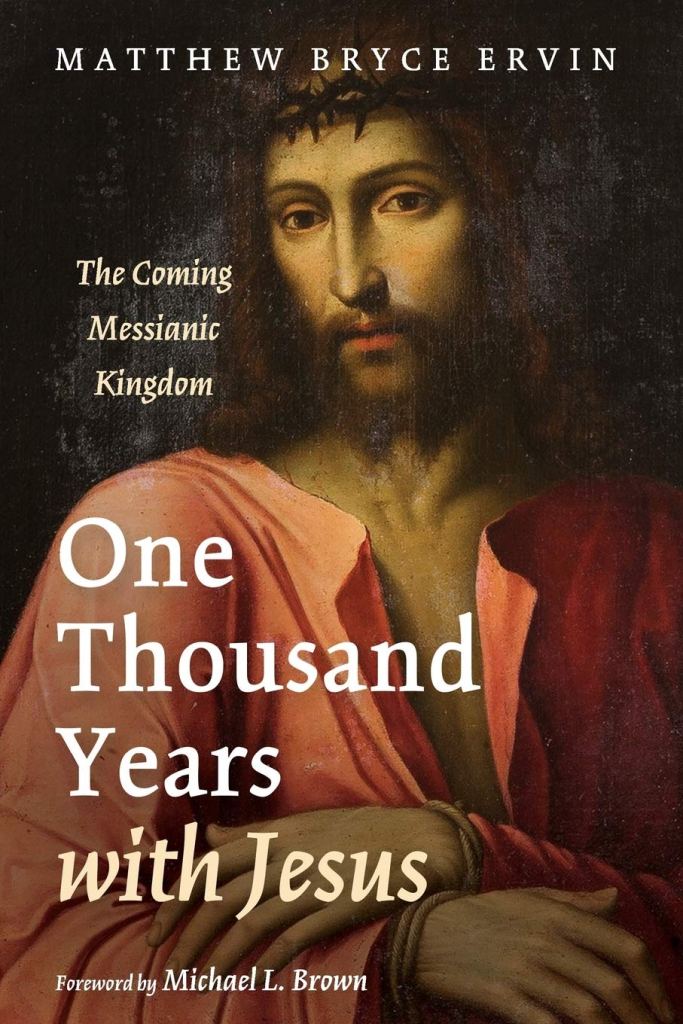
Check out http://www.millennialkingdom.net and Matthew Bryce Ervin’s book, One Thousand Years with Jesus The Coming Messianic Kingdom.

Then I saw an angel coming down from heaven, holding in his hand the key to the bottomless pit and a great chain. And he seized the dragon, that ancient serpent, who is the devil and Satan, and bound him for a thousand years, and threw him into the pit, and shut it and sealed it over him, so that he might not deceive the nations any longer until the thousand years were ended. After that, he must be released for a little while. Then I saw thrones, and seated on them were those to whom the authority to judge was committed. Also, I saw the souls of those who had been beheaded for the testimony of Jesus and for the word of God, and those who had not worshiped the beast or its image and had not received its mark on their foreheads or their hands. They came to life and reigned with Christ for a thousand years. The rest of the dead did not come to life until the thousand years were ended. This is the first resurrection. Blessed and holy is the one who shares in the first resurrection! Over such the second death has no power, but they will be priests of God and of Christ, and they will reign with him for a thousand years.” Revelation 20:1-6

THE FEAR OF THE LORD: PART 2

My first post on Fear of the Lord listed many Scriptures on the blessings we can expect if we fear the Lord. I was blown away by how many there are. Moreover, they are so important I decided to list them below this post just in case you missed reading them. Even if you did read them it is worth reading them again, they are so encouraging.

The Bible makes it clear we are all called to “Fear of the Lord“. As we are told in the Psalms the fear of the Lord is the beginning of wisdom.

The fear of the Lord is the beginning of wisdom: and the knowledge of the holy is understanding.” Proverbs 9:10

Since we have these promises, beloved, let us cleanse ourselves from every defilement of body and spirit, bringing holiness to completion in the fear of God.2 Corinthians 7:1

What promises? In the preceding verses, we were told that when we repented of our sins and were baptized; dying to self, being born again by the Holy Spirit. we are now “the temple of the Holy Spirit“. It is the Holy Spirit that empowers us to live a holy life.

Only fear the Lord and serve him faithfully with all your heart. For consider what great things he has done for you.1 Samuel 12:24

This scripture was spoken by Samuel to the people of Israel. Jesus had not paid the price for our sins back then so Samuel was speaking to people who had not received the Holy Spirit and yet expected the people to serve Him because of the miracles He had performed to establish them as His nation in the Promised Land.

But I will warn you whom to fear: fear him who, after he has killed, has authority to cast into hell. Yes, I tell you, fear him!Luke 12:5

BLESSINGS FOR THOSE THAT FEAR THE LORD

Oh, fear the LORD, you his saints, for those who fear him have no lack! Psalms 34:9 The friendship of the LORD is for those who fear him,” Psalms 25:14For as the heaven is high above the earth, so great is his mercy toward them that fear him.” Psalms 103:11
The Lord taketh pleasure in them that fear him, in those that hope in his mercy.” Psalms 147:11
Behold, the eye of the Lord is upon them that fear him, upon them that hope in his mercy.Psalms 33:18
Like as a father pitieth his children, so the Lord pitieth them that fear him.” Psalms 103:13
And his mercy is on them that fear him from generation to generation.” Luke 1:50O fear the Lord, ye his saints: for there is no want to them that fear him.” Psalms 34:9
He will fulfil the desire of them that fear him: he also will hear their cry, and will save them.Psalms 145:19
Surely his salvation is near to them that fear him; that glory may dwell in our land.” Psalms 85:9
The fear of the Lord leads to life: and he that has it shall abide satisfied; he shall not be visited with evil.Proverbs 19:23
The angel of the Lord encamps round about them that fear him, and delivers them.” Psalms 34:7
You that fear the Lord, trust in the Lord: he is their help and their shield.Psalms 115:11
In the fear of the Lord is strong confidence: and his children shall have a place of refuge. The fear of the Lord is a fountain of life, to depart from the snares of death.” Proverbs 14:26-27
The fear of the Lord prolongs days: but the years of the wicked shall be shortened.” Proverbs 10:27
By humility and the fear of the Lord are riches, and honour, and life.Proverbs 22:4
Better is little with the fear of the Lord than great treasure and trouble therewith.” Proverbs 15:16
Oh, how great is your goodness, which you have laid up for them that fear you; which you have wrought for them that trust in you before the sons of men!” Psalms 31:19
Blessed is everyone who fears the Lord; that walks in his ways. For you shall eat the labour of your hands: happy shall you be, and it shall be well with you. Your wife shall be as a fruitful vine by the sides of your house: your children like olive plants round your table. Behold, thus shall the man be blessed that fears the Lord. The Lord shall bless you out of Zion: and you shall see the good of Jerusalem all the days of thy life. Yea, you shall see thy children’s children, and peace be upon Israel.Psalms 128:1-6 My son, if you receive my words and treasure up my commandments with you, making your ear attentive to wisdom and inclining your heart to understanding; yes, if you call out for insight and raise your voice for understanding, if you seek it like silver and search for it as for hidden treasures, then you will understand the fear of the Lord and find the knowledge of God.Proverbs 2:2-5

Those that fear the Lord will be raptured, glorified and return with Jesus to rule and reign with Him during His Millenial reign on this earth.

DO YOU CARE ABOUT GOD?

Watch Ray Comfort of Living Waters minister the Gospel to this young man. He had no concept of what God had done to secure His salvation and thereby eternal life. Watch the change as the truth slowly dawns on Him. This is evidence of how the Holy Spirit works in our lives to transform us. Only God could bring about the change we see in this young man.

GOD PRESERVES HIS SERVANTS

After 52 years of ministry, skydiving 98-year-old preacher, Roy Jernigan wants people to see Jesus in his life. I can relate to Roy’s testimony. I am 86 and I know God still has more for me to do specifically to alert the church to God’s soon-coming Millennial Kingdom on this earth. Checkout http://www.millennialkingdom.net

Asked to comment on the state of the American Church today:

Jernigan quickly explained that the main driver of his faith is the Bible without the trappings of denominational restrictions.

Jernigan has certainly got this right. The denominational church is not the church Jesus established as outlined in the Book of Acts. Jesus calls us all to be disciples who make more disciples. We all like the denominational church model as it removes this essential facet of the church. It is the pastor’s responsibility to grow the church so we can get on with our lives doing what we want to do.

“I’m not a denominational man. I don’t criticize the denominations but think about this: we have all kinds of denominations — Baptist, Methodist, Presbyterian, Episcopalian, you name it, and every one of them has a different doctrine,” he explained. “They can’t all be right. And so, consequently, I don’t claim a denomination. I claim to be a Christian. And as a Christian, I follow the New Testament teachings on the Apostle Paul.”

And Jernigan’s nondenominational approach to ministry aligns with the direction of the American Church today. Data from the 2020 U.S. Religion Census show that in the last 10 years, the number of American Christian adherents in nondenominational churches nearly doubled in number and surpassed America’s largest Protestant denomination, Southern Baptist, by several million adherents.

Other recent studies also show that while America remains a highly religious nation, with seven in 10 claiming affiliation with some kind of organized religion, for the first time in nearly 80 years, fewer than half now say they have formal membership in a specific house of worship. Church attendance has also continued to decline in the wake of the COVID-19 pandemic lockdowns.

While he admits that being a Christian today is much harder than it was 50 years ago when fewer distractions were competing for people’s attention, Jernigan believes that the model of many church ministries today is partly to blame for people deserting the pews.

“I’ll be honest with you, one of the biggest problems that pastors have today is trying to build a church on their own,” Jernigan told CP.

“Today, preachers have gotten themselves into such a rut by building big buildings with stained glass windows and everything. And the people have deserted them because they get tired of being bled to death [financially]. And hear the preacher say, ‘you got to give, you got to give, you got to give.’ My conviction is you don’t have to hound Christians to give. If they are saved, they love the Lord, they will give,” he said.

Jernigan also criticized preachers who treat their ministry as a business. “I think it’s the wrong approach. Commercial? You don’t commercialize God. I believe this is a gross mistake, that people, you see so much of this today, trying to commercialize and put things into a peaceful (more like bless me) type of thing rather than teaching the Bible,” he said. “I do believe if preachers would come down off the high horse, and quit preaching, what I call cotton candy messages, that’s all fluff and no substance, I believe there’d be a great difference in the world today.”

And as the church continues to compete for the attention of society today, Jernigan is worried that current social trends might lead to a point in society where Jesus is “completely rejected.”

“Today, there is much more to pull a person away than there was in my day,” he said. “It is much more difficult. And it does appear to me that as the time approaches (Jesus return to put things right), that things are going full circle to the extent that Christ … is going to be completely rejected.”

He urged Christians who left institutional churches but still want to maintain their Christian faith to keep reading the Bible and praying to God for direction.

“My heart goes out to so many people, it really does,” he said. “There are a lot of people out there that are hungry, and they’re thirsting for the Word of God, but they don’t have anyone to give it to them.” You be one of those Christians that does do what Jesus called us to do i.e. bring the good news of Jesus Christ to the lost.