KNOWING GOD

Believers are usually pretty comfortable with revering God for his immortality, power, and perfection, and so we should be. He is the Creator, in whom we live and move and have our being. He is the Great I Am. But our connection with God will always be unfolding. If a person only focuses on the immensity of God, and on reverence for him, they will know little intimacy. If a person understands the great freedom we are promised in Christ but knows no reverence, they will be without foundation, To walk closely with God, we must be ever journeying, getting to know facet after facet of the divine nature. It is madness to think of him as less complex, less finely calibrated than ourselves.

God has sovereignly chosen to make himself vulnerable, in that he experiences difficult and negative emotions, along with great joy and delight, in response to earthly events.

The Lord saw that the wickedness of man was great in the earth and that every intention of the thoughts of his heart was only evil continually. And the Lord regretted that he had made man on the earth, and it grieved him to his heart. So the Lord said, “I will blot out man whom I have created from the face of the land, man and animals and creeping things and birds of the heavens, for I am sorry that I have made them.” Genesis 6:5-7

Divine regret is a difficult concept, as it challenges our understanding of infallibility. We relate regret to either poor choices, bad luck, or lack of knowledge – ‘If I knew then what I know now, I wouldn’t have done it.’ But God was fully cognizant of every one of his actions and choices, and still found himself regretting some of them. For God to feel regret, he must therefore be vulnerable to our choices. Free will must actually be free, and poor choices on our part can cause divine pain. The Lord gets upset and frustrated, just as He is pleased and delighted by us in turn. The only way I can make sense of this vulnerability is as a deliberate, sovereign choice. The Lord of All could have placed himself above such feelings, but instead, he chose a version of creation in which the choices of his children affect him.

We can see the breadth of God’s emotions at work in the life of Jesus. What do you make of the following passage?

‘O Jerusalem, Jerusalem, the one who kills the prophets and stones those who are sent to her! How often I wanted to gather your children together, as a hen gathers her chicks under her wings, but you were not willing!’ Matthew 23:37

Compassion, for example, drove him to acts of kindness and mercy, such as healing the sick.

‘And Jesus went forth, and saw a great multitude, and was moved with compassion toward them, and He healed their sick.’Matthew 14:14

Jesus knew ordinary, everyday emotions too, such as pleasure and friendship. There was a particular disciple he was closer to than any other, on a human level. John is referred to as ‘the disciple that Jesus loved’ on several occasions and was depicted leaning back on Jesus’ chest at the last supper to ask him a question. On the cross, Jesus charged this same disciple with looking after his mother, and his mother with looking after this disciple.
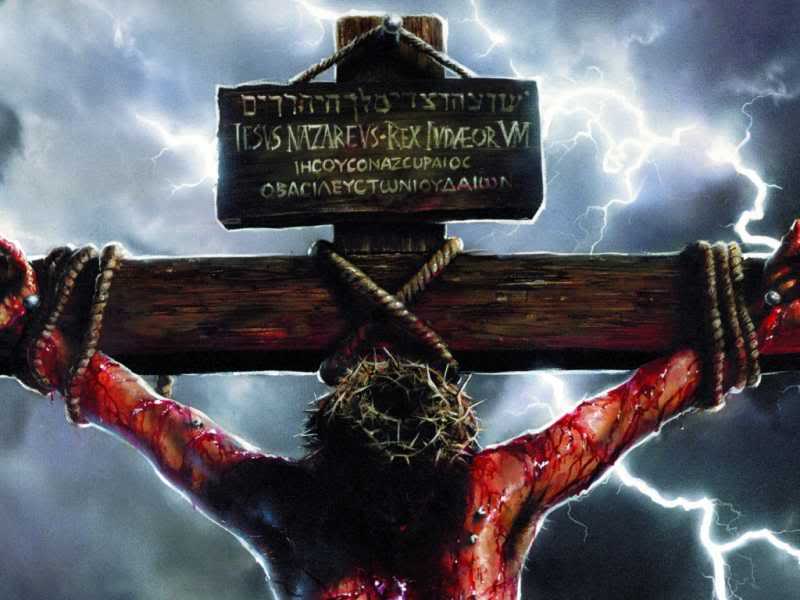
When Jesus, therefore, saw His mother, and the disciple whom He loved standing by, He said to His mother, “Woman, behold your son!” Then He said to the disciple, “Behold your mother!” And from that hour that disciple took her to his own home.’John 19:26-27

How human! How relatable! On the day of his death, he was concerned about those he was leaving behind, providing for their emotional needs by calling them, mother and son. How dear, how important, this must have been to Jesus, at that moment.

There was no time when the emotions of God were stretched like they were in the Garden of Gethsemane.

‘And He was withdrawn from them about a stone’s throw, and He knelt down and prayed, saying, “Father, if it is Your will, take this cup away from Me; nevertheless not My will, but Yours, be done.” Then an angel appeared to Him from heaven, strengthening Him. And being in agony, He prayed more earnestly. Then His sweat became like great drops of blood falling down to the ground.’ Luke 22:41-44

At that moment Jesus was a man in torment, able to prevent his own suffering but choosing to embrace it anyway. He was desperate to escape the agony of the cross – not just the physical pain, but the spiritual horror of becoming all human brokenness, for our sake – and yet he bowed his head. This total mastery of self serves as a supreme example to us. If Jesus were not a deeply emotional person, mastery might have been easier, but being torn up inside and still submitting to God? That is staggering, to me, what about you?

Adapted from an article by Duncan Edward Pile, October 27th, 2021 “Hold Me Closer Cosmic Dancer” http://www.patheos.com

WORLD VIEWS CONTRARY TO GOD’S WORD

Remember the former things of old: for I am God, and there is none else; I am God, and there is none like me, declaring the end from the beginning, and from ancient times the things that are not yet done, saying, My counsel shall stand, and I will do all my pleasure” Isaiah 46: 9– 10

This verse tells us that GOD at the very beginning laid out his plan for mankind. God controls history and He has given us this history, past, present, and future in the Bible. Much of God’s Word is prophecy and fulfilled prophecy proves it was inspired by God and yet rather than Scripture being the basis upon which everything else is judged, it is fast being relegated by the world to the realm of myths and fables and by much of Christianity, it now takes second place to the prevailing cultural canons.

Central to this issue is that many view the Scriptures as a source we can go to in order to support what it is we truly believe about the world around us, rather than revelation given by God Himself that reveals the world for what it is. Some even affirm that Scripture is the lens through which we must understand the world—yet have adopted worldviews opposed to Scripture itself. Thus, arguments using the Scriptures are in abundance, but when push comes to shove, what wins out is not what the text says, but historical, sociological, psychological, and anecdotal arguments (and often, emotionally manipulative ones at that). All of these systems are seen as a lens through which one can and should interpret the Scriptures, especially as they seemingly fall silent on some of the predominant cultural issues in our day.

available from http://www.creation.com

It is increasingly rare to find Christians who will agree that the systems of thought concerning the issues of race relations, LGTBQ + narratives of identity, gender roles, etc., are under the domain of darkness and yet they are totally contrary to God’s commandments. The apostle John expresses it clearly when he says that the love of this world is incompatible with genuine faith (1 John 2). In this, he is not merely speaking to the things we typically gravitate towards in our understanding of “the world.” He is not solely identifying a love of possessions, power, prestige, and wealth—he is identifying a system of thought that denies God’s sovereignty. The apostle James likewise draws attention to this reality when he takes to task the adulterers and adulteresses guilty of making friendship with this world, which is at enmity with God (James 4:4). Jesus told us that the world would be like this prior to His second coming.

Many so-called Christians are seeking a sort of ecumenism with these various systems of thought the world holds dear. This, rather than God Himself, is what captures the hearts and minds of professing Christians. The Word is no longer the central, dominating focus of the church. It is claimed to be; it is preached as such; it is taught this way in our academic institutions—yet in practice, the Word is not sufficient to substantively inform us how we ought to think and even act on these matters. Instead, the broader church is integrating various disciplines from this world in a manner consistent with the mantra “all truth is God’s truth,” yet without subjecting these disciplines to the ultimate authority of the Scriptures. Yet they claim to do so. Compromising with evolution and billions of years is the stand-out example. How can you have death and suffering before mankind when God’s Word tells us that the world was perfect at creation and mankind’s rebellion is what brought death and suffering to the world?

On paper then, you can find one who is socially and theologically conservative, yet in practice, they embrace ideologies born out of socially and theologically liberal frameworks. These things become sufficiently “Christianized,” or draped in the language of redemption, yet at its core, it is a fundamental denial of many plain teachings of Scripture. For example, an elder candidate is not considered exclusively on the basis of the biblical criteria outlined in the pastoral epistles, but in part, includes things like diversity quotas. God’s Word is not considered the ultimate guide.

When we get into the issues of systemic or institutional racism, hegemonic power, white guilt, generational guilt, etc., the same can be said. The debate is not over the facts representative of each case, but the values of the people interacting with these facts. In more plain language: It isn’t about the truth of what objectively happens, nor the truth of the Biblical text in relation to those facts, but what emotions have been felt regardless of either. This is why one can continue to see riots even after the acquittal of officers based on the evidence at hand, yet likewise why you can see cultural commentators, pastors, and various others, comment on the injustice of it all when the verdict doesn’t match their anticipated outcome. One’s reaction dictates the truth, rather than the truth dictating how one then responds.

When we get to issues of gender roles, or whether or not you should identify as a gay Christian a la Revoice, the presenting issue is much the same. Objective biblical reality is not considered; the norm is the prevailing cultural dogma, draped in biblical garb. In either case, the subjective interpretation of reality informs the objective reality rather than the other way around—but the phraseology and language still bear intrinsic Christian likeness. Thus, you can have one who affirms one thing on paper, yet is a wildly different thing when the terms are defined and it is put into practice— it is this that reveals whether or not we truly take God at His Word, and therefore, whether or not we truly believe God’s Word is sufficient and authoritative on these things.

One of the things the recent pandemic, social unrest, and even political unrest has revealed, is what professing Christians genuinely believe about Scripture—not simply in its content, but in its nature and purpose. It has likewise revealed just how much the broader church has made friendship with the world, not just in those easy-to-identify idols of the heart we so often draw focus to like sex, money, and power, but in the embrace of the worldview this age expresses, which does not come from the Father. Much like any time of theological crisis, the solution is much the same: the people of God must return to being a people of His Word. We must approach the text as if God is truly speaking to us and He means what He says, otherwise, we will be driven by the ever-changing winds of cultural dogma.

adapted from “Why Churches Go Woke: They Deny The Sufficiency Of Scripture”  July 28, 2021, by Grayson Gilbert http://www.patheos.com

GOD CREATED YOU FOR A PURPOSE

There are purposes for which God created us all. As well, God has given each of us talents and gifts which equip us for specific works or tasks.

We were created for a very specific purpose and these top 7 Bible verses about purpose will show that to be true. Gal. 1;1, Coloss. 1:1, Isaiah 43:7, Prov.16:4, Ephes. 2:11-12, Psalms %7:2, 1 Corinth. 10:31

For we are his workmanship, created in Christ Jesus for good works, which God prepared beforehand, that we should walk in them.Ephesians 2:10

When we surrender our lives to Jesus Christ, our Heavenly Father sends the Holy Spirit to guide us to accomplish those works as long as we obey His commands – “not my will, but yours, be doneLuke 22:42.

To Glorify God

Everything was created for a purpose…including us. The Bible is clear about one of our purposes, and that is that we are to glorify God. For example, if we get into trouble, we are told to: 

“call upon me in the day of trouble; I will deliver you, and you shall glorify me Psalm 50:15.

The psalmist knew that it was: 

“Not to us, O Lord, not to us, but to your name give glory, for the sake of your steadfast love and your faithfulness. Psalm 115:1.

Answered prayer gives God glory, so the Lord our God is to be praised and we should seek to glorify His name. We certainly have nothing to boast or brag about. The Lord says, 

“I am the LORD; that is my name; my glory I give to no other, nor my praise to carved idols.” Isaiah 42:8

If you look at the creation, you can see for yourself that 

“The heavens declare the glory of God, and the sky above proclaims his handiwork.” Psalm 19:1

So rightfully we should say:

“O LORD, our Lord, how majestic is your name in all the earth! You have set your glory above the heavens.” Psalm 8:1

The first purpose for which we were created was to give God glory and make His glory known to others.

To Make Disciples

When Jesus gave the Great Commission, which in essence is an imperative command, He didn’t give them a second option or Plan B. He said, “All authority in heaven and on earth has been given to me” (Matthew 28:18b), and since God has given Jesus all authority in heaven and on earth, He is passing this authority on to them, which is why He can say, 

“Go therefore and make disciples of all nations, baptizing them in the name of the Father and of the Son and of the Holy Spirit.” Matthew 28:19.

That doesn’t mean everyone that they share Christ with will become disciples of Christ. They are only told to go and make disciples, but it is generally understood that God will use them as a means to make disciples (Acts 2:47), and He did. He sent them into different parts of the world to bring the gospel since they had God’s authority, but the Commission is not quite finished yet. Jesus commands them.

“teaching them to observe all that I have commanded you. And behold, I am with you always, to the end of the age.” Matthew 28:20

So how does making disciples glorify God? The more there are to worship and praise God in the kingdom, the more glory He will receive. In a prophetic Scripture, the psalmist writes, “All the nations you have made shall come and worship before you, O Lord, and shall glorify your name” (Psalm 86:9). In the kingdom, “they [will] sing the song of Moses, the servant of God, and the song of the Lamb” (Rev. 15:3a), asking, “Who will not fear, O Lord, and glorify your name? For you alone are holy. All nations will come and worship you, for your righteous acts have been revealed” (Rev. 15:4). That is one of our purposes. It is to bring as many to Christ as the Lord our God will save, knowing that He alone saves (Acts 4:12), but He is still pleased to use us as a means to save some.

Works for His Glory

God has prepared works for us to do after we are saved. The only question is, Will we walk in them? Jesus told His disciples, 

“If you abide in me, and my words abide in you, ask whatever you wish, and it will be done for you. By this, my Father is glorified, that you bear much fruit and so prove to be my disciples.” John 15:7-8

Fruit never glorifies us but it always glorifies God, because we can do nothing without Christ (John 15:5). We must remain in Him or abide or dwell in the Vine (Christ) or we will only bear wax fruit, and not genuine fruits of the Spirit, but we will also begin to bear good works as a by-product of our salvation, but even this is from the Spirit of God, therefore, all works we do give God glory. There is no good we can do in our own human strength (Isaiah 64:6).