WHAT WILL BE YOUR LEGACY?

I just heard Jodi Benson give her testimony and it challenged me. She said she lives one day at a time because this really is all that we have. She is so right each of us needs to live this way being accountable to God for each day.

Legendary in the USA, “Little Mermaid” star Jodi Benson said she tries to find a way to serve others each and every day, explaining her hopes for the legacy she plans to leave behind for her family. “I would like God to be able to look at me and say, ‘You loved well and you served well,'” Benson told CBN’s Faithwire at the red carpet premiere of “The Wingfeather Saga.” “My daily prayer … is to be light, salt, and love every single day when we wake up.” She said she ponders how she can love and serve someone each and every day. “That’s all I’ve got — I’ve only got today,” Benson said. “And I want to be my best today.” As for “The Wingfeather Saga,” a new animated show from Angel Studios, Benson said she’s elated to be voicing the character Nia, and to be working with fellow Christians on the project. Watch what she had to say it is inspirational, encouraging, and at the same time challenging.

I will say to the LORD, “My refuge and my fortress, my God, in whom I trust.” Psalms 91:2

KNOWING GOD

Believers are usually pretty comfortable with revering God for his immortality, power, and perfection, and so we should be. He is the Creator, in whom we live and move and have our being. He is the Great I Am. But our connection with God will always be unfolding. If a person only focuses on the immensity of God, and on reverence for him, they will know little intimacy. If a person understands the great freedom we are promised in Christ but knows no reverence, they will be without foundation, To walk closely with God, we must be ever journeying, getting to know facet after facet of the divine nature. It is madness to think of him as less complex, less finely calibrated than ourselves.

God has sovereignly chosen to make himself vulnerable, in that he experiences difficult and negative emotions, along with great joy and delight, in response to earthly events.

The Lord saw that the wickedness of man was great in the earth and that every intention of the thoughts of his heart was only evil continually. And the Lord regretted that he had made man on the earth, and it grieved him to his heart. So the Lord said, “I will blot out man whom I have created from the face of the land, man and animals and creeping things and birds of the heavens, for I am sorry that I have made them.” Genesis 6:5-7

Divine regret is a difficult concept, as it challenges our understanding of infallibility. We relate regret to either poor choices, bad luck, or lack of knowledge – ‘If I knew then what I know now, I wouldn’t have done it.’ But God was fully cognizant of every one of his actions and choices, and still found himself regretting some of them. For God to feel regret, he must therefore be vulnerable to our choices. Free will must actually be free, and poor choices on our part can cause divine pain. The Lord gets upset and frustrated, just as He is pleased and delighted by us in turn. The only way I can make sense of this vulnerability is as a deliberate, sovereign choice. The Lord of All could have placed himself above such feelings, but instead, he chose a version of creation in which the choices of his children affect him.

We can see the breadth of God’s emotions at work in the life of Jesus. What do you make of the following passage?

‘O Jerusalem, Jerusalem, the one who kills the prophets and stones those who are sent to her! How often I wanted to gather your children together, as a hen gathers her chicks under her wings, but you were not willing!’ Matthew 23:37

Compassion, for example, drove him to acts of kindness and mercy, such as healing the sick.

‘And Jesus went forth, and saw a great multitude, and was moved with compassion toward them, and He healed their sick.’Matthew 14:14

Jesus knew ordinary, everyday emotions too, such as pleasure and friendship. There was a particular disciple he was closer to than any other, on a human level. John is referred to as ‘the disciple that Jesus loved’ on several occasions and was depicted leaning back on Jesus’ chest at the last supper to ask him a question. On the cross, Jesus charged this same disciple with looking after his mother, and his mother with looking after this disciple.

When Jesus, therefore, saw His mother, and the disciple whom He loved standing by, He said to His mother, “Woman, behold your son!” Then He said to the disciple, “Behold your mother!” And from that hour that disciple took her to his own home.’John 19:26-27

How human! How relatable! On the day of his death, he was concerned about those he was leaving behind, providing for their emotional needs by calling them, mother and son. How dear, how important, this must have been to Jesus, at that moment.

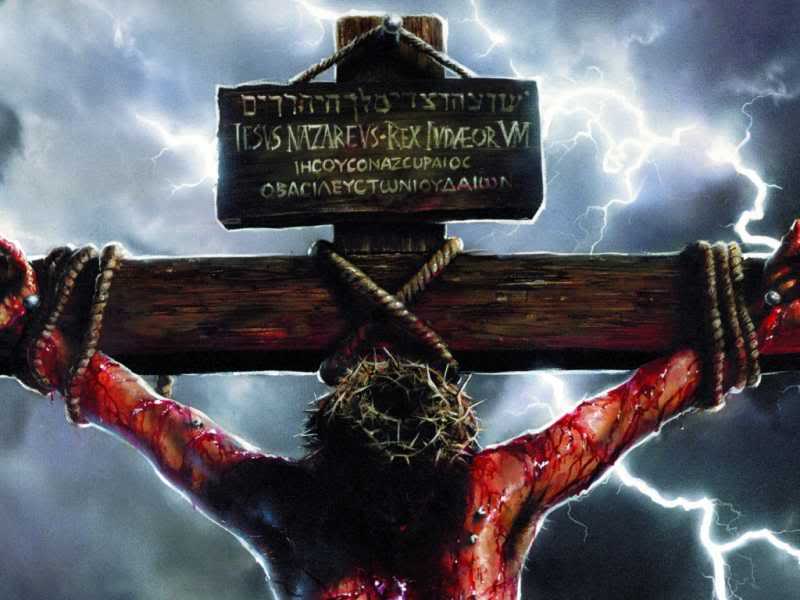
There was no time when the emotions of God were stretched like they were in the Garden of Gethsemane.

‘And He was withdrawn from them about a stone’s throw, and He knelt down and prayed, saying, “Father, if it is Your will, take this cup away from Me; nevertheless not My will, but Yours, be done.” Then an angel appeared to Him from heaven, strengthening Him. And being in agony, He prayed more earnestly. Then His sweat became like great drops of blood falling down to the ground.’ Luke 22:41-44

At that moment Jesus was a man in torment, able to prevent his own suffering but choosing to embrace it anyway. He was desperate to escape the agony of the cross – not just the physical pain, but the spiritual horror of becoming all human brokenness, for our sake – and yet he bowed his head. This total mastery of self serves as a supreme example to us. If Jesus were not a deeply emotional person, mastery might have been easier, but being torn up inside and still submitting to God? That is staggering, to me, what about you?

Adapted from an article by Duncan Edward Pile, October 27th, 2021 “Hold Me Closer Cosmic Dancer” http://www.patheos.com

SOVEREIGNTY OF GOD IN EVANGELISM

What is God calling Christians to do? We are simply to be found faithful in the task of delivering the Gospel message. We are to bring the gospel into our workplaces, friendships, and families, to whomever and wherever. All that is required is to look to where God has placed us and simply to be found faithful to the task of proclaiming the good news to those who are dead in their sins. It requires that we not be ashamed of the good news of the gospel, which includes not being ashamed of the bad news of God’s judgment against sin.

Whatever the result of that proclamation of the gospel may be, whether a hardening or a softening of the heart, God effectually uses this message for His purposes.

Not every instance of proclaiming a message of repentance is designed by God to bring the people who hear it to repentance and faith. In fact, Scripture often demonstrates the opposite is true—that the proclamation serves to condemn the recipients rather than restore them. A great example of this is found in the commissioning of the prophet Isaiah:

Then I heard the voice of the Lord, saying, “Whom shall I send, and who will go for us?” Then I said, “Here am I. Send me!” He said,

Go and tell these people: Keep on listening, but do not perceive; keep on looking, but do not understand. Render the hearts of these people insensitive, their ears dull, and their eyes dim, otherwise they might see with their eyes, hear with their ears, understand with their hearts, and return and be healed.” Then I said, “Lord, how long?” and He answered, “Until cities are devastated and without inhabitants, houses are without people and the land is utterly desolate, the Lord has removed men far away, and the forsaken places are many in the midst of the land. Yet there will be a tenth portion in it, and it will again be subject to burning, like a terebinth or an oak whose stump remains when it is felled. The holy seed is its stump Isaiah 6:8-13

As Brevard Childs ( Isaiah. Westminster John Knox Press, (2001): p56). puts it, “Isaiah, the prophet is to be the executor of death, the guarantor of complete hardening. His very proclamation is to ensure that Israel will not turn and repent.” How would you like to be called by God to deliver that message?

Then Death and Hades were thrown into the lake of fire. This is the second death, the lake of fire. And if anyone’s name was not found written in the book of life, he was thrown into the lake of fire.Revelation 20:14

If sinners will be damned, at least let them leap to Hell over our bodies. And if they will perish in the Lake of Fire, let them perish with our arms about their knees, imploring them to stay. If Hell must be filled, at least let it be filled in the teeth of our exertions, and let not one go there unwarned and unprayed for.” Charles Spurgeon

We may not necessarily like the implications of God using our proclamation of judgment and salvation to effectively harden an individual’s heart. We may not believe the implications of this are even fair—but we ought to remember in the midst of everything that we don’t want fair because our idea of what’s fair doesn’t square with God’s.

What’s fair is God condemning every man, woman, and child to eternal destruction in the Lake of Fire. What’s fair is that the only blameless One to have ever existed would not be put to the cross to pay for the sins of others. What you and I desire is mercy and grace, because mercy is not giving people what they deserve, which is condemnation, and grace is giving people what they don’t deserve, which is no condemnation. The gospel is a scandal to the world because it sees the murderer, rapist, racist, and the like, on equal footing with the sweet old lady who doesn’t confess Christ—and offers them all the same grace of God in Christ. What that very simply means is that the gospel is not barred from anyone on the basis of their own doing or choosing, but rather, on the sovereign choice of God Himself. If those who struggle with evangelizing were to focus on the sovereignty of God in evangelism, it would free many a burdened soul up to take joy in the work that God has given them, realizing that whether the person they share the gospel with rejects or receives it, God is glorified in accomplishing His work through the preached word.

This post was extracted from an article by Grayson Gilbert, A Lesson from Isaiah on the Sovereignty of God in Evangelism  July 23, 2020, http://www.patheos.com

TRUE HAPPINESS IS FOUND IN JESUS

To be holy is to see God as He is and to become like Him, covered in Christ’s righteousness. And since God’s nature is to be happy, the more like Him we become in our sanctification, the happier we will be. When did you last hear that message?

Forcing a choice between happiness and holiness is utterly foreign to Scripture. If it were true that God wants us to be only holy, wouldn’t we expect Philippians 4:4 to say, “Be holy in the Lord always” instead of “Rejoice in the Lord always”?

Why should the nations say, “Where is their God?” Our God is in the heavens; He does all that he pleases.” Psalms 115:2-3

God is decidedly and unapologetically anti-sin, but he is in no sense anti-happiness. Indeed, holiness is exactly what secures our happiness. Charles Spurgeon said,

Holiness is the royal road to happiness. The death of sin is the life of joy.”

It’s common to hear objections to the word happy based on its etymology, or history. One commentator says that “Happy comes from the word ‘hap,’ meaning ‘chance.’ It is therefore incorrect to translate [the Greek word makarios] as ‘happy’”

When people say they want to be happy, they are typically making no statement whatsoever about chance. D.A. Carson argues in Exegetical Fallacies, “The meaning of a word cannot be reliably determined by etymology” (32). King James Version translators wouldn’t have used happy and other forms of the root word happiness thirty-six times or translated makarios as some form of happy seventeen times if they thought its word history disqualified happy as a credible biblical word.

Unfortunately, because Bible teachers such as Oswald Chambers saw people trying to find happiness in sin, they came to think that pursuing happiness is sinful. Chambers said, “Joy is not happiness,” and continued, “There is no mention in the Bible of happiness for a Christian, but there is plenty said about joy” (God’s Workmanship, and He Shall Glorify Me, 346).

That simply is not true. In the King James Version, which Chambers used, Jesus tells his disciples, “If ye know these things, happy are ye if ye do them” (John 13:17). Speaking of faithful Christians, James said, “We count them happy which endure” (James 5:11). Peter said to fellow believers, “If ye suffer for righteousness sake, happy are ye” (1 Peter 3:14 ) and “If ye be reproached for the name of Christ, happy are ye” (1 Peter 4:14).

How beautiful upon the mountains are the feet of him who brings good news, who publishes peace, who brings good news of happiness. (Isaiah 52:7)

It’s hard for me to conceive of a greater insult to Jesus than to effectively deny what Hebrews reveals about his happy nature: “God, your God, has anointed you with the oil of gladness above your companions(Hebrews 1:9 NASB).

It also seems insulting to say that the best Father in the universe doesn’t want his children to be happy. In reality, the Bible is a vast reservoir containing, not dozens, but hundreds of passages conveying happiness. I’ve found more than 2,700 Scripture passages where words such as joy, happiness, gladness, merriment, pleasurecelebrationcheerlaughterdelightjubilationfeastingexultation, and celebration are used. Throw in the words blessed and blessing, which often connotes happiness, and the number increases.

Our message to the world should not be “Don’t seek happiness,” but “You’ll find in Jesus the happiness you have always been seeking.”

Adapted from the article “Common Christian Myths About Happiness” by Randy Alcorn March 11th, 2021 in Patheos.

IS YOUR LIFE BRINGING GLORY TO GOD

God never called us to do anything for Him. He does, however, call us to work with him.

James, the half-brother of Jesus, taught: “In the same way, faith also if it has no works, is dead.” James 2:17,

The simple truth about the difference between good works and bad or religious works, is that good works are works that God by His Holy Spirit calls us to do, through prayer and our ongoing relationship with God in Christ.

Dead religious works, in contrast, are things we try to do for God in order to earn His favour. Jesus died on a cross for our sins, and we receive His favour only by His grace. No amount of works will ever purchase that favour. However, because of that grace we now do good works for Him through the leading of His Holy Spirit.

In Matthew 25:23, Jesus said, “Well done, good and faithful servant; you have been faithful over a few things, I will make you ruler over many things.”

It sounds to me like Jesus was building some form of “performance-based Christianity!” Our true calling is to be living so close to Him, and to be so biblically astute, that our whole lives bring glory to His name in the process. Moreover, what you do on earth for Him will determine your role in serving Him during His Millennial reign on this earth.

In fact, God, the Father sent the Holy Spirit to be our counsellor, teacher and comforter to make us like Jesus and to prepare us to rule and reign with Him during His Millennial reign on this earth.

This image has an empty alt attribute; its file name is image-1.jpeg

 “Worthy are you to take the scroll and to open its seals, for you were slain, and by your blood you ransomed people for God from every tribe and language and people and nation, and you have made them a kingdom and priests to our God, and they shall reign on the earth.Revelation 5:9-10

They came to life and reigned with Christ for a thousand years. But the rest of the dead did not live again until the thousand years were finished. This is the first resurrection. Blessed and holy is he who has part in the first resurrection. Over such the second death has no power, but they shall be priests of God and of Christ, and shall reign with Him a thousand years.” Revelation 20:4-6

GOD USES SUFFERING

God often uses suffering for His purposes, even Christians, to purge sin from our lives. The suffering causes us to stop and re-evaluate our lives. Holy Spirit conviction comes upon us and we realise we have grieved Him and quenched His work in our lives, This invariably leads to repentance and make us realise how dependent we are upon God’s grace. It will also lead to a lot of other good things in our lives, greater discernment, greater sensitivity to things of the Spirit, transformed minds, wisdom, expanded hope, increased desire to spend time in His Word and to know the truth, teach us to give thanks in all circumstances, increased faith, strengthened character. Hopefully, when we see God transforming our lives in these ways we will come to the conclusion that the suffering was worth it.

Quadriplegic painter Joni Eareckson Tada shares ‘life-changing’ words on anniversary of her diving accident

Not all of us have had to suffer like Joni Eareckson Tada but she wrote in he book When God Weeps: “Before my paralysis, my hands reached for a lot of wrong things, and my feet took me into a lot of bad places. After my paralysis, tempting choices were scaled down considerably. My particular affliction is divinely hand tailored expressly for me. Nobody has to suffer ‘transverse spinal lesion at the fourth-fifth cervical’ exactly as I did to be transformed to His image.”

How about Nick Vujicic born without arms and legs. He tried to take his own life at age eight in four inches of water. Thank God he was unsuccessful, hundreds of thousands maybe even more will be in God’s Kingdom because of the testimony of this man.

GROWING IN GOD

Ways to stay focused on God’s agenda for your life

1. Holy Spirit Journal: Once you decide to record all the moments the Holy Spirit cautions/blocks/directs/inspires events during your day you will discover the significance of these experiences/miracles. Take your H.S. journal with you so you can jot down the incidences whilst still fresh in your mind and you do not forget to thank God for them. He will love that you do. Too frequently, we miss those God-moments that, whether they seem large or small, are truly phenomenal. Also, take time to review them at the end of every day, the Holy Spirit may give you fresh revelation something you missed at the time.

2. Before every new challenge, every new day, pray. Pray and fast if necessary. Remind yourself of God’s faithfulness! Every prayer He has answered. Replay every victory He has given you before you make a critical decision. Make sure you have “put on the whole armour of God each day so that you can stand against the evil forces of the devil.” Ephesians 6:10  The devil and his minions will do their best to get you thinking negatively to produce the wrong outcome.

3. Keep a visual image of what you’re aiming for—the outcome the Bible promises. Do this and watch what happens.

What are some daily habits you employ to stay connected to the Holy Spirit and living eternal now?

available on Amazon as an ebook or trade paperback edition or request one from me at ron@bakb.com.au and make a donation on Home page

GETTING IN STEP WITH GOD

Teach Me Your Paths – Psalm of David (Psalm 25)

David understood the truth of God’s Word. “If I had cherished sin in my heart, the Lord would not have listened; but God has surely listened and heard my voice in prayer.” Psalm 66:18-19

What about us? Do we know God has heard our prayers as David did? Read what David had to say in this Psalm and then let us consider what we now have in Jesus and how we pray.

Make me to know your ways, O LORD; teach me your paths. Lead me in your truth and teach me, for you are the God of my salvation; for you I wait all the day long.Psalm 25:4-5

Good and upright is the LORD; therefore He instructs sinners in the way. He leads the humble in what is right, and teaches the humble His way. All the paths of the LORD are steadfast love and faithfulness, for those who keep His covenant and His testimonies.” Psalm 25: 8-10

For your name’s sake, O LORD, pardon my guilt, for it is great. Who is the man who fears the LORD? Him will He instruct in the way that he should choose. His soul shall abide in well-being, and his offspring shall inherit the land. The friendship of the LORD is for those who fear Him, and He makes known to them His covenant. My eyes are ever toward the LORD, for He will pluck my feet out of the net.Psalm 25:11-15

We know David was a sinner (Bathsheba and Uriah) but he understood repentance and God’s forgiveness. He was a man who feared the Lord. God even said He was a man after God’s own heart. What does this mean? I think it means David knew and trusted God and was doing His best to live that out. What we need is humility in relation to ourselves and confidence in relation to God.

3348529
also available as eBook on Amazon

Consider now what Jesus has provided for all who believe in Him as Lord and Saviour. Through His sacrifice, Jesus made it possible for our Heavenly Father to send the Holy Spirit to indwell our Spirit, to be our counsellor, teacher and comforter.

The Spirit helps us in our weakness. For we do not know what to pray for as we ought, but the Spirit himself intercedes for us with groanings too deep for words. And He who searches hearts knows what is the mind of the Spirit, because the Spirit intercedes for the saints according to the will of God.” Romans 8:26-27

For us the Spirit is there revealing God’s will to us in the Scriptures and bringing God’s prayer concerns to life within us. He is searching our hearts and trying our ways so He can bring us to true repentance. He reveals the glory and goodness of God so that our prayers will be filled with praise and thanks.

We can be confident that God will hear when we come to Him. God answers every prayer that starts in heaven, every prayer born in our hearts by the Holy Spirit, every prayer based on a sure promise from His Word. As we pray to our Heavenly Father we need to acknowledge the Spirit and ask Him to help us to pray aright and to recognise His promptings that our prayers may be pleasing to our Heavenly Father and accomplish His purposes.

WHERE WILL YOU GO AND DO FOR GOD?

You will receive power when the Holy Spirit has come upon you, and you will be my witnesses in Jerusalem and in all Judea and Samaria, and to the end of the earth.” And when he had said these things, as they were looking on, he was lifted up, and a cloud took him out of their sight. And while they were gazing into heaven as he went, behold, two men stood by them in white robes, and said, “Men of Galilee, why do you stand looking into heaven? This Jesus, who was taken up from you into heaven, will come in the same way as you saw him go into heaven.Acts 1:6-8

We know that it was probably only as a result of persecution that Christians eventually moved out of Jerusalem to spread the Gospel. Hence, we know that God will do whatever is necessary to accomplish His purposes. What was the eventual outcome? From what we know, Peter and his wife traveled into Asia Minor, over to Greece, and on to Rome, never to return home. John eventually made his way throughout Western Turkey and settled in Ephesus to oversee the work there. Notably, he ended up on the island of Patmos in the Aegean Sea. Thomas headed in the opposite direction to India, Matthew to Ethiopia. Judas Thaddeus to Armenia.

But for most of us, God’s call is to go out into the community where He has placed us. The big question is, are we completing the great commission to make disciples in our community? Considering we are approaching the time of His return the answer to this question in the affirmative is mandatory.

available as an ebook on Amazon

ENCOUNTERING MISGUIDED PROPHECIES

This story provides an important lesson in the what we do with prophetic messages, regardless of who gives them, particularly when they relate to God’s call on your life.

Twenty-three-year-old George Whitefield sat on a ship ready to sail for America from the port of Deal, located approximately 70 miles southeast of London. For some time, he had experienced a compelling call to preach the gospel to colonial America and now the day for his departure had finally arrived. His heart was filled with gratitude, excitement and expectation.

As he waited for the ship’s crew to hoist anchor and sail, a letter was delivered to him from John Wesley who had just returned from a failed mission to Georgia. He opened the letter and was stunned by what he read. Wesley wrote that when he saw that the same wind that brought him in was taking Whitefield out, he inquired of the Lord about Whitefield’s journey. Wesley emphatically stated that the word God gave him for Whitefield was, “Let him return to London.”

Whitefield was shocked and momentarily confused. Wesley was 10 years his senior and had been a mentor to him. He held the Wesley brothers, John and Charles, in very high esteem. However, this word from John contradicted everything he believed about his call to America.

Whitefield went to prayer, and as he prayed, there came to his mind a story from the Old Testament about a “man of God” who lost his life because he listened to the words of an “old prophet” instead of diligently adhering to what God had instructed him.

I Kings 13 tells this story of the unnamed “man of God” whom God instructed to go to Bethel and prophesy against the idolatrous altars that had been established there by King Jeroboam. God also instructed him not to stop to eat or drink but to return directly home to Judah when he had completed his assignment.

Based on this directive from the Lord, he went to Bethel. As he prophesied against the idolatrous altars, they miraculously split apart, and the ashes were poured out on the ground. As he departed Bethel according to the Lord’s instructions, an “old prophet,” who heard of what had happened, saddled his donkey, caught up with the “man of God” and invited him to his home to eat and drink.

When the “man of God” recounted to the “old prophet” what the Lord had instructed him, the “old prophet” said, “‘I am a prophet like you, and an angel spoke to me by the word of the Lord, saying, ‘Bring him back with you into your house so that he may eat bread and drink water'” (1 Kings 13:18). The “old prophet,” however, was lying.

The “man of God” went back with the “old prophet” in contradiction to the instructions the Lord had given him; and as a result of his disobedience, he lost his life and was not buried in the burial ground of his ancestors.

With this story so vividly impressed on his mind, Whitefield knew what he must do. He sent back a reply to Wesley in which he said, “I cannot return to London.” Whitefield said no to Wesley’s “thus saith the Lord.”

History has demonstrated that Whitefield made the correct decision, for he became the major figure in the Great Awakening that rocked Colonial America and prepared her for statehood. Everywhere he went, great revival followed his preaching.

Because of God’s blessing on his labors, he became the most recognizable person in colonial America and Thomas S. Kidd, who teaches history at Baylor University, calls him “America’s Spiritual Founding Father.”

We can all be thankful that Whitefield said no to Wesley’s “thus saith the Lord.”