THE PURSUIT OF HAPPINESS

Pastor John Piper responds to a viral social media post by Jordan Peterson stating that life’s purpose is meaning rather than happiness. Piper insists believers glorify God by finding true joy in Him even amid suffering. I agree with Piper’s view.

In your presence [O God] there is fullness of joy; at your right hand are pleasures forevermore’ Psalm 16:11

In a Nov. 12, 2024, post on X that garnered 2.1 million views and 31,000 likes​, Peterson, a Canadian psychologist, wrote, “Life is suffering. The purpose of life is not to be happy, but to find something that sustains you in spite of suffering.”

In response to a reader who asked the pastor to share his thoughts on the topic, Piper, founder of Desiring God, acknowledged a core truth in Peterson’s message: chasing superficial, momentary pleasure is futile. 

Peterson is “right that for most people, happiness is experienced as fleeting, superficial, unpredictable, and impulsive” when pursued as an end in itself, Piper said in a recent episode of his “Ask Pastor John” podcast.

He also agreed that life should indeed be “profoundly meaningful” rather than spent in pursuit of empty pleasures. “I want people to have lives that are profoundly meaningful. So, amen, yes,” Piper noted.

However, the author of Don’t Waste Your Life diverges from Peterson on the role of happiness in life’s purpose. Piper stressed that the concept of happiness shouldn’t be discarded but redeemed. 

In contrast to Peterson’s approach of abandoning “happiness” as a life goal, Piper contended that true, deep happiness “rooted in God” is not only legitimate but essential​. 

The Minnesota-based pastor cautioned that even “meaning” can become an empty concept if divorced from God.

“I’ve been pursuing a different strategy than Jordan Peterson in the hope of rescuing people from the pursuit of fleeting, unpredictable, impulsive, superficial and (I would add) God-dishonoring, Christ-diminishing, Bible-ignoring, damning happiness,” he said. 

Drawing from biblical teaching, Piper laid out five key points to explain why joy in God stands at the heart of creation and the Christian life. First, Piper said God created the world to display His glory.​

“Creation is the overflow of God’s exuberance in being God,” he explained, meaning the universe exists to showcase God’s greatness, beauty and worth​.

“You might say that creation is the overflow of God’s exuberance in being God, in being great and beautiful and valuable, supremely so — so much so that He means to go public with His glory and communicate it,” he said.

Second, human beings are made in God’s image (Genesis 1:27) and designed to reflect that glory​, Piper said, adding: “That’s what images are for; they image forth what they are images of.”

Third, Piper addressed the reality of sin and suffering, emphasizing that no one lives out God’s purpose perfectly; in fact, humanity has turned away and become “enemies of God.”​

Fourth, Piper stressed that being “supremely happy” in God is crucial to honouring Him, a principle that lies at the heart of his perspective. The pastor defined the term in a 2015 piece as “God is most glorified in us when we are most satisfied in Him.”

“Being supremely happy in God […] is essential to glorifying God and showing that He’s supremely valuable,” he said, “and this is true especially in our suffering.”

When believers continue to delight in God amid trials, it demonstrates that God is more precious than health, comfort or any earthly gain, he said. “If we can maintain a deep and unshaken happiness in God through suffering, we make Him look as precious as He really is,” Piper explained​.

Finally, Piper noted that if God is most glorified when His creation is satisfied in Him, then pursuing joy in God is not optional but commanded​.

“Happiness, joy, pleasure — they’re not optional for the Christian,” he said, pointing to the Bible’s many calls to rejoice. Scripture repeatedly instructs believers to “Delight yourself in the Lord” and “Rejoice in the Lord always.

“Enjoying Him is not a by-product of something greater. It is the essence of human greatness. It is the essence of worship.”
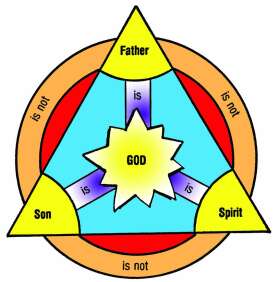
John Piper should have included the most important aspect of living out the Christian life: Jesus made it possible for our Heavenly Father to send the third person of the Trinity, the Holy Spirit, to indwell our spirit so we can live a new life in Christ. He is our counsellor, teacher, comforter and helper. He produces the fruit of the Spirit (Galatians 5:22-23) in our lives: love, joy, peace, patience, faithfulness, goodness, gentleness, kindness, and self-control. He also provides the nine gifts of the Spirit for ministry. (1 Corinthians 12:4-11). Our responsibility is to allow Him to direct our steps each day by saying, “not my will but your will be done” today.

A GOOD REASON TO MARRY

The decline of marriage over the last several decades is causing the decline in happiness or at least most of it. As Sam Peltzman, lead researcher behind the University of Chicago paper told The Atlantic in statistical hyperbole: “The only happy people for 50 years have been married people.”

After all, marriage is God’s design for man, woman, and family.

Therefore a man shall leave his father and his mother and hold fast to his wife, and they shall become one flesh.” Genesis 2:24

Olga Khazan, who wrote the Atlantic piece and has been cohabiting with her partner for 15 years, says these stats also struck her as counterintuitive. However, she then admits that “this is a fairly consistent finding dating back decades in social-science research: Married people are happier. Period.” 

Of course, happiness isn’t the sole or even the best reason to get married. Many things in life carry deep meaning and significance that don’t necessarily make us happy. A life lived only for happiness is a futile “chasing after the wind.” Enduring suffering, overcoming trials and tragedy, or sacrificing time, energy, or even our lives for others are all richly worthwhile pursuits that yield rewards in eternity. Certainly, loving someone and raising godly children is worth it, even if it’s not always fun.  

And we should note, that “happiness” is a malleable word. When survey participants say being married or having children made them “happy,” they may often mean that these permanent connections give them lasting joy, something more profound than fleeting happiness, which surveys seldom quantify.     

Still, these consistently stark results are unmistakable. They should challenge the entire way of thinking in sitcoms, movies, and editorials. Marriage is one of the chief sources of well-being and satisfaction in life. The fact that marriage rates have declined so dramatically over the last 50 years has had real, population-wide consequences. 

Because the reasons people are not marrying at the same rates are so complex, different solutions will be required to raise the marriage rate. According to Wilcox and Bass, one of the most important reasons is the fact that, for many Americans who are living together and may already have children, getting married incurs a tax “penalty.” The federal government needs to, in their words, stop “making marriage a bad financial bet for lower-income families.”  

That would be a good start. Ultimately, however, our bad laws are reinforced by a low view of marriage that has infected hearts and minds via entertainment, media, culture, and individual choices. We have a worldview problem, which has led to a conflict between the values and priorities of millions of people and the way they were actually created to live.  

Marriage is part of God’s plan for humanity and for His creation. No other human institution forges such lasting and consequential bonds. So, it should surprise no one — least of all Christians — that our nation’s 50-year experiment with alternatives to marriage has left huge numbers of people deeply unhappy. Repent and get back into a relationship with your Heavenly Father through the sacrifice Jesus made our your behalf.

 ” Jesus said to him, I am the way, and the truth, and the life. No one comes to the Father except through me. John 14:6

GOD IS YOUR SOURCE OF EVERY GOOD THING

Unless you truly get this basic truth you are missing out on all but what you can generate on your own for the short time God allows you to live on the planet He created. Above all, you are missing out on eternal life.

Happiness can’t be bigger than its source. God is primary; all other forms of happiness—relationships, created things, and material pleasures—are secondary. If we don’t consciously see God as our source, these secondary things intended for enjoyment can master us.

Only God can satisfy the longing soul, and the hungry soul he fills with good things” (Psalm 107:9). We are finite and fallen, and we lack what’s required for true happiness. All those who look within themselves for pleasures and delight are doomed to misery. We just aren’t big enough and good enough to supply the happiness we crave!

When the first man and woman, Adam and Eve, disobeyed God, being deceived by the already fallen angelic being Satan, God withdrew the Holy Spirit from Adam and Eve’s spirit. They died spiritually then and physically some 900 years later.

The spirit of man is the lamp of the Lord, searching all his innermost parts.” Proverbs 20:27

Our spirit, as the lamp of the Lord, was always meant to house the Holy Spirit. What an amazing truth, the third person of the Trinity, the Holy Spirit, is the oil that allows us to function as God intended.

The wonderful news for all who accept God’s solution for our rebellion (JESUS paying the price, dying that we might live) is that Jesus made it possible for our Heavenly Father to send the Holy Spirit to once again indwell our spirit, enabling us to live as He intended.

Christ-followers enjoy what God provides first and foremost because they enjoy the God who made them and provides for them. Unlike us, God is infinite and without flaws. Secondary things bring some joy, but God alone is our “exceeding joy” (Psalm 43:4). Scottish theologian Samuel Rutherford (1600–1661) wrote, “It is the infinite Godhead that must allay the sharpness of your hunger after happiness, otherwise there shall still be a want of satisfaction to your desires.”

Secondary things are not incidental or unimportant— they’re God’s gifts to draw us to Him—so we should never disdain the created world. But by putting God first and His creation second, the world and its beauties become instruments of joy and worship. We love them better when we love God more than them.

In the mid-1600s, Puritan John Gibbon said, “God alone is enough, but without him, nothing [is enough] for thy happiness.” Whether or not we’re conscious of it, since God is the fountainhead of happiness, the search for happiness is always the search for God.

The only place you will find out the truth about this Cosmos and the meaning of life is in God’s Word, in which He gives us the entire story of the Cosmos we inhabit from its beginning to its fiery end. My recommendation would be either The Open Bible Expanded Edition (New King James Version), Thomas Nelson Publishers, or the ESV Study Bible (English Standard Version) published by Crossway.

WHAT IS YOUR GREATEST SOURCE OF JOY?

What is our greatest source of joy? Paul pointed to the Holy Spirit:

The fruit of the Spirit is love, joy, peace, patience, kindness, goodness, faithfulness, gentleness, self-control.” Galatians 5:22-23

Sadly, many church people believe they are saved but have never been born again of the Holy Spirit. Unless a person has truly repented of their sin and rebellion against God and understood and accepted what Jesus Christ has achieved for them by dying on The Cross and then given testimony of dying to self by being baptised then they have not received the Holy Spirit to enable them to live the Christian life.

Jesus made it possible for our Heavenly Father to send the third person of the Trinity to be our Counsellor, Comforter, and Healer. He provides the gifts of the Holy Spirit for ministry. The gifts of the Holy Spirit are not for you to use how you want. They have specific purposes for God’s Kingdom. They are intended to glorify God by revealing more of who He is and displaying His sovereignty and power over all things.

To each is given the manifestation of the Spirit for the common good. For to one is given through the Spirit the utterance of wisdom, and to another, the utterance of knowledge according to the same Spirit, to another faith by the same Spirit, to another, gifts of healing by the one Spirit, to another the working of miracles, to another prophecy, to another the ability to distinguish between spirits, to another, various kinds of tongues, to another the interpretation of tongues. All these are empowered by one and the same Spirit, who apportions to each one individually as he wills.1 Corinthians 12:7-11

Back to JOY: commenting on chara, the Greek Word usually rendered “joy” in this passage, the United Bible Societies’ translation handbook advises, “In some languages, joy is essentially equivalent to ‘causes people to be very happy.’ In order to indicate that this joy is not merely some passing experience, one may say ‘to be truly happy within their hearts.’ In some languages, joy is expressed idiomatically as ‘to be warm within one’s heart,’ or ‘to dance within one’s heart.’”

The beauty of God’s creation is a major source of joy

If it seems that the translators are taking liberties by saying “happy” instead of “joyful,” note that the other eight adjectives perfectly correspond to the nouns used in the English Standard Version and the New American Standard Bible. Chara is the only Greek word in this passage rendered differently by the CEV translators. Their goal was faithfulness to the original language. “Joy” is a good translation of chara, but so too is its synonym “happiness.”

Some suggest that the order of the ninefold fruit of the Spirit is significant and that love is named first because “the greatest . . . is love” (1 Corinthians 13:13). If this is true, then joy’s position as the second listed might imply it’s the second greatest.

Why does Paul emphasize joy and the other eight components of the Spirit’s fruit in the context of his attack on legalism in Galatians? Reading between the lines, we might surmise that joy was too rare among the Christians there, as it often is today.

Joy, along with the fruit of the Spirit, stands in contrast to the works of the flesh (see Galatians 5:19-21). Only new life in Christ equips the believer to walk in the Spirit (see Galatians 5:16-18, 24-25).

The permanence of the Holy Spirit’s indwelling in our lives allows us to continually access supernatural joy/happiness. To be robbed of the ability to rejoice or of the source of joy, a believer would have to be robbed of our joyful God’s indwelling.

adapted from an article “The Fruit of the Spirit Are Ingredients of Happiness” August 3, 2020, by Randy Alcorn – http://www.patheos.com

TRUE HAPPINESS IS FOUND IN JESUS

To be holy is to see God as He is and to become like Him, covered in Christ’s righteousness. And since God’s nature is to be happy, the more like Him we become in our sanctification, the happier we will be. When did you last hear that message?

Forcing a choice between happiness and holiness is utterly foreign to Scripture. If it were true that God wants us to be only holy, wouldn’t we expect Philippians 4:4 to say, “Be holy in the Lord always” instead of “Rejoice in the Lord always”?

Why should the nations say, “Where is their God?” Our God is in the heavens; He does all that he pleases.” Psalms 115:2-3

God is decidedly and unapologetically anti-sin, but he is in no sense anti-happiness. Indeed, holiness is exactly what secures our happiness. Charles Spurgeon said,

Holiness is the royal road to happiness. The death of sin is the life of joy.”

It’s common to hear objections to the word happy based on its etymology, or history. One commentator says that “Happy comes from the word ‘hap,’ meaning ‘chance.’ It is therefore incorrect to translate [the Greek word makarios] as ‘happy’”

When people say they want to be happy, they are typically making no statement whatsoever about chance. D.A. Carson argues in Exegetical Fallacies, “The meaning of a word cannot be reliably determined by etymology” (32). King James Version translators wouldn’t have used happy and other forms of the root word happiness thirty-six times or translated makarios as some form of happy seventeen times if they thought its word history disqualified happy as a credible biblical word.

Unfortunately, because Bible teachers such as Oswald Chambers saw people trying to find happiness in sin, they came to think that pursuing happiness is sinful. Chambers said, “Joy is not happiness,” and continued, “There is no mention in the Bible of happiness for a Christian, but there is plenty said about joy” (God’s Workmanship, and He Shall Glorify Me, 346).

That simply is not true. In the King James Version, which Chambers used, Jesus tells his disciples, “If ye know these things, happy are ye if ye do them” (John 13:17). Speaking of faithful Christians, James said, “We count them happy which endure” (James 5:11). Peter said to fellow believers, “If ye suffer for righteousness sake, happy are ye” (1 Peter 3:14 ) and “If ye be reproached for the name of Christ, happy are ye” (1 Peter 4:14).

How beautiful upon the mountains are the feet of him who brings good news, who publishes peace, who brings good news of happiness. (Isaiah 52:7)

It’s hard for me to conceive of a greater insult to Jesus than to effectively deny what Hebrews reveals about his happy nature: “God, your God, has anointed you with the oil of gladness above your companions(Hebrews 1:9 NASB).

It also seems insulting to say that the best Father in the universe doesn’t want his children to be happy. In reality, the Bible is a vast reservoir containing, not dozens, but hundreds of passages conveying happiness. I’ve found more than 2,700 Scripture passages where words such as joy, happiness, gladness, merriment, pleasurecelebrationcheerlaughterdelightjubilationfeastingexultation, and celebration are used. Throw in the words blessed and blessing, which often connotes happiness, and the number increases.

Our message to the world should not be “Don’t seek happiness,” but “You’ll find in Jesus the happiness you have always been seeking.”

Adapted from the article “Common Christian Myths About Happiness” by Randy Alcorn March 11th, 2021 in Patheos.

WHICH DO YOU WALK IN AND WHAT IS YOUR DESTINATION?

Only new life in Christ equips believers to walk in the Spirit. Which do you walk in, the flesh or the Spirit? The difference on this earth is stark and even greater for eternity.

For the desires of the flesh are against the Spirit, and the desires of the Spirit are against the flesh, for these are opposed to each other,Galatians 5:17

And those who belong to Christ Jesus have crucified the flesh with its passions and desires.” Galatians 5:24

WORKS OF THE FLESH

Now the works of the flesh are evident: sexual immorality, impurity, sensuality, idolatry, sorcery, enmity, strife, jealousy, fits of anger, rivalries, dissensions, divisions, envy, drunkenness, orgies, and things like these. I warn you, as I warned you before, that those who do such things will not inherit the kingdom of God.Galatians 5:19-21

WORKS OF THE SPIRIT

But the fruit of the Spirit is love, joy, peace, patience, kindness, goodness, faithfulness, gentleness, self-control; against such things there is no law.Galatians 5:22-23

The fruit of the Spirit leads to true happiness in this life and of course it leads to eternal life in the Kingdom of God, first during the transitional Millennial Kingdom and then on the new earth and heaven after the White Throne judgement for eternity.

“They came to life and reigned with Christ for a thousand years. The rest of the dead did not come to life until the thousand years were ended. This is the first resurrection.” Rev.20:4-5

“Then I saw a new heaven and a new earth, for the first heaven and the first earth had passed away… Rev. 21:1-

HAPPINESS AND HOLINESS

“Holiness is the royal road to happiness. The death of sin is the life of joy.” Charles Spurgeon. Indeed, holiness is exactly what secures our happiness.

To be holy is to see God as He is and to become like Him, covered in Christ’s righteousness. And since God’s nature is to be happy, the more like Him we become in our sanctification, the happier we will be. Forcing a choice between happiness and holiness is utterly foreign to Scripture. If it were true that God wants us to be only holy, wouldn’t we expect Philippians 4:4 to say, “Be holy in the Lord always” instead of “Rejoice in the Lord always”?

The Puritans, Jonathan Edwards, Charles Spurgeon, and many others used the words happy and happiness frequently in biblical, theological, and Christ-centered contexts. When they called on believers to be happy, they weren’t speaking of happenstance or chance, but of enduring delight and pleasure and good cheer in Jesus.

Sadly, Bible teachers such as Oswald Chambers saw people trying to find happiness in sin so they came to think that pursuing happiness is sinful. Chambers said, “Joy is not happiness,” and continued, “There is no mention in the Bible of happiness for a Christian, but there is plenty said about joy” (God’s Workmanship, and He Shall Glorify Me, 346). I respect and have been blessed by Oswald Chambers publications such as My Utmost for His Highest, but statements like this are misleading. It simply is not true. In the King James Version, which Chambers used, Jesus tells his disciples, “If ye know these things, happy are ye if ye do them” (John 13:17 KJV). Speaking of faithful Christians, James said, “We count them happy which endure” (James 5:11 KJV). Peter said to fellow believers, “If ye suffer for righteousness’ sake, happy are ye” (1 Peter 3:14 KJV) and “If ye be reproached for the name of Christ, happy are ye” (1 Peter 4:14 KJV). I am not sure what Oswald Chambers thought of these verses but it seems clear God wants us to be happy but we can only be happy when we are in close relationship with Him and obedient to His Word and call.