
The claims supporting the global climate reset have persistently lacked predictive validity, a necessary precondition in the physical sciences. Rarely has the modelling convinced; and the scare campaigns, such as the nonsense from media creation Greta Thunberg, are just public relations pantomime. It is increasingly obvious that the routine threats that “time is running out” are just cynical scare mongering.
Previously the fact that it was blatant deception did not matter because the climate proponents enjoyed the support of the financial institutions and governments, which meant reasonable debate was suppressed. They are losing that support.
Financial fads usually disappear with great speed as the money moves elsewhere. It will be slower with governments. They are deeply ideologically committed to net zero with a vast array of government regulations and funding for renewables, green government bureaucracies, local and global environmental organisations and agencies. They will not reverse this easily.
Sadly, cheap and stable energy is essential for any economy to survive, particularly for industry. now that robotics and AI are essential components. Moreover, Australia has heaps of natural gas, oil and coal. We should have the cheapest energy for our industry and peope of any country in the world. AI Data Centres and robotics require lots of energy that is consistent not like wind and solar. Who can predict when the wind will blow, and the sun shines only during the daytime with no heavy cloud cover. With robotics and AI Amazon warehouses operate 24 hours a day 7 days a week.
In the end, it is always about the money, and I believe the financial sentiment is turning. The markets are realising that the massive investment returns in renewables will never materialise. Moreover, wind turbines and the transmission infrastructure needed are an eyesore.
Undoing the economic damage will take time, but eventually reality will even filter down to Australian policymakers. But don’t expect any among them to take responsibility for their delusions and errors.
After six months of vacillating over whether or not they should simply ape the government’s energy policies, the Coalition has come up with an alternative. Instead of destroying the Australian economy in pursuit of Net Zero, hopefully they’re going to prioritise providing Australians with affordable power. Whether they have the people to formulate the right strategy and communicate it to the public is debatable.
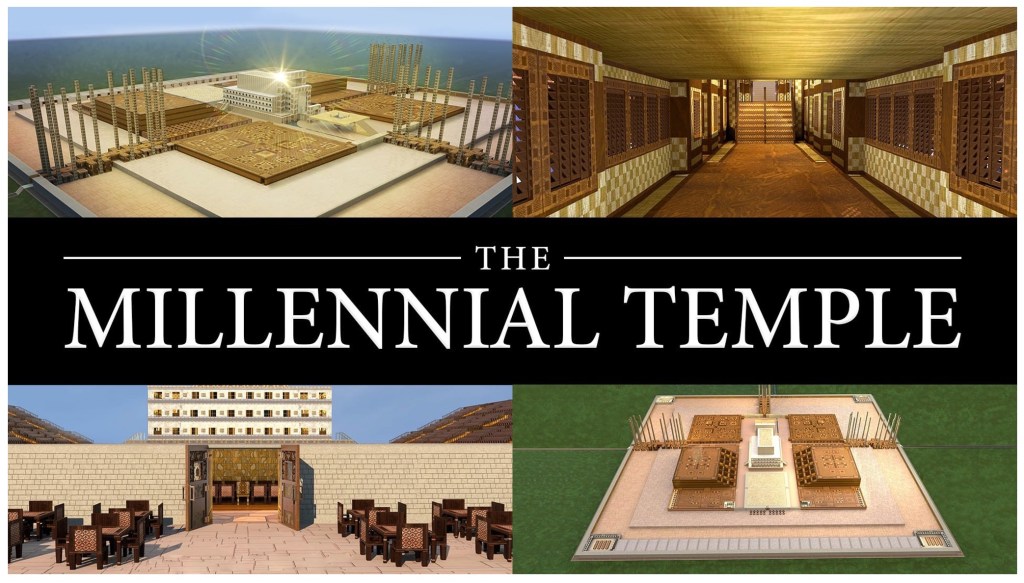
Fortunately, Jesus Millennial Kingdom is not too far distant. Biblical end times prophecies are playing out now and we may be in the last seven years of Daniel’s 70 weeks prophecy. For Christians this is wonderful as we know God will rapture us to heaven before He pours out His wrath on an unrepentant world with the Trumpet (Revelation 8) and Bowl judgements (Revelation 16). Following the Trumpet and Bowl judgements Jesus and the glorified Saints return to rescue Israel at the battle of Armageddon. Jesus and the Saints will rule the world for 1,000 years so that God fulfils the covenant He made with Abraham and confirmed with Isaac, Jacob and David that Israel’s Messiah, Jesus will rule the nations of the world from a magnificent new Jerusalem. During the time God pours out His wrath upon the earth He reconstructs the geomorphology of the world so that Jerusalem is on the highest mountain in the world.
“The great city was split into three parts, and the cities of the nation’s fell, and God remembered Babylon the great, to make her drain the cup of the wine of the fury of his wrath. And every island fled away, and no mountains were to be found.“ Revelation 16:19-20
The millennial Jerusalem sits on the highest plateau and has two rivers flowing out of its east and west sides. The mountain’s great height emphasizes Jerusalem as the centre of world authority, for all the nations will flow to it. A totally new construct. The millennial Jerusalem is nine times larger than the current city. All the land of Israel round about Jerusalem, which was encompassed with mountains, but now these mountains shall become a plain.
For more on Jesus coming Millennial Kingdom go to http://www.millennialkingdom.net.

 LIVING ETERNAL NOW