REVIVALS TRANSFORM CHURCHES BUT DO THEY TRANSFORM NATIONS?

Argentina’s great revival of the 1980s transformed churches but left the nation largely unchanged — a sobering lesson on why Christians must engage both the sanctuary and the ballot box.

Argentina

Revival 

In 1985, I returned to my native Argentina to witness a move of God that would change the nation’s spiritual landscape forever. Through the ministry of evangelists like Carlos Annacondia, thousands were swept into the Kingdom.

My father’s church in La Plata exploded from 300 members in one location to thousands of believers in 19 new preaching points. We saw miracles, healings, and a generation of new believers on fire for Christ.

It was glorious, but it left many with a haunting question: If the revival was so great, why was the nation not transformed?

Despite full and multiplying churches, Argentina’s economy remained broken, corruption stayed rampant, and in 2010, it became the first Latin American nation to legalise same-sex marriage.

We had focused so much on becoming “light” within our buildings that we forgot to be the “salt” that preserves a decaying culture. We dedicated ourselves to our churches, while the enemy dedicated himself to our cities.

The Myth of Political Detachment

A common argument against Christian political involvement is that Jesus never told us to vote. However, we must remember that democracy did not exist in His time; the Jews were subjects of Rome, not voters in a republic. Today, we live in a different reality where failing to vote is often a lack of gratitude for the freedoms we enjoy.

While the Gospel does not depend on who sits in the seat of government — and often spreads fastest under persecution — the laws of a land directly impact our quality of life and our ability to protect the vulnerable.

Proverbs 29:2 reminds us: “When the godly are in authority, the people rejoice. But when the wicked are in power, they groan.

Duty Over Security

Too often, pastors remain silent about elections to “keep the peace” or protect their congregation’s size. But prioritising personal security over national well-being is an abandonment of duty. We are called to be known for declaring Christ, but that doesn’t mean we ignore the tools God has given us to promote righteousness.

As Daniel served in Babylon without being contaminated by its system, we can engage in politics without losing our personal holiness.

Like the builders in Nehemiah’s day, we must hold a tool for building the church in one hand and a weapon to defend our families and values in the other.

A New Chapter for Argentina

Today, 42 years after the revival began, we are finally seeing the fruit of “holy involvement.” In 2025, the Argentine government officially recognised evangelical churches as legal entities for the first time. That same year, six evangelical Christians won seats in the legislature. The church is finally finding its voice beyond the sanctuary walls.

Breaking the Silence

In 1 Kings 18, Elijah challenged the people of Israel to stop wavering between God and Baal. The Bible records a chilling detail: “But the people were completely silent.

In a culture that often mirrors the sensuality and darkness of Baal worship, the church cannot afford to be silent. We must learn from the history of Argentina.

Revival is the engine, but reform is the vehicle. I urge you to be both salt and light — not just in your pews, but at the ballot box.

Article by Rev. Sergio Scataglini is an international speaker and author. He was born in Argentina and is president of Scataglini Ministries, Inc.
CHRITIAN FILMS WORTH WATCHING AND PROMOTING

The Kendrick Brothers’ SHOW ME THE FATHER is the first documentary film from the creators of WAR ROOM, OVERCOMER, FIREPROOF, and COURAGEOUS. Featuring a variety of amazing true stories, this captivating movie takes audiences of all ages on an inspiring and emotional cinematic journey.

Providing a fresh perspective on the roles of fathers in today’s society, SHOW ME THE FATHER invites you to think differently about how you view your earthly father, and how you personally relate to Father God.

Altizer’s latest project, He Calls Me Daughter is also inspiring. Stephen and Jill Kendrick’s story of adopting their precious daughter from a Chinese orphanage is amazing. The incredible plot twist for American football coaches Deland McCullough and Sherman Smith needs to be seen to be believed. In fact, the film is worth watching just for the beautiful moment of truth between them 64 minutes into the documentary.

He Calls Me Daughter is a little clunky at times, but overall, it’s a moving reminder of the impact, for better or worse, that fathers have. Ultimately, it’s a hopeful film, as it illustrates the incredible love that God, our perfect Father in Heaven, has for us.

EARTH IS NOT JUST A SPEC IN THE UNIVERSE

In this episode of Creation Talk, host Joshua Bemenderfer talks with guest Keaton Halley about the claim that Earth’s small size proves humanity is insignificant. Referencing voices like Carl Sagan and Bill Nye, they examine whether science truly supports that conclusion—or whether it reflects a biblical worldview, considering on the evidence.

The conversation explores cosmic and local fine-tuning, from life-permitting constants in the universe to Earth’s position in the habitable zone and the stability of our sun. Keaton argues that the data points not to mediocrity, but to intentional design—suggesting that our “speck” in the cosmos is far more significant than it appears.

Introduction/Teaser: 1. Carl Sagan and the Pale Blue Dot, 2. Bill Nye and Cosmic Insignificance, 3. Does Size Equal Significance? 4. Psalm 8 – Humility and Dominion, 5. A Thanks for Support, 6. Made in God’s Image, 7. The Purpose of Humans, 8. Does Location Make Us Mediocre? 9. Cosmic Fine Tuning, 10. Local Fine Tuning, 11. Final Takeaways, 12. Promo: Genesis The Key to the Gospel

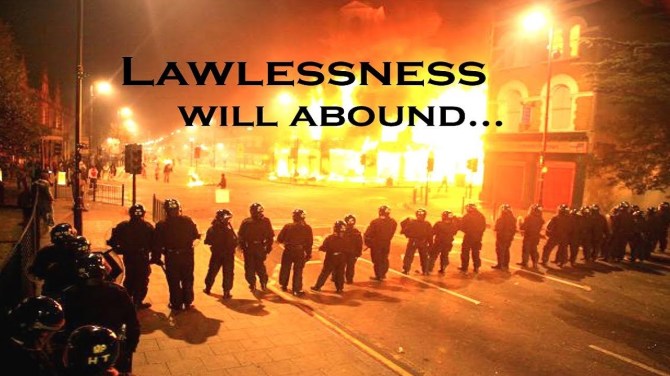
BIBLICAL END TIMES LAWLESSNESS

Minnesota: many Americans, understandably shocked, look at the protests, the violence, and the loss of life and point to immediate causes. Some cite fraud and corruption in federally funded social programs, apparently tolerated by state officials. Others point to aggressive enforcement of immigration law that sparked deadly confrontations.

Minnesota is not an outlier; it is a case study of what happens when institutions that once fostered moral restraint abandon that role. The real cause is less obvious because it is far removed from the tragic events we see today in the headlines.

It can be traced back decades to what was called the long march through the institutions — a phrase coined in the late 1960s by Marxist student leader Rudi Dutschke. The phrase deliberately echoed Mao Zedong’s Long March, but Dutschke’s was not a military campaign. It was a cultural and ideological one, measured in decades rather than battles.

The strategy was to transform society not by overthrowing government outright, but by infiltrating its core institutions: universities, primary and secondary education, the media, the courts, and even churches. The objective was to shape what people were taught — what would be considered normal, respectable, and acceptable — so that political outcomes would eventually become inevitable.

House Speaker Mike Johnson (R-La.) alluded to this reality recently before the British Parliament when he referenced a quote often attributed to Abraham Lincoln:

The philosophy of the schoolroom in one generation will be the philosophy of government in the next.”

That insight helps explain why the classroom has been central to this long march. Obstacles to Marxist ideology had to be removed or marginalized. It was no accident that prayer and Bible reading were removed from public schools in 1962 and 1963. When God and His word are removed as moral restraints, lawlessness fills the vacuum — and that is the fertile ground in which Marxism takes root and gains power.

Over time, that march has moved beyond institutions and inevitably spilled into the streets. Confrontations like those we’ve seen in Minneapolis — whether involving George Floyd or Alex Pretti — are becoming routine. The rule of law depends on shared moral limits; when those limits erode, force alone cannot restore order.

In the last days, before Jesus returns to restore righteousness, he said that “lawlessness will be increased

And you will hear of wars and rumours of wars. See that you are not alarmed, for this must take place, but the end is not yet… and there will be famines and earthquakes in various places. All these are but the beginning of the birth pains.
Then they will deliver you up to tribulation and put you to death, and you will be hated by all nations for my name’s sake. And then many will fall away and betray one another and hate one another. And many false prophets will arise and lead many astray. And because lawlessness will be increased, the love of many will grow cold
.” Matthew 24:7-12

We are fast approaching the time of Jesus return. Next on God’s agenda for planet earth is Jesus Millennial Kingdom. To learn more go to http://www.millennialkingdom.net.

WHO ARE THE TWO WITNESSES OF REVELATION 11?

For centuries, Bible scholars have taught that Enoch and Elijah are the two witnesses in Revelation 11, largely on the basis that they both were taken to heaven by God and had not experienced death.. But what if this traditional interpretation is wrong? Hidden in Scripture are clues that point to a completely different answer—one that changes everything we thought we knew about end times prophecy. In this video, we examine the biblical evidence, uncover the Transfiguration connection, and reveal the shocking truth about who these mysterious witnesses really are.

📖 Key Topics Covered:

  • The two witnesses prophecy in Revelation 11
  • Why the Enoch and Elijah theory has major problems
  • The Transfiguration’s prophetic significance
  • Biblical proof of the witnesses’ true identity
  • What this means for believers today

The answer has been hiding in plain sight all along. Discover the truth that will transform your understanding of biblical prophecy.

WALKING WITH THE HOLY SPIRIT: THE SECRET TO TRUE FREEDOM

Every human heart longs for freedom — freedom from fear, guilt, sin, and the emptiness of life apart from God. Yet true freedom cannot be found by human effort, philosophy, or religion. It is found only through a living relationship with the Holy Spirit — God Himself indwelling the hearts of believers to guide, empower, and transform them.

And Peter said to them, “Repent and be baptized every one of you in the name of Jesus Christ for the forgiveness of your sins, and you will receive the gift of the Holy Spirit.” Acts 2:38

When we place our faith in Jesus Christ as Saviour and Lord, something miraculous happens. The Father sends the third Person of the Trinity — the Holy Spirit — to dwell within us. Jesus promised this gift before His death and resurrection:

And I will ask the Father, and He will give you another Helper, that He may abide with you forever — the Spirit of truth” John 14:16–17

The very presence of God takes up residence within the believer, marking us as His children and filling us with life.

But walking with the Spirit is more than a theological truth — it’s a daily relationship. The Apostle Paul urges believers:

If we live by the Spirit, let us also walk by the SpiritGalatians 5:25

That means aligning our hearts and choices with His gentle leading rather than following the desires of our own nature. When we do, we discover what it means to live in freedom — not freedom from obedience, but freedom in obedience. Sin no longer has dominion over the one whose life is yielded to God’s Spirit.

The evidence of this life is called “the fruit of the Spirit” (Galatians 5:22–23): “love, joy, peace, patience, kindness, goodness, faithfulness, gentleness, and self-control”. These qualities don’t come through human effort but by divine transformation. They blossom naturally as we stay connected to the Holy Spirit, much like branches drawing life from the vine.

The Spirit also gives us gifts (9 just like the fruit of the Spirit)— supernatural abilities for ministry and service — so that the Church may be built up and others may encounter God’s love through us. Whether teaching, encouraging, showing mercy, or praying in faith, every gift is given “for the common good” (1 Corinthians 12:7).

To walk with the Spirit is to live with eternity in view — understanding that every moment, every action, every choice is shaping us for eternal life with God. The Spirit is our Comforter in sorrow, our Teacher in confusion, our Strength in weakness, and the seal of our inheritance in Christ. He whispers truth into the noise of the world and reminds us daily that we belong not to ourselves, but to the One who died and rose again.

If you have placed your faith in Jesus, you possess this incredible gift. But perhaps the real question is: are you walking in step with Him? Freedom, joy, and peace are waiting — not in trying harder, but in surrendering completely to the loving guidance of the Spirit within. The secret to abundant life isn’t striving, but abiding. Scripture warns us not to grieve the Spirit or quench His work in our lives.

And do not grieve the Holy Spirit of God, by whom you were sealed for the day of redemption.Ephesians 4:30

Do not quench the Spirit.” 1 Thessalonians 5:19

Jesus is returning soon. How good it will be if you have already developed a close relationship with Him. Will you be ready to rule and reign with Him in Jesus Millennial Kingdom? If you want to know more about what is next on God’s agenda for planet Earth go to http://www.millennialkingdom.net

DISCERNING GOD’S VOICE

This post follows my earlier post on Recognizing Gods Voice. If you have not read it I suggest you do.

Discerning God’s Voice From Our Own Thoughts

One of the most common questions believers ask is, “How do I know if what I’m sensing is God, or just my own thoughts?” It’s an honest question, and a deeply important one. Hearing God’s voice is not difficult because God is silent — it’s difficult because our inner world is noisy. We carry emotions, desires, fears, memories, and assumptions that all speak loudly within us. Add to that the influence of culture, the enemy’s lies, and the pressures of daily life, and it becomes clear why discernment is essential.

The good news is that God does not leave us guessing. Jesus said His sheep know His voice. That means it is possible — and expected — for believers to learn to distinguish God’s voice from every other voice. Discernment is not about spiritual talent; it is about spiritual training. As we grow in relationship with God, His voice becomes clearer, and the competing voices lose their power.

God’s Voice Aligns With Scripture

The first and most reliable test of God’s voice is Scripture. God will never speak in a way that contradicts His Word. If an impression, idea, or internal nudge goes against Scripture, it is not from God — no matter how strong it feels.

Our thoughts can be influenced by emotion. The enemy can whisper lies. But Scripture is steady, unchanging, and trustworthy. It is the anchor that keeps us from drifting into confusion.

When you sense something and wonder if it’s God, ask: “Does this align with the truth of Scripture?” If the answer is no, the discernment is simple. If the answer is yes, you can move to the next layer of testing.

God’s Voice Reflects His Character

God’s voice always sounds like God. His tone, His nature, and His heart are consistent. He does not speak harshly, manipulate, shame, or pressure. He does not stir fear or confusion. He does not flatter or inflate pride. His voice is firm but gentle, convicting but hopeful, truthful but loving.

Our own thoughts often carry the tone of our emotions — anxious, rushed, fearful, or self‑protective. The enemy’s voice is accusatory, condemning, and discouraging. But the Shepherd’s voice carries peace, clarity, and grace.

When you sense something internally, ask: “Does this sound like the Jesus I know?” If the tone doesn’t match His character, it isn’t His voice.

God’s Voice Produces Peace, Not Pressure

One of the clearest distinctions between God’s voice and our own is the fruit it produces. God’s voice brings peace — even when He is correcting us or calling us into something challenging. His peace is not the absence of difficulty; it is the presence of His steady assurance.

Our own thoughts often produce pressure, urgency, or panic. The enemy’s voice produces fear, confusion, or condemnation. God’s voice leads; other voices push.

If what you’re sensing feels frantic, rushed, or heavy with fear, pause. The Shepherd does not drive His sheep — He leads them.

God’s Voice Leads Toward Obedience and Holiness

Another way to discern God’s voice is by examining the direction it leads. God’s voice always draws us closer to Him. It leads toward obedience, humility, repentance, forgiveness, generosity, purity, and love.

Our own thoughts often lead toward comfort, self‑protection, or avoidance. The enemy’s voice leads toward sin, pride, bitterness, or compromise.

If what you’re sensing leads you to become more like Christ, it is likely God. If it leads you away from Christ, it is not.

God’s Voice Is Consistent, Not Chaotic

God is not inconsistent. He does not change His mind from one day to the next. He does not speak in riddles or contradictions. His voice is steady and coherent.

Our own thoughts can be scattered and inconsistent. One moment we feel confident; the next we feel uncertain. Emotions shift quickly, but God’s voice remains stable.

If what you’re sensing changes dramatically with your mood, it may not be God. If it remains steady over time, it may very well be His leading.

God’s Voice Is Often Confirmed Through Community

God designed us to discern His voice within the context of community. Wise, mature believers can help us test what we’re sensing. Sometimes God uses others to confirm His leading. Other times, He uses them to gently correct our assumptions.

If you believe God is speaking something significant, share it with someone who knows Scripture, walks closely with God, and loves you enough to be honest. The Shepherd often confirms His voice through the unity and wisdom of His people.

God’s Voice Draws Us Into Relationship

Perhaps the most important distinction is this: God’s voice always draws us closer to Him. Even when He corrects us, His correction is an invitation to deeper intimacy. His voice leads us into prayer, worship, trust, and surrender.

Our own thoughts often lead us inward — into overthinking, self‑reliance, or self‑criticism. The enemy’s voice leads us away from God — into shame, hiding, or rebellion.

If what you’re sensing draws your heart toward God, it is likely His voice.

Growing in Discernment Takes Time

Learning to discern God’s voice is a journey. It takes practice, patience, and humility. You won’t always get it right — and that’s okay. God is a patient Shepherd. He teaches us gently. He trains our ears over time. The more we walk with Him, the more familiar His voice becomes.

Make space for quiet. Stay rooted in Scripture. Invite the Holy Spirit to guide you. Surround yourself with godly voices. And trust that the Shepherd is committed to helping you recognize His call.

He is speaking. And with time, you will learn to discern His voice with confidence and joy.

Jesus is returning soon. How good it will be if you have already developed a close relationship with Him. Will you be ready to rule and reign with Him in Jesus Millennial Kingdom? If you want to know more about what is next on God’s agenda for planet Earth go to http://www.millennialkingdom.net

TRENDS TO TRANSFORM THE END TIMES CHURCH

We are living in a kairos moment — a window of divine opportunity — where crises and breakthroughs collide, giving birth to movements that will reshape how the body of Christ engages culture, makes disciples, and stewards the Kingdom.

In regions marked by severe religious persecution, traditional forms of evangelism and church planting are no longer viable. In response, many believers are turning to the marketplace as their new missional frontier. The workplace has become both pulpit and parish.

Instead of planting churches in hostile environments, believers are establishing businesses, launching startups, and taking jobs in strategic sectors where they can quietly model Christ and disciple others within relational networks. We are seeing a return to the early Church’s incarnational model (Book of Acts), where faith was embedded in daily life rather than confined to religious spaces.

This trend will accelerate as more nations adopt anti-conversion laws, and it will force the global church to equip people not only for Sunday worship but for Monday mission.

We are witnessing the decline of the franchise-faith model — where churches are built more like corporate chains than spiritual families. Next-gen seekers are disillusioned with plastic pulpits, formulaic worship, and celebrity leadership. They want authenticity, not algorithms. They’re not looking for another event — they’re longing for embodied community.

Mega-churches that function more like consumer service centers than missional movements will continue to be challenged by a rising generation that values transparency over trendiness and formation over performance.

In an age of rapid deconstruction, instability, and moral failure, people are no longer impressed by flashy services or influencer preachers. They are searching for churches with integrity, consistency, and strong governance.

The era of the one-man show is ending. Teams, shared leadership, accountability structures, and financial transparency will mark the future church. Leaders who fail to embrace best practices in governance and ethical standards will lose credibility — and ultimately, their flocks.

Perhaps the most unpredictable and unsettling trend is the exponential rise of AI technologies. Artificial Intelligence will challenge the Church’s understanding of consciousness, creativity, ethics, and even the definition of humanity itself.

We are fast approaching Jesus second coming, first, to rescue the Saints prior to pouring out His wrath upon an unrepentant world with the Trumpet and Bowl judgements and then returning to Earth with the glorified Saints to rescue the nation He established for His purposes, Israel at the battle of Armageddon.

Jesus will then institute His Millennial Kingdom to fulfil the covenant promises made to Abraham, Isaac, Jacob and David when Israel’s Messiah, Jesus will rule the nations of the world from a magnificent new Jerusalem on the highest mountain in the world. For more on all aspects of Jesus Millennial Kingdom go to http://www.millennialkingdom.net

AN INSPIRATIONAL STORY TOLD AND SUNG BY A 70 YEAR OLD

This video features a virtual avatar designed to inspire and entertain, portrayed as a participant in a fictional setting. It is not associated with the official “Got Talent” program, its real participants, or events. The avatar is entirely a creative construct, intended not to mislead but to provide a unique artistic and imaginative experience. All characters and events depicted are purely fictional. It is designed to entertain but also to convey a Christian message of hope and inspiration.

It also demonstrates how with current AI technology fake messages can be generated that will deceive many. A good example is a number of fake Jonathan Cahn YouTube videos have surfaced. Make sure you checkout all websites authenticity by checking for a Disclaimer below the video.

BLESSINGS OR CURSE: WHICH DO YOU CHOOSE?

As Christians, let us reject the poisonous curse of anti-Semitism, stand boldly with God’s chosen people, and be among those who receive the blessing promised to Abraham.

Please pray that the Jews may come to know their Messiah and Saviour, Jesus Christ. We know that when Jesus comes all Israel will be saved but we also know that during the reign of the Antichrist two thirds of the Jews will be killed.

I choose blessing over cursing, life over death, truth over lies, and the Kingdom of God over the kingdom of darkness.  Please pray for repentance in the hearts of those who are cursing Israel.

Pray for the peace of Jerusalem: May those who love you be secure.”  Psalm 122:6

blessing or cursing Israel

God’s Covenant Promise

When God called Abraham, He declared: “I will make you a great nation; I will bless you and make your name great; and you shall be a blessing. I will bless those who bless you, and I will curse him who curses you; and in you all the families of the earth shall be blessed.”  Genesis 12:2–3

This was not merely a promise to an individual but a covenant binding God’s people Israel to His eternal purposes. To curse Abraham’s descendants is to oppose God’s chosen instrument for blessing the families of the earth (and nations) – including the very Messiah, Jesus Christ, who came through Israel.