NUCLEAR POWER IS ALREADY POWERING ONTARIO CANADA & THEY ARE LEADING THE WAY WITH SMR’S

Why aren’t our politicians following what is happening in Canada specifically in Ontario. Watch the video below and hear from Ontario politicians on what they believe about nuclear power.

(CAMBRIDGE, Ontario – April 19, 2024) – BWX Technologies, Inc. (NYSE: BWXT) announced today an investment to expand its Cambridge manufacturing plant. Already one of the largest nuclear commercial manufacturing facilities in North America, the site’s increased footprint will enable greater capacity to support ongoing and anticipated customers’ investments in Small Modular Reactors, traditional large-scale nuclear, and advanced reactors, in Canada and around the world.

The expansion, estimated to cost C$50 million, will increase the facility’s footprint 25 percent to 280,000 square feet. Additionally, over the next few years, BWXT will invest approximately C$30 million in advanced manufacturing equipment for the facility that has designed and manufactured hundreds of large nuclear components. This total estimated C$80 million investment will increase capacity significantly, improve productivity and create more than 200 long-term jobs for skilled workers, engineers and support staff in the area. 

John MacQuarrie, president of Commercial Operations, BWXT, stated, “Our expansion comes at a time when we’re supporting our customers in the successful execution of some of the largest clean nuclear energy projects in the world. At the same time, the global nuclear industry is increasingly being called upon to mitigate the impacts of climate change and increase energy security and independence. By investing significantly in our Cambridge manufacturing facility, BWXT is further positioning our business to serve our customers to produce more safe, clean, and reliable electricity in Canada and abroad.” 

Mike Rencheck, president and CEO of Bruce Power said, “The nuclear industry is powering Ontario’s economy, by supplying clean, reliable electricity, life-saving medical isotopes, and creating thousands of good jobs. We are supporting advanced manufacturing while providing a deeply decarbonized grid to attract new businesses to our province. The expansion at the BWXT facility in Cambridge is another great example of the positive impact our industry can have in communities all across the province. Clean air, cancer-fighting medical treatments, and economic expansion leading Ontario to a better future.”

Ken Hartwick, president and CEO of Ontario Power Generation (OPG), said, “As we refurbish our existing nuclear facilities and build new, OPG is also generating jobs and economic activity in Ontario’s robust nuclear supply chain. BWXT’s planned expansion is a great example of how building out a system to meet Ontario’s increasing clean energy needs is also paying dividends for our province’s economy.” 

Recent announcements by provincial governments to increase emissions-free power generation have reinvigorated the nuclear industry in Canada. Within the last year, the Government of Ontario has announced support for building a total of four small modular reactors (SMRs) for Ontario Power Generation’s (OPG) Darlington New Nuclear Project; refurbishing OPG Pickering Nuclear Generating Station; and initiating pre-development work for siting up to 4,800 MWs of new nuclear power generation at Bruce Power.  

Premier of Ontario Doug Ford said, “We’re thrilled to see BWXT expand its footprint and create hundreds of new jobs in Cambridge. As our province continues to lead the future of nuclear energy, the company’s investment will help provide Ontario families and businesses with access to clean, reliable, and affordable power.
IS THE NUCLEAR VERSUS RENEWABLES A “MAY THE BEST MAN WIN” RACE?

This article is taken from the article “Peter Dutton’s nuclear policy gives renewables investors a shock” in The Australian Monday 24th June 2024.

If renewable energy was the cheapest electricity source and nuclear the most expensive, the green energy barons would have nothing to fear from a nuclear competitor. Yet the market reaction to Dutton’s intervention proved investors don’t buy the government’s spin. They know that in a competitive market, nuclear generation will eat renewables’ lunch, just as coal once did before wind and solar were showered with subsidies and the market rules were altered in renewables’ favour.

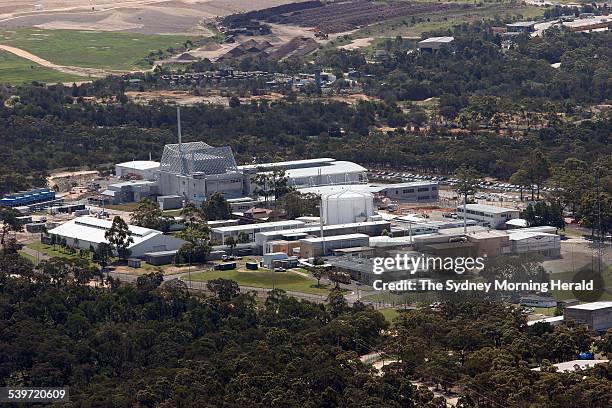
(AUSTRALIA OUT) An aerial of the Lucas Heights nuclear reactor site on 14 November 2005. SMH NEWS Picture by ROBERT PEARCE. (Photo by Fairfax Media via Getty Images/Fairfax Media via Getty Images via Getty Images)

However, the Clean Energy Investor Group is hardly a disinterested observer. It is the peak body for major renewable investors, including Macquarie, Blackrock, Neoen, and Tilt Energy. Together, they own 76 clean energy assets worth $38bn. The present value of those assets is now hostage to the electoral fortunes of Anthony Albanese (current Prime Minister), which is why cashed-up renewable energy investors are accumulating a war chest of hundreds of millions of dollars to keep Labor in power.

The influence of this powerful, crony-capitalist enterprise is one reason Dutton has only an outside chance of turning nuclear into an election-winning issue. However, polling on public support for nuclear has been trending Dutton’s way, and the evidence from around the world is stacked in his favour. Bearing in mind, Australia already has a Nuclear Reactor. The High Flux Reactor was Australia’s first nuclear reactor. It was built at the Australian Atomic Energy Commission Research Establishment at Lucas Heights, Sydney. The reactor was in operation between 1958 and 2007 without incident, when it was superseded by the Open-pool Australian lightwater reactor, also at Lucas Heights and it is still in operation today.

However, the history of bad ideas shows them to be most potent when entrepreneurs discover ways of making a buck out of them. The influence of the cashed-up renewable energy sector in global politics and cultural institutions has made the net-zero narrative all but impossible to dislodge.

Protecting the present value of trillions of dollars of global capital rests on maintaining the fiction that wind and solar power, backed up by numberless batteries yet to be built and pumped hydro yet to be installed, is the key to rescuing the planet. Trillions of dollars of capital have been misallocated to this purpose thanks to perverse incentives provided by politicians whose most pressing concern is not to save the planet but to survive the next election.

Australia is not the only country caught up in the exuberance of the 2019 Paris climate conference and promised more than it could possibly achieve. It is hard to find a single Western economy remotely on track to meet 2030 commitments, let alone the big one in 2050. I will shortly put up a post entitled “Germany Failed to Achieve Clean Energy Transition Without Nuclear”

In a report published last month by the Fraser Institute, Czech-Canadian scientist Vaclav Smil outlined the task ahead. More than 4 terawatts of electricity-generating capacity must be replaced, and almost 1.5 billion gasoline and diesel vehicle engines must be converted to electricity. Almost all the world’s agricultural and crop-processing machinery must be replaced, including 50 million tractors and more than 100 million irrigation pumps. New heat sources must be developed to smelt iron, manufacture cement and glass, process chemicals and preserve food. More than half a billion domestic, industrial, and institutional gas furnaces must be abandoned. Novel forms of motive power must be found for 120,000 merchant vessels, and we’ll need to develop a carbon-free way of keeping 25,000 jetliners in the air. Not to mention, the AI revolution is gobbling up power. AI, the Cloud, and decentralized currencies like Bitcoin require enormous energy at a time when the world is trying to transition to solar and wind which are totally unpredictable power sources.

For Vaclav Smil, the most disturbing thing about the net-zero fallacy is what it tells us about the economic, numerical, and scientific illiteracy of a generation that is, on paper, the most educated in history. As Smil told American author Robert Bryce in an email exchange, we live in a fully post-factual world.

The net-zero fallacy has taken root “because the soil is receptive: utterly brainless mass of mobile-bound individuals devoid of any historical perspective and any kindergarten commonsense understanding”.

The cartoonish reaction to Dutton’s nuclear announcement last week was evidence of Vaclav Smil’s point. If there is a solid argument against legalising nuclear power in Australia, Chris Bowen failed to produce it. Bearing in mind we have had a nuclear power plant operating safely in Sydney for decades. Until he does, Dutton can safely regard the debate as won.

Yet politicians are not rewarded for winning fact-based arguments. They are rewarded by winning elections. As Thomas Sowell points out, one of the differences between economics and politics is that politicians are not forced to pay attention to long-term consequences.

“An elected official whose policies keep the public happy up through election day stands a good chance of being voted another term in office, even if those policies will have ruinous consequences in later years,” Sowell wrote in Basic Economics.

Yet the test of Dutton’s policy is whether it will increase competition in the market, offering a credible alternative to the untrodden renewable-only path on which we are embarked.

The squeals from the renewable energy establishment last week suggest he is on the right track.

Nick Cater is a senior fellow at the Menzies Research Centre, a visiting fellow at the Danube Institute, and a columnist with The Australian. He is a former editor of The Weekend Australian and a former deputy editor of The Sunday Telegraph. He is the author of The Lucky Culture published by Harper Collins.

We are living in the Biblical prophesied end-times world: God and His laws have been jettisoned, many churches have compromised with the world on homosexuality, gay marriage, and even transgenderism. Government debt is not sustainable so people’s confidence in politicians is at an all-time low, anarchy is next as energy supplies fail. Other, prophesied end times signs such as earthquakes, pestilences, and famine are already evident. The fact that the major Biblical end-times prophecy was already fulfilled over 70 years ago: the re-establishment of Israel as a nation, should give every Christian confidence that Jesus’ prophesied return to Earth is near.

ENERGY: SMALL MODULAR NUCLEAR REACTORS IS THE WAY TO GO

Great article: Nuclear resistance casts Australia as energy laggard nation by Judith Sloan in The Weekend Australian

Judged by the reaction to my column last week, many readers share my concerns about the planned transition of the energy system outlined by Energy Minister Chris Bowen. It’s already clear that the vision of an electricity grid powered almost entirely by renewable energy by the end of the decade and linked by many kilometres of new transmission lines is unachievable.

As for the proposition that electricity prices will fall, it’s similarly clear that the modelling on which this appealing idea was based is fundamentally flawed. In particular, the work undertaken by the CSIRO bizarrely assumes all the capital costs of transmission and distribution associated with the transition are simply written off at the end of the decade. The reality is the investors will continue to earn guaranteed returns on these investments and these will feed into higher consumer prices.

It’s anyone’s guess what Bowen will be up to in 2030 but it’s odds-on to a dollar that he won’t be the climate change and energy minister. But the point is that the fate of the electricity grid, and energy generation more broadly, is too important to be left to day-to-day politics; it requires careful planning and implementation by those who really understand how the system works.

Sadly, the leadership and staff of the Australian Energy Market Operator appear to be incapable of this task given the faulty and impractical Integrated System Plans the agency releases. The incompetence of state government ministers and bureaucrats, in combination with starry-eyed fantasies of renewable energy zones, simply adds to the developing nightmare.

The features of the failing transition are obvious already. Snowy 2.0 is behind schedule and now it is predicted that the pumped-hydro project alone will cost $10bn – the original estimate was $2bn. Many billions of dollars for additional transmission will also be needed.

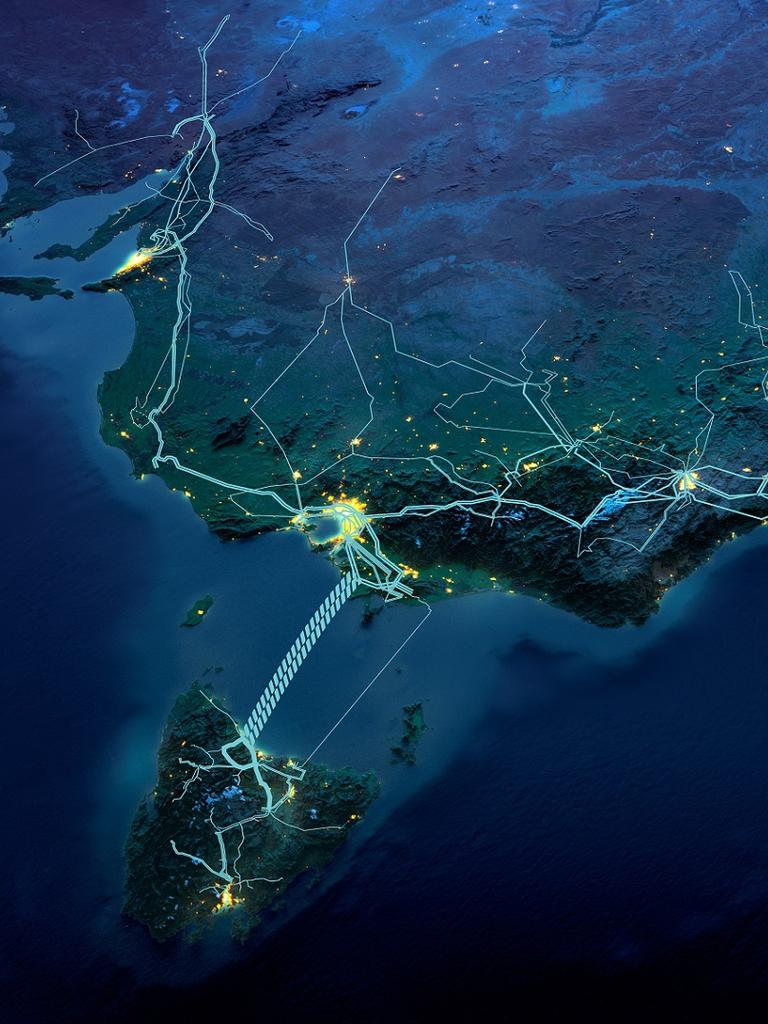
Marinus Link route

The Marinus Link between Tasmania and Victoria increasingly looks unlikely to go ahead as its cost blows out from $3.1bn to $5.5bn and the fiscally fragile Tasmanian government baulks at bearing the higher figure. Absent this link, the slew of renewable energy projects in Tasmania envisaged as part of the transition is unlikely to proceed. This setback also exposes Victoria’s energy transmission plans.

As for Queensland’s energy transition plans, the inclusion of two large-scale pumped-hydro projects increasingly looks absurd, both in terms of costs and feasibility. There is strong local opposition to the project outside Mackay. The only upside to Queensland’s plan is the intention to keep its (relatively new) coal-fired plants going until renewable energy plus storage can provide guaranteed electricity.

One of the most worrying aspects of this unfolding tragedy is Bowen’s closed mind when it comes to other options to achieve a reliable and affordable grid as well as meeting decarbonisation goals. His muted objection to gas is part of the problem and the fact this energy source is not part of the national security mechanism, the capacity mechanism to provide back-up power to the grid in the event of power shortfalls, is close to incomprehensible.

Bowen’s fierce and ongoing opposition to nuclear power as the greenest form of 24/7 generation simply beggars belief. His unfounded assertion that nuclear is simply too expensive must be tested by the market on the basis of the government lifting the completely unjustified ban on nuclear power.

There are more and more countries that beg to differ with Bowen’s assertion. France, Sweden, Finland, Britain, Canada, South Korea, the US, and others are all ramping up investments in nuclear energy. If nuclear power is too expensive, it’s news to these economic powerhouses. We really run the risk of being left at the starting gate unless we make this shift.

The turning point for Labor should have been the signing of the AUKUS deal and its commitment to the use of nuclear-powered submarines. As part of this agreement, we are required to ramp up the nuclear-related workforce substantially and deal with the waste on our shores. It is the perfect correlate to the establishment of a domestic nuclear power industry.

The lessons being learned by other countries will prove useful and should allow us to short-circuit some of the lengthy delays that have plagued the nuclear industry. Indeed, there is clear evidence that the high expense of nuclear has been partly the result of massive over-regulation and a tendency for heel-dragging by the authorities. The comparison between the US and Canadian regulators is telling in this context, with the Canadian regulator being much more efficient and cooperative.

There are several technology choices we could make, including simply using the tried-and-true ones. The South Koreans, for instance, are finalising several plants using the current principal technology. In Australia, these plants could be easily located where coal-fired plants exist or have existed: the sources of water and their proximity to transmission lines make them perfect sites.

There is also the option of providing a pilot site for TerraPower, the new form of nuclear generation promoted by Bill Gates.

Work is proceeding in Wyoming, US; the plant will generate 350 megawatts to 500MW. While the cost of this plant is estimated to be $US4bn ($6.2bn), the expectation is the next ones could cost as little as $US1bn. This form of nuclear generation doesn’t require significant amounts of water or auxiliary power. Interestingly, there was fierce bidding to have the plant located at the various possible sites.

If it were not for Bowen’s, and Labor’s, ingrained opposition to nuclear power that has little justification in the current climate, it could be exciting times for the electricity industry in Australia.

Small modular reactors will also likely be part of the mix; after all, we currently have them floating around the oceans. The Canadians have made a major commitment to their development and Rolls-Royce is working day and night to achieve SMRs as a commercial option for that company. In time, Australia may simply be able to buy them off the shelf.

Of course, the renewable energy industrial complex is likely to arc up because the most sensible thing to do, if decarbonisation is the paramount concern, is simply to go with nuclear and forget short-lived, unreliable intermittent wind and solar, even with the fanciful addition of batteries.

In the short term, it is possible to make nuclear and renewable energy complementary. But as the turbines and panels reach the end of their short lives, it won’t make much sense to replace the landscape-scarring installations. But the key now is to get on with it.

 CONTRIBUTING ECONOMICS EDITOR JUDITH SLOAN