MARGINALISATION WILL BECOME PERSECUTION

Wearing The Rainbow Badge

Christians in Ancient Rome were regarded with deep suspicion. Why? They did not attend the pagan temples or participate in their rituals and activities. These were the centres of community. Participation made you “one of us.” It granted you society’s seal of acceptance. To disassociate from it was practically an act of subversion.

Subversives were the subject of suspicion and rumour. Ultimately, marginalisation developed into persecution.

There was a time when I would have been well regarded as a productive and responsible member of society by being happily married, having well-behaved children, and being a committed church member. Such a person once embodied the values of our society. They were considered decent people and others were encouraged to emulate them.

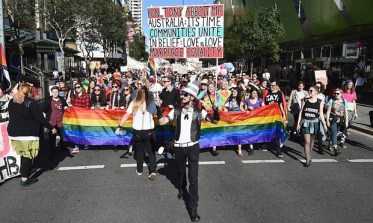
At the recent Gay Mardi Gras in Sydney it is clear that there’s a new badge of acceptance on the horizon. Political leaders including our Prime Minister, Malcolm Turnbull, the leader of the Opposition, Bill Shorten and NSW Premier, Gladys Berejiklian made very public, photographed appearances with Cher. Shorten attended with children.

Corporations including banks, insurers, professional services firms and endless others served up Mardi Gras themed content on Facebook and other media channels. ANZ bank became “GAYNZ” in 2017 and “YAYNZ” in 2018 – rainbow lettering to match.

Image result for pictures of rainbow clad children at Mardi Gras

The ABC ran a promotional video featuring rainbow-clad children waxing eloquent about the virtues and importance of Gay Mardi Gras.

This is hot on the heels of the Australian Defence Force announcing that it would add a rainbow insignia against those names of people in its directories who are “in alliance with members of the LGBTI community.”

Most corporate and government workplaces now celebrate “Wear it Purple” and “IDAHOT” days for which staff are encouraged to wear purple in support of the LGBTIQ cause.

In Melbourne last week, I observed rainbow lanyards being worn by office workers from several companies.

Police force members have been asked to wear purple shoelaces to work.

Though all this is done in the name of equality, tolerance and acceptance, it stands for anything but.

The rainbow is the badge of a political movement, driven primarily by Marxist and Queer ideologies. Dissidents are not treated well.

If tolerance were all that is demanded, Christians would have nothing to fear, but in truth the demand stops at nothing less than celebration and affirmation.

The staff member who is not wearing purple is immediately identified as the subversive one, on the fringes. An outsider. The employee with a plain black lanyard, the parents who don’t want their children in rainbow garb, the firm that doesn’t spruik its rainbow credentials, the person in the directory who declines the rainbow logo – all subversives.

When same-sex marriage ads were put in Australian newspapers, large corporations were conspicuous by their absence – not their presence.

The same is now true of leading politicians. The next Prime Minister, Leader of the Opposition or NSW Premier who does not attend the Gay Mardi Gras will be asked to explain why.

Parts of society are deeply suspicious of Christians’ motives for not joining the celebration, but there are very plain reasons for those who care to look.

The parade itself is shockingly sexually explicit. The worst of it is rarely publicised, but images emerge here and there illustrating just how far short it falls of Christian standards of propriety – gay, straight, or otherwise.

More generally, the rainbow movement defines human beings by their sexual behaviour. Something by which no Christian measures identity because it is a false standard, incompatible with the truth about human beings.

Further, the rainbow has become the symbol of a political movement which is radically at odds with the Christian worldview in its ideological underpinnings. Based on Marxist, Queer and similarly destructive political theories, Christians cannot be complicit.

Barely a day goes by in which I don’t see another example of how “outsiders” – those who don’t buy into the movement – are treated.

This is no longer a theoretical concern.

Public servants placed under discipline, university lecturers threatened with dismissal, employees fired, students suspended, professional accreditations withdrawn, Christian organisations sued. It is happening often.

The “outsiders” cannot even expect to become foster parents anymore.

It begs the question – is it really worth being an outsider? Is it possible we’re taking these things too seriously? Should we just join in?

The Apostle Paul leaves us in no doubt – he does not merely call out the practice of these things, but also the “approval” of them.

We cannot behave as if we approve all this and wash our hands of responsibility.

This is a key sense in which the Roman Christians were “in the world, but not of the world.” They could not lend their approval to the activities of the temple – they stood for something quite different and their lives were a testimony to it.

When we stand against the tyranny of the so-called “tolerance” movement, we will doubtless be treated with suspicion at best, and hostility at worst. False allegations of hatred and intolerance will be levelled. There may be anger and disgust.

Not only do we know that it isn’t true, but we know that there’s a far greater blessing in following Christ than there is in being an “insider.”

Jesus says it better than I ever could:

 “If the world hates you, know that it has hated me before it hated you. If you were of the world, the world would love you as its own; but because you are not of the world, but I chose you out of the world, therefore the world hates you. Remember the word that I said to you: ‘A servant is not greater than his master.’ If they persecuted me, they will also persecute you. (John 15:18-20)

 “Blessed are you when others revile you and persecute you and utter all kinds of evil against you falsely on my account. Rejoice and be glad, for your reward is great in heaven, for so they persecuted the prophets who were before you. (Matt 5:11-12)

 March 06, 2018

ENEMIES OF CHRISTIANITY DECLARING NEW WAR ON RELIGION

I came across this article written last year by a non Christian, Andrew Bolt who can see more clearly than Christian leaders the coming persecution.

CHRISTIANS, prepare for persecution. Open your eyes and choose stronger leaders for the dark days.

I am not a Christian, but I am amazed that your bishops and ministers are not warning you of what is already breaking over your heads.

How mad that Queensland’s Education Department can now warn schools against letting students praise Jesus in the playground. The department has put out reports telling state schools “to take appropriate action if aware that students participating in (religious instruction) are evangelising to students who do not participate”.

It gives examples of what students must not say in the playground — such as “knowing about Jesus is a very important thing”, or “God, please help us to use our knowledge to help others”. Nor may students hand out Christmas cards or decorations.

What do these bureaucrats fear from children inspired by Christ?

Is it that stuff about loving your neighbour? Or that instruction to respect the dignity of every human life that makes Christians the enemy of totalitarians?

But this ban on playground talk of Jesus is only the most shocking salvo of the new war on Christians.

Pastor Campbell Markham is facing an anti-discrimination complaint arising from blog posts he wrote relating to the marriage debate.

Last week, two Christian preachers were summoned to Tasmania’s Anti-Discrimination Tribunal for preaching their faith’s stand on traditional marriage and homosexuality.

Hobart pastor, Campbell Mark­ham and street preacher David Gee, from Hobart’s Cornerstone Church, were denounced by an atheist offended by, among other things, Markham quoting a verse from the Bible.

We’ve seen this before. Hobart’s Catholic Archbishop, Julian Porteous, was two years ago ordered by this tribunal to tell by what right he spoke against same-sex marriage.

How cowed the churches have been before this looming persecution, now picking off vocal Christians, one by one.

Just this year, Sydney University’s Student Union threatened to deregister the university’s Evangelical Union unless it stopped insisting members declare their faith in Christ.

Meanwhile, same-sex marriage extremists bullied Coopers Brewery into taking down a video of a Christian MP Andrew Hastie debating same-sex marriage, and lobbied IBM, PwC and Sydney University to punish staff belonging to a Christian group opposed to gay marriage.

Last week, 70 pro-Safe Schools activists picketed a church to abuse people at an Australian Christian Lobby (ACL) meeting as “bigots”.

A sign explaining why Coopers Beer is not being served at a hotel earlier this year.

Last year, an ACL meeting was cancelled after the hotel venue was bombarded with threats.

The state-funded SBS joined in by banning an ad by Christians defending traditional marriage, yet ran one for an Ashley Madison dating service for adulterers.

The Greens are the political wing of this attack on Christianity, and are demanding churches lose their legal freedom to hire only people who live by their faith.

The media, too, often cheer this war, using as their excuse the sexual abuse of children by some priests and ministers decades ago. Rarely do they admit the average gap between the alleged offences by Catholic priests and the lodging of complaints is 33 years. That suggests the churches did crack down on paedophiles decades ago.

But this vilification has had its effect. The Census shows the proportion of Australians calling themselves Christian has dropped from 74 per cent in 1991 to 52 per cent now.

No wonder, when the weaker churches cower before the persecution.

Last week, some even licked the boots of the anti-Christian ABC when it launched yet another attack, smearing churches as the haven of wife-beaters.

Christians are more inclined to volunteer, donate and keep families together, surveys show.

This ABC series led off with a ludicrously false claim: “The men most likely to abuse their wives are evangelical Christians who attend church sporadically.”

A week after I proved this untrue, the ABC edited its reports to replace that false claim with another: “Overall, the international studies indicate that intimate partner violence is just as serious a problem in Christian communities, as it is in the general community.”

Wrong again. Professor Bradford Wilcox, author of the American study the ABC cited as proof, complained “the (ABC’s) story … does not square with the evidence that church ­going couples, in America at least, appear to be less likely to suffer domestic violence”.

In fact, Christianity produce better citizens in many ways. Surveys show Christians are more inclined to volunteer, donate and keep families together. So what do the enemies of Christianity wish to achieve by smearing, silencing and destroying this civilising faith? What would they replace it with? With the atheism that preaches every man for himself? With Islam? Or with the green faith that has not inspired a single hospital, hospice, school, or even soup kitchen? Yet the persecution is starting. Are the churches ready?

Since this article was written Australia now has legislated same sex marriage and as a result the transgender activists have escalated their agenda beyond my belief. People these are “last days” and we have moved into “fast forward”.

PERSECUTION OF CHRISTIANS INCREASING IN CHINA

An evangelical megachurch was destroyed by Chinese Communist authorities late last year in the country’s northern Shanxi province, sparking fears among Christians that the persecution they suffer will soon get worse.

China Aid said that Chinese military police detonated explosives inside Golden Lampstand Church in Linfen, destroying the $2.6 million house of worship, which was owned by the Christians who worshipped there.

A demolition crew broke apart the remaining pieces of the church after the explosion with diggers and jackhammers.

Lampstand’s head Pastor, Yang Rongli, had previously spent seven years in prison on charges of assembling a large crowd to disturb traffic order, and has been under police surveillance since his release in October 2016.

Describing the demolition, the pastor was quoted as saying that at first, police surrounded the church.

“Patrol wagons guarded the church. Workers smashed the church’s glass. At this point, excavators are digging into the church, but we are not allowed to enter or watch.”

“The village head and the police from the local police station warned all the believers against entering the church. Now, we really have no idea what is going to happen.”

The order to demolish the church reportedly came from China’s top officials, who control the military police.

“The repeated persecution of Golden Lampstand Church demonstrates that the Chinese government has no respect for religious freedom or human rights,” said ChinaAid President and founder Bob Fu.

“ChinaAid calls on the international community to openly condemn the bombing of this church building and urge the Chinese government to fairly compensate the Christians who paid for it and immediately cease these alarming demolitions of churches.”

The Guardian reports that a Catholic church in the neighboring province of Shaanxi was also demolished in a similar fashion last month, which is stoking fears among Christians that the widespread crackdown on churches continues in full force.

As many as 1,200 crosses have been removed from churches in Zhejiang province since 2015, with officials arguing that many of the demolitions have been down to building code violations.

A local pastor, who asked not to be named, said that he saw “more police than I could count” at the site, preventing worshippers from approaching.

“My heart was sad to see this demolition and now I worry about more churches being demolished, even my own,” he said. “This church was built in 2008, there’s no reason for them to destroy it now.”

The Associated Press noted that the evangelical megachurch had a congregation of 50,000, and had been targeted by police on a number of occasions. Officials reportedly hired thugs to smash the church and take its Bible during the crackdown in 2009, when Rongli was arrested.

Christians have protested against church demolitions, with a video captured in Shanxi in August showing a clash between Catholics and government representatives who were using bulldozers to destroy church property.

As mentioned in my last post, approximately 215 million Christians now experience high, very high, or extreme levels of persecution; that means 1 in 12 Christians live where Christianity is “illegal, forbidden, or punished,” according to Open Doors researchers.


LAST DAYS PERSECUTION OF CHRISTIANS INTENSIFIES


48 Christians Massacred in Nigeria; Terrorists Break Through Doors, Burn Houses, Destroy Churches

Forty-eight Christians were massacred in nine days of violent attacks in Nigeria, with some of the survivors describing the terror they felt at the hands of Islamic Fulani herdsmen who broke through their doors and destroyed houses and churches.

“Every one of us ran to save his life,” church elder Dauda Samuel Kadiya of the Evangelical Church Winning All (ECWA) in Zanwrua, told Morning Star News. “I was shot at, but the bullet only bruised my hand. You can see the wound yourself.”

The herdsmen slaughtered a total of 48 Christians in several attacks carried out in Plateau state between Oct. 8 and Oct. 17, survivors said, with believers fleeing villages and abandoning worship buildings.

“Some of the church buildings were destroyed by the attackers,” Kadiya added.

International Christian Concern (ICC), which reports on the persecution of believers around the world, pointed out that although such raids are not new for the area, the “ferocity and number of attacks in this short period have caused major problems for the beleaguered citizens.”


The Fulani raids in Plateau State have sparked outrage from Christian leaders, who have accused the army of failing to defend villagers on a number of occasions.

“The soldiers had told the women and children to go and hide in the primary (elementary) school class at night while the men in the village constituted a vigilante group and join[ed] the soldiers in patrolling the area. Sadly, the militia descended and the soldiers fled, leaving the defenseless villagers to be massacred by the terrorists,” the Rev. Andrew Okebe, the Zonal Coordinator of Christian Association of Nigeria, Miango District, said after one of the major attacks earlier this month.

Nigerian President Muhammadu Buhari himself has lamented the growing number of casualties.

Reuters reported that Christians and other Nigerian civilians continue being terrorised not only by the Fulani but also by the Boko Haram terror group, whose eight-year insurgency has made it very difficult for hundreds of thousands of uprooted people to return home.

ISIS Slaughters 128 in Syrian Christian Town: ‘They Attacked us Like Animals, They Came to Kill Us’

Shocking details are emerging of a surprise ‘revenge’ attack by ISIS militants on what was once a predominantly Syrian Christian town.

“They attacked us like animals, they came to kill us,” a resident of Qaryatayn said, speaking on condition of anonymity.

On Sunday, Syrian government troops recaptured Qaryatayn from ISIS militants. But before retreating from the town, the terror group went on a killing spree slaughtering countless people.

“They killed children {and} women,” recounted one survivor. “They broke the arms of the women {and} burned them.”

The Britain-based Syrian Observatory for Human Rights says at least 128 people were murdered in the rampage.


PERSECUTION IS COMING FOR THOSE WHO STAND ON THE WORD OF GOD

In 1 Peter 4:12-13, the apostle Peter says, “Beloved, do not be surprised at the fiery ordeal that is taking place among you to test you, as though some strange thing happened to you. But rejoice insofar as you share in Christ’s sufferings, so that you may rejoice and be glad also in the revelation of His glory.”

The same Peter who wrote these words once rebuked Christ for declaring His intention to go to the cross (see Matthew 16:21-23). Peter once found suffering abhorrent, but now he tells us we should rejoice. Peter had grown in his understanding of the role of suffering in the Christian life. He had seen that the suffering of the cross was not the end—but only the way to the resurrection.

The persecution of the church is not new. In fact, history proves again and again that Christianity flourishes best under persecution. How then are we as Christians to respond to persecution?

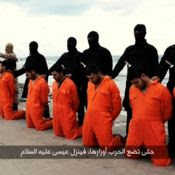
On February 12, 2015, 21 Egyptian Christians were beheaded on the coast of the Mediterranean at the hands of ISIS fighters. Just before they beheaded each man, they offered him his life—if only he would deny Christ. But these brave men loved Jesus more than their own lives.

In this age of tolerance, we must love those who persecute us—but never surrender the truth. We must invite all people to come to the one who loves them and died for their sin. We must “implore [them] in Christ’s stead: Be reconciled to God” (2 Corinthians 5:20). Above all, we must resist the temptation of being ashamed of the Gospel.

In the midst of suffering, God makes us some incredible promises:

  • “If you are reproached because of the name of Christ, you are blessed, because the Spirit of glory and of God rests upon you” (1 Peter 4:14).
  • “In the world you will have tribulation. But be of good cheer. I have overcome the world” (John 16:33).
  • “Our light affliction, which lasts but for a moment, works for us a far more exceeding and eternal weight of glory” (2 Corinthians 4:17).

There is an indescribable blessing that can only be received through suffering for Christ. When you trust in Him, even amid persecution or difficult circumstances, you will experience His presence with you in a unique and powerful way. And as you walk with the Lord in obedience, He promises that He will never leave you or forsake you—in the fiery furnace, the lion’s den, or even in your workplace.

This article originally appeared on Leading The Way.

CORRIE TEN BOOM AND THE RAPTURE

Corrie understood that the Bible does not teach a Pretribulation Rapture and try and explain it to the Christians in the Middle East and Africa who are already suffering intense persecution.

Isis beheading 21 coptic ChristiansCorrie wrote this letter in 1974 well before ISIS and the horror it is bringing upon Christians particularly in Syria and Iraq.

In America, the churches sing, “Let the congregation escape tribulation”, but in China and Africa and the Middle East the tribulation has already arrived. This last year alone more than two hundred thousand Christians were martyred in Africa. Now things like that never get into the newspapers because they cause bad political relations.
But I know. I have been there.  We need to think about that when we sit down in our nice houses with our nice clothes to eat our steak dinners.  Many, many members of the Body of Christ are being tortured to death at this very moment, yet we continue right on as though we are all going to escape the tribulation.
Several years ago, I was in Africa in a nation where a new government had come into power. The first night I was there some of the Christians were commanded to come to the police station to register. When they arrived, they were arrested and that same night they were executed. The next day the same thing happened with other Christians. The third day it was the same. All the Christians in the district were being systematically murdered.

The fourth day I was to speak in a little church. The people came, but they were filled with fear and tension. All during the service they were looking at each other, their eyes asking, “Will this one I am sitting beside be the next one killed?  Will I be the next one?”

The room was hot and stuffy with insects that came through the screen less windows and swirled around the naked bulbs over the bare wooden benches.  I told them a story out of my childhood.

“When I was a little girl, ” I said, “I went to my father and said, ‘Daddy, I am afraid that I will never be strong enough to be a martyr for Jesus Christ.” “Tell me,” said Father, “When you take a train trip to Amsterdam, when do I give you the money for the ticket? Three weeks before?”

“No, Daddy, you give me the money for the ticket just before we get on the train.” “That is right,” my father said, “and so it is with God’s strength. Our Father in Heaven knows when you will need the strength to be a martyr for Jesus Christ. He will supply all you need – just in time.”

My African friends were nodding and smiling.  Suddenly a spirit of joy descended upon that church and the people began singing, “In the sweet, by and by, we shall meet on that beautiful shore.”

Later that week, half the congregation of that church was executed. I heard later that the other half was killed some months ago, but I must tell you something.  I was so happy that the Lord used me to encourage these people, for unlike many of their leaders, I had the word of God. I had been to the Bible and discovered that Jesus said He had not only overcome the world, but to all those who remained faithful to the end, He would give a crown of life.
How can we get ready for the persecution?  First, we need to feed on the word of God, digest it, make it a part of our being.  This will mean disciplined Bible study each day as we not only memorise long passages of scripture, but put the principles to work in our lives.

Next, we need to develop a personal relationship with Jesus Christ. Not just the Jesus of yesterday, the Jesus of History, but the life-changing Jesus of today who is still alive and sitting at the right hand of God.

We must be filled with the Holy Spirit. This is no optional command of the Bible, it is absolutely necessary. Those earthly disciples could never have stood up under the persecution of the Jews and Romans had they not waited for Pentecost. Each of us needs our own personal Pentecost, the baptism of the Holy Spirit. We will never be able to stand in the tribulation without it.

In the coming persecution we must be ready to help each other and encourage each other.  But we must not wait until the tribulation comes before starting.  The fruit of the Spirit should be the dominant force of every Christian’s life.

Many are fearful of the coming tribulation, they want to run. I, too, am a little bit afraid when I think that after all my eighty years, including the horrible Nazi concentration camp, that I might have to go through the tribulation also.  But then I read the Bible and I am glad.

When I am weak, then I shall be strong, the Bible says. Betsy and I were prisoners for the Lord, we were so weak, but we got power because the Holy Spirit was on us.  That mighty inner strengthening of the Holy Spirit helped us through.  No, you will not be strong in yourself when the tribulation comes.  Rather, you will be strong in the power of Him who will not forsake you.  For seventy-six years I have known the Lord Jesus and not once has
He ever left me, or let me down.

“Though He slay me, yet will I trust Him”, for I know that to all who overcome, He shall give the crown of life. Hallelujah!

Are you preparing for Jesus return? In the Olivet Discourse (Matthew 24 also in Mark and Luke)) Jesus told His disciples what it would be like prior to His second coming, and like Corrie understood, it will be a time of great tribulation when he comes and the angels “will gather together His elect from the four winds, from one end of heaven to the other.” We will not experience God’s wrath but we will go through tribulation.


CHRISTIANS -“HATEFUL, MEAN, BIGOTED, NARROW-MINDED”

Someone has said, “If I can define you, I can confine you.” Once the caricature “hateful, mean, bigoted, narrow- minded” attaches to believing Christians, we become identified through that false lens. Thus, for example, when we attempt to support religious freedom bills in legislatures, we are immediately defined as “haters.” Big businesses and the media target legislative members and engender public support for the idea that core religious rights that were long the subject of broad societal consensus, are in fact unjustifiable shields for “bigoted” religious people and institutions that must not be tolerated.

Marginalisation

Once the caricature is drawn, then it becomes easy to move to the next step—marginalisation.

Think of this, for example, why is it that there is no evangelical on the Supreme Court? Evangelicals are one of the largest minorities in the United States. But, our pro-life position and views on marriage are regarded as not acceptable and militate against an appointment to the Supreme Court—and beyond that, to appellate courts and district courts. Our views are simply unacceptable to the political powers that be and we are sidelined from the public square— marginalised.

us-supreme-court-memebersEvangelical Scalia DIED

Discrimination

Once you can make a caricature of a group and marginalise them, you can discriminate against them.

The biggest examples of that, from a legal point of view, are the recent cases before the Supreme Court of Hobby Lobby and the Little Sisters of the Poor. In both cases, the present administration forcefully sought to discriminate against persons who, because of religious belief, did not want to facilitate abortions. Those decisions hung by a slim thread in the Supreme Court. Hobby Lobby won by a 5-4 vote, and the Little Sisters of the Poor case was sent back down to the lower courts, in all likelihood, because a majority of opinion could not be reached on a divided 4-4 Court.

Another example that is impacting Assemblies of God colleges and universities as well as all schools who are members of the Council of Christian Colleges and Universities (CCCU) is a recent change in the Department of Education (DOE). Christian institutions are now discriminated against because they hold to biblical teaching on sexual morality.

Next on the horizon is the possibility that accrediting associations will determine that a school which has behavioural standards for students regarding same-sex or gender identity relationships is a school not worthy of accreditation, and/or that companies, school boards, and graduate schools will not admit or employ graduates of schools who “discriminate” on the basis of sexual orientation and identity. Schools will either be forced to accept standards imposed on them or go out of business.

Persecution

Step one: make a caricature of persons committed to scriptural teaching on morality. Step two: marginalise them. Step three: discriminate against them. Finally, the last stage: persecute them.

This is what is pending in the California legislature as I write—the outright persecution of Christian institutions by a state that says, “We will attempt to humiliate and marginalise you if you don’t give in.”

What’s next? Unless present trends are reversed, I can envision a day not too far off in which faith-based para church educational and compassion institutions are forced to close if they retain biblical standards of sexual conduct for employment, or even requirements that employees, faculty, or students profess a Christian commitment.

The local church itself will be the last domino to fall in terms of persecution. Tax-exempt status may be lost. Ministers could lose the ministerial housing allowance. Donors may not be able to deduct charitable contributions. Churches which utilise their facilities for public events and compassion ministry, in addition to their times of worship, will be declared public places of accommodation and forced to provide marriage services to same-sex couples.

If you say, “Oh, that can never happen in America,” then let me remind you that we never thought a day would come when the White House would be lit up with the rainbow flag to celebrate a decision by the Supreme Court to legalise same-sex marriage.

I have never written anything like I am writing to you now. I realise that what I am writing paints a very dark picture. You are now asking yourself, but what can we do? Here are some suggestions.

Pray

There may be some who are cynical about a call to pray. But, we know the Lord hears the prayers of His people. Let’s take to heart 2 Chronicles 7:14, “If my people, who are called by name, will humble themselves and pray and seek my face and turn from their wicked ways, then I will hear from heaven and I will forgive their sin and will heal their land.” We must pray for a third Great Awakening to come to America.

Prayers of gratitude for the religious liberty we have enjoyed, and prayers of petition for its future protection should be an ongoing and regular part of our personal and corporate prayer life.

Engage

Use whatever means possible to exert your influence on our culture and political system. Be informed as a voter. Run as a candidate for office if you sense the Spirit asking that of you. Let your elected representatives hear from you on issues such as religious liberty protection.

It’s also vital that we understand that we advocate religious liberty for others, not just ourselves. It is against our religion to impose our religion. When we find persons, organisations, or religious bodies who stand with us on the First Amendment protection of the free exercise of religion, then we welcome their advocacy alongside our own.

Of course, being engaged requires being informed; helping those who worship in our churches every week to understand the nature of the challenges we face, honestly but without overstating, is a critical first step. Had Christians across Missouri truly understood what was at stake in the religious liberty bill that failed in that state legislature earlier this year, the outcome may have been different. We must educate in order to inspire action.

Watch Your Spirit

There’s a fascinating verse in Jude 9 that says, Yet Michael the archangel, when contending with the devil in a dispute about the body of Moses, did not dare to pronounce upon him a railing judgement. But he said, “The Lord rebuke you!'” In other words, Michael did not behave like the devil in fighting the devil. We must take to heart the admonition of the apostle Paul,

“The servant of the Lord must not quarrel, but must be gentle toward all people …” Opponents must be gently instructed, in the hope that God will “grant them repentance to a know the truth” (2 Tim. 2:24–25).                                                                                                                                                                                         Let’s be gracious as we take our stand on issues that concern us.

Do Good

The world may not agree with our beliefs, but they cannot deny when we do good. As individual believers and as a church together we must continue to serve others. We must be known as people of compassion and mercy. We are for the just treatment of others and we help the poor, the needy, the addicted, the wounded, the lonely and the downtrodden.

Keep Doing the Main Things

Our first and foremost call is to preach and live the gospel. Let’s keep the main things the plain things, and the plain things the main things. We must fulfil both the Great Commission (Matt. 28:18–20) and the Great Commandment (Matt. 22:37–39). That’s our priority! Let’s never substitute evangelism and discipleship with political action. Let’s keep eternal matters and temporal matters in perspective.

Our Battle Is Spiritual

God loved the world and so must we. We cannot give others any reason to identify us as “haters” or “bigots.” The world will not be won by Christians who are shaking their fists at sinners. Something is a truism when it is true. This truism is true: “We must hate the sin and love the sinner.” “For our fight is not against flesh and blood, but against principalities, against powers, against the rulers of the darkness of this world, and against spiritual forces of evil in the heavenly places. Therefore, take up the whole armour of God that you may be able to resist in the evil day, and having done all, to stand” (Eph. 6:12–13).

Rejoice

Nothing happening has caught the Lord by surprise. He told us we would be persecuted because of our loyalty to Him. But we are not to be angry about that or downcast. Instead, Jesus said: ”

Blessed are those who are persecuted for righteousness’ sake, for theirs is the kingdom of heaven. Blessed are you when men revile you, and persecute you, and say all kinds of evil against you falsely for My sake.12 Rejoice and be very glad, because great is your reward in heaven, for in this manner they persecuted the prophets who were before you” (Matt. 5:10–12).

Thank you for letting me share my heart with you on this vital matter of religious liberty. In every dark time, believers have learned to say anew, “Our Lord reigns!”

This an abbreviated letter (grievous warning) was sent out by George O. Wood, General Superintendent of the Assemblies of God (USA) and chair of The Assemblies of God Fellowship

GOD’S PLAN FOR MIDDLE EAST IS WORKING PERFECTLY

Middle Eastern Christian Woman Tells Americans Not to Pray for Persecution to End

God’s plan for the Middle East is “working perfectly” even though the persecution of Middle Eastern Christians is seemingly getting worse by the day, a persecuted Christian woman told American churchgoers on Sunday.

The Christian woman, who is referred to by the pseudonym of “Maryam” for security purposes, was encouraged by a group of six pastors and ministry leaders from the United States to travel to America and share her family’s story of persecution and speak about the dedicated faith displayed by Christians in the Middle East.

As a whole, persecution and harassment are daily struggles for Middle Eastern Christians, Maryam said.

Although Christians in the west might view persecution as a bad thing, Maryam and many other Middle Eastern Christians view persecution as a necessity to help the Church continue to grow in a hostile part of the world.

“The persecution is getting worse and worse and worse,” Maryam said. “But on the other hand actually, what has encouraged me, encouraged my faith, encouraged my church, encouraged everybody Christian in [the region] is that the Church is increasing.”

Maryam explained that while some radical Muslims are brutally killing and persecuting so called non-believers and claim to be acting in the name of Allah, many other Muslims in the Middle East are starting to open their eyes and ask serious questions about the religion they espouse.

Isis beheading 21 coptic Christians

“A lot of Muslim people now, they are so confused about what is going on now. A lot of them are asking, ‘Who is this God whose name is Allah, who orders people to slaughter?'” she said. “They are confused and they are asking and wondering now days about ISIS and about what is going on. We are talking to them and asking them ‘Please, open your Quran and search what is written,'” Maryam continued. Yes, this God named Allah does call Muslims to war with nonbelievers for the sake of Islamic rule. At least 109 verses promote violence.

Can you pray for those who persecute you?

This video tells the story of how Suta’s faithfulness and the Holy Spirit’s conviction eventually led Raji, who once persecuted Christians, to embrace Christ.

May this story inspire you to pray not only for persecuted Christians but also for those who persecute them.

Help solve the refugee crisis – 7 Steps Aussie’s can take.

This article by David Leyonhjelm, Contributor, The Daily Reckoning makes a worthwhile contribution to the problem. I am sure you won’t agree with all of his suggestions but it will challenge most of us.

“Calls to solve the Middle East refugee crisis have been loud but vague; so here’s my guide to dealing with the situation compassionately and effectively.

Image result for pics Syrian refugees

Invite a refugee family to stay at your place: Contact the Refugee Council, Uniting Church or Red Cross to offer your spare room to someone in need. After all, just going to a rally or signing a petition is a bit vacuous. When you said, ‘welcome more refugees’, didn’t that mean you would welcome them? Or did you think that someone else would do it?

Employ a refugee, or let someone else do so: Most refugees want to work. If you’re not in a position to offer a job, don’t prevent others from doing so. Many lack the language or skills to jump straight into a $17.29 an hour gig, yet would gladly take a job that pays more than welfare. Exempt refugees from the minimum wage. Many Australians who dislike welfare-dependent refugees would be more welcoming if they paid their way via employment.

Cut foreign aid: Doubling our refugee intake would cost a billion dollars, but if we cut foreign aid by the same amount, taxpayers who worry about the cost of helping foreigners would have nothing to complain about. We’d still fund short-term humanitarian assistance, because cutting a billion dollars from foreign aid still leaves billions more. And we’d do more good for foreigners by bringing them here than channelling cash to corrupt local elites.

Think global, act local: While there are millions fleeing the Middle East, there are also millions fleeing trouble spots closer to home — Burma, Sri Lanka and Vietnam. Taking refugees from our region would do as much good as from Syria (although persecuted Christians from Syria should be fast tracked*). And realistically, we have more capacity to assimilate Buddhists, Hindus and Christians to our way of life and liberal democracy than we do Muslims.

Let economic refugees pay to get here: Plenty are fleeing their homelands because of mayhem and poverty, not persecution. Instead of them paying people smugglers to get here, and our Government then paying the people smugglers to send them back, we should accept economic refugees for a fee — to prove to sceptical taxpayers that economic refugees need not be a budget burden, and would ensure those most able to hit the ground running in the workplace are the ones who choose to make Australia home.

Let people in as interim second-class residents: Australians would accept a much higher intake, if migrants did not immediately have access to taxpayer‑funded welfare, healthcare, housing and education as citizens. They would also accept a much higher intake if the hurdle to obtain citizenship were higher. Some will argue that they don’t want a two-tiered system in Australia, but if we ask potential migrants if they want to come even without access to our social welfare system, I’m pretty sure what most would say.

Be the best we can be: Economic development and growth isn’t just in our own interest. It means we can afford to be the most altruistic country on the planet. So listen to those who want to approve developments, cut red tape, remove industry protectionism, and get resources out of the public sector into the private sector: they’re the most compassionate Aussies around.”

* comment by me