Make prayer the steering wheel of your life as do Alex and Stephen Kendrick but you also need to get out of the driver’s seat and let the Holy Spirit take control.
Brothers Alex and Stephen Kendrick, who have created iconic Christian films like “Facing the Giants,” “Courageous,” “Fireproof,” “War Room,” and “Overcomer,” are gearing up for a unique, new project they believe is a “divine appointment” for the times in which we’re living. “Lifemark,” which releases in select theaters nationwide on September 9 with Fathom Events, tells the true story of an adopted young man’s journey to meet his birth parents. The film comes as society boisterously debates the life issue and as the U.S. Supreme Court is poised to potentially overturn Roe v. Wade, the 1973 case that codified nationalized abortion. The Kendricks, who partnered with actor Kirk Cameron to create the powerful adoption story, know the timing isn’t a coincidence.
This movie is a result of prayer and letting God direct the Kendrick brother’s actions.
Watch this video and be inspired. If you live in the USA watch out for the movie, Lifemark in September.
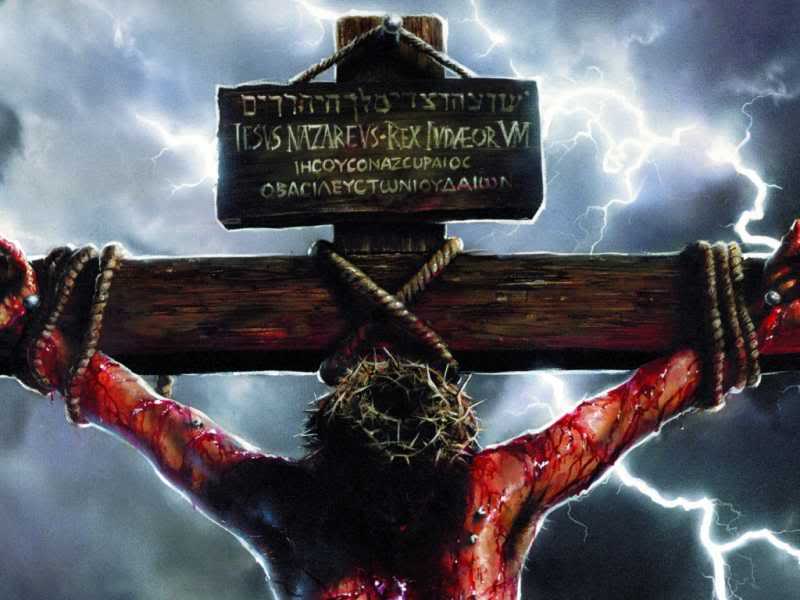
Thank goodness we have the Psalms: how helpful they are in our Christian walk, they explore the full range of human experience in a very personal and practical way. However, one psalm, Psalm 22 stands out because Jesus quotes verse 1 as His last words from the Cross. Why did Jesus take us to this psalm? It is obvious when we read the rest of the psalm, the psalm is a prophecy of what Jesus was experiencing on The Cross at the time He spoke it.
David had no understanding God was using Him to deliver a prophecy that provides incredible detail about what Jesus would experience on The Cross one thousand years later. David was obviously going through a terrible time in his life to have expressed the words he did in this prayer but consider that God gave David the words to pray so that His prayer could be used by Jesus to prove He is who He said He was, the promised Redeemer of not only Israel but the World.
“My God, my God, why have you forsaken me? Why are you so far from saving me, from the words of my groaning? O my God, I cry by day, but you do not answer, and by night, but I find no rest. Yet you are holy, enthroned on the praises of Israel. In you our fathers trusted; they trusted, and you delivered them. To you they cried and were rescued; in you, they trusted and were not put to shame. But I am a worm and not a man, scorned by mankind and despised by the people. All who see me mock me; they make mouths at me; they wag their heads; “He trusts in the LORD; let him deliver him; let him rescue him, for he delights in him!… I am poured out like water, and all my bones are out of joint; my heart is like wax; it is melted within my breast; my strength is dried up like a potsherd, and my tongue sticks to my jaws; you lay me in the dust of death. For dogs encompass me; a company of evildoers encircles me; they have pierced my hands and feet— I can count all my bones— they stare and gloat over me; they divide my garments among them, and for my clothing they cast lots... ” Psalms 22:1-8
Note how Psalm 22 ends, David understood that regardless of whether God answered his prayer, God is still in control of His universe and this scripture will come to pass:
“As I live, says the Lord, every knee will bow to Me, and every tongue will give praise to God.” Romans 14:11
Moreover, it reveals that King Jesus will rule over the nations from Jerusalem in His soon coming Millennial Kingdom.
“I will tell of your name to my brothers; in the midst of the congregation,I will praise you: You who fear theLORD, praise him! All you offspring of Jacob, glorify him and stand in awe of him, all you offspring of Israel! For he has not despised or abhorred the affliction of the afflicted, and he has not hidden his face from him but has heard when he cried to him. From you comes my praise in the great congregation; my vows I will perform before those who fear him. The afflicted shall eat and be satisfied; those who seek him shall praise the LORD! May your hearts live forever! All the ends of the earth shall remember and turn to the LORD, and all the families of the nations shall worship before you. For kingship belongs to the LORD, and he rules over the nations.“Psalms 22:22-28
“They came to life and reigned with Christ for a thousand years. The rest of the dead did not come to life until the thousand years were ended. This is the first resurrection. Blessed and holy is the one who shares in the first resurrection! Over such the second death has no power, but they will be priests of God and of Christ, and they will reign with him for a thousand years.” Revelation 20:4-6
A lot of bad theology inevitably surfaces when we face suffering. When people lose their faith because of suffering, it suggests a weak or nominal faith that didn’t account for or prepare them for evil and suffering. Any faith not based on the truth needs to be lost—the sooner, the better.
Suffering and evil exert a force that either pushes us away from God or pulls us toward Him. But if personal suffering gives sufficient evidence that God doesn’t exist, then surely I shouldn’t wait until I suffer to conclude He’s a myth. If my suffering would one day justify denying God, then I should deny Him now in light of other people’s suffering.
Believing that God exists is not the same as trusting the God who exists. A nominal Christian often discovers in suffering that his faith has been in his church, family, career, or social network, but not Christ. As he faces evil and suffering, he may find his beliefs shaken or even destroyed. But genuine faith—trusting God even when we don’t understand—will be made stronger and purer.
The last three paras have been excerpted from Randy Alcorn’s book “90 Days of God’s Goodness”.
Denzel Washington’s instant reaction to Will Smith’s Slap Is a convicting reminder to us all: ‘The Only Solution Was Prayer’
The actor knew the importance of turning to the Lord in the heat of the moment. Rather than join in panic, ignore the problem or take another worldly approach, Washington decided to act upon our Ephesians 6:18 mandate.
“Pray at all times in the Spirit with every prayer and request, and stay alert in this with all perseverance and intercession for all the saints.”
Like the others around him, he could have remained seated in shock and awe. He could have whispered and wondered while disengaging from what was happening around him.
But Washington took a different route and decided to pray alongside Smith.
In reality, it was a simple act of obedience. But, in practice, Washington’s immediate, level-headed, and God-focused response to the crisis now poses a convicting reminder to us all.
As he explained: “The vast majority of us will never behave in a manner that garners international rebuke nor will we be witness to one, yet we all face trials, tribulations, and problems in our everyday lives. And when we do, what’s our first response?
I can’t speak for anyone else, but it’s often much easier to rage, judge, yell, ignore, or flee. Yet we’re called to pray “on all occasions with all kinds of prayers and requests.” We’re called to seek the Lord not only when we face these situations but when others, too, are in the midst of turmoil.”
Distinguished actor Denzel Washington sat down with me during our 2022 @ThisIsILS and taught us how he used his faith to mitigate a painful situation.
As chaos reigns in Ukraine, Christians and Jews around the world are turning to God in prayer. History demonstrates God uses catastrophes for His purposes.
Faithwire has reported prayer gatherings between Christians and Jews, of Ukrainians coming together in public squares to seek God’s guidance, and of religious and political leaders invoking the sovereignty of God. Rabbi Yaakov Dov Bleich, the chief rabbi of Kyiv, reportedly invited Christian leaders to join the Jewish community in praying Psalm 31, a hymn of protection, over the evolving situation in Ukraine, according to Eternity News.
Others, still, are calling for a day dedicated to prayer for a nation under assault by Russian President Vladimir Putin’s regime.
Pro-Ukraine demonstrators carry signs and Ukrainian flags near Russia’s UN Mission, Thursday, Feb. 24, 2022, in New York. World leaders Thursday condemned Russia’s invasion of Ukraine as “barbaric” and moved to slap unprecedented economic sanctions on Moscow and those close to President Vladimir Putin.
“In these days of uncertainty and fear, we pray that each of us might again turn to the Lord and receive God’s gift of peace, work for God’s justice, know God’s reconciliation and love, and choose paths, not of hatred or destruction, of violence or retribution, but God’s way of justice, mercy, and peace,” Archbishop of Canterbury, Just Welby wrote in a pastoral letter published Thursday.
CBN News senior international correspondent George Thomas echoed the archbishop’s words, urging Christians to come together to pray for Ukraine this Sunday, Feb. 27. “Will you join them?” Thomas asked from the balcony of his hotel room in Lviv, Ukraine. “And will you join us, the entire world, in this prayer?”
All over the world Christian leaders and politicians are calling for prayer. Sadly, it required a catastrophe of this dimension to get Christians to unite in prayer.
Want help on how to pray then look no further than the seven (really six) important prayer points that Paul gives us:
“Finally, brothers, pray for us, that the word of the Lord may speed ahead and be honored, as happened among you, and that we may be delivered from wicked and evil men. For not all have faith. But the Lord is faithful. He will establish you and guard you against the evil one. And we have confidence in the Lord about you, that you are doing and will do the things that we command. May the Lord direct your hearts to the love of God and to the steadfastness of Christ.”2 Thessalonians 3:1-5
2 Chronicles 7;14
1. Paul primarily prays that the Gospel will go forth speedily so this needs to be our priority in prayer as well. We are to pray that God’s glorious Gospel would keep going forward unhindered. Not only that the Gospel would go forward, but it would “be honored.” Paul has in mind here that the Gospel would be accepted and respected as saving truth. He reminds the Church that this is how the Gospel was received among them. It was joyously received.
2. Paul asks that we pray to be delivered from the evil/wicked ones. There are several aspects of deliverance that are in mind here.
Deliverance from those that are wicked. In the context of the local church, those that attend are a mixed crop of wheat and tares (Matthew 13:24-30). Simply put, some are Christians and some are not. Sometimes those non-believers are major sources of conflict, luring others away to sin, and doctrinal perversity
Deliverance from those that are evil – those actively and aggressively promoting sin, bringing hardships, and conflicts.
3. We need to ask God to make us stable/strong in Him. This encompasses faith, doctrine, trust, and other issues relating to God strengthening His people.
4. He will guard us against the wiles of Satan and his demons.
5. He will teach us to be obedient to the Holy Spirit’s leading and to His Word. That our minds would be renewed by His Word.
6. Pray that God would direct our hearts. Here, Paul prays that Christian hearts would be directed specifically into the love of God and the steadfastness of Christ.
To the love of God – this could involve both being directed to God’s love as well as the believer loving God more. Either case would have a major impact on a believer’s sanctification. A deep love for God and dwelling on God’s deep love for the believer drowns out lesser loves and affections.
To the steadfastness (patience) of Christ – How often do you reflect on the patience of Christ? Specifically, why He is patient with his children? There is divine patience that the believer experiences because of who they are in Christ. There is rest and peace that is found in the completed work of Christ and is a reminder that there is no more condemnation for the believer. This prayer could also be for Christlike patience. Which of us couldn’t use more of that?
7. In conclusion, there is no better thing for us to regularly pray for ourselves, our pastors and for each other than successful delivery of the Gospel, deliverance from evil men, for the Lord to make us stable, protect us from evil, and guide us into obedience. Along with those things, we should pray that our love and endurance would blossom as we look at Christ.
‘‘Is anyone among you sick? Let him call for the elders of the church, and let them pray over him, anointing him with oil in the name of the Lord. And the prayer of faith will save the sick, and the Lord will raise him up.’James 5:14-15
The clearly expected outcome – ’the prayer of faith will save the sick, and the Lord will raise him up.’ In verses 17-18, James continues to assert the miraculous power of prayers, offered in faith:
‘Elijah was a man with a nature like ours, and he prayed earnestly that it would not rain, and it did not rain on the land for three years and six months. And he prayed again, and the heaven gave rain, and the earth produced its fruit.’James 5:17-18
Clearly, James believed that prayers offered in faith would result in the physical, miraculous intervention of God. When we look at the life of Jesus, and the amount of time and energy he devoted to healing the sick, which was an expression of his deep compassion for the suffering, it is easy to see that James was closer to the truth than most Christians are today.
Jesus relied on miracles to confirm his words, moreover, He told us that those that believe in Him will do even greater works than He did.Do we really believe Him?
“I assure you: The one who believes in Me will also do the works that I do. And he will do even greater works than these because I am going to the Father. Whatever you ask in My name, I will do it so that the Father may be glorified in the Son. If you ask Me anything in My name, I will do it.” John 14:12-14
Powerless prayers have been rendered as such by the long, slow erosion of faith among God’s people, and that erosion has been made possible by the embracing of false traditions. For example, the kind of prayers that close with ‘not my will but yours, be done’. This is not stated in faith, in expectation of an outcome, but more as a catch-all – ‘please ignore everything I just asked for, if it doesn’t suit you.’
This is not the model of discipleship we are to follow and teach, where we are completely unaware of the will of God, and our prayers are at best guesswork. Paul urges us to walk ever more closely with God, and increasingly understand his will.
‘Therefore, I urge you, brothers and sisters, in view of God’s mercy, to offer your bodies as a living sacrifice, holy and pleasing to God – this is your true and proper worship. Do not conform to the pattern of this world, but be transformed by the renewing of your mind. Then you will be able to test and approve what God’s will is – his good, pleasing and perfect will.’Romans 12:1-2
As we yield to God’s mercy and walk closely with him, our ideas are changed. We jettison old ways of thinking, as healthier, more life-giving inspiration arises in His company, and as our minds are renewed, we become more attuned to Him and to His will. Only then, in our closeness with God, where His good, pleasing and perfect will is known, can we pray effectively.
In the early church, the lived experience of the Christian faith was far greater than it is today. There is much we have lost and must seek to restore.Back to the church as God intended as revealed in the Book of Acts.
Praying effectively: James sums it up well:
But when you ask, you must believe and not doubt, because the one who doubts is like a wave of the sea, blown and tossed by the wind. That person should not expect to receive anything from the Lord. Such a person is double-minded and unstable in all they do.’James 1:6-8
Adapted from the excellent article "The Prayer God Can’t Answer" by Duncan Edward Pile Patheos Nov. 23rd 2021
“God lift me from the intolerable burden of my ignorance, arrogance, willful blindness, bitterness, and resentment. And I pray that others rise above the same faults and temptations.
I watched Fox News release this message: There are terrible things afoot under the surface of our society, and the perpetrators are coming for you and coming for us. And then I watched the Democrats respond in panic and anger, saying: There are terrible things afoot under the surface of our society, and the perpetrators are coming for you and coming for us.
Are there terrible things afoot, bubbling under the surface? Is something coming for you? And for us? Ask yourself how true that is of yourself and your own life. Have you addressed all that? Are you concerning yourself with the dust in your enemy’s eyes, instead of attending to the filth that obscures your own sight? Do we want accusation, suspicion, discord, derision, and hatred? Or the peace and prosperity and happiness that beckons to us at this moment like never before? Who’s the enemy here? Is it the basket of deplorables? Is it the freaks and the queers? Is it the plumbers and carpenters and tradesmen and managers who work honestly and diligently during the day and the soldiers who stalwartly defend the borders and protect us? Is it the artists and visionaries whose expressions of unbridled creativity entertain and rejuvenate us and who continually offer to us an unending panoply of technological miracle? Is it the institutions that guide and protect us that so many lived and died to erect and establish which for all their faults have served us so well?
Do we want revenge or justice? Do we want contempt or mercy? Do we want war—or peace? And what are you aiming at in your heart of hearts? I see even the best of men degenerating into the exchange of blows. I see even the best of men identifying the enemy in our neighbours and friends. I see even the best of men falling prey to cowardice and self-righteous anger. It needs to stop. I need to stop. You need to stop. Before it’s too late. Who is the enemy here? The snake in your heart? The lies on your tongue? The arrogance of your intellect? The cowardice of our refusal to see? The enemy is that which divides to sow discord. The enemy is the pride and fear that stops us from lending a hand across the divide. The enemy is the great and eternal adversary of mankind. And if we demonize our brothers, our comrades-in-arms, do we not precisely call that dread spirit forth? Have we not yet learned? courage, trust, truth, love, even unto your enemy. Which is you? God forgive us our trespasses as we forgive those who trespass against us. May what is the highest guide our vision. May what is highest open our ears. May what is the highest guide our tongues. And may we pray fearful of the hell we could so easily and carelessly create. Deliver us from evil. Shine a light into the corners of our dark hearts. For thine is the Kingdom, the Power, and the Glory, forever and ever, Amen.“
God uses catastrophes for His purposes. Since the Covid -19 pandemic started, Australians are experiencing a renewed spiritual awakening with three in ten praying more often now. Moreover, Prayer Groups are more active and growing.
Building prayer across the nation
A new report (McCrindle Research) has revealed that the experience of COVID-19 has caused many Australians to experience a renewed spiritual search. A third of Australians have thought more about God, while 28% have prayed more. During the pandemic, almost half of Australians have thought more about the meaning of life (47%) or their own mortality (47%). The collective experience of the pandemic has ushered in a return to a focus on the local community, with half of Australians (53%) valuing a strong local community more than they did three years ago. The local church is a key element of the local community with three in four Australians (76%) agreeing the churches in their local area are making a positive difference to their community.
The research, which was conducted by McCrindle Research and surveyed 1,000 Australians also found that two-thirds of Australians are likely to attend a church service either online (64%) or in-person (67%) if personally invited by a friend or family member. Far from religion and spirituality being only for older Australians, Gen Z (45%) are twice as likely as Baby Boomers (21%) to be extremely or very likely to attend an online church service if personally invited by a friend or family member. Mark McCrindle, Founder and Principal of McCrindle Research says, “This data is worth reflecting on a little longer: in this seemingly secular era, where the church is perceived by many commentators to be on the decline and culturally outdated, almost half of all young adults invited to a church service by a friend or family member would very likely attend.”
The report also found that Australians are accepting of others’ religious views. Nine in ten (90%) agree that in Australia people should have the freedom to share their religious beliefs if done in a peaceful way, even if those beliefs are different from mainstream community views. There is, however, wavering support for religious symbolism in public life. Almost two in five Australians (39%) agree that Christian practices in public life such as parliament opening in prayer, oaths in court being taken on the Bible, or Christian chaplains in hospitals or jails should be stopped. Three in five (61%), however, disagree and are therefore open to Christian practices in public life continuing.
Interestingly, religious discrimination is a genuine issue in Australia with almost three in ten Australians (29%) having experienced religious discrimination, this equates to about half of those who identify with a religion which is six in ten Australians. Australians who identify with a non-Christian religion are more likely to have experienced discrimination (54%) than Protestants (27%) or Catholics (32%). Religious discrimination is also more likely to be experienced by younger Australians who are four times as likely as their older counterparts to say they have experienced religious discrimination (51% Gen Z cf. 13% Baby Boomers).
Arlington residents, students, and church members came together Wednesday night, only hours after shots rang out in Timberview High School in the Mansfield school district, according to the Fort Worth Star-Telegram.
The suspected gunman, an 18-year-old student, was taken into custody by police after he began firing shots in a classroom. The alleged shooter, Timothy Simpkins, turned himself in with his attorney Wednesday afternoon.
Just hours after tragedy struck, one 15-year-old student from Arlington, Texas, joined her community in prayer not just for her four classmates injured by a gunman who opened fire in her school Wednesday, but for the shooter himself.
“I want to pray for the shooter, Lord God,” said Ashlyn Henson, praying through tears. “That you’d touch his mind. Touch his heart, Jesus. That you allow him to see his wrong. That you allow him to feel that remorse and that pain he caused. And that he fixes himself in your eyes, Lord God.”
Henson shared her grief during an evening prayer service at Cornerstone Baptist Church, where the youth minister, Al Curley, reminded the community that horrible things happen because of the sin in the world, urging them to turn to Jesus for solace.
He went on to urge fellow believers to “proclaim hope” in the midst of despair.
“And the hope is that God so loved the world that He gave His Son that whosoever believes in Him should not perish but have everlasting life,” Curley added, referencing John 3:16. “Yes, the world is fleeting and the world is perishing, but, for those of us who have the assurance of hope in Jesus Christ, we have the promise of everlasting life.
We’ve got to share that message with the lost, because the message of the Gospel, the message of redemption, is life itself, eternal life.
Do you pray expecting God to answer? In this prayer, note what David says after pleading his case; he watches expectantly. David expects God to respond.
“Listen to my words, Lord; consider my sighing. Pay attention to the sound of my cry, my King and my God, for I pray to You. At daybreak, Lord, You hear my voice; at daybreak I plead my case to You and watch expectantly.“Psalms 5:1-3
Notice how specific David’s prayers wereand how specific God’s replies.
“And David inquired of the Lord, “Shall I pursue after this band? Shall I overtake them?” He answered him, “Pursue, for you shall surely overtake and shall surely rescue.”1 Samuel 30:8
After this David inquired of the Lord, “Shall I go up into any of the cities of Judah?” And the Lord said to him, “Go up.” David said, “To which shall I go up?” And he said, “To Hebron.” 2 Samuel 2:1
God always prepares His servants, His people to do the job He calls them to do. Note, how God prepared the people to follow Joshua just as they did Moses. Likewise God will prepare you and all those that are to work with you, to do the job He has called you to do.
“The Lord said to Joshua, “Today I will begin to exalt you in the sight of all Israel, that they may know that, as I was with Moses, so I will be with you.” Joshua 3:7
Just as God had Moses part the Red Sea to allow the Israelites to cross, he also had Joshua part the Jordan River to allow the Israelites to enter the Promised Land.
“Then Joshua told the Israelites, “Come closer and listen to the words of the Lord your God.” He said: “You will know that the living God is among you and that He will certainly dispossess before you the Canaanites, Hittites, Hivites, Perizzites, Girgashites, Amorites, and Jebusites when the ark of the covenant of the Lord of all the earth goes ahead of you into the Jordan... When the feet of the priests who carry the ark of the Lord, the Lord of all the earth, come to rest in the Jordan’s waters, its waters will be cut off. The water flowing downstream will stand up in a mass.”Joshua 3:9-13
There is power in prayer. When men work they work but when men pray, God works,
Just as David is a great example of how to pray correctly, sadly he also shows us what happens to our relationship with God when we sin as grievously as David did. First, we notice it separates us from God. God uses Nathan to tell David about the extensive consequences of his sin of killing Uriah and taking his wife Bathsheba.
“Now therefore the sword shall never depart from your house, because you have despised me and have taken the wife of Uriah the Hittite to be your wife.’ Thus says the Lord, ‘Behold, I will raise up evil against you out of your own house. And I will take your wives before your eyes and give them to your neighbour, and he shall lie with your wives in the sight of this sun. For you did it secretly, but I will do this thing before all Israel and before the sun.‘ David said to Nathan, “I have sinned against the Lord.” And Nathan said to David, “The Lord also has put away your sin; you shall not die. Nevertheless, because by this deed you have utterly scorned the Lord, the child who is born to you shall die.”2 Samuel 12:10-14
Note this prayer of thanksgiving by David well after the grievous sin involving Uriah and Bathsheba. He had learnt an important lesson: “kept myself from sinning“.
“He (Lord) rescued me from my powerful enemy and from those who hated me, for they were too strong for me. They confronted me in the day of my distress, but the Lord was my support. He brought me out to a spacious place; He rescued me because He delighted in me. The Lord rewarded me according to my righteousness; He repaid me according to the cleanness of my hands. For I have kept the ways of the Lord and have not turned from my God to wickedness. Indeed, I have kept all His ordinances in mind and have not disregarded His statutes. I was blameless before Him and kept myself from sinning. So the Lord repaid me according to my righteousness, according to my cleanness in His sight.” 2 Samuel 22:18-25



 LIVING ETERNAL NOW