HOW FOREIGN INFLUENCE HAS SHAPED AUSTRALIA’S ENERGY POLICY

This post follows my earlier post “Australia Needs to Learn from Germany’s $500 billion Mistake” ( based on renewable energy). It is important our politicians see that video as well as this one, so do what you can to get the message out.

Zoe Booth speaks with Gerard Holland, CEO of the Page Research Centre and founding member of the Alliance for Responsible Citizenship, about the hidden forces shaping Australia’s energy transition. Holland argues that foreign money, green-lobby astroturfing, and political restrictions are distorting Australia’s energy strategy. The conversation covers new research revealing more than $108 million in foreign-funded efforts to influence energy policy, the economics of renewables, nuclear power, and the growing cost-of-living crisis. They explore why the renewable transition is struggling to deliver cheap and reliable power, how subsidies shift costs onto lower-income households, and why Australia’s policy direction risks worsening strategic and economic vulnerabilities. This episode asks: Who benefits from keeping Australia nuclear-free and energy-dependent? What if net zero isn’t achievable through renewables alone? And what does this mean for Australia’s economic and national security future?

As I believe Jesus is returning with the glorified Saints to rule the nations with a rod of iron, maybe as early as 2035, poor decisions on energy supply will be quickly put right. Nuclear Fission or even Nuclear Fusion will be possibly on the table at that time. God has given us many prophetic scriptures on Jesus coming Millennial Kingdom you can prepare to rule and reign with Jesus by going to http://www.millennialkingdom.net

“He who overcomes, and he who keeps My deeds until the end, to him I will give authority over the nations; and he shall rule them with a rod of iron, as the vessels of the potter are broken to pieces, as I also have received authority from My FatherRevelation 2:26-27

THE COALITION STAKES ITS CLAIM ON AFFORDABLE ENERGY

The claims supporting the global climate reset have persistently lacked predictive validity, a necessary pre­condition in the physical sciences. Rarely has the modelling convinced; and the scare campaigns, such as the nonsense from media creation Greta Thunberg, are just public relations pantomime. It is increasingly obvious that the routine threats that “time is running out” are just cynical scare mongering.

Previously the fact that it was blatant deception did not matter because the climate proponents enjoyed the support of the financial institutions and governments, which meant reasonable debate was suppressed. They are losing that support.

Financial fads usually disappear with great speed as the money moves elsewhere. It will be slower with governments. They are deeply ideolo­gically committed to net zero with a vast array of government regulations and funding for renewables, green government bureaucracies, local and global environmental organisations and agencies.  They will not reverse this easily.

Sadly, cheap and stable energy is essential for any economy to survive, particularly for industry. now that robotics and AI are essential components. Moreover, Australia has heaps of natural gas, oil and coal. We should have the cheapest energy for our industry and peope of any country in the world. AI Data Centres and robotics require lots of energy that is consistent not like wind and solar. Who can predict when the wind will blow, and the sun shines only during the daytime with no heavy cloud cover. With robotics and AI Amazon warehouses operate 24 hours a day 7 days a week.

In the end, it is always about the money, and I believe the financial sentiment is turning. The markets are realising that the massive investment returns in renewables will never materialise. Moreover, wind turbines and the transmission infrastructure needed are an eyesore.

Undoing the economic damage will take time, but eventually reality will even filter down to Australian policymakers. But don’t expect any among them to take responsibility for their delusions and errors.

After six months of vacillating over whether or not they should simply ape the government’s energy policies, the Coalition has come up with an alternative. Instead of destroying the Australian economy in pursuit of Net Zero, hopefully they’re going to prioritise providing Australians with affordable power. Whether they have the people to formulate the right strategy and communicate it to the public is debatable.

Fortunately, Jesus Millennial Kingdom is not too far distant. Biblical end times prophecies are playing out now and we may be in the last seven years of Daniel’s 70 weeks prophecy. For Christians this is wonderful as we know God will rapture us to heaven before He pours out His wrath on an unrepentant world with the Trumpet (Revelation 8) and Bowl judgements (Revelation 16). Following the Trumpet and Bowl judgements Jesus and the glorified Saints return to rescue Israel at the battle of Armageddon. Jesus and the Saints will rule the world for 1,000 years so that God fulfils the covenant He made with Abraham and confirmed with Isaac, Jacob and David that Israel’s Messiah, Jesus will rule the nations of the world from a magnificent new Jerusalem. During the time God pours out His wrath upon the earth He reconstructs the geomorphology of the world so that Jerusalem is on the highest mountain in the world.

The great city was split into three parts, and the cities of the nation’s fell, and God remembered Babylon the great, to make her drain the cup of the wine of the fury of his wrath. And every island fled away, and no mountains were to be found. Revelation 16:19-20

The millennial Jerusalem sits on the highest plateau and has two rivers flowing out of its east and west sides. The mountain’s great height emphasizes Jerusalem as the centre of world authority, for all the nations will flow to it. A totally new construct. The millennial Jerusalem is nine times larger than the current city. All the land of Israel round about Jerusalem, which was encompassed with mountains, but now these mountains shall become a plain.

For more on Jesus coming Millennial Kingdom go to http://www.millennialkingdom.net.

WHY AUSTRALIA MUST GO NUCLEAR

If we want to have a cleaner environment, we will need to address a few fundamental issues: The source of electricity and the baseload power generation infrastructure must be upgraded. And that means we need to migrate to nuclear fission. If the goal is to stop using coal and natural gas, then this is the only logical way to power economies and cleanly “fuel” EVs. The power distribution grid needs to be completely upgraded. If we all had EVs today, the power grids would collapse. It couldn’t carry the load. And our aging power grids tend to lose between 7–15% of the electricity between the source of production and your EV. This is what is referred to as transmission and distribution losses (T&D losses). That means we have to burn extra amounts of fossil fuels for each unit of electricity delivered to an end user. The power generation of major developing economies like China and India must be addressed. These countries continue to increase their use of coal, especially China, despite developed countries around the world reducing the use of coal. The U.S. private sector continues to lead the world in terms of investment and technological innovation on both next-generation forms of nuclear fission (small modular reactors, or SMRs) and nuclear fusion technology. Sadly, nuclear fusion is not even close.

U.S. energy technologies are aggressively “doing something about it” rather than just talking about it over tea parties. Fortunately, the Trump administration is very pro-nuclear as a source of energy, which has not been the case in the U.S. for decades. We can also expect to see some major regulatory changes that will safely streamline the regulatory process for developing and commissioning nuclear fission reactors.

In summary, we need to follow America’s lead. Dutton has seen the light, and we should give him the reigns at the next election. What he proposes is the best and least expensive power generation option for Australia, particularly using the existing transmission lines by converting coal-fired plants to nuclear. Labour’s renewables with solar and wind are not a viable option, and from my standpoint, wind turbines are an eyesore.

AUSTRALIA: NUCLEAR POWER IS THE ONLY SOLUTION TO OUR ENERGY DILEMMA

Article by Chris Kenny in The Australian, November, 16th 2024.

Anthony Albanese and Chris Bowen have long argued that renewable energy is the cheapest form of electricity. However, while tens of billions of dollars in subsidies and investments flow into renewables, prices keep going up. A reckoning must come, and it will be ugly.

Not only is Labor’s plan to reach its net-zero goal by switching the electricity grid to 90 percent renewable energy physically impossible (it has committed to get to 82 percent within 6 years), but the attempt is sending us a broke. At some stage, the facts will break through the delusion.

The unavoidable logic behind firming up a renewable energy grid makes additional costs unavoidable – a renewables grid demands two grids. You need to construct an expansive network of wind and solar generation plants, enough to cover about three times peak demand spread across vastly different microclimates in the hope that wind or sun will be available somewhere when you need it.

On Friday, the Coalition released estimates from Frontier Economics putting the total requited spend for the renewables transition at $642bn – that is $500bn more than Labor has estimated, and about five times what we have already spent. All of this must be recouped with profit, so our power price pain can only ­increase.

The catch with renewables is that they will always require backup, in effect another electricity grid, perhaps using much of the same transmission lines, but capable of generating peak demand without wind or solar. Most likely this backup grid would be powered by gas.

Once we know there is enough backup to supply peak demand, we can understand that the entirety of the renewable asset build is an additional and unnecessary energy cost we have chosen to impose on ourselves. It alienates land, increases complexity, and escalates costs without providing additional power, all so we can meet emissions reduction targets that other countries are not meeting, and which will make no discernible difference to global emissions or, therefore, the climate, anyway.

And whenever gas is needed to firm up the grid, the price the gas generators can charge will determine the cost of electricity. Two grids, a vast and inefficient renewable grid we could well do without, and an effective and reliable fossil-fuel grid are needed to guarantee the energy that underpins our society.

The lies being told on renewables costs have been brilliantly exposed by simple observations and arguments run by entrepreneur Dick Smith in an, until now, private debate with The Guardian Australia. Smith responded after The Guardian ran a piece slamming him for running “ill-informed claims” about renewable energy costs and practicality.

Smith does not contest the need to reduce emissions. His arguments are about whether renewables can power a modern economy and whether nuclear might not be a crucial part of the energy mix. In his letter, Smith says the underestimates from the CSIRO allow it to “falsely claim that renewables with storage is the cheapest form of energy”.

The electronics entrepreneur, adventurer, and environmentalist made a killer observation that exposes the ruse. “No doubt you have noticed all the wind and solar farms that exist around our country,” Smith wrote to The Guardian. “If the CSIRO claim that wind, solar, and storage is the cheapest form of energy is correct, these facilities would include batteries to supply power 24/7 – or at least for five hours. None of them do.”

This connects to a point I have made for a decade or more – instead of subsidising the installation of unreliable renewable energy, we should have made any subsidies or targets contingent on generators firming up their own supplies, either with batteries or dispatchable generation. Smith provides a clear explanation for why this is impossible: “That is, the cost of even limited storage results in solar and wind power being so expensive it is unaffordable.”

Dick Smith has also pointed out that when Broken Hill went dark last month because the main transmission line from Victoria was taken out in a storm, neither the nearby solar factory, wind farm, or big battery were able to keep the Silver City in power. He cites the real-world example of Lord Howe Island where despite a $12m grant for a renewables grid with storage, they have ended up with higher power prices and a reliance on diesel generators for 100 percent of their electricity at times.

This is just the reality. No developed country has even attempted to run on a 90 percent renewables model, and unless there is a watershed development in energy storage no country ever will – so what is Australia playing at?

A clue for a secure, prosperous, and clean energy future comes from our defense force—not the inane net-zero strategy but their plan to run nuclear-propelled ­submarines.

Instead of wasting government subsidies and burdening consumers with the investment costs of unproven renewable models and other “green energy superpowers” hyperbole like green hydrogen and pumped hydro, the time is ripe for nuclear power. It is dense power with a small land footprint that can use existing transmission infrastructure,

Remember the Whyalla wipeout? A decade or more on, it is still on the way with grave doubts about the future of the steelworks, delayed only by taxpayer subsidies and green energy posturing.

A steel manufacturing centre established with the advantage of cheap and reliable coal power is struggling again, as it awaits some kind of “green hydrogen” saviour. Yet a couple of hours up the road is one of the world’s largest uranium mines, and Whyalla and Port Augusta are linked to the national transmission grid because of the now-demolished coal-fired power plants in the region.

A nuclear power station near Port Augusta would buttress power supplies for Whyalla, South Australia and the national grid. Any excess power at times of low demand could be used for desalination or hydrogen production.

It is a much more logical and efficient solution, with proven technology, than our current renewables-plus-storage experiment. The only thing stopping the nuclear option is an honest and truthful appraisal of our options – and the political will.

WIND AND SOLAR IS NOT THE ANSWER: USA GOING TO NUCLEAR

USA is planning to convert closed coal-fired power stations to nuclear. Just as Peter Dutton suggests Australia should do with small modular nuclear reactors as well as new conventional nuclear reactors.

Nuscale Small Modular Nuclear reactor

The U.S. Department of Energy (DOE) today released a report showing that hundreds of U.S. coal power plant sites could convert to nuclear power plant sites, adding new jobs, increasing economic benefit, and significantly improving environmental conditions. This coal-to-nuclear transition could add a substantial amount of clean electricity to the grid, helping the U.S. reach its net-zero emissions goals by 2050. 

The study investigated the benefits and challenges of converting retiring coal plant sites into nuclear plant sites. After screening recently retired and active coal plant sites, the study team identified 157 retired coal plant sites and 237 operating coal plant sites as potential candidates for a coal-to-nuclear transition. Of these sites, the team found that 80% are good candidates to host advanced reactors smaller than the gigawatt scale.  

A coal-to-nuclear transition could significantly improve air quality in communities around the country. The case study found that greenhouse gas emissions in a region could fall by 86% when nuclear power plants replace large coal plants, which is equivalent to taking more than 500,000 gasoline-powered passenger vehicles off the roads.  

It could also increase employment and economic activity within those communities. When a large coal plant is replaced by a nuclear power plant of equivalent size, the study found that jobs in the region could increase by more than 650 permanent positions. Based on the case study in the report, long-term job impacts could lead to additional annual economic activity of $275 million, implying an increase of 92% in tax revenue for the local county when compared to the operating coal power. 

“This is an important opportunity to help communities around the country preserve jobs, increase tax revenue, and improve air quality,” said Assistant Secretary for Nuclear Energy Dr. Kathryn Huff. “As we move to a clean energy future, we need to deliver place-based solutions and ensure an equitable energy transition that does not leave communities behind.” 

The reuse of coal infrastructure for advanced nuclear reactors could also reduce costs for developing new nuclear technology, saving from 15% to 35% in construction costs. Coal-to-nuclear transitions could save millions of dollars by reusing the coal plant’s electrical equipment (e.g., transmission lines, switchyards), cooling ponds or towers, and civil infrastructure such as roads and office buildings.  

Argonne National Laboratory, Idaho National Laboratory, and Oak Ridge National Laboratory conducted the study, sponsored by the Department of Energy’s Office of Nuclear Energy. 

Read the full report here.

IS THE NUCLEAR VERSUS RENEWABLES A “MAY THE BEST MAN WIN” RACE?

This article is taken from the article “Peter Dutton’s nuclear policy gives renewables investors a shock” in The Australian Monday 24th June 2024.

If renewable energy was the cheapest electricity source and nuclear the most expensive, the green energy barons would have nothing to fear from a nuclear competitor. Yet the market reaction to Dutton’s intervention proved investors don’t buy the government’s spin. They know that in a competitive market, nuclear generation will eat renewables’ lunch, just as coal once did before wind and solar were showered with subsidies and the market rules were altered in renewables’ favour.

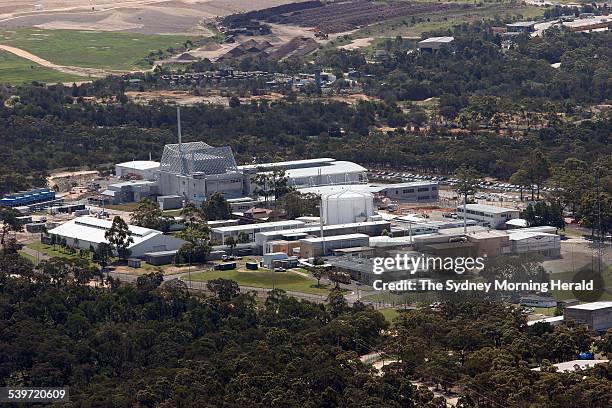
(AUSTRALIA OUT) An aerial of the Lucas Heights nuclear reactor site on 14 November 2005. SMH NEWS Picture by ROBERT PEARCE. (Photo by Fairfax Media via Getty Images/Fairfax Media via Getty Images via Getty Images)

However, the Clean Energy Investor Group is hardly a disinterested observer. It is the peak body for major renewable investors, including Macquarie, Blackrock, Neoen, and Tilt Energy. Together, they own 76 clean energy assets worth $38bn. The present value of those assets is now hostage to the electoral fortunes of Anthony Albanese (current Prime Minister), which is why cashed-up renewable energy investors are accumulating a war chest of hundreds of millions of dollars to keep Labor in power.

The influence of this powerful, crony-capitalist enterprise is one reason Dutton has only an outside chance of turning nuclear into an election-winning issue. However, polling on public support for nuclear has been trending Dutton’s way, and the evidence from around the world is stacked in his favour. Bearing in mind, Australia already has a Nuclear Reactor. The High Flux Reactor was Australia’s first nuclear reactor. It was built at the Australian Atomic Energy Commission Research Establishment at Lucas Heights, Sydney. The reactor was in operation between 1958 and 2007 without incident, when it was superseded by the Open-pool Australian lightwater reactor, also at Lucas Heights and it is still in operation today.

However, the history of bad ideas shows them to be most potent when entrepreneurs discover ways of making a buck out of them. The influence of the cashed-up renewable energy sector in global politics and cultural institutions has made the net-zero narrative all but impossible to dislodge.

Protecting the present value of trillions of dollars of global capital rests on maintaining the fiction that wind and solar power, backed up by numberless batteries yet to be built and pumped hydro yet to be installed, is the key to rescuing the planet. Trillions of dollars of capital have been misallocated to this purpose thanks to perverse incentives provided by politicians whose most pressing concern is not to save the planet but to survive the next election.

Australia is not the only country caught up in the exuberance of the 2019 Paris climate conference and promised more than it could possibly achieve. It is hard to find a single Western economy remotely on track to meet 2030 commitments, let alone the big one in 2050. I will shortly put up a post entitled “Germany Failed to Achieve Clean Energy Transition Without Nuclear”

In a report published last month by the Fraser Institute, Czech-Canadian scientist Vaclav Smil outlined the task ahead. More than 4 terawatts of electricity-generating capacity must be replaced, and almost 1.5 billion gasoline and diesel vehicle engines must be converted to electricity. Almost all the world’s agricultural and crop-processing machinery must be replaced, including 50 million tractors and more than 100 million irrigation pumps. New heat sources must be developed to smelt iron, manufacture cement and glass, process chemicals and preserve food. More than half a billion domestic, industrial, and institutional gas furnaces must be abandoned. Novel forms of motive power must be found for 120,000 merchant vessels, and we’ll need to develop a carbon-free way of keeping 25,000 jetliners in the air. Not to mention, the AI revolution is gobbling up power. AI, the Cloud, and decentralized currencies like Bitcoin require enormous energy at a time when the world is trying to transition to solar and wind which are totally unpredictable power sources.

For Vaclav Smil, the most disturbing thing about the net-zero fallacy is what it tells us about the economic, numerical, and scientific illiteracy of a generation that is, on paper, the most educated in history. As Smil told American author Robert Bryce in an email exchange, we live in a fully post-factual world.

The net-zero fallacy has taken root “because the soil is receptive: utterly brainless mass of mobile-bound individuals devoid of any historical perspective and any kindergarten commonsense understanding”.

The cartoonish reaction to Dutton’s nuclear announcement last week was evidence of Vaclav Smil’s point. If there is a solid argument against legalising nuclear power in Australia, Chris Bowen failed to produce it. Bearing in mind we have had a nuclear power plant operating safely in Sydney for decades. Until he does, Dutton can safely regard the debate as won.

Yet politicians are not rewarded for winning fact-based arguments. They are rewarded by winning elections. As Thomas Sowell points out, one of the differences between economics and politics is that politicians are not forced to pay attention to long-term consequences.

“An elected official whose policies keep the public happy up through election day stands a good chance of being voted another term in office, even if those policies will have ruinous consequences in later years,” Sowell wrote in Basic Economics.

Yet the test of Dutton’s policy is whether it will increase competition in the market, offering a credible alternative to the untrodden renewable-only path on which we are embarked.

The squeals from the renewable energy establishment last week suggest he is on the right track.

Nick Cater is a senior fellow at the Menzies Research Centre, a visiting fellow at the Danube Institute, and a columnist with The Australian. He is a former editor of The Weekend Australian and a former deputy editor of The Sunday Telegraph. He is the author of The Lucky Culture published by Harper Collins.

We are living in the Biblical prophesied end-times world: God and His laws have been jettisoned, many churches have compromised with the world on homosexuality, gay marriage, and even transgenderism. Government debt is not sustainable so people’s confidence in politicians is at an all-time low, anarchy is next as energy supplies fail. Other, prophesied end times signs such as earthquakes, pestilences, and famine are already evident. The fact that the major Biblical end-times prophecy was already fulfilled over 70 years ago: the re-establishment of Israel as a nation, should give every Christian confidence that Jesus’ prophesied return to Earth is near.

DIGITALISATION, ARTIFICIAL INTELLIGENCE, AND ROBOTICS

THE SWITCH TO RENEWABLE ENERGY IS A MASSIVE DISRUPTER TO GOVERNMENTS, COMPANIES AND INDIVIDUALS TO MANAGE CHANGE BUT ADD DIGITALISATION, A.I. AND ROBOTICS AND WE HAVE CHAOS.

“But you, Daniel, shut up the words and seal the book, until the time of the end. Many shall run to and fro, and knowledge shall increase.Daniel 12:4

How about this prophecy given to Daniel about the time of the end. In addition, we have many prophecies that in the “last days” chaos and lawlessness will abound.

How about this FLYING CAR developed by an Israeli company that uses hydrogen and electric battery power.

For some people like me that love change and can see all the new investment opportunities that this change provides, it is an exciting time. The big challenge for me is that I can so easily get sidetracked from what God is calling me to do in the twilight years of my life. I need to make sure I continue to live eternally now knowing that there are eternal rewards for building God’s kingdom on earth.