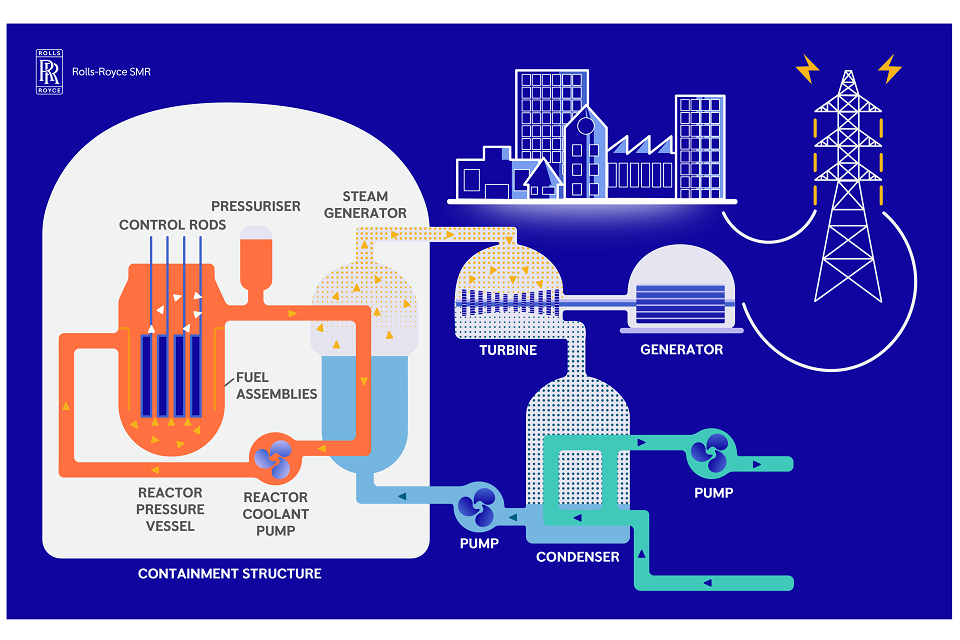
Rolls-Royce SMR has won a “multi-billion pound” contract to build three small modular nuclear reactors for Sweden, marking a major step in the British engineering group’s ambition to become a leading supplier of SMR technology in Europe.
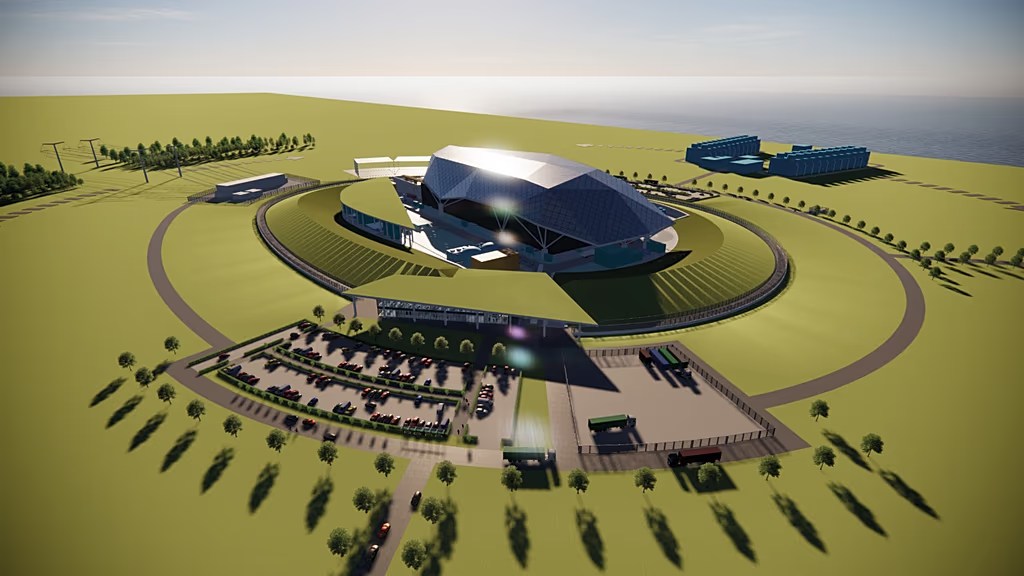
Following a rigorous selection process that started in 2022, UK engineering giant Rolls-Royce’s nuclear division, Rolls-Royce SMR, won the contract to build nuclear reactors for Sweden. As part of the deal, the group, selected by Videberg Kraft as its partner, will deliver three Small Modular Reactors (SMRs) to Sweden’s west coast, at the Värö Peninsula. The partnership with utility Vattenfall and developer Kärnfull Next is seen as one of the most advanced opportunities for deployment outside of the UK.
The current announcement follows another deal in April this year, when Rolls-Royce SMR signed a contract with the Czech CEZ Group to advance work on the Czech Republic’s first Small Modular Reactor (SMR). The firm also sealed a deal with Great British Energy – Nuclear (GBE-N) for the design and delivery of the first small modular reactors (SMRs) in the UK.
In Germany Chancellor Merz announced that “nuclear power plants are to be built,” and “all the necessary documents have been exchanged” to begin construction on new nuclear power plants, which will likely be put on the old sites. In Merz’s speech, he said the heart of the issue is that Germany’s power industry is too heavily reliant on imports from other countries.
Germany’s western neighbor, France, has dominated Europe’s nuclear power industry since the mid-1980s. Its 57 operating reactors fulfill 70% of the country’s energy needs, and France sells $3.5 billion, of nuclear energy annually to other countries. Currently, France is building six new reactors and considering another eight.
Meanwhile, as of early 2026, China has 59 operating nuclear reactors with 37 more under construction, the World Nuclear Association reported. The country’s operable nuclear capacity shot up in the 2010s, and new growth has since levelled off slightly.
The U.S. currently has 94 operating nuclear reactors — the most of any country. But without expansion, China will take its title.
The European Commission considers small modular reactors (SMRs) to be a promising low-carbon technology that could help support the bloc’s clean energy and energy security goals. In order to remove regulatory barriers, the EU’s SMR strategy was adopted in March 2026 to accelerate the development and deployment of the technology across Europe.
SMRs are smaller than conventional nuclear power plants, typically generating between 20 and 300 megawatts of electricity. At the upper end of that range, a reactor could produce around 7.2 million kilowatt-hours of electricity per day — enough to power hundreds of thousands of homes.
The International Energy Agency (IEA) estimates that more than 1,000 small modular reactors could be deployed worldwide by 2050 under a supportive policy scenario, requiring cumulative investment of around $670bn (€577bn).
On Thursday June 18th 2026 Switzerland’s lower house voted to lift its nuclear-plant ban. It is about time Australia also lifted its ban.. It’s crazy, we will be exporting more and more uranium to power SMR’s in other countries but not using this excellent power source here.
I am confident that both SMR’s and Nuclear Fusion will be used as power sources in Jesus coming Millennial Kingdom so we should get on board now.