FORMER LESBIAN PROFESSOR ON WHAT CHANGED HER HEART

A former professor of women’s studies at Syracuse University recently shared her personal journey from lesbian feminist to Christ-follower. During an episode of The Becket Cook Show, Rosaria Butterfield explained how converting to Christianity radically transformed her life, identity, and relationships.

She met a Presbyterian pastor who played an integral part in opening her eyes and heart to the Lord. “I talk about what it was like to meet a pastor, who was my neighbour when I was a lesbian, feminist, activist, professor,” Butterfield said. “I met Ken Smith, the pastor who the Lord used in my conversion. I thought this man is really smart. He and his wife Floy welcomed me into their world and they came into my world and they didn’t act as though I was polluting them.

Early on in our friendship, Ken said to me ‘there’s a difference between acceptance and approval and if you can live with that difference, I can live with that difference.’” Butterfield started reading the Bible and routinely met with Pastor Ken and Floy, which allowed her to discuss situations from a Christian perspective. “I saw the way his house functioned, it was amazing. We would talk about hard and heavy things. We would read the Bible, we would pray, and would sing songs. I couldn’t help but notice there was an aesthetic, palpable difference between my house and Ken Smith’s house.” She continued, “My house was filled with anxiety and constant frenetic, political activism. At Ken’s house, they would talk about hard things, but at a certain point, they would open the Bible. They’d pray and they would do this thing called ‘leave it at the cross.’ Then they would go on and laugh, feast, and have fun.

I was intrigued by that. I came to the Bible with a long list of things I was mad about that I needed to work through.” “In two years, I read the Bible seven times. I wanted to understand why Bible-believing Christians believed the things they did. This man-God, Jesus was and is compelling beyond description. I wondered two things: could I trust Him and is it true? And that was really the turning point. That’s when I decided that I needed to stop working with Ken Smith.” Butterfield explained that she came to a critical moment in her spiritual journey where the truth of the Gospel was visible and that frightened her. “At that point, Ken and Floy did not become stalkers but they came very close. They weren’t going to let go of me,” she said. “I stopped reading the Bible for research and started reading it for personal questions of truth, life, and death.

It was at that point that I was convicted of a number of sins. I was convicted of the sin of somehow thinking that I had been on the side of truth, justice, diversity, reparations, kindness, and compassion when it was really Jesus who was persecuted the whole time.” “I started going to church, I just showed up one day,” Butterfield said. “I discovered that sermons were this totally different thing and they would really force me to think about things that I hadn’t thought about before. I realized that part of why I didn’t understand how to be a godly woman was because I didn’t understand how to be a woman, which was hilarious because I’m a professor of women’s studies at the time,” she pointed out. “I was a mess, and I committed my life to Christ because I believed He was true and real and I had no idea what He was going to do with a mess like me.”

“Conversion put me in complicated and comprehensive chaos. I sometimes wonder, when I hear other Christians pray for the salvation of the “lost,” if they realize that this comprehensive chaos is the desired end of such prayers. Often, people asked me to describe the “lessons” that I learned from this experience. I can’t. It was too traumatic. Sometimes in crisis, we don’t really learn lessons. Sometimes the result is simpler and more profound: sometimes our character is simply transformed.” —Rosaria Butterfield
TESTIMONY OF A TRANSFORMED LIFE

For me, prison ministry is a no-brainer,” he says. “I’m going to do that until the Lord calls me home. … I want to help the parole board see that people can change. … I want our senators and lawmakers to have a different mentality, and I want the people who are coming home to have the resources they need.

The above quote was made by Jon Kelly the same man who made the following quote

“I was always high every day … always in fights, always getting shot at or shooting at somebody,” Jon Kelly says. “I for sure did not think I would make it past 16.”

Growing up in north Philadelphia with a single mother and a little sister, Jon was the epitome of a disrespectful, troubled teen. He grew up in a rough neighborhood. Multiple schools—including a disciplinary school he says was “like prison, but you get to go home”—couldn’t keep him out of trouble. He dropped out by ninth grade.

Jon began selling crack cocaine when he was only 12 years old, but in his teens, he decided it was more lucrative to rob drug dealers. “I thought it was a good thing,” he says. After all, “I wasn’t bothering law-abiding citizens.”

One night, Jon and his friends went to a drug dealer’s home and robbed him. Things got out of hand, and in the process, one of the group shot and killed their victim.

Jon remembers the day he was arrested. It was a Friday—March 15, 2002—and he had just turned 19 two months before. He was arrested for his role in the murder and brought to jail, but it was overcrowded from the city’s violent crime. The only place with room for Jon was in isolation, or solitary confinement.

A couple of the corrections officers would talk to Jon from time to time. That first week in jail, Jon was so bored he asked if either of the men could bring him something to read. The officers handed him a New Testament. On the cover were the words, “There’s hope for you. Jesus cares.”

“I read God’s Word for the first time,” Jon says, “and I haven’t been the same since.”

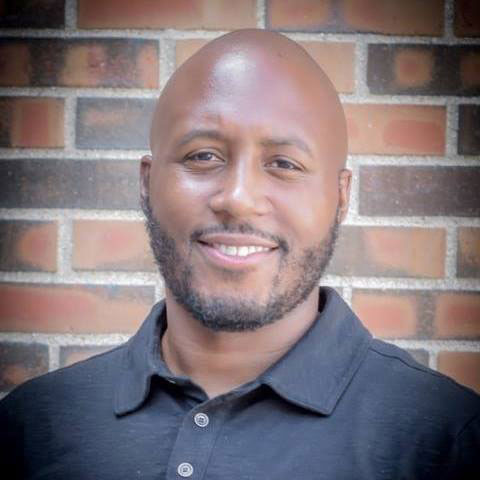
pastor jon kelly
Jon Kelly today

Today, Jon Kelly is the pastor of Chicago West Bible Church, a 2-year-old church he helped start after receiving his bachelor’s degree from Moody Bible Institute. He is married and has two children.

“It’s been an amazing journey, and I praise God for that,” Jon says.

Only God can change lives like Jon Kelly’s and provide the people and the resources to make use of that life for the benefit of God’s Kingdom.

Only Holy Spirit led lives are both transformed by God to produce the fruit of the Spirit – love, joy, peace, faithfulness, gentleness, goodness, kindness and self-control and be available to be used by the Holy Spirit using the gifts of the Spirit – Revelation Gifts – Words of Wisdom, Words of Knowledge and Discerning of Spirits, Vocal Gifts – Prophecy, Tongues, and interpretations of Tongues, Power Gifts – Faith, Healing and Miracles.

JESUS TRANSFORMS PRISON IN EL SALVADOR

J Lee Grady (Fire In My Bones, Charisma Magazine) stood in front of 600 male inmates at a prison in Izalco, El Salvador. The men were dressed in white T-shirts and white drawstring pants, and many of them sported tattoos on their faces and necks. All the men were members of violent gangs when they were incarcerated. About 20% of them were affiliated with the MS-13 gang—a group known for horrific attacks on women, children and police officers.

Yet he felt no fear as he looked out over the crowd and shared a message from Luke 15 about the prodigal son. Most of the men were carrying Bibles, and when he announced his text, they immediately turned to the passage. They yelled, “Amen,” or “Gloria a Dios,” when Grady stressed an important point. And they clapped and cheered when he reminded them that the kosher Jewish father in the story welcomed his wayward son home even though the boy smelled like pigs.

Almost every prisoner in this huge group became a Christian after arriving at the Izalco prison. Two churches now operate inside the facility, pastored by men who were once tough criminals. All the men now gather for Bible study every day, they hold prayer and fasting vigils, and they are helping each other to grow spiritually.

When the men worshipped on Monday, six guys used plastic paint tubs for drums while an inmate with a huge smile led the praise choruses. The men sang louder and with more passion you would see in most churches in the outside world.

Latino-man-172291797
!Jesucristo vive dentro de esta prisión!” (“Jesus Christ lives inside this prison!”

“Our government is encouraging this movement,” says Oscar David Benavides, director of the prison. He says in 2016 he was allowed to encourage evangelism among inmates. When men experienced conversions, he intentionally moved them into buildings where there were non-Christian inmates.

Faith was never forced on anyone, but more and more men began to find Jesus in a chain reaction of grace. The new converts changed dramatically. They were no longer angry and depressed. They became cooperative and friendly. Their frowns turned to smiles.

Today, El Salvador’s government leaders see evidence that Christianity is good for violent offenders.

No serious crimes have occurred inside the Izalco facility since the prison revival began. The inmates treat each other with respect, even though they were affiliated with rival gangs. “The transformation is an obvious miracle,” Oscar Benavides says.

In the United States, Grady said, “We are skittish about mixing government and religion. We don’t want prayer in schools. We don’t want the Bible to influence public policy. And yet our prisons are so dangerous they are like hell on earth. A report released last year by The New Republic said 428 inmates died in Florida’s prisons in 2017, hundreds have died in prisons in Oregon and Washington since 2008, and the rate of prisoner-on-prisoner violence has doubled in Alabama in the past five years.

Grady said, “he is not going to hold his breath until America’s prison officials try El Salvador’s method of reform – JESUS”. But asks, “Why wouldn’t we?” In this tiny Central American nation—the only country in the world named after Jesus Christ—a true miracle has happened. We are foolish to ignore it.”