Dominant Superpower nations maintain secure borders. They have strong currencies. They don’t appoint senile leaders. They aren’t in a constant state of social revolution, e.g. BLM and Cancel Culture. And they aren’t bankrupt. Dominant superpowers have stable, effective governments that can do what is necessary to solve problems. And they have societies whose people can coexist peacefully without being at each others’ throats all the time.
Thousands of maskless anti-vaccine mandate protestors rallied in Washington D.C on Sunday to voice an opinion against US President Joe Biden administration’s COVID-19 mask and vaccine policies.
It’s hardly controversial to assert that dominant superpowers don’t accumulate $30 trillion in debt (which, by the way, is 25% larger than the entire US economy).
Dominant superpowers don’t surrender tens of billions of dollars of military equipment to a relatively small terrorist organisation and then fly away with local civilians clinging to the side of their aircraft.
Dominant superpowers don’t engineer historically high inflation… and then ignore it. Nor do they embrace socialism, i.e. the literal opposite of the capitalist economic system that enabled it to become the largest superpower ever.
Above all else, dominant superpowers don’t put themselves under God’s judgment by rejecting Him and His Commandments.
It is becoming obvious now why the USA does not play any leadership role as a nation in the end times before Jesus returns. It is apparent from what we see unfolding with the World Economic Forum (WEC) Great Reset and the U.N. Resolution: Transforming our world: the 2030 Agenda for Sustainable Development adopted by the General Assembly on 25 September 2015 that the United Nations will soon take the lead role prior to the Antichrist arriving on the scene in the not too distant future.
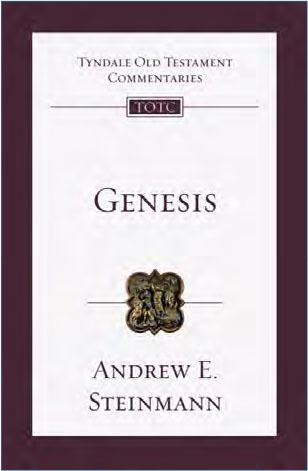
The Tyndale Old Testament Commentary series are designed to be non-technical and easily accessible commentaries on the English text, aimed at the busy pastor or preaching layman. The latest in the series is on GENESIS. This is the foundational book of the Bible so you need to know what it teaches.
The commentary opens with an Introduction to Genesis where the author highlights that this book is the book of beginnings and relates to the beginning of the world, of sin, of God’s promise of redemption, and of the nation of Israel, whom God chose as His people.
Importantly, Steinmann adopts the traditional literal ‘solar day’ view advocated by Young Earth Creationists.
Each pericope or section of text is treated with three separate sections: (1) Context, (2) Comment, and (3) Meaning. The Context section discusses the historical and literary context of the particular section of text. The Comment section provides more detailed commentary on the text itself. Though all verses in the text are covered, it is not strictly a verse-by-verse commentary. Given that this commentary is pitched at pastors and laymen rather than other scholars, there is no detailed Hebrew exegesis, though the author does make occasional reference to key Hebrew words and terms, along with clear explanations. Finally, the Meaning section offers a brief summary and meaning of the text, along with any theological notions and implications.
Numerous ‘Additional Notes’ that discuss a particular topic, idea, or interpretation in more detail also appear throughout the commentary. Topics include ‘The seven days of creation, ‘Knowledge of the name Yahweh in Genesis’, and ‘The ages of the persons in the genealogies of Genesis 5 and 11’.
Steinmann points to the notion of ‘God’s Chosen People’ as a prominent theme throughout the book of Genesis. God chooses his people by favouring a particular line of descendants. God chooses Seth over Cain, Shem over his brothers, Jacob (renamed Israel) over Esau. Because you have put your trust in Jesus as your Saviour and Lord, God chooses you and has at least one important task for you to do.
‘Justification by faith’ is another important theme and is clearly demonstrated in the life of Abraham. Abraham believed in the gracious promise of God that through him and his seed all the nations of the earth would be blessed. Despite Abraham not understanding how this prophecy would be fulfilled through the incarnation and death of Christ, he still trusts in God’s grace and promises: “Abraham believed God, and it was credited to him as righteousness” (Romans 4:3). Indeed, Hebrews 11 also indicates that Abel, Enoch, and Noah were also righteous through faith.
Steinmann’s commentary is an order of magnitude better than Derek Kidner’s previous volume on Genesis in this series. It contains clear and generally accurate historical and theological explanations of the book of Genesis. This is the purpose and goal of the Tyndale Old Testament Commentary series. Although the author often makes reference to Hebrew words and other ancient Near Eastern cognates, you will not find technical discussions of Hebrew grammar and linguistics. What you will find is a concise, reliable commentary on the text of Genesis that is also accessible to the busy pastor and preaching layman.
The book is thoroughly reviewed by Andrew S. Kulikovsky in the latest edition of Journal of Creation http://www.creation.com. The above is extracted from that review.
This follows my earlier post, MILLENNIAL KINGDOM – EARLY CHURCH FATHERS dated February 8th, 2022. Once I have received feedback on this post it will go up on the website http://www.millenniumkingdom.net
Much of the information in this post is extracted from the excellent book by Matthew Bryce Ervin, One Thousand Years with Jesus: The Coming Messianic Kingdom, Resource Publications.
The death of Lactantius in AD 325 marked the end of Premillennialism as a commonly held belief in the church until after the Reformation of the 16th century. No doubt there were some saints that read the Scriptures and believed what they said about the Messianic Age, though their teachings on the matter are few.
Early as the year 170, a church party in Asia Minor—the so-called Alogi—rejected the whole body of apocalyptic writings and denounced the Apocalypse of John (Revelation) as a book of fables. Most groups are not so honest in their rejection of the plain reading of Scripture. Others claim to view Revelation and other prophetic writings in the Bible as inspired by God. However, the normal meanings of these prophecies are often obfuscated or ignored in favor of uncovering some hidden meaning. These secret meanings are often so foreign to the text that the original audience would never have arrived at them.
Origen and Allegory: The method of interpreting Scripture in this way is known as the allegorical hermeneutic. It was first promoted and largely developed by Origen at the turn of the third century. Origen (185–254 AD) was steeped in Greek philosophy, a perspective that greatly influenced his approach to understanding Scripture. This necessitated a militancy against Premillennialism. Greek Philosophy typically viewed matter as being flawed, or even evil, while the nonphysical part of reality was good. Only a nonphysical and purely spiritual kingdom was acceptable to Origen and those in agreement with his Alexandrian theology. Origen provided no unified alternative to the many prophecies on the future earthly reign of the Messiah as a system. Instead, various passages on the matter were each relegated to having vague “spiritual” meanings, if they were addressed at all.
It is difficult to overestimate the level of influence Origen and his allegorical hermeneutic had in shaping much of the Christian world’s approach to Scripture. One of his students, Dionysius, strongly opposed the promotion of Premillennialism through exegesis by the Egyptian church bishop Nepos. On what followed, German Lutheran Theologian, Adolf von Harnack (1851-1930) recounted: “Dionysius became convinced that the victory of mystical theology over “Jewish” chiliasm would never be secure so long as the Apocalypse of John passed for apostolic writing and kept its place among the homologoumena (those considered authoritative) of the canon . . . In the course of the 4th century, it was removed from the Greek canon, and thus the troublesome foundation on which chiliasm might have continued to build was got rid of . . . late in the Middle Ages, (God ensured) the Book of Revelation did recover its authority, however, the church was by that time so hopelessly entangled by a magical cultus as to be incapable of fresh developments.” Harnack’s explanation reveals that Dionysius was also motivated by a distaste for Judaism.
Theologian Renald Showers elaborated on the influence of antisemitism of the time. “Gentiles who professed to be Christians increasingly called Jews “Christ-killers” and developed a strong bias against anything Jewish. Because the premillennial belief in the earthly, political Kingdom rule of Messiah in the future was the same hope which had motivated the Jews for centuries, that belief was increasingly “stigmatized as ‘Jewish’ and consequently ‘heretical’” by eastern Gentile Christians.”
Some of the same people who claimed to worship a Jew as God in the flesh, and hold up the Scriptures that were written by Jews (cf. Rom 3:1–2), were at the same time eager to separate themselves from what was Jewish. What absurdity! Unfortunately, this attitude is still commonplace in much of the Christian world to various degrees today.
Showers listed three other primary reasons for the rejection of Premillennialism in the early church. First, the Montanists, a sect of Christians often deemed as heretical, happened to include Chiliasm among their doctrines. Premillennialism predated Montanism and was established orthodox eschatology, but still unfairly suffered from the guilt by association fallacy. Second, some believers feared that the Romans would increase their persecution of the church if it was taught that Jesus would return and destroy their empire. Third, a few were concerned that the focus on the return of Jesus to reign on the earth diverted attention away from the daily work of the church.
None of these reasons are based upon the responsible exegesis of Scripture. The veracity of any doctrine must be determined by Scripture alone.
Augustine was the bishop of Hippo, living from AD 354 to 430. He remains a much-praised theologian, particularly within Catholic Christian circles. Augustine serves as the cardinal figure in the turning away from Premillennialism. He once held to the doctrine before formulating the first truly developed alternative.
In The City of God, the bishop wrote on his transition: “There should follow on the completion of six thousand years, as of six days, a kind of seventh-day Sabbath in the succeeding thousand years; and that it is for this purpose the saints rise, viz., to celebrate this Sabbath. This opinion would not be objectionable if it were believed that the joys of the saints in that Sabbath shall be spiritual, and consequent on the presence of God; for I myself, too, once held this opinion. But, as they assert that those who then rise again shall enjoy the leisure of immoderate carnal banquets, furnished with an amount of meat and drink such as not only to shock the feeling of the temperate but even to surpass the measure of credulity itself, such assertions can only be believed by the carnal. They who do believe them are called by the spiritual Chiliasts, which we may literally reproduce by the name Millenarians.” Augustine refuted an argument never put forward by his opponents, a straw man fallacy. Premillennialists, whether in the early centuries or now, did and do believe that the joys in the Millennium are spiritual. They are, however, not only spiritual. And these blessings are certainly contingent upon God’s presence. Augustine insulted Premillennialists for anticipating the enjoyment of food and drink. This is an unfair characterization. Such an expectation is not based on carnal desire, but on the plain reading of several prophetic passages, including Isaiah 25:6 and Matthew 26:29.
Augustine’s influence was so dominant that Amillennialism went largely unchallenged until well into the Reformation. On why Premillennialism did not make an immediate return at that time, John MacArthur explained: The Reformers had it right on most issues. But they never got around to eschatology. They never got around to applying their formidable skills. You cannot fight the war on every front. And at the time of the Reformation, they were fighting the war where the battle raged the hottest and that was over the gospel and over the nature of Christ and over salvation by grace through faith and over the authority of Scripture. They were fighting the massive Roman system. And being occupied on those fronts, they never really got to the front of eschatology. This does not mean that the Reformers held to no eschatological position at all. It means that their high view of God’s word over the traditions of men was not seriously applied to what was a lower priority. This resulted in a lingering Amillennialism.
It is rather difficult to find more than a few pages in a row from Calvin’s Institutes of the Christian Religion that lack a reference to Augustine. Such was the level of influence Augustine held over the reformer. Calvin even followed after Augustine in mischaracterizing the beliefs of the chiliasts or early premillennialists. If these fathers really believed that the reign of Christ would come to an end after the Millennium then they deserved to be mocked. Of course, this is not what the chiliasts believed, nor is it even a remotely accurate description of Premillennialism in general. The reign of Jesus does not end with the Millennium. He will remain King on the new earth for all eternity.
Joseph Mede (1586–1639) is one of the most fascinating figures from the twilight of the Reformation. He was not only a widely influential church scholar but also a naturalist and Egyptologist. Mede was well-schooled in biblical languages, subjects he lectured on at Christ’s College of the University of Cambridge. Mede broke with his contemporaries in returning to the literal interpretation of the prophetic Scriptures. His book, The Key of the Revelation, was a clarion call for a return to Premillennialism. Mede was certain that the thousand years of the millennium . . . represented the future reign of the saints with Christ . . . Mede Identified the millennium with the future seventh trumpet and the day of judgment, both of which, he argued, would last one thousand years. It was a systematic repudiation of the Reformer’s Augustinianism.
Mede was a harbinger; after him came the flood. William Twisse, Prolocutor of the Westminster Assembly, wrote a preface to the 1643 English translation of The Key of Revelation. In it, he rebuked Augustine for relinquishing the doctrine of Christ’s Kingdom on earth and praised Mede for returning to it. Isaac Newton, arguably the most prolific scientist in history, acknowledged Mede as the greatest influence on his interpretation of biblical prophecy. The list of church leaders and Bible scholars following Mede in becoming premillennialists continues at some length.
Postmillennialism: In the late 17th century, the Unitarian Daniel Whitby (1638–1726) developed a new alternative to both Premillennialism and Amillennialism: Postmillennialism. Just as the name suggests, Postmillennialism is the belief that Jesus will return after the thousand years of Revelation 20.
For Whitby, the Millennium, whether literal or figurative for a long period, is a golden age where Christianity has conquered the unbelieving world. During this time most, if not all, people will become saved and biblical values will flourish.
With the escalating persecution of Christians in our time which fits with Biblical prophecy it is hard to understand how Christians can hold to this view.
Charles Spurgeon wrote: “Paul does not paint the future with rose-colour: he is no smooth-tongued prophet of a golden age, into which this dull earth may be imagined to be glowing. There are sanguine brethren who are looking forward to everything growing better and better and better, until, at last, this present age ripens into a millennium. They will not be able to sustain their hopes, for Scripture gives them no solid basis to rest upon. We who believe that there will be no millennial reign without the King, and who expect no rule of righteousness except from the appearing of the righteous Lord, are nearer the mark. Apart from the Second Advent of our Lord, the world is more likely to sink into pandemonium than to rise into a millennium. A divine interposition seems to me the hope set before us in Scripture, and, indeed, to be the only hope adequate to the occasion.”
Like Mede, Twisse, Newton, Spurgeon, and Matthew Bryce Ervin, I am confident that the Bible teaches the following: Jesus returns first to rapture and meet the Saints in the air and take them to heaven, at the same time God pours out His wrath on unrepentant earth with the Trumpet and Bowl judgements. We are not given the time period but we know from Scripture that at the fifth trumpet judgement, demonic beings were allowed to torment people for five months. Personally, I think the time period will be one year and ten days the same time God poured out His wrath upon the earth in Noah’s day. This means the Saints will be in heaven for that time before they return with Jesus to defeat the Antichrist at the battle of Armageddon and to set up Jesus’ Millennial Kingdom.
Wars and rumours of wars are just one of the early end times signs that Jesus spoke of when asked by the disciples about His second coming and the end of the world.
Russia has been massing some 100,000 troops plus logistics to support them in what looks like an impending invasion of Ukraine. In response, President Biden is sending 3,000 American soldiers to Poland and Romania, which border Ukraine.
New satellite images show battle groups and a vehicle park in Yelnya, Russia, on January 19, 2022. SATELLITE IMAGE 2021 MAXAR TECHNOLOGIES
What would be the consequence if those Americans are fired upon? What if Russia moves on the Baltic Republics (Estonia, Latvia, and Lithuania), also the home of a large Russian minority with grievances? They are members of NATO, in which an attack on one member nation is considered an attack on them all. If the Russians move on Estonia, all of the European members and the United States would be obliged by treaty to go to war with Russia. Most of the NATO nations have little military capabilities these days, trusting the United States to bear all of the costs involved.
China and Russia, once rivals have made formal alliances with each other. Not only that, both countries have made formal alliances with Iran, drawing the explosive Middle East into the global political alignments. In fact, these three countries are already being called “a new Axis.” (See, for example, this analysis: As America Sleeps, a Dangerous Axis Develops.)
China’s threats against Taiwan keep intensifying. Its much-expanded navy, its cutting-edge military technology, and its saber-rattling incursions of intimidation into the waters of other Asian countries are of concern. The Chinese ambassador has explicitly threatened “military conflict” with the U.S. if they support Taiwan in its continued claims of independence.
President Biden and the Pentagon turned what should have been an orderly withdrawal from Afghanistan into a humiliating rout. A military that can’t even pull off a successful retreat will seem unlikely to be able to stage a successful attack. The spectacle of the vaunted American military running away from the barely-equipped Taliban and even leaving behind some of their own people has surely emboldened their adversaries. They even abandoned hundreds of billions of dollars of military equipment and disgracefully turned their backs on their friends and allies. This could be seen in the ridicule that came from Russia and China, which called the U.S. a “paper tiger.”
As well as wars and rumours of wars, famines, pestilences, and earthquakes in many countries are other end times signs occurring now. Covid is the most notable. Apostate churches, false prophets and teachers, and lawlessness are also significant signs.
“And you will hear of wars and rumours of wars: see that you are not alarmed: for all these things must come to pass, but the end is not yet. For nation shall rise against nation, and kingdom against kingdom: and there shall be famines, and pestilences, and earthquakes, in various places. All these are the beginning of sorrows. Then they will deliver you up to tribulation, and put you to death: and you will be hated by all nations for my name’s sake. And then many will fall away, and betray one another, and hate one another. And many false prophets will arise and lead many astray. And because lawlessness will be increased, the love of many will grow cold. But the one that endures to the end will be saved. And this gospel of the kingdom shall be proclaimed throughout the whole world as a testimony to all nations, and then the end will come.” Matthew 24:6:14
Whilst tribulation is ahead, the indwelling Holy Spirit will guide our steps to lead many to Jesus and bring glory to God. Look up your redemption is approaching.
“Now when these things begin to take place, straighten up and raise your heads because your redemption is drawing near.” Luke 21:28
Think about how Joshua felt when God told him to lead the Israelites into Canaan, drive out the pagan inhabitants, and secure the land as a homeland for His people.
In the natural, this would seem to be an impossible task but the key of course is revealed in the following Scripture:
Have I not commanded you? Be strong and of good courage; do not be afraid, nor be dismayed, for the Lord your God is with you wherever you go.Joshua 1:9
God does not commission us without the promise of His presence and provision. We only have to be “strong and of good courage.”
How would you like to be Noah, being told to build an enormous boat as God was going to destroy every living creature on the earth save those on this boat Noah was to build. We are simply told that “Noah did this; he did all that God had commanded him”Genesis 6:22
How Long Was the Ark?
At approximately 510 feet long, it would take nearly one and a half football fields to equal the Ark’s length. That’s big enough that NASA could lay three space shuttles—nose to tail—on the Ark’s roof!
How Tall Was the Ark?
The roof of Noah’s Ark was more than 50 feet from the ground—higher than a modern four-story house. That’s plenty of space for three extra-tall inner decks as the Bible describes.
The Ark had the same storage capacity as about 450 standard semi-trailers. A standard livestock trailer holds about 250 sheep, so the Ark had the capacity to hold at least 120,000 sheep.
“And God said to Noah, “I have determined to make an end of all flesh, for the earth is filled with violence through them. Behold, I will destroy them with the earth. Make yourself an ark of gopher wood. Make rooms in the ark, and cover it inside and out with pitch. This is how you are to make it: the length of the ark 300 cubits, its breadth 50 cubits, and its height 30 cubits. Make a roof for the ark, and finish it to a cubit above, and set the door of the ark in its side. Make it with lower, second, and third decks. For behold, I will bring a flood of waters upon the earth to destroy all flesh in which is the breath of life under heaven. Everything that is on the earth shall die. But I will establish my covenant with you, and you shall come into the ark, you, your sons, your wife, and your sons’ wives with you. And of every living thing of all flesh, you shall bring two of every sort into the ark to keep them alive with you. They shall be male and female. Of the birds according to their kinds, and of the animals according to their kinds, of every creeping thing of the ground, according to its kind, two of every sort shall come in to you to keep them alive. Also take with you every sort of food that is eaten, and store it up. It shall serve as food for you and for them.” Noah did this; he did all that God commanded him.” Genesis 6:13-22
Are you confident that God is with you wherever you go? He will be if you are obedient to His commands. Moreover, you will know if you are not being obedient because you will experince His discipline. What form that takes varies widely but repentance is required to get you back on track. This is a word usually not spoken of in apostate churches.
Do you want times of refreshing from the Lord? If you do then repent.
A Pakistani teenager has reportedly led his entire tribe to embrace Jesus, a remarkable story shared this week by Mission News Network (MNN).
A 17-year-old going by the pseudonym “Rehan” for security reasons was working as a waiter when he met Safdar, a truck driver, and partner with a missions group called Foursquare Missions International (FMI).
Safdar gave Rehan an audio Bible after they met, and the teen listened. Then, he started meeting with Safdar to talk about God and the Bible. Soon, he became a Christian and was baptized, according to Missions Network News MNN.
Rehan soon shared the Gospel message with his family and community members. Considering the sweeping and intense persecution Christians face in Pakistan, these actions were dangerous and, without a doubt, courageous.
Pakistan (MNN) — In Pakistan, a 17-year-old boy led his entire tribe to follow Jesus.
At first, Rehan’s parents, who were receptive to the Gospel, were scared. But he reportedly forged on.
A man named Nehemiah, who works for FMI, explained that Rehan wasn’t dissuaded. He invited missionaries to minister to his tribe and share the Gospel – and the results were incredible.
Rehan’s 60-person tribe reportedly stopped participating in Muslim prayer and turned toward Jesus.
“One evening, he gathered all the tribe’s members under one big tent. First, Rehan showed a movie about Jesus,” Nehemiah told MNN. “Then, an FMI partner shared a 15-minute devotion about new hope in Christ. That day, a 17-year-old boy led his whole tribe to the Lord Jesus Christ.”
Now, the missions groups ask for prayer for this tribe and others in the region.
This story is especially remarkable, considering the hostile arena in which Rehan boldly shared the Gospel. As Open Doors USA’s “2022 World Watch List” notes, Pakistan is one of the most dangerous countries in the world to be a Christian. The nation ranks eighth on the list, with Islamic oppression serving as the primary form of persecution.
“In Pakistan, Christians are considered second-class citizens and are discriminated against in every aspect of life,” Open Doors reported. “Church leaders can be arrested if they don’t abide by the authorities’ wishes. These arrests act as warnings to the Christian minority and intimidate them further.”
Regardless, God is at work as Rehan’s story demonstrates it just requires willing workers that God can use.
Virtual replicas now exist. As previously posted, Facebook has changed its name to Meta in recognition that the future is in the virtual universe. In the video below, Nelson reveals that China has already shown they have used a replica newsreader for seven months. Think about that for a moment, they (those in control) can create a replica of you and have you say whatever they want.
Facebook’s new logo Meta
“It (False Prophet) deceives those who dwell on earth, telling them to make an image for the beast that was wounded by the sword and yet lived. And it was allowed to give breath to the image of the beast, so that the image of the beast might even speak and might cause those who would not worship the image of the beast to be slain.”
Could this be what John is referring to when he talks of the False Prophet making an image of the beast, a virtual image that can speak just as the replica newsreader did?
What about the following verse; until the technology of today – smartphones, how could people from all over the earth see the dead bodies of the two witnesses lying in a street in Jerusalem? It must have been a mystery to John. Although his whole Revelation experience must have been mind blowing.
“And they of the people and kindreds and tongues and nations shall see their dead bodies three days and an half, and shall not suffer their dead bodies to be put in graves.” Revelation 11:9
Same with Daniel: the following end times words he was given truly describe the time we are living in now particularly “knowledge shall be increased“.
Daniel,shut up the words, and seal the book, even to the time of the end:many shall run to and fro, andknowledge shall be increased.Daniel 12:4
End times Biblical prophecy is unfolding in our time like never before. Are you prepared for Jesus return? The second last book of the Bible, Jude, tells us what we need to be doing in the last days before Jesus returns. Check it out.
Fight! Contend! Do battle! When apostasy arises, when false teachers emerge, when the truth of God is attacked it is time to fight for the faith. Only believers who are spiritually “in shape” can answer the summons.
Want help on how to pray then look no further than the seven (really six) important prayer points that Paul gives us:
“Finally, brothers, pray for us, that the word of the Lord may speed ahead and be honored, as happened among you, and that we may be delivered from wicked and evil men. For not all have faith. But the Lord is faithful. He will establish you and guard you against the evil one. And we have confidence in the Lord about you, that you are doing and will do the things that we command. May the Lord direct your hearts to the love of God and to the steadfastness of Christ.”2 Thessalonians 3:1-5
2 Chronicles 7;14
1. Paul primarily prays that the Gospel will go forth speedily so this needs to be our priority in prayer as well. We are to pray that God’s glorious Gospel would keep going forward unhindered. Not only that the Gospel would go forward, but it would “be honored.” Paul has in mind here that the Gospel would be accepted and respected as saving truth. He reminds the Church that this is how the Gospel was received among them. It was joyously received.
2. Paul asks that we pray to be delivered from the evil/wicked ones. There are several aspects of deliverance that are in mind here.
Deliverance from those that are wicked. In the context of the local church, those that attend are a mixed crop of wheat and tares (Matthew 13:24-30). Simply put, some are Christians and some are not. Sometimes those non-believers are major sources of conflict, luring others away to sin, and doctrinal perversity
Deliverance from those that are evil – those actively and aggressively promoting sin, bringing hardships, and conflicts.
3. We need to ask God to make us stable/strong in Him. This encompasses faith, doctrine, trust, and other issues relating to God strengthening His people.
4. He will guard us against the wiles of Satan and his demons.
5. He will teach us to be obedient to the Holy Spirit’s leading and to His Word. That our minds would be renewed by His Word.
6. Pray that God would direct our hearts. Here, Paul prays that Christian hearts would be directed specifically into the love of God and the steadfastness of Christ.
To the love of God – this could involve both being directed to God’s love as well as the believer loving God more. Either case would have a major impact on a believer’s sanctification. A deep love for God and dwelling on God’s deep love for the believer drowns out lesser loves and affections.
To the steadfastness (patience) of Christ – How often do you reflect on the patience of Christ? Specifically, why He is patient with his children? There is divine patience that the believer experiences because of who they are in Christ. There is rest and peace that is found in the completed work of Christ and is a reminder that there is no more condemnation for the believer. This prayer could also be for Christlike patience. Which of us couldn’t use more of that?
7. In conclusion, there is no better thing for us to regularly pray for ourselves, our pastors and for each other than successful delivery of the Gospel, deliverance from evil men, for the Lord to make us stable, protect us from evil, and guide us into obedience. Along with those things, we should pray that our love and endurance would blossom as we look at Christ.
The article by Robin Schumacher “The Judgements of God are everywhere” in Christian Post February 7th is timely. I have reproduced some of it below. Schumacher makes no reference to the fact that the lawlessness and increasing persecution of Christians that we see escalating in our world matches end-times Biblical prophecy along with the many other signs. The good news for Christians is Jesus’ return is near so we need to get on with what God has called us to do, confident that He will empower us to do it.
The Judgement of God is everywhere:
“Judgment is covering our land today with respect to our choice of politicians. You can almost hear God saying, “So, you want to reject and cancel leaders who honor me? Fine.”
I’ll have you elect officials who call evil good and good evil. Who, like a lost donkey finder, do and say things so stupid you wonder how they get up in the morning and tie their own shoes. Who enshrine criminals as victims and paint their victims as evil-doers. Who take away your protection from felons while using your money to pay for their own private security teams. Who prioritize gender-neutral toy aisles over keeping criminals in jail and businesses safe from theft. Who robs your wallets by pursuing the failed scorched-earth policies of godless, communist governments. And who trample on the one true faith while lifting up false religions that belittle women and force submission. Let’s see how you do with leaders who, “are like wolves tearing the prey, by shedding blood and destroying lives in order to get dishonest gain” (Ezekiel 22:27).
So you want to abandon Me?
Romans 1:18-32 teaches that everyone knows there is a God from nature itself and therefore it is natural to worship the Creator who brought everything into existence. When people choose not to do that which is natural and abandon God, He gives them over to a life that is unnatural and abandons them.
When we look at the current state of our culture, which has shut God out of nearly every sphere, you can see His judgments springing up far and wide: “Are you actually confused over whether I exist and who or what you should worship even though you know the truth down deep in your soul? Well, I’ll send a state of confusion upon you, to the point where you’re puzzled over even the basics of your humanity including what gender you are and your own sexual attraction.
I’ll have your most beautiful cities mocked with names like San “Fransicko” because of the depraved mind you’ll develop. Since you pollute these lands with murdered unborn children and moral filth, you won’t be able to walk down your streets without stepping over human feces. I’ll put out on open display people destroying their lives with drugs and pay for their habits with money out of your own pocket, stolen by insane-reasoning politicians. These will be the same ones who won’t lift a finger to stop violence, even as your own children continue to be killed by stray bullets from repeat offenders who are constantly released and laugh at your court house’s revolving door.”
What about you?
The only thing worse than being blind to the judgments of God occurring around you is being oblivious to the ones occurring to you. Contrary to what some believe, they don’t typically come as a lightning bolt from the sky but rather as the natural consequences hardwired into sin itself.
Like the prodigal son, you can get so dull to the awful end results in your life that you wake up one day in the pig pen and wonder how you got there.
But it’s no mystery really; we often ignore His repeated jabs in the side to get our attention. The wake-up calls from God are something articulated succinctly by C. S. Lewis who wrote,
“God whispers to us in our pleasures, speaks in our conscience, but shouts in our pains: it is His megaphone to rouse a deaf world.”
I wish I could tell you that I have hope our culture will collectively listen to God’s bullhorn and return to Him, but my confidence in that is waning. However, individually, you and I can open our eyes and ears to His delivered course corrections and experience deliverance from the consequences of our personal sins.
It’s my prayer that we avoid God’s wrath in the first place, learn from it if that’s not possible, and realize that His judgments are many times self-inflicted wounds from our own sins:
“They would not accept my counsel, they spurned all my reproof.So they shall eat of the fruit of their own way, and be satiated with their own devices.For the waywardness of the naive will kill them, and the complacency of fools will destroy them.But he who listens to me shall live securely and will be at ease from the dread of evil”(Proverbs 1:30-33).“
Christians will avoid the coming wrath of God that will be poured out with the Trumpet and Bowl judgements beginning in Revelation 8:1. At the trumpet blast, when the seventh seal surrounding the scroll containing the Trumpet and Bowl judgements is opened the Saints are raptured.
“For the Lord himself will descend from heaven with a cry of command, with the voice of an archangel, and with the sound of the trumpet of God. And the dead in Christ will rise first. Then we who are alive, who are left, will be caught up together with them in the clouds to meet the Lord in the air, and so we will always be with the Lord.” 1 Thessalonians 4:16-17
Many great historians and churchmen can be cited in affirming the early dominance of Premillennialism. Among them is the celebrated church historian Philip Schaff. He penned this oft-quoted passage:
“The most striking point in the eschatology of the ante-Nicene age is the prominent chiliasmor millenarianism, that is the belief of a visible reign of Christ in glory on earth with the risen saints for a thousand years, before the general resurrection and judgment. It was indeed not the doctrine of the church embodied in any creed or form of devotion, but a widely current opinion of distinguished teachers, such as Barnabas, Papias, Justin Martyr, Irenaeus, Tertullian, Methodius, and Lactantius” Schaff, History of the Christian Church Vol 11, p. 614
Contained in Barnabas’ epistle is this common early church millennial belief:
“Attend, my children, to the meaning of this expression, “He finished in six days.” This implieth that the Lord will finish all things in six thousand years, for a day is with Him a thousand years. And He Himself testifieth, saying, “Behold, to-day will be as a thousand years.” Therefore, my children, in six days, that is, in six thousand years, all things will be finished. “And He rested on the seventh day.” This meaneth: when His Son, coming [again], shall destroy the time of the wicked man, and judge the ungodly, and change the sun, and the moon, and the stars, then shall He truly rest on the seventh day. Ye perceive how He speaks . . . I shall make a beginning of the eighth day, that is, a beginning of another world.” The Epistle of Barnabus. Chapter 15, p. 146-147
Barnabus got it right both with the age of the earth and that Jesus will rule and reign on this earth for a thousand years and only then the White Throne Judgement followed by a new heaven and new earth.
Justin Martyr was an overtly premillennial ante-Nicene church father
Justin gave his most famous statement on the Millennium: “For if you have fallen in with some who are called Christians, but who do not admit this [truth] and venture to blaspheme the God of Abraham, and the God of Isaac, and the God of Jacob; who say there is no resurrection of the dead, and that their souls, when they die, are taken to heaven; do not imagine that they are Christians . . . But I and others, who are right-minded Christians on all points, are assured that there will be a resurrection of the dead, and a thousand years in Jerusalem, which will then be built, adorned, and enlarged, [as] the prophets Ezekiel and Isaiah and others declare.” Dialogue with Trypho LXXX, p.239