Peter H. Diamandis, MD, is the Founder of XPRIZE, Singularity University, ZeroG, A360 and Dave Blundin is the founder & GP of Link Ventures. Both men are well known for the roles on Peter’s, Moonshots blog.
In this video Peter & Dave sit down with Brett Adcock to discuss the future of Figure AI and Humanoid Robots. Brett Adcock is the founder of Figure AI, an AI robotics company developing general-purpose humanoid robots.
Brett Adcock (born April 6, 1986) is an American technology entrepreneur and billionaire who is the founder and chief executive officer of Figure AI. In 2018, Adcock co-founded Archer Aviation, five years after he co-founded Vettery. In 2023, he established Cover. As of June 2024, Forbes estimated his net worth as US$1.4 billion.
In 2026, Figure AI will be working with companies to introduce robots in their companies to replace humans for manufacturing, and all other functions including warehousing and distribution. Figure has 55 companies knocking on the door ready to spend big bucks which will help them scale up their robots manufacture. However, he did say that with neural net his company can produce general-purpose humanoid robots and he is keen to produce them as is Elon Musk with Optimus Robots.
The disruption that robotics will cause to employment in 2026 will just increase the lawlessness we are already seeing in developed countries where for the most part, people, particularly the younger generation have accepted evolution and the Big Bang theory as the origin of life and the Cosmos. For them, God and His commandments are part of myths and legends. Their lives have no meaning or purpose. For Christians who know their Bibles and Biblical end times prophecy realise this is just part of what God has revealed to prepare us for the tribulation that precedes Jesus second coming to earth to usher in His Millennial Kingdom. For more on what is next on God’s agenda for planet earth go to http://www.millennialkingdom.net.
Can AI Replace Teachers? Inside the Company Using AI Tutors to Teach 200% Faster
The world is changing so fast and in so many ways. The speed of changes in technology: recursive AI which impacts everything, robotics, self driving cars and trucks, gene therapy, renewable energy, etc. It is leading to so many changes in society and work. Job losses will be huge.
Sadly, with the teaching of the theory of evolution in schools and universities as fact has led to nations excluding God from existence. Reality is God does exist and He judges nations. Moreover, He has given us the true history of this world in His Word, the Bible, and because Biblical end times prophecies are playing out in our time we know how the story ends. It is not good for a world of unrepentant unbelievers as God will pour out His wrath upon the earth with the trumpet (Revelation 8) and bowl (Revelation 16) judgements. Jesus then returns to earth with the glorified Saints to defeat the Antichrists army at the battle of Armageddon and usher in His Millennial reign on earth. Go to http://www.millennialkingdom.net for more details on what is next on God’s agenda for planet earth.
In this video, the host, Peter Diamandis of Moonshots spotlights Alpha Schools’ exponential leap in using AI in education. What they are doing is commendable but the missing dimension is God and the Great Commission.
Alpha Schools are achieving AI mastery of academics in 2 hours daily – top 1% SATs, then they devote the rest of the day to life skills workshops to enable children to thrive in an AI world. With CEO Mackenzie Price and principal Joe Lamont, they dismantle failing systems for a 10X future. They cover the following topics:
Reimagining School for the AI Age – Alpha Schools’ Academic Excellence: 10x Faster Learning and High Scores – Using AI to Teach Kids 10x Faster – The Role of Guides and Mentors in Alpha Schools – The Impact of AI and Motivation on Learning – Personalized Learning and AI Coaching – Motivating Kids in a New Educational Paradigm – Overcoming Parental and Cultural Barriers – Challenges and Resistance from Legacy Education Systems – Global Perspectives and Government Adoption – Where to Learn More About Alpha Schools – Final Thoughts: The Urgency and Opportunity in Education Reform
As the “Big Five” tech companies develop their own proprietary hardware, the barrier to entry for a new cloud provider becomes nearly insurmountable. It is no longer enough to buy a fleet of GPUs; a competitor would now need to invest billions in R&D to design their own chips just to achieve price parity. This could lead to a permanent oligopoly in the AI infrastructure space, where only a handful of companies possess the specialized hardware required to run the world’s most advanced intelligence systems.
The Road to 2027 and Beyond
Looking ahead, the silicon wars are only expected to intensify. Even as Google’s TPU v6 and Meta’s MTIA v3 dominate the headlines today, Google is already beginning the limited rollout of TPU v7 (Ironwood), its first 3nm chip designed for massive rack-scale computing and Elon Musk is also talking about developing chips for his companies.. Experts predict that by 2027, we will see the first 2nm AI chips entering the prototyping phase, pushing the limits of Moore’s Law even further. The focus will likely shift from raw compute power to “interconnect density”—how fast these thousands of custom chips can talk to one another to form a single, giant “planetary computer.”
We also expect to see these custom designs move closer to the “edge.” While 2026 is the year of the data center chip, the architectural lessons learned from MTIA and TPU are already being applied to mobile processors and local AI accelerators. This will eventually lead to a seamless continuum of AI hardware, where a model can be trained on a TPU v6 cluster and then deployed on a specialized mobile NPU (Neural Processing Unit) that shares the same underlying architecture, ensuring maximum efficiency from the cloud to the pocket.
The primary challenge moving forward will be the talent war. Designing world-class silicon requires a highly specialized workforce of chip architects and physical design engineers. As hyperscalers continue to expand their hardware divisions, the competition for this talent will be fierce. Furthermore, the geopolitical stability of the semiconductor supply chain remains a lingering concern.
While Google and Meta design their chips in-house, they still rely on foundries like TSMC for production. Any disruption in the global supply chain could stall the ambitious rollout plans for 2027 and beyond.
Conclusion: A New Era of Infrastructure
The mass production of Google’s TPU v6 and Meta’s MTIA v3 in early 2026 represents a pivotal moment in the history of computing. It marks the end of NVIDIA’s absolute monopoly and the beginning of a new era of vertical integration and specialized hardware. By taking control of their own silicon, hyperscalers are not only reducing costs but are also unlocking new levels of performance that will define the next generation of AI applications.
In terms of significance, 2026 will be remembered as the year the “AI infrastructure stack” was finally decoupled from the gaming GPU heritage. The move to ASICs represents a maturation of the field, where efficiency and specialization are the new metrics of success. This development ensures that the rapid pace of AI advancement can continue even as the physical and economic limits of general-purpose hardware are reached.
In the coming months, the industry will be watching closely to see how NVIDIA responds with its upcoming Vera Rubin (R100) architecture and how quickly other players like Microsoft and AWS can scale their own designs. The battle for the heart of the AI data center is no longer just about who has the most chips, but who has the smartest ones. The silicon divorce is finalized, and the future of intelligence is now being forged in custom-designed silicon.
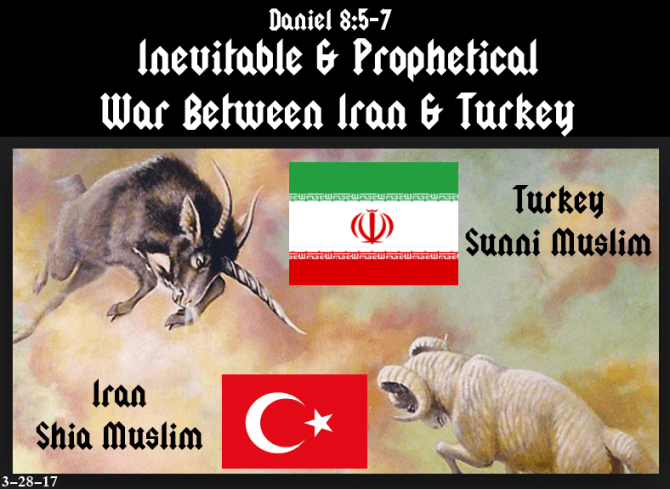
In a world that no longer fears God or even recognises His existence, it is fast approaching the time when God steps in and pours out His wrath upon an unrepentant world. Satan understands the time and he will do his utmost to maintain control of the world. God has revealed what he will do. He takes control of a human being and with supernatural acts presents himself as the saviour of the world: no wonder he is called the Antichrist. Many of the Biblical end times prophecies have been fulfilled, next to watch for is the Goat (Turkey) and Ram (Iran) war of Daniel 8.
Elon Musk just merged SpaceX with xAI, and Tesla may be next. This could be the biggest turning point in Tesla’s history.
Imagine Data Centres in Space, even on the moon, powered by solar ( 6 x more effective in space). Hence. solar power in space for energy on earth.
Jo Bhakdi is an economist and tech entrepreneur. He has a YouTube channel covering both Tesla and AGI. Check out his website and community at pioneerlands.org
What does this mean in terms of Biblical history. It is interesting to see this comment in the Book of Daniel where we find many end times prophecies.
“But you, Daniel, shut up the words and seal the book, until the time of the end. Many shall run to and fro, and knowledge shall increase.”Daniel 12:4
For Daniel this revelation must have seemed strange as there was no internet, or AI, or cars and planes back in Daniel’s day. But for us it makes good sense. Never before has knowledge increased to the extent it is today with AI. Along with the many other end times signs we can know we are in the last days before the prophesied return of Jesus takes place. Are you ready for what is next on God’s calendar for planet Earth: Jesus Millennial Kingdom. To get prepared can I suggest you go to http://www.millennialkingdom.net where you will find all the information you will need.
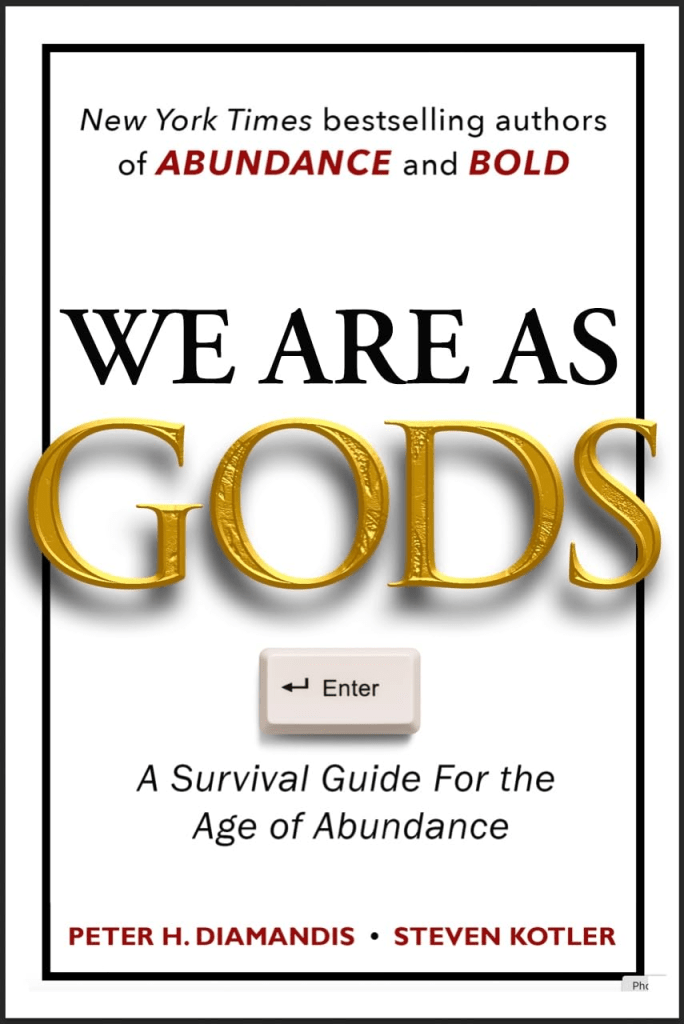
In 1968, Stewart Brand declared: ‘We are as gods – and we might as well get good at it.’ Half a century later, that prophecy has come true.
We can rewrite genes, edit embryos, build artificial minds, extend life, and terraform worlds. The old miracles – omniscience, omnipresence, even resurrection – are becoming standard operating procedure. But the real question isn’t whether humanity can play god. It’s whether we can do it wisely.
In this book, the bestselling authors of Abundance and Bold return with a sweeping exploration of our species’ next great transformation. Blending hard science with vivid storytelling, Peter Diamandis and Steven Kotler chart humanity’s ascent from scarcity to superabundance – and the psychological, ethical, and existential challenges that come with it.
Across breakthroughs in AI, robotics, genetics, longevity, and consciousness research, they reveal a paradox at the heart of progress: as our external power expands, our inner resilience must evolve to match. Abundance without meaning leads to collapse. Intelligence without wisdom leads to extinction. To thrive in a world of everything, everywhere, all the time, we must learn to wield our godlike powers with humility, creativity, and flow.
Equal parts warning and invitation, We Are As Gods is a map for flourishing in the exponential century. Because the future won’t be built by those who fear what’s coming, but by those who know how to turn chaos into creation.
Abundance is here. Are you ready?
This book “We Are As God’s” explains why Jesus will return shortly as the Bible prophecies. It says, “we can now rewrite genes, edit embryos, build artificial minds, extend life, and terraform worlds. The old miracles – omniscience, omnipresence, even resurrection – are becoming standard operating procedure. But the real question isn’t whether humanity can play god. It’s whether we can do it wisely.”
In this book, the bestselling authors of Abundance and Bold return with a sweeping exploration of our species’ next great transformation. Blending hard science with vivid storytelling, Peter Diamandis and Steven Kotler chart humanity’s ascent from scarcity to superabundance – and the psychological, ethical, and existential challenges that come with it.
Across breakthroughs in AI, robotics, genetics, longevity, and consciousness research, they reveal a paradox at the heart of progress: as our external power expands, our inner resilience must evolve to match. Abundance without meaning leads to collapse. Intelligence without wisdom leads to extinction. To thrive in a world of everything, everywhere, all the time, we must learn to wield our godlike powers with humility, creativity, and flow.
Equal parts warning and invitation, We Are As Gods is a map for flourishing in the exponential century. Because the future won’t be built by those who fear what’s coming, but by those who know how to turn chaos into creation.
This article by Peter Diamandis shows he is totally ignorant of God and His Word. God has shown us in His Word that we are fast approaching Jesus return to restore righteousness and fulfil the covenant He made with Abraham, Isaac and Jacob, The nation God established for His purposes Israel will finally fulfil its destiny when Jesus, Israel’s Messiah will rule the nations of the world from a newly constructed Jerusalem, Go to http://www.millennialkingdom.net for more information on Jesus Millennial Kingdom because it is next on God’s agenda for planet earth.
GPT 5.2 release will result in corporate collapse in 2026, and 1.1M job losses.CEO’s now need to consider that the jobs that most (up to 80%, maybe 90%) of their employees are doing can be done by generative AI.We are not at sentient AI as yet but computers can now learn from their mistakes.
AI and autonomous agents are taking on more and more roles. To support this new economic model, a new standard is being developed: Agent TCP/IP. This protocol enables agents to autonomously trade data, content, and proprietary knowledge, creating a decentralized knowledge economy. It allows agents to engage secure programmable transactions without human intermediaries, facilitating collaboration, trade, and resource sharing.
You need to watch Peter Diamandis (Moonshots) interview these three experts Dr. Alexander Wissner-Gross, a computer scientist and founder of Reified, Salim Ismail is the founder of OpenExO and Dave Blundin is the founder & GP of Link Ventures talk about the future of gen AI and jobs.
Chat GPT 5.2 beats humans at 11 times speed and 1% cost so job losses will escalate in 2026.
This is part of the Biblical prophesied chaos that will exist at the time Jesus returns to rescue Israel, the only nation that God established for His purposes. In order to complete the covenants God made with Abraham, Isaac, Jacob and David their Messiah, Jesus will rule the nations of the world from a magnificent new Jerusalem. To get prepared to rule and reign with Jesus in His coming Millennial Kingdom go to http://www.millennialkingdom.net.
When Elon Musk’s Grok AI was asked to scan every prayer in the Bible, people expected it to find contradictions and problems. But what happened next shocked both scientists and religious leaders. The AI discovered patterns that have been hidden for thousands of years. Patterns that change everything we thought we knew about prayer and faith. Let’s find out what Grok really found. In late 2023, Elon Musk’s company XAI launched Grok, a new artificial intelligence system. This wasn’t just another chatbot giving safe, boring answers. Grok was different. It had personality. It could access real-time information from X, formerly Twitter. Most importantly, it was built to tackle questions other AI systems avoided.
GROK Revealed Four Patterns of Prayer Content:
1. Acknowledges God’s character and faithfulness, righteousness and power.
2. Aligns with God’s purposes,
3. Trusts in God and surrender,
4. Persistence – pray, keep praying.
AI found other patterns in prayers including numerical, mathematical, etc. This can only be possible if Scripture is God ordained.
I am impressed with Grok 4 and its response to questions on Scripture. Go take a look for yourself. It is much better than Chat GPT.
What about prayer in Jesus coming Millennial Kingdom. Will people still pray with Jesus on earth. Yes they will continue to pray to God the Father in Jesus name as we do now. Go to http://www.millennialkingdom.netfor more on all aspects of Jesus coming Millennial Kingdom and be prepared to rule and reign with Jesus.
A silent revolution is unfolding inside Amazon—and it’s far more than a warehouse upgrade. Leaked internal documents reveal that the company plans to automate up to 75% of its operations by 2033, using robots like Cardinal, Blue Jay, Sparrow, and Robin to replace what would have been over 600,000 human jobs. The implications stretch across every sector of the American economy. In this video, you’ll uncover how Amazon’s robotic workforce is reshaping the meaning of employment, why businesses are prioritizing efficiency over labour, and what kinds of skills—and investments—will actually survive the coming automation wave. From AI-driven logistics to the rise of collaborative robotics, this isn’t science fiction; it’s the new economic reality unfolding in real time. You’ll also learn how artificial intelligence has accelerated Amazon’s transformation, why other corporations are preparing to follow, and what steps individuals can take to protect their financial and professional futures. The question isn’t if automation will replace jobs—it’s how fast it will happen, and who will be prepared when it does.
This is not only happening at Amazon, UPS has disclosed about 48,000 job cuts this year.
Governments that have rejected God have already descended into chaos on all fronts so this move by companies to shed jobs will only further heighten the mayhem. There is only one answer to the problem and that has been revealed to us in God’s Word. Jesus returns as king first to rescue His Saints and then to pour out His wrath upon an unrepentant world with the Trumpet and Bowl judgements of Revelation 8 & 16. The battle of Armageddon follows and then Jesus sets up His Millennial Kingdom. To prepare for Jesus coming Millennial Kingdom go to http://www.millennialkingdom.net
What should Christians think about AI? Artificial Intelligence is reshaping culture, business, education, and even the way we think about human identity. In this roundtable conversation, Sean McDowell talks with 3 Biola professors to explore how believers can navigate the rapidly changing world of AI with wisdom and clarity. This is an intriguing conversation that I am sure you will appreciate and learn from.
This is what is ahead says Jensen Hwang and Elon Musk and they are not wrong. Are we ready for this?
Elon Musk and Jensen Huang have officially joined forces in shaping the next era of AI dominance. NVIDIA’s new Blackwell chip isn’t just an upgrade—it’s a revolution, redefining what machines can learn, build, and become. Musk is betting Tesla’s future on it, investing in a million GPUs to power full self-driving and humanoid robots at scale. Huang, meanwhile, says we’re only scratching the surface. In this video, They break down how NVIDIA’s unstoppable hardware is fuelling Musk’s AI empire, how this alliance could reshape robotics and automation, and whether humanity is ready for the power they’re unleashing.
This is all leading to the Mark of the Beast when you will not be able to buy or sell without this mark. Think about it, Jesus disciple, John, in the book of Revelation revealed this over 2000 yearsago.
“Also it causes all, both small and great, both rich and poor, both free and slave, to be marked on the right hand or the forehead, so that no one can buy or sell unless he has the mark, that is, the name of the beast or the number of its name.” Revelation 16:16-17