
It seems that as America celebrates its 250th birthday, many Americans are rediscovering the faith of the Founding Fathers.
For decades, Americans have been told that the Founders were largely atheists, agnostics, or secularists determined to remove religion from public life. The claim appears in classrooms, media commentary, and popular culture. It has become so commonplace that many simply accept it as fact. The historical record says otherwise and it is being talked about.
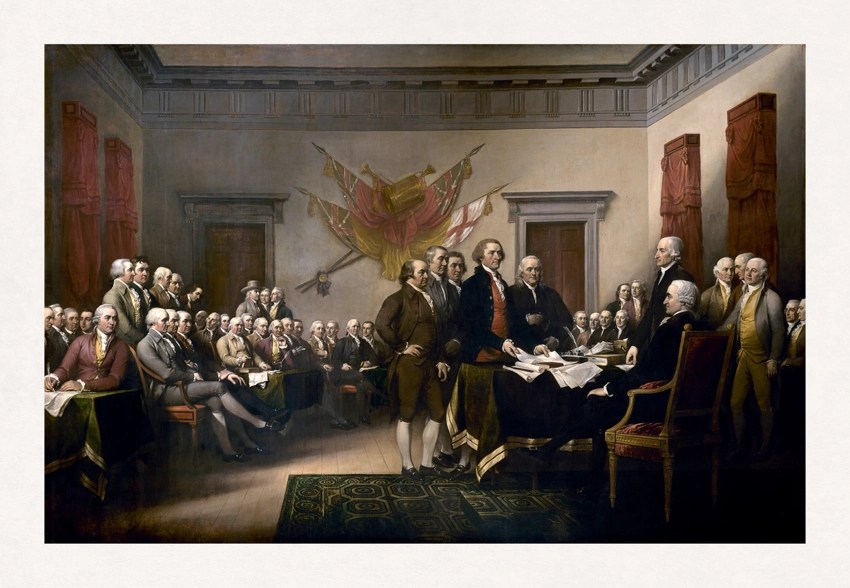
The Founders were not theological clones. They did not all share identical beliefs about Christ, salvation, the Trinity, or Scripture. Some would fit comfortably within orthodox Christianity today. Others would not. But what they shared was something equally profound. A soul-deep conviction that without God, the American experiment would fail.
Patrick Henry openly professed faith in Jesus Christ and declared that the Bible was worth more than all other books ever printed. Not some books. All books. Ever printed.
Samuel Adams spoke frequently of Christianity and believed public virtue rested upon biblical principles. He understood that a nation’s character begins not in its laws but in its homes, its churches, and its hearts.
John Jay, the first Chief Justice of the United States, was unapologetically Christian. He encouraged Americans to prefer Christian leaders and viewed the Christian faith not as one option among many but as the very foundation of a free and just society.
Roger Sherman, the only Founder to sign all four major founding documents, left behind a detailed statement of orthodox Christian belief affirming Christ’s divinity, atoning death, and resurrection. He signed his name to the birth of a nation and to his faith in Jesus Christ with equal conviction.
Yet other Founders held different views.
Thomas Jefferson admired Jesus deeply but rejected His divinity, miracles, and resurrection. Jefferson famously produced his own version of the Gospels, removing supernatural elements while preserving Christ’s moral teachings. He got the Teacher but missed the Savior.
John Adams believed strongly in God and Providence but rejected the doctrine of the Trinity.
Benjamin Franklin praised Jesus as one of the greatest moral teachers in history, though he expressed uncertainty regarding Christ’s divine nature.
George Washington remains perhaps the most debated figure of all. His writings are filled with references to Providence, prayer, and divine guidance. Yet he rarely spoke explicitly about Jesus Christ, leading historians to reach differing conclusions about the depth and nature of his personal theology. What emerges from the historical record is not a generation of atheists. What emerges is a generation on its knees. A generation that understood its dependence upon God, His providence, His blessing, and His guidance. A generation that understood something we have nearly forgotten. They believed rights came from God. They believed human beings were morally accountable. They believed liberty required virtue. They believed religion played an indispensable role in preserving self-government. And most importantly, they understood that freedom without God was not freedom at all — it was chaos waiting to happen.
Modern Americans often assume the Constitution alone protects liberty. The Founders understood something deeper. A constitution is merely words on paper unless the people themselves possess the character to sustain it. That conviction was rooted in a biblical understanding of human nature. The Founders knew government could restrain evil. They knew laws could punish wrongdoing. But they also knew neither government nor law could transform the human heart. Only God could do that.
And nowhere is this truth more beautifully, more powerfully, more unforgettably demonstrated than in one extraordinary moment in Philadelphia in the summer of 1787. The Constitutional Convention was failing. The men who had risked everything to birth a nation were watching that nation begin to fracture before their eyes. Weeks had passed. Tempers had flared. Progress had stalled. The greatest minds of a generation sat in that sweltering room unable to find their way forward. Then an old man rose to speak. Benjamin Franklin was 81 years old. His body was failing him. He would live only three more years. He was not an orthodox Christian. He had wrestled with theology his entire life. But in that moment, in that room, when the American experiment hung in the balance, Benjamin Franklin did not call for another committee. He did not propose another compromise. He did not appeal to reason or philosophy or the great thinkers of the Enlightenment. He called the room to prayer. He reminded those brilliant, exhausted, fractious men that during the darkest days of the Revolutionary War they had prayed for divine protection and guidance. And that God had answered. “And have we now forgotten that powerful Friend?” he asked. Then he quoted Scripture: “Except the Lord build the House, they labour in vain that build it.”
Read that again. Benjamin Franklin. The man whom skeptics most love to claim as their own. Standing before the greatest assembly of minds in American history. Quoting the Psalms. Calling a nation back to God. If that does not move you, read it again until it does.

