KNOWING GOD IS IN CONTROL

I am God, and there is none like me, declaring the end from the beginning and from ancient times things not yet done, saying, My counsel shall stand, and I will accomplish all my purpose. Isaiah 46:10

Sometimes, we need the reminder that God knows the future and can do what is humanly impossible. He knows what is eternally best in ways we cannot. God can see ultimate purposes and plans that we can’t. We also need to understand that God is in control.

Countries where the people once honoured God, recognising that “God was in Christ reconciling the world to Himself2 Corinthians 5:19, experienced unprecedented security and prosperity. These same countries today are crumbling as people turn their backs on God. ” Righteousness lifts up a nation, but sin is a shame to any people.” Proverbs 14:34.

As nations turn their backs on God, living as if He does not exist, sin abounds; political corruption, lying, slander, public displays of debauchery, violent crime, abortion, theft, adultery, drug taking, drunkenness, gambling, and greed of all kinds. Economic woes follow as taxes increase and governments borrow money to pay for bigger police forces, gaols, and social security systems to fix the problems. Underpinning this abandonment of faith in God is the widespread acceptance of evolutionary thinking – that everything made itself by natural processes and that God is not necessary. The complex design we see in the world designed itself. God says they are without excuse if they ignore the obvious.

For what can be known about God is plain to them, because God has shown it to them. For his invisible attributes, namely, his eternal power and divine nature, have been clearly perceived, ever since the creation of the world, in the things that have been made. So they are without excuse.Romans 1:19-20

Sadly, such thinking abounds in universities and governments today. As a result, some of the greatest evil ever seen perpetrated was by those who adopted an evolutionary approach to morality: Lenin, Hitler, Stalin, Mao Zedong, and Pol Pot. Many millions have suffered terribly and lost their lives because of this atheistic way of thinking. Atheism kills because, without God, there are no rules – anything goes. Atheists are at the forefront of efforts to legitimise abortion, euthanasia, drug taking, prostitution, pornography, and promiscuity. All these things cause misery, suffering, and death. Atheism is the philosophy of death, and it comes from the great deceiver, Satan, who is intent on our destruction.

The Bible reveals that God knew this would happen and that before Jesus returns to restore righteousness, His followers will be persecuted for His namesake.

Then they will deliver you up to tribulation and put you to death, and you will be hated by all nations for my name’s sake. And then many will fall away and betray one another and hate one another. And many false prophets will arise and lead many astray. And because lawlessness will be increased, the love of many will grow cold. But the one who endures to the end will be saved. And this gospel of the kingdom will be proclaimed throughout the whole world as a testimony to all nations, and then the end will come.Matthew 24:9-14

You need to be living eternal now, ready for Jesus’ return. My book is available on Amazon.

MUSLIM TURNED RIGHTS ACTIVIST AYAAN HIRSI ALI NOW A CHRISTIAN

Ayaan Hirsi Ali, a former Muslim and renowned critic of Islam, has revealed her conversion to Christianity, describing her journey from Islam to atheism and ultimately to Christianity.

On Nov. 11, 2024, activist and author Ayaan Hirsi Ali published an essay titled “Why I am Now a Christian.” Her declaration has understandably made waves. For 20 years, Ali has written, spoken, and acted as a committed atheist. Rejecting the Islamic teachings she was indoctrinated with during her teenage years, she has long argued for secularism as the needed lens for furthering humanity and countering the world’s evils so often perpetrated by religious dogma. Hence, her conversion to Christianity is not being well received by the media.

Ali grounds the explanation for her conversion on the usefulness of Christianity. I do not mean “useful” in a trite way, as one might find a spoon more helpful to eat soup than a fork. Ali sees the use of Christianity as fundamental on a societal and personal level. In this way, Ali grounds her turn to Christianity on the same principles that led her to reject God and organized religion. She now sees Christianity not as a foe to her cause but as a needed ally.

Hirsi Ali traces her initial disillusionment with Islam following the 9/11 terrorist attacks when she questioned the justifications for the attacks in the name of Islam. During her teenage years in Nairobi, Hirsi Ali says she was influenced by the Muslim Brotherhood, which instilled in her a strict interpretation of Islam.- This period was characterized by a strict adherence to religious practices and a deep-seated disdain for non-Muslims, particularly Jews. However, her later exposure to atheism through figures like Christopher Hitchens and Richard Dawkins provided a stark contrast to her previous beliefs.

Hirsi Ali attributes her turn to Christianity to a broader concern for the challenges facing Western civilization. She cites threats from authoritarian regimes, global Islamism, and “woke” ideology as catalysts for seeking a unifying force. Christianity, in her view, offers a foundation of values and traditions that uphold human life, freedom, and dignity, and counters the divisiveness she associates with atheism.

Responding to her embrace of the Christian faith, conservative Christian philosopher Dr. Robert George wrote on Facebook: “Two decades ago, under the influence of the writings of Bertrand Russell, she became an atheist. Her thought was that atheism was smart and sophisticated — it was allegedly what really intelligent people believed (the ‘brights,’ as Daniel Dennett embarrassingly labeled himself and his fellow unbelievers). It was the way to a world of rationality and civil liberty. Hirsi Ali is not the first to have gone down that misguided path. She now sees that it is indeed misguided and that there is, if I may quote scripture, a more excellent way.

Hirsi Ali’s embrace of Christianity also stems from a personal quest for spiritual solace and meaning in life.

Hirsi Ali critiques atheism as leaving a “God hole,” which she believes has led to the rise of irrational ideologies and the erosion of Western values. She argues that Christianity provides a unifying story and foundational texts, similar to those in Islam, that can engage and mobilize people.

Christians should be thankful for Ali’s essay. It no doubt took plenty of courage to make, given her past commitments and social circle. The author of this article Adam Carrington, an associate professor of politics at Hillsdale College made the following comment. “We also should exercise cautious support of her. She mentions at the end of her essay that “I still have a great deal to learn about Christianity. I discover a little more at church each Sunday.” Judging by her essay, she still might need guidance in seeing the centrality of grace in Christianity and how that grace is most manifest in the person and work of the Son of God, made flesh. Sometimes, those truths take time to know and to feel. In some sense, we spend our entire lives trying to rest in God’s grace, not save ourselves as is the normal human inclination.

But we also should be thankful that Ali sees the political and social goods of Christianity, historically and today. In its witness, we see the dignity of humanity made in the image of its Creator. In its doctrine, we see the need for politics that protects the innocent, punishes the guilty, and guards the right. In Christianity, we also see the need for mercy, not just from God, but with each other as neighbors and citizens.

That such commitments to dignity, law, and mercy seem obvious to so many of us is not the insight of secular humanism. Ali has joined us in seeing its origins in the God revealed in the Bible.

THE CASE FOR EASTER

The Case for Easter invites participants to examine the evidence for themselves and consider whether the story of Jesus’ resurrection makes sense. It will point them to the inescapable conclusion that led New York Times bestselling author Lee Strobel from atheism to Christianity: Jesus was the Son of God who conquered the grave

In his bestselling book The Case for Christ, Lee Strobel retraced his spiritual journey from atheism to faith by showing how the evidence he obtained from experts in the field of history, archaeology, and ancient manuscripts led him to the verdict that Jesus truly was the Son of God. Now, in this four-week study for Easter (DVD/digital downloads sold separately), Lee investigates the story surrounding the resurrection of Jesus—and how we can know that it is true.

In each session, he explores the following aspects of the Easter story:

What the Gospel accounts actually say about Jesus’ death and resurrection, how we can reconcile the discrepancies between the accounts, and how we can know the biblical accounts are accurate

How we can use a technique known as “five minimal facts”—facts on which even skeptical scholars agree are true—and medical evidence to build a strong case for Jesus’ resurrection

What the evidence in the Gospels reveals about the Jesus’ tomb being empty, why the Gospel writers are credible when they make this claim, and what this evidence leads us to conclude

Who the Bible states witnessed Jesus being alive after the crucifixion, how early creeds emerged that stated Jesus was alive, and how it’s clear the early church carried on this teaching.

The Case for Easter invites participants to examine the evidence for themselves and consider whether the story of Jesus’ resurrection makes sense. It will point them to the inescapable conclusion that led Lee from atheism to Christianity: Jesus was the Son of God who conquered the grave.

GOD EXISTS – SO WHAT?

The People who best articulate the answer to the “so what” question of God are the atheistic existentialist philosophers. Nietzsche had the courage to admit that the rejection of God ends in nihilism (existence is senseless and useless). Another, Jean-Paul Sartre, well describes existence without God with the chosen title of his book Nausea and the portrayal of life as “an empty bubble floating on a sea of nothingness”.

Sartre’s study partner, Albert Camus, tells us in “An Absurd Reasoning” (contained in The Myth of Sisyphus: And Other Essays) that a God-less life leads to there being “only one really serious philosophical question, and this is suicide. Judging whether life is or is not worth living amounts to answering the fundamental question of philosophy.” It’s what Daryl on The Walking Dead calls “opting out”.

Fred Hoyle, famous British mathematician and astronomer said “the probability of the formation of just one of the many proteins on which life depends is comparable to that of a solar system packed full of blind people randomly shuffling Rubik’s cubes all arriving at the solution at the same time” which of course is absurd. In fact, life without God is absurd.

Despite all of the above most people live their lives as if God does not exist. They do their best to live life on God’s planet, enjoying all that He has provided but not wanting to even know their Creator, in fear that they will not be able to “call the shots”, i.e., be God of their own little world. You only realise how sad this is when you know that our Creator loves us so much that He sent His Son, Jesus, to die in our place that we might be restored into a right relationship with our Heavenly Father.

For the wages of sin is death, but the free gift of God is eternal life in Christ Jesus our Lord.” Romans 6:23

For God so loved the world, that he gave his only Son, that whoever believes in him should not perish but have eternal life. For God did not send his Son into the world to condemn the world, but in order that the world might be saved through him. Whoever believes in him is not condemned, but whoever does not believe is condemned already, because he has not believed in the name of the only Son of God.” John 3:16-18

In their case the god of this world has blinded the minds of the unbelievers, to keep them from seeing the light of the gospel of the glory of Christ, who is the image of God. For what we proclaim is not ourselves, but Jesus Christ as Lord, with ourselves as your servants for Jesus’ sake. For God, who said, “Let light shine out of darkness,” has shone in our hearts to give the light of the knowledge of the glory of God in the face of Jesus Christ.2 Corinthians 4:4-6

Jesus said, “No one can come to me unless the Father who sent me draws him.” John 6:44.

Our first job: We need to pray that the unsaved we are connected to will be drawn by the Father.

Our second job: We need to pray that those that hear the Gospel will understand it. “When anyone hears the word of the kingdom and does not understand it, the evil one comes and snatches away what has been sown in his heart.” Matthew 13:19

Our third job: We need to pray that the eyes of unbelievers will be opened so they can see the light. Opening spiritual eyes is, of course, God’s business. But releasing God’s power to open blinded eyes is prayer business, to which God calls us.

REALITY OF MORAL LAW

God is the moral lawgiver and has declared there is a moral order that governs life. It is revealed in His Word to us – the Bible. He created us, so He has the authority to tell us how life should be lived. Moreover, He created us in His image to be in a love relationship with us. Consequently, He gave us free will to choose, to trust Him or reject Him. Sadly, our progenitors disobeyed Him resulting in a world separated from its Creator. Demonstrating the extent of His love for us, our Heavenly Father sent His Son, Jesus, to become one of us so that He could provide a way for us to get back into a right relationship with Him. Jesus made it possible for our Heavenly Father to send the Holy Spirit to indwell all believers so they can follow the road map (Bible) God provided so we don’t get lost.

Adam and Eve expelled from the Garden of Eden

However, it must be remembered, all have a conscience, a moral compass which ultimately keeps us from destroying ourselves.

“No society has ever survived or will ever survive without morality, and no morality has ever survived without a transcendent source.” C.S. Lewis, Six Essays on the Abolition of Man

Dr. George Mavrodes taught philosophy at the University of Michigan for thirty-three years. He said that though the reality of moral obligations might not be proof for the existence of God, it is very strong evidence for it. He said that if anyone believes in absolute moral obligations, this only makes sense in a world where God exists. He makes it clear that this is the only way to account for one of the most significant aspects of human life. He encourages people who might not believe in God to be open to the possibility that the theistic view of life is truer to reality.

“Most of the skeptics I have seen move toward faith later told me that it was around this issue of moral obligation that they first began to wonder whether their views really fit the actual world they lived in.” Dr Tim Keller, Making Sense of God

Friedrich Nietzsche, the philosopher who coined the phrase “God is dead,” clearly recognized the hypocrisy that existed among those who claimed to be atheists. He had great contempt for those who didn’t believe in God and yet still clung to a belief in truth, morality, love, and human dignity. Nietzsche attempted to practice atheism until the day he died. As Jean-Paul Sartre said, such a life is “a cruel and long-range affair,” a life where love, beauty, and meaning could not exist. Nietzsche eventually went insane, suffering from the horrors of syphilis and spending the balance of his rapidly declining life in an asylum.

If you have an atheistic worldview and you logically think through its implications, you cannot help but experience despair when you consider that life is purposeless. We are here by chance, and when we die we go into everlasting nothingness. This generally culminates in a life of emptiness.

Diverting the mind is much easier for us today, because of the breakneck, vastly accelerated speed of daily life. The frenzy of digital life allows so little time for introspection and reflection. We find we are subtly, insidiously encouraged to ignore the significant issues of life, particularly the issue of “meaning.” Without realizing it, we seek to divert our minds with work and pleasure, to keep us from having to think about the emptiness of life, knowing that one day this is all going to end.

Without God, life ultimately is absurd.

JOURNEYS TO FAITH FROM ATHEISM TO THEISM

Testimonies of atheists converting to Christianity are powerful, particularly of people like Antony Flew and C.S. Lewis. Both men were members of The Oxford Socratic Club, a student-led organization that was dedicated to providing an open forum for the discussion of the intellectual issues connected with religion and specifically Christianity. The club clearly had an impact on these intellectual giants who spent over a decade together adhering to the practice of Socrates—following the argument wherever it led. The members were committed to following the truth of all arguments, even if it led them in a direction that they did not want to go.

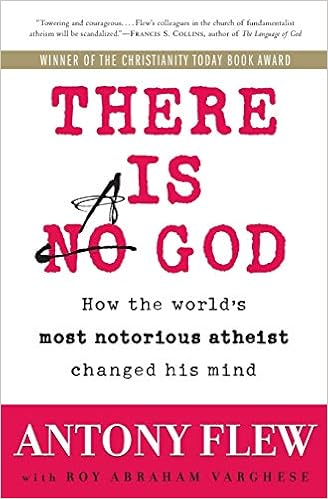
Most people do not know that British philosopher Antony Flew was one of the most celebrated atheists of the last 50 years. For five decades, he launched an aggressive attack on the existence of God. And then, in 2007, he stunned the world by announcing that he had changed his mind. He laid out his reasoning in his book There Is a God: How the World’s Most Notorious Atheist Changed His Mind. In the book he states:

“I now believe that the universe was brought into existence by an infinite intelligence. I believe that this universe’s intricate laws manifest what scientists have called the Mind of God. I believe that life and reproduction originate in a divine Source. Why do I believe this, given that I expounded and defended atheism for more than half a century? The short answer is this: This is the world picture, as I see it, that has emerged from modern science.”

At a symposium at New York University, Flew shared some controversial thoughts:

“What I think the DNA material has done is that it has shown, by the almost unbelievable complexity of the arrangements which are needed to produce life, that intelligence must have been involved in getting these extraordinarily diverse elements to work together.” When asked how his atheist friends responded, he said: “I have been denounced by my fellow unbelievers for stupidity, betrayal, senility, and everything you could think of, and none of them have read a word that I have ever written.”

In the end, Antony Flew’s mind was changed because of the principled practice he followed all of his life: follow the truth wherever it leads. It seems quite logical that if we do not have a great love of truth, we most certainly will never find it

C.S. Lewis is among the most influential writers of the twentieth century. Many people are somewhat surprised to learn that Lewis, who was dutifully raised in a traditional Christian household in Ireland, actually became an avowed atheist in his early teens while attending public school at the prestigious Malvern College in England. It would be years later, after World War I, and well into his years at Oxford University, before he began his great search for a deeper and richer understanding of God’s existence.

Lewis writes that there were two events in his life that ultimately led him to the Christian faith. The first step began when he read G.K. Chesterton’s book The Everlasting Man, and the second, he has written, had a “shattering impact” on him. This event occurred one night, when one of the more militant atheists on the Oxford faculty staff, a man by the name of T.D. Weldon, came to his room and confided that he believed the historical authenticity of the Gospels appeared to be surprisingly sound.

Weldon’s remarks about the historical authenticity of the Gospels wouldn’t let him rest, as the conversation echoed in his memory and continued to haunt him. So, Lewis, a determined seeker of truth, began an investigation.

As a professor of English literature at Oxford, he had spent his entire professional life studying ancient manuscripts. And though, up to that time, he had never seriously read the Bible, he nonetheless considered it to be one of the world’s great myths, like Norse mythology. The Gospels, Lewis noted, didn’t contain the rich, imaginative writing techniques of most ancient writings. With a literary critic’s ear for language and meter, Lewis recognized that the New Testament didn’t contain the stylized and carefully groomed qualities one would expect in any myth-making culture.

Lewis writes:

“[The Gospels] appeared to be simple, eye-witness accounts of historical events primarily by Jews who were clearly unfamiliar with the great myths of the pagan world around them…I was by now too experienced in literary criticism to regard the Gospels as myth. They had not the mythological taste.”

This image has an empty alt attribute; its file name is 41dk4A7YaOL._SX330_BO1,204,203,200_.jpg

Lewis continues, emphasizing that the Gospels were different from anything else he had ever read in ancient literature.

“Now, as a literary historian, I am perfectly convinced that whatever else the Gospels are, they are not legends. I have read many legends and am quite clear that they are not the same sort of thing. They are not artistic enough to be legends. From an imaginative point of view, they are clumsy; they don’t work. Most of the life of Jesus is totally unknown to us and no people building up a legend would allow that to be so.

Here we have this brilliant man, C.S. Lewis, an expert in ancient literature, a man of integrity and great education, who for so many years had dismissed the Gospels—the most influential body of writing in the Western world—simply because they sounded so unconvincing and without merit.

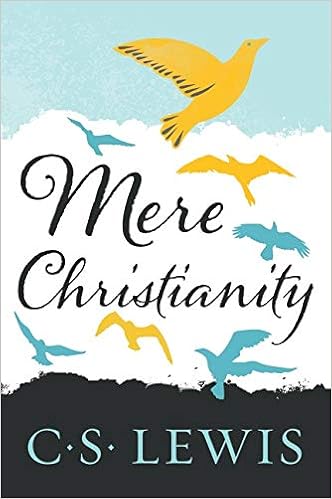
C.S Lewis books such as The Case for Christianity and Mere Christianity have done much to impact the world for Christ and will continue to do so.

ATHEIST RICHARD DAWKINS SAYS WITHOUT GOD WORLD WOULD BE LESS MORAL

Richard Dawkins, one of the world’s most famous atheists, has admitted that eliminating God from the public consciousness would pose huge problems.  Dawkins insisted that if religion were to be abolished, it would “give people a license to do really bad things.”  The Oxford University fellow said that, without the presence of a higher being, “people may feel free to do bad things because they feel God is no longer watching them.”  Dawkins warned that people would feel entitled to do what they like because they no longer need to obey a “divine spy in the sky reading their every thought,”, a description he often uses for an omnipresent God.

Dawkins – eliminating God from the public consciousness would pose huge problems

Dawkins told of an experiment he came across which intended to find out whether people would be “good” if they felt someone was watching. He concluded from the results that “it seems plausible that, if somebody sincerely believes God is watching his every move, he might be more likely to be good.”  “I hate that idea,” Dawkins added.  “I want to believe that humans are better than that and would be honest whether anyone was watching or not.” 

In response creationist Ken Ham, said, “Dawkins has spent his life fighting God, but still recognises that atheism doesn’t provide a foundation for morality.”  “Without a biblical foundation, anything goes,” Ham added.  “Who determines what is right or wrong?  Everyone does what’s right in their own eyes.  Dawkins is admitting that atheism is totally morally bankrupt.”

The Bible tells us how to get wisdom and understanding. The benefits thereof and the danger of not doing so:

The fear of the Lord is the beginning of wisdom; a good understanding have all those who do His commandments.Psalms 111:19

“The Lord is my light and my salvation; whom shall I fear?
The Lord is the strength of my life; of whom shall I be afraid?” Psalms 27:1

“Oh, fear the Lord, you His saints! There is no want to those who fear Him.” Psalms 34:9

“Do not be wise in your own eyes; fear the Lord and depart from evil.
It will be health to your flesh, and strength to your bones.” Proverbs 3:7-8

“An oracle within my heart concerning the transgression of the wicked:
There is no fear of God before his eyes… the words of his mouth are wickedness and deceit; he has ceased to be wise and to do good.” Psalms 36:1-1

“The fear of man brings a snare, but whoever trusts in the Lord shall be safe.” Proverbs 29:25

“And do not fear those who kill the body but cannot kill the soul. But rather fear God who is able to destroy both soul and body in hell.” Matthew 10:28

ARE YOU A FOOL LIKE ME?

Great Easter message. Pass it on

Bill Sweeney's avatarUnshakable Hope

I’m sure it’s the little boy still hiding in my 57-year-old paralyzed body, but I enjoy trying to pull off a good April Fools Day joke on Mary. In our thirty-two years of marriage, I probably have a 75% success rate.

It can be a real challenge to carry out a successful April fools joke with ALS because I can’t speak so I have to attempt to fool her via email or using my computer’s (no inflection) robot voice (the only “voice” I’ve had for the last twenty years).

As I’m sure you know, April Fools Day and Easter (the day we celebrate Christ’s resurrection from the dead) fall on the same day this year. The two have not fallen on the same day since 1956.

Are Christians foolsfor believing that Christ was literally raised from the dead?

Atheists, agnostics and those of other faiths, believe it…

View original post 721 more words

DANIELS – GOD’S IRRELEVANT IN VICTORIA

Slavery to atheistic dogma rife in Victoria

Religious liberty is all very well and all that, but it has its limits in Victoria’s state schools where principals are bound by Ministerial Direction 145.

The determination allows faith-based religious instruction at the principal’s discretion providing no child attends for more than 30 minutes a week, and then only in the lunch break or in the hour before or after school. Parents must complete form CD145 — available in 15 languages — to give consent.

Instructors must be referred to as instructors or special instructors, never as teachers. Teaching material cannot be described as “curriculum” and may only be referred to as “materials” or “program materials”.

The Safe Schools program is different. There is no parental red tape to navigate since Safe School classes are compulsory and will be conducted in every state school by next year.

In summary, parents must apply to have kids study the Biblical canon, but they don’t get asked if they’d like their kids to study OMG I’m Queer, OMG I’m Trans, Gayby Baby, or anything else included in the School Action Toolkit “that explores family diversity in a fun & insightful way”. Principals don’t ask parents, they consult an amorphous entity that the Department of Education calls “the broader school community”. OMG indeed.

For a glimpse of what a Bill Shorten prime ministership may entail, head to his home state of Victoria where Daniel Andrews’s track record reads like “a wish list for progressives”, according to one fan writing in the Huffington Post, an online journal for readers who find The Age too conservative.

“Australian-first program of medical cannabis? Check,” writes the fan. “A $572 million package for domestic violence, more money even than the federal government spends nationwide? Check. An Australia-first LGBTI ‘pride centre’ and specific gender-diverse health services? Check.”

The OMG list gets worse. ­“Directly defying Canberra and standing in opposition to cutting funding for LGBTI education program, the Safe Schools Coalition? Check. A huge increase to legal services for asylum-seekers? Check.”

As Paul Kelly reminded us on these pages last weekend, the Andrews government now wants to legalise what it delicately calls “voluntary assisted dying”. Putting poor old Grandpa out of his misery? Check.

Andrews is undoubtedly the most hardline, ideological, left-wing premier to assume office in this or any other state. As Liberal MP Bernie Finn said recently: “This bloke makes Joan Kirner look like a softie.”

A half-century ago Gough Whitlam flew to Melbourne to tell the state’s left faction they were behaving like a bunch of losers.

“We construct a philosophy of failure, which finds in defeat a form of justification and a proof of the purity of our principles,” he told them, raising his voice above the jeers and catcalls. “Certainly the impotent are pure.”

Whitlam was Labor’s first leader to hold a university degree, a handicap many assumed disqualified him from the job. Today the party is full of them, but sadly few have the learning of Whitlam, who graduated long before the education was dumbed down.

Today Whitlam would probably be scratching his head and wondering how it came to pass that a morally vain extremist such as Andrews, armed with the soft-headed philosophy of cultural inclusion, could ever have been elected in the first place, let alone be seen as a serious contender in the polls next year.

Andrews has achieved the seemingly impossible in reconciling the sensitivities of the sophisticates with the day-to-day anxieties of the masses.

He has an army of media minders to run a virtual newsroom, turning out dozens of asinine press releases weekly, whistling to both audiences.

On one hand they are steeped in symbolic concern about the vulnerable, pledged to give a voice to the voiceless, dedicated to restoring fairness and promise to make Victoria a safe place.

On the other hand they boast of jobs precincts, better kindergartens, new school buildings, level-crossing and road improvements, addressing the practical concerns in the regions and outer suburbs.

Meanwhile his government panders to activism by handing out thousands of grants, large and small, to community organisers of every stripe. It pays for the Australian GLBTIQ Multicultural Council’s Multicultural Dinner, hands over a lazy half-mill to LGBTI support groups to counsel LGBTI Victorians disturbed by a plebiscite, and chucks money at the Feminist Writers Festival in recognition of its “important role in challenging sexism and gender stereotypes, and fostering cultural change”.

It embarks on “a creative new approach to reduce homophobia” by subsidising the development of “an engaging digital app that will give players of all ages insights into the experiences of LGBTI people and the prejudices and discrimination they can face”.

The government funds Literacy Leader Induction Workshops to provide every government primary school with “a trained literacy leader”. Just one, apparently, but it’s a start.

And so in countless feel-good ways, announced in countless fawning press releases, the Andrews government funds a growing bullshit industry, employing countless professional do-gooders in meaningless bullshit jobs.

When Andrews boasts of the jobs he has created, he neglects to mention that the taxpayer is paying for most of them. The growth in education, health, welfare and much heavy construction is funded by the state. But when your only work experience is in politics, that probably doesn’t matter.

At best the bullshit industry is merely ineffective, but we suspect the moral harm is worse. The application of identity politics, the constant affirmation of diversity and the pleas on behalf of the vulnerable feed a culture of complaint and entitlement. It erodes the personal virtues of prudence, fortitude and courage by outsourcing responsibility for individual destiny to the machinery of state.

It is customary for outgoing Labour governments to leave a fiscal deficit on the doormat. The moral deficit Andrews is likely to leave behind will be altogether harder to clean up.

Nick Cater is executive director of the Menzies Research Centre.

BETSY DE VOS APPOINTED EDUCATION SECRETARY

With the election of Betsy DeVos as Education Secretary, there is NO doubt now, that Trump is God’s man to bring Him back into the Nation’s life and hopefully make what is on their currency “In God We Trust” meaningful.

betsydevos_si

Rev. Robert Sirico, the founder of the Grand Rapids-based Acton Institute and a long-time DeVos family friend, describes her as a “solid evangelical Christian” who is active in her church and “orthodox in her beliefs and personal commitment to Jesus Christ.”

John Booy, another long-time friend, told CBN News that DeVos integrates her faith into all areas of her life and that it’s led her to a “deep sensitivity to those who have not had the privilege she’s grown up with.”

DeVos and her husband Dick DeVos spoke at a 2001 Christian philanthropic gathering about their faith.  She described a desire to be active in education to influence the culture and help “advance God’s kingdom.”

Dick DeVos spoke about wanting to drive better performance across all education.  “Our Christian worldview, which for us comes from a Calvinist tradition, which is to be very much a part of the world and to provide for a greater opportunity, a more expanded opportunity someday for all parents to be able to educate their children in a school that reflects their worldview,” he said.

Booy is principal at the Potter’s House, a Christian K-12 school in Grand Rapids.  DeVos has actively supported the school for years and Booy says she became passionate about reforming education while meeting parents there.  The school opened in 1981 to provide a choice for families in the low-income neighbourhood surrounding it.  At the time, their public school ranked third-lowest in the state.

Ingersoll, the University of North Florida scholar, says that “it’s a long-standing goal of the religious right to dismantle public education” and that religious conservatives like DeVos “don’t see public schools as religiously neutral.” If an education is not Christian, then it is anti-Christian. This is a view, she suggests, DeVos shares with Mike Pence, the religiously conservative vice president, who is expected by some to have Dick Cheney-level influence in the Trump administration. Moreover, it is a view that can’t be ignored. Creation cannot be taught in public schools only evolution which is also teaching children atheism.

This is just one more Christian appointed by Trump to high office in government.