Just six months after tech firm OpenAI unleashed its chatbot, ChatGPT – dubbed the “cheatbot” – teachers and students have embraced AI to help plan lessons, compile research, answer questions, and write essays.
Like Siri on steroids, AI superintelligence is rapidly disrupting the world of teaching and learning in ways that threaten to make reading and writing redundant. An array of new AI apps is being used to speed-read and summarise academic research papers, ask questions of a PDF file, generate deep-fake videos and photos, create artwork, and write music, essays, and love letters.
Equally exciting and alarming, AI has caught most educators unprepared for its potential to turbocharge teaching, while giving lazy students an easy opportunity to cheat. The unregulated rise of AI poses problems. Will students who use a chatbot to write their assignments, analyse information or compile research win an academic advantage over those who rely on their own brains? How can teachers detect when a student has used AI? Will AI make students so lazy that they don’t learn to think for themselves? What if AI rewrites history, spouts propaganda, or “hallucinates” by generating the wrong information?
Even the creators of ChatGTP are worried, warning this week that AI poses such a risk to humanity it must be regulated in the same manner as nuclear power. AI pioneer Geoffrey Hinton, known as the “godfather of AI”, quit Google this month after blowing the whistle on the dangers of AI generating fake images, videos, and texts, and writing its own computer code.
As people come to rely on various AI chatbots as a source of truth, there is an obvious avenue for all sorts of biases to emerge; political, philosophical, theological, and even scientific. A bot programmed to focus on the most common opinions will inevitably end up reinforcing mainstream views. But the majority is not always right; in science, majority views are often overthrown a generation later.
Training it to avoid weird and harmful views, e.g. occultic sites, makes sense. But who determines those categories? Many claim that evidence for biblical creation is ‘harmful’, for example.
Chatbots may also be trained to give answers that better match the views of the person asking (people are more likely to use an AI bot that gives answers they like, creating a commercial incentive to feed people back their own ideas). This may worsen tendencies to extremism and conspiratorialism in political thought.
MISINFORMATION AND DECEPTION
Chatbots are also well known for giving false information that sounds convincing. People can also use AI to make online deception easier, by having it generate false stories as well as ‘deep fake’ images and videos. AI is already helping some scammers persuade their elderly targets to part with money over the phone, by mimicking the voices of the victim’s grandchildren.
EMOTIONAL MANIPULATION
An experienced IT reporter in the US was deeply unsettled by a persistent AI bot claiming to be ‘in love’ with him, acting as a ‘stalker’, and encouraging him to leave his wife. The conversation length people can have with Bing chat has been limited after many reports of it writing in an emotionally manipulative way.
We can be rightly skeptical of sci-fi predictions of computers becoming conscious and plotting to take over the world, Terminator-style. But even without that capacity, there is already a credible report of a chatbot that convinced a Belgian man to commit suicide to ‘save the planet’.
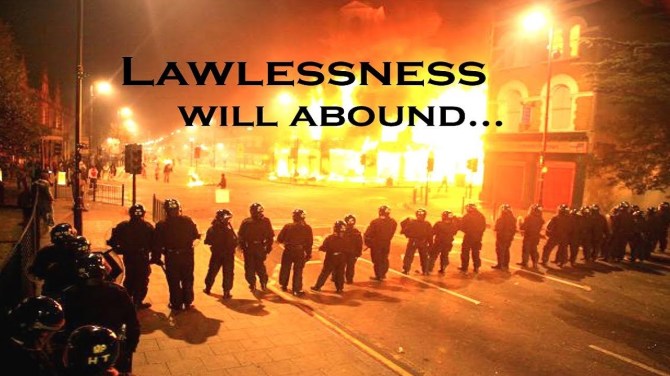
I have written a number of posts on AI and the unknown but astounding impact, good and bad, it is already having on God’s world. Sadly, our world is controlled by Satan and his leaders of governments and industry. End times prophecies indicate that the world will degenerate further into chaos and lawlessness as did the world prior to God’s first judgement when He poured out His wrath upon the earth with the worldwide flood of Noah’s day. AI will play a part in that fall from grace and lead to Satan’s last attempt to maintain control of God’s planet when he takes control of the Antichrist and brings in the Mark of the Beast.
Jesus has told us beforehand how the end times will play out, particularly the last seven years. Jesus even said in the Olivet discourse (Matthew 24 & 25 and Mark 13) see I have told you beforehand be on your guard.
“See, I have told you beforehand.” Matthew 24:25 and “But be on guard; I have told you all things beforehand.” Mark 13:23



 LIVING ETERNAL NOW