George Barna, a leading expert in church and worldview trends, has weighed in on some of the biggest issues facing the Church, including the steady decrease in a biblical worldview and dwindling concern for spiritual formation, which results in “Christian invisibility” in our culture.
Bible Colleges and seminaries set young ministry leaders up for failure. “You get what you measure,” George Barna contended. “So, if you measure the wrong things, you’ll get the wrong outcomes … pastors measure how many people show up, how much money they raise, how many programs they offer, how many staff persons they hire, how much square footage they built out. Jesus didn’t die for any of that. “If we were to go back to the Bible, I think we’d recognise the local church, the institutional church, as we’ve created it, is man-made. It’s not in the Scriptures,” he said.
Barna says, “We need to go back and recognise that it starts with families; parents have the primary responsibility to raise their children to become spiritual champions. Local churches need to support parents in that endeavour. Our primary focus needs to be on children … and growing their biblical worldview. If we do that, we’ll be able to increase the 3 per cent of adults who are disciples in America today to a larger proportion.”
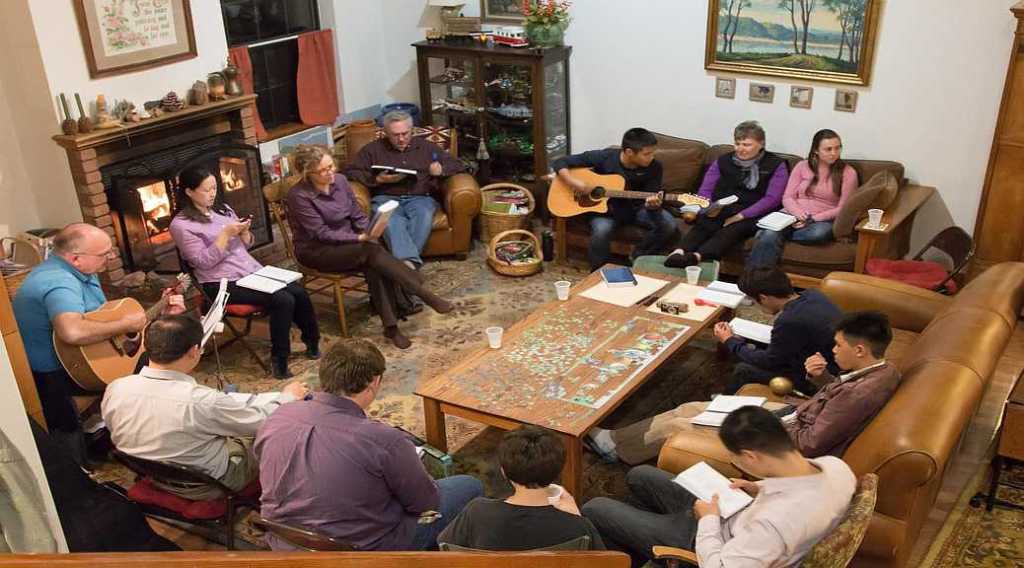
I would also suggest that the church return to the church as described in the Book of Acts. Francis Chan got it right when he walked away from his church of 5000 to establish house churches where everybody is trained to be disciples to preach the good news of the Gospel.
Barna warns the church is at a critical juncture, and the path to a thriving Christian community lies in returning to the core biblical principles, the empowerment of parents as spiritual leaders and the intentional discipling of the next generation. “All the other stuff is noise,” he said. “If we don’t do those things, we’re going to lose even more in this war … this is our moment, we’ve reached a time of Christian invisibility in our culture. What I’m seeing now is that we’re getting to this place where the typical American … will not have anyone in their circle of influence who has a biblical worldview. You’re not going to be influenced by God’s truth.
The Church, as the body of Christ, is called to be a city on a hill, a light to the nations, and the pillar of truth in a world darkened by sin. However, many denominational/institutional churches have compromised with the world on sexuality, marriage, and gender. They are the apostate church Jesus described in the Olivet Discourse as the end-times church. They are not the church God intended, as described in the Book of Acts.
The Early Church Was Hospitable
People were not only giving their resources or money but were joyfully opening their homes to hold gatherings and share meals. Church didn’t have a specific time or place, it simply was whenever the believers were together; at home or at the temple, at the dining table, or resting in the living room. They shared their lives, their homes, their food, and their time—and they did it all with glad and generous hearts. “And day by day, attending the temple together and breaking bread in their homes, they received their food with glad and generous hearts.” Acts 2:46
The Early Church Was Sacrificial
From their closeness and love for one another, flowed unselfishness that blessed all the church members. People were valued over money or social standing and through the church, the Lord met all the needs of the poor and needy members. They were loved and cherished to the glory of God.
“And they were selling their possessions and belongings and distributing the proceeds to all, as any had need.” Acts 2:45
The Early Church Was Joyful
And do you know what the result of living like that was? Joy. A natural, God-given, outpouring of joy. Joy despite persecution, joy despite ridicule. God gave His early church joy. They never stopped praising Him.
“And day by day, attending the temple together and breaking bread in their homes, they received their food with glad and generous hearts, praising God and having favor with all the people. And the Lord added to their number day by day those who were being saved.” Acts 2:46-47
The Early Church Was Expanding
This radical, miraculous, and joyful lifestyle got the attention of many outsiders, and God, in His goodness, saved many during this time in church history.
The Early Church Was Gospel-Cantered
The church was made up of people who shared one very specific belief: Jesus is the way, the truth, and the life—no one comes to the Father except through Him (John 14:6). You were not part of the church unless you accepted that salvation is through Christ’s life, His death, and resurrection alone and declared this faith publicly by baptism (being fully submerged in water and then raised out again). Their unity in Christ united them as a group.
“And Peter said to them, “Repent and be baptized every one of you in the name of Jesus Christ for the forgiveness of your sins, and you will receive the gift of the Holy Spirit.” So those who received his word were baptized, and there were added that day about three thousand souls.”Acts 2:38.41
The Early Church Was Devoted to Learning God’s Word
The early church was excited about their salvation and ready to live lives that honored God, so they devoted themselves to the teaching of the apostles. They didn’t have the fully revealed Word of God the way we do today. They were taught from the Old Testament scrolls and from sermons and letters written and sent around by the apostles. This was a trait that continued until it led to the Reformation.
“And they devoted themselves to the apostles’ teaching and the fellowship, to the breaking of bread and the prayers“. Acts 2:42
The Early Church Was Diverse
This doesn’t seem very profound today, but we must remember that in Bible times, your culture and geographical position largely influenced who and how you worshipped. Until the beginning of the church, that is! Suddenly, at Pentecost, people from all regions with varied languages experienced the miracle of the Holy Spirit who enabled them to understand and speak in different languages that they might hear the gospel and believe. Many were then united in their faith in Jesus Christ. What a great reminder that the gospel is for all people; every tribe, tongue, and nation. The early church was certainly diverse (Acts 2:9-11)!
The Early Church Was United
Something that really stands out about the early church is their intentional devotion to one another. The gospel not only saved their eternal lives (souls) but also drastically changed their everyday, earthly lives, and relationships too! There were no isolated groups within the church, there was no room for pretenders and hypocrisy, they were physically and emotionally close and shared everything they had with each other.
“And all who believed were together and had all things in common.” Acts 2:44
The Early Church: a Reminder for Today’s Christians
As Christians, we are to love God, hold fast to His Word, and serve each other with the same zeal and love that the first Christians had for each other. We’re quick to get comfortable in our neat, quiet lives but the gospel calls us to step out, love hard, make sacrifices, and share ourselves with others. We are His church, He has called us. And He will meet our needs as we serve Him and seek to edify our own churches, particularly in our region, city and nation.
How will you respond?
“This is my commandment, that you love one another as I have loved you. Greater love has no one than this, that someone lay down his life for his friends.” John 5:12-13
Returning to a no-frills practice of following Jesus will be good for all of us. We will remember what our faith is all about. This is why in the last days before Jesus returns He needs to purify His church. Apostasy in denominational churches is rife as demonstrated by the acceptance of gay marriage and homosexual pastors. They no longer believe in the inerrancy of God’s Word. Like the world, they have been caught up in the evolutionary myth of billions of years of Earth’s history. They no longer believe that God judged mankind with the worldwide flood of Noah’s day and yet it is the only explanation for the existence of billions of dead things buried quickly all over the world, including the fossil fuels: coal, oil, and natural gas (the result of buried forests). They have discounted both Noah’s flood and the short timescale of Scripture determined by Genesis 1-11. When you study geology from a biblical standpoint and use the geological model of the Flood to connect the real-world observations of geology you discover it is superior to the prevailing old-earth frameworks in explaining the data. (Biblical Geology 101 by Michael Oard and Robert Carter 2021).
An exciting training development, one which could help us prepare for church without buildings, has gained great popularity in the body of Christ over the past several years by readying people for possible service on the mission field, particularly among Muslims. TOAG, or “Training Ordinary Apprentices to Go,” (Global Mobilisation Network). It seeks to teach people to “do church” in small group settings, away from large worship gatherings that will not be available abroad. Participants spend ten months learning how to reach unreached people groups and develop an authentic community in a small group setting. Families with children are welcomed in, and future workers for Christ are much better prepared than earlier generations of believers. I’ve heard from a few that have participated in TOAG that it is difficult, yet rewarding. The method’s founders state the goal of the training: During TOAG, interns learn to be a Kingdom Community without including Western structures that often hinder movements. They experience life in community with other interns, something more akin to the Book of Acts. By taking them out of present ecclesiastical structures, which include powerful (& professional) music, well-crafted homilies (by highly trained professionals) in safe, comfortable surroundings (expensive buildings), interns experience first-hand what is and is not required for believers to be a ‘Kingdom-Community,’ experimenting with simple, organic structures capable of sharing the life-changing power of God’s Kingdom and reproducing into movements. … These are just some of the reasons why many Americans benefit from the hands-on learning experience of TOAG.
We need to prepare for the prophesied persecution that is coming and expect God to grow us through it as never before. Literally, millions of Christians around the world can testify to this truth, as Paul testified clearly in this Scripture.
“We also glory in our sufferings, because we know that suffering produces perseverance; perseverance, character; and character, hope. And hope does not put us to shame, because God’s love has been poured out into our hearts through the Holy Spirit, who has been given to us.” Romans 5:3-5:
Whether you use TOAG or some other training method you need to get with like-minded believers who understand the times and get into step with what God is calling us to do in these last days to make sure we complete the Great Commission in the community where God has placed us.
Check out http://www.lastdaysovercomer.org for the free ebook Prepare for the Last Days – Fulfilling God’s Purposes at the End of the Age.
The Holy Spirit is setting a fire under the believers in the rural areas of Kenya. I have been connected to the Kenya House Church Movement for about 4 years now and have seen it grow from six house churches to twenty-one. Moreover, I met with most of the leaders in April of this year in Migori, Kenya for a three-day training meeting. I reported on it in an earlier post.
Pastor Charles Otieno Owino, the leader of the KHC, is on the far left. All of the leaders received a copy of my latest book Living Eternal Now – Ready for Jesus Return. Some are holding it.
This post will help you understand the task ahead for the church in Kenya. As well, I have included pictures taken of meetings at some of the new house churches by way of inspiration which I hope will encourage some of my followers to join me in funding this work. I have put a DONATIONS icon on my Home Page for this purpose.
Buembu House ChurchBondo House ChurchNyarombo House ChurchNyarombo house church. Believers are praying after hearing the gospel message. They are not sleeping.Great teaching on the early church from the Book of Acts which is serving as the model on which the KHC movement is built.
As narrated in the Book of Acts, the New Testament Church is both a prescriptive and descriptive account that illustrates a pattern for contemporary congregations.
The following are 7 essentials the contemporary church must embrace for missional movement.
Acts 1 shows how 120 disciples of Jesus spent 10 days together in prayer, comparing Scripture and making leadership decisions. This ensured that the foundation of the burgeoning movement would be secure. Their goal was to work towards oneness as it related to the understanding and preaching of the Good News of the Messiah.
Without this period of waiting upon God and reflection, the massive spontaneous addition of 3,000 people after Peter’s first sermon could have resulted in chaos and destroyed the movement. The contemporary Church must take adequate time every season to wait upon God in prayer and biblical reflection in order to be ready for the Gospel’s movement.
Acts 2:42 says that immediately after the Day of Pentecost, the believers devoted themselves to the apostles’ doctrine, to the fellowship, to the breaking of bread, and to prayer. Visitors to Jerusalem that converted, abandoned plans to go back to their homeland so they could sit under the apostles’ teaching.
This apostolic doctrine shaped their social gatherings, common meals, and corporate prayer. Without this, the activities of the Church would have been based upon subjective experiences and opinions of gatherers. The contemporary Church must also establish believers in the first principles of the faith if they are going to experience a prolific Gospel movement.
Acts 5:1-12 relay the narrative of the judgment upon Ananias and Saphira.
This illustrates how the standard of holiness and the fear of the Lord must be maintained to ensure the health of the Church. If God allowed them to continue lying, manipulating, and receiving honor deceptively through giving gifts (which amounts to dirty politics), it would have spread like yeast and eventually would have corrupted the Church.
It is not an accident that God began to do extraordinary miracles as soon as this couple was removed from the Church (Acts 5:12-14). The contemporary Church must understand that we limit the capacity for God to move through us whenever we allow unbiblical standards to permeate our Church.
Acts 6:1-7 Almost immediately after the birth of the Jesus movement, ethnic sectarianism and bias reared their ugly head. This took place when the Greek-speaking widows were being overlooked when food was being distributed. Peter had enough wisdom to appoint 7 men of integrity and wisdom who would oversee this ministry, resulting in every widow’s needs being met, the Word of God spreading, and the number of disciples multiplying.
Acts 7:54-60 The martyrdom of Stephen, demonstrates an amazing pattern for us to follow in the contemporary church. God cannot bless a Gospel movement if the saints are unwilling to give their lives to advance His kingdom. Even Paul said that he was always given over to death so that the life of Christ might manifest through him (2 Corinthians 4:11). A contemporary church filled with people who only gather to have their felt needs met will never advance the Gospel. Jesus said we would have power after the Spirit comes upon us to be His witnesses. The word witness comes from the word martyr. Hence, a faithful witness overcomes the enemy when he is not willing to shrink from death (Revelations 12:11).
Acts 7:58, 8:8 The early Church did not skip a beat but continued to thrive after mass persecution broke out against them. Even though they were forced out of their homes and lost everything, their mind was on spreading the Gospel! Wherever they were scattered, they preached the Word. This resulted in major churches being planted in the cities of Samaria and Antioch and resulted in their chief antagonist, Saul, being converted and becoming the greatest of the apostles. The contemporary Church must persevere amid persecution (similar to the powerful Gospel movement we see today through the persecuted churches in Iran, China, and India).
Acts 13:1-2 Instead of being bogged down with endless church committees and deliberations, the Antioch church elders spent adequate time ministering to the Lord and fasting. Giving God space to move upon them, released a divine strategy that changed the entire world. The contemporary Church must also prioritize seeking the Lord and waiting for the strategic Spirit to illuminate our hearts so we can labor for the things God ordains instead of asking God to bless our agendas.
Adapted from article ”8 lessons churches can learn from the book of Acts” by Joseph Mattera, Christian Post Feb. 20
In the Book of Acts the Gospel bearers face threats, persecution, imprisonment, internal conflict, theological controversy, litigation, storms and shipwreck, but none of these impede the Gospel’s progress. The Gospel is the powerful instrument the Holy Spirit uses to produce believers – in Jerusalem, Samaria, Cyprus, Lystra, Derbe (city of Galatia) and throughout Europe. In rural areas (Acts 14) and philosophical centres (Acts17), the Gospel is equally at home, with the Holy Spirit revealing the truth of the Gospel.
All three persons of God are involved in redeeming mankind: God the Father, Jesus His Son and the Holy Spirit
Luke gives us statistical summaries to show the growth of the church (Acts 2:41; 4:4) and comments throughout on the health of the Word. In Chapter 6, when dissension breaks out in the church, Luke tells us ‘the word of God continued to increase and spread’ (v.7). In Chapter 12 when Herod has James killed, the word’s health is contrasted with Herod’s wormy death (v.24). In Chapter 19 when people burnt their magic scrolls to ash, the Word, he says, ‘continued to increase and prevail mightily’ (v.20).
If the title of the book of Acts were to be changed, I would suggest a title which included ’the unstop-ability of God’s Gospel’. What a refreshing encouragement to read this Holy Spirit-inspired book and be reminded that God’s purpose prevails.
“The purpose of God is to glorify himself by saving a people of his own, through hearing and believing the Gospel of his Son, as it is carried to the world by his Holy Spirit-empowered people”.
This abbreviated and slightly modified inspiring article by David Cook is from AP – Reformed Thought for Christian Living
It is profoundly wrong that so many Christian institutions seem to be deliberately set up to insulate their leadership, from any private or public criticism, and designed to keep bad news from seeping out. It is past time for our institutions and our institutional leaders to act in ways that demonstrate they recognize and believe that our sinful nature applies to them as well to ordinary people.
Watchdog groups such as MinistryWatch and the Roys Report have extensively noted, many Christian ministries are run like family businesses. Ravi Zacharias’ ministry was a family affair: it was named after him, and his wife and several daughters were on the board or employed by the ministry at six-figure salaries. The same is true at Liberty University, where Jerry Falwell Jr. followed in his father’s footsteps and his son is a vice president. I could name many other similar Christian celebrities. The reality is the Christian celebrity culture is toxic.
Ravi Zacharias was the head of an international, $40-million-a-year apologetics ministry devoted to explaining and justifying Christianity to a watching world. The position brought him international fame and fortune. When he died there was an outpouring of hagiographies of him from Christian circles.
But increasingly, evidence shows that Ravi Zacharias was guilty of significant levels of adultery and sexual abuse, and lying. Ravi lied about his academic credentials, claiming degrees from Oxford and Cambridge, along with a fake doctorate. Worse was his years long sexting scandal with a married woman that he repeatedly lied about and, more recently, the discovery that he was a part-owner of a number of “massage clinics” where he sexually abused women.
Zacharias and his ministry apparently spent years denying, obfuscating, and covering up piles of evidence of his misconduct. Finally, after Ravi’s death, the executive committee of the board of Ravi Zacharias International Ministries has admitted that there is credible evidence that he engaged in sexual misconduct for many years. In a statement clearly designed to claim a show of transparency, the board noted: “We are heartbroken at learning this but feel it necessary to be transparent and to inform our staff, donors, and supporters at this time, even while the investigation continues.”
In truth, the board seems to have been far from transparent. Only now, almost a year after Ravi’s death, and after years of obfuscation, has the board finally admitted that the stories about Ravi are true. To its credit, the board hired a law firm that has already investigated and authenticated many of the allegations and has engaged victim-advocate Rachael Denhollander as a consultant and a separate compliance firm to evaluate RZIM’s board. But frankly, for many, this comes far too late.
All about making disciples who in turn will make disciples
Thank goodness for the Francis Chan’s of this world who recognise that Jesus did not want an Institutional Church. He walked away from his church of 5000 to set up Home Churches without paid pastors or buildings. These churches are set up as the church is described in the Book of Acts. Look at the requirements Paul outlines for church leaders there. Also, the ante-Nicene churches were simple and free. They found their unity in wholehearted devotion to Christ, not in a systematic theology or set of doctrines.
The Last Reformation Movement initiated by Torben Sondergaard is a good example of what God is doing in these last days. Take a look at my recent post “Obedience and Listening to the Holy Spirit” and watch the video. It gives two great testimonies of the type of people God is using to complete the Great Commission before Jesus returns.



 LIVING ETERNAL NOW