
“Science unequivocally requires that all things are composed of matter and energy. Therefore, immaterial substances—such as God or the human soul—cannot exist.”
However, science itself does not provide any substantiation for the premise. After all, if science can deal only with matter and energy, it can’t possibly show that other things can’t exist. Rather, this claimed requirement is a philosophical position called materialism, and there are substantial grounds for doubting it. ‘Materialism’ in philosophy doesn’t mean striving for material goods, but the belief that matter (or mass/energy) is all there is.
Immaterial Creator of the universe
Among the reasons for rejecting materialism are the compelling arguments that support the existence of an immaterial Creator of the universe. These include the design of living things, the fine-tuning of the universe for life, and the evidence that it has a finite age, among other arguments.
These features of reality are best explained by the biblical teaching that God is the Creator. If these arguments are successful, materialism fails.
Humans are more than mere machines
If materialism were true, humans would consist merely of organized matter, which we have reason to doubt. The renowned atheist Richard Dawkins eloquently articulates his perspective on human nature:
On one planet [Earth], and possibly only one planet in the entire universe, molecules that would normally make nothing more complicated than a chunk of rock, gather themselves together into chunks of rock-sized matter of such staggering complexity that they are capable of running, jumping, swimming, flying, seeing, hearing, capturing, and eating other such animated chunks of complexity; capable in some cases of thinking and feeling, and falling in love with yet other chunks of complex matter.
However, this materialistic perspective faces serious philosophical and scientific challenges. If humans are reduced to purely physical objects devoid of any immaterial aspect, it becomes exceedingly difficult to explain many basic truths about human beings.
Intrinsic value
The first of these is a person’s value. Physical objects have value only because we assign value to them. They are tools, not ends in themselves. Their value is extrinsic and dependent on changeable factors. Human beings, on the other hand, possess intrinsic value merely by virtue of being human, independent of external factors. We do not lose our value even if we lose significant capabilities—declining mentally or becoming comatose, to give a couple of examples.
Christians know that our intrinsic value comes from being made in God’s image We are not merely bodies but souls that can relate to God. Yet even non-Christians will often recognize the value of human beings, whether they recognize the source of that value or apply it consistently to all people.
Without intrinsic value, it would be hard to make sense of human rights, for example. We know it’s wrong to treat people as mere objects. But the evolutionary materialism of our age insists we have emerged unaided from animals, which originally arose randomly from simple chemicals. That means that people lack souls and do not bear the image of God. In other words, they can only be mere physical objects. In such a view, the intrinsic nature of our value cannot be accounted for.
First-person perspective
Second, physical objects lack a first-person perspective. They lack consciousness and self-awareness and are incapable of having a truly subjective point of view, using the self-reflexive pronoun ‘I’. Even complex computers and robots with artificial intelligence lack real awareness.
In contrast, human beings do possess a first-person perspective. We are conscious agents, capable of not only awareness but even self-awareness and the ability to articulate our point of view. It is difficult to explain this universal experience if humans are merely physical objects.
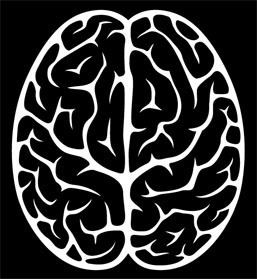
“DAILY, WE ENCOUNTER MENTAL STATES THAT CANNOT BE EXPLAINED BY BRAIN MATTER ALONE.”
Intentional mental states
Third, humans possess intentional mental states. ‘Intentionality’ is a technical term in philosophy that refers to the power of the mind to represent or refer to other things. That is, some mental states can be ‘of’ or ‘about’ something else. Whenever people think, believe, desire, fear, or wonder, they direct their thoughts toward a specific subject or concept. They may think about breakfast, or experience a fear of spiders, for example. Physical events by themselves are not ‘of’ or ‘about’ other things in that same sense, so what happens in our minds is not physical. Daily, we encounter mental states that cannot be explained by brain matter alone.
Human emotion and other ‘felt’ experiences
Fourth, when a person feels joyful, upset, or anxious, the brain is part of the neural circuitry that plays a role in giving that person such experiences. The brain itself, though, is not joyful, upset, or anxious; the person is. The brain is only a complex organ—a physical object with physical properties, similar in that sense to a computer. A computer might be programmed to say, “I’m sad”, but the computer would not really feel sadness. Emotions like happiness, sadness, and fear are not material entities. They can only be experienced by conscious, sentient creatures who have a non-material aspect to their being, like humans and many animals. This is evidence that we are not merely brains in bodies.
Brain research subjects
Empirical studies show results consistent with the above philosophical arguments. For example, pioneering neuroscientist Wilder Penfield conducted over 1,100 brain surgeries in which he stimulated areas of the brain while patients were awake, and noted their responses. He was able to induce bodily movements, sensations, emotions, and memories. But the patients invariably testified that the response was like a reflex, not an action they chose to do. Penfield found he could not stimulate their will. Also, he could not cause them to draw conclusions, make decisions, or even think abstract thoughts (about, say, mathematics). Such experiments suggest that it is the immaterial self which is ultimately responsible for these activities, rather than the physical brain.
IMAGE BEARERS
God developed and populated the earth, which was initially empty (“without form and void”), as described in Genesis 1:2. He executed this task with exceptional precision and skill, thereby establishing a magnificent stage upon which to showcase His most significant creative accomplishment, humankind. Not only did God reserve the best for last, but He also created humans in a manner that distinguished them from animals. According to Genesis 1:26, humans were created to have a unique relationship to God. This was accomplished through the divine plan (“let us make man”), the divine pattern (“in our image”), and the divine purpose (“let them have dominion”). The attribute of being in the image of God (imago Dei) is not merely bestowed by God and retained by humans. It is what gives people special value (Genesis 9:6; James 3:9), and it is part of God’s design for human beings, who were specifically created to represent God on Earth and reflect many of His attributes.
 LIVING ETERNAL NOW