Australia’s Great Barrier Reef (GBR) is doing well, in fact great. But the popular media won’t report this good news, but here is what a knowledgeable expert on the reef has to say. Dr. Peter Ridd a geophysicist, physical oceanographer, and inventor — has worked on the Great Barrier Reef since 1984 and has written over 100 scientific publications. Now an adjunct fellow at The Institute of Public Affairs, he was fired in 2018 from teaching at Australia’s James Cook University after criticizing exaggerations about reef damage. Dr. Ridd is also a member of the CO2 Coalition of Arlington, Virginia.
The Great Barrier Reef is made up of approximately 3,000 reefs covering an area nearly the size of California off Australia’s eastern coast. The condition of its coral is frequently referenced as an indicator of the reef’s health, regularly in the context of the supposed damage global warming is doing to the planet.
The reef now has more coral than any time since records began in 1986, according to the Australian Institute of Marine Science (AIMS). There is roughly 20 percent more coral on the GBR than last year, which itself equaled a previous record year. All three major regions of the reef now have excellent coral cover and AIMS states that two regions are at record-breaking high levels.
As of the latest 2022 survey of the GBR, coral covered 34 percent of the seabed, double the lowest coverage recorded in 2012. There are many types of ecosystems on reefs other than coral – 34% is a remarkably high number.
This coral health exists despite four supposedly massively destructive and unprecedented bleaching events striking parts of the reef since 2016 – all allegedly due to climate change and one as recently as this year. Coral reefs typically take five to 10 years to recover from major damage, so how can GBR be enjoying such good health this soon? Is it possible that reef-science institutions exaggerated the damage in the first place to advance the global warming narrative? Perhaps.
However, 36 years of AIMS data show that large amounts of coral occasionally die — usually from cyclones, hot-water bleaching, or starfish plagues — but that recovery is often fast. For example, the Cooktown region suffered a moderate coral loss after a 2016 bleaching event but had recovered by 2021. By far, the biggest loss of coral was after Cyclone Hamish smashed the southern half of the reef in 2009. Recovery was largely complete by 2016.
These marine events, which have been going on for millennia, are akin to terrestrial bushfires from which the land quickly recuperates. However, untrustworthy institutions of science and other climate alarmists use them to foster hysteria over a climate that has vacillated between warmth and cold for as long as they have been observed.
These same purveyors of hyperbole then ignore or downplay news of the reef’s convalescence. For example, last year’s good news of coral coverage matching previous records was dismissed by claims that only the fast-growing coral had recovered. Poppycock! It is these species — staghorn and plate coral — that are most delicate and susceptible to damage and most obvious in their recovery.
Staghorn and plate coral — are most delicate and susceptible to damage and most obvious in their recovery.
The exceptional news this year is that almost every region of the reef is doing extremely well. For so much of the reef’s coral to be this healthy at the same time is very unusual. Normally, a large chunk of the reef is recovering from a major cyclone that drags down the average. So when the reef’s overall coverage is at today’s level of more than thirty percent of the area, the GBR’s health is indeed good.
This overall health is only apparent if the condition of the entire reef is reported. For whatever reason, AIMS stopped in 2017 averaging regional data to provide a composite view of the reef’s condition. I had to do that calculation for recent years myself to get a complete picture. Is this another instance of obscuring positive data?
Those who would play down the news of exceptional reef health should consider the unnecessary emotional damage being inflicted on children worried about their future. Elementary school students in America speak of their premature demise because of a faux climate emergency. A 2019 Australian survey reported that “around half of the residents, tourists and tourist operators surveyed, and almost one-quarter of fishers, report significant Reef Grief.”
God’s amazing creation has exceptional recuperative powers that provide further proof of intelligent design not evolution by random chance.
The real general theory of evolution teaches that “all the living forms in the world have arisen from a single source which itself came from an inorganic form (non-living).” The inorganic chemicals ultimately came from hydrogen, itself produced from the Big Bang, where nothing exploded and became everything.
This is the true position of atheistic evolutionists and when considered in the light of recent scientific discoveries revealing the incredible complexity of life and the amazing design in nature it is inconceivable they are still arguing against intelligent design and teaching evolution as capable of producing it all.
The ENCODE (Encyclopedia of DNA Elements) project has now published some 30 papers of phase two, revealing that most of our DNA is functional and effectively killing the evolutionary idea that nearly all our DNA is ‘junk’. This work was completed in 2007, and the results of more recent studies show levels of even more complexity.
The major international ENCODE research project junks the idea of ‘junk’ DNA
The 2007 research involved over 440 scientists in 32 institutes performing over 1,600 experiments. They found that over 80% of the human DNA does something, although the details of what it does mostly remain to be determined. Less than 2% of the DNA codes for proteins; the rest turns out to be like a huge control panel, with millions of switches that turn protein-producing genes on or off. And different cells have different switch settings because they need different parts of the DNA to be active. The complexity is mind-boggling and can only be the result of a mind of indescribable intelligence. Certainly chaos and random chance is not an option.
We need to understand that in the case of atheistic evolutionists, they have been blinded by the god of this world, Satan. They, like most people, do not consider the spiritual realm which God’s Word reveals is where the true battle for people’s souls is taking place.
“In their case the god of this world has blinded the minds of the unbelievers, to keep them from seeing the light of the gospel of the glory of Christ, who is the image of God.“2 Corinthians 4:4
Jesus and God’s Word have revealed the truth about the spiritual battle that is being waged by Satan and the fallen angels (demons). The following scriptures reveal that God has provided all we need to be overcomers in this battle.
“For we wrestle not against flesh and blood, but against principalities, against powers, against the rulers of the darkness of this world, against spiritual wickedness in high places.” Ephesians 6:12
“Therefore take up the whole armor of God, that you may be able to withstand in the evil day, and having done all, to stand firm. Stand therefore, having fastened on the belt of truth, and having put on the breastplate of righteousness, and, as shoes for your feet, having put on the readiness given by the gospel of peace. In all circumstances take up the shield of faith, with which you can extinguish all the flaming darts of the evil one; and take the helmet of salvation, and the sword of the Spirit, which is the word of God, praying at all times in the Spirit, with all prayer and supplication.” Ephesians 6:13-18
Our children need to be taught the truth about God and His creation. Only the Bible reveals the true history of this fallen world so it is foundational to educating our children. Religious Education (RE) was once considered an essential part of the school curriculum. This is no longer the case in most States of Australia.
A clinical look at life’s complexity, design, and ultimate causation
The universe, our planet, and life itself have the appearance of being designed. Even many atheists acknowledge this. But they are quick to dismiss it as an illusion—the product of time, chance, and the laws of nature. They say the science is settled: Everything just evolved; there was no intelligent input, and no design.
However, the scientific consensus is terribly wrong, as distinguished surgeon, David Galloway, shows in this new book about intelligent design. Drawing on extensive clinical experience with the human body, Galloway examines its complex, integrated systems, demonstrating that intelligent design is the only reasonable explanation. Galloway goes on to show how the idea that life and consciousness arose spontaneously is deeply unscientific and contrary to the evidence. He also helpfully explores the question, How can ‘science’ get things so terribly wrong?
Filled with fascinating examples (both from history, and Galloway’s own long medical experience), illustrated in full colour, and with a short ‘take home message’ at the end of every chapter, Design Dissected is an engaging read. It is written from an Intelligent Design perspective (i.e. it doesn’t directly discuss God or the Bible), and comes highly recommended by some of the biggest names in the Intelligent Design movement.
OVERVIEW (excerpt from the Introduction)
The structure of the book is built around three sections. Firstly, in Enigmata, I have outlined the means by which the great questions of science have been tackled. We will see how scientific truth has sometimes even been ridiculed before finding acceptance. We’ll discover how scientific conclusions can be contaminated by presuppositions of various kinds and consider reductionism as an enterprise to uncovering causation. To put it another way, we need to address the question of whether we can support the idea that natural processes are entirely sufficient to produce what we find in the living world, or not. I also offer a warning about the dangers of scientism – that is, the assumption that science is equipped to answer every ultimate question.
The second section, Layers of Perplexity, aims to reveal why the conventional understanding of the origin of life and of biological complexity fails to carry the intellectual weight it is required to bear. I have used examples from human systems and even considered the discipline of origin of life chemistry. Each of these demonstrates that a naturalistic understanding offers a completely inadequate explanation for the intricate and nuanced systems that underpin our existence.
The final section, Thinking about Thinking, opens the mystery of the origin of consciousness and asks the questions of ultimate reality that, for many, seem to be just too difficult and are therefore consigned to the ‘consider it later’ pile!
RECOMMENDATIONS
“[Galloway] argues that explaining the origin of such systematic organization [in the human body] as a result of purely unguided natural processes stretches the limits of credulity. Instead, he makes a compelling case that this integrated and informational complexity provides powerful evidence of real, not just apparent, design. A fresh and original discussion of the evidence of intelligent design in the living system. Highly recommended.” — Dr. Stephen C. Meyer
“By far the strongest evidence that a system was deliberately designed is the very structure of the system itself. … David Galloway regales the reader with tale after tale of the wonders of the human body—and of the disasters that result when a part fails. By the end of the book, his conclusion that the body was purposely designed becomes self-evident.”— Dr. Michael J. Behe
“I strongly recommend this most impressive and thought-provoking book.”— Prof. Frank G. Dunn
AUTHOR – David Galloway is a Scottish surgeon who trained in Glasgow, London, and New York City. He conducted original research in the causes and cellular mechanisms of some common cancers and developed a specialist practice in their surgical treatment. He was a Consultant Surgeon in Glasgow and a Former President of the Royal College of Physicians and Surgeons of Glasgow. He is also a Fellow of numerous medical and surgical Colleges and has held academic appointments in Glasgow, Kuala Lumpur, and Hong Kong.
We are all familiar with the iconic ape-to-man image, which shows a smooth evolutionary progression from stooped ape to upright man. But what is the scientific evidence for the various transitional species in this evolutionary ‘march of progress’?
In this short video, you will find out. Contents: Introduction 00:34 Homo neanderthalensis (‘Neanderthal Man’) 01:01 Homo erectus 01:21 Australopithecus afarensis (e.g. ‘Lucy’) 02:02 Homo habilis 02:56 Summary.
Those who demand a naturalistic explanation (no miracles allowed!) for distant starlight from Christians don’t seem to realize that the standard ‘big bang’ secular view of origins entails miracles—but without a miracle worker! The problem is that the distribution of the background radiation in the universe is fairly uniform, but there has not been enough time for radiation (at the speed of light) to disperse over such a large universe. This is called the ‘horizon problem’. It is really the big bang’s very own ‘light time-travel’ problem. To ‘explain’ this, cosmologists invoked a period of super-fast expansion of the universe—much faster than the speed of light—for a brief time just after the ‘bang’. This was dubbed ‘inflation’. What started it, how it could proceed, and what stopped it are all mysteries. These are in effect naturalistic miracles, with no sufficient cause or explanation.2 They are used to prop up a theory that would not work without them.
So, it is not that miracles are not allowed in explaining origins. Ironically, they are only disallowed when it comes to biblical creation, which the Bible says is miraculous!
Bible-believing Christians are ‘streets ahead’ of secularists here because we have an all-powerful God who is able to do things beyond our ken.
Great is our Lord, and abundant in power; his understanding is beyond measure. The Lord lifts up the humble; he casts the wicked to the ground. (Psalm 147:5–6)
God calls us to humbly submit to Him and His Word.
Dr Catchpoole has a B.Ag.Sc. (Hons) from the University of Adelaide, and was awarded his Ph.D. by the University of New England (NSW).
“When did I realise that the earth could be no older than about 6,000 years.? The exact moment that turned my thinking around was when a simple image was put up, of Eden with layers of fossil bones in the earth beneath Adam and Eve. This showed the stark implications for Christianity if e.g. dinosaur fossils were millions of years old. That would mean there was not only death before the Fall; many fossils also show evidence of suffering, bloodshed and violence, and diseases like bone cancer. Yet after Adam and Eve were created, God called everything He had made “very good” (Genesis 1:31). I realised that it made no sense for God to have looked at tumorous dinosaur bones on Day 6, then call this very good, knowing that cancer would cause such enormous future human misery.
The Eden-on-bones scenario also raised a fundamental doctrinal issue. If we put the shedding of blood before sin, then why did God in Jesus shed blood because of sin? (Genesis 3:21, Hebrews 9:22, 10:4–10) I could see that my compromising of God’s Word by believing the secular millions of years completely destroyed the whole basis for the Atonement (1 Corinthians 15:21–22)1.
Evolutionary geneticists have themselves realised that mutations accumulate so quickly (about 60–100 per person per generation), that the human species should have become extinct at least ten times over. Evolutionary geneticist Alexey Kondrashov asks, “Why have we not died 100 times over?*
That presumes we’ve been here for the 100,000+ years of the evolutionary timeline. It’s not a problem in the Bible’s 6,000-year timeline, with only about 200 generations since Adam. We’re still going downhill fast (Romans 8:19–22), but it’s understandable we haven’t gone extinct—there simply hasn’t been enough time.
The importance of the age of the earth in presenting the gospel message is demonstrated by the following testimony of an aboriginal man.
“I’ve been locked up in every jail in Queensland, so I’ve had the Gospel preached to me more times than I can count. But I ain’t never heard the Gospel like this. Just think … we [Aboriginal people] haven’t been here 60,000 years like they tell us; we come from Noah just 4,500 years ago, and Adam 6,000 years ago—along with everyone else alive today— that’s powerful! So Christ died for everyone—whitefella and blackfella!“
*Kondrashov, A., Contamination of the genome by very slightly deleterious mutations: why have we not died 100 times over? J. Theoretical Biology 175:583–594, 1995.
Extract from article in the latest Creation magazine from CMI (www.creation.com) Creation magazine interviews former CMI speaker/scientist Dr David Catchpoole
Part 1 explains that the cause of the universe is supernatural and cannot be explained by natural events. The word of God brought the universe into existence from something that is not visible, something, unlike ordinary visible/tangible matter and energy. This is consistent with the scientific conclusion that the matter and energy that comprise the universe cannot be eternal. Thus, the cause of the universe must be supernatural.
2. There are potential explanations anyway.
Christian astrophysicists have proposed various explanations as to how God might have created things in such a way that even Adam and Eve would have been able to see distant starlight. This section is a bit technical, but we have tried to make it as easy as possible to understand. The ideas are mind-stretching because they seem to conflict with our everyday experience of the world.
Time dilation models
Einstein is famous for discovering that time is not constant but is affected by movement (speed) and gravitational forces. This is known as Special Relativity and General Relativity, respectively. When an object moves very fast, time for that object slows down, or even stops at the speed of light. Also, when an object is in the presence of a massive object, which provides a strong gravitational attraction, time slows down. These effects are measurable and thus have been verified by experiment. They are so real that GPS satellites, which depend on precision clocks for global positioning calculations, must have their on-board clocks adjusted for the lesser gravity (being up in the sky) and for the speed of movement of the satellite.
Now we can try to imagine God creating the universe, “stretching out the heavens” (Psalm 104:2) on Day 4 of Creation Week. This would entail massive gravitational forces and enormous differences in speeds, both of which would change the time ‘out there’ compared to planet Earth. Thus, in one Earth day (Day 4) an enormous amount of time could transpire ‘out there’ allowing ample time for the light to travel to Earth. Various models have been proposed based on these ideas
New Model
Well, this is not so new; it goes back to Einstein’s era. Einstein’s findings of time changing with motion means that the speed of light (c) cannot be measured in one direction. It can only be measured for the round trip (two-way speed). This gives the average speed, but we cannot know if the speed is the same in both directions.
Einstein assumed that the speed of light in all directions was the same (called the synchrony convention) but he realized that it was an assumption without proof.
God calls us to humbly submit to Him and His Word.
Physicists have been wracking their brains ever since Einstein to try to figure out how to measure the speed of light in one direction. For example, we might want to fire a laser beam at the moon and measure how long it takes to get there. However, we need to place a clock on the moon that is telling the same time as a clock on Earth. That is a problem because as we fly the clock to the moon, the time changes on the clock! Putting it another way, the only way the observer on the moon can know when the light beam is sent from Earth is to be sent a message, which then travels at the speed of light. It all becomes totally circular!
There has been quite some discussion about this in recent times, including from secularists—that the speed of light might not be the same in all directions.
So, what if the speed of light towards us was infinite and the speed away from us was c/2? That would give an average speed of c, which we measure. There is no way that we can know that this is not so. And that would mean that light from distant stars would reach Earth the instant that they were created. No problem!
Throughout the account in Genesis 1, the Bible says that God spoke things into existence—eight times, “And God said … ”. And after He spoke, it is often concluded with, “and it was so”. The New Testament tells us,
“By faith we understand that the universe was created by the word of God, so that what is seen was not made out of things that are visible.” (Hebrews 11:3)
The word of God brought the universe into existence from something that is not visible, something, unlike ordinary visible/tangible matter and energy. This is consistent with the scientific conclusion that the matter and energy that comprise the universe cannot be eternal. Thus, the cause of the universe must be supernatural.
And so the Bible describes the Word of God as powerful:
“So shall my word be that goes out from my mouth; it shall not return to me empty, but it shall accomplish that which I purpose, and shall succeed in the thing for which I sent it.” (Isaiah 55:11)
The New Testament tells us that this agency of God, the Word by which He created everything, was none other than the Lord Jesus Christ:
In the beginning was the Word, and the Word was with God, and the Word was God. He was in the beginning with God. All things were made through him, and without him was not anything made that was made. (John 1:1–3)
Genesis 2 tells us that God made the first man and woman. He took dust and made the man, Adam (Genesis 2:7), and took his rib and fashioned the woman, Eve, the mother of all.
I have never had anyone demand that I explain to them how God made a man from dust. And yet there is this demand that we explain how God could have created the stars such that we can see the light from distant stars.
Distant star cluster
The Genesis account makes it clear that the creation of the heavenly bodies was just as miraculous as the creation of the first people:
And God said, “Let there be lights … And God made the two great lights—the greater light to rule the day and the lesser light to rule the night—and the stars.” (Genesis 1:14–16).
Was this any less a miracle than the creation of the man from dust? And yet there is a demand for a naturalistic explanation for how God did this! This seems to me to be quite inconsistent and unreasonable to demand such a thing as a condition of believing the Bible’s account, especially the timeframe.
It’s also interesting that the timeframe of six days with the seventh day of rest—the basis of our 7-day week (Exodus 20:11)—underlines the miraculous nature of God’s actions. And that is part of the problem for those who don’t or won’t believe the timeframe, such as theistic evolutionists and long-age creationists. When they refuse to believe the timeframe, they then tend to think of ‘creation’ in a naturalistic way, over billions of years. And then secular ideas of how things came to be take precedence over the Bible’s clear account. Thus the miraculous nature of Creation Week takes a back seat and so we have this demand for a naturalistic explanation for how we can see distant starlight.
The bottom line: Creation Week involved a series of miracles, one after the other. Thus, these are things for which we can provide no natural explanation. We do not know how God could speak the stars into existence, and thus we cannot know how He created things in such a way that we can see the light from celestial objects millions and billions of light-years distant.
In other words, the question tacitly denies the supernatural nature of the Creation Week events. In doing so it robs God of His omnipotence and limits Him to work only in ways that we can understand. This results in a very diminished view of God. In effect, those who do this are constructing a god compatible with their own limited understanding, which is a form of idolatry.
More on the recently launched James WebbSpace Telescope (JWST). If this is a subject of interest and you have not already done so take a look at my first post on December 24th, 2021 with the same name.
Webb’s mission objectives drive the need for Webb to be stationed far from Earth. To see the most distant stars and galaxies, it is necessary for Webb to operate in the infrared part of the electromagnetic spectrum (see fig 4), because more distant objects tend to emit light that has been redshifted, and the infrared wavelengths better penetrate interstellar gas and dust.
In this post, Creation Ministries International (CMI) will try and help you understand how a biblical perspective already informs on prospective discoveries. I have extracted content from their article. Go to their website http://www.creation.com to view the complete article.
What you need to know about the James Webb Space Telescope – Understand how a biblical perspective already informs on prospective discoveries by Scot Devlin and Mark Harwood
We know that the Bible contains an accurate eyewitness testimony of the origins of the universe, and man’s interpretations from telescopic data is just speculation compared with the biblical written record. Is this 10 billion dollars then wasted or could it have been better spent?
Webb’s scientific objectives are vast. Webb’s senior project scientist John Mather, said:
“Webb will have an ambitious science agenda stretching from studying small worlds in our solar system to surveying the outer reaches of the universe. “We’re going to look at everything there is in the universe that we can see.”
NASA have split the scientific objectives into four categories:
Early Universe
Galaxies Over Time
Star Lifecycle
Other Worlds
We will explore the questions scientists are hoping Webb will answer, under these categories, giving a biblical perspective on each question:
1. Early Universe:
”Webb will be a powerful time machine with infrared vision that will peer back over 13.5 billion years to see the first stars and galaxies forming out of the darkness of the early universe.”
We are told that Webb will see stars and galaxies as they appeared 13.5 billion years ago, which is what is meant by “early”. Note that this is a claim based on belief in the big bang model. What Webb will actually observe will be light from galaxies and stars that are very far away. How long that light takes to get to the JWST is another question. In fact, even the assumed vast distances to the very far away galaxies9 are model and parameter dependent. What can be said without any layers of interpretation is that Webb is expected to observe objects with redshifts (see box entitled Redshift) up to Z=15 with 100 times the sensitivity of the Hubble
Why are the furthest away stars and galaxies of interest?
Cosmologists are hoping that Webb will find Population III galaxies which would consist of stars that are made up of ONLY Hydrogen and Helium (and trace amounts of lithium) and NO heavier elements.
These are the hypothetical first-generation stars in the big bang model, and therefore should be the most distant stars.
So far only Population II and Population I stars have been directly observed. Even distant quasar spectra reveal heavier elements (i.e. the gas surrounding quasars contain elements heavier than Hydrogen and Helium), and yet the big bang theory relies on the existence of Population III stars:
It is proposed that reionization was triggered by these Population III stars, and they were the source of the heavier elements. Therefore, no Population III stars; no carbon, no oxygen, no silicon, no earth, no me and no you!
2. Galaxies Over Time
“Webb’s unprecedented infrared sensitivity will help astronomers to compare the faintest, earliest galaxies to today’s grand spirals and ellipticals, helping us to understand how galaxies assemble over billions of years.”
Again, note the assumption that the faintest, furthest away galaxies are the earliest. Whilst distance might be a proxy for a relative time scale, the big bang timescale is dependent upon its assumptions. Galaxy evolution has long been a problem for the big bang.
The astronomer, Edwin Hubble, was the first to classify galaxies based on their morphology, and he came up with the following categories:
Ellipticals (E)
Lenticular (SO)
Spirals (S)
Barred Spirals (SB)
Irregulars (Irr).
Although Hubble didn’t necessarily intend to suggest that galaxies evolve from simple to complex, it was thought that galaxies start off looking like ellipticals and then mature on towards spirals.
However, there are an increasing number of strange looking galaxies that astronomers are struggling to fit into the evolutionary theory, for example ring galaxies.
Galaxy formation
The two opposite competing theories of galaxy formation currently are the bottom-up theory and the top-down theory. Top-down theory postulates that the largest structures in the universe formed first and then divided into clusters, groups, and galaxies. Bottom-up theories speculate that the primordial fluctuations first formed protogalaxies, which by gravitational attraction grew into galaxies, groups, clusters etc.
Whilst astronomers are expecting Webb and other new observations to help develop these theories, the one answer that is rarely considered is that God made them that way!
3. Star Lifecycle
“Webb will be able to see right through and into massive clouds of dust that are opaque to visible-light observatories like Hubble, where stars and planetary systems are being born.”
Spectroscopy can be used to calculate the precise amounts of elements within stars. By using particle and quantum physics theories, well tested here on Earth, we can calculate how long a star will burn which fuel for, and how that star will change over time.
Whilst these theories are well established, the currently accepted theory for star formation (Jeans collapse of molecular clouds) has a number of unproven assumptions.
From NASA’s JWST website we see listed two of the open questions the JWST is to answer:
How do clouds of gas and dust collapse down to the dense cores that form stars?
What is the early evolution of protostars?
Another JWST website page says:
“Researchers still do not know the details of how clouds of gas and dust collapse to form stars, or why most stars form in groups, or exactly how planetary systems form.
What we do have is a collection of images of gas clouds with different densities and temperatures. We are told that they are images of gas clouds in the stellar formation process, but they could simply be a variety of created cosmic objects.
Whilst biblical history tells us it is not necessary for stars to form naturalistically, the big bang timeline demands it. 13.8 billion years is beyond the lifetime of most stars. Therefore, to uphold the big bang paradigm, many of the stars we see today must have been created within this timeline, not just near the beginning. In fact, to have the 1022 stars existing today, they must be created on a daily basis over the alleged 13.8 billion years.
Nucleosynthesis
Prominent atheist, Carl Sagan famously said, ‘we’re made of star stuff.’ He was referring to the theory that most of the atomic nuclei in our bodies were forged by the nuclear furnaces and explosive deaths of stars in the ancient universe. The Nucleosynthesis theory (the secular story for how all the elements came about), is said to explain the production and origin of all the elements in the universe. Big bang nucleosynthesis is the part of the story presented, not only as the explanation of the abundance of the light elements (hydrogen, deuterium, and helium), but as evidence of the big bang. We have critiqued that claim here.
The abundance of the heavier elements (heavier than iron) is much more contested in the evolutionary community, as the naturalistic production of some elements has not yet been observed, let alone the ability of that natural process to produce the abundances of the different elements found in the universe.
With the James Webb space telescope viewing the near and mid-infrared spectrum unimpeded by the earth’s atmosphere it is well placed to see such spectral features. If LIGO or VIRGO or any other yet-to-be-built gravitational wave interferometer detects a neutron star merger, then Web will almost certainly be repositioned to observe the merger in the hope of identifying the spectral signatures of the heavier elements.
Planet formation
JWST’s infrared capability and position above the earth’s atmosphere make it a unique tool32 for looking at rotating circumstellar disks of dense gas and dust surrounding stars, and it is within these that we are told planets form. They hence have the name, protoplanetary disks.
We are told that planet formation is a simple extension of star formation:
”According to our current knowledge, planets are formed around a new star by condensing in a disc of molecular gas and dust, embedded within a larger molecular cloud. Condensation increases until they become giant planets, which are heated, then cleanse their orbits in the disc and possibly bend it. Remaining gas in the disc finally disappears, leaving planets, a disc of dust and debris.”
Whilst naturalistic planet formation has always been a problem, further difficulties have arisen in the last 20 years, since the discovery of now over 4,000 known exoplanets: Before the discovery of the first exoplanet, 51 Pegasi b in 1995, the only known planets on which to base a planet formation theory on were the planets in our solar system.
The discovery of exoplanetary systems inconsistent with long-held planetary formation theories caused the invention of many modifications and even completely new theories. The JWST website admits:
“The continual discovery of new and unusual planetary systems has made scientists re-think their ideas and theories about how planets are formed.”
4. Other Worlds
”Webb will tell us more about the atmospheres of extrasolar planets, and perhaps even find the building blocks of life elsewhere in the universe. In addition to other planetary systems, Webb will also study objects within our own Solar System.”
We have previously commented on Webb’s ability to detect exoplanet atmospheres.
As well as delivering information about planetary atmospheres through investigating their chemical composition (fig 9), Webb will also capture direct images of exoplanets, with the use of its onboard coronagraph. As of December 2021, only 104 exoplanets have been directly imaged (roughly 0.2% of all reported exoplanets).
It is easy to see that many of the questions to be answered under the category ‘other worlds’ are directly related to the public’s increased interest in extra-terrestrial life. They include for example:
Can we find planets orbiting in the habitable zones of stars where it is possible for water, or perhaps life, to exist?
How did life develop on Earth?
Was there ever life on Mars?
From our own solar system to distant star systems—what can we understand about planet formation, evolution, and the suitability of planets as habitats?
What are the sources of water and organics for planets in habitable zones?
What is the origin of water and organic materials in a planetary system?
The JWST is uniquely designed to answer these questions because of its capability and sensitivity in the infrared range (see fig 9).
With our knowledge of the Bible and understanding that God created the universe (Hebrews 11:3), we can confidently predict that the JWST observations will further contradict and complicate evolutionary theories on the origin of the universe, the origin of stars, the origin of planets, the origin of water on Earth, and the origin of life. With regards to the latter, we expect JWST will dismiss the possibility of life on Mars or any exoplanet.
We hope and pray that this telescope will open many eyes to the Glory of God and the amazing and unique habitability of the earth:
For this is what the LORD says— he who created the heavens, he is God; he who fashioned and made the earth, he founded it; he did not create it to be empty but formed it to be inhabited—he says: “I am the LORD, and there is no other.—Isaiah 45:18
Maybe humanity’s next eye in the sky, the JWST, will cause many to recognise truth that Jesus Christ is Creator and Lord and there is no other!
A rare look inside a fossilized dinosaur egg found in southern China has revealed an exquisitely preserved embryo—and evidence suggesting that some of these prehistoric creatures had even more in common with modern birds than previously thought.
Scientists said the embryo inside the egg, which was laid between 72 million to 66 million years ago during the Late Cretaceous period, was that of a two-legged, feathered carnivore known as an oviraptorid. They said, in a paper about the discovery published Tuesday in the journal iScience (interdisciplinary open-access journal), the embryo’s curled body position—with its back against the blunt end of the 7-inch-long egg and its head between its legs—resembles that of bird embryos.
For evolutionists, this find poses some difficult questions:
1. How could this fossilised embryo survive millions of years?
2. How come it resembles that of bird embryos today?
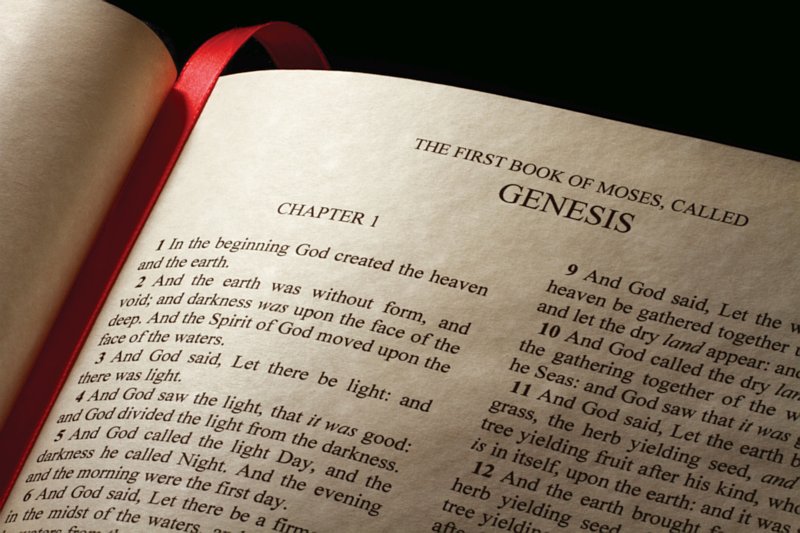
“God created the great sea creatures and every living creature that moves, with which the waters swarm, according to their kinds, and every winged bird according to its kind. And God saw that it was good. And God blessed them, saying, “Be fruitful and multiply and fill the waters in the seas, and let birds multiply on the earth.” And there was evening and there was morning, the fifth day. And God said, “Let the earth bring forth living creatures according to their kinds—livestock and creeping things and beasts of the earth according to their kinds.” And it was so. And God made the beasts of the earth according to their kinds and the livestock according to their kinds, and everything that creeps on the ground according to its kind. And God saw that it was good.Then God said, “Let us make man in our image, after our likeness. And let them have dominion over the fish of the sea and over the birds of the heavens and over the livestock and over all the earth and over every creeping thing that creeps on the earth… And there was evening and there was morning, the sixth day.” Genesis 1:21-31
Why did God create the universe in six days? He tells us in His commandments: six days you shall work and the seventh day you will rest. It was a pattern for how He made man. We are to work as He did for six days and the seventh will be a rest and holy day which is used to remember, thank and praise our Creator.
“For in six days, the Lord made heaven and earth, the sea, and all that is in them, and rested on the seventh day. Therefore the Lord blessed the Sabbath day and made it holy.” Exodus 20:121
In the soon-coming Millennial Kingdom Jesus will reinstate this pattern for man.