SIGNPOSTS TO GOD

Prominent atheist Richard Dawkins was once asked what he would say to God if he encountered Him after he died. Dawkins quoted what Bertrand Russell is reputed to have said when asked the same question: “Sir, why did you take such pains to hide yourself?

I think I can understand why some might echo that sentiment. After all, God is invisible; we can’t perceive Him directly with our physical senses. Yet the signs of His existence—indeed, of His goodness and greatness—are everywhere. The Apostle Paul was right when telling a first-century pagan audience that God has always given evidence of His existence through the good things He has done, such as “rains from heaven and fruitful seasons, satisfying your hearts with food and gladness.” (Acts 14:17). God has put up signposts everywhere to help us find our way to Him. Here are just a few of them.

The humblest believer in God as Creator must exercise far less credulity, and has far less explaining to do, than the most ardent evolutionist materialist.

Of course, fallen humanity has devised many increasingly sophisticated speculations of how nature could have made itself. Ministries like Creation Ministries International (http://www.creation.com) provide people with specific answers to such challenges. Even so, it pays to step back and contemplate the ‘big picture’ of what is claimed, and its affront to common sense.

Evidence of design

Flicking through a magazine one day as a child, I came across a photograph of Mount Rushmore, South Dakota, with the unmistakable likenesses of four American presidents carved into the rocks. Knowing nothing of how these came to be there, I remember thinking, “How strange! These can’t have happened by accident.”

Precisely! No one could seriously suggest that these shapes resulted from wind, or rain, or glacial erosion. These carved faces are clearly the result of creative design and effort.

Though not professing a commitment to anything like the God of the Bible, Paul Davies, former professor of theoretical physics at The University of Adelaide, writes in his book The Mind of God:

Through my scientific work, I have come to believe more and more strongly that the physical universe is put together with an ingenuity so astonishing that I cannot accept it merely as a brute fact … I cannot believe that our existence in this universe is a mere quirk of fate, an accident of history, an incidental blip in the great cosmic drama.2

The humblest believer in God as Creator must exercise far less credulity, and has far less explaining to do, than the most ardent evolutionist materialist.

Another signpost is human nature. We have been made in the image of God (Genesis 1:27). Thus, we have spiritual capacities that cannot be explained apart from God. Language, reason, ambition, creativity, humour, wonder, worship—all these have no counterpart in the natural world. These qualities mark us out as different from the rest of God’s handiwork. This is another way of saying that our Creator has endowed us with the capacity to relate to Him at a personal level.

Within human nature, conscience is another sign pointing to God. Proverbs 20:27 says of the human spirit that it is “the lamp of the Lord, searching all [man’s] innermost parts.”. Our conscience is responsible for our intuitive knowledge of right and wrong, good and evil. The Apostle Paul states that even those who don’t have God’s law in written form still have a conscience that commends them when they instinctively do what it commands and accuses them when they don’t (Romans 2:14–15).

Even without a ‘book of rules,’ we know it’s wrong to lie, steal, covet, and murder. Conscience ‘puts a pebble in our shoe’ whenever we violate it. The standard it sets and the guilt it inflicts point us to God—the Source of all good and the Judge of all evil.

Eternity in our hearts

Our longing for eternity is another pointer to God. Somehow, we know and feel that this life is not all that there is. Archaeologists have discovered how carefully and elaborately the ancient Egyptians prepared for the afterlife, and they had no Bible to tell them about a life to come. Where does this longing for eternity come from? Everything on Earth is subject to change and decay:

Of old you laid the foundation of the earth, and the heavens are the work of your hands. They will perish, but you will remain; they will all wear out like a garment. You will change them like a robe, and they will pass away, but you are the same, and your years have no end (Psalm 102:25–27).

These ‘immortality longings’ we all feel at various moments are pointers to the God who created us in His own image.

Hunger of the soul

Another signpost to God is our longing for meaning and purpose. We always knew when our cat Simba was hungry and wanted to be fed. (Any cat owner knows that dogs have masters, but cats have staff!) He would eat his prescription dry food and go away content; his next meal seemed to be the limit of his horizon. But we can’t live at that bare, subsistence level—at least, not for long. We crave meaning and purpose in our lives; we long to enjoy significant and satisfying relationships.

This sense of longing is often called ‘the homesickness of the soul’—and rightly so, for that’s precisely what it is. The true object of our longing is God. The words of the psalmist reflect this truth:

As a deer pants for flowing streams, so pants my soul for you, O God. My soul thirsts for God, for the living God. When shall I come and appear before God? (Psalm 42:1–2)

Illuminating the way

Of all the signposts pointing to God, the Bible is by far the clearest. When a British monarch is crowned, he or she is given a copy of the Bible, and told, “This Book is the most valuable thing that this world affords. This is the royal law; these are the lively oracles of God.” When we read the Bible with a humble and teachable attitude, we find it to be a source of supernatural wisdom and power. The psalmist prayed: “Open my eyes, that I may behold wondrous things out of your law” (Psalm 119:18). Paul reminded his young associate Timothy that Scripture provides the wisdom and instruction that leads to “salvation through faith in Christ Jesus” (2 Timothy 3:15).

Scripture’s major theme is Jesus Christ, God’s only Son. As the “image of the invisible God” (Colossians 1:15), Jesus is the clearest and most compelling witness to the existence and greatness of God the Father. Jesus Himself said: “Whoever has seen me has seen the Father” (John 14:9). He is the perfect transcript of what God is like.

But the supreme demonstration of God’s love and care is the sending of His Son into the world to suffer death on the cross, to save us from our sins, and to reclaim us for Himself. The Cross is more than enough to convince us that God loves and cares for lost people (Romans 5:8). Jesus Himself said that He came “to seek and to save the lost” (Luke 19:10).

There are signposts everywhere to help us find our way to God, but the most vital one is Jesus. He said: “I am the way, and the truth, and the life. No one comes to the Father except through me” (John 14:6).

The article Signposts to God is by Peter Howe on http://www.creation.com

SIGNPOSTS TO GOD

Another great article in Creation Magazine 2023, Vol 45, Issue 2, this time by Peter Howe Dip. Th., B.Th., M.A. A trained primary school teacher, Peter pastored several churches as an ordained minister in the Wesleyan Methodist Church of Australia.

Evidence of design

Flicking through a magazine one day as a child, I came across a photograph of Mount Rushmore, South Dakota, with the unmistakable likenesses of four American presidents carved into the rocks. Knowing nothing of how these came to be there, I remember thinking, “How strange! These can’t have happened by accident.”

Precisely! No one could seriously suggest that these shapes resulted from wind or rain or glacial erosion. These carved faces are clearly the result of creative design and effort.

Though not professing a commitment to anything like the God of the Bible, Paul Davies, former professor of theoretical physics at The University of Adelaide, writes in his book The Mind of God:

Through my scientific work, I have come to believe more and more strongly that the physical universe is put together with an ingenuity so astonishing that I cannot accept it merely as a brute fact … I cannot believe that our existence in this universe is a mere quirk of fate, an accident of history, an incidental blip in the great cosmic drama.

The humblest believer in God as Creator must exercise far less credulity, and has far less explaining to do, than the most ardent evolutionist materialist.

Of course, fallen humanity has devised many increasingly sophisticated speculations of how nature could nonetheless have made itself. Ministries like CMI provide people with specific answers to such challenges. Even so, it pays to step back and contemplate the ‘big picture’ of what is claimed, and its affront to common sense itself.

The evidence within

Another signpost is human nature. We have been made in the image of God (Genesis 1:27). Thus, we have spiritual capacities that cannot be explained apart from God. Language, reason, ambition, creativity, humour, wonder, worship—all these have no counterpart in the natural world. These qualities mark us out as different from the rest of God’s handiwork. This is another way of saying that our Creator has endowed us with the capacity to relate to Him at a personal level.

Within human nature, conscience is another sign pointing to God. Proverbs 20:27 says of the human spirit that it is “the lamp of the Lord, searching all [man’s] innermost parts.”. Our conscience is responsible for our intuitive knowledge of right and wrong, good and evil. The Apostle Paul states that even those who don’t have God’s law in written form still have a conscience that commends them when they instinctively do what it commands and accuses them when they don’t (Romans 2:14–15).

An image of hand

Even without a ‘book of rules,’ we know it’s wrong to lie, steal, covet, and murder. Conscience ‘puts a pebble in our shoe’ whenever we violate it. The standard it sets and the guilt it inflicts point us to God—the Source of all good and the Judge of all evil.

Eternity in our hearts

Our longing for eternity is another pointer to God. Somehow, we know and feel that this life is not all that there is. Archaeologists have discovered how carefully and elaborately the ancient Egyptians prepared for the afterlife, and they had no Bible to tell them about a life to come. Where does this longing for eternity come from? Everything on Earth is subject to change and decay:

Of old you laid the foundation of the earth, and the heavens are the work of your hands. They will perish, but you will remain; they will all wear out like a garment. You will change them like a robe, and they will pass away, but you are the same, and your years have no end.” Psalm 102:25–27

These ‘immortality longings’ we all feel at various moments are pointers to the God who created us in His own image.

Hunger of the soul

Another signpost to God is our longing for meaning and purpose. We always knew when our cat Simba was hungry and wanted to be fed. (Any cat owner knows that dogs have masters, but cats have staff!) He would eat his prescription dry food and go away content; his next meal seemed to be the limit of his horizon. But we can’t live at that bare, subsistence level—at least, not for long. We crave meaning and purpose in our lives; we long to enjoy significant and satisfying relationships.

This sense of longing is often called ‘the homesickness of the soul’—and rightly so, for that’s precisely what it is. The true object of our longing is God. The words of the psalmist reflect this truth:

As a deer pants for flowing streams, so pants my soul for you, O God. My soul thirsts for God, for the living God. When shall I come and appear before God?Psalm 42:1–2

Of all the signposts pointing to God, the Bible is by far the clearest. When a British monarch is crowned, he or she is given a copy of the Bible, and told, “This Book is the most valuable thing that this world affords. This is the royal law; these are the lively oracles of God.” When we read the Bible with a humble and teachable attitude, we find it to be a source of supernatural wisdom and power. The psalmist prayed: “Open my eyes, that I may behold wondrous things out of your law” (Psalm 119:18). Paul reminded his young associate Timothy that Scripture provides the wisdom and instruction that leads to “salvation through faith in Christ Jesus” (2 Timothy 3:15).Scripture’s major theme is Jesus Christ, God’s only Son. As “image of the invisible God” (Colossians 1:15), Jesus is the clearest and most compelling witness to the existence and greatness of God the Father. Jesus Himself said: “Whoever has seen me has seen the Father” (John 14:9). He is the perfect transcript of what God is like.

But the supreme demonstration of God’s love and care is the sending of His Son into the world to suffer death on the cross, to save us from our sins, and to reclaim us for Himself. The Cross is more than enough to convince us that God loves and cares for lost people (Romans 5:8). Jesus Himself said that He came “to seek and to save the lost” (Luke 19:10).

To help us find our way to God, there are signposts everywhere, but the most vital one is Jesus. He said: “I am the way, and the truth, and the life. No one comes to the Father except through me” (John 14:6).

EVOLUTION?

What we believe drives what we do.

If you believe in evolution as taught in our schools and universities (universe caused by Big Bang and evolved) then there is no basis for meaning or purpose in your life and there is no basis for the moral laws of right and wrong. In fact, without God there is no basis for the objective moral values that do exist.

Is it any wonder we are seeing “lawlessness abound” as the Christian basis for our society is being jettisoned.

According to evolution, this wonderfully designed Cosmos and more specifically this earth with its finely tuned attributes came into being by random chance. And yet, earth’s atmosphere contains all the ingredients for life. It possesses the exact cocoon conditions necessary for life on Earth. Design by an intelligent Creator is in fact the only plausible explanation but it cannot be considered by humanist scientists because it involves the supernatural.

Dr Scott Todd, a well known evolutionist professor (immunologist) stated in “Nature 401 (September 30, 1999) “Even if all the data points to an intelligent designer, such a hypothesis is excluded from science because it is not naturalistic.

Cosmic Constants: Stephen Hawking has admitted: “The remarkable fact is that the values of these numbers [the constants of physics] seem to have been very finely adjusted to make possible the development of life.” (A Brief History of Time, p. 125) 

  1. Gravitational force constant
  2. Electromagnetic force constant
  3. Strong nuclear force constant
  4. Weak nuclear force constant
  5. Cosmological constant
The Atmosphere is composed of five layer, each of which plays its role in protecting and nurturing Earth … the perfect cocoon
picture of earth from space, the astronauts were struck by its beauty

What about humankind, where did our intelligence come from: matter and energy? Information requires an intelligent source and is ample proof for the existence of our Creator God who has made Himself known, ultimately through God, the Son, coming to earth to redeem us, to restore us back into a right relationship with our Heavenly Father, our Creator.

Our ability to recognise beauty, to communicate, to create and utilise technology to make computers, the internet, artificial intelligence, robots is evidence for design of the highest order. In fact, God tells us we are made in His image so it makes sense we have the ability to create and make and do all of these amazing things.

You can know the truth about this world. God has revealed it to us through the design in His created world, through His prophets (inspired Word of God, Bible), through the nation He established, Israel and ultimately, through God, the Son, Jesus, coming to earth to redeem us from the curse of SIN and through God, the Holy Spirit coming to indwell all who repent and put their trust in Jesus as their Lord and Saviour.

It is the Holy Spirit indwelling believers that truly reveals the truth about this world. You cannot live the Christian life without the Holy Spirit as your Counsellor, Teacher and Comforter.

Have you been born again and have the Holy Spirit indwelling your Spirit? He is the one that produces the fruit of the Spirit in the lives of all believers: love, joy, peace, faithfulness, gentleness, goodness, kindness, patience and self control. He is also the one that provides the gifts of the spirit for ministry, gifts of faith, words of knowledge, words of wisdom, words of prophecy, gifts of tongues, interpretation of tongues, gifts of healing , miracles, gift of discernment of spirits. If the fruit of the Spirit is not evident in your life and you are not operating in some of the gifts of the Spirit then you need to seek out believers that are, so you can repent and they will baptise you (total immersion) so you can come up a new person totally forgiven of your past sins and if needed demons cast out.

IRREFUTABLE EVIDENCE FOR DESIGN IN UNIVERSE

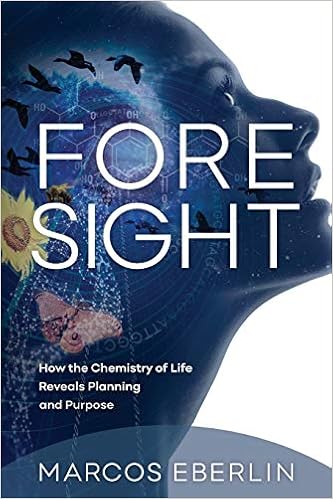
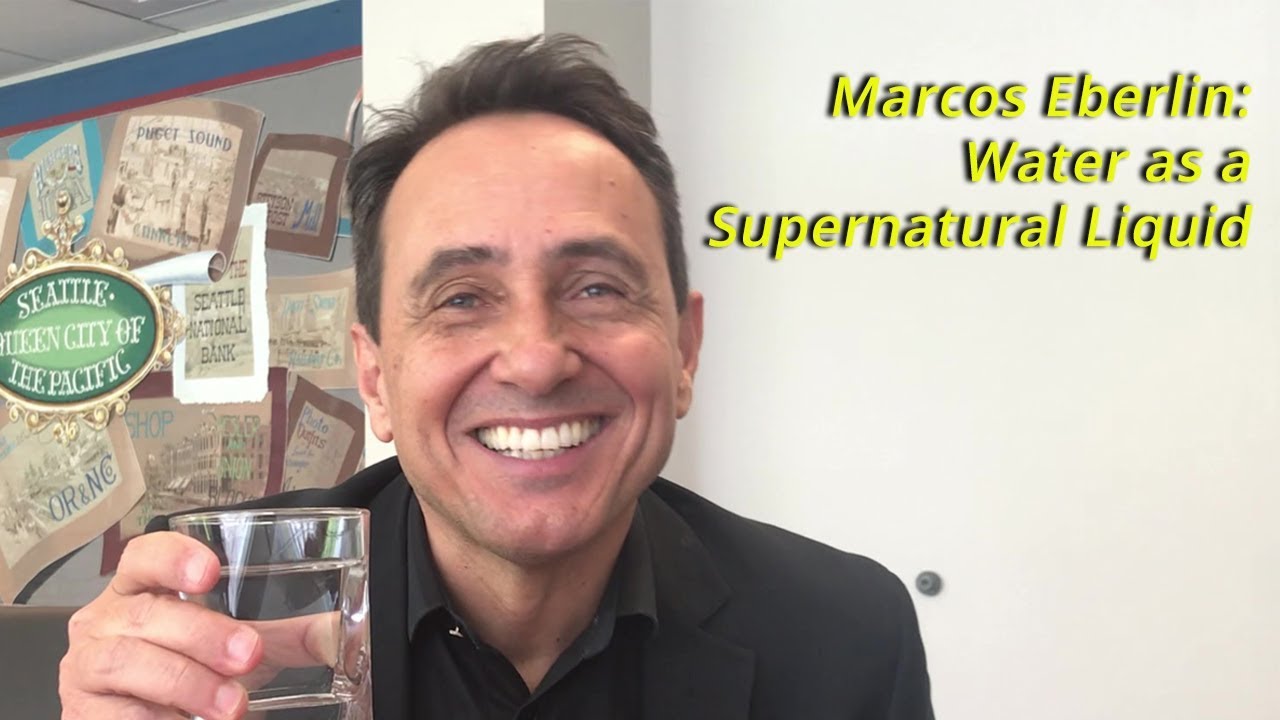
Eberlin’s book demonstrates that the currently available scientific knowledge increasingly points to the existence of a supreme being who carefully planned the universe and life. This breakthrough will revolutionize science in the years to come.

Two Nobel prize winners are happy to recommend Eberlin’s book to those interested in the chemistry of life. They state the author is well established in the field of chemistry and presents the current interest in biology in the context of chemistry. An interesting study of the part played by foresight in biology.
1. Sir John B. Gurdon, PhD, Nobel Prize in Physiology or Medicine (2012), Co-Founder of The Gurdon Institute, University of Cambridge.
2. Brian David Josephson, PhD, Nobel Prize in Physics (1973),
Professor Emeritus of Physics, University of Cambridge

This book provides masterful information about teleology, an exciting and prominent scientific field that provides irrefutable evidence of foresight in nature. The arguments raised in the book are convincingly supported by incontestable and previously published experimental data, much of it gathered from prestigious scientific journals. Dr. Marcos Eberlin brilliantly makes use of his expertise, achieved in more than twenty five years applying mass spectrometry in assorted areas such as biochemistry, biology, and fundamental chemistry to outline a convincing case that will captivate even the more skeptical readers.