
Dr. Jordan B. Peterson sits down with mathematician, author, and theologian Dr. John Lennox. They discuss the axioms and dangerous aims of transhumanism, the interplay between ethical faith, reason, and the empirical world that makes up the scientific endeavour, and the line between Luciferian intellectual presumption and wise courageous exploration. Dr. John Carson Lennox is a Northern Irish mathematician, bioethicist, and Christian apologist. Dr Lennox has been one of the most important apologists for me. I take every opportunity to listen to him. He has written books that will expand your Biblical knowledge and faith. He was a professor at Oxford and Green Templeton College (now retired) where he specialized in group theory. Lennox appeared in numerous debates with questions ranging from “Is God Good” to “Is There a God,” and faced off with academic titans such as Richard Dawkins, Michael Shermer, and Christopher Hitchens, among others. Lennox speaks four languages – English, German, French, and Russian, has written 70 peer-reviewed articles on mathematics, co-authored two Oxford Mathematical Monographs, and was noted for his role in translating Russian mathematics while working as a professor. I have also enjoyed listening to Jordan Peterson and seeing the positive impact he has had on male university students and watching his coming to faith after both his daughter and wife came to faith.
Tag Archives: Existence of God
THE TRUTH ABOUT TRUTH AND THE EXISTENCE OF GOD
Possessing no absolute or true existence of its own, evil is, by nature, parasitic. Being not of the created order, it can exist only by drawing its existence from that order. Evil must use the good. And so though good can exist without evil, evil cannot exist without good.
Truth can exist without falsehood, but falsehood cannot exist without truth.

Laws can exist without crimes, marriage without adultery, and life without murder. But crimes cannot exist without laws, adultery without marriage, and murder exist without life. Destruction requires structure, immorality requires morality, and sin requires the holy.
The good is primary. Evil is the parasitic inversion of the good. And so the existence of evil inadvertently testifies not against the existence of the good—but for it. It bears witness, unwillingly, to the existence of the good—the existence of God.
If evil is uncreated, how did it come to exist? God did not create evil, but He did create personhood, consciousness, and volition—free will. Free will is a necessity. If one does what is good because one has no choice in doing so, then it is not good. The good must be freely chosen and thus requires free will. And therein is the risk. To allow the choosing of good, one must allow the choosing of its opposite. And the opposite of good is evil. It is the allowance and risk of the good that allow for the risk of evil.
Evil requires personhood, will, consciousness, and volition.
Therefore, when looking for the source of evil we are looking in the direction of personhood, toward a conscious entity. It must be a created being that by its volition turned against the created order, against existence itself, a being that became an anti-being, an inversion. And this is exactly what the Scriptures reveal. There are two entities with the ability to choose good or evil: one, human, and the other, angelic. Since evil is spiritual and beyond flesh and blood, its origin must be found beyond flesh and blood, beyond the human, in the realm of the spiritual and the angelic. And in that realm, we see it, the entity that fulfills all the prerequisites—consciousness, volition, free will, and inversion and yet not of flesh and blood—an angelic being that turned against the fabric of the created order and against existence itself. In his inversion, he became the anti-being, the parasitic inversion of the good, the nemesis of reality. He became the one who should not exist and yet does. He became the Devil.
“How you are fallen from heaven, O Day Star, son of Dawn! How you are cut down to the ground, you who laid the nations low! You said in your heart, I will ascend to heaven; above the stars of God I will set my throne on high; I will sit on the mount of assembly in the far reaches of the north; I will ascend above the heights of the clouds; I will make myself like the Most High.’” Isaiah 14:12-14
This information is in Jonathan Cahn’s new book The Dragons Prophecy: Israel, the Dark Resurrection, and the End of Days‘. God is using Jonathan mightily as a prophet to America, but we can learn from him as well.
DAVID’S PRAYER WAS ALSO AN AMAZING PROPHECY
Thank goodness we have the Psalms: how helpful they are in our Christian walk, they explore the full range of human experience in a very personal and practical way. However, one psalm, Psalm 22 stands out because Jesus quotes verse 1 as His last words from the Cross. Why did Jesus take us to this psalm? It is obvious when we read the rest of the psalm, the psalm is a prophecy of what Jesus was experiencing on The Cross at the time He spoke it.
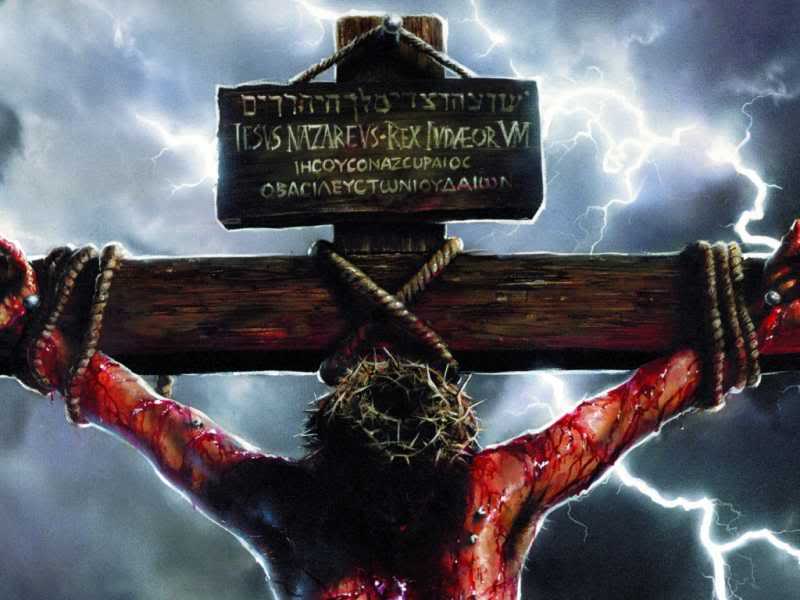
David had no understanding God was using Him to deliver a prophecy that provides incredible detail about what Jesus would experience on The Cross one thousand years later. David was obviously going through a terrible time in his life to have expressed the words he did in this prayer but consider that God gave David the words to pray so that His prayer could be used by Jesus to prove He is who He said He was, the promised Redeemer of not only Israel but the World.
“My God, my God, why have you forsaken me? Why are you so far from saving me, from the words of my groaning? O my God, I cry by day, but you do not answer, and by night, but I find no rest.
Yet you are holy, enthroned on the praises of Israel. In you our fathers trusted; they trusted, and you delivered them. To you they cried and were rescued; in you, they trusted and were not put to shame.
But I am a worm and not a man, scorned by mankind and despised by the people. All who see me mock me; they make mouths at me; they wag their heads; “He trusts in the LORD; let him deliver him; let him rescue him, for he delights in him!… I am poured out like water, and all my bones are out of joint; my heart is like wax; it is melted within my breast; my strength is dried up like a potsherd, and my tongue sticks to my jaws; you lay me in the dust of death. For dogs encompass me; a company of evildoers encircles me;
they have pierced my hands and feet— I can count all my bones— they stare and gloat over me; they divide my garments among them, and for my clothing they cast lots... ” Psalms 22:1-8
Note how Psalm 22 ends, David understood that regardless of whether God answered his prayer, God is still in control of His universe and this scripture will come to pass:
“As I live, says the Lord, every knee will bow to Me, and every tongue will give praise to God.” Romans 14:11
Moreover, it reveals that King Jesus will rule over the nations from Jerusalem in His soon coming Millennial Kingdom.
“I will tell of your name to my brothers; in the midst of the congregation, I will praise you: You who fear the LORD, praise him! All you offspring of Jacob, glorify him and stand in awe of him, all you offspring of Israel! For he has not despised or abhorred the affliction of the afflicted, and he has not hidden his face from him but has heard when he cried to him. From you comes my praise in the great congregation; my vows I will perform before those who fear him. The afflicted shall eat and be satisfied; those who seek him shall praise the LORD! May your hearts live forever! All the ends of the earth shall remember and turn to the LORD, and all the families of the nations shall worship before you. For kingship belongs to the LORD, and he rules over the nations.“ Psalms 22:22-28

A lot of bad theology inevitably surfaces when we face suffering. When people lose their faith because of suffering, it suggests a weak or nominal faith that didn’t account for or prepare them for evil and suffering. Any faith not based on the truth needs to be lost—the sooner, the better.
Suffering and evil exert a force that either pushes us away from God or pulls us toward Him. But if personal suffering gives sufficient evidence that God doesn’t exist, then surely I shouldn’t wait until I suffer to conclude He’s a myth. If my suffering would one day justify denying God, then I should deny Him now in light of other people’s suffering.
Believing that God exists is not the same as trusting the God who exists. A nominal Christian often discovers in suffering that his faith has been in his church, family, career, or social network, but not Christ. As he faces evil and suffering, he may find his beliefs shaken or even destroyed. But genuine faith—trusting God even when we don’t understand—will be made stronger and purer.
The last three paras have been excerpted from Randy Alcorn’s book “90 Days of God’s Goodness”.
REFLECTIONS ON THE EXISTENCE OF GOD
If you read my recent post “Does God Exist” then you will know a little about the timely new book written by Richard E. Simmons 111, Reflections on the Existence of God. If you want to learn more about the book and why Richard decided to write it at this time then listen to the Eric Metaxas interview below. It is excellent you will learn heaps from both men about their journey of faith.
 LIVING ETERNAL NOW