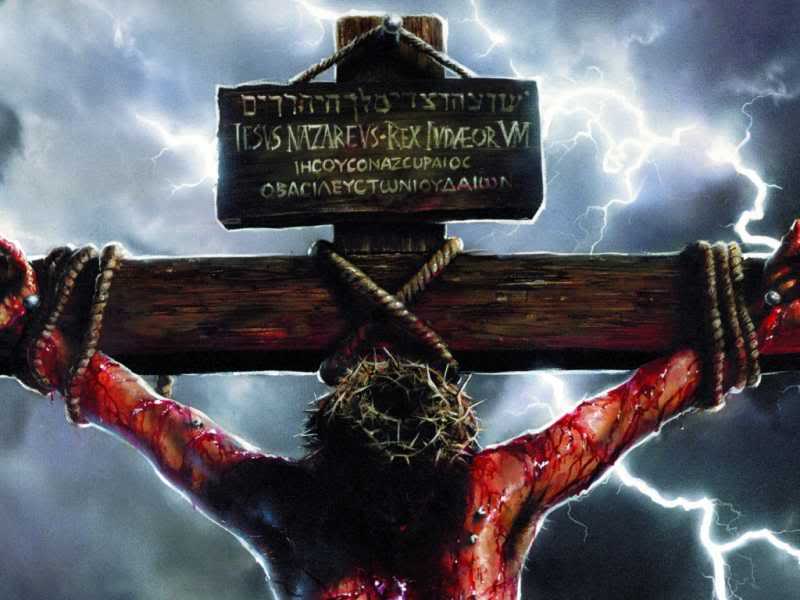
HOW TO DEAL WITH ALL RELIGIONS ARE THE SAME

The Apostle Paul brought his intellect to bear against the best-of-the-best philosophers and religious practitioners of his day on Mars Hill in Act 17. At that time, Athens was the religious center of Greece and was marinating in every faith and philosophy that existed.

When he was delivering his address to that diverse audience on Mars Hill, Paul highlighted a few things all those in attendance had in common — their shared humanity and inherent religious nature — but then he took a hard right turn into the particulars of the Christian faith that makes it distinct from all others.

One important thing that the assertion “all religions are the same” ignores is the key distinction between universals and particulars. Universals are typically said to be abstract whereas particulars are concrete; i.e., a universal is something particulars have in common, but that commonality in no way means all particulars are the same thing.

No one does a better job of humorously pointing this out where religion is concerned than the English writer and poet Steve Turner in his short work called “Creed”:

We believe that all religions are basically the same. At least the one that we read was. They all believe in love and goodness. They only differ on matters of Creation, Sin, Heaven, Hell, God, and Salvation.

And, of course, the central difference in all religions that Paul highlighted to the Athenians was Christ Himself, which is exactly how you and I should deal with the “all religions are the same” argument as well.

If there was ever a time for a Christian leader to declare in a speech that we all believe the same thing and that every road leads to God, it was then. But that’s not what Paul did.

Why and how Christianity is distinct  

Think about every religion you know without Christianity. The vast majority, if not all, take an approach to our human predicament that is either epistemic, pragmatic, or existential, with some blending two or all three.  

The epistemic path is one that says, “If I just learn something, then I’ll be better.” For example, Buddhism has its four noble truths, its 8-fold path to enlightenment, etc. To the epistemic, knowledge leads to salvation.

The pragmatic approach says, “If I just do something, then I’ll be OK.” Nearly every religion other than Christianity follows this works-based plan, with a good example being Islam and its concept of the deeds scale. The pragmatist earns their salvation by the sweat of their brow.  

The existentialist thinks, “If I just experience something, then I’ll be fine.” Those involved in spiritist and/or new-age faiths always look for a vision, a breakthrough, or some spiritual event that moves them from their current life to one that’s better.

But Christianity is different. It is not epistemic, pragmatic, or existential, but instead is something else.

The Christian faith is ontological.   

Christianity rests completely on a Person — Jesus Christ. The prophets of other religions admit their faith does not depend on them to be true, i.e., you can take them out of the equation and the religion remains intact.

But if you take Christ out of Christianity, it completely collapses. Moreover, Christianity subsumes the approaches found in other religions and pours them all into the person of Christ.

As an example, the epistemic gains knowledge through words. And what do we read at the beginning of John’s Gospel?

“In the beginning was the Word, and the Word was with God, and the Word was God. And the Word became flesh, and dwelt among us, and we saw His glory, glory as of the only begotten from the Father, full of grace and truth” (John 1:1, 14). Jesus is the knowledge of God personified.

With respect to pragmatism and a works-based approach, Jesus was once asked: “What shall we do, so that we may work the works [plural] of God?” Jesus’ answer to them was, “This is the work [singular] of God, that you believe in Him whom He has sent” (John 6:28-29).

Lastly, existentialism concerns itself with experience and life. To that end, Jesus said, “I have come that they might have life and have it abundantly … I am the way, and the truth, and the life; no one comes to the Father but through Me” (John 10:10; 14:6). 

Christianity diverges from all other religions because it is built upon the person of Christ, who, in His Person, embodies all approaches to spiritual truth.

Paul acknowledged this unique and ontological nature of Christianity when he spoke on Mars Hill and also when he wrote, “for I know whom [not what] I have believed … For God, who said, “Light shall shine out of darkness,” is the One who has shone in our hearts to give the Light of the knowledge of the glory of God in the face of Christ” (2 Tim. 1:12; 2 Cor. 4:6).

In other words, Christianity is Jesus. Period. 

This post was taken from a great article by Robin Schumacher CP VOICES | MONDAY, APRIL 03, 2023 “All religions are the same and other lies”

THE FEAR OF THE LORD

Concerning The Fear of the Lord, God has spoken to the Timothy 2 Team (www.Timothy2.org) in this way: “The Fear of the Lord has all but left My Church. It must return if the ‘Church’ is to stand. It must return if the ‘Church’ is to make a difference. I am about to judge My ‘Church’, and the first thing that will be judged is the lack of The Fear of the Lord!”

The Dictionary says: “Fear: Awe or reverence for God, to have reverential regard for, as to fear the Lord.”
The Bible says:
“The fear of the Lord is to hate evil….” Proverbs 8:13
“…by the fear of the Lord men depart from evil.” Proverbs 16:6 “The fear of the Lord is hatred of evil. Pride and arrogance and the way of evil and perverted speech, I hate. Proverbs 8:13 “He that walks in his uprightness fears the Lord: but he that is perverse in his ways despises him.” Proverbs 14:2 “Be not wise in your own eyes: fear the Lord, and depart from evil.” Proverbs 3:7 “And unto man he said, Behold, the fear of the Lord, that is wisdom; and to depart from evil is understanding.” Job 28:28

Each of us must ask ourselves this question: Do I really hate evil; have I really departed from evil, or is there a compromise in my own life? Have I allowed the values of the world to become my values? When I discover evil in my own life, do I confront it and get rid of it, or do I make excuses for it? Do I encourage purity and The Fear of the Lord in the lives of those for whom I am responsible to teach and disciple? These are very serious questions. We cannot be in bed with evil and claim to fear the Lord.

The Lord has commanded in Leviticus 19:2 “You shall be holy: for I the Lord your God am holy.” But the only way that we can live an untainted life in a world filled with darkness is by walking in the Fear of the Lord. It is “The Spirit of the Fear of the Lord” that produces holy and righteous living in us. Also, it is through the Fear of the Lord that we gain access to an intimate relationship with God: Psalms 24:3-4 “Who shall ascend to the hill of the Lord? or who shall stand in his holy place? He that hath clean hands, and a pure heart…” Matthew 5:8 “Blessed are the pure in heart: for they shall see God.”

“And now, Israel, what does the Lord your God require of you, but to fear the Lord your God, to walk in all his ways, to love him, to serve the Lord your God with all your heart and with all your soul, and to keep the commandments and statutes of the Lord, which I am commanding you today for your good? Deuteronomy 10:12-13

“You shall not fear other gods, but you shall fear the Lord your God, and he will deliver you out of the hand of all your enemies.” 2 Kings 17:39

“The precepts of the LORD are right, rejoicing the heart; the commandment of the LORD is pure, enlightening the eyes; the fear of the LORD is clean, enduring forever; the rules of the LORD are true, and righteous altogether. Psalms 19:8-9

What tremendous blessings are in store for those who choose to walk in the Fear of the Lord!

“And the spirit of the Lord shall rest upon him, the spirit of wisdom and understanding, the spirit of counsel and might, the spirit of knowledge and of the fear of the Lord; and shall make him of quick understanding in the fear of the Lord: and he shall not judge after the sight of his eyes, neither reprove after the hearing of his ears.” Isaiah 11:2-3

“When the Spirit of truth comes, he will guide you into all the truth, for he will not speak on his own authority, but whatever he hears he will speak, and he will declare to you the things that are to come.” John 16:13

Note the six attributes of the Spirit of the Lord (Holy Spirit) given by Isaiah: the spirit of wisdom and understanding, the spirit of counsel and might, and the spirit of knowledge and fear of the Lord. The seventh attribute is given by Jesus in the N.T., the Spirit of truth. When the Bible speaks of the Seven Spirits of God it is referring to these seven attributes.

God the Holy Spirit is also known as “The Seven Spirits of God”. (Revelation 1:4, 5) Since there is only ‘one’ Holy Spirit, God shows us that the “Seven Spirits” are actually seven ‘Attributes’ of the Holy Spirit.

When we are born again Jesus made it possible for our Heavenly Father to send the third person of the Trinity to indwell our spirit which was God’s plan from the beginning: Proverbs 20:27 says: “The spirit of man is the lamp of the Lord,“, Our spirit is the lamp of the Lord which requires oil, the Holy Spirit, to function properly. When Adam and Eve rebelled against God, the Holy Spirit departed their spirits immediately so they died spiritually and then died physically some nine hundred years later.

As we have just covered, the primary attribute of the Holy Spirit is Fear of the Lord. Now that the Holy Spirit has been restored to our spirit as our Counsellor, Teacher and Comforter, all seven attributes of the Holy Spirit are available to us.

“The Seven Spirits of God” are made available to us through the ‘Fullness’ of the Holy Spirit. This is not to be confused with the ‘Charisma Gifts’ or the ‘Fruit of the Spirit’. Rather it is walking in the ‘Fullness’ of “The Seven Spirits of God”.

EXAMPLES OF PEOPLE WHO FEARED THE LORD

ABRAHAM: “He said, “Do not lay your hand on the boy or do anything to him, for now, I know that you fear God, seeing you have not withheld your son, your only son, from me.” Genesis 22:12

HEBREW MIDWIVES OF MOSES TIME
Read Exodus 1:15-21 for the full story.
“But the midwives feared God, and did not as the King of Egypt commanded them, but saved the men children alive.” Exodus 1:17

ISRAEL
“And Israel saw that great work which the Lord did upon the Egyptians: and the people feared the Lord, and believed the Lord, and his servant Moses.” Exodus 14:31

“And he [Saul] took a yoke of oxen, and hewed them in pieces, and sent them throughout all the coasts of Israel by the hands of messengers, saying, Whosoever cometh not forth after Saul and after Samuel, so shall it be done unto his oxen. And the fear of the Lord fell on the people, and they came out with one consent.” 1 Samuel 11:7, see 1 Samuel 11:1-7

THE EARLY CHURCH

“And fear came upon every soul: and many wonders and signs were done by the apostles.” Acts 2:43
“Then had the churches rest throughout all Judaea and Galilee and Samaria, and were edified; and walking in the fear of the Lord, and in the comfort of the Holy Ghost, were multiplied. Acts 9:31

BLESSINGS FOR THOSE THAT FEAR THE LORD

Oh, fear the LORD, you his saints, for those who fear him have no lack! Psalms 34:9 The friendship of the LORD is for those who fear him,” Psalms 25:14 “For as the heaven is high above the earth, so great is his mercy toward them that fear him.” Psalms 103:11
“The Lord taketh pleasure in them that fear him, in those that hope in his mercy.” Psalms 147:11
“Behold, the eye of the Lord is upon them that fear him, upon them that hope in his mercy.” Psalms 33:18
“Like as a father pitieth his children, so the Lord pitieth them that fear him.” Psalms 103:13
“And his mercy is on them that fear him from generation to generation.” Luke 1:50 “O fear the Lord, ye his saints: for there is no want to them that fear him.” Psalms 34:9
“He will fulfil the desire of them that fear him: he also will hear their cry, and will save them.” Psalms 145:19
“Surely his salvation is near to them that fear him; that glory may dwell in our land.” Psalms 85:9
“The fear of the Lord leads to life: and he that has it shall abide satisfied; he shall not be visited with evil.” Proverbs 19:23
“The angel of the Lord encamps round about them that fear him, and delivers them.” Psalms 34:7
“You that fear the Lord, trust in the Lord: he is their help and their shield.” Psalms 115:11
“In the fear of the Lord is strong confidence: and his children shall have a place of refuge. The fear of the Lord is a fountain of life, to depart from the snares of death.” Proverbs 14:26-27
“The fear of the Lord prolongs days: but the years of the wicked shall be shortened.” Proverbs 10:27
“By humility and the fear of the Lord are riches, and honour, and life.” Proverbs 22:4
“Better is little with the fear of the Lord than great treasure and trouble therewith.” Proverbs 15:16
“Oh, how great is your goodness, which you have laid up for them that fear you; which you have wrought for them that trust in you before the sons of men!” Psalms 31:19
“Blessed is everyone who fears the Lord; that walks in his ways. For you shall eat the labour of your hands: happy shall you be, and it shall be well with you. Your wife shall be as a fruitful vine by the sides of your house: your children like olive plants round your table. Behold, thus shall the man be blessed that fears the Lord. The Lord shall bless you out of Zion: and you shall see the good of Jerusalem all the days of thy life. Yea, you shall see thy children’s children, and peace be upon Israel.” Psalms 128:1-6 My son, if you receive my words and treasure up my commandments with you, making your ear attentive to wisdom and inclining your heart to understanding; yes, if you call out for insight and raise your voice for understanding, if you seek it like silver and search for it as for hidden treasures, then you will understand the fear of the Lord and find the knowledge of God.” Proverbs 2:2-5

There are more, many more perhaps I will do another post on the Fear of the Lord.

DO YOU REALLY KNOW THE GOD OF THE BIBLE?

God is eternally perfect in every way. He is the single standard by which we understand all things to be good and true.

God is immutable (unchanging over time), omnipotent, omniscient, and omnipresent. All powerful, all knowing, and ever-present.

God’s omnipotence describes His immeasurable power. He can do anything and everything. But, what should we do with this information? Simple. We are being told to keep calm and leave everything to the ever-powerful God we serve. He is all-powerful and He is in control.

God’s omniscience should remind us of how His Will is absolute. God knows you. He knows what’s going to hurt you, makes you smile, encourages you, heals you, and makes you more like Jesus. Because you committed your life to Jesus as your Lord and Saviour, God the Father has sent the Holy Spirit to indwell your spirit. He has given you everything you need to live a Christian life under His Grace and blessings. For your part, you only need to believe in the Will of God and know the Holy Spirit will guide your every step as long as you say, Lord, not my will but your will be done today. Humans can only predict but, the Lord can leap through time and He knows what good He is going to bring you. All you need to do is rest in that knowledge. No one except your deeds can take that away from you.

God’s omnipresence or “all-present” refers to how God is everywhere. He is not a material that is confined within time and space. God controls time and space. Psalm 139 shows us that He knows what we are going to do before we even do it. Jeremiah 1:5 says that God knew us before we were even formed in the womb of our mothers. Aside from this, God already has a purpose for us before we were even born! This is possible because of God’s omnipresence. He has already seen the future while being in the past.

For Christians, because we have accepted Jesus Christ as Our Lord and Saviour we have received the special privilege of the Holy Spirit indwelling our Spirit. As Proverbs states our spirit is the lamp of the Lord. The lamp requires oil (Holy Spirit) to function as God intended man to function.

“The spirit of man is the lamp of the Lord, searching all his innermost parts.” Proverbs 20:27

Consider these words by Reformed theologian Herman Bavinck on the errors of a relationship-driven human-god economy. He writes, “The difference between the creator and the creatures hinges on the contrast between being and becoming” (Reformed Dogmatics, 2:156).

God is “being” (eternal, unchanging, perfect, all-knowing) and we are always “becoming” something else based on our experiences.

There is a problem with Mutual Theism: “it’s a relationship, not a religion” mentality. We must not forget that when we misrepresent and misunderstand the God of scripture, we make an idol. Our sinful, finite minds are naturally opposed to the holy and exclusive. It makes us uneasy. So, we will ease our consciences and in sin, make Him more like us. Outside of biblical Christianity, almost every religion presents divinity as attainable. But there is only one God that is truly transcendent, divine, and holy. This is the God of the bible. Unlike other gods, His actions are not removed from His being. Rather, His will, His being, His essence, and His actions are eternally the same within God.

One might counter that God’s actions/responses are not connected to His being or essence. He is not becoming something else when He responds with a temporal action.  But, that draws out complications related to how Christians historically understand God’s ontology (study of God’s existence). Christians understand God to be absolute. He is self-sustaining. All wisdom and knowledge are complete and found in Him. More than that, God is the source of all knowledge. No one can know anything unless God has revealed it to them. To suggest that God can know or become something different (if even only for an instant) undermines what it means to be God. God does not change. He is not subject to mood swings; He is always God with perfect understanding, knowledge, and action in every situation.

Furthermore, we must not attempt to understand God through a lens of attributes or behavior, rather, we must understand these attributes through the lens of God. God is not made up of components – like the sum of many parts. He is not some complex mixture of love, wrath, grace, etc. He just is. He cannot become anything else because He has always been. For these reasons, we cannot separate God’s actions from His being. They’re unified; all in one. God just is and will forever be. His actions are always the perfect expressions of His being.

Most of us are just uninformed and unaware that their framework for understanding how we relate to the divine is substantially skewed. We have unknowingly adopted Theistic Mutualism (it’s a relationship, not a religion) as our theological framework.

We pray and petition because we desire other realities in our life. We want God to hear us, change His mind, and honor our requests. For reference, consider the following verses:

  • Psalm 106:23: “Therefore he said he would destroy them had not Moses, his chosen one, stood in the breach before him, to turn away his wrath from destroying them.”
  • Judges 2:18: “Whenever the Lord raised up a judge for them, he was with the judge and saved them out of the hands of their enemies as long as the judge lived; for the Lord relented because of their groaning under those who oppressed and afflicted them.”
  • Genesis 6:6: “And the Lord regretted that he had made man on the earth, and it grieved him to his heart”

So how we do reconcile these emotionally-fueled responses from God with the fact that God is also immutable and impassable? The expressions from God we find in scripture are provided and written anthropomorphically. That is, they are written to give God human-like characteristics to help us better understand an aspect of God’s being or Law (the two can be separated). They are packaged in such a way that helps a finite being understand the behavior of an infinite one.

So, what’s so controversial? Well, the problem centers on how we understand the driving force of these responses from God. If it’s only us and prayer, then the economy of influence we have with God is not too dissimilar from that of the gods found within Greek Mythology. We possess the power to draw some alternate desired reality from God. God, the source of infinite power and knowledge, is ours to try and manipulate. Like Moses in the verse above, we act because we want to revise God’s position on a matter.

Peradventure, let’s pretend we think God to not be compassionate enough in a certain situation, but after intense prayer, fasting, and reasoning with God, He complies and divinely expresses the desired and proper compassion. Logically, this means the petitioner possesses some unique insight into the situation that God must not have. This person has enlightened God’s understanding and convinced Him that He ought to be more compassionate, given this and that. In this scenario, God is not immutable and certainly not omniscient. Instead, He is adapting and by way of outside influence, becoming a more enlightened version of Himself. Clearly, this is nonsense. God is eternally perfect in every way. He is the single standard by which we understand all things to be good and true. Yet, this is how many Christians practically carry out their relationship with God.

As an example, has there ever been a point in time when God did not hate sin? No, of course not – yet we find in scripture how God is enraged at sinful behavior. However, He didn’t start the day calmly and then become enraged once a sin was committed. No. His character and “being” has always hated that which is opposed to His righteousness. God is omniscient; He knows everything. He knew sin was going to happen. Nevertheless, scripture communicates God’s anger at sin to us in a way that is anthropomorphic and understandable. In fact, the only aspect of the human-divine “relationship”  that is subject to change is how we apply these eternal truths in our lives.

We must not forget that God created everything, even time. While God is eternal, He engages with us in the temporal. He meets us where we are. Bavinck helps us again when he explains, “He [God] remains eternal and inhabits eternity, but uses time with a view to manifesting His eternal thoughts and perfections” (Reformed Dogmatics, 2:164). It is as Reformed theologian Scott Clark once stated, “The historic Reformed view is that all of God’s revelation is accommodated. That is how it must be in the nature of divine-human relations.” The story of salvation is full of examples of God making Himself known to His people. This was perfectly manifested in the incarnation.

The problematic and prevalent relationship-first model of Christianity fails to paint the correct picture of the economy between God and man. God is God and we are not. We must not project a human relationship model onto the divine; this is precisely why Evangelicals need to abandon the, “It’s a relationship, not a religion” mentality.

That being said, none of what I have said means that we can’t know God and interact with Him. We absolutely can! Jesus has made this possible. But we must pursue a relationship that is honest to His being. Christianity is a religion, and it is the only religion that offers a covenantal relationship with the only true and living God.

In closing, I recommend reading James Dolezal’s book All That is in God. He deals with this topic in much more detail and effectiveness. It’s not an easy read, but it is rich in doctrine and thought and worthy of your time.

Adapted from the article “Why Evangelicals Need to Stop Saying ‘It’s a Relationship, Not a Religion” October 15, 2018, by Jack Lee published by Patheos.

HOW TO ENJOY THINGS MORE

In Eyes Wide Open, Steve DeWitt reveals some wonderful truths, “Christians who properly place God as the source and goal of the things they enjoy will find themselves enjoying those things even more. In truth, the way we as believers relish created beauties ought to outstrip that of unbelievers, since we neither find our identity in them nor hold on to them as ultimate.”

Secondary happiness, which is found in something or someone God has created, ultimately leads back to Him. The secondary only fulfills its purpose when people follow it to the primary.

Robert Crofts wrote, “Let these earthly pleasures and felicities excite and encourage us to thankfulness, to all duties of virtue and piety, to look higher to their fountain, to God himself, to heaven, to love and enjoy in Him, to contemplate His infinite goodness, love, beauty, sweetness, glory, and excellency.”

Paul said, “What is our hope, our joy, or the crown in which we will glory in the presence of our Lord Jesus when he comes? Is it not you? Indeed, you are our glory and joy” 1 Thessalonians 2:19-20

Paul understood that God is our primary joy. It’s fine for us to say that our children, our grandchildren, and our friends are joys if we remember that God made them and works through them to bring us happiness. They’re not lesser joys, but greater ones—precisely because we know whom these gifts come from! Then we will be able to say as Paul did:

Rejoice in the Lord always. I will say it again: Rejoice! Let your gentleness be evident to all. The Lord is near. Do not be anxious about anything, but in every situation, by prayer and petition, with thanksgiving, present your requests to God. And the peace of God, which transcends all understanding, will guard your hearts and your minds in Christ Jesus…I have learned to be content whatever the circumstances. I know what it is to be in need, and I know what it is to have plenty. I have learned the secret of being content in any and every situation, whether well-fed or hungry, whether living in plenty or in want. I can do all this through him who gives me strength. Philippians 4:4-7, 11-13

The Bible teaches absolute truth. Success and a productive life come from embracing the following Biblical principles:

1. Truth exists and is knowable.

2. Truth upheld brings blessings.

3. Truth disregarded brings consequences, usually bad.

Embracing a biblically informed worldview of “truth” brings “joy unspeakable” (1 Peter 1:8) and “abundant life” (John 10:10) as Jesus promised to obedient followers.

AMERICAS CIVILISATION DECAY ACCELERATES

What does civilizational decay look like? On Wednesday afternoon, Americans received a major warning sign that their Republic is teetering on the brink. It came in the unlikely form of a Senate cloture vote — a rather obscure parliamentary procedure that sets up the final passage of a bill in the Senate. But it wasn’t just any cloture vote, and it’s not just any bill under consideration.

I’m talking about the so-called Respect for Marriage Act, it is anything but that if you accept marriage as defined by God, and it just moved one step closer to President Biden’s desk, where it will certainly be signed into law. It passed cloture by a vote of 62-37, as 12 Republican senators joined Senate Democrats to throw “people of faith under the bus” — and possibly into prison.

Whether you realize it or not, marriage is one the best indicators of the health and stability of a nation. Just like buildings societies demand a stable foundation. Without one, they will crumble and crash, leaving a wreckage of human suffering and misery in the ruins.

No matter how hard progressives try to deny it, marriage is the irreplaceable foundation for stable societies. Not just any “marriage” but one man joining with one woman in a permanent, monogamous, committed union and dedicated to caring for any offspring such a union may produce.

Patrick Brown, at the Ethics and Public Policy Center, put it clearly. He explains that:

“But the institution of marriage itself — in law, custom, and tradition — is intimately bound up with the act of creating and raising children. Marriage, at its core, is the social institution most fundamentally oriented towards procreation. It is God’s way, (he said societies way) of harnessing, binding, and supporting the relationship that creates a new life, and it gives the child produced from that union (and his or her parents) the best chance at a stable life.”

Why is marriage the bedrock of society? Because it is how humanity endures throughout the ages, just as God intended for it to be. Jesus, Himself reminds us of the inescapable gravity of marriage.

“Haven’t you read,” he replied, “that at the beginning the Creator ‘made them male and female,’ and said, ‘For this reason a man will leave his father and mother and be united to his wife, and the two will become one flesh’? So they are no longer two, but one flesh. Therefore, what God has joined together, let no one separate.” Matthew 19:4-6

Now, Jesus is addressing divorce here, but the principle, which is that God-defined marriage is between one man and one woman for life, applies to the proposed redefinition of marriage that is now sailing through the United States Congress with the so-called “Respect for Marriage Act.” They are trying to separate “what God has joined together.”

If we start unraveling this thread, there is no telling where the stopping point may be. Well, we actually do have a stark and dark preview: “sex change” operations on teenagers at top hospitals around the country, “kid-friendly” drag shows in your small town, and the rise of the acceptance of pedophilia. When you cut the brakes on God’s design for human sexuality and flourishing you can soon expect to fly off the cliff and crash into hell.

Lest I conclude on such a dark note, join me in remembering that just as human history began with a marriage so too it ends with a marriage. The arc of redemption stretches from Genesis 2:21-25, the marriage of Adam and Eve, to Revelation 19:6-9, the “marriage supper of the Lamb,” that is, of Christ and the Church. The Senate, the Democrats, and worthless Republicans may prevail against the definition of marriage and our religious liberty here in America, but God has guaranteed that the gates of Hell will not prevail against His church (Matthew 16:18)

However, the Bible reveals it will take Jesus’ return to this earth to restore sanity to the world. First, Jesus comes in the clouds to take His Saints to heaven, and then He pours out His wrath upon an unrepentant world with the Trumpet and Bowl judgements. The severity of God’s judgement is fierce. Below, I reveal what the Bible tells us about the first two trumpet judgements. The judgements escalate in intensity.

We need to warn our unbelieving family members and friends of what they are facing if they do not repent of their rebellion against God and His commandments. Show them how to ask God for His saving grace provided by Jesus. It is only by dying to self and becoming a new creature in Jesus Christ with the Holy Spirit indwelling their spirit can they avoid God’s coming judgement.

The Seven Trumpets
“Now the seven angels who had the seven trumpets prepared to blow them. The first angel blew his trumpet, and there followed hail and fire, mixed with blood, and these were thrown upon the earth. And a third of the earth was burned up, and a third of the trees were burned up, and all green grass was burned up. The second angel blew his trumpet, and something like a great mountain, burning with fire, was thrown into the sea, and a third of the sea became blood. A third of the living creatures in the sea died, and a third of the ships were destroyed.“ Revelation 8:6-9


The above is a much-abbreviated version of the original article published at the Standing for Freedom Center. The last three paras. are mine.

The author William Wolfe served as a senior official in the Trump administration, both as a deputy assistant secretary of defense at the Pentagon and a director of legislative affairs at the State Department. Prior to his service in the administration, Wolfe worked for Heritage Action for America, and as a congressional staffer for three different members of Congress, including the former Rep. Dave Brat. He has a B.A. in history from Covenant College and is finishing his Master of Divinity at The Southern Baptist Theological Seminary.

KNOWING GOD

Believers are usually pretty comfortable with revering God for his immortality, power, and perfection, and so we should be. He is the Creator, in whom we live and move and have our being. He is the Great I Am. But our connection with God will always be unfolding. If a person only focuses on the immensity of God, and on reverence for him, they will know little intimacy. If a person understands the great freedom we are promised in Christ but knows no reverence, they will be without foundation, To walk closely with God, we must be ever journeying, getting to know facet after facet of the divine nature. It is madness to think of him as less complex, less finely calibrated than ourselves.

God has sovereignly chosen to make himself vulnerable, in that he experiences difficult and negative emotions, along with great joy and delight, in response to earthly events.

“The Lord saw that the wickedness of man was great in the earth and that every intention of the thoughts of his heart was only evil continually. And the Lord regretted that he had made man on the earth, and it grieved him to his heart. So the Lord said, “I will blot out man whom I have created from the face of the land, man and animals and creeping things and birds of the heavens, for I am sorry that I have made them.” Genesis 6:5-7

Divine regret is a difficult concept, as it challenges our understanding of infallibility. We relate regret to either poor choices, bad luck, or lack of knowledge – ‘If I knew then what I know now, I wouldn’t have done it.’ But God was fully cognizant of every one of his actions and choices, and still found himself regretting some of them. For God to feel regret, he must therefore be vulnerable to our choices. Free will must actually be free, and poor choices on our part can cause divine pain. The Lord gets upset and frustrated, just as He is pleased and delighted by us in turn. The only way I can make sense of this vulnerability is as a deliberate, sovereign choice. The Lord of All could have placed himself above such feelings, but instead, he chose a version of creation in which the choices of his children affect him.

We can see the breadth of God’s emotions at work in the life of Jesus. What do you make of the following passage?

‘O Jerusalem, Jerusalem, the one who kills the prophets and stones those who are sent to her! How often I wanted to gather your children together, as a hen gathers her chicks under her wings, but you were not willing!’ Matthew 23:37

Compassion, for example, drove him to acts of kindness and mercy, such as healing the sick.

‘And Jesus went forth, and saw a great multitude, and was moved with compassion toward them, and He healed their sick.’” Matthew 14:14

Jesus knew ordinary, everyday emotions too, such as pleasure and friendship. There was a particular disciple he was closer to than any other, on a human level. John is referred to as ‘the disciple that Jesus loved’ on several occasions and was depicted leaning back on Jesus’ chest at the last supper to ask him a question. On the cross, Jesus charged this same disciple with looking after his mother, and his mother with looking after this disciple.

“When Jesus, therefore, saw His mother, and the disciple whom He loved standing by, He said to His mother, “Woman, behold your son!” Then He said to the disciple, “Behold your mother!” And from that hour that disciple took her to his own home.’” John 19:26-27

How human! How relatable! On the day of his death, he was concerned about those he was leaving behind, providing for their emotional needs by calling them, mother and son. How dear, how important, this must have been to Jesus, at that moment.

There was no time when the emotions of God were stretched like they were in the Garden of Gethsemane.

‘And He was withdrawn from them about a stone’s throw, and He knelt down and prayed, saying, “Father, if it is Your will, take this cup away from Me; nevertheless not My will, but Yours, be done.” Then an angel appeared to Him from heaven, strengthening Him. And being in agony, He prayed more earnestly. Then His sweat became like great drops of blood falling down to the ground.’ Luke 22:41-44

At that moment Jesus was a man in torment, able to prevent his own suffering but choosing to embrace it anyway. He was desperate to escape the agony of the cross – not just the physical pain, but the spiritual horror of becoming all human brokenness, for our sake – and yet he bowed his head. This total mastery of self serves as a supreme example to us. If Jesus were not a deeply emotional person, mastery might have been easier, but being torn up inside and still submitting to God? That is staggering, to me, what about you?

Adapted from an article by Duncan Edward Pile, October 27th, 2021 “Hold Me Closer Cosmic Dancer” http://www.patheos.com

MANKIND AND CREATION’S VASTNESS

God in His Word reveals why He created human beings. We are meant to be in a relationship with Him.

Genesis 1:27 states: “God created mankind in his own image.”

Psalms 8:1–5 says: “O Lord … What is man that You take thought of him … Yet You have made him a little lower than God, And You crown him with glory and majesty!”

John 3:16 explains God gave humans His son to redeem us out of His love for us.

The vast expanse of space

These texts show that God is human-oriented: human beings are like God, and he values us highly.

“When I look at your heavens, the work of your fingers, the moon and the stars, which you have set in place, what is man that you are mindful of him, and the son of man that you care for him? Yet you have made him a little lower than the heavenly beings and crowned him with glory and honor. You have given him dominion over the works of your hands” Psalms 8:3-6

Note the contrast between vv. 3–4 and v. 5. Looking at the stars causes the psalmist to ask why He (God) cares for us. And yet in verse 5, He crowns us with glory and honour. The psalmist is clearly capable of meditating on his own insignificance in the light of the sky, and yet he also acknowledges God’s care for us in the way He made us.

Solomon makes a similar observation, this time concerning God dwelling in the temple he has just built.

“But will God indeed dwell on the earth? Behold, heaven and the highest heaven cannot contain you; how much less this house that I have built! 1 Kings 8:27

Solomon prayed these words after God had manifested his special presence in the temple (1 Kings 8:10–11), so he wasn’t questioning whether God would care enough to dwell in the temple. Rather, he was marvelling that God would condescend so far and fill the temple with His glory. This is even more evident in the Incarnation, where the eternal Word of God “tabernacles among us” (John 1:14) as the human Jesus of Nazareth.

The vastness of the universe impresses on us God’s sheer immensity. Even the cosmos, as large as it is, can’t contain God! But we’re so small. Little dots on a single speck of a planet floating in some nondescript place in the vast cosmic dark. Does it make God feel immense? Of course, it does!

And yet, we are right at the centre of God’s spiritual concerns. The Incarnation proves that. But this disjunct is precisely what we’d expect of God.

“For thus says the One who is high and lifted up, who inhabits eternity, whose name is Holy: ‘I dwell in the high and holy place, and also with him who is of a contrite and lowly spirit, to revive the spirit of the lowly, and to revive the heart of the contrite.’” Isaiah 57:15

God is a God of loving condescension. He voluntarily descends from His transcendent dignity to care for us “mere specks of dust”. What better way for God to create a context for that impression than to create a vast universe in which we’re alone on a tiny speck in the vast cosmic dark? He fills all things, yet concerns himself with us so much that He sends His eternal Son to become one of us to bring us into eternal communion with Him by making it possible for our Heavenly Father to send the eternal Holy Spirit to indwell our spirit.

“Do you not know that your body is a temple of the Holy Spirit within you, whom you have from God? You are not your own, for you were bought with a price. So glorify God in your body.” 1 Corinthians 6:19-20

Our spirit was always meant to be indwelt by the Holy Spirit, as this verse shows, our spirit is the lamp of the Lord which needs the Holy Spirit to function as God intended.

“The spirit of man is the lamp of the Lord, searching all his innermost parts.” Proverbs 20:27

Extract from the article “Why did God make such a big universe?” by Shaun Doyle 19th July 2022 http://www.creation.com

REAPING A HARVEST OF DEATH AND MISERY

By turning our back on God and His Word we are reaping a harvest of death and misery. God is the creator. God is the source of life. Satan works to destroy life (murder/death).

Evidence is clear nations that once honoured God’s ways have abandoned/rejected God: unrestricted abortion, euthanasia, indoctrinating children with gender bending ideology, extremist deep green ideology that sees humans as a plague on the earth. The Bible that the world rejects reveals with startling accuracy exactly what is unfolding in our day. In both the O.T and N.T there are many prophecies of the years leading up to Jesus return to this earth first to take His Saints to heaven before pouring out His wrath upon an unrepentant world with the Trumpet and Bowl judgements of Revelation

Only God can reveal what is truly going on in His world. The discovery of DNA and the electron microscope has revealed that the earth is designed for life. Our planet has all the hallmarks of brilliant systems engineering. No thinking scientist can believe that life and the universe happened by random chance.

God has revealed that just as our original ancestors disobeyed God’s command knowing that death would be the outcome. The Bible reveals that another one of God’s created beings (an angelic being now called Satan) also rebelled against God and it was he that deceived Adam and Eve. Note well what Jesus told us about him and all who follow him. Jesus was speaking to the religious leaders of the day. Whom do you follow even if unwittingly?

“If God were your Father, you would love me, for I came from God and I am here. I came not of my own accord, but He sent me. Why do you not understand what I say? It is because you cannot bear to hear my word. You are of your father the devil, and your will is to do your father’s desires. He was a murderer from the beginning, and does not stand in the truth, because there is no truth in him. When he lies, he speaks out of his own character, for he is a liar and the father of lies.” John 8:44

Note what Jesus said about Himself and what He said about Satan.

“Jesus said to him (Thomas), “I am the way, and the truth, and the life. No one comes to the Father except through me. If you had known me, you would have known my Father also. From now on you do know him and have seen him.” John 14:6-7

“The thief (Satan) comes only to steal and kill and destroy. I came that they may have life and have it abundantly. I am the good shepherd. The good shepherd lays down his life for the sheep.” John 10:10-11

GOD the Father, GOD the Son, and GOD the Holy Spirit

Read what Jesus promised His disciples and us that He will provide to enable us to live the Christian life. Our Heavenly Father will send the third person of the Trinity to indwell our spirit. Note also that He acknowledges Satan as ruler of this world.

“But the Helper, the Holy Spirit, whom the Father will send in my name, He will teach you all things and bring to your remembrance all that I have said to you. Peace I leave with you; my peace I give to you. Not as the world gives do I give to you. Let not your hearts be troubled, neither let them be afraid. You heard me say to you, I am going away, and I will come to you.’ If you loved me, you would have rejoiced, because I am going to the Father, for the Father is greater than I. And now I have told you before it takes place, so that when it does take place you may believe. I will no longer talk much with you, for the ruler of this world is coming. He has no claim on me, but I do as the Father has commanded me, so that the world may know that I love the Father. Rise, let us go from here.” John 14:26-31

Article inspired by article in the latest Creation magazine “EXIT GOD, ENTER DEATH CULTURE.” http://www.creation.com

WHAT ARE THEY TEACHING OUR CHILDREN?

The real general theory of evolution teaches that “all the living forms in the world have arisen from a single source which itself came from an inorganic form (non-living).” The inorganic chemicals ultimately came from hydrogen, itself produced from the Big Bang, where nothing exploded and became everything.

This is the true position of atheistic evolutionists and when considered in the light of recent scientific discoveries revealing the incredible complexity of life and the amazing design in nature it is inconceivable they are still arguing against intelligent design and teaching evolution as capable of producing it all.

The ENCODE (Encyclopedia of DNA Elements) project has now published some 30 papers of phase two, revealing that most of our DNA is functional and effectively killing the evolutionary idea that nearly all our DNA is ‘junk’. This work was completed in 2007, and the results of more recent studies show levels of even more complexity.

The major international ENCODE research project junks the idea of ‘junk’ DNA

The 2007 research involved over 440 scientists in 32 institutes performing over 1,600 experiments. They found that over 80% of the human DNA does something, although the details of what it does mostly remain to be determined. Less than 2% of the DNA codes for proteins; the rest turns out to be like a huge control panel, with millions of switches that turn protein-producing genes on or off. And different cells have different switch settings because they need different parts of the DNA to be active. The complexity is mind-boggling and can only be the result of a mind of indescribable intelligence. Certainly chaos and random chance is not an option.

We need to understand that in the case of atheistic evolutionists, they have been blinded by the god of this world, Satan. They, like most people, do not consider the spiritual realm which God’s Word reveals is where the true battle for people’s souls is taking place.

“In their case the god of this world has blinded the minds of the unbelievers, to keep them from seeing the light of the gospel of the glory of Christ, who is the image of God.“ 2 Corinthians 4:4

Jesus and God’s Word have revealed the truth about the spiritual battle that is being waged by Satan and the fallen angels (demons). The following scriptures reveal that God has provided all we need to be overcomers in this battle.

“For we wrestle not against flesh and blood, but against principalities, against powers, against the rulers of the darkness of this world, against spiritual wickedness in high places.” Ephesians 6:12

“Therefore take up the whole armor of God, that you may be able to withstand in the evil day, and having done all, to stand firm. Stand therefore, having fastened on the belt of truth, and having put on the breastplate of righteousness, and, as shoes for your feet, having put on the readiness given by the gospel of peace. In all circumstances take up the shield of faith, with which you can extinguish all the flaming darts of the evil one; and take the helmet of salvation, and the sword of the Spirit, which is the word of God, praying at all times in the Spirit, with all prayer and supplication.” Ephesians 6:13-18

Our children need to be taught the truth about God and His creation. Only the Bible reveals the true history of this fallen world so it is foundational to educating our children. Religious Education (RE) was once considered an essential part of the school curriculum. This is no longer the case in most States of Australia.

GOD’S TIMING IS PERFECT

The Christian actor and executive producer, Kirk Cameron recently appeared on CBN’s “Faith vs. Culture,” where he spoke about “Lifemark,” a movie chronicling the true story of a teenage boy unexpectedly contacted by his birth mother, who gave him up for adoption 18 years earlier. The film debuts as a Fathom Event in theaters nationwide September 9-15.

Cameron described the movie from filmmaking duo Alex and Stephen Kendrick as the brothers’ “best one yet.” The “Growing Pains” star last worked with the Kendricks in 2008, when “Fireproof” hit theaters.

The timing of the debut of “Lifemark” is certainly noteworthy, I would suggest Kirk Cameron was God-led, given the pro-life film’s premiere is coming just a few months after the U.S. Supreme Court ruled to overturn the precedent established in 1973 by its landmark case Roe v. Wade, granting nationwide legal cover to abortion access.

“This is a movie that’s coming out an unbelievably providential moment in history,” Cameron told CBN show co-hosts Dan Andros and Billy Hallowell. “Who would have thought that Roe v. Wade would be gone? Let’s say that again: Roe v. Wade is gone. Holy smokes! And now here’s a movie coming on the heels of that Supreme Court decision that celebrates the value of life in the womb and the beauty of adoption.”

Telling the story of “Lifemark,” which details the last-minute decision of an 18-year-old girl seconds away from abortion stopping the procedure to choose adoption instead, was personally important to Cameron because he and his wife have four adopted children themselves — two of whom have, like the character in the movie, met their birth mothers.

God is at work in believers’ lives. He will use you just as he is using Kirk Cameron just get in step with Him.

Listen to the many God stories that Kirk relates in this video. Moreover, they are in the upcoming film. Stories like this change people’s lives bringing them to a knowledge of God and His goodness.