Prayer does not promise to free us from trouble. Indeed, God promises us the opposite. Trials will come. Such is this world. Rather, we pray to align our hearts and minds with God’s will.
We pray that we would accept God’s ordering of things, not our own, because it is HIS Kingdom.
We pray that we will be made strong and made better in difficulty, like gold purified in fire.
We pray that we would do those things which advance God’s purposes, to shine His testimony brightest in the darkness.
We pray for those things which we believe are in God’s will — but with the same caveat Jesus used — “not my will, but Yours be done.”
We pray with our eyes on the new heaven and new earth, where all these troubles will be solved, the dead will be reunited, and every tear will be wiped away.
God-Given Strength
The mockers will say, “See! Prayer did not help!” Not so.
It is only by faith that the tragedies of this fallen world become instruments of advancing a greater purpose.
The one who has no faith is defeated because they have no hope beyond living a trouble-free life, which happens to nobody.
But to the one who has faith, the troubles of this world are like gym equipment to a gymnast. They strengthen us. They bring us close to God. They help us to understand things with an ultimate and eternal perspective.
And it is those people, made fit by the fallenness of their world, who are strong to advance works for God; who walk in His ways; and who will rejoice the greatest when God greets them and all the troubles that made them are now resolved.
To put it bluntly, they are not the killers. They are the finest of people.
No point railing against the pray-ers in trouble. You will be better served to understand their method.
Then you can live with hope and meaning, too, no matter what this fallen world throws up.
Republished with minor changes, thanks to Martyn Iles.
In Matthew 4:4, Jesus said, “Man shall not live by bread alone, but by every word that comes from the mouth of God.” Paul said in Romans 10:17 that our faith comes from “hearing through the word of Christ.” Psalms 119:105 says “Your Word is a lamp to our feet and a light to our path; something we store up in our hearts as to not sin against the Lord. Solomon said in Ecclesiastes 12:13 “the whole duty of man” is to “fear God and keep His commandments,” which can only be done by knowing Him and His commands through His Word. Paulsaidin 2 Timothy 3:16-17 the Bible is how we are “complete” and “equipped for every good work.” Jesus says the Word is the truth that sets us free.
“All Scripture is breathed out by God and profitable for teaching, for reproof, for correction, and for training in righteousness, that the man of God may be complete, equipped for every good work.” 2 Timothy 3:16-17
“Sanctify them in the truth; your word is truth.” John 17:17
Really, all of Scripture proclaims our need for Scripture. All of Scripture proclaims our need to pray. Time with the Lord, via our communication with Him in prayer and time spent in His Word, are the most valuable, precious, and significant ways we can spend our time. Jesus knew this. In His earthly ministry, we see how He knew Scripture, preached Scripture, and lived out Scripture. Encompassing all of this was His consistent communion with His Father in prayer. Jesus is the best example we have of prioritizing spiritual discipline over all other disciplines, and we’re supposed to imitate Him. Yet not only do we often fail to imitate Him we also often neglect to even try.
Jesus said in John 14:15, “Whoever does not love Me does not keep My words.” This is not to say you don’t love your Lord and Savior, but do you keep His words? Do you read His Word? We may proclaim, “Lord, I love you!” But do we also proclaim, “I delight to do Your will, O my God; Your law is within my heart” (Psalm 40:8)?
God’s Word is utterly substantial and worthy of being the top priority in our lives. Sadly, we prioritize other things. But don’t you see? The pursuit of spiritual growth is worth putting forth the same effort as we would toward any other form of growth. In fact, it’s worth infinitely more effort — hopefully, you will soon be convinced of this, if you aren’t already.
It’s a perspective focused on the immediate that often drives us to prioritize things other than spiritual growth, and this isn’t surprising. It’s easy to see how working toward a healthy diet, physical activity, or career advancement is beneficial now, and when we focus on these things, we often allow the importance of spiritual growth to be put aside. However, challenge yourself to consider these areas in light of eternity, and you just might see how minuscule their weight truly is.
One day, our bodies and worldly achievements will fade away. If we shove the maturing of our faith to the side, it may be too late before we realize our faith is all that matters. In reality, unlike everything else that will fade away, our souls will go with us to the White Throne judgement by God, which inevitably makes them the most important aspect of our life now. Am I saying you should put aside all earthly ambition to pursue spiritual growth? Certainly not. The argument is that prioritizing spiritual growth is what allows you to then prosper in other areas.
It would be a mistake to think our spiritual well-being only matters when considering eternity. It surely does matter then, but it equally matters now. It’s worth our every effort to grow in our faith now because the effects of such a pursuit will become manifest in both the immediate and what’s to come.
To prove that our faith plays a role in all areas of life. My question is: Is this the perspective you have each day? Do you believe what you do right now counts for eternity? If so, then it should change the way you view your priorities. You just might see the spiritual growth that’s easily forgotten is exactly what you need to get through today, tomorrow, and each day that’s to come.
A heart with the Word of God written upon it can have peace in the chaos, joy in the trial, and hope for the future. A life that prioritizes spiritual growth is one that inevitably leads to growth elsewhere. The way I see it, a strong faith makes for a better friend, spouse, relative, co-worker, athlete, musician — you name it!
We already know as we’ve read from 1 Corinthians 10:31, that “whatever you do, do all to the glory of God.” What we prioritize should glorify God, as well. And truly, I cannot think of a better way to glorify Him than by making His Word, His truth, and revelation what we cherish.
The House Speaker, Republican Mike Johnson, was asked by an unidentified member of the media at the weekly press conference for GOP leadership on Jan. 17 whether he thinks President Joe Biden’s victory in the bitterly contested and politically heated campaign was, in fact, “God’s will.”
Johnson, a 51-year-old Evangelical who was elected speaker last fall after receiving the backing of former President Donald Trump, told reporters he believes Biden’s victory “must have been God’s will” because of his personal faith in the Scriptures.
“I said in my speech before I took the gavel that, look, I’m a Bible-believing Christian, right? A Bible-believing Christian believes what the Bible says, right?” Johnson replied. “The Bible says that God is the one who raises up people in authority.”
He explained that not only does he believe God is “sovereign,” but that America’s Founding Fathers held a similar view. Johnson pointed to the Declaration of Independence, a document he said shows the Founding Fathers “acknowledge[d] that our rights don’t come from government, they come from God, and we’re made in His image. “Everybody’s made the same,” added Johnson. “We all are given equal rights and value and that’s something that we defend.”
Based on those beliefs, he said, “then you believe that God is the one that allows people to be raised in authority.” “Biden’s election must have been God’s will then. That’s my belief,” said Johnson.
At times, God ensures we get the government we deserve so that we live with the consequences. Fortunately, God has shown us what will unfold in the future as the world turns its back on God and lives as if he does not exist.
In the Olivet Discourse (Matthew 24:36-39, Luke 17:26-27) Jesus told us that in the last days before He returns to Earth to enforce righteousness the world will be like it was in the days of Noah, evil and lawlessness will abound. We are even told that Satan and His demons are cast out of heaven and Satan knowing his time is short takes over the body of the Antichrist and declares himself to be God. During the reign of the Antichrist, for Christians, it will be like the time of the early church, it will be a time of great persecution. It will also be a time for the church, empowered by the Holy Spirit, to shine, knowing their redemption is close.
“For the powers of the heavens will be shaken. And then they will see the Son of Man coming in a cloud with power and great glory. Now when these things begin to take place, straighten up and raise your heads because your redemption is drawing near.”Luke 21:26-28
Why should you be living eternally now? All believers will appear before the judgment seat of Christ and whilst our eternal destiny is safe what we have done will affect our rewards. For Christians that are raised in the first resurrection and are raptured with the living Saints, it is generally agreed that we will face the judgment seat of Christ during the time (Isaiah 34:8, Isaiah 61:2, Isaiah 63:4) we are in heaven before returning to earth with Jesus. If you disagree, keep in mind that these are not my words, but God’s. Jesus, speaking to both believers and unbelievers, said, “I tell you, on the day of judgment people will give account for every careless word they speak, for by your words you will be justified, and by your words, you will be condemned.” Matthew 12:36-37. Also, Paul said, “For we must all appear before the judgment seat of Christ, so that each one may receive what is due for what he has done in the body, whether good or evil”2 Corinthians 5:10
There are two different judgments in God’s Word: the judgment of faith, and the judgment of works. The judgment of faith relates to our eternal salvation, while the judgment of works relates to our eternal rewards.
For Christians, salvation took place in a moment in the past. It was free, it can’t be lost, it is the same for all Christians, and it is solely based on a faith that is ours by the grace of God alone. By contrast, future rewards are earned (by God’s grace), can be lost, differ among Christians, and are based on our efforts.
Salvation is about God’s work for us. Conversely, rewards are a matter of our work for God. When it comes to salvation, our work for God is no substitute for God’s work for us. God saves us because of Christ’s work, not ours. Likewise, when it comes to rewards, God rewards us for our work, not Christ’s. (Our good works are empowered by the Holy Spirit; nevertheless, we need to submit to Him so God refers to it as our work.)
Let me be sure this is perfectly clear. Christ paid the price for all of our sins, once and for all (Hebrews10:12-18). If we have trusted Him for that provision, we will not pay the eternal price, the second death. He has fully forgiven our sins, and we are completely secure in Christ’s love (Psalm 103:8-18; Romans 8:31-39). Our salvation is sure, and we will not undergo the judgment of condemnation (John 5:24; Romans 8:1).
But although the forgiveness of our sins has every bearing on our eternal destination, it has no automatic and effortless effect on our eternal rewards, apart from the fact that God’s sanctifying work comes out of our salvation, and therefore we should expect that the Holy Spirit’s presence in our lives should lead us to do good works that God will reward. But we must choose to do the works He prompts us to do. Neither does it mean our choices have no consequences in eternity. Forgiven people can still lose their rewards or forfeit eternal positions of responsibility they could have had if they’d served Christ consistently and faithfully before death.
Trust in Christ, lean on Him, and draw upon Him for power, for apart from Him we can do nothing. But if we hope to receive a reward, we must still do the necessary work. As our forefathers put it, to wear the crown we must first bear the cross.
Just as there are eternal consequences to our faith, so there are eternal consequences to our works.
What we do with our resources—including our time, money, and possessions—will matter not just twenty minutes, twenty days, or twenty years from now. It will matter twenty trillion years from now.
Though Paul insists we are saved by faith, not works (Titus 3:5), he also clearly states that the choices we make and the things we do have eternal implications, and that we will each answer to God for the works we have done in this life:
If anyone builds on this foundation [Christ] using gold, silver, costly stones, wood, hay or straw, their work will be shown for what it is, because the Day will bring it to light. It will be revealed with fire, and the fire will test the quality of each person’s work. If what has been built survives, the builder will receive a reward. If it is burned up, the builder will suffer loss but yet will be saved—even though only as one escaping through the flames. (1 Corinthians 3:12-15)
Those believers who have been less faithful and obedient in their walk with Christ will not suffer loss of salvation! But they will suffer loss of the reward that would have been theirs had they been more Christ-centered and faithful in their service to Jesus.
What 1 Corinthians 3 says is so sobering that a temporary loss doesn’t seem likely. This loss of rewards appears permanent, for while we will all serve God in our resurrected bodies on His New Earth, there appears to be a finality to the fact that after death comes judgment (Hebrews 9:27). If there are any future judgments for our service to God on the New Earth, we are not told about them in Scripture. Of course, we should anticipate for our future service He will say to all of his children, “Well done!” And yet, despite Scripture’s silence on this, I think it’s very possible that God, who is by nature a rewarder (), may continue to reward His people for faithful service on the New Earth. That resonates with me, and I don’t see anything unbiblical about it. It fully fits His nature as a Father who takes joy in saying “Well done” to His devoted children.
Earning Our Full Reward
First Corinthians isn’t the only passage that speaks of losing reward. The apostle John wrote, “Watch yourselves, so that you may not lose what we have worked for, but may win a full reward” (2 John 1:8, ESV).
To win a full reward would be glorious, wouldn’t it? But surely all of us will regret some of our decisions on that day when we “suffer loss” or “lose what we have worked for.” Anticipating standing before the judgment seat of Christ should motivate us to follow Him wholeheartedly and generate in us a proper fear of God.
All of us will be full of joy in Heaven, but those who served Him faithfully, particularly in the midst of adversity, will have been made, by God’s grace, into larger vessels. They won’t be fuller of joy, but they will have a greater capacity, and their fullness will accordingly contain even more joy. (Hence the special place in Revelation given to the martyrs.) There won’t be envy or regret, because of our new natures, and all will be full of joy, yet there will be true continuity and eternal consequence so that what we do—not just what we believe—in this life affects the next.
Maybe one way to say it is that the “loss” of rewards is in some sense permanent, but the “suffering” of that loss will be temporary. God will do away with the suffering (Revelation 21:4), but that is after the judgment, after we give an account to the Lord. The suffering of regret will be there at the judgment (how could it not be?) before entrance to the eternal state, but then comes the learning and purifying and eternal rejoicing. Perhaps we’ll offer a short, entirely sincere, “I regret my lack of faith and faithfulness,” expressing this to our God who graciously forgives. Then, with that forever behind us, we move on to eternal joy.
But there will be no ongoing suffering, for all our regrets about our past will be overshadowed by God’s grace. Yet if there were no reckoning, no “suffering loss” then the 1 Corinthians 3 passage would be meaningless (which is exactly what most teaching on the subject reduces it to). Some will object that this is a sort of Protestant purgatory, just shorter in duration than languishing in the flames of Catholic purgatory. But the suffering is not in the eternal state, only in a temporal judgment, and judgment must involve the negative as well as positive or it too is meaningless. The biblical statements of “giving an account” and that include “works done in the body, whether good or evil” are unmistakable in that regard. (Doing the evil will clearly have taken away from the rewards that would have come from doing good.)
Consequences without Condemnation
Since all who know Jesus go to the intermediate Heaven immediately when we die, it appears that whenever this judgment happens, it will be after we get there. So, while God will one day wipe away every tear from our eyes (Revelation 21:4), it seems likely that when we must give an account for our lives, there will be, for a time, some regrets and tears and a sense of that loss Scripture speaks of.
I realize this is hard to grasp. I am just trying to be true to all God’s Word says, instead of choosing only parts of it. This may sound like a sort of condemnation and punishment, but we are assured this isn’t the case, for “There is no condemnation for those who are in Christ Jesus” (Romans 8:1).
Ephesians 1:7 says, “In him [Jesus] we have redemption through his blood, the forgiveness of sins, in accordance with the riches of God’s grace”. The Bible teaches not only forgiveness of our sins but also consequences for our choices. These consequences apply despite our forgiveness. Forgiveness means that God eliminates our eternal condemnation; we will not be ultimately punished for our sins, but there may be immediate consequences in this world due to our sins. Forgiven people can still contract AIDS, go to jail for drunk driving, or suffer the death penalty, for example. A murderer or drug dealer can be fully redeemed and forgiven, and may still spend the rest of his life in prison. He may lose his family as well as his freedom. After all, the thief on the cross remained there despite his confession of faith.
In Heaven, God appears to say that while all our sins will be forgiven and there will be no ongoing shame or regrets, nevertheless at the judgment seat an initial and temporary sense of shame, regret and sorrow seems likely, though one that will soon be swallowed up by eternal grace and joy.
Prepared for Good Works
One of the most often quoted passages in Scripture states, “For it is by grace you have been saved, through faith—and this is not from yourselves, it is the gift of God— not by works, so that no one can boast” (Ephesians 2:8-9).
It’s a wonderful truth, but verse 10 immediately follows with more truth about works: “For we are God’s handiwork, created in Christ Jesus to do good works, which God prepared in advance for us to do.” God has prepared a lifetime of good works and we will give an account to Him for whether or not we have done them.
Surely each of these passages and others like them implies that while we will be fully forgiven in Christ and be forever totally cleansed and purified by His redemptive work, we will nonetheless be held accountable for what we have and haven’t done in this life.
It seems reasonable we won’t be joyful at the very moment we have to give an account for our sins, the careless words we have spoken, and all the wood, hay, and straw of our lives that will be consumed in the fire, that could have instead been gold and silver and precious stones. And at the same time, we will find great pleasure in the rewards God has given us, and we will celebrate the rewards He gives to others.
Embracing Paradox
But how does this all fit with the truth about the forgiveness of our sins? I think of the example of Charles Spurgeon, who didn’t try to reconcile every paradox or apparent contradiction in the Bible. Speaking of the truths of God’s sovereignty and human responsibility—which I also believe to be applicable to the truths of complete forgiveness and accountability at the judgment Spurgeon said this:
“These two truths, I do not believe, can ever be welded into one upon any human anvil, but one they shall bein eternity: they are two lines that are so nearly parallel, that the mind that shall pursue them farthest, will never discover that they converge; but they do converge, and they will meet somewhere in eternity, close to the throne of God, whence all truth doth spring.“
Spurgeon also wrote, “Those who will only believe what they can reconcile will necessarily disbelieve much of divine revelation.” Our desire for logical consistency, as we understand it, can become our God. Then we, not Scripture and not God, become our own ultimate authority. We end up ignoring, rejecting or twisting Scripture that doesn’t fit our chosen theology.
On the contrary, our theology should reflect Scripture itself, and wherever Scripture teaches apparently contradictory ideas, our theology should embrace those same ideas, rather than resort to a consistency that rejects part of God’s revealed Word.
Certainly, any and all of our regrets about our past will be overshadowed by God’s grace, which is the good news of the Gospel. There is comfort in 1 Corinthians 4:5, which says God “will bring to light the things now hidden in darkness and will disclose the purposes of the heart. Then each one will receive his commendation from God.” God will apparently find something to reward “each one” for. This makes sense, for no one can truly be born again without having demonstrated some fruit for which God can reward us.
Let’s Live in Light of Eternity Now
All of this argues for cultivating an eternal perspective in which we seek to live each day in light of eternity—not out of dread, yet with the right kind of fear of God and heartfelt love that desires to please our Lord and Savior.
In his book When Christ Comes, Max Lucado writes, “You can be certain you won’t regret any sacrifice you made for the kingdom. The hours of service for Christ? You won’t regret them. The money you gave? You’d give it a thousand times over. The times you helped the poor and loved the lost? You’d do it again. . . . You’d change the diapers, fix the cars, prepare the lessons, repair the roofs. One look into the faces of the ones you love, and you’d do it all again.”
An eternal perspective isn’t something we have to wait until Heaven to have. So I’ve often given readers and listeners this advice: live now the way that you will one day wish you would have. Don’t postpone obedience, holiness, purity, drawing close to God, and serving others.
Five minutes after we die, we’ll know exactly how we should have lived—it will be too late to go back and change anything. God has given us His Word so we don’t have to wait until we die to know how we should have lived. There’s no second chance for the unbeliever—but also no second chance for the believer! Just as missionary C. T. Studd said, “Only one life, ’twill soon be past; only what’s done for Christ will last.”
You and I have one life on this fallen earth in which to follow Jesus and invest in Heaven. Let’s not miss the opportunity. God will one day take away all our sorrows, but why go into eternity with regrets? Here’s a prayer for us: May what will be most important to us five minutes after we die become most important to us now.
Let me add KNOW YOUR WHY:
To bring glory to God
To know God’s will for your life
God wants to use me to bring people into His Kingdom
Adapted from the article: “Will We Have Regrets at the Judgment Seat of Christ?” December 5, 2022 by Randy Alcorn http://www.patheos.com
Living Eternally Now is available o Amazon or from me direct: ron@bakb.com.au
The following excellent article on prayer is taken from “Your circumstances are not guidance” by Duncan Edward Pile which appeared in http://www.patheos.com on August 29, 2022. Heed Duncan’s advice it will change your life.
How do you know if your circumstances are from God? The church of my youth taught that if you prayed about something and gave the outcome into God’s hands, saying ‘thy will be done’, whatever happened would be God’s will.
If a person asked God for a blessing, the failure of that blessing to arrive would be interpreted by the spiritual leaders of my youth as an answer to prayer, the answer being ‘no’. This approach is not in line with the teachings of Jesus.
‘Very truly I tell you, my Father will give you whatever you ask in my name…ask and you will receive, that your joy may be full.’John 16:22-24
As well as filling us with joy at the goodness of God, receiving from him also brings the Father glory.
‘And I will do whatever you ask in my name, so that the Father may be glorified in the Son.’John 14:13,
If receiving from God brings him glory and fills us with joy, why would we be wary of expecting it?
One of the ways in which I am most richly assured of the loving nature of God is in specific answers to specific prayers. I believe the Christian life can be a journey into increasing discernment, powerful prayer, and the direct intervention of God through the leading and might of the Holy Spirit. That has certainly been my story. The Lord guides us, leads us, and is faithful. He wants to get involved in the details and circumstances of our lives.
Increasing answers to prayer
For me, the key to seeing prayers answered is to discern the will of God before you make a request. The Holy Spirit involves us in bringing his will to pass, leading our prayers, and filling us with the authority to speak powerful, effective words. We are his hands and feet, his church. God does not bypass his children in order to make his will manifest.
“The prayer of a righteous person is powerful and effective. Elijah was a human being, even as we are. He prayed earnestly that it would not rain, and it did not rain on the land for three and a half years. Again he prayed, and the heavens gave rain, and the earth produced its crops.” James 5:16-18,
The will of God is enacted through the prayers and actions of those who walk closely with the Holy Spirit and follow his leading.
Jesus taught his disciples how to pray, and his instruction carried none of the fatalism I see in so much of the Evangelical movement, which seems to pray as if tossing a coin into a wishing well, singing ‘Ke sera sera, whatever will be will be.’
Jesus told his disciples to pray ‘Thy will be done, on Earth as in Heaven.’ Or in other words, we pray that God’s will be as perfectly and completely performed here on Earth (in our lives and circumstances) as it is in Heaven, where the Lord reigns supreme. The powerful prayer of a person in tune with the Lord starts with discerning God’s will, embodying the emotion and power of the Holy Spirit as he pours might through us, and giving voice to what we feel and perceive.
Once we learn to follow his leading we can pray in power, and that Spirit-led prayer is incredibly effective, cutting through resistance and genuinely changing things on a practical level. I have seen extraordinary answers to prayer throughout my adult life, praying in exactly this way. I’ve known intercessory prayer where the emotions of God flood through me and I’m left huddled and groaning, crying out with the compassion of God. I’ve smashed through resistance and barriers in the Spirit, going to battle on someone else’s behalf. The same is true of every person I know who walks closely with the Holy Spirit. We lend him our bodies, emotions, and voices, and pray as led. We are spiritual beings, praying Spirit-led prayers.
The enemy of faith
The difference between habitually answered and unanswered prayer is a life of faith versus a life of uncertainty.
“If any of you lacks wisdom, you should ask God, who gives generously to all without finding fault, and it will be given to you. But when you ask, you must believe and not doubt, because the one who doubts is like a wave of the sea, blown and tossed by the wind. That person should not expect to receive anything from the Lord. Such a person is double-minded and unstable in all they do.” James 1:5-8
The instruction to believe and not doubt is not about mental discipline. To free ourselves from instability, double-mindedness, and spiritual ineffectiveness, we must have a clear, singular belief that God is good. He is not the author of suffering.
“Don’t be deceived, my dear brothers and sisters. Every good and perfect gift is from above, coming down from the Father of the heavenly lights, who does not change like shifting shadows.” James 1:16-17,
God does not change. His intentions towards us don’t shift. He is the author of love, joy, and peace, and is committed to bringing each of us to a place of genuine wholeness. Naturally, this is a lifelong quest, but it is essential to understand the trajectory, and that our ultimate destiny is glory. ,
“And we all, who with unveiled faces contemplate the Lord’s glory, are being transformed into his image with ever-increasing glory, which comes from the Lord, who is the Spirit.” 2 Corinthians 3:18
“But as it is written, what no eye has not seen, nor ear heard, nor have entered into the heart of man, the things which God has prepared for those who love Him.” 1 Corinthians 2:9,
Once we’ve established a heartfelt belief in God’s unrelenting goodness towards us, and his commitment to bless our lives, we are ready to ask for the gifts and blessings he promises in his word. When our hearts and minds are singular, we are ready to receive.
To recap – the two key ingredients to praying in the will of God (and seeing that will come to pass) are knowing the goodness of God and learning to be led by the Spirit. To pray without the knowledge of God’s unchanging love is to build a house without a foundation; to pray without the knowledge of God’s will through the Holy Spirit is to waste oxygen. To pray ‘thy will be done’, while considering that might express itself through either blessing or suffering, is to be utterly deceived. To pray in the Spirit, led and empowered by God, and standing on the sure foundation of a knowledge of his unchanging goodness and compassion towards us, is to enter the miraculous. The person who prays in this way lives a life of effectiveness, influence, and spiritual power.
I return to the teachings I was offered in my youth. Praying for something and ‘offering it to God’ is no guarantee of an outcome God desires. It is in fact, a guarantee of unanswered prayer because such a prayer is riddled with uncertainty and doubt. That person will receive nothing from the Lord.
Progressive Christianity is no closer to the truth of this than the most conservative, Calvinistic congregation, in my opinion. From what I read here on Patheos (and elsewhere), they too are in the business of keeping the Holy Spirit at a distance and offering weak apologetics for unanswered prayers.
I don’t want to sound like a broken record, but for me, this remains the greatest blind spot in the ongoing Evangelical/Progressive debate. Both groups minimise the power of the Christian life, reducing the role of the Holy Spirit and embracing Christian fatalism. I pray that our hearts will be turned to the Lord and that we have the humility to accept that the life of faith is lived in the tangible power of the Spirit, who leads us in discernible ways and leads us to prayers that transform the world around us.
Lead us, Lord, I pray. Humble us, Lord, I ask. Bring us back to the spiritual power and authority all believers are called to. Amen.
If God exists, then we also need to consider a positive aspect, which is sometimes called “freedom for.” Just like a car that has been designed by its creator to operate in a certain fashion, humans have been made in God’s image for a greater purpose and only experience freedom when they discover and live that purpose (Genesis 1-2). It is only when we know the truth, and align our lives to it, that we can experience genuine freedom.
LIVING IN ACCORDANCE WITH GOD’S DESIGN: The secular worldview says to live as you want. The Christian view says to live as God leads.
The secular view emphasizes the individual as supreme. The Christian view says that loving God and loving others is supreme.
The secular view says that we create existential truth. The Christian view says we discover the truth.
God has done His utmost to reveal the truth to us by sending His only Son not only to reveal the truth about Him and us but to atone for our sins and rebellion by dying on The Cross in our place that we might have the opportunity to get back into a right relationship with our Heavenly Father.
“And the Word became flesh and dwelt among us, and we have seen his glory, glory as of the only Son from the Father,full of grace and truth.“John 1:14
“For the law was given through Moses; grace and truth came through Jesus Christ.” John 1:17
“God is spirit, and those who worship him must worship in spirit and truth.” John 4:24
God has also made it clear as to what is the outcome for those that reject the truth about God.
“Therefore God gave them up in the lusts of their hearts to impurity, to the dishonoring of their bodies among themselves, because they exchanged the truth about God for a lie and worshiped and served the creature rather than the Creator, who is blessed forever! Amen.” Romans 1:24-25
“He will render to each one according to his works: to those who by patience in well-doing seek for glory and honor and immortality, he will give eternal life; but for those who are self-seeking and do not obey the truth, but obey unrighteousness, there will be wrath and fury.” Romans 2:6-8
God has also revealed in great detail what will unfold in the last seven years prior to Jesus’ return and the wrath of God is poured out on an unrepentant people. For those that want to know the truth, God has given it to us in His Word. Literally, thousands of fulfilled Bible prophecies prove the Bible is God’s revealed inerrant Word. You reject it at your own peril as the following Scripture reveals.
“Then the kings of the earth and the great ones and the generals and the rich and the powerful, and everyone, slave and free, hid themselves in the caves and among the rocks of the mountains, calling to the mountains and rocks, “Fall on us and hide us from the face of him who is seated on the throne, and from the wrath of the Lamb, for the great day of their wrath has come, and who can stand?”Revelation 6:15-17
If you do not, it really is an insult to your Creator. You have failed to recognise your true dependence upon Him. You do not take your next breath without His provision. He sustains His universe. Moreover, you do not know the extent of His love for mankind as revealed by the sacrifice of His Son, Jesus, and in His Word, the Bible.
Dwell on these scriptures:
“What then shall we say to these things? If God is for us, who can be against us? He who did not spare His own Son but gave Him up for us all, how will He not also with Him graciously give us all things?” Romans 8:31-32
“Let us then with confidence draw near to the throne of grace, that we may receive mercy and find grace to help in time of need.” Hebrews 4:16 (Also read the preceding two verses)
Our heavenly Father is delighted when his children acknowledge their dependence as His children.
“Ask, and it will be given to you; seek, and you will find; knock, and it will be opened to you. For everyone who asks receives, and the one who seeks finds, and to the one who knocks it will be opened. Or which one of you, if his son asks him for bread, will give him a stone? Or if he asks for a fish, will give him a serpent? If you then, who are evil, know how to give good gifts to your children, how much more will your Father who is in heaven give good things to those who ask him!” Matthew 7:7-11
Jesus makes it clear here that our heavenly Father, who is perfect in His love and unlimited in power wants good things for us , his children.
“And this is the confidence that we have toward him, that if we ask anything according to his will he hears us. And if we know that he hears us in whatever we ask, we know that we have the requests that we have asked of him.”1 John 5:14-15
God does not promise to give us anything and everything we ask for . But He does make an astonishing promise to us that is even better. He promises to give us whatever we ask for that is according to His will. He knows what we need, the things that are truly good for us, the riches of His grace that He wants us to have.
To find out what is according to God’s will, just read God’s Word, there He tells us what He wants most for us. Go to Romans 8:29 – “to be conformed to the likeness of His Son“.
“For those whom he foreknew he also predestined to be conformed to the image of his Son, in order that he might be the firstborn among many brothers. And those whom he predestined he also called, and those whom he called he also justified, and those whom he justified he also glorified.” Romans 8:29-30
This then should be our starting prayer: “Please heavenly Father conform me into the image of your Son.” You can be sure this prayer is according to His will and it will be answered. The Holy Spirit will produce the fruit of the Spirit in your life, love, joy, peace, patience, faithfulness, gentleness, goodness, kindness and self control.
Submission comes down to a choice. Are we going to recognize the authority of another, or are we going to insist on doing things the way that we want to do them? Above all do we recognise the authority of our Creator God. The following Scripture tells us exactly what our Creator thinks about the importance of us submitting to authority. Moreover, His word tells us exactly the roles and rules He has established for male, females, fathers and mothers, elders and children that enable us to function in His world.
“Have this attitude in yourselves which was also in Christ Jesus, who, although He existed in the form of God, did not regard equality with God a thing to be grasped, but emptied Himself, taking the form of a bond-servant, and being made in the likeness of men. Being found in appearance as a man, He humbled Himself by becoming obedient to the point of death, even death on a cross. For this reason also, God highly exalted Him, and bestowed on Him the name which is above every name.” Philippians 2:5-9.
Understanding that submitting to authority does not have anything to do with the value or worth of an individual is fundamental to our ability to accept whatever role God assigns to us.
Submission is defined as, “The action or fact of accepting or yielding to a superior force or to the will or authority of another person.”
People have struggled with the idea of submission forever, usually because of pride, ego, or greed. For organizations to function effectively, there must be order and recognition of authority. In the absence of these two things, we have chaos. Jesus is such a great example for us and yet Jesus asserted His authority over man when He said:
“I am the way and the truth and the life. No one comes to the Father except through me.” – John 14:6. and “All authority has been given to Me in heaven and on earth.”Matthew 28:18
Sadly, the roles and rules established by our Creator are no longer considered valid in todays society. We would prefer to make up our own rules so that we can do whatever we desire to do whenever we want to do it. Lawlessness is the result. God’s Word tells us that in the last days before Jesus returns to this earth lawlessness will abound.
“And because lawlessness will be increased, the love of many will grow cold. But the one who endures to the end will be saved. And this gospel of the kingdom will be proclaimed throughout the whole world as a testimony to all nations, and then the end will come.” Matthew 24:12-14
“Now concerning the coming of our Lord Jesus Christ and our being gathered together to him… Let no one deceive you in any way. For that day will not come, unless the rebellion comes first, and the man of lawlessness is revealed, the son of destruction, who opposes and exalts himself against every so-called god or object of worship, so that he takes his seat in the temple of God, proclaiming himself to be God.”2 Thessalonian 1:1,3-4
Jesus second coming is as important as His first coming. It is glorious for those of us that have accepted His offer of eternal life. It was achieved by Jesus sacrifice on The Cross which was necessary to bring us back into a righteous relationship with our Heavenly Father. However, accepting Jesus offer also requires us to submit to His Lordship over our lives. When we do, Jesus makes it possible for our Heavenly Father to send the Holy Spirit to indwell our Spirit enabling us to live the Christian life. Our Spirit is the lamp of the Lord which requires oil, the Holy Spirit to function, to produce light.
“The spirit of man is the lamp of the Lord, searching all his innermost parts.” Proverbs 20:27
When we say to our Heavenly Father, as Jesus did during His time on this earth, not my will but your will be done, the Holy Spirit will produce the fruit of the Spirit in our lives: love, joy, peace, patience, faithfulness gentleness goodness, kindness and self control. Also all nine gifts of the Spirit will be available for us to achieve God’s purpose for our lives (1 Corinthians 12;4-11).
Sadly, many people who think they are Christians have never truly submitted to the Lordship of Christ and so have never received the Holy Spirit to enable them to live the Christian life. They have never truly died to self to enable them to be born again in Christ. Where do you stand?
Jesus commands us: “Love your enemies, do good to those who hate you, bless those who curse you, pray for those who abuse you” (Luke 6:27-28), We can’t do this in our own strength. It takes yielding to God’s Holy Spirit within to “Love your enemies, do good to those who hate you, bless those who curse you,” and “pray for those who abuse you.”
I am sure Abraham did not completely understand what God was doing by asking him to sacrifice his son, but he was prepared to do it anyway. Likewise, there are times when I cannot understand why we are commanded to pray for our enemies, do good to those that hate us, bless those who curse us, and pray for those who abuse us but, I do it anyway. And never have I ever regretted it.
I might not precisely understand what God’s Word tells me to do in some cases, so I must trust the Spirit and yield to His influence. The Spirit might prompt me to do something that I would not ordinarily do, and even though my own flesh says, “No,” I sense it’s what God wants me to do, and more often than not, I discover that, in His sovereignty, God had placed me in such a place and time to do just what He willed for me to do. I know that if what I do helps others; if it glorifies God, and it’s revealed in the Word of God, then I must do it, even if I don’t fully understand it at the time.
“Truly, truly, I say to you, whoever believes in me will also do the works that I do; and greater works than these will he do, because I am going to the Father.” John 14:12
“And these signs will accompany those who believe:In my name they will drive out demons; they will speak in new tongues; they will pick up snakes with their hands; and when they drink deadly poison, it will not hurt them at all; they will place their hands on sick people, and they will get well.” Mark 16:15-18
Do you believe it is your Father’s will for you and the people around you to be healed? Seek His will and put your will in His hands. Luke 5:12-1
In the light of John 14:12, do you question the availability of the power of Jesus and that He now commissions us to do likewise?
Need more Scriptures?
“And He called the twelve together and gave them power and authority over all demons and to cure diseases, and he sent them out to proclaim the kingdom of God and to heal. And they departed and went through the villages, preaching the gospel and healing everywhere.” Luke 9:1-2, 6
Next Jesus sent out the seventy-two. “Go! I am sending you… Heal the sick who are there and tell them, ‘The kingdom of God has come near to you.’” Luke 10:3, 9
“And behold, a woman who had suffered from a discharge of blood for twelve years came up behind him and touched the fringe of his garment, for she said to herself, “If I only touch his garment, I will be made well.” Jesus turned, and seeing her he said, ‘Take heart, daughter; your faith has made you well.’ And instantly the woman was made well.”Matthew 9:20-22.
“But if you can do anything, have compassion on us and help us.” And Jesus said to him,” ‘If you can!’ All things are possible for one who believes.” Immediately the father of the child cried out and said, “I believe; help my unbelief!” …most of them said, “He is dead.” But Jesus took him by the hand and lifted him up, and he arose.”Mark 9:22-24,26-27.
Be blessed as you look to Jesus the Son of God –
Pray by faith for God’s healing power for you and those around you.
Discern God’s will and pray according to His will.
Pray for those the Spirit leads you to – those who need healing as a demonstration of God’s personal love for them – so they know the kingdom of heaven is real and near.
In these last days only disciples of Christ will bring His Kingdom to impact this increasingly dark world. Find a church that is raising up disciples who will then make more disciples.


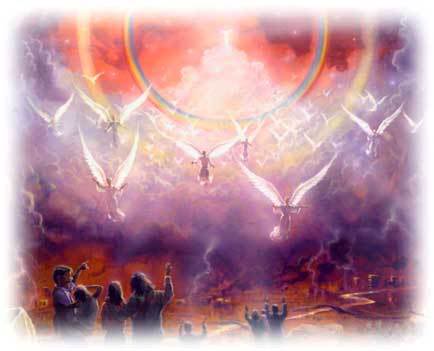


 LIVING ETERNAL NOW