WHERE DID JESUS GO FOR THE THREE DAYS BETWEEN THE CROSS AND THE EMPTY TOMB?

Most people treat those three days as a gap, a pause, a silence between the tragedy of Friday and the miracle of Sunday. They were not silence. What happened during those three days in the unseen realm, in the spiritual dimension that runs beneath everything we can see and touch was the most consequential, and the most deeply personal sequence of events in the entire history of creation. I am going to show you. three things, each one building on the last, each one more staggering than the one before it. And all three are answers to the same question. Where exactly did Jesus go during those three days? Why did he have to go there? And what did he actually do while he was there?

First, where he went. When Jesus died on that cross on Friday afternoon, His body was sealed in a tomb, but his soul went somewhere. and the Apostles Creed reveals where. If you do not know the Apostles Creed, Google it. There are four words buried inside it that describe the first destination of Jesus after death. Four words that contain one of the most explosive, most liberating truths in all of Christian history. Maybe, you have said them many times. You’ve almost certainly never understood what they were actually telling you about where Jesus went and what the place he descended into actually looked like. Because nobody showed you the map. The ancient world, the world of Abraham, Moses, David, and Jesus himself had a detailed, vivid, specific understanding of what the realm of the dead looked like, what it was divided into, who was there, and why. That map is almost entirely lost to modern Christianity. And without it, those four words are just words. By the end of this presentation, you will have that map. You will know exactly where Jesus went. And you will never say those four words the same way again.

Second, why He went to Sheol/Hell. This is the question almost nobody ever answers directly. Why did Jesus, the son of God, whose suffering was finished at the cross, descend into the realm of the dead at all? Why did he go there? What was the reason? And underneath that question is an even deeper one that will reframe everything you think you know about the cross. Why was heaven’s door locked in the first place? Why could Abraham, the father of faith, the man God called his friend, not enter heaven when he died? Why could Moses not? Why could David not? Why could not a single human soul, no matter how righteous, no matter how faithful, no matter how beloved by God, could walk through the gates of heaven, until a single specific, unrepeatable moment in history? What was the lock on that door? And what made the cross, and only the cross, the key that could open it? Jesus went to hell because the door had been locked since the Garden of Eden. And He went there as the only one in all of creation who had just paid the price to unlock it. When you understand this fully, the crucifixion will never look like tragedy to you again. It will look like the greatest unlocking in the history of eternity.

Third, what He did while he was there. This is where it becomes almost impossible to believe until you see it with full context. There are two verses in the 27th chapter of Matthew that almost every person who has ever read them has quietly passed over. Most people assume they are symbolic. Most people file them away without fully processing what they actually describe. Those two verses record the visible, physical, publicly witnessed aftermath of what Jesus accomplished during those three days in the realm of the dead. Something so extreme, so documented in the streets of Jerusalem, so undeniable that historians have never been able to fully explain it away. And when you understand what those verses actually record, you will finally understand why a group of men hiding behind a locked door on Saturday in absolute terror became by Sunday morning. People who were willing to die rather than stop talking about what they had witnessed. They were not moved by faith alone. They were moved by something they saw with their own eyes in their own city among people they knew by name. Three promises, three revelations, each one an answer to the title of this presentation. Where Jesus went, why he went, and what he did. Each one building on the last. Now to understand what happened during those three days, you first need to understand something that the first century Jewish world knew as common knowledge and that modern Christianity has almost completely forgotten. You need to understand how the ancient world, the world of Abraham, of Moses, of David, of Jesus himself understood what happens when a person dies. Because the picture they carried is radically, shockingly different from the clean binary most of us were raised with. Heaven or hell, good or bad. The scriptures do not teach that picture. Not in the Old Testament, not in the New Testament, not in the words of Jesus. The ancient Hebrew word for the realm of the dead was Sheol in Greek. The language of the New Testament and the early church. That same realm was called Hades. And here is what every first century Jew understood instinctively that most modern Christians do not. Sheol/Hades was not reserved for the wicked alone. It was the destination of every human soul that ever died. Righteous and wicked, holy obedient and rebellious. The evidence for this is not subtle. Jacob, the patriarch, the man who wrestled with God and was renamed Israel when he believed his son Joseph had been killed, said simply, “I will go down to Sheol.” Mourning, not, “I will go to a place of punishment.” He expected, as a matter of course, to go to Sheol. David, the man described as after God’s own heart, the greatest king in Israel’s history, the writer of the Psalms, wrote repeatedly about Sheol as the destination of his own soul. In Psalm 16, he cried out, “Do not abandon my soul to Sheol, not do not send me to Sheol as punishment.” He wrote from the understanding that Sheol was where souls go, all souls. And in one of the most haunting moments in all of the Old Testament, when King Saul visited the witch of Endor, and she called up the spirit of the dead prophet Samuel, Samuel rose from Sheol, the righteous prophet, the holy man, from Sheol. Now, pause here because this is where it gets truly extraordinary. If both the righteous and the wicked descended into Sheol, were they all experiencing the same thing? No. And this is where the picture Jesus drew for his listeners becomes something you will not easily forget. Because Sheol was divided, two sides, two entirely different experiences, separated by a chasm so absolute, so permanent that not a single soul in the history of the world had ever crossed it. Jesus described this geography himself in precise deliberate detail in a parable recorded in the 16th chapter of Luke. A wealthy man and a poor man named Lazarus both die. Lazarus is carried by angels to a place the Jewish people called Abraham’s bosom. The warmest, most tender name they knew for the waiting place of the righteous, the father’s chest, the place of sheltered rest. Think of a child exhausted and frightened finally being gathered in against the chest of their father. That is the image. The rich man opens his eyes on the other side of that chasm. Torment, heat, anguish, no comfort. And from there he can see across a void he cannot cross. Abraham and Lazarus resting at his side. He cries out. He begs. He pleads for a warning to be sent to his living brothers. And Abraham answers with eight words that carry the weight of eternity. A great chasm has been fixed between us. Fixed, permanent, irreversible. No crossing, no negotiation, no exceptions. Now Jesus tells this parable with deliberate precision. He is not simply warning against greed. He is handing his listeners a map of the spiritual reality that governed every human death. from Abel, the first man to die, all the way to the cross. And what that map shows is the detail that unlocks everything else we are going to discover today. Even the righteous dead, even Abraham himself, were not in heaven. Read that again. Abraham, the father of faith, the man God called his friend. The man who had left his homeland on the strength of a single divine command and believed promises that stretched further than any human lifetime could reach. Not in heaven, in Abraham’s bosom, yes, but still in Sheol. Still in the realm of the dead, still on the wrong side of a door that had not yet been opened. Still waiting. And so was every other faithful soul who had died before the cross. from Abel to Moses, from Joshua to Elijah, from Isaiah who described the suffering servant with the precision of a prophet who somehow saw it 700 years before it happened to the very last righteous soul who closed their eyes before Good Friday. All of them waiting. But waiting for what? And why? That question, the question of why the door was locked at all. The answer is about to reframe everything. But first, I need to show you what happened to Jesus the moment he died. Because there is a phrase you have been reciting your entire life that is about to tell you something you may never have fully understood until this moment. Think about the Apostles Creed. Between was crucified, died, and was buried. And on the third day, he rose again from the dead. There are four words that most sail past without ever stopping to truly ask what they mean. He descended into hell. Here is what those four words actually mean. Here is what the church has taught about them for 2,000 years. And once you truly understand it, you will feel those four words in a completely different part of yourself. The original Latin of the apostles creed does not say descended in Ghenna, the place of fire and eternal punishment. It says descended into inferos. He descended into the lower regions. The word inferos is identical to Hades in Greek and Sheol in Hebrew. It simply means the realm of the dead, the place beneath, the holding ground of all departed souls. This was the first meaning given in the apostolic preaching to Christ’s descent into hell that Jesus like all men experienced death and in His soul joined the others in the realm of the dead. But He descended there as Saviour. Not as a prisoner, not as a soul. Being punished further for our sins. His suffering was finished at the cross. It is finished meant exactly that. He descended as Saviour. As a king entering territory he came to conquer with purpose, with power, with the completed work of the cross held in his hands like the key to a door that had been sealed for thousands of years. But now we arrive at the deepest question. Why was the door sealed? Why couldn’t righteous souls, faithful, holy souls who loved God, simply enter heaven when they died? What was the lock on the door? Here is the answer. And it begins, as so many things in scripture do, in a garden. When Adam and Eve sinned, when the first human act of disobedience shattered the original communion between humanity and God, something broke that no human being in all of subsequent history possessed the ability to repair. The door between humanity and the full presence of God swung shut. Not because God withdrew his love. Not because he stopped caring for the men and women he had made, but because the fullness of his justice, which is not cruelty, but the deepest expression of his holiness, required a payment for sin that no finite human life could make. Think of it this way. Every human being who ever lived, including the most righteous, the most obedient, the most beloved by God, carried with them the inherited wound of original sin. Not a personal guilt they had earned, but a condition they had been born into. A fracture in human nature that ran all the way back to the garden. Abraham did not earn that fracture, but he carried it. Moses, who spoke with God face to face on Mount Sinai, carried it. David, the man after God’s own heart, carried it. John the Baptist, whom Jesus called the greatest man born of women, carried it. And the full presence of God, the beatific vision, the unveiled face of the father requires a soul that has been completely, infinitely, perfectly reconciled, not mostly reconciled, not mostly forgiven, completely. The debt was real. The debt was infinite in its weight. And no finite human life, however holy, however faithful, could make an infinite payment. So the righteous dead waited. They waited in Abraham’s bosom, in peace, in comfort, in the presence of the patriarchs and the prophets. Not suffering, not forgotten, not abandoned, but waiting. Waiting for a payment they could not make themselves. Waiting for a door they could not open from the inside. Waiting for the fulfilment of a promise that had been made in the very moment their first parents were expelled from Eden. A promise embedded in the words God spoke to the serpent in Genesis 3:15. I will put enmity between you and the woman and between your offspring and hers. He will crush your head. The first prophecy of the Messiah spoken in the garden. In the very moment the door first closed, a promise that the one who would unlock it was already coming. And they waited. Abel, the first human being to die in faith, waited the longest. Then Adam and Eve arrived in Sheol carrying the weight of knowing that it was their act that had started the chain of events that made the weight necessary in the first place. Thousands of years passed. One prophet after another descended into Abraham’s bosom with nothing but the promise and the faith that it would one day be kept. And then on a Friday afternoon in Jerusalem at 3:00 in the afternoon, as the Passover lambs were being slaughtered in the temple, a man hanging on a cross between two criminals cried out in a loud voice, “It is finished,” and bowed his head and breathed his last. The debt was paid in full by the only one in all of creation with infinite worth to offer. The son of God in whom human nature and divine nature were perfectly united. Whose sacrifice therefore carried infinite weight, infinite sufficiency, infinite completeness. The door was unlocked and the one who had just paid the price descended immediately, purposefully as Saviour into the realm of the dead. Now, here is what Jesus said to the dying criminal beside him in his final breaths on the cross. Today, today you will be with me in paradise. Today, the same day, immediately. Which means the moment Jesus’ spirit left his body, he descended into Sheol into Paradise into Abraham’s bosom, carrying the completed, finished, perfect work of the cross directly to the souls who had been waiting for it since the beginning of the world. He descended there as Saviour. The descent into hell brings the gospel message of salvation to complete fulfilment. This is the last phase of Jesus’s messianic mission, the spread of Christ’s redemptive work to all men of all times and all places. The last phase. The mission was not complete at the cross alone. The cross paid the price. The descent delivered it to every soul who had ever lived in faith and died before the payment could be made. This is why Jesus had to descend not as punishment, not as additional suffering, but because a Saviour does not merely pay the ransom from a distance. He goes in person to bring the captives home. And now with the door unlocked and the work of the cross in hand, Jesus did something that almost no preacher ever explains.

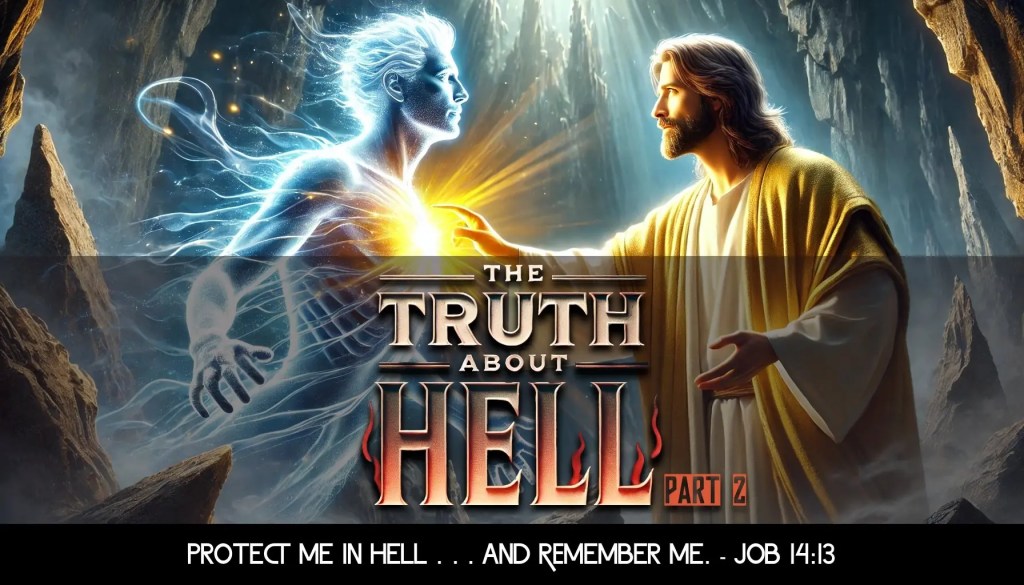
Jesus went somewhere first. Before he went to Abraham’s bosom, before he gathered the waiting souls, he went somewhere darker to someone who was not waiting for rescue. And what he said in the darkest place in creation is recorded in one of the most mysterious, most avoided, most theologically explosive passages in the New Testament. And what he did after that, what he said when he turned toward the light, toward the waiting souls, toward thousands of years of patient faith finally about to be rewarded. You are about to hear all of it for the first time with full context, and it will permanently change the way you see the power of the cross. First letter of Peter 3:18-20. Hear every word carefully, every single word is loadbearing. Peter writes, “Christ also suffered once for sins, the righteous for the unrighteous, that he might bring us to God, being put to death in the flesh, but made alive in the spirit, in which he also went and proclaimed to the spirits in prison, who had formerly been disobedient when God’s patience waited in the days of Noah, while the ark was being prepared. He went and proclaimed to the spirits in prison.” Three questions tear open from the middle of that sentence. Who were these spirits? Where was this prison? And what precisely did he proclaim to them? Augustine, called this passage replete with difficulties. Scholars, saints, and church fathers have wrestled with it for 20 centuries. So, let’s build the answer from the ground up carefully. Some interpreters have suggested these spirits were the human souls of those who perished in Noah’s flood. People who heard God’s warning through Noah, rejected it, drowned in judgment, and were now imprisoned in the torment side of Sheol. But this interpretation runs directly into the wall of Hebrews chapter 9 27. It is appointed for man to die once and after that comes judgment. Once then judgment. No second chances. No post-mortem appeals. The decision of this life is irrevocably sealed at death. So Jesus was not offering those spirits salvation or a second chance. The most the text says is that he proclaimed something to them. What then was he proclaiming? And who exactly were these imprisoned spirits? Look at what Peter writes just three sentences later, verse 22, as he describes Jesus ascending to the right hand of the father. Angels, authorities, and powers had been made subject to Him. Powers made subject to Him. The language of conquest, the language of military dominance, the language of a war that has been decisively, permanently won. Now read the letter of Jude verse 6 written by the same apostolic circle in the same generation drawing on the same tradition. The angels who did not keep their own position of authority but abandoned their proper dwelling. These He has kept in eternal chains under gloomy darkness until the judgment of the great day. Chained in darkness in a prison awaiting final judgment. And the connection to Noah explicitly named by Peter echoed in Jude is not decorative. In the ancient Jewish tradition that both apostles were drawing from, these were supernatural beings of enormous ancient power. beings who had transgressed the boundaries of their station in the days before the flood, who had worked against the plan of God for humanity since before the written memory of the world, and who had been imprisoned in the depths of Sheol ever since. Chained, waiting for a judgment they knew was coming. Now Jesus, fresh from the cross, his suffering complete, the debt paid, the victory secured, he descended into the realm of the dead. And he went to their prison first, not to offer mercy, not to negotiate, not to give them a second chance, but to declare, to stand in front of the most ancient, most powerful, most long imprisoned enemies of humanity, and announce face to face in their own domain what the cross had accomplished. The Apostle Paul captures the image perfectly in Colossians 2:15. He disarmed the rulers and authorities and put them to open shame, triumphing over them in him. Triumphing. The Greek word there is the exact word for a Roman military triumph. The ceremony where a victorious general would march his defeated enemies through the streets of Rome in chains, making a public spectacle of their humiliation, announcing to the whole world that the war was over and there was only one outcome. Jesus did that not in the streets of Rome, not before human eyes, in the depths of the spiritual realm, in the prison of the powers that had opposed God’s people since before Noah’s flood. He walked in. He stood before them. He declared his absolute irreversible dominion over everything they had ever tried to destroy. You thought the cross was your victory. It was mine. You are judged, and I hold the keys.

Then he turned. He turned away from the darkness and moved toward the light, toward Abraham’s bosom, toward the righteous dead, toward every faithful soul that had been waiting since the beginning of the world. And what happened in that moment? The moment Jesus arrived in the place of waiting. The moment a select group of souls, the souls of Abraham, of Moses, of David, of Isaiah, and other prophets who had died heard His voice. That moment is described in language so beautiful and so precise that it has taken people’s breath away for nearly 20 centuries. and what followed it. What happened in the days surrounding the resurrection recorded in two verses in Matthew 27 that most people have read and quietly almost unconsciously passed over as if they couldn’t possibly mean what they say. That is where we are going next. What those two verses describe, the physical, documented, publicly witnessed thing that happened in the streets of Jerusalem is the reason a group of terrified men hiding behind a locked door on Saturday were by Sunday morning willing to die for what they had seen. It is interesting that there is a holy Saturday liturgically in the Catholic church in the Eastern churches in the traditions that preserve the full memory of the Triduum. Holy Saturday is not simply the day before Easter. It is a day of its own. A day with its own theology. A day when the church has for nearly 2,000 years sat in the awareness of what was happening in the unseen realm between the sealed tomb and the empty one. And every year in the office of readings on Holy Saturday, the Catholic Church reads aloud an ancient homily. Nobody knows who wrote it. It has survived for nearly 2,000 years. And what it describes in language so beautiful and so precise that it takes your breath away is the moment Jesus arrived in the place of waiting. I want you to hear part of it now. The homily begins. Today a great silence reigns on earth. A great silence and a great stillness. A great silence because the king is asleep. And then it describes Jesus descending into the realm of the dead, searching, moving through the darkness, looking for someone. And it gives him words. Words the church has proclaimed on Holy Saturday for nearly 20 centuries. He has gone to search for Adam, our first father. As for a lost sheep, he greatly desires to visit those who live in darkness and in the shadow of death. He goes to free from sorrow Adam and Eve captive with him. He says to Adam, “I am your God who for your sake have become your son. I order you, oh sleeper, to awake. I did not create you to be a prisoner in the realm of the dead. Rise from the dead, for I am the life of the dead. Rise from the dead, I am the life of the dead. The first person Jesus came looking for when he entered the place of waiting. The first soul he sought in that vast company of the righteous dead was Adam. The man whose sin had started everything. The man whose act of disobedience in the Garden of Eden had locked the door that Jesus had just died to unlock. the man who had been waiting in Sheol longer than any other human soul in existence. And Jesus came for him first. Not last, not eventually, first. As a shepherd searches for a lost sheep, as a father runs toward a son he sees coming down the road. He found him. He found Abraham who had left on the strength of a promise he never saw completed in his lifetime. Sarah, Isaac, Jacob, Joseph, Moses, who had spoken with God face to face and died within sight of the promised land. Elijah who had stood on Mount Carmel and called down fire from heaven. Isaiah who had written about the pierced servant 700 years before the crucifixion. David who had written, “You will not abandon my soul to Sheol” and spent his entire life believing those words before they were fulfilled. John the Baptist who had pointed at Jesus in the Jordan River and said, “Behold the Lamb of God,” and was then beheaded in a dungeon and had waited here for the one whose coming he had announced. and the thief on the cross who had said, “Remember me,” just hours before, and was told, “Today you will be with me in paradise,” resting there exactly as promised. Every soul from Abel to that thief, every person who had ever lived and died, trusting in the promise that began in Genesis 3:15, Jesus gathered them all. The Apostle Paul captures this in Ephesians 4:8-10 quoting the ancient Hebrew victory hymn Psalm 68. When he ascended on high, he led a host of captives, a host, not a handful, the vast, indescribable multitude of every righteous soul who had ever died waiting for this moment. Led out, led up, led through the door that the cross had just unlocked. The door that had been sealed since Eden. the door that only infinite love poured out on a cross could have ever opened into the full unveiled eternal face-to-face presence of God. The waiting was over. The debt was paid. The door was open. Heaven received human souls, real ones, named ones, beloved ones, for the first time since the garden was closed.

And then on the third day, something happened in the visible world. The stone was rolled away. The tomb was empty. The body was gone. And Matthew recording what followed in the days surrounding the resurrection writes two verses that most people have passed over their entire Chapter 27:52 and 53. And I need you to hear these as if for the first time because what they describe is not a symbol. It is not a metaphor. It is not poetry. It is a report. The tombs also were opened, and many bodies of a select group of Saints who had fallen asleep were raised. And coming out of the tombs after his resurrection, they went into the holy city and appeared to many. Many bodies of the saints raised, coming out of their tombs, walking into Jerusalem, appearing in person, face to face, recognized to many people. Matthew is writing for an audience in Jerusalem. who knew their neighbours. People who could walk to the houses of the people he was describing. People who could ask. People who had seen. This is the first fruits. This is the visible physical publicly witnessed confirmation that what happened in the unseen realm during those three days was real and that it was exactly what Jesus said it would be. Death had not merely been survived. It had been invaded, conquered from the inside, and its captives had been set free. Now, do you understand why the disciples were unafraid on Sunday morning? They had seen people they knew, people who had died walking through the streets of their city. This was not rumour. This was not religious enthusiasm. This was their neighbours, their families, people with names and faces and histories. And Peter standing before a Jerusalem crowd 50 days later at Pentecost did something no one could refute. He quoted David, “You will not abandon my soul to Sheol.” And then made the argument that silenced the city. David wrote those words, “But David died.” David’s body is still in that tomb. You can walk to it right now. So David was not writing about himself. He was writing about someone whose soul would actually escape Sheol. Someone whose body would not stay in the ground. And then Peter said, “That someone, we saw him. We touched him. He stood in rooms we locked from the inside. He ate with us. He is not in any tomb.” And the crowd Peter was speaking to, many of them had been in Jerusalem weeks earlier. Some of them had seen the raised saints with their own eyes walking recognized in the streets of their own city. This was not a rumour. This was not one man’s testimony. This was a city full of witnesses and not one of them could produce a body. Now, right here is where I need to bring this home to you personally directly because none of this is merely ancient history. Revelation 1 verse 18. The risen Christ speaks to the Apostle John on the island of Patmos. After the cross, after the descent, after the resurrection, after everything, he says, “I am the living one. I died and behold, I am alive forever more. And I have the keys of death and Hades.” The keys. Before the cross, death held those keys. Every soul that died, even the righteous, even the beloved, entered Sheol and could not leave. Death held them. The door held them. The debt held them. But Jesus paid the debt. Jesus walked into death’s territory. Jesus proclaimed his victory to every dark power within it. Jesus gathered every captive who had been waiting since the beginning. Jesus led them home. Jesus walked out. And he came back holding the keys. Death. no longer holds them. He does. Which means this, and I need you to hear this personally. Wherever you are right now, whatever you are carrying. If you belong to Jesus Christ, if you have placed your faith in the one who died and rose, then when your last breath comes, you do not go to a waiting place. Abraham’s bosom has been emptied. The holding room has been cleared, the door is wide open. You go directly immediately into the presence of the Lord. The Apostle Paul wrote those words from a prison cell in Rome with his own execution approaching. He wrote them without grief, without fear, without negotiation. For me to live is Christ, and to die is gain. I desire to depart and to be with Christ, for that is far better. to depart and to be with Christ, not to wait, not to rest in a holding space at the edge of heaven, to be with Christ face to face. This is only possible because of those three days, because of the descent, because of the proclamation, because of the rescue, because of the door that was unlocked by the only payment that could ever have been sufficient. This is why the church has proclaimed at Christian burials for 2,000 years, “Death has been swallowed up in victory. Oh death, where is your victory? Oh death, where is your sting?” This is why the martyrs sang. Not because death didn’t hurt, but because they had seen or heard from witnesses who had seen exactly what was waiting on the other side of it. A Lord who had been there. A Lord who had gone ahead. A Lord who had cleared every obstacle, defeated every power, and was standing at the door with the keys in his hand. Are you afraid of death, your own, someone you love? Are you sitting in grief right now wondering whether the person you lost is truly safely completely held? Then I want you to take the three days seriously. Not just the cross, not just the empty tomb, the three days in between. Because the cross paid the price, but the three days proved the rescue was personal. He didn’t just unlock the door from outside and say, “Go ahead in.” He went in himself. He went to every soul waiting in the dark. He said to Adam, to everyone. I did not create you to be a prisoner here. Rise, come home. And that is what he is saying to everyone who comes to him. Now the door is open. He went first and he is there on the other side waiting. Now I want to leave you with something that has nothing to do with theology. Just a question. One question that every human being who has ever lived has had to face and that most people spend their entire lives trying not to look at directly. What happens to me when I die? Not in the abstract, not as a doctrinal position. Not as a line in a creed you recite on Sunday. What happens to you? your soul. The people you have loved, the losses you have not fully recovered from, the fear that visits you in the quiet moments. What happens to that person when the last breath comes before today? Maybe the honest answer was, I believe something happens. I hope it is good, but I do not fully know. And that uncertainty lives in me like a stone I cannot put down. That is an honest place to be. Most people live there their entire lives. Even people who sit in church every week. But here is what those three days change. Jesus did not rise from the dead and leave us a theology. He left us a testimony. He went to the place every human soul goes after death. He walked through it. He saw it from the inside. He did not send an angel. He did not issue a decree from a safe distance. He descended personally, purposefully as the son of God who had just become the son of man into the same darkness every human being has ever feared. And he came with the keys. Which means the question, “What happens when I die?” is no longer a question you have to answer with hope alone. It is a question that has been answered by someone who has been there, not theorized, not imagined, been there. And what he found on the other side and what he made possible by going is the thing that changes everything about how you live on this side. The people you have lost, if they died in faith, if they trusted the one who holds those keys, they are not in a waiting room. They are not in the dark. They are not suspended somewhere between here and a heaven that has not quite opened for them yet. The door is open. It has been open since the moment Jesus walked out of that tomb. And they went through it held safe, face to face with the one who descended into death specifically so that no soul who trusted him would ever have to face it alone. That is the testimony of a man who died went there and came back holding the proof. So when the fear comes and it will come because you are human and death is real and grief is not something you logic your way out of. I want you to remember not a doctrine. I want you to remember a man walking out of a tomb holding keys that used to belong to death. saying to everyone on this side and to everyone waiting on the other side, the same thing he said to Adam in the dark. I did not create you to be a prisoner here. Rise, come home. That is what those three days were for. That is the gospel in full.

WHAT DOES THE BIBLE TEACH ON HELL?

It is good to see more Biblical teaching on the fate of unbelievers. It is certainly not eternal conscious torment that has been the teaching of most institutional churches. Gary Black of Life, Hope, and Truth Ministries (www.lifehopeandtruth.com) explains why hell is not a place of eternal torment and how the Christian world came to that mistaken idea.

The research I did for my own book on this topic: Lake of Fire – Terminal Punishment/Second Death; Eternal Conscious Torment; Universal Redemption? (available as an ebook on Amazon) revealed that in the first five centuries, there were six known theological schools. Four of them taught that all people would eventually be rescued from Hell (Apocatastasis): these being the theological schools at Alexandria, Antioch, Caesarea, and Edessa/Nisbis. One school, Ephesus, taught Annihilationism (that sinners are totally incinerated into nothingness in the Lake of Fire). Only one theological school, Rome/Carthage taught eternal punishment. Source: The New Schaff-Herzog Encyclopedia of Religious Knowledge, Universalism entry, p. 96, Baker Book House. In fact, a case can be made that when the Church rejected a high view of God’s goodness and replaced it with a view of God as an eternal torturer, the Dark Ages began, almost to the day.

DO WE HAVE AN IMMORTAL SOUL?

Modern, mainstream Christianity teaches that our bodies die, but we live on as souls. So why does the Bible teach something else entirely? Knowing what your soul is—and what happens to it after you die—is a core concept of Christianity. Join Gary Black as he explains both the biblical teaching of the soul and how that teaching became corrupted over the centuries.

Then when death comes to a man, the mortal part, it seems dies, but the immortal part goes away unharmed and undestroyed withdrawing from death.” Plato, Phaedo 106e

Understanding the soul is not immortal is critical to understanding that eternal conscious torment is not the fate of the unrepentant.

Then Death and Hades were thrown into the lake of fire. This is the second death, the lake of fire. And if anyone’s name was not found written in the Book of Life, he was thrown into the lake of fire.” Revelation 20:14-15

But as for the cowardly, the faithless, the detestable, as for murderers, the sexually immoral, sorcerers, idolaters, and all liars, their portion will be in the lake that burns with fire and sulfur, which is the second death. Revelation 21:8-9

And do not fear those who kill the body but cannot kill the soul. Rather fear him who can destroy both soul and body in hell.Matthew 10:28

WHY PEOPLE REJECT GOD

The reason a young former pastor renounced his Christian faith and rejected God was because: “How could a loving God reject people who were sincere in whatever faith they held? Would He truly condemn them because they understood Him differently than those professing faith in Jesus Christ as their Savior and Lord?”

This young man’s issue was not the historical credibility of the resurrection of Jesus or the reliability of the Genesis narrative regarding the Fall of Man. Instead, he was offended by the idea that a God of mercy would not welcome into eternal life everyone who seemed to be earnest in whatever faith they have. Put simply, this former pastor decided to create a new god, one in his own image.

Former evangelical pastor Rob Bell turned from biblical faith several years ago by denying the reality of Hell. He like so many leaders of denominational churches believe the Bible teaches non-believers will be tormented for all eternity in the Lake of Fire and yet the Bible clearly teaches that after the White Throne judgement, there is a second death in the Lake of Fire.

For the wages of sin is death, but the free gift of God is eternal life in Christ Jesus our Lord.” Romans 6:23

Bell was right in believing eternity in Hell is hardly just, and is inconsistent with the nature of the God – Who is love. This belief cost him eternal life with his Creator.

My book on the Lake of Fire is available as an ebook on Amazon.

But as for the cowardly, the faithless, the detestable, as for murderers, the sexually immoral, sorcerers, idolaters, and all liars, their portion will be in the lake that burns with fire and sulfur, which is the second death.” Revelation 21:8 (also see Revelation 2:11, 20:6, and 20:14)

In reading various “de-conversion” stories, accounts by and about people who have left their Christian faith, there is a persistent theme. It’s not about the reasonableness of Christianity, its intellectual coherence, or the credibility of its propositional claims. Rather, they come to a point where their dislike of certain doctrines or practices leads them to abandon their walk with Christ. They jettison their faith because it does not comport with their preferences. Or, put another way, the God of Scripture is not Who they want Him to be.

I often wonder if these people were been born again by the Holy Spirit. Jesus made it possible for God the Father to send the Holy Spirit to indwell our Spirit to be our Counsellor, our Teacher, and our Comforter. Jesus said He will bring us into all truth if we let Him.

We need to know God is not like us. He cannot denigrate the purity of His character by acting as though our transgressions really aren’t a big deal. And that’s the sticking point: the eternal Triune God is not concerned with conforming to our expectations. His character is not malleable, and He is not accountable to us for what He does.

Consider the story of Job. God allows Job’s entire family to be murdered, his vast wealth stolen, and his health broken. Job calls out to God, demanding to know why He has permitted these things given that he, Job, has been so faithful to Him. God is uncompelled to justify Himself to Job. Instead, He says, “Will the faultfinder (Job) contend with the Almighty? Let him who reproves God answer it” (Job 40:1).

Similarly, when Paul debates with an imaginary rhetorical opponent about God’s sovereignty and human free will, the apostle does not try to dissect something beyond man’s grasp. Instead, he affirms that “there is no injustice with God” and asks, “Who are you, o man, to answer back to God?” (Romans 9:14, 20).

But this same God is infinitely loving and desires no one to perish but all to come to repentance and faith in His Son (2 Peter 3:9). This is why He invites us into a relationship with Himself. In His great, undeserved kindness, God has revealed Himself to us. “His invisible attributes, namely, His eternal power and divine nature, have been clearly perceived, ever since the creation of the world, in the things that have been made,” Paul asserts (Romans 1:20). His power, intelligence, and love are displayed in a world that is complex, ordered, and abundant. The heavens, “the work of His fingers,” declare His glory (Psalms 8:4, 19:1).

He has revealed Himself in our very natures, with the weight of moral duty “written on our hearts” (Romans 2:15) and eternity placed within them (Ecclesiastes 3:11). He has revealed His character and desires, His demands, and His offer of everlasting life, in the pages of text composed by numerous men over the course of many centuries. The Bible is His written revelation.

Most profoundly, He has revealed Himself in the person of Jesus of Nazareth, the Son of Man and Son of God, sinless and righteous, Who took the penalty for sin we deserve as He died on the cross, and whose resurrection heralded His victory over sin, death, and the devil. Trusting in Him and Him alone for forgiveness, we receive life, eternal life, that He alone can give. Moreover, Jesus made it possible for us to receive the third person of the Trinity, the Holy Spirit into our Spirit to enable us to live the Christian life.

This is news so grand that it invites adoration of the One offering it. It should create in us a longing to know and follow Him, not turn our backs on Him because He does not seek to appease our finite indignation about things we can’t grasp. Would you really want to serve a God so eager to be liked He debases His Majesty to plead for our approval?

“A man can no more diminish God’s glory by refusing to worship Him,” wrote C.S. Lewis, “than a lunatic can put out the sun by scribbling the word ‘darkness’ on the walls of his cell.” He is Who He is and invites us to know Him — and that’s the best news of all.

WHY LIVE ETERNALLY NOW?

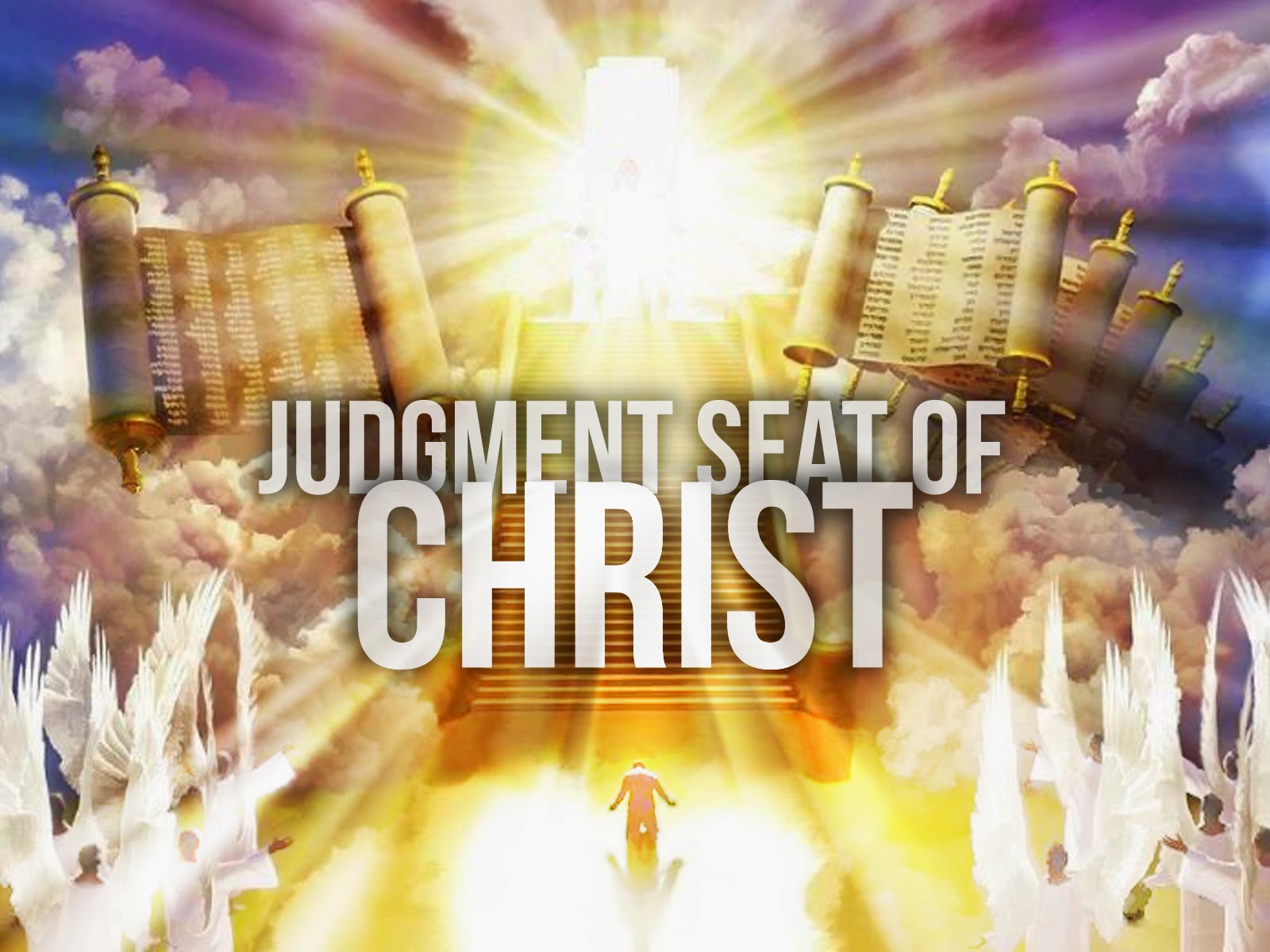
Why should you be living eternally now? All believers will appear before the judgment seat of Christ and whilst our eternal destiny is safe what we have done will affect our rewards. For Christians that are raised in the first resurrection and are raptured with the living Saints, it is generally agreed that we will face the judgment seat of Christ during the time (Isaiah 34:8, Isaiah 61:2, Isaiah 63:4) we are in heaven before returning to earth with Jesus. If you disagree, keep in mind that these are not my words, but God’s. Jesus, speaking to both believers and unbelievers, said, “I tell you, on the day of judgment people will give account for every careless word they speak, for by your words you will be justified, and by your words, you will be condemned.” Matthew 12:36-37. Also, Paul said, “For we must all appear before the judgment seat of Christ, so that each one may receive what is due for what he has done in the body, whether good or evil” 2 Corinthians 5:10

There are two different judgments in God’s Word: the judgment of faith, and the judgment of works. The judgment of faith relates to our eternal salvation, while the judgment of works relates to our eternal rewards.

For Christians, salvation took place in a moment in the past. It was free, it can’t be lost, it is the same for all Christians, and it is solely based on a faith that is ours by the grace of God alone. By contrast, future rewards are earned (by God’s grace), can be lost, differ among Christians, and are based on our efforts.

Salvation is about God’s work for us. Conversely, rewards are a matter of our work for God. When it comes to salvation, our work for God is no substitute for God’s work for us. God saves us because of Christ’s work, not ours. Likewise, when it comes to rewards, God rewards us for our work, not Christ’s. (Our good works are empowered by the Holy Spirit; nevertheless, we need to submit to Him so God refers to it as our work.)

Let me be sure this is perfectly clear. Christ paid the price for all of our sins, once and for all (Hebrews 10:12-18). If we have trusted Him for that provision, we will not pay the eternal price, the second death. He has fully forgiven our sins, and we are completely secure in Christ’s love (Psalm 103:8-18; Romans 8:31-39). Our salvation is sure, and we will not undergo the judgment of condemnation (John 5:24; Romans 8:1).

But although the forgiveness of our sins has every bearing on our eternal destination, it has no automatic and effortless effect on our eternal rewards, apart from the fact that God’s sanctifying work comes out of our salvation, and therefore we should expect that the Holy Spirit’s presence in our lives should lead us to do good works that God will reward. But we must choose to do the works He prompts us to do. Neither does it mean our choices have no consequences in eternity. Forgiven people can still lose their rewards or forfeit eternal positions of responsibility they could have had if they’d served Christ consistently and faithfully before death.

Trust in Christ, lean on Him, and draw upon Him for power, for apart from Him we can do nothing. But if we hope to receive a reward, we must still do the necessary work. As our forefathers put it, to wear the crown we must first bear the cross.

Just as there are eternal consequences to our faith, so there are eternal consequences to our works.

What we do with our resources—including our time, money, and possessions—will matter not just twenty minutes, twenty days, or twenty years from now. It will matter twenty trillion years from now.

Though Paul insists we are saved by faith, not works (Titus 3:5), he also clearly states that the choices we make and the things we do have eternal implications, and that we will each answer to God for the works we have done in this life:

If anyone builds on this foundation [Christ] using gold, silver, costly stones, wood, hay or straw, their work will be shown for what it is, because the Day will bring it to light. It will be revealed with fire, and the fire will test the quality of each person’s work. If what has been built survives, the builder will receive a reward. If it is burned up, the builder will suffer loss but yet will be saved—even though only as one escaping through the flames. (1 Corinthians 3:12-15)

Those believers who have been less faithful and obedient in their walk with Christ will not suffer loss of salvation! But they will suffer loss of the reward that would have been theirs had they been more Christ-centered and faithful in their service to Jesus.

What 1 Corinthians 3 says is so sobering that a temporary loss doesn’t seem likely.  This loss of rewards appears permanent, for while we will all serve God in our resurrected bodies on His New Earth, there appears to be a finality to the fact that after death comes judgment (Hebrews 9:27). If there are any future judgments for our service to God on the New Earth, we are not told about them in Scripture. Of course, we should anticipate for our future service He will say to all of his children, “Well done!” And yet, despite Scripture’s silence on this, I think it’s very possible that God, who is by nature a rewarder ( ), may continue to reward His people for faithful service on the New Earth. That resonates with me, and I don’t see anything unbiblical about it. It fully fits His nature as a Father who takes joy in saying “Well done” to His devoted children.

Earning Our Full Reward

First Corinthians isn’t the only passage that speaks of losing reward. The apostle John wrote, “Watch yourselves, so that you may not lose what we have worked for, but may win a full reward” (2 John 1:8, ESV).

To win a full reward would be glorious, wouldn’t it?  But surely all of us will regret some of our decisions on that day when we “suffer loss” or “lose what we have worked for.” Anticipating standing before the judgment seat of Christ should motivate us to follow Him wholeheartedly and generate in us a proper fear of God.

All of us will be full of joy in Heaven, but those who served Him faithfully, particularly in the midst of adversity, will have been made, by God’s grace, into larger vessels. They won’t be fuller of joy, but they will have a greater capacity, and their fullness will accordingly contain even more joy. (Hence the special place in Revelation given to the martyrs.) There won’t be envy or regret, because of our new natures, and all will be full of joy, yet there will be true continuity and eternal consequence so that what we do—not just what we believe—in this life affects the next.

Maybe one way to say it is that the “loss” of rewards is in some sense permanent, but the “suffering” of that loss will be temporary. God will do away with the suffering (Revelation 21:4), but that is after the judgment, after we give an account to the Lord. The suffering of regret will be there at the judgment (how could it not be?) before entrance to the eternal state, but then comes the learning and purifying and eternal rejoicing. Perhaps we’ll offer a short, entirely sincere, “I regret my lack of faith and faithfulness,” expressing this to our God who graciously forgives. Then, with that forever behind us, we move on to eternal joy.

But there will be no ongoing suffering, for all our regrets about our past will be overshadowed by God’s grace. Yet if there were no reckoning, no “suffering loss” then the 1 Corinthians 3 passage would be meaningless (which is exactly what most teaching on the subject reduces it to). Some will object that this is a sort of Protestant purgatory, just shorter in duration than languishing in the flames of Catholic purgatory. But the suffering is not in the eternal state, only in a temporal judgment, and judgment must involve the negative as well as positive or it too is meaningless. The biblical statements of “giving an account” and that include “works done in the body, whether good or evil” are unmistakable in that regard. (Doing the evil will clearly have taken away from the rewards that would have come from doing good.)

Consequences without Condemnation

Since all who know Jesus go to the intermediate Heaven immediately when we die, it appears that whenever this judgment happens, it will be after we get there. So, while God will one day wipe away every tear from our eyes (Revelation 21:4), it seems likely that when we must give an account for our lives, there will be, for a time, some regrets and tears and a sense of that loss Scripture speaks of.

I realize this is hard to grasp. I am just trying to be true to all God’s Word says, instead of choosing only parts of it. This may sound like a sort of condemnation and punishment, but we are assured this isn’t the case, for “There is no condemnation for those who are in Christ Jesus” (Romans 8:1).

Ephesians 1:7 says, “In him [Jesus] we have redemption through his blood, the forgiveness of sins, in accordance with the riches of God’s grace”. The Bible teaches not only forgiveness of our sins but also consequences for our choices. These consequences apply despite our forgiveness. Forgiveness means that God eliminates our eternal condemnation; we will not be ultimately punished for our sins, but there may be immediate consequences in this world due to our sins. Forgiven people can still contract AIDS, go to jail for drunk driving, or suffer the death penalty, for example. A murderer or drug dealer can be fully redeemed and forgiven, and may still spend the rest of his life in prison. He may lose his family as well as his freedom. After all, the thief on the cross remained there despite his confession of faith.

In Heaven, God appears to say that while all our sins will be forgiven and there will be no ongoing shame or regrets, nevertheless at the judgment seat an initial and temporary sense of shame, regret and sorrow seems likely, though one that will soon be swallowed up by eternal grace and joy.

Prepared for Good Works

One of the most often quoted passages in Scripture states, “For it is by grace you have been saved, through faith—and this is not from yourselves, it is the gift of God— not by works, so that no one can boast” (Ephesians 2:8-9).

It’s a wonderful truth, but verse 10 immediately follows with more truth about works: “For we are God’s handiwork, created in Christ Jesus to do good works, which God prepared in advance for us to do.” God has prepared a lifetime of good works and we will give an account to Him for whether or not we have done them.

Surely each of these passages and others like them implies that while we will be fully forgiven in Christ and be forever totally cleansed and purified by His redemptive work, we will nonetheless be held accountable for what we have and haven’t done in this life.

It seems reasonable we won’t be joyful at the very moment we have to give an account for our sins, the careless words we have spoken, and all the wood, hay, and straw of our lives that will be consumed in the fire, that could have instead been gold and silver and precious stones. And at the same time, we will find great pleasure in the rewards God has given us, and we will celebrate the rewards He gives to others.

Embracing Paradox

But how does this all fit with the truth about the forgiveness of our sins? I think of the example of Charles Spurgeon, who didn’t try to reconcile every paradox or apparent contradiction in the Bible. Speaking of the truths of God’s sovereignty and human responsibility—which I also believe to be applicable to the truths of complete forgiveness and accountability at the judgment Spurgeon said this:

These two truths, I do not believe, can ever be welded into one upon any human anvil, but one they shall be in eternity: they are two lines that are so nearly parallel, that the mind that shall pursue them farthest, will never discover that they converge; but they do converge, and they will meet somewhere in eternity, close to the throne of God, whence all truth doth spring.

Spurgeon also wrote, “Those who will only believe what they can reconcile will necessarily disbelieve much of divine revelation.” Our desire for logical consistency, as we understand it, can become our God. Then we, not Scripture and not God, become our own ultimate authority. We end up ignoring, rejecting or twisting Scripture that doesn’t fit our chosen theology.

On the contrary, our theology should reflect Scripture itself, and wherever Scripture teaches apparently contradictory ideas, our theology should embrace those same ideas, rather than resort to a consistency that rejects part of God’s revealed Word.

Certainly, any and all of our regrets about our past will be overshadowed by God’s grace, which is the good news of the Gospel. There is comfort in 1 Corinthians 4:5, which says God “will bring to light the things now hidden in darkness and will disclose the purposes of the heart. Then each one will receive his commendation from God.” God will apparently find something to reward “each one” for. This makes sense, for no one can truly be born again without having demonstrated some fruit for which God can reward us.

Let’s Live in Light of Eternity Now

All of this argues for cultivating an eternal perspective in which we seek to live each day in light of eternity—not out of dread, yet with the right kind of fear of God and heartfelt love that desires to please our Lord and Savior.

In his book When Christ Comes, Max Lucado writes, “You can be certain you won’t regret any sacrifice you made for the kingdom. The hours of service for Christ? You won’t regret them. The money you gave? You’d give it a thousand times over. The times you helped the poor and loved the lost? You’d do it again. . . . You’d change the diapers, fix the cars, prepare the lessons, repair the roofs. One look into the faces of the ones you love, and you’d do it all again.”

An eternal perspective isn’t something we have to wait until Heaven to have. So I’ve often given readers and listeners this advice: live now the way that you will one day wish you would have. Don’t postpone obedience, holiness, purity, drawing close to God, and serving others.

Five minutes after we die, we’ll know exactly how we should have lived—it will be too late to go back and change anything. God has given us His Word so we don’t have to wait until we die to know how we should have lived. There’s no second chance for the unbeliever—but also no second chance for the believer! Just as missionary C. T. Studd said, “Only one life, ’twill soon be past; only what’s done for Christ will last.”

You and I have one life on this fallen earth in which to follow Jesus and invest in Heaven. Let’s not miss the opportunity. God will one day take away all our sorrows, but why go into eternity with regrets? Here’s a prayer for us: May what will be most important to us five minutes after we die become most important to us now.

Let me add KNOW YOUR WHY:

  1. To bring glory to God
  2. To know God’s will for your life
  3. God wants to use me to bring people into His Kingdom

Adapted from the article: “Will We Have Regrets at the Judgment Seat of Christ?”  December 5, 2022 by  Randy Alcorn http://www.patheos.com

Living Eternally Now is available o Amazon or from me direct: ron@bakb.com.au

SOVEREIGNTY OF GOD IN EVANGELISM

What is God calling Christians to do? We are simply to be found faithful in the task of delivering the Gospel message. We are to bring the gospel into our workplaces, friendships, and families, to whomever and wherever. All that is required is to look to where God has placed us and simply to be found faithful to the task of proclaiming the good news to those who are dead in their sins. It requires that we not be ashamed of the good news of the gospel, which includes not being ashamed of the bad news of God’s judgment against sin.

Whatever the result of that proclamation of the gospel may be, whether a hardening or a softening of the heart, God effectually uses this message for His purposes.

Not every instance of proclaiming a message of repentance is designed by God to bring the people who hear it to repentance and faith. In fact, Scripture often demonstrates the opposite is true—that the proclamation serves to condemn the recipients rather than restore them. A great example of this is found in the commissioning of the prophet Isaiah:

Then I heard the voice of the Lord, saying, “Whom shall I send, and who will go for us?” Then I said, “Here am I. Send me!” He said,

Go and tell these people: Keep on listening, but do not perceive; keep on looking, but do not understand. Render the hearts of these people insensitive, their ears dull, and their eyes dim, otherwise they might see with their eyes, hear with their ears, understand with their hearts, and return and be healed.” Then I said, “Lord, how long?” and He answered, “Until cities are devastated and without inhabitants, houses are without people and the land is utterly desolate, the Lord has removed men far away, and the forsaken places are many in the midst of the land. Yet there will be a tenth portion in it, and it will again be subject to burning, like a terebinth or an oak whose stump remains when it is felled. The holy seed is its stump Isaiah 6:8-13

As Brevard Childs ( Isaiah. Westminster John Knox Press, (2001): p56). puts it, “Isaiah, the prophet is to be the executor of death, the guarantor of complete hardening. His very proclamation is to ensure that Israel will not turn and repent.” How would you like to be called by God to deliver that message?

Then Death and Hades were thrown into the lake of fire. This is the second death, the lake of fire. And if anyone’s name was not found written in the book of life, he was thrown into the lake of fire.Revelation 20:14

If sinners will be damned, at least let them leap to Hell over our bodies. And if they will perish in the Lake of Fire, let them perish with our arms about their knees, imploring them to stay. If Hell must be filled, at least let it be filled in the teeth of our exertions, and let not one go there unwarned and unprayed for.” Charles Spurgeon

We may not necessarily like the implications of God using our proclamation of judgment and salvation to effectively harden an individual’s heart. We may not believe the implications of this are even fair—but we ought to remember in the midst of everything that we don’t want fair because our idea of what’s fair doesn’t square with God’s.

What’s fair is God condemning every man, woman, and child to eternal destruction in the Lake of Fire. What’s fair is that the only blameless One to have ever existed would not be put to the cross to pay for the sins of others. What you and I desire is mercy and grace, because mercy is not giving people what they deserve, which is condemnation, and grace is giving people what they don’t deserve, which is no condemnation. The gospel is a scandal to the world because it sees the murderer, rapist, racist, and the like, on equal footing with the sweet old lady who doesn’t confess Christ—and offers them all the same grace of God in Christ. What that very simply means is that the gospel is not barred from anyone on the basis of their own doing or choosing, but rather, on the sovereign choice of God Himself. If those who struggle with evangelizing were to focus on the sovereignty of God in evangelism, it would free many a burdened soul up to take joy in the work that God has given them, realizing that whether the person they share the gospel with rejects or receives it, God is glorified in accomplishing His work through the preached word.

This post was extracted from an article by Grayson Gilbert, A Lesson from Isaiah on the Sovereignty of God in Evangelism  July 23, 2020, http://www.patheos.com

THE MAJORITY OF CATHOLICS AND MAINLINE PROTESTANTS WILL ENDURE GOD’S WRATH

More than three years after Pope Francis sparked a firestorm of religious debate by telling a young boy that his deceased atheist father might still end up in Heaven, a new study from the Pew Research Center shows a majority of Catholic and mainline Christians also believe people who don’t believe in God will go to Heaven.

Did not Jesus say, “I am the way, and the truth, and the life. No one comes to the Father except through me.” John 14:6.

Whoever believes in the Son has eternal life; whoever does not obey the Son shall not see life, but the wrath of God remains on him.John 3:36

Catholic Church
Religious rituals versus relationship with the living God

What are the Christian leaders in these denominations teaching their congregations? What did Jesus accomplish on The Cross on our behalf? Does it account for nothing? And yet we know that without Jesus’ sacrifice our Heavenly Father could not have sent the Holy Spirit to indwell believers to sanctify us and enable us to live the Christian life.

Data for the Pew Research Centre study, conducted Sept. 20-26, was collected from a nationally representative sample of 6,485 U.S. adults.

Pew researchers decided for the first time to tackle deep philosophical questions like the meaning of life, the purpose of suffering, and why bad things happen to people. The national study was released amid a backdrop of major life-changing events for many, most notably the coronavirus pandemic which has claimed millions of lives globally.

In discussing American views on the afterlife, the study showed that majorities of U.S. adults believe in both Heaven and Hell, but significantly more believe in Heaven. Some 73% of respondents reported belief in Heaven, while 62% of respondents reported belief in Hell.

When it comes to Christians as a group, the study showed that the overwhelming majority of all Christian groups supported belief in Heaven. Protestants from historically black and evangelical churches were more likely than mainline Protestant Christians or Catholics to express belief in Hell.

And while 39% of all American adults, in general, believe people who don’t believe in God can still go to Heaven, 68% of Catholics and 56% of mainline Protestant Christians were found to hold this belief compared to 21% of evangelicals and 31% of Christians from historically black churches.

LIVING ETERNAL NOW

Colossians is a great book for helping us to live eternally now. Paul instructs us to concentrate on the eternal realities of heaven. “Set your minds on things above” The Greek verb for set emphasizes an ongoing decision. Christians must continually discipline themselves to focus on eternal realities instead of the temporal realities of this earth.

“If then you have been raised with Christ, seek the things that are above, where Christ is, seated at the right hand of God. Set your minds on things that are above, not on things that are on earth. For you have died, and your life is hidden with Christ in God. When Christ who is your life appears, then you also will appear with him in glory.
Put to death therefore what is earthly in you: sexual immorality, impurity, passion, evil desire, and covetousness, which is idolatry. On account of these the wrath of God is coming. In these you too once walked, when you were living in them. But now you must put them all away: anger, wrath, malice, slander, and obscene talk from your mouth. Do not lie to one another, seeing that you have put off the old self with its practices and have put on the new self, which is being renewed in knowledge after the image of its creator. Here there is not Greek and Jew, circumcised and uncircumcised, barbarian, Scythian, slave, free; but Christ is all, and in all.” Colossians 3:1-11

Use of old self and new self. These two terms do not refer to the Christian’s fleshly and spiritual natures. Instead, Paul describes our former unredeemed life as the old self and our life as God’s child as the new self. The new self has the image of the new creation in Christ, just as the old self bears the image of our fallen nature. The old self is under an old master, Satan, while the new self has a new master, the Holy Spirit of God living within.

available on Amazon as eBook

UNCOMFORTABLE TRUTH -THERE IS A HELL

Jesus is the only way to heaven, hell is a real destination for those that don’t trust in Him,. How many people do you interact with every month that are on the road to eternal separation from God in Hell? 

The existence of Hell is a painful, uncomfortable, but honest truth. So, here’s the million dollar question: what are we doing about it? What are we willing to do about it?

Who in your family and what friends will not join you in the first resurrection? It takes place when Jesus returns to rapture, first those dead in Christ, and then those Saints still living. At this time, we receive bodies capable of living eternally.

Remember unbelievers souls remain in Hades for a thousand years before they are raised for judgement at the White Throne Judgement. Following which they are cast into the Lake of Fire which is the second death.

Death and Hades delivered up the dead that were in them. And they were judged each one according to his works.Revelation 20:13

Then Death and Hades were cast into the lake of fire. This is the second death. And anyone not found written in the Book of Life was cast into the lake of fire. Revelation 20:14

Jesus answered, “I am the way and the truth and the life. No one comes to the Father except through me.” John 14:6

Jesus is the only way to God, Jesus is God, if you believe in Jesus you shall not perish. But if you don’t place your trust in Jesus, then you will perish. Jesus talks about this eternal perishing as second death in the Lake of Fire.

For the wages of sin is death, but the gift of God is eternal life in Christ Jesus our Lord.Romans 6:23.

“The truly righteous man attains life, but He who pursues evil goes to his death.” Proverbs 11:19

Then, when desire has conceived, it gives birth to sin; and sin, when it is full-grown, brings forth death.James 1:14

Jesus said, “And do not fear those who kill the body but cannot kill the soul. But rather fear Him who is able to destroy both soul and body in hell.Matthew 10:28

That’s why the resurrection of Jesus is so central. He performed miracle after miracle, proving he was divine, including the ultimate miracle, when he rose from the dead, validating every exclusive claim he made about himself. So, when other religions honour Jesus as a prophet or a good teacher, but not the Son of God, they are not placing their trust in Jesus for forgiveness and salvation, and Jesus himself said he’s the only way to heaven.

Sadly, because the Bible is no longer believed to be the inerrant word of God, largely due to the acceptance of evolution by Bible Colleges and some denominations such as the Catholics and Anglicans, the creation story in Genesis is no longer believed as true history. Once the foundational book of the Bible was toppled other truths such as Jesus is the only way to God went as well, certainly with the Catholics.

Can I suggest you connect with http://www.creation.com to get equipped to witness to your family and friends, to defend your faith, and deliver the gospel message in a compelling way to those that have swallowed the lie of evolution and billions of years and therefore jettisoned God’s Word.

PREWRATH ESCHATOLOGY SIMPLIFIED

Prewrath eschatology sees the Parousia as a complex-whole, where God will fulfil a variety of purposes:

  1. Beginning with the revelation of Christ in the sky displaying his shekinah glory and power to the whole world .
  2. Resurrection and rapture of God’s people.
  3. Immediately followed by the wrath of God poured out on the earth with the trumpet and bowl judgements. It is the day of the Lord’s judgements upon the ungodly and Antichrist’s kingdom. Duration is possibly 1 year and 10 days, same time as God poured out His wrath the first time during the days of Noah.
  4. Jesus return to this earth with the saints, restoring Israel to salvation which begins Christ’s earthly reign on this earth for a thousand years. Curse is not lifted off the entire earth. People still die. At the end of Jesus thousand year reign, Satan is released and deceives the nations and a final battle occurs which God ends with fire from heaven. Satan is cast into the Lake of Fire and God’s word says he, the beast and the false prophet will be tormented forever and ever.
  5. The Great White Throne Judgement is held in heaven after the dead unbelievers are raised to life.
  6. Unbelievers will be cast into the lake of Fire, which for them will be ultimately, after due punishment, the second death. “Then Death and Hades were cast into the lake of fire. This is the second death. Anyone not found written in the Book of Life was cast into the lake of fire.” Revelation 20:14 Also Jesus said, “And do not fear those who kill the body but cannot kill the soul. But rather fear Him who is able to destroy both soul and body in hell. Only Satan and his minions face eternal torment in the Lake of Fire which was prepared for them. Matthew 25:41
  7. “Now I saw a new heaven and a new earth, for the first heaven and the first earth had passed away. Then I, John, saw the holy city, New Jerusalem, coming down out of heaven from God, prepared as a bride adorned for her husband. And I heard a loud voice from heaven saying, “Behold, the tabernacle of God is with men, and He will dwell with them, and they shall be His people. God Himself will be with them and be their God. And God will wipe away every tear from their eyes; there shall be no more death, nor sorrow, nor crying. There shall be no more pain, for the former things have passed away.”
    Then He who sat on the throne said, “Behold, I make all things new.” Revelation 21:2-5