WHAT IS BEING TAUGHT TO OUR CHILDREN ABOUT IDENTITY?

Christians must beware of this DANGEROUS new ideology – Gender Identity Theory.

In this video, Martyn Iles reveals why gender identity theory is unbiblical and harmful to society, and what we should do about its rise in popularity.

The only thing that is truly important is what God, our Creator says about who we are. For one we are made in the image of God which refers first to what we are called to be.

Martyn looks at the following three identities. 1. Humans as God made us. 2. Humans as Sin spoiled us. 3. Humans as Jesus Christ restored us.

1. Humans as God made us: We were made perfect without sin and death.

2. Humans as sin spoiled us:

For from within, out of the heart of man, come evil thoughts, sexual immorality, theft, murder, adultery, coveting, wickedness, deceit, sensuality, envy, slander, pride, foolishness. All these evil things come from within, and they defile a person.Mark 7:21-23

3. Humans as Jesus Christ restored us:

For as in Adam all die, so also in Christ shall all be made alive.1 Corinthians 15:22

But God, being rich in mercy, because of the great love with which he loved us, even when we were dead in our trespasses, made us alive together with Christ—by grace you have been saved— and raised us up with him and seated us with him in the heavenly places in Christ Jesus so that in the coming ages he might show the immeasurable riches of his grace in kindness toward us in Christ Jesus.Ephesians 2:4-7

KNOWING GOD

Believers are usually pretty comfortable with revering God for his immortality, power, and perfection, and so we should be. He is the Creator, in whom we live and move and have our being. He is the Great I Am. But our connection with God will always be unfolding. If a person only focuses on the immensity of God, and on reverence for him, they will know little intimacy. If a person understands the great freedom we are promised in Christ but knows no reverence, they will be without foundation, To walk closely with God, we must be ever journeying, getting to know facet after facet of the divine nature. It is madness to think of him as less complex, less finely calibrated than ourselves.

God has sovereignly chosen to make himself vulnerable, in that he experiences difficult and negative emotions, along with great joy and delight, in response to earthly events.

The Lord saw that the wickedness of man was great in the earth and that every intention of the thoughts of his heart was only evil continually. And the Lord regretted that he had made man on the earth, and it grieved him to his heart. So the Lord said, “I will blot out man whom I have created from the face of the land, man and animals and creeping things and birds of the heavens, for I am sorry that I have made them.” Genesis 6:5-7

Divine regret is a difficult concept, as it challenges our understanding of infallibility. We relate regret to either poor choices, bad luck, or lack of knowledge – ‘If I knew then what I know now, I wouldn’t have done it.’ But God was fully cognizant of every one of his actions and choices, and still found himself regretting some of them. For God to feel regret, he must therefore be vulnerable to our choices. Free will must actually be free, and poor choices on our part can cause divine pain. The Lord gets upset and frustrated, just as He is pleased and delighted by us in turn. The only way I can make sense of this vulnerability is as a deliberate, sovereign choice. The Lord of All could have placed himself above such feelings, but instead, he chose a version of creation in which the choices of his children affect him.

We can see the breadth of God’s emotions at work in the life of Jesus. What do you make of the following passage?

‘O Jerusalem, Jerusalem, the one who kills the prophets and stones those who are sent to her! How often I wanted to gather your children together, as a hen gathers her chicks under her wings, but you were not willing!’ Matthew 23:37

Compassion, for example, drove him to acts of kindness and mercy, such as healing the sick.

‘And Jesus went forth, and saw a great multitude, and was moved with compassion toward them, and He healed their sick.’Matthew 14:14

Jesus knew ordinary, everyday emotions too, such as pleasure and friendship. There was a particular disciple he was closer to than any other, on a human level. John is referred to as ‘the disciple that Jesus loved’ on several occasions and was depicted leaning back on Jesus’ chest at the last supper to ask him a question. On the cross, Jesus charged this same disciple with looking after his mother, and his mother with looking after this disciple.

When Jesus, therefore, saw His mother, and the disciple whom He loved standing by, He said to His mother, “Woman, behold your son!” Then He said to the disciple, “Behold your mother!” And from that hour that disciple took her to his own home.’John 19:26-27

How human! How relatable! On the day of his death, he was concerned about those he was leaving behind, providing for their emotional needs by calling them, mother and son. How dear, how important, this must have been to Jesus, at that moment.

There was no time when the emotions of God were stretched like they were in the Garden of Gethsemane.

‘And He was withdrawn from them about a stone’s throw, and He knelt down and prayed, saying, “Father, if it is Your will, take this cup away from Me; nevertheless not My will, but Yours, be done.” Then an angel appeared to Him from heaven, strengthening Him. And being in agony, He prayed more earnestly. Then His sweat became like great drops of blood falling down to the ground.’ Luke 22:41-44

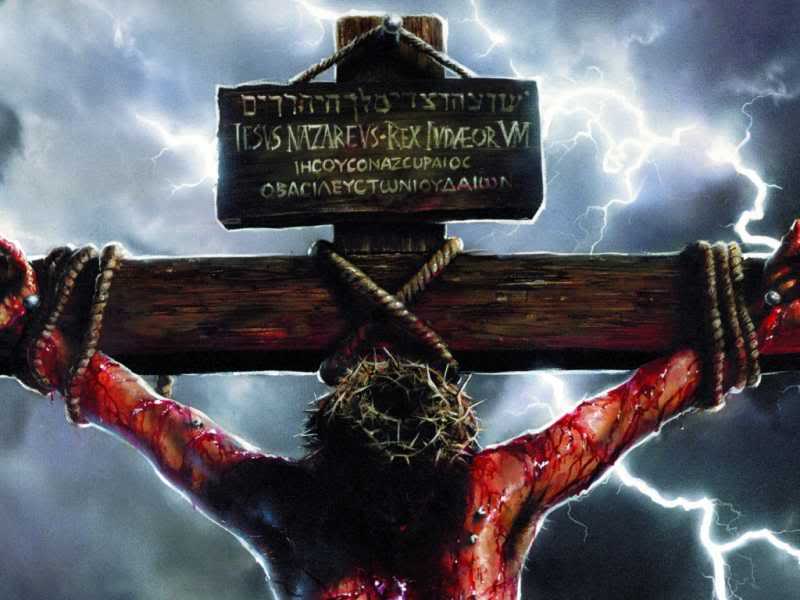
At that moment Jesus was a man in torment, able to prevent his own suffering but choosing to embrace it anyway. He was desperate to escape the agony of the cross – not just the physical pain, but the spiritual horror of becoming all human brokenness, for our sake – and yet he bowed his head. This total mastery of self serves as a supreme example to us. If Jesus were not a deeply emotional person, mastery might have been easier, but being torn up inside and still submitting to God? That is staggering, to me, what about you?

Adapted from an article by Duncan Edward Pile, October 27th, 2021 “Hold Me Closer Cosmic Dancer” http://www.patheos.com

MANKIND AND CREATION’S VASTNESS

God in His Word reveals why He created human beings. We are meant to be in a relationship with Him.

Genesis 1:27 states: “God created mankind in his own image.”

Psalms 8:1–5 says: “O Lord … What is man that You take thought of him … Yet You have made him a little lower than God, And You crown him with glory and majesty!”

John 3:16 explains God gave humans His son to redeem us out of His love for us.

The vast expanse of space

These texts show that God is human-oriented: human beings are like God, and he values us highly.

When I look at your heavens, the work of your fingers, the moon and the stars, which you have set in place, what is man that you are mindful of him, and the son of man that you care for him? Yet you have made him a little lower than the heavenly beings and crowned him with glory and honor. You have given him dominion over the works of your handsPsalms 8:3-6

Note the contrast between vv. 3–4 and v. 5. Looking at the stars causes the psalmist to ask why He (God) cares for us. And yet in verse 5, He crowns us with glory and honour. The psalmist is clearly capable of meditating on his own insignificance in the light of the sky, and yet he also acknowledges God’s care for us in the way He made us.

Solomon makes a similar observation, this time concerning God dwelling in the temple he has just built.

But will God indeed dwell on the earth? Behold, heaven and the highest heaven cannot contain you; how much less this house that I have built! 1 Kings 8:27

Solomon prayed these words after God had manifested his special presence in the temple (1 Kings 8:10–11), so he wasn’t questioning whether God would care enough to dwell in the temple. Rather, he was marvelling that God would condescend so far and fill the temple with His glory. This is even more evident in the Incarnation, where the eternal Word of God “tabernacles among us” (John 1:14as the human Jesus of Nazareth.

The vastness of the universe impresses on us God’s sheer immensity. Even the cosmos, as large as it is, can’t contain God! But we’re so small. Little dots on a single speck of a planet floating in some nondescript place in the vast cosmic dark. Does it make God feel immense? Of course, it does!

And yet, we are right at the centre of God’s spiritual concerns. The Incarnation proves that. But this disjunct is precisely what we’d expect of God.

“For thus says the One who is high and lifted up, who inhabits eternity, whose name is Holy: ‘I dwell in the high and holy place, and also with him who is of a contrite and lowly spirit, to revive the spirit of the lowly, and to revive the heart of the contrite.’” Isaiah 57:15

God is a God of loving condescension. He voluntarily descends from His transcendent dignity to care for us “mere specks of dust”. What better way for God to create a context for that impression than to create a vast universe in which we’re alone on a tiny speck in the vast cosmic dark? He fills all things, yet concerns himself with us so much that He sends His eternal Son to become one of us to bring us into eternal communion with Him by making it possible for our Heavenly Father to send the eternal Holy Spirit to indwell our spirit.

Do you not know that your body is a temple of the Holy Spirit within you, whom you have from God? You are not your own, for you were bought with a price. So glorify God in your body.1 Corinthians 6:19-20

Our spirit was always meant to be indwelt by the Holy Spirit, as this verse shows, our spirit is the lamp of the Lord which needs the Holy Spirit to function as God intended.

The spirit of man is the lamp of the Lord, searching all his innermost parts.Proverbs 20:27

Extract from the article “Why did God make such a big universe?” by Shaun Doyle 19th July 2022 http://www.creation.com

GOD’S CONSTRUCTS ON EARTH A COPY OF HEAVENLY THINGS

“They serve a copy and shadow of the heavenly things. For when Moses was about to erect the tent, he was instructed by God, saying, “See that you make everything according to the pattern that was shown you on the mountain.” Hebrews 8:5

Thus it was necessary for the copies of the heavenly things to be purified with these rites, but the heavenly things themselves with better sacrifices than these. For Christ has entered, not into holy places made with hands, which are copies of the true things, but into heaven itself, now to appear in the presence of God on our behalf.Hebrews 9:23-24

Christ did not enter a man made sanctuary that was only a copy of the true one, He entered heaven itself. The earthly sanctuary was a copy of the true one in heaven. The new Jerusalem that John sees descending from heaven to the new earth after the White Throne judgement is in the intermediate or present heaven.

After this I looked, and the sanctuary of the tabernacle of witness in heaven was opened, and out of the sanctuary came the seven angels with the seven plagues, clothed in pure, bright linen, with golden sashes around their chests.” Revelation 15:5-6

But you have come to Mount Zion and to the city of the living God, the heavenly Jerusalem, and to innumerable angels in festal gathering, and to the assembly of the firstborn who are enrolled in heaven, and to God, the judge of all, and to the spirits of the righteous made perfect, and to Jesus, the mediator of a new covenant ” Hebrews 12:22-24

There is a city of the living God: the heavenly Jerusalem which John saw prophetically coming down to the new earth.

Then I saw a new heaven and a new earth, for the first heaven and the first earth had passed away, and the sea was no more. And I saw the holy city, new Jerusalem, coming down out of heaven from God, prepared as a bride adorned for her husband. And I heard a loud voice from the throne saying, “Behold, the dwelling place of God is with man. He will dwell with them, and they will be his people, and God himself will be with them as their God.Revelation 21:1-2