
Those turning to Christian faith are not who we might expect – it’s especially older people, the recently widowed, and recently separated or divorced. Sadly, the move is mostly away from Christian identity in outer suburbia and regional areas. However, Australians are still turning to Christianity in large numbers, despite a decline in Christian affiliation. While 85,000 15-24 year olds have moved towards Christianity in the last five years, that’s dramatically down on a decade ago Founder and Principle of McCrindle research, Mark McCrinde, says his report shows a new search for purpose and meaning and asks is “Australia Post Christian or are we now Post Secular?” Plus they compare the findings of the national McCrindle report with the recent Sydney Anglican report on Church attendance. If you’re Australian, it is worth a look. It may help you to pray more wisely for your nation.
Tag Archives: meaning
HUMAN BEINGS WERE MADE TO “IMAGE” GOD
This life-changing truth comes from Martyn Isle’s book WHO AM I? Solving the identity puzzle.

“God created man in his own image, in the image of God he created him; male and female he created them.” Genesis 1:27
When we read that verse we learn that mankind clearly reflected and embodied something that was God’s. In Colossians and Ephesians, the Apostle Paul connects the “new self”, after we have received the Holy Spirit, with the image of God, and in doing so he tells us what the image is.
“If the Spirit of him who raised Jesus from the dead dwells in you, he who raised Christ Jesus from the dead will also give life to your mortal bodies through his Spirit who dwells in you.” Romans 8:11
“Do not lie to one another, seeing that you have put off the old self with its practices and have put on the new self, which is being renewed in knowledge after the image of its creator.” Colossians 3:9-10
The same thought is expressed in Ephesians, this time the “new self” is described according to the likeness of God, which is also Genesis 1:27 language. The template of the “new self” is the image and likeness of God.
“Be renewed in the spirit of your minds, and to put on the new self, created after the likeness of God in true righteousness and holiness.” Ephesians 4:23-24
Scripture tells us that the whole of God’s nature may be summarised in that sacred word “HOLY”. First, it means sinless and perfect. So Adam and Eve were made sinless and perfect. But when we refer to the holiness of God, it refers to all aspects of His perfection and character traits. So we can assume that all of God’s character traits were able to be demonstrated by Adam and Eve because of their holiness. They were able to radiantly image Him and reflect His glory. This includes His love, grace, mercy, righteousness, kindness, goodness, faithfulness, etc. But to be made in God’s image means to be made with the knowledge of God. Adam and Eve knew God. They spoke to Him directly, and He with them, so rationality, objectivity, creativity, love, and other such abilities cannot be irrelevant to God’s image. We have all these unique abilities so that we may apply them to the great high calling of God’s image on the human race. They enable us to be holy. They enable us to act righteously. They enable us to know God. These are the ends for which they are designed. This is what we should use our special faculties for. The more we know about God, the more we discover who we ought to be, and the more we want to be that person.
Take the human mind as one example. It is unique. We apply it rightly when we use it to grow in the knowledge of God. When the mind is renewed by that knowledge, it changes our whole person, teaching us to reject sin, embrace righteousness, and be holy. It also animates our lives to do small and big things in a way that serves God.
“Do not be conformed to this world, but be transformed by the renewal of your mind, that by testing you may discern what is the will of God, what is good and acceptable and perfect.” Romans 12:2
When we understand the truth about what God’s image is, we understand the high calling on our lives. Mostly, when we hear people say that humans are made in God’s image, we hear them say it as if that’s the end of the story. It is not the end of the story. It is better to put it this way: human beings were made to image God. We should not think about it as a status, we should think about it as our calling.
It is our calling to be holy, righteous, and to know God. It is how we live up to our purpose of bearing God’s image.

DO ALL TO THE GLORY OF GOD
Where do I come from? Where am I going? What is the meaning of life?
Science takes things apart to see how they work. Religion puts them together to see what they mean.
I love listening to John Lennox. He is an evangelist extraordinaire. He makes it so simple and at the same time exciting as he reveals God’s truth about the universe He created. Christians will enjoy this video immensely and want to share it with others. Non-Christians will hate it as it challenges their faith to the core.
WHAT COMPELS YOU?
“For Christ’s love compels us, because we are convinced that one died for all, and therefore all died. And He died for all, that those who live should no longer live for themselves but for Him who died for them and was raised again” 2 Corinthians 5:14-15; NIV
Christ died for us, we must no longer live for ourselves, but for Christ Jesus, and let his love flow through us to others. Will we respond as vessels for God’s love in the present Coronavirus context? Let’s step up, not down, as God’s new normal for us is what it has always been for Jesus’ church in the Spirit—engage with all those Jesus connects us, our family, our church family, our workplace and our community.
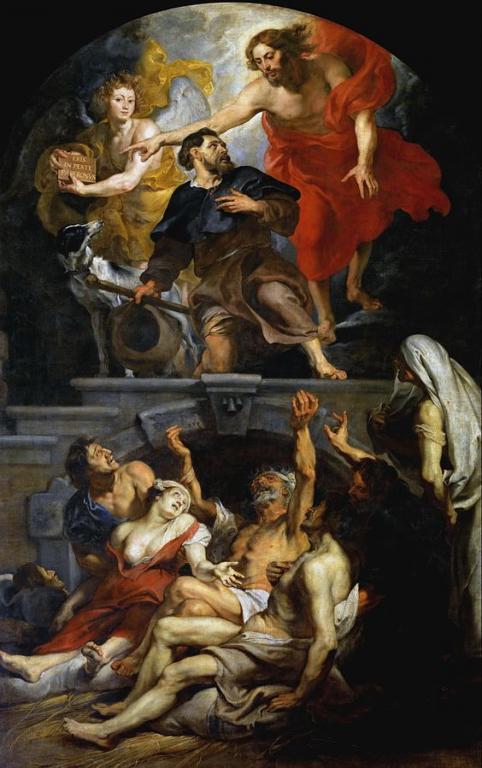
The following reflection highlights the way one pastor and church, Mark Nicklas and his community Beaverton Foursquare, are stepping up and participating in the triune God’s normative mission in the face of the Coronavirus.
They are partnering with other churches, the school across the street, and civic authorities. They understand that we are all in it together. They clearly comprehend that this is no place or time to be lone rangers. We need to work together in solidarity. This pandemic truly affects us all.
We are called to be ambassadors of Christ (2 Corinthians 5:20), Mark highlights that the love of Christ is to compel us, like it did Paul and his ministry team. Mark says, “Love is lapped up wherever it is spilled.” God’s love is lavish, so it never runs out. Since Christ died for us, we must no longer live for ourselves, but for Christ Jesus, and let the Holy Spirit guide and direct our every step in love.
Are you living your life with eternity in view? The following scripture is tough but it is true.
“Jesus said to him, “If you would be perfect, go, sell what you possess and give to the poor, and you will have treasure in heaven; and come, follow me.” When the young man heard this he went away sorrowful, for he had great possessions. And Jesus said to his disciples, “Truly, I say to you, only with difficulty will a rich person enter the kingdom of heaven.” Matthew 19:21-23
GOD EXISTS – SO WHAT?
The People who best articulate the answer to the “so what” question of God are the atheistic existentialist philosophers. Nietzsche had the courage to admit that the rejection of God ends in nihilism (existence is senseless and useless). Another, Jean-Paul Sartre, well describes existence without God with the chosen title of his book Nausea and the portrayal of life as “an empty bubble floating on a sea of nothingness”.
Sartre’s study partner, Albert Camus, tells us in “An Absurd Reasoning” (contained in The Myth of Sisyphus: And Other Essays) that a God-less life leads to there being “only one really serious philosophical question, and this is suicide. Judging whether life is or is not worth living amounts to answering the fundamental question of philosophy.” It’s what Daryl on The Walking Dead calls “opting out”.
Fred Hoyle, famous British mathematician and astronomer said “the probability of the formation of just one of the many proteins on which life depends is comparable to that of a solar system packed full of blind people randomly shuffling Rubik’s cubes all arriving at the solution at the same time” which of course is absurd. In fact, life without God is absurd.
Despite all of the above most people live their lives as if God does not exist. They do their best to live life on God’s planet, enjoying all that He has provided but not wanting to even know their Creator, in fear that they will not be able to “call the shots”, i.e., be God of their own little world. You only realise how sad this is when you know that our Creator loves us so much that He sent His Son, Jesus, to die in our place that we might be restored into a right relationship with our Heavenly Father.
“For the wages of sin is death, but the free gift of God is eternal life in Christ Jesus our Lord.” Romans 6:23
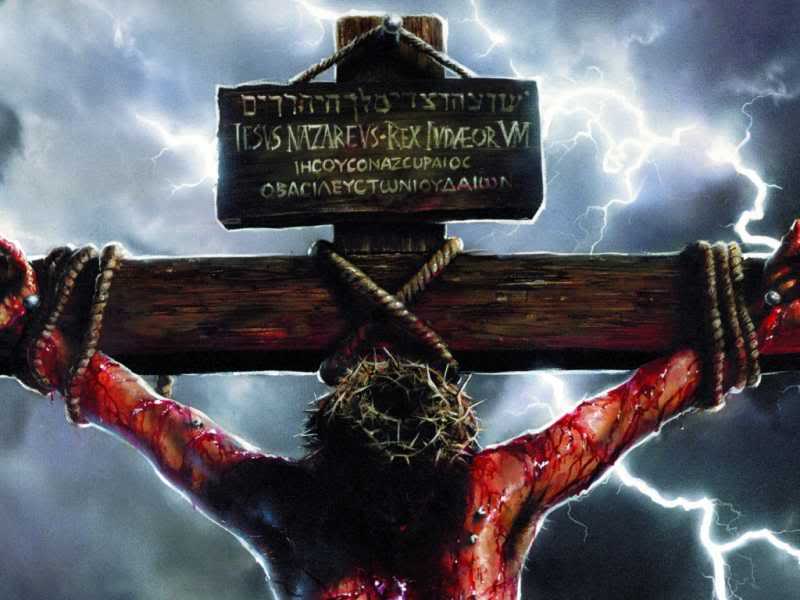
“In their case the god of this world has blinded the minds of the unbelievers, to keep them from seeing the light of the gospel of the glory of Christ, who is the image of God. For what we proclaim is not ourselves, but Jesus Christ as Lord, with ourselves as your servants for Jesus’ sake. For God, who said, “Let light shine out of darkness,” has shone in our hearts to give the light of the knowledge of the glory of God in the face of Jesus Christ.” 2 Corinthians 4:4-6
Jesus said, “No one can come to me unless the Father who sent me draws him.” John 6:44.
Our first job: We need to pray that the unsaved we are connected to will be drawn by the Father.
Our second job: We need to pray that those that hear the Gospel will understand it. “When anyone hears the word of the kingdom and does not understand it, the evil one comes and snatches away what has been sown in his heart.” Matthew 13:19
Our third job: We need to pray that the eyes of unbelievers will be opened so they can see the light. Opening spiritual eyes is, of course, God’s business. But releasing God’s power to open blinded eyes is prayer business, to which God calls us.
Answering an atheist on meaning and purpose of life
I hope this article “Answering a reasonable atheist on deep philosophical questions” from Creation Ministries International (CMI) 30th September, 2012 provides helpful answers for Christians and unbelievers as well.
To demonstrate that not all of CMI’s opponents are hostile and unreasonable, we publish feedback by Tim W. of the USA to our article – Answering the ‘new atheists’ (interview with Doug Wilson). In this, Tim W. sought to defend the proposition that atheism can provide meaning and purpose. Tim W.’s email is printed in its entirety (red), and then followed by point-by-point responses by Dr Jonathan Sarfati.
This is an interesting article. I think you are on the right track when you suggest that modern atheists are worried at the resurgence of conservative Christianity in the United States. Frankly, it concerns me that so many politicians have anti-abortion views with which I strongly disagree. Part of my moral beliefs value limited rights of women to choose the fate of their unfertilized eggs, embryos and their own bodies. Similarly, I understand that Christians have legitimate reason to be concerned that unbelievers will influence a policy or social climate that permits the destruction of actual or potential human organisms. The stakes are high so it should be no surprise that the voices of atheism rise to compete with the voices of religion.
I also agree with the author, and with Hume, that one cannot infer what ought to be, in a normative sense, from what is, was or will be the case. In this way, it is reasonable to say that naturalism or ‘scientism’ cannot suggest a specific theory or morality. However, that does not mean that morality is not compatible with materialism, naturalism or atheism. It only means that morality must come from philosophy (ethics) rather than from theology. There is no reason why an atheist cannot have a more sophisticated ‘sense’ or theory of morality than someone who bases their beliefs of right and wrong conduct (or thoughts) on the teachings of a formal religion. My own beliefs are more consistent with a general sense of basic ‘fairness,’ than obedience to the demands of a deity.
Lastly, I don’t understand the basis of a statement such as “The atheist cannot put forward, within his own framework, a justification for why reasoning is trustworthy, or even worthwhile,” or “the atheist can’t account for reason if there is no God.” These are philosophical questions that do not seem to be contingent on the existence of a God. Is reasoning trustworthy or meaningful? Those are matters of epistemology, not theology. Moreover, I think it is far from obvious that neither life, nor anything else for that matter, can have meaning unless one believes in God. God may give your life meaning, but that does not mean that nothing can provide meaning for an atheist’s life. I can imagine an atheist saying that her daughter, for example, gives her life meaning. Would you call her a liar?
Response
Dr Jonathan Sarfati replies: Thanks (on behalf of CMI and the article author).
TW: I think you are on the right track when you suggest that modern atheists are worried at the resurgence of conservative Christianity in the United States.
JS: What is really striking is how many modern atheists have become such delicate little flowers. They are hurt and offended by plastic baby Jesuses at Nativity scenes and are in danger of having a stroke if they hear a student-led prayer at a football game. (But of course, anyone objecting to obscenity or porn should just look the other way or change channels.) Even leading atheist Richard Dawkins is not such a wimp; he joins in Christmas celebrations. What a contrast the modern activists are with the far more robust atheists of yesteryear who vigorously debated the formidable G.K. Chesterton, and remained good friends even after finishing second.
TW: Frankly, it concerns me that so many politicians have anti-abortion views with which I strongly disagree.
JS: It would concern me if we didn’t have that many. Once we dehumanize one class of humanity, there is no limit. See for example article – Unborn babies may “be planning their future”: What now for the abortion lobby?
TW: Part of my moral beliefs value limited rights of women to choose the fate of their unfertilized eggs, embryos and their own bodies.
JS: Well, there’s the problem: the unborn is not part of a woman’s body. A reductio ad absurdum I’ve explained is: this would entail that a mother carrying a son must have a penis.
TW: Similarly, I understand that Christians have legitimate reason to be concerned that unbelievers will influence a policy or social climate that permits the destruction of actual or potential human organisms.
JS: Yes, that’s exactly the issue. Without the protection of life, no other right, real or assumed, has any meaning. ‘Rights’ to private property, housing, employment, medical care, or anything else, mean nothing if one is not alive to exercise them.
TW: The stakes are high so it should be no surprise that the voices of atheism rise to compete with the voices of religion.
JS: The problem arises when voices of atheism try to silence the voices of Christianity. This includes university ‘speech codes’, ‘hate speech’, the persecution of Christians in atheistic communist regimes, and the GayStapo attacks on the Church and family. See Gay marriage, politicians, and the rights of Christians.
TW: I also agree with the author, and with Hume, that one cannot infer what ought to be, in a normative sense, from what is, was or will be the case.
JS: A key point.
TW: In this way, it is reasonable to say that naturalism or ‘scientism’ cannot suggest a specific theory or morality. However, that does not mean that morality is not compatible with materialism, naturalism or atheism. It only means that morality must come from philosophy (ethics) rather than from theology.
JS: It certainly can’t come from the axiom ‘God does not exist.’
TW: There is no reason why an atheist cannot have a more sophisticated ‘sense’ or theory of morality than someone who bases their beliefs of right and wrong conduct (or thoughts) on the teachings of a formal religion. My own beliefs are more consistent with a general sense of basic ‘fairness’, than obedience to the demands of a deity.
JS: But where does the notion of ‘fairness’ come from in an evolutionary world? Surely it’s just a delusion caused by certain neurochemical activity that happened to be useful for our ancestors to survive. Just like rape was useful to spread our genes, as two evolutionists seriously argued in a book (look how one squirmed to justify why rape should be considered ‘wrong’). Similarly, the article Bomb-building vs. the biblical foundation documents how leading atheistic philosopher/logician Bertrand Russell could not explain why right vs. wrong was any different from choosing one’s favourite colours.
Think of consistent evolutionist and atheistic philosopher Peter Singer, who justifies infanticide, euthanasia, and bestiality. It’s also notable that some critics of my article Abortion ‘after birth’? Medical ‘ethicists’ promote infanticide claimed that Singer was an anomaly among atheists. Yet I showed that his pro-infanticide views were shared by the Journal of Medical Ethics and the vocal antitheist P.Z. Myers. See also Bioethicists and Obama agree: infanticide should be legal. He also wrote the major Encyclopaedia Britannica article on Ethics (1992), and earlier this year, the Australian Government gave him Australia’s highest honour, Companion of the Order of Australia.
TW: Lastly, I don’t understand the basis of a statement such as “The atheist cannot put forward, within his own framework, a justification for why reasoning is trustworthy, or even worthwhile,” or “the atheist can’t account for reason if there is no God.” These are philosophical questions that do not seem to be contingent on the existence of a God.
JS: I would say they are, as natural selection explains only survival value, not truth and logic. In Canada, one atheistic philosophy professor argued that these things would have selective value. I responded that this is not necessarily so under his belief system. After all, he must regard theistic religion as one thing that evolved for survival value, yet he would regard this as false and illogical. Thus survival, under his perspective, can be enhanced by the false as well as the true.
TW: Is reasoning trustworthy or meaningful? Those are matters of epistemology, not theology. Moreover, I think it is far from obvious that neither life, nor anything else for that matter, can have meaning unless one believes in God. God may give your life meaning, but that does not mean that nothing can provide meaning for an atheist’s life.
JS: One of my colleagues wrote in Answering life’s big questions: Only the Bible provides the answers:
Today we are effectively told, in the evolutionary story, that life is a fluke, a cosmic accident. In this case our existence lacks any purpose, so life is a farce. And where are we going, in this view? Fertilizer! In short, life is: Fluke … farce … fertilizer.
Evolutionist Richard Dawkins said that we live in a universe that has “no design, no purpose, no evil, no good, nothing but pitiless indifference”. The evolutionists’ universe has no purpose because it is an accident; a cosmic accident. With evolution so widely taught in schools and universities, is it any wonder that so many lack any purpose or meaning to their lives?
As Susan Blackmore, psychologist and disciple of Richard Dawkins said, “If you really think about evolution and why we human beings are here, you have to come to the conclusion that we are here for absolutely no reason at all.”
TW: I can imagine an atheist saying that her daughter, for example, gives her life meaning.
JS: But hardly ultimate meaning, since both mother’s and daughter’s entire lives are just a blink of an eye in the uniformitarian cosmic scheme. Bertrand Russell said in his anti-Christian book Religion and Science:
Man, as a curious accident in a backwater, is intelligible: his mixture of virtues and vices is such as might be expected to result from fortuitous origin.
TW: Would you call her a liar?
JS: Not at all. A lie implies intentional deception, not just falsehood. As you could see from searching our site, we are very sparing with accusations of ‘lying’ (although some evolutionists justify deception and are just being consistent), as opposed to having a faulty interpretive framework. (However, we won’t deny that this prior adoption of this faulty framework is culpable according to Romans 1:20 and 2 Peter 3:3–7 and foolish (Psalm 14:1). But the point remains that a valid deduction from a faulty framework is not a lie.)
 LIVING ETERNAL NOW