The thought of powering our cars, trucks, trains, and even planes with the most abundant element in the universe, whose byproduct is just water, sounds like the solution to greatly reducing global carbon emissions. Hydrogen seems perfect on the surface. It stores three times as much energy per unit of mass as gasoline. When it is combined with air, the energy released can power a vehicle, and it combines with oxygen to produce water.
Hydrogen is produced from water. About 70 million tons of hydrogen are produced each year, primarily used for ammonia fertilizer. And 96% of hydrogen production is made by a process known as steam-methane reformation. This process uses energy created by natural gas, coal, and oil to produce hydrogen. The industry produces 830 million metric tons of carbon dioxide yearly to produce this “clean” hydrogen fuel.
If we have to burn massive amounts of carbon-based fuel to put hydrogen in our cars, we aren’t helping the environment. We are only displacing where the carbon emissions take place, not whether or not they happen in the first place.
It is no different than fueling our electric vehicles with electricity produced from coal, natural gas, or oil. It is nonsensical to think that we are helping the environment.
Currently, 4% of hydrogen production is produced using electrolysis which uses electricity to split the hydrogen out of the water. However, the costs are four times higher than steam-methane reformation. To put things in perspective, it takes about 50–55 kilowatt hours of electricity to produce a single kilogram of hydrogen fuel. That’s the equivalent of about two days of electricity consumption for an average home in America. Two days of an entire household’s energy consumption just to produce one kilogram that provides enough fuel to travel 70 miles. Also, its volume is a problem It takes up a lot of space, so we can only carry about 5–6 kilograms of hydrogen in our tank. The other tricky nuance is that hydrogen molecules are so tiny, that they easily leak out of most containers.
Without billions of dollars in subsidies, hydrogen just doesn’t make economic sense; and because of where the energy comes from in the production of hydrogen – mainly fossil fuels – it doesn’t even make environmental sense.
For hydrogen fuel cells to be both environmentally sustainable and economical, the world must address how it produces baseload power. This is the kind of power required to manufacture the 70 million tons of hydrogen produced every year.
The most desirable technology to achieve this is nuclear fusion technology but it is still a long way off. Nuclear fusion is the same process that powers the sun and other stars and is widely seen as the holy grail of clean energy. Experts have worked for decades to master the highly complex process on Earth, and if they do, fusion could generate enormous amounts of energy with tiny inputs of fuel and emit zero planet-warming carbon in the process. In the meantime, nuclear fission providing carbon-free emissions with limited radioactive waste is a sustainable energy production strategy and one we should all be using. Both Small Modular Nuclear Reactors and Large-Scale Reactors are the way forward and progressive countries are already pursuing that strategy.
There are already SMRs deployed and operating in China and Russia, as well as one test reactor in Japan. Other first-of-a-kind SMRs are expected to be built this decade, followed by accelerated deployment worldwide during the 2030s, particularly as a source of reliable, low-carbon power generation and heat for hard-to-abate sectors. This includes notably the use of SMRs for on-grid baseload power to replace coal-fired generation, though market demand for SMRs continues to grow for other applications as well. The most promising include off-grid heat and power to replace diesel generators in remote regions for mining operations, fossil-fuel replacement for district heating, and high-temperature heat to replace fossil-fuel cogeneration in heavy industries. Other applications include replacing fossil fuels in cogeneration for ammonia and potash production for the fertiliser industry; hydrogen production for synthetic fuels and clean steel production; as well as marine propulsion to replace heavy-fuel oil for merchant shipping.
SMRs are driving innovation in the nuclear sector The sector is witnessing significant innovation internationally. This includes SMRs at various stages of development, from fundamental research on new concepts to commercial deployment and operation. The innovation pipeline includes a range of reactor concepts – from incremental innovation in existing light water reactor technologies to breakthroughs in advanced Generation IV reactor concepts. It also includes SMRs in a variety of configurations – with land-based, multi-module, marine-based and transportable designs. These innovations incorporate new materials, a range of coolants, and, in some cases, innovative fuels. This is in turn expected to lead to the deployment of a range of SMRs of different sizes, with a range of outlet temperatures, and new attributes.
Nuclear energy supplies approximately 10% of the world’s electricity from 412 nuclear power reactors in operation, providing 370 gigawatts of capacity. It is the largest source of non-emitting electricity generation in OECD countries and the second largest source worldwide after hydropower.
The role of nuclear energy in meeting these pathways was emphasized at the 28th Conference of the Parties (COP28) in Dubai on 2 December 2013 when the leaders of over 20 countries committed to tripling global installed nuclear capacity by 2050, recognizing the critical role of nuclear energy in achieving global net zero greenhouse gas emissions and keeping within reach the goal of limiting the temperature rise to 1.5°C.
This commitment builds on NEA analysis that concluded in 2022 that to meet climate goals consistent with a 1.5°C scenario, global installed nuclear capacity needs to triple to 1 160 gigawatts by 2050 (NEA, 2022).
Why isDr Adrian Paterson, the former chief executive of the Australian Nuclear Science and Technology Organisation (ANSTO), which operates the Lucas Heights reactor in Sydneybeing ignored.
Dr Paterson has written to Prime Minister Anthony Albanese demanding urgent action to keep the nation’s lights on.
Paterson asks: “Why are we as a modern democracy banning nuclear at the federal and state level when low-carbon nuclear provides the cheapest consumer costs? Nuclear would transform an electricity grid which is getting … less reliable plus getting very, very expensive.
“Your electricity plan, for a massive expansion of the grid with wind and solar sources is deeply flawed and expensive. It will fail to deliver quality, 24-hour electricity,” Dr Paterson warned.
Dr Paterson said nuclear energy production stands apart from wind and solar because it doesn’t require a “massive expansion” of the grid – the cost of which would easily fund the first nuclear power plants.
Regarding a CSIRO report that claims nuclear will be too expensive, Paterson says: “CSIRO has no expertise in the cost of generation.
“What they do is take publicly available figures of the construction costs of nuclear power plants – usually in countries that have got regulatory environments that are kind of designed to stop nuclear – and convert them into a generation cost using an algorithm which is provided to them by a private sector firm that is not an expert in the nuclear industry,” he says.
“I’ve engaged the CSIRO for several years both directly and also through the press to say that we can work together to sort this out and they have no inclination to do it. People don’t know that to build all of the planned solar panels and wind turbines we’re going to have to double the size of the grid, which is 40 percent of electricity bills.
“The eastern grid in Australia is the most complex machine in the southern hemisphere. The policy of this government is to make it twice as big as it is and twice as complex if you have to integrate intermittent sources into it.
“How do people believe that we can create a grid that’s double the size with lower energy density and still have the current quality of life?
“The current policy is based on a failure to get proper engineers in the room. Engineers are being banned from giving talks as we speak,” Paterson says.
Commenting on his letter to the PM, Dr Paterson said Australians should be given a choice in how their electricity is generated.
“We shouldn’t be making decisions based on the personal preference of Anthony Albanese. This ‘Captain’s Pick’ mindset is stuck in the 80s when he was an antinuclear campaigner at Sydney University.
“It’s time Australia had the option to join the rest of the world, who are already using nuclear to stabilise the grid and power their economies.
“Why should Australia miss out on cheap, clean fuel? Why should Australians pay more to keep the lights on at home? Why not keep businesses doors open and unemployment low?”
Dr Paterson served as chief executive of ANSTO for 12 years, has degrees in chemistry and engineering, sits on the board of HB11 Energy, a company developing laser hydrogen fusion technology, and is now the principal and founder of energy advisory Siyeva Consulting.
In August 2021, China announced the completion of its first experimental thorium-based nuclear reactor. Built in the middle of the Gobi Desert in the country’s north, the reactor is undergoing testing. If the experiment proves successful, Beijing plans to construct another reactor potentially capable of generating electricity for more than 100 000 homes.
China is not alone in its intentions to reap thorium’s unique properties. In the past, India, Japan, the United Kingdom, the United States of America, and other countries have demonstrated enthusiasm for research into the possible application of thorium in nuclear power.
What can thorium offer?
Thorium boasts several advantages over the conventional nuclear fuel, uranium-235. Thorium can generate more fissile material (uranium-233) than it consumes while fuelling a water-cooled or molten-salt reactor. According to estimates, the Earth’s upper crust contains an average of 10.5 parts per million (ppm) of thorium, compared with about 3 ppm of uranium.
“Because of its abundance and its fissile material breeding capability, thorium could potentially offer a long-term solution to humanity’s energy needs,” Kailash Agarwal, a Nuclear Fuel Cycle Facilities Specialist at the International Atomic Energy Agency (IAEA) said.
Another advantage is that thorium-fuelled reactors could be much more environmentally friendly than their uranium counterparts. In addition these reactors — and nuclear power in general — do not emit greenhouse gases in operation, they also produce less long-lived nuclear waste than present-day uranium-fuelled reactors.
Not without challenges
However, several economic and technical obstacles make the deployment of thorium challenging. Despite its abundance, the metal is currently expensive to extract.
Maritime / China Unveils Plans For ‘Largest Ever’ Container Ship, Powered By Thorium Reactor
January 2024 Report: Jiangnan Shipyard, a division of state-owned China State Shipbuilding Corporation (CSSC), said the KUN-24AP, featuring a thorium-based Generation IV molten salt reactor, would prove safer and more efficient than the uranium reactors currently used to power warships.
China has an abundant supply of thorium meaning that it could be a cost-effective low-carbon alternative for shipping and other industries.
Rolls-Royce SMR was successful in the Swedish nuclear selection process 12th June 2024. It has won a place on Vattenfall’s shortlist of just two SMR companies competing to potentially deploy a fleet of small modular reactors (SMRs) in Sweden.
Vattenfall, the Swedish multinational power company, has announced the shortlist of two SMR vendors as part of its plans to meet the rising electricity demand, adding nuclear capacity and helping Sweden achieve its goal of creating a fossil-free economy by 2045. The other successful SMR wasGE Hitachi’s BWRX-300.
This selection follows a thorough assessment process in which Rolls-Royce SMR had the opportunity to present a fundamentally different approach to building nuclear projects and a modularisation strategy focused on risk reduction to Vattenfall, an experienced and technically respected energy utility.
Rolls-Royce SMR CEO, Chris Cholerton, said: “We are delighted to be one of the two SMR technologies selected by Vattenfall for further evaluation in Sweden. Success in reaching the final two, in such a fiercely competitive process, reflects the benefits of our integrated power station design, our approach to modularisation, and our use of proven nuclear technology.
“Rolls-Royce SMR is the fastest and most affordable way of bringing new nuclear power online and we are excited to work with utilities and industrial customers around the globe, to unlock sustainable sources of low-cost, low-carbon electricity for decades to come.”
Vattenfall’s focus will be deployment at the Ringhals nuclear site with a project that, at the earliest, is operational in the first half of the 2030s, with assessments for SMR and large-scale reactors ongoing.
Sweden has said it needs an additional 100-250 TWh of electricity production over the next 25 years and Vattenfall is poised to play a critical role in the country’s energy transition, including integrating new nuclear capacity into the energy mix.
Rolls-Royce SMR is on track to complete Step 2 and immediately enter Step 3 of the Generic Design Assessment by the UK nuclear industry’s independent regulators this summer. This will be the most important regulatory milestone to date – confirming Rolls-Royce SMR’s first-mover advantage as the leading technology in Europe.
Germany was already reducing its greenhouse gas emissions before 2011, so it came as a surprise when Merkel announced that her government would “end the use of emissions-free nuclear energy and reach the age of renewable energy as fast as possible.” The Energiewende’s goal of reducing emissions 80 to 95 percent by 2050 was ambitious, but it was the prospect of achieving this goal without nuclear energy that truly turned heads. By shuttering nuclear plants and scaling wind and solar, Merkel made a poor bet that a green economy could run on wind and sunshine alone.
After a swath of decrees and guidelines, as well as tens of billions of euros in subsidies for, and investment in, renewable projects, Merkel boasted about creating hundreds of thousands of green-collar jobs. Many Germans embraced this vision for the future, taking pride in their nation’s turn toward an economy powered by nature. Yet it quickly became apparent that while the Energiewende plan offered vision, it lacked sound strategy.
Bureaucracy slowed the construction of necessary infrastructure for storing and transporting new renewable forms of energy. And suddenly Dunkelflaute—a term used to describe periods of low energy production when the sun failed to shine or the wind didn’t blow—entered the German vernacular. By 2019, the Federal Court of Auditors declared that the 160 billion euros ($180 billion) spent over the last five years were “in extreme disproportion to the results.”
By the tenth anniversary of the Energiewende, the scope of the project’s failure became clear. The year before, German leaders had celebrated renewables reaching 46.2 percent of national electricity consumption due to favorable weather conditions and lower demand. But in 2021, this trend reversed. During the COVID economic bounce back, energy demand exploded while wind power production decreased by 25 percent—leaving coal and natural gas generation to fill in the gaps.
German households have the highest electricity prices in the world, but many Germans are still committed to their utopian vision. Last fall, voters pushed out Merkel’s center-right Christian Democrats in favor of a coalition led by the center-left Social Democrats. This wasn’t a refutation of the Energiewende though, since it appears that Chancellor Olaf Scholz will double down as he has expressed interest in being known as the “climate chancellor” and supports policies including an EU-wide carbon price.
The Energiewende has consequences beyond German borders too. The country can’t meet its energy needs with domestic wind, solar, and coal production. So Germans are eagerly awaiting the completion of Nord Stream 2, a pipeline that will deliver natural gas from Russia. It will pump fossil fuel into Germany while lining the pockets of Russian oligarchs with cash. Those excommunicated nuclear plants would have provided emissions-free energy without any reliance on Russia.
Meanwhile in Brussels, Germany’s new Economy and Climate Protection Minister Robert Habeck wants to force the Energiewende plan on the rest of Europe. He recently rejected the European Commission’s plan to label nuclear energy “green,” saying the move “waters down the good label for sustainability.” As long as Germany is miscategorized as the global climate leader, other nations will follow its mindless model including Australia.
The European Union’s REPowerEU Plan, initiated in May 2022, has put nuclear energy at the forefront of its strategy to secure energy and achieve climate goals. France continues investing heavily in nuclear power, whereas Germany has moved away from it.
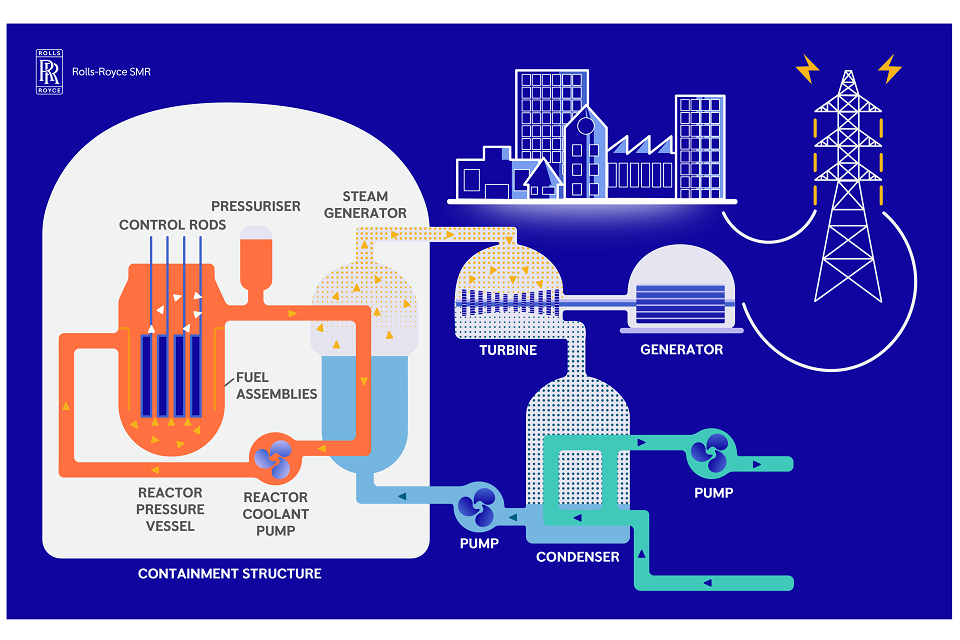
Rolls-Royce SMR Ltd
The Small Modular Reactor (SMR) business is one of the ways that Rolls-Royce is helping to ensure the UK continues to develop innovative ways to tackle the global threat of climate change.
With the Rolls-Royce SMR technology, we have developed a clean energy solution that can deliver cost-competitive and scalable net zero power for multiple applications – from grid and industrial electricity production to hydrogen and synthetic fuel manufacturing.
The need for clean energy has created a global demand for our SMR as countries look for ways to provide reliable ways to achieve net zero. Our SMR has been designed in direct response to that enormous global challenge and our ambitions are set to match that global market as we build a world-class global product.
This article is taken from the article “Peter Dutton’s nuclear policy gives renewables investors a shock” in The Australian Monday 24th June 2024.
If renewable energy was the cheapest electricity source and nuclear the most expensive, the green energy barons would have nothing to fear from a nuclear competitor. Yet the market reaction to Dutton’s intervention proved investors don’t buy the government’s spin. They know that in a competitive market, nuclear generation will eat renewables’ lunch, just as coal once did before wind and solar were showered with subsidies and the market rules were altered in renewables’ favour.
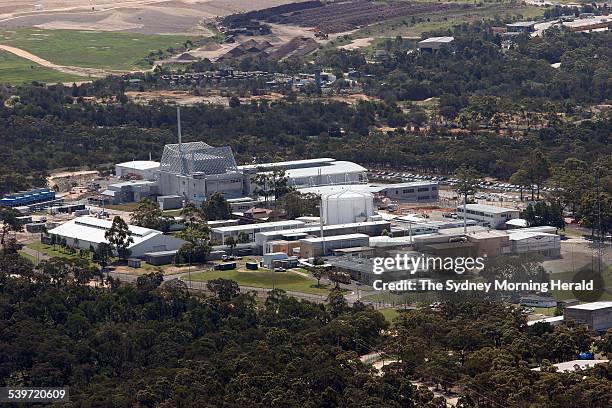
(AUSTRALIA OUT) An aerial of the Lucas Heights nuclear reactor site on 14 November 2005. SMH NEWS Picture by ROBERT PEARCE. (Photo by Fairfax Media via Getty Images/Fairfax Media via Getty Images via Getty Images)
However, the Clean Energy Investor Group is hardly a disinterested observer. It is the peak body for major renewable investors, including Macquarie, Blackrock, Neoen, and Tilt Energy. Together, they own 76 clean energy assets worth $38bn. The present value of those assets is now hostage to the electoral fortunes of Anthony Albanese (current Prime Minister), which is why cashed-up renewable energy investors are accumulating a war chest of hundreds of millions of dollars to keep Labor in power.
The influence of this powerful, crony-capitalist enterprise is one reason Dutton has only an outside chance of turning nuclear into an election-winning issue. However, polling on public support for nuclear has been trending Dutton’s way, and the evidence from around the world is stacked in his favour. Bearing in mind, Australia already has a Nuclear Reactor. The High Flux Reactor was Australia’s first nuclear reactor. It was built at the Australian Atomic Energy Commission Research Establishment at Lucas Heights, Sydney. The reactor was in operation between 1958 and 2007 without incident, when it was superseded by the Open-pool Australian lightwater reactor, also at Lucas Heights and it is still in operation today.
However, the history of bad ideas shows them to be most potent when entrepreneurs discover ways of making a buck out of them. The influence of the cashed-up renewable energy sector in global politics and cultural institutions has made the net-zero narrative all but impossible to dislodge.
Protecting the present value of trillions of dollars of global capital rests on maintaining the fiction that wind and solar power, backed up by numberless batteries yet to be built and pumped hydro yet to be installed, is the key to rescuing the planet. Trillions of dollars of capital have been misallocated to this purpose thanks to perverse incentives provided by politicians whose most pressing concern is not to save the planet but to survive the next election.
Australia is not the only country caught up in the exuberance of the 2019 Paris climate conference and promised more than it could possibly achieve. It is hard to find a single Western economy remotely on track to meet 2030 commitments, let alone the big one in 2050. I will shortly put up a post entitled “Germany Failed to Achieve Clean Energy Transition Without Nuclear”
In a report published last month by the Fraser Institute, Czech-Canadian scientistVaclav Smil outlined the task ahead. More than 4 terawatts of electricity-generating capacity must be replaced, and almost 1.5 billion gasoline and diesel vehicle engines must be converted to electricity. Almost all the world’s agricultural and crop-processing machinery must be replaced, including 50 million tractors and more than 100 million irrigation pumps. New heat sources must be developed to smelt iron, manufacture cement and glass, process chemicals and preserve food. More than half a billion domestic, industrial, and institutional gas furnaces must be abandoned. Novel forms of motive power must be found for 120,000 merchant vessels, and we’ll need to develop a carbon-free way of keeping 25,000 jetliners in the air. Not to mention, the AI revolution is gobbling up power. AI, the Cloud, and decentralized currencies like Bitcoin require enormous energy at a time when the world is trying to transition to solar and wind which are totally unpredictable power sources.
For Vaclav Smil, the most disturbing thing about the net-zero fallacy is what it tells us about the economic, numerical, and scientific illiteracy of a generation that is, on paper, the most educated in history. As Smil told American author Robert Bryce in an email exchange, we live in a fully post-factual world.
The net-zero fallacy has taken root “because the soil is receptive: utterly brainless mass of mobile-bound individuals devoid of any historical perspective and any kindergarten commonsense understanding”.
The cartoonish reaction to Dutton’s nuclear announcement last week was evidence of Vaclav Smil’s point. If there is a solid argument against legalising nuclear power in Australia, Chris Bowen failed to produce it. Bearing in mind we have had a nuclear power plant operating safely in Sydney for decades. Until he does, Dutton can safely regard the debate as won.
Yet politicians are not rewarded for winning fact-based arguments. They are rewarded by winning elections. As Thomas Sowell points out, one of the differences between economics and politics is that politicians are not forced to pay attention to long-term consequences.
“An elected official whose policies keep the public happy up through election day stands a good chance of being voted another term in office, even if those policies will have ruinous consequences in later years,” Sowell wrote in Basic Economics.
Yet the test of Dutton’s policy is whether it will increase competition in the market, offering a credible alternative to the untrodden renewable-only path on which we are embarked.
The squeals from the renewable energy establishment last week suggest he is on the right track.
Nick Cater is a senior fellow at the Menzies Research Centre, a visiting fellow at the Danube Institute, and a columnist with The Australian. He is a former editor of The Weekend Australian and a former deputy editor of The Sunday Telegraph. He is the author of The Lucky Culture published by Harper Collins.
We are living in the Biblical prophesied end-times world: God and His laws have been jettisoned, many churches have compromised with the world on homosexuality, gay marriage, and even transgenderism. Government debt is not sustainable so people’s confidence in politicians is at an all-time low, anarchy is next as energy supplies fail. Other, prophesied end times signs such as earthquakes, pestilences, and famine are already evident. The fact that the major Biblical end-times prophecy was already fulfilled over 70 years ago: the re-establishment of Israel as a nation, should give every Christian confidence that Jesus’ prophesied return to Earth is near.
Great article: Nuclear resistance casts Australia as energy laggard nation by Judith Sloan in The Weekend Australian
Judged by the reaction to my column last week, many readers share my concerns about the planned transition of the energy system outlined by Energy Minister Chris Bowen. It’s already clear that the vision of an electricity grid powered almost entirely by renewable energy by the end of the decade and linked by many kilometres of new transmission lines is unachievable.
As for the proposition that electricity prices will fall, it’s similarly clear that the modelling on which this appealing idea was based is fundamentally flawed. In particular, the work undertaken by the CSIRO bizarrely assumes all the capital costs of transmission and distribution associated with the transition are simply written off at the end of the decade. The reality is the investors will continue to earn guaranteed returns on these investments and these will feed into higher consumer prices.
It’s anyone’s guess what Bowen will be up to in 2030 but it’s odds-on to a dollar that he won’t be the climate change and energy minister. But the point is that the fate of the electricity grid, and energy generation more broadly, is too important to be left to day-to-day politics; it requires careful planning and implementation by those who really understand how the system works.
Sadly, the leadership and staff of the Australian Energy Market Operator appear to be incapable of this task given the faulty and impractical Integrated System Plans the agency releases. The incompetence of state government ministers and bureaucrats, in combination with starry-eyed fantasies of renewable energy zones, simply adds to the developing nightmare.
The features of the failing transition are obvious already. Snowy 2.0 is behind schedule and now it is predicted that the pumped-hydro project alone will cost $10bn – the original estimate was $2bn. Many billions of dollars for additional transmission will also be needed.
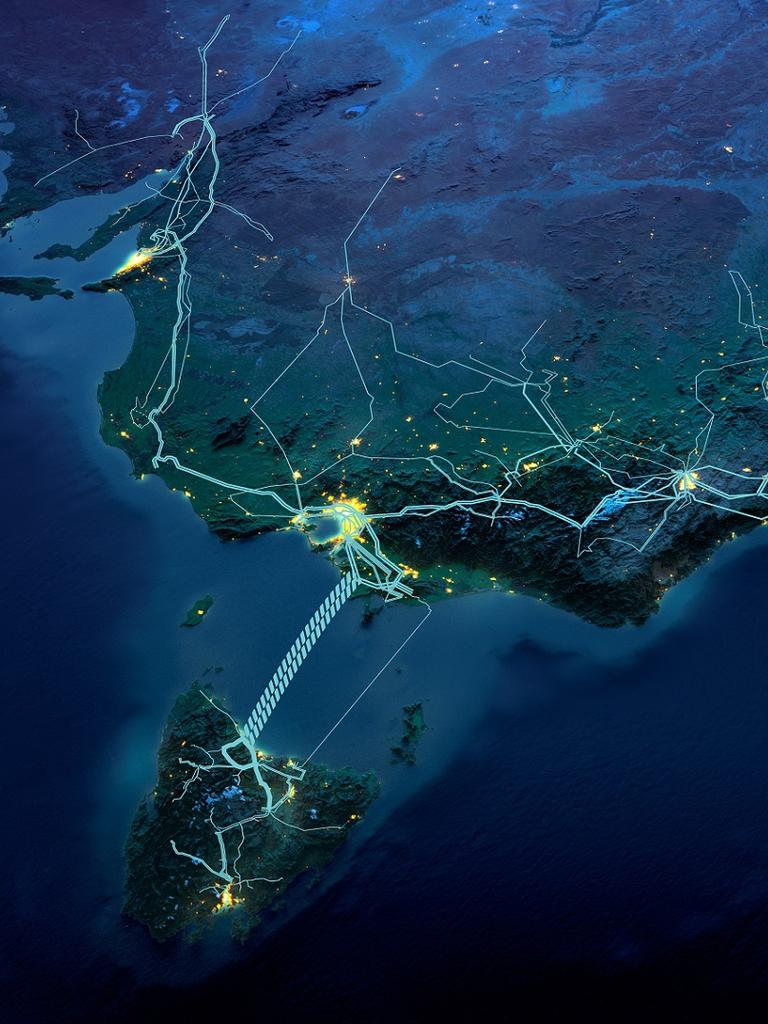
The Marinus Link between Tasmania and Victoria increasingly looks unlikely to go ahead as its cost blows out from $3.1bn to $5.5bn and the fiscally fragile Tasmanian government baulks at bearing the higher figure. Absent this link, the slew of renewable energy projects in Tasmania envisaged as part of the transition is unlikely to proceed. This setback also exposes Victoria’s energy transmission plans.
As for Queensland’s energy transition plans, the inclusion of two large-scale pumped-hydro projects increasingly looks absurd, both in terms of costs and feasibility. There is strong local opposition to the project outside Mackay. The only upside to Queensland’s plan is the intention to keep its (relatively new) coal-fired plants going until renewable energy plus storage can provide guaranteed electricity.
One of the most worrying aspects of this unfolding tragedy is Bowen’s closed mind when it comes to other options to achieve a reliable and affordable grid as well as meeting decarbonisation goals. His muted objection to gas is part of the problem and the fact this energy source is not part of the national security mechanism, the capacity mechanism to provide back-up power to the grid in the event of power shortfalls, is close to incomprehensible.
Bowen’s fierce and ongoing opposition to nuclear power as the greenest form of 24/7 generation simply beggars belief.His unfounded assertion that nuclear is simply too expensive must be tested by the market on the basis of the government lifting the completely unjustified ban on nuclear power.
There are more and more countries that beg to differ with Bowen’s assertion. France, Sweden, Finland, Britain, Canada, South Korea, the US, and others are all ramping up investments in nuclear energy. If nuclear power is too expensive, it’s news to these economic powerhouses. We really run the risk of being left at the starting gate unless we make this shift.
The turning point for Labor should have been the signing of the AUKUS deal and its commitment to the use of nuclear-powered submarines. As part of this agreement, we are required to ramp up the nuclear-related workforce substantially and deal with the waste on our shores. It is the perfect correlate to the establishment of a domestic nuclear power industry.
The lessons being learned by other countries will prove useful and should allow us to short-circuit some of the lengthy delays that have plagued the nuclear industry. Indeed, there is clear evidence that the high expense of nuclear has been partly the result of massive over-regulation and a tendency for heel-dragging by the authorities. The comparison between the US and Canadian regulators is telling in this context, with the Canadian regulator being much more efficient and cooperative.
There are several technology choices we could make, including simply using the tried-and-true ones. The South Koreans, for instance, are finalising several plants using the current principal technology. In Australia, these plants could be easily located where coal-fired plants exist or have existed: the sources of water and their proximity to transmission lines make them perfect sites.
There is also the option of providing a pilot site for TerraPower, the new form of nuclear generation promoted by Bill Gates.
Work is proceeding in Wyoming, US; the plant will generate 350 megawatts to 500MW. While the cost of this plant is estimated to be $US4bn ($6.2bn), the expectation is the next ones could cost as little as $US1bn. This form of nuclear generation doesn’t require significant amounts of water or auxiliary power. Interestingly, there was fierce bidding to have the plant located at the various possible sites.
If it were not for Bowen’s, and Labor’s, ingrained opposition to nuclear power that has little justification in the current climate, it could be exciting times for the electricity industry in Australia.
Small modular reactors will also likely be part of the mix; after all, we currently have them floating around the oceans. The Canadians have made a major commitment to their development and Rolls-Royce is working day and night to achieve SMRs as a commercial option for that company. In time, Australia may simply be able to buy them off the shelf.
Of course, the renewable energy industrial complex is likely to arc up because the most sensible thing to do, if decarbonisation is the paramount concern, is simply to go with nuclear and forget short-lived, unreliable intermittent wind and solar, even with the fanciful addition of batteries.
In the short term, it is possible to make nuclear and renewable energy complementary. But as the turbines and panels reach the end of their short lives, it won’t make much sense to replace the landscape-scarring installations. But the key now is to get on with it.
Everyone needs to read the article “Energy Solution Hinges on New Technology” which appeared in The Weekend Australian, Saturday June 15th 2019 by Dr Bjorn Lomborg, president of the think tank Copenhagen Consensus Centre. He has been named one of TIME magazine’s 100 most influential people in the world. I have reproduced it below in an amended form.
The reality is, today, solar and wind energy together deliver only about 1 per cent of global energy. The International Energy Agency estimates that even by 2040 these will cover a little more than 4 per cent of global energy.
The idea that we already have the needed technology to phase out quickly from fossil fuels is nonsense, so before we can establish what the solution to climate change really looks like, we first need to dismantle the faulty idea that we have the solution already.
One of the world’s leading energy researchers, Czech-Canadian Vaclav Smil, has said:
“The great hope for a quick and sweeping transition to renewable energy is wishful thinking.”
Former US vice-president Al Gore’s chief scientific adviser, Jim Hansen, who put global warming on the agenda back in 1988, agreed, saying:
“Suggesting that renewable’s will let us phase rapidly off fossil fuels in the United States, China, India, or the world as a whole is almost the equivalent of believing in the Easter Bunny and Tooth Fairy.”
The recent “hoo-ha” or “brouhaha” by climate change activists, involving thousands of children skipping school to be involved in street protests in Australia, over the Adani Coal Mine, demonstrates that the belief that we already have the solutions is a delusion on a planetary scale. It may be comforting to tell ourselves that global warming is effectively solved. It’s dangerous because it leads to us taking at face value promises and vows that have no chance of being enacted. And it is reckless because it stops us from focusing on what we need to do instead.
If we do care to fix climate, we need to change course. This was clearly shown by 27 of the world’s top climate economists and three Nobel laureates who looked at the whole gamut of climate solutions for Copenhagen Consensus.
If we keep doing what we’ve done so far and make more promises to cut carbon in ineffective ways such as subsidising wind and solar, each dollar spent will avoid only 3c of climate damage.
Recently, the 10-year, $US10 billion public investment into shale gas in the US proved to be a great way to cut carbon. While it wasn’t intended as climate policy, it led the way for a surge in production of cheap gas, which out competed a significant part of US coal consumption. Because gas emits about half the CO2 of coal, the US has reduced emissions more than any other country in the past 10 years.
France has an extremely low level of carbon dioxide emissions per capita from electricity generation since over 90% of its electricity is nuclear (58 nuclear reactors) or hydro. Why isn’t nuclear on the table in other countries, particularly Australia with some of the biggest reserves of uranium ore?
Politicians across the world happily promise to emit net zero CO2 by 2050, knowing they will be long retired from politics when those vows are broken. Achieving this will be almost impossibly expensive, likely provoking “yellow vest” street riots long before their conclusion.
After New Zealand made its 2050 zero emissions promise, the government commissioned a report on the costs. The report found that achieving this goal in the most cost-effective manner would cost more than last year’s entire national budget on social security, welfare, health, education, police, courts, defence, environment and every other part of government combined. Each and every year.
UN Losing Credibility:
UN secretary-general Antonio Guterres is inviting all heads of state to New York next September to promise jointly to cut global emissions to zero by 2050. To see exactly how unrealistic this is, look at the UN Intergovernmental Panel on Climate Change’s five policy scenarios for the 21st century. The most optimistic “sustainable” scenario puts on green-tinted glasses to envisage a world in which the rich countries happily accept having their energy availability cut in half and people in the poor world accept they will never catch up even to half of rich-world energy availability.
We have a world in crisis with politicians living in “Lalaland”. To quote again, former US vice-president Al Gore’s chief scientific adviser, Jim Hansen “suggesting that renewable s will let us phase rapidly off fossil fuels in the United States, China, India, or the world as a whole is almost the equivalent of believing in the Easter Bunny and Tooth Fairy.”
Surely, for the Bible believing Christian, this is further evidence we are living in the prophesied end times prior to Jesus return to rule with a rod of iron for one thousand years, as revealed in Revelation 20.





 LIVING ETERNAL NOW