
In relation to the question of race, we need to consider the secular mindset of today’s racial illuminati. They employ the categories of guilt and innocence but apart from a conviction that God has dealt with universal guilt by the sacrifice of his innocent Son. Therefore, whites are guilty because they are white; blacks innocent because they are black.
Redemption and reconciliation through forgiveness is not on offer, only perpetual repentance on the part of one group.
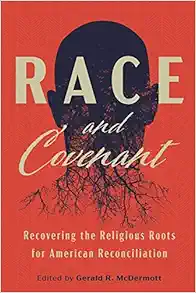
For most of the last two thousand years Christians have believed that God deals with nations as nations and enters into closer relations with societies that claim him as Lord. This belief in the national covenant, only recently out of fashion, is where Frederick Douglass, Abraham Lincoln, and Martin Luther King, Jr. turned when faced with such questions in their own time.
This anthology, Race and Covenant explores the theme of national covenant in scripture, history, and contemporary American society as well as the theology and practices of covenant communities. Its authors suggest new strategies for finding racial reconciliation in this troubled time.
Featuring contributions from W.B. Allen, Joshua Berman, Timothy George, Derryck Green, Alveda C. King, Glenn C. Loury, Gerald R. McDermott, Joshua Mitchell, Evan Musgraves, Osvaldo Padilla, James M. Patterson, Jacqueline C. Rivers, R. Mitchell Rocklin, Robert Smith, Jr., Carol M. Swain, Mark Tooley, and Robert L. Woodson, Sr.
This stirring passage from Derryck Green’s contribution itself commends the book:
Blacks have been systematically targeted, attacked, hurt, and damaged. Slavery and segregation, while not unique to America, were evil. They were sins against the national covenant, and these sins have been massive impediments to the peace and unity which most blacks and whites seek. The residual of white racial chauvinism, though legally outlawed, continues to guide far too many hearts and minds. Some black anger and resentment are therefore understandable; some are not. But it doesn’t matter. Jesus was very clear that the obligation of his followers is to upend the normal cycle of reciprocating anger, antipathy, and hostility. As his disciples, black folks in the churches must initiate reconciliation, and that begins with forgiveness.
Extracted from article Race, Covenant, and Forgiveness by James F Keating in The Catholic Thing, Saturday July 10th, 2021

 LIVING ETERNAL NOW