According to Bloomberg, China has more nuclear reactors under construction than any other country, having approved a dozen in each of the past two years. The nation is on track to become the world’s largest producer of nuclear energy by 2030, overtaking France and the United States. Moreover, it was the first country to connect a small modular nuclear reactor to its grid in the Shandong province.
The EAST fusion-research tokamak at the Chinese Academy of Science’s Institute of Plasma Physics (ASIPP) in Hefei, China.
China has approved five new nuclear power projects, adding 11 reactors with an estimated investment of 220 billion yuan ($30.79 billion), marking a new record in the country’s atomic energy expansion. The decision was taken at an executive meeting of the State Council, presided over by Premier Li Qiang on Monday, the state-run Xinhua news agency said. State-controlled Chinese business news outlet Jiemian said the reactors will be constructed across the provinces of Jiangsu, Shandong, Guangdong, Zhejiang, and Guangxi.
Jiemian estimates are based on the average cost of 20 billion yuan ($2.8 billion) per reactor. Typically, China completes such projects within five years of approval. Six of the reactors will be managed by subsidiaries of the state-owned China General Nuclear Power Group (CGN), with several expected to be third-generation Hualong One reactors.
The China National Nuclear Corporation (CNNC) will build three more reactors, while the State Power Investment Corporation (SPIC) will oversee the construction of two others. Both CNNC and SPIC are also publicly owned. Notably, the Xuwei project in Jiangsu, operated by CNNC, will include a fourth-generation gas-cooled reactor designed to supply both heat and electricity, featuring enhanced safety measures.
China connected its first commercial onshore small modular nuclear reactor to its power grid, making it the first country in the world to draw power from such a machine, a report from Bloomberg reveals. China Huaneng Group Co.‘s 200-megawatt unit 1 reactor at Shidao Bay is connected to the grid in the Shandong province.
As part of its energy security and emissions reduction strategy, China is heavily investing in nuclear power alongside renewable sources like wind and solar. Beijing aims to double nuclear energy’s share of the national energy mix from 5 percent to 10 percent by 2035. Dutton is correct in including it in Australia’s energy mix.
Alphabet’s Google is plugging into nuclear power for its artificial intelligence (AI) operations. The tech giant inked a deal with Kairos Power to purchase electricity from small modular reactors (SMRs).
The plan: Bring the first SMR online by 2030, with more to follow through 2035.
The bigger picture: This move highlights the surging energy demands of AI, with U.S. data center power consumption projected to triple between 2023 and 2030.
In a deal that marks the first corporate agreement to deploy multiple small modular reactors (SMRs) in the U.S., Kairos Power, and Google have signed a Master Plant Development Agreement to facilitate the development of a 500-MW fleet of molten salt nuclear reactors by 2035 to power Google’s data centers.
Momentum for a nuclear revival driven by data center power demand is already beginning to crop up. As POWER reported earlier this month, Microsoft and Constellation Energy committed $1.6 billion to restart the Unit 1 reactor of the shuttered Three Mile Island in Pennsylvania by 2028. The facility, known as the Crane Clean Energy Center, could supply Microsoft’s AI-driven data centers for at least 20 years. Amazon Web Services, similarly, last year bought a 960-MW data center campus powered by the 2,500-MW Susquehanna nuclear plant.
Also, the Strategic Capabilities Office of the US Department of Defense (DOD) has selected BWXT Advanced Technologies and X-energy LLC to develop a final design for a prototype mobile microreactor under the Project Pele initiative. The two teams have been selected through a preliminary design competition which began in April 2019. Three companies – BWX Technologies, Westinghouse Government Services, and X-energy – were selected last year to begin preliminary design work for a prototype reactor. One of the remaining two companies may be selected to build and demonstrate a prototype after a final design review early next year, and the completion of an environmental analysis under the US National Environmental Protection Act, DOD said.
Australia has realized the need for nuclear submarines, so we are committed to nuclear energy and need to develop expertise with small nuclear reactors. We have also had a nuclear reactor in Sydney since the 1950s without incident. Hence, it makes good business sense to bring nuclear energy into our energy mix as well.
There are already SMRs deployed and operating in China and Russia, as well as one test reactor in Japan. Other first-of-a-kind SMRs are expected to be built this decade, followed by accelerated deployment worldwide during the 2030s, particularly as a source of reliable, low-carbon power generation and heat for hard-to-abate sectors. This includes notably the use of SMRs for on-grid baseload power to replace coal-fired generation, though market demand for SMRs continues to grow for other applications as well. The most promising include off-grid heat and power to replace diesel generators in remote regions for mining operations, fossil-fuel replacement for district heating, and high-temperature heat to replace fossil-fuel cogeneration in heavy industries. Other applications include replacing fossil fuels in cogeneration for ammonia and potash production for the fertiliser industry; hydrogen production for synthetic fuels and clean steel production; as well as marine propulsion to replace heavy-fuel oil for merchant shipping.
SMRs are driving innovation in the nuclear sector The sector is witnessing significant innovation internationally. This includes SMRs at various stages of development, from fundamental research on new concepts to commercial deployment and operation. The innovation pipeline includes a range of reactor concepts – from incremental innovation in existing light water reactor technologies to breakthroughs in advanced Generation IV reactor concepts. It also includes SMRs in a variety of configurations – with land-based, multi-module, marine-based and transportable designs. These innovations incorporate new materials, a range of coolants, and, in some cases, innovative fuels. This is in turn expected to lead to the deployment of a range of SMRs of different sizes, with a range of outlet temperatures, and new attributes.
Nuclear energy supplies approximately 10% of the world’s electricity from 412 nuclear power reactors in operation, providing 370 gigawatts of capacity. It is the largest source of non-emitting electricity generation in OECD countries and the second largest source worldwide after hydropower.
The role of nuclear energy in meeting these pathways was emphasized at the 28th Conference of the Parties (COP28) in Dubai on 2 December 2013 when the leaders of over 20 countries committed to tripling global installed nuclear capacity by 2050, recognizing the critical role of nuclear energy in achieving global net zero greenhouse gas emissions and keeping within reach the goal of limiting the temperature rise to 1.5°C.
This commitment builds on NEA analysis that concluded in 2022 that to meet climate goals consistent with a 1.5°C scenario, global installed nuclear capacity needs to triple to 1 160 gigawatts by 2050 (NEA, 2022).
Why aren’t our politicians following what is happening in Canada specifically in Ontario. Watch the video below and hear from Ontario politicians on what they believe about nuclear power.
(CAMBRIDGE, Ontario – April 19, 2024) – BWX Technologies, Inc. (NYSE: BWXT) announced today an investment to expand its Cambridge manufacturing plant. Already one of the largest nuclear commercial manufacturing facilities in North America, the site’s increased footprint will enable greater capacity to support ongoing and anticipated customers’ investments in Small Modular Reactors, traditional large-scale nuclear, and advanced reactors, in Canada and around the world.
The expansion, estimated to cost C$50 million, will increase the facility’s footprint 25 percent to 280,000 square feet. Additionally, over the next few years, BWXT will invest approximately C$30 million in advanced manufacturing equipment for the facility that has designed and manufactured hundreds of large nuclear components. This total estimated C$80 million investment will increase capacity significantly, improve productivity and create more than 200 long-term jobs for skilled workers, engineers and support staff in the area.
John MacQuarrie, president of Commercial Operations, BWXT, stated, “Our expansion comes at a time when we’re supporting our customers in the successful execution of some of the largest clean nuclear energy projects in the world. At the same time, the global nuclear industry is increasingly being called upon to mitigate the impacts of climate change and increase energy security and independence. By investing significantly in our Cambridge manufacturing facility, BWXT is further positioning our business to serve our customers to produce more safe, clean, and reliable electricity in Canada and abroad.”
Mike Rencheck, president and CEO of Bruce Power said, “The nuclear industry is powering Ontario’s economy, by supplying clean, reliable electricity, life-saving medical isotopes, and creating thousands of good jobs. We are supporting advanced manufacturing while providing a deeply decarbonized grid to attract new businesses to our province. The expansion at the BWXT facility in Cambridge is another great example of the positive impact our industry can have in communities all across the province. Clean air, cancer-fighting medical treatments, and economic expansion leading Ontario to a better future.”
Ken Hartwick, president and CEO of Ontario Power Generation (OPG), said, “As we refurbish our existing nuclear facilities and build new, OPG is also generating jobs and economic activity in Ontario’s robust nuclear supply chain. BWXT’s planned expansion is a great example of how building out a system to meet Ontario’s increasing clean energy needs is also paying dividends for our province’s economy.”
Premier of Ontario Doug Ford said, “We’re thrilled to see BWXT expand its footprint and create hundreds of new jobs in Cambridge. As our province continues to lead the future of nuclear energy, the company’s investment will help provide Ontario families and businesses with access to clean, reliable, and affordablepower.
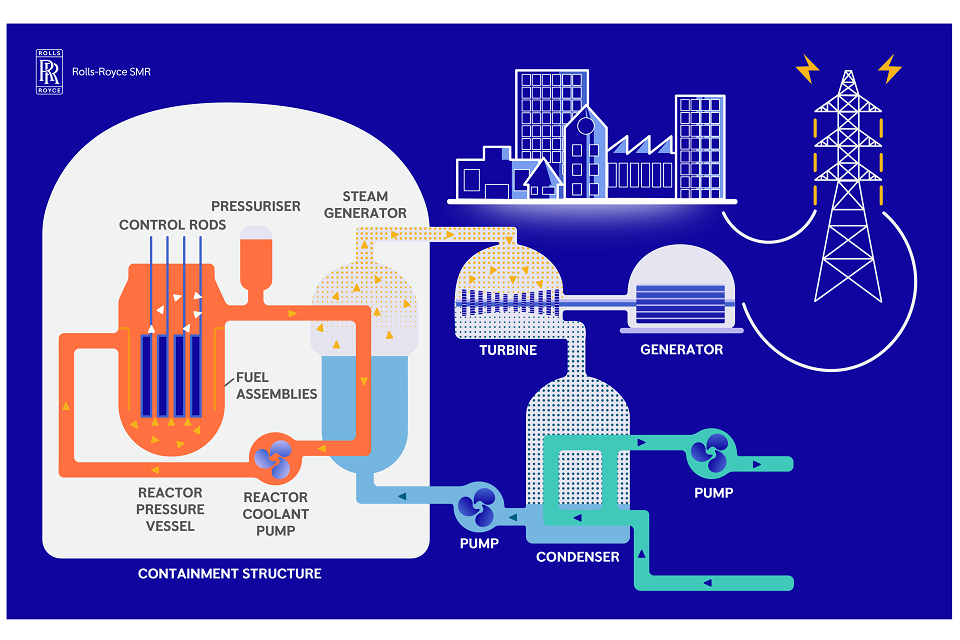
Rolls-Royce SMR was successful in the Swedish nuclear selection process 12th June 2024. It has won a place on Vattenfall’s shortlist of just two SMR companies competing to potentially deploy a fleet of small modular reactors (SMRs) in Sweden.
Vattenfall, the Swedish multinational power company, has announced the shortlist of two SMR vendors as part of its plans to meet the rising electricity demand, adding nuclear capacity and helping Sweden achieve its goal of creating a fossil-free economy by 2045. The other successful SMR wasGE Hitachi’s BWRX-300.
This selection follows a thorough assessment process in which Rolls-Royce SMR had the opportunity to present a fundamentally different approach to building nuclear projects and a modularisation strategy focused on risk reduction to Vattenfall, an experienced and technically respected energy utility.
Rolls-Royce SMR CEO, Chris Cholerton, said: “We are delighted to be one of the two SMR technologies selected by Vattenfall for further evaluation in Sweden. Success in reaching the final two, in such a fiercely competitive process, reflects the benefits of our integrated power station design, our approach to modularisation, and our use of proven nuclear technology.
“Rolls-Royce SMR is the fastest and most affordable way of bringing new nuclear power online and we are excited to work with utilities and industrial customers around the globe, to unlock sustainable sources of low-cost, low-carbon electricity for decades to come.”
Vattenfall’s focus will be deployment at the Ringhals nuclear site with a project that, at the earliest, is operational in the first half of the 2030s, with assessments for SMR and large-scale reactors ongoing.
Sweden has said it needs an additional 100-250 TWh of electricity production over the next 25 years and Vattenfall is poised to play a critical role in the country’s energy transition, including integrating new nuclear capacity into the energy mix.
Rolls-Royce SMR is on track to complete Step 2 and immediately enter Step 3 of the Generic Design Assessment by the UK nuclear industry’s independent regulators this summer. This will be the most important regulatory milestone to date – confirming Rolls-Royce SMR’s first-mover advantage as the leading technology in Europe.
AI Could Soon Need as Much Electricity as An Entire Country
This graph reveals that for decades the power demands for A.I. closely followed Moore’s Law, doubling roughly every 20 months. However, Moore’s Law was shattered in 2010. And the processing power required to train AI went from doubling every 20 months to doubling every six months. To put this in perspective for you: that’s a 16 trillion percent increase over the last 13 years alone… This growth shows no sign of slowing down. In fact, Epoch AI, a research institute warns: The amount of [computing power] developers use to train their systems will continue increasing at its current accelerated rate. That means in one year, the amount of computing power required to train AI systems will increase by 300%… In 3 years, by 6,300%… In 5 years, by a staggering 102,300%.
Operating and developing new artificial intelligence systems requires unparalleled energy demands… energy demands we cannot currently meet. Consider this: ChatGPT already receives an average of 10 million queries per day. That’s roughly 300 million queries per month. Research from the University of Washington shows it costs around one gigawatt-hour of energy to answer these queries. One gigawatt-hour is roughly the same energy consumed by 33,000 households! And that’s for only one AI program.
The problems are FAR worse at scale. The University of Massachusetts Amherst found that “training a single AI model can emit as much carbon as five cars in their lifetimes.” That’s not operating, just development. And that’s for just ONE of the thousands upon thousands of AI models that are being trained every single day. That’s why, The New York Times reported, by 2027 AI servers are predicted to consume as much as 134 terawatt hours annually. In less than three years, AI will have the same annual energy consumption as countries like Argentina, the Netherlands, and Sweden.
“If you really want to make the biggest, most capable super intelligent system you can, you need high amounts of energy.” SAM ALTMANCEO, OPEN AI
“The world is actually headed for a really bad energy crisis because of AI unless we fix a few things.” ARIJIT SENGUPTA, FOUNDER, AIBLE
Elon Musk predicts that by 2045 the power demand in the U.S will have tripled from current levels – largely driven by AI’s needs.
Those in the know, understand that unless the insatiable energy demands of artificial intelligence are met, the industry will never go mainstream.
Fossil fuels are the primary energy source used to train and operate AI systems and could continue to meet the growing energy demands…
But that would require the woke Silicon Valley tech companies and progressive politicians to turn their backs on the religion of Climate Change. And with the activists already up in arms about the environmental impact of artificial intelligence, this is untenable to the ruling class. So they’ll argue that renewables like wind and solar should be used to meet the energy demands of AI…
But the reality is that there is ZERO chance of these renewables producing enough low-cost energy to meet AI’s needs. As The Manhattan Institute reported: “Thinking that wind and solar can ever replace fossil fuels is nothing but an “exercise in magical thinking.” Of course, those who have decided that fossil fuels are quite literally the end of humanity don’t care for these facts.
The Ivy League elites continue to lecture us that wind and solar are the ONLY way forward. But let’s look at the data: Recent research has shown that after two decades of intense support for increased clean energy… The proportion of energy provided by these “clean sources” went from a paltry 13-14% to… get this… 15.7%. That’s after global investment and spending on these clean energy solutions hit an estimated $1.4 trillion in 2022. Tell me, after more than twenty years of failure, do you think these green “solutions” will suddenly be able to meet the exponential energy needs of AI. Of course not. Just consider the projected energy consumption of artificial intelligence we discussed earlier, 134 terawatt hours annually. To generate this amount of energy from wind power alone would require almost 17,000 wind turbines. That would take up roughly 2,284 square kilometers, about 1.5-times the size of London – a city of 8.9 million people.
And that’s assuming all this energy went to AI. This is why it’s obvious to me that renewables like wind, solar, and hydro will NEVER meet the energy demands of AI. And this has created a unique situation… The economic, social, and geopolitical incentives behind AI are far too powerful to be stopped.
Even the Biden administration is not incompetent enough to halt the progress on AI development and cede power to our rivals like China and Russia. However, for artificial intelligence development to continue and reach its full potential vast amounts of energy will be required. And there’s only one solution…
The U.S. Secretary of Energy, Jennifer Granholm, a radical who makes inane music videos about ending fossil fuels… …has come to admit that… the future of nuclear energy is here and should be protected. JENNIFER GRANHOLM, U.S. SECRETARY OF ENERGY
Hence the U.S. government is adopting nuclear power and recently passed the ADVANCE Act (the Accelerating Deployment of Versatile, Advanced Nuclear for Clean Energy)
Its stated mission is to: “Boost development and deployment of new nuclear technologies, incentivize expansion in America, […] and help position the U.S. as the world’s leader in nuclear energy.”
Miraculously, this is one of the only bills this year that made it through the Senate with bipartisan support… which highlights the importance of nuclear energy, not just for the future of AI, but for the country. In fact, the US Department of Energy recently went so far as to say: “Nuclear power is intrinsically tied to national security.”
While it’s refreshing to finally see D.C. pass legislation that is grounded in reality and that will benefit the country, there’s a problem. After decades of negative attention and pressure from the mainstream media, the U.S. has been closing nuclear power plants.
In 1998, the number of operating reactors declined to 104 and remained there through 2013… When the number then declined even further to 92 in 2022. On top of that, nuclear power has only provided 20% of total annual U.S. electricity generation from 1990 through 2021- that’s 31 years of stagnation. In fact, Plant Vogtle in Waynesboro, Georgia, will be America’s first new nuclear plant since the 1990’s.
The only catch? It took 15 years to build… and it cost more than $30 billion. This is a massive milestone for Waynesboro and the country. The plant is projected to power 500,000 homes and businesses for the next 60 to 80 years… but Plant Vogtle’s story exposes a brutal truth: Building nuclear power plants is expensive, time-consuming, and complicated.
This means that traditional nuclear power plants will be unable to meet the exponentially growing energy demands of the AI sector. It could take decades for the U.S. to build out the necessary infrastructure.
However, thanks to a single decision on February 21 last year… a new type of nuclear energy will be able to provide practically endless clean energy all across the country. A new technology was recently approved by the U.S. government… and it’s THIS technology that will act as the Keystone for the AI industry. It enables AI companies to use nuclear energy – easily, quickly, and without spending years and billions of dollars to develop power plants. It’s a revolutionary new technology that allows us to build hundreds, if not THOUSANDS of nuclear facilities all across the country. At 1/50th the cost and in 1/5th the amount of time. To say this is a historical development would be an understatement. It is a generational achievement that, according to former Presidential advisor David Durham is A game-changing technology. DAVID DURHAMFMR. PRESIDENTIAL ADVISOR
It’s something that former White House Deputy, Matt Bennett, believes will… Save the world. MATT BENNETT FMR. WHITE HOUSE DEPUTY
So what is this technology that I believe will be the Keystone of the artificial intelligence industry for decades to come. It’s a nuclear power plant named after a Nobel-prize winning scientist named Enrico Fermi. Fermi was one of the greatest geniuses of the last 100 years and is considered the father of nuclear energy. it was the world’s first small modular nuclear reactor (SMR). As the name implies, an SMR is a nuclear reactor that produces nuclear energy but is MUCH smaller than a typical reactor. It has all the advantages of a nuclear reactor, with almost none of the disadvantages.
It can produce electricity without overheating.
It can self-regulate.
It can be paired with renewable resources.
It can be built in two years (as opposed to ten).
It can be deployed on top of shuttered coal plants, of which we have 300 in America right now… This is what Bill Gates’ nuclear company – TerraPower – has done. They’ve staked their claim at the site of a retired coal plant.
An SMR can produce energy for 10 years without being refueled, whereas a typical reactor has to be refueled every 18 to 24 months
This is why, as our energy needs continue to surge, SMRs are gaining the attention of governments all around the world. They know green energy can’t meet the demands so hundreds of billions of dollars are pouring into the development of SMRs. Right now, 80 different SMR designs are being developed in 19 different countries. Three have already begun operating. Others will soon follow. And when they do, the world will never be the same again.
For the first time ever, we will be able to provide nuclear energy to ANYONE, ANYWHERE, AT ANYTIME. And we’ll be able to do it WITHOUT having to spend billions of dollars on reactors that take a decade to build. And this is why Small Nuclear Reactors (SMRs) are the Keystone technology to the AI industry. It’s the ONLY way tech companies can meet the energy demands of artificial intelligence without fossil fuels.
In five… ten… even fifteen years from now… When we’re looking back on the craze of the AI boom, the top investments won’t be the company with the best artificial intelligence. The real winners will be those who master the SMR. Consider Sam Altman’s SMR startup, Oklo. He plans to take it public this year for upwards of $500 million dollars. Why? In his own words: “If the use of artificial intelligence scales up, it will demand a lot of energy… I don’t see a way for us to get there without nuclear.” SAM ALTMAN CEO, OPEN AI
He not only serves as the chairman of Oklo, the startup working to commercialize nuclear fission with microreactors… But he’s also invested $375 million in Helion – that’s right; another nuclear company – marking the “biggest investment [he’s] ever made” Helion is a nuclear energy startup working on systems that are “smaller, a lot faster to iterate, and then gets […] to commercially useful electricity […] as soon as possible.” Sam Altman – is ALL-IN on nuclear microreactors.
In addition to Oklo, a number of other companies are working on “new breeds” of advanced microreactors… Including GE Hitachi, Holtec, Kairos Power, NuScale Power, TerraPower, and X-energy. However, despite the potential of these companies, I don’t recommend you go near them. You see, there is one major roadblock each of them faces. The Nuclear Regulatory Commission (NRC). In November 2022, the NRC denied “without prejudice” Oklo’s application to build and operate the company’s Aurora microreactor in Idaho. The reason? “Failure to provide information on several key topics.” Vague, confusing, and totally unhelpful – classic bureaucrats!
The company that is building small nuclear reactors is BWXT and it’s got the backing of the US government. BWXT will build the first advanced full-scale transportable nuclear microreactor in the USA under a contract awarded by the US Dept. of Defence (DoD) Strategic Capabilities Office. To be completed and delivered in 2024 for testing at the Idaho National Laboratory.
Poland’s first two nuclear stations will be BWRX-300 small modular reactors. By the end of the year, 20 locations will be presented to local communities, with the first SMR reactor set to be built between 2028 and 2029.
BWX Technologies, Inc. (NYSE: BWXT) today announced a two-phase, two-year contract with the Wyoming Energy Authority to assess the viability of deploying small-scale nuclear reactors in the state as a source of resilient and reliable energy to augment existing power generation resources. 03/21/2023
Man taking God’s place in controlling His universe will soon end. In Australia, the present government has ruled out the use of nuclear energy and is charging ahead with wind and solar. What madness. We need Holy Spirit-led people in power who can make Godly decisions. Fortunately, Biblical prophecy tells us that Satan and man’s control of Earth is coming to an end.
What energy sources will Jesus use during His Millennial reign to power the world? Will nuclear fusion be perfected for energy use? God uses nuclear fusion for the sun to provide the heat needed to sustain life on Earth so I think it is a natural alternative energy source..
Great article: Nuclear resistance casts Australia as energy laggard nation by Judith Sloan in The Weekend Australian
Judged by the reaction to my column last week, many readers share my concerns about the planned transition of the energy system outlined by Energy Minister Chris Bowen. It’s already clear that the vision of an electricity grid powered almost entirely by renewable energy by the end of the decade and linked by many kilometres of new transmission lines is unachievable.
As for the proposition that electricity prices will fall, it’s similarly clear that the modelling on which this appealing idea was based is fundamentally flawed. In particular, the work undertaken by the CSIRO bizarrely assumes all the capital costs of transmission and distribution associated with the transition are simply written off at the end of the decade. The reality is the investors will continue to earn guaranteed returns on these investments and these will feed into higher consumer prices.
It’s anyone’s guess what Bowen will be up to in 2030 but it’s odds-on to a dollar that he won’t be the climate change and energy minister. But the point is that the fate of the electricity grid, and energy generation more broadly, is too important to be left to day-to-day politics; it requires careful planning and implementation by those who really understand how the system works.
Sadly, the leadership and staff of the Australian Energy Market Operator appear to be incapable of this task given the faulty and impractical Integrated System Plans the agency releases. The incompetence of state government ministers and bureaucrats, in combination with starry-eyed fantasies of renewable energy zones, simply adds to the developing nightmare.
The features of the failing transition are obvious already. Snowy 2.0 is behind schedule and now it is predicted that the pumped-hydro project alone will cost $10bn – the original estimate was $2bn. Many billions of dollars for additional transmission will also be needed.
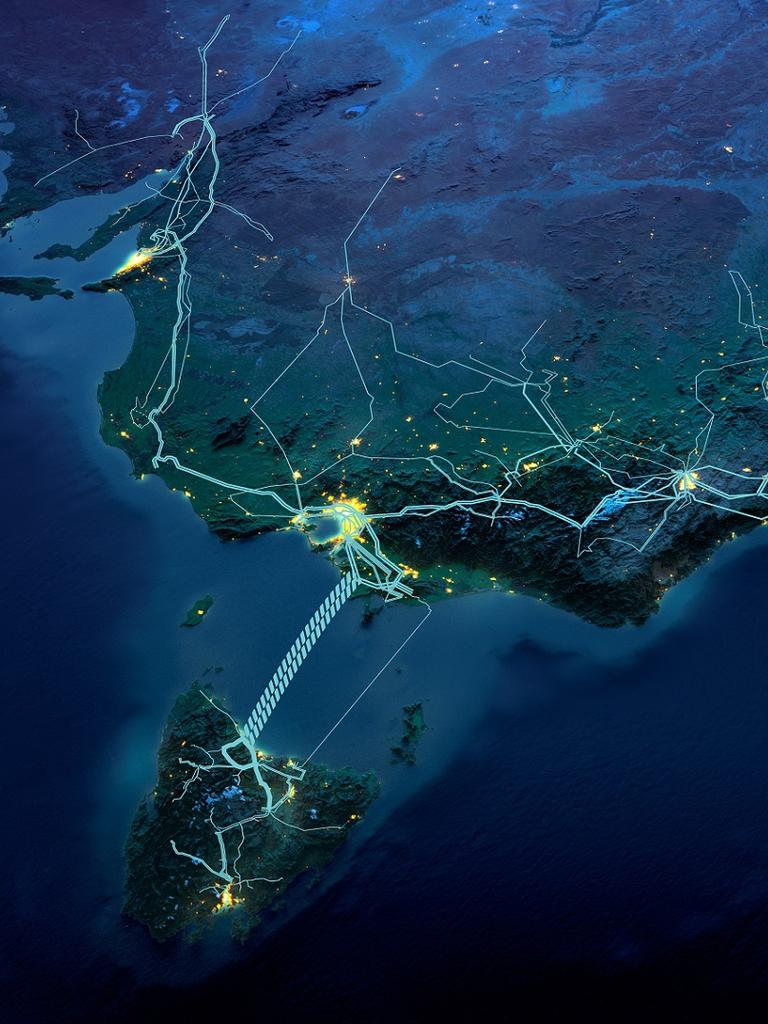
The Marinus Link between Tasmania and Victoria increasingly looks unlikely to go ahead as its cost blows out from $3.1bn to $5.5bn and the fiscally fragile Tasmanian government baulks at bearing the higher figure. Absent this link, the slew of renewable energy projects in Tasmania envisaged as part of the transition is unlikely to proceed. This setback also exposes Victoria’s energy transmission plans.
As for Queensland’s energy transition plans, the inclusion of two large-scale pumped-hydro projects increasingly looks absurd, both in terms of costs and feasibility. There is strong local opposition to the project outside Mackay. The only upside to Queensland’s plan is the intention to keep its (relatively new) coal-fired plants going until renewable energy plus storage can provide guaranteed electricity.
One of the most worrying aspects of this unfolding tragedy is Bowen’s closed mind when it comes to other options to achieve a reliable and affordable grid as well as meeting decarbonisation goals. His muted objection to gas is part of the problem and the fact this energy source is not part of the national security mechanism, the capacity mechanism to provide back-up power to the grid in the event of power shortfalls, is close to incomprehensible.
Bowen’s fierce and ongoing opposition to nuclear power as the greenest form of 24/7 generation simply beggars belief.His unfounded assertion that nuclear is simply too expensive must be tested by the market on the basis of the government lifting the completely unjustified ban on nuclear power.
There are more and more countries that beg to differ with Bowen’s assertion. France, Sweden, Finland, Britain, Canada, South Korea, the US, and others are all ramping up investments in nuclear energy. If nuclear power is too expensive, it’s news to these economic powerhouses. We really run the risk of being left at the starting gate unless we make this shift.
The turning point for Labor should have been the signing of the AUKUS deal and its commitment to the use of nuclear-powered submarines. As part of this agreement, we are required to ramp up the nuclear-related workforce substantially and deal with the waste on our shores. It is the perfect correlate to the establishment of a domestic nuclear power industry.
The lessons being learned by other countries will prove useful and should allow us to short-circuit some of the lengthy delays that have plagued the nuclear industry. Indeed, there is clear evidence that the high expense of nuclear has been partly the result of massive over-regulation and a tendency for heel-dragging by the authorities. The comparison between the US and Canadian regulators is telling in this context, with the Canadian regulator being much more efficient and cooperative.
There are several technology choices we could make, including simply using the tried-and-true ones. The South Koreans, for instance, are finalising several plants using the current principal technology. In Australia, these plants could be easily located where coal-fired plants exist or have existed: the sources of water and their proximity to transmission lines make them perfect sites.
There is also the option of providing a pilot site for TerraPower, the new form of nuclear generation promoted by Bill Gates.
Work is proceeding in Wyoming, US; the plant will generate 350 megawatts to 500MW. While the cost of this plant is estimated to be $US4bn ($6.2bn), the expectation is the next ones could cost as little as $US1bn. This form of nuclear generation doesn’t require significant amounts of water or auxiliary power. Interestingly, there was fierce bidding to have the plant located at the various possible sites.
If it were not for Bowen’s, and Labor’s, ingrained opposition to nuclear power that has little justification in the current climate, it could be exciting times for the electricity industry in Australia.
Small modular reactors will also likely be part of the mix; after all, we currently have them floating around the oceans. The Canadians have made a major commitment to their development and Rolls-Royce is working day and night to achieve SMRs as a commercial option for that company. In time, Australia may simply be able to buy them off the shelf.
Of course, the renewable energy industrial complex is likely to arc up because the most sensible thing to do, if decarbonisation is the paramount concern, is simply to go with nuclear and forget short-lived, unreliable intermittent wind and solar, even with the fanciful addition of batteries.
In the short term, it is possible to make nuclear and renewable energy complementary. But as the turbines and panels reach the end of their short lives, it won’t make much sense to replace the landscape-scarring installations. But the key now is to get on with it.
Dr Jordan B Peterson and Dr. Steven Koonin discuss the Intergovernmental Panel on Climate Change (IPCC) reports – the globally sourced research on climate change – and how policymakers take summaries of summaries from these to justify their green agenda, despite what the reports actually suggest. They also discuss starvation, obesity, green economics, and nuclear futures.
Dr. Steven Koonin, a University Professor at NYU, has served as the Department of Energy’s Under Secretary for Science, as Chief Scientist for BP, and as professor and Provost at Caltech. He is a member of the National Academy of Sciences, a Governor of Lawrence Livermore National Laboratory, a senior fellow of Stanford’s Hoover Institution, and a Trustee of the Institute for Defense Analyses. Koonin holds a BS in physics from Caltech and a Ph.D. in theoretical physics from MIT. He wrote the recent bestseller “Unsettled: What Climate Science Tells Us, What It Doesn’t, and Why It Matters.”
It is important that this man has both dimensions: knowledge of climate science and energy production (technology, production, and business). Very few people have both perspectives, which is why you need to hear what he has to say.
What is not discussed in the media is the fact that the earth is becoming greener due to the increase in CO2 in the atmosphere, Since the 1980s the increase is 40%. This is wonderful. For example, the Sahara Desert has been reduced by 15%. There is no apocalypse in the future, we can manage well if we allow scientists like Dr. Koonin to guide the change to more climate-friendly energy sources. Small modular nuclear reactors will be in the mix.





 LIVING ETERNAL NOW