JESUS TOLD US THAT IN THE WORLD CHRISTIANS WILL HAVE TROUBLE

In this world you will have trouble. But take heart! I have overcome the world” John 16:33 

This world is fallen, and pain is inevitable, but God understands suffering and for those that repent and accept Jesus as their Lord and saviour He sends the Holy Spirit to be our comforter as well as our counsellor and teacher.

Even though I walk through the valley of the shadow of death, I will fear no evil, for you are with me” Psalm 23:4

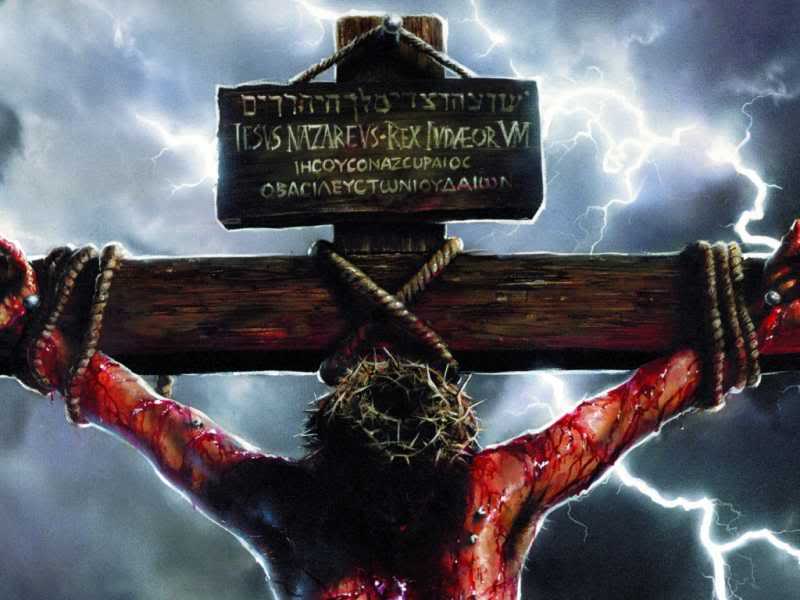
We are not forsaken. God, who carried the cross, knows our torment. Jesus wept for Lazarus, bore the lash of betrayal, and drank the full cup of God’s wrath against sin. He is not a distant deity; He is near, catching every tear, feeling every wound. His scarred hands hold us. When the world’s brokenness threatens to drown us, we cling to the One who declares, “In this world you will have trouble. But take heart! I have overcome the world” (John 16:33). Our agony is not unseen; our pain is not without purpose.

Scripture is laden with proof that God understands our suffering with Jesus Himself being the greatest example, for “Christ also suffered once for sins, the righteous for the unrighteous, that he might bring us to God, being put to death in the flesh but made alive in the spirit” (1 Peter 3:18). In John 15:18, Jesus also warned us, “If the world hates you, know that it has hated me before it hated you.

But 1 Peter 5:10 asks us to hold on, for “after you have suffered a little while, the God of all grace, who has called you to his eternal glory in Christ, will himself restore, confirm, strengthen, and establish you.” And we can find comfort in the promise of Psalm 147:3, “He heals the broken-hearted and binds up their wounds.

God uses tragedy for good.

In the chaos of Charlie’s assassination, as panic gripped and hope flickered, Joseph Backholm of Family Research Council asked God to use this for good. And you know what? He is.

They report people are falling to their knees in prayer. Souls who’ve never darkened a church’s door feel a pull to worship. “I’ve seen hearts break open — people apologizing for venomous words hurled at Charlie, ashamed of their hatred”. Some are abandoning ideologies soaked in malice, seeing them for the poison they are. Others are rising, vowing to carry the torch of truth, to marry and raise families rooted in faith, to use their voices to ignite courage in others. Christians, too, are shaking off their slumber, emboldened to stand unyielding in the face of evil.

It is difficult to fully fathom why such heartbreak is allowed, why evil is permitted to wound so deeply. But know this: God is good. No weapon formed against His purposes will prosper (Isaiah 54:17). As Charles Spurgeon so powerfully said, “I have learned to kiss the wave that slams me into the Rock of Ages.” I despise the pain we endure, but I praise a God rich in grace and mercy, who gives our suffering meaning — who gives us hope in life and death. He takes what evil intends for destruction and weaves it into redemption. As Genesis 50:20 declares, “You intended to harm me, but God intended it for good.”

Where, o death, is your victory? Where, o grave, is your sting?” 1 Corinthians 15:55

I firmly believe that Charlie was a brother in Christ, which means a brother was taken from us. But do you know what else that means? Charlie is home now having been welcomed with the words all believers long to hear: “Well done, good and faithful servant.”

As Christians, we view suffering through the lens of eternity. This world, with all its beauty and brokenness, is not our final destination. Every trial we face, every tear we shed, carries eternal weight because we are running a race toward the finish line. Death does not have the final word. The pain we endure is no match for the blood of Christ. We have hope, now and forever, in His name, because He is the lamb who was slain for us. As Charlie posted days before his death, “Jesus defeated death so you can live.”

The sting of death for the Christian? Gone! Christ has taken that sting for us, and death is now a welcome friend.” Someday soon, we will see, before our very eyes, Jesus returning in the clouds.

Now concerning the coming of our Lord Jesus Christ and our being gathered together to him… Let no one deceive you in any way. For that day will not come, unless the rebellion comes first, and the man of lawlessness is revealed, the son of destruction, who opposes and exalts himself against every so-called god or object of worship, so that he takes his seat in the temple of God, proclaiming himself to be God. Do you not remember that when I was still with you I told you these things?

But as this Scripture reveals, the Antichrist (man of lawlessness0 comes first. Many of the Biblical end times prophecies given to us by Jesus, Paul, John and the O.T. prophets particularly Daniel, Isaiah and Ezekiel are playing out in our day. In Daniel’s seventy weeks prophecy we are given a lot of detail on the the last seven years prior to Jesus return and based on what the UN is doing to implement a two state solution for Israel and Palestine (Peace Treaty) we may be at the beginning of the seven years. As Jesus told us:

Now when these things begin to take place, straighten up and raise your heads, because your redemption is drawing near.” Luke 21:28

WHY IT IS IMPORTANT TO DEAL WITH MILLIONS OF YEARS

Some things should make Christians angry. In this powerful presentation, Ken Ham challenges believers to reclaim righteous anger, stand firm on the authority of Scripture, and boldly confront the lies of modern culture. Genesis 1 to 11 provides the foundation of the true history of this world and answers to the most troubling questions humans can raise, such as why there is death and suffering in the world.

God has raised up two ministries to cope with Satan’s most successful strategy (evolution), so make sure you connect with and support Answers in Genesis, http://www.answersingenesis.org and Creation Ministries International, http://www.creation.com.

DO WE WELCOME GOD’S REFINING FIRE?

We’ve lost an understanding of the reality of suffering as a consequence of the fall and neglected to see how God overrules evil for his greater purposes. We need to understand this so our feet land on the solid foundation of God’s Word and the God of that Word—and there find understanding and hope. All other ground is sinking sand.

If you’ve trusted in Christ as the Savior and Lord of your life, you can rest in the truth that your afflictions and sufferings come to you for your ultimate good and his ultimate glory.

Let’s look at four specific biblical reasons why God ordains suffering for His people.

1. To Kill Sin and Grow Godliness

God uses suffering to expose the sin that clings so closely to our hearts. When we suddenly bear an affliction, our pride, impatience, and unbelief will often surface. Pain has a way of cracking open the heart, laying it bare. When I’ve faced suffering, I’ve responded with anger. Though the suffering itself isn’t evil, it illuminates the evil residing within me. Sometimes it reveals my lack of faith in God’s promises. I begin questioning God: How could you let this happen? 

If we’re prone to love something in this world—house, spouse, children, job—more than God, He may sometimes remove the idol. And it will hurt. In doing so, though, we are freed to refocus our primary love on him alone. King David saw a woman bathing, sent for her, slept with her, then had her husband killed. When the prophet Nathan confronted David about his sin, he responded with Psalm 51. Suffering serves as a cleanser, revealing and killing our present sin, and deterring us from greater sin.

2. To Relinquish the Temporal for the Eternal

God also uses suffering to wean us from a love of this world and redirect our thoughts and affections toward that which is eternal: “Set your minds on things that are above, not on things that are on earth” (Col. 3:2). Jesus told the rich young ruler to sell all he had and give it to the poor. Then, he said, you will have treasure in heaven. The young man went away sorrowful. Sometimes, God will simply remove those treasures for our greater good; it’s better to lose an eye than to face God’s judgement. (Matthew. 5:29).

As Christians, the afflictions we experience in this life should point us to the reality that we’re “sojourners and exiles” (1 Pet. 2:11Heb. 11:13) here on earth, journeying toward the ultimate city. Our citizenship is in God’s Kingdom (Phil. 3:20). This fallen world is not our home, and the afflictions we experience along the way serve as arrows directing us to release what’s fading and grasp what’s unending.

Paul declares that God “comforts us in all our afflictions,” adding: “For as we share abundantly in Christ’s sufferings, so through Christ, we share abundantly in comfort too” (2 Cor. 1:3–5). As the Lord of true comfort, we are to see our pain as “preparing us for an eternal weight of glory beyond all comparison” (2 Cor. 4:17).

Though our outer self is wasting away, our inner self is being renewed day by day. For this light momentary affliction is preparing for us an eternal weight of glory beyond all comparison, as we look not to the things that are seen but to the things that are unseen. For the things that are seen are transient, but the things that are unseen are eternal.2 Corinthians 4:16-18

3. To Produce a Hypocrisy-Free Faith

God also uses suffering is to refine us, as fire refines gold by burning away the impurities (Jer. 9:7Zech. 13:9Mal. 3:3). Suffering will often distinguish the true believer from the hypocrite by the response of each. In our suffering, we are given the opportunity to discover the sincerity of our love, hope, and faith in God.

Are there areas of dishonesty or insincerity in your heart? A plunge into a season of affliction can reveal these. When suffering falls on a church—whether through illness or persecution—“Christ’s summer friends” flee, as the Puritan John Flavel put it. Affliction causes the believer to cling to God and the unbeliever to forsake him. In this way, it comes as a sort of revealing test to separate sheep from goats and refine his precious people through fire.

4. To Bear Witness to the World

Under the rod of affliction we’re given the unique opportunity to bear witness to the gospel’s power in our lives—which effectively calls others to repent and believe. The believer’s own endurance under trial serves as a shining public witness to the truth of God’s Word.

I’ve known believers who have suffered so well that onlookers have asked about the unshakable hope and peace the sufferer enjoys. God uses the suffering of his people to display his grace in securing their salvation. Our frequent trials prove our hope and faith is not in vain, and serve as a platform to showcase gospel hope.

Our Father in heaven ordains suffering for us because he loves us (Heb. 12:6). He is weaning us from a love of this world, transforming us by the renewing of our minds (Rom. 12:2), and will complete the good work he began in us (Phil. 1:6). May we rest in the surety of his covenant promise that, even amid suffering and trial, he will never leave us nor forsake us (Heb. 13:5).

Editors’ note: This excerpt is adapted from Brian Cosby’s new book, A Christian’s Pocket Guide to Suffering: How God Shapes Us through Pain and Tragedy (Christian Focus, 2015). For a more extensive survey of these five points, see Cosby’s book Suffering and Sovereignty: John Flavel and the Puritans on Afflictive Providence (Reformation Heritage, 2012).

.

WHO CAUSED DEATH, DISEASE, AND SUFFERING IN THIS WORLD?

For those Christians who believe in millions of years, it is only logical that the world as we see it today with all its groaning has gone on like this for millions of years before man. This then puts the blame on God for death, disease, and suffering. But God’s Word blames our sin!

No, one can’t add millions of years into Scripture. To do so is to attack the character of God and undermine the authority of the Word of God.

When God originally created everything, it was “very good.” There was no death, disease, or suffering. But because we (in Adam) sinned against our holy God (we committed high treason against God by our outright disobedience), God judged that disobedience with death and the curse (Genesis 3:14–19Romans 5:12).

Therefore, just as sin came into the world through one man and death through sin, and so death spread to all men because all sinned… The good news is ”For if, because of one man’s trespass, death reigned through that one man, much more will those who receive the abundance of grace and the free gift of righteousness reign in life through the one man Jesus Christ.Romans 5:12, 17

It must be remembered that there was a supernatural entity, Satan, involved in deceiving Eve and Adam into disobeying God. He is a fallen angel who we are told rebelled against God because he wanted to be God.

Satan is called the “prince of the power of the air” in Ephesians 2:2. He is the “ruler of this world” in John 12:31. These titles and many more signify Satan’s capabilities. To say, for example, that Satan is the “prince of the power of the air” is to signify that in some way he rules over the world and the people in it. This is not to say that he rules the world completely; God is still sovereign. But it does mean that God, in His infinite wisdom, has allowed Satan to operate in this world within the boundaries God has set for him.

We know from Biblical prophecy that all of the O.T. prophets were told that their Messiah would eventually rule Israel (Acts 3:24), the nation God established for His purposes. Almost 2,000 Biblical prophecies are of Jesus’ return to this Earth first to rescue His Saints and pour out His wrath upon an unrepentant world. Jesus then returns to Earth with the glorified Saints to rule and reign the nations with a rod of iron for 1000 years. Satan has ruled this world for 6,000 years but now he is bound in chains for most of the thousand years. He is released at the end of the thousand years and we are told that he is still able to raise an army of rebellious people to come against Jesus and the Saints. Fire from heaven consumes them and it is at this stage God destroys the old heaven and earth. Jesus’ Millennial Kingdom is a transition period.

It is after the second resurrection and the White Throne judgement that John sees a magnificent new Jerusalem descending from a new Heaven onto a new Earth where there will be no more death, disease, pain, or suffering. It will be a restoration (Acts 3:20–21). If death, disease, and suffering have been here since God created life, then it makes no sense that there will be a restoration to a new heaven and earth with no death and suffering.

BIBLICAL TRUTHS ABOUT SUFFERING

God sets a limit on evil and suffering in your life. In Job’s life, Satan could do only so much for so long. God determined the limits. And since life continues after death, your suffering can last only the tiniest fraction of your true eternal lifetime. Rest in the knowledge that everything that comes into your life—yes, even evil and suffering—is Father-filtered.

Here and now, God offers you the comfort of His presence. He promises in Hebrews 13:5,Never will I leave you; never will I forsake you.

Suffering is temporary. It could last far longer.

If you are God’s child, then your suffering cannot outlast your lifetime. Knowing that suffering will one day end gives us strength to endure this day. Though we don’t know exactly when, we do know for sure that either by our deaths or by Christ’s return, our suffering will end. From before the beginning, God drew the line in eternity’s sand to say to His children, “This much and no more, then endless joy.”

For this light momentary affliction is preparing for us an eternal weight of glory beyond all comparison, as we look not to the things that are seen but to the things that are unseen. For the things that are seen are transient, but the things that are unseen are eternal.2 Corinthians 4:17-18

In 2 Corinthians 4:17–18 Paul speaks of relative weights. He calls our present evils and sufferings “light and momentary.” When we face a lengthy period of great adversity, though it hardly seems momentary, in fact, it is. In eternity, people in God’s presence will fully agree with Paul that their earthly sufferings were unworthy to be compared with eternal glory.

Suffering can produce some desirable good. It can make us better people, and it can reveal God’s character in ways that bring Him glory and bring us good.

As a young Christian, I believed that going to Heaven instead of Hell was all that mattered. But as I read the Bible, I saw that to be called according to God’s purpose is to be conformed to the character of Christ. God’s purpose for our suffering is Christlikeness. That is our highest calling. If God answered all our prayers to be delivered from evil and suffering, then He would be delivering us from Christlikeness. But Christlikeness is something to long for, not to be delivered from.

Whether suffering brings us to Christlikeness depends, to some degree, upon our willingness to submit to God, to trust Him, and to draw our strength from Him. Suffering will come whether we allow it to make us Christlike or not—but if we don’t our suffering is wasted.

God can see all the ultimate results of suffering; we can see only some. When we see more, in His presence, we will forever praise Him for it. He calls upon us to trust Him and begin that praise now.

Suffering and weeping are real and profound, but for God’s children, they are temporary. Eternal joy is on its way.

God promises that the eternal ending will break forth in such glorious happiness that all present suffering will pale in comparison. All who know Jesus will have a happy ending. We just haven’t seen it yet.

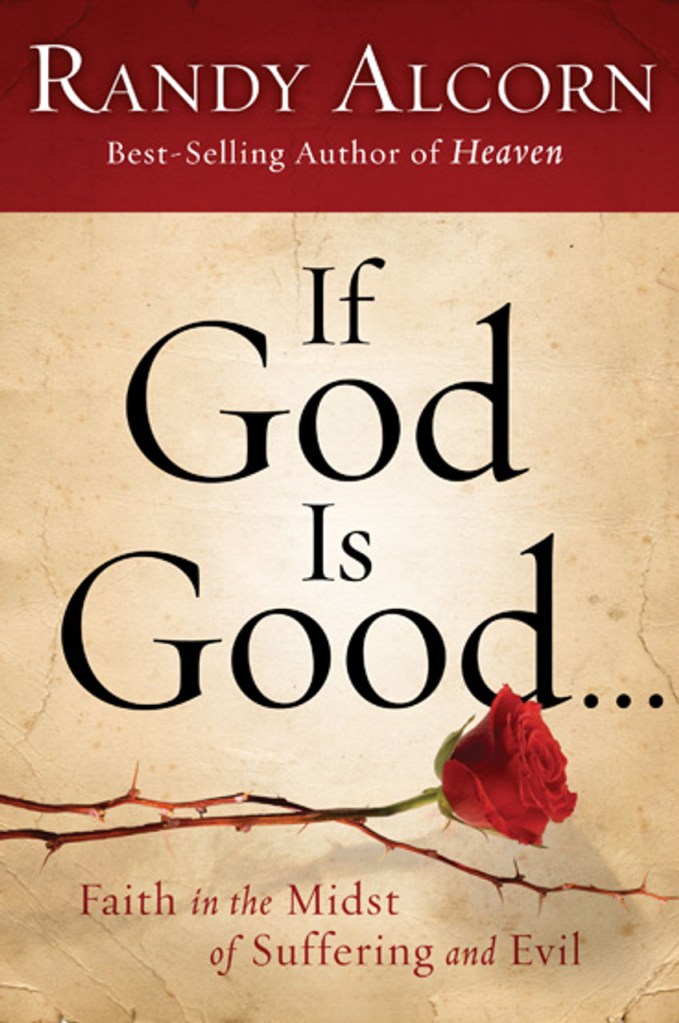
This article was adapted from Randy Alcorn’s book If God Is Good.

WHY DOES GOD PERMIT WHAT HE HATES?

Why does God permit what He hates? Find out with special guest Joni Eareckson Tada.

Periods of awakening often coincide with periods of suffering for the people of God. The Bible indicates that Christians should expect suffering, for our Lord Himself suffered in this life.

If anyone would come after me, let him deny himself and take up his cross and follow me. For whoever would save his life will lose it, but whoever loses his life for my sake will find it. For what will it profit a man if he gains the whole world and forfeits his soul? Or what shall a man give in return for his soul? For the Son of Man is going to come with his angels in the glory of his Father, and then he will repay each person according to what he has done.Matthew 16:24

Joni, from her experience, provides us with a good understanding of the place of suffering in the Christian life, reminding us of our need for the Holy Spirit to sustain us as we face personal trials and even direct persecution.

Love this gem of wisdom given by Joni: God permits what he hates to accomplish what He loves. Christ in me the hope of glory.

DAVID’S PRAYER WAS ALSO AN AMAZING PROPHECY

Thank goodness we have the Psalms: how helpful they are in our Christian walk, they explore the full range of human experience in a very personal and practical way. However, one psalm, Psalm 22 stands out because Jesus quotes verse 1 as His last words from the Cross. Why did Jesus take us to this psalm? It is obvious when we read the rest of the psalm, the psalm is a prophecy of what Jesus was experiencing on The Cross at the time He spoke it.

David had no understanding God was using Him to deliver a prophecy that provides incredible detail about what Jesus would experience on The Cross one thousand years later. David was obviously going through a terrible time in his life to have expressed the words he did in this prayer but consider that God gave David the words to pray so that His prayer could be used by Jesus to prove He is who He said He was, the promised Redeemer of not only Israel but the World.

My God, my God, why have you forsaken me? Why are you so far from saving me, from the words of my groaning? O my God, I cry by day, but you do not answer, and by night, but I find no rest.
Yet you are holy, enthroned on the praises of Israel. In you our fathers trusted; they trusted, and you delivered them. To you they cried and were rescued; in you, they trusted and were not put to shame.
But I am a worm and not a man, scorned by mankind and despised by the people. All who see me mock me; they make mouths at me; they wag their heads; “He trusts in the LORD; let him deliver him; let him rescue him, for he delights in him!
I am poured out like water, and all my bones are out of joint; my heart is like wax; it is melted within my breast; my strength is dried up like a potsherd, and my tongue sticks to my jaws; you lay me in the dust of death. For dogs encompass me; a company of evildoers encircles me;
they have pierced my hands and feet— I can count all my bones— they stare and gloat over me; they divide my garments among them, and for my clothing they cast lots..
. ” Psalms 22:1-8

Note how Psalm 22 ends, David understood that regardless of whether God answered his prayer, God is still in control of His universe and this scripture will come to pass:

As I live, says the Lord, every knee will bow to Me, and every tongue will give praise to God.Romans 14:11

Moreover, it reveals that King Jesus will rule over the nations from Jerusalem in His soon coming Millennial Kingdom.

I will tell of your name to my brothers; in the midst of the congregation, I will praise you: You who fear the LORD, praise him! All you offspring of Jacob, glorify him and stand in awe of him, all you offspring of Israel! For he has not despised or abhorred the affliction of the afflicted, and he has not hidden his face from him but has heard when he cried to him. From you comes my praise in the great congregation; my vows I will perform before those who fear him. The afflicted shall eat and be satisfied; those who seek him shall praise the LORD! May your hearts live forever! All the ends of the earth shall remember and turn to the LORD, and all the families of the nations shall worship before you. For kingship belongs to the LORD, and he rules over the nations. Psalms 22:22-28

They came to life and reigned with Christ for a thousand years. The rest of the dead did not come to life until the thousand years were ended. This is the first resurrection. Blessed and holy is the one who shares in the first resurrection! Over such the second death has no power, but they will be priests of God and of Christ, and they will reign with him for a thousand years.” Revelation 20:4-6

A lot of bad theology inevitably surfaces when we face suffering. When people lose their faith because of suffering, it suggests a weak or nominal faith that didn’t account for or prepare them for evil and suffering. Any faith not based on the truth needs to be lost—the sooner, the better.

Suffering and evil exert a force that either pushes us away from God or pulls us toward Him. But if personal suffering gives sufficient evidence that God doesn’t exist, then surely I shouldn’t wait until suffer to conclude He’s a myth. If my suffering would one day justify denying God, then I should deny Him now in light of other people’s suffering.

Believing that God exists is not the same as trusting the God who exists. A nominal Christian often discovers in suffering that his faith has been in his church, family, career, or social network, but not Christ. As he faces evil and suffering, he may find his beliefs shaken or even destroyed. But genuine faith—trusting God even when we don’t understand—will be made stronger and purer.

The last three paras have been excerpted from Randy Alcorn’s book “90 Days of God’s Goodness”.

IS OUR SUFFERING POINTLESS?

Perhaps the greatest test of whether we believe the following Scripture is to identify the very worst things that have happened to us and reflect on whether we believe that God has or will use them for our good.

“In all things God works for the good of those who love Him, who have been called according to His purpose”. Romans 8:28

Invariably, if you have lived long enough so that enough time has passed since some of those “worst things” happened to you, then you’ll almost certainly find that God has used those circumstances to stop you from relying on your own efforts, grieving the Holy Spirit in the process and quenching His work in your life.

And do not grieve the Holy Spirit of God, by whom you were sealed for the day of redemption.Ephesians 4:30

Do not quench the Spirit.” 1 Thessalonians 5:19

Jesus made it possible for God. our Father to send the third person of the Trinity to indwell our Spirit. As Jesus Himself said to His disciples, it is far better I go so the Father can send the Holy Spirit to be your counsellor, comforter, and teacher. If you let Him, He will direct your every step. Until you truly die to self and say to the Holy Spirit, not my will but your will be done this day and every day you truly cannot live the Christian life. The fruit of the Spirit, love, joy, peace, patience, faithfulness, gentleness, goodness, kindness, and self-control will not be evident in your life nor the gifts of the Spirit available for ministry, words of wisdom, words of knowledge, gift of prophecy, gift of faith, healings, miracles, discerning of spirits, gift of tongues, interpretation of tongues. I would venture to say that until you realise the Holy Spirit’s presence and submit to Him, God will continue to bring painful experiences into your life. When you finally realise the immensity of the gift God has provided you will rejoice that God has brought those painful experiences into your life so that you eventually came to experience His wonderful truth. Experiences labeled as the worst things that ever happened to you become some of the best from an eternal perspective. That’s because God uses the painful, difficult experiences of life for our ultimate eternal good.

How is this possible? Because God is both loving and sovereign. Our experiences provide persuasive proof that while evil and suffering are not good, God can use them to accomplish immeasurable good. This knowledge should give us great confidence that even when we don’t immediately see any redemptive meaning in our suffering, God can see it—and one day we will too. Therefore, we need not run from suffering or lose hope if God doesn’t remove it. We can trust that God has a purpose for whatever He permits.

THE PROBLEM OF PAIN

C. S. Lewis said in The Problem of Pain, “The human spirit will not even begin to try to surrender self-will as long as all seems to be well with it.” Our self-will deceives us; in loss, tragedy, and suffering we may finally come to terms with our need for help.

Why do God’s children undergo pressure, suffering, and deadly peril? Paul answers clearly: “that we might not rely on ourselves but on God” God uses our weakness and inadequacy not only to build our character but also to manifest His strength and grace to us and through us.

For we do not want you to be unaware, brothers, of the affliction we experienced in Asia. For we were so utterly burdened beyond our strength that we despaired of life itself. Indeed, we felt that we had received the sentence of death. But that was to make us rely not on ourselves but on God who raises the dead. He delivered us from such a deadly peril, and he will deliver us. On him, we have set our hope that he will deliver us again. You also must help us by prayer, so that many will give thanks on our behalf for the blessing granted us through the prayers of many.2 Corinthians 1:8-11

Paul says, “Suffering exposes our theology. …Suffering will deepen your faith or it will weaken it. …Your suffering is not a failure of God’s plan. …In suffering, God reveals us and reveals Himself. … suffering is the workroom for grace.”

ENDURING THROUGH SUFFERING

I can do all things through him who strengthens me.Philippians 4:13

You cannot view this verse in isolation you need to consider the previous verse first.

Not that I am speaking of being in need, for I have learned in whatever situation I am to be content.Philippians 4: 11

Philippians 4:13 is not about how one can literally do anything we put our minds to simply because we are in Christ. Paul has a specific context in mind here—and it is not about attaining your personal goals and aspirations, developing a healthy conception of self-worth, nor is it designed to be a coping mechanism to deal with the grit and grime of life. Truthfully, the passage isn’t even about finding the secret of contentment in all things, despite insistence from many that this is the focal point of this passage. This interpretation does have more validity to it due to the following passage.

Not that I am speaking of being in need, for I have learned in whatever situation I am to be content. I know how to be brought low, and I know how to abound. In any and every circumstance, I have learned the secret of facing plenty and hunger, abundance and need.Philippians 4:11-12

Paul undoubtedly affirms learning contentment in all circumstances. However, the overarching point of Paul to the Philippians in this passage is not contentment, but one of enduring through suffering, particularly, suffering brought on through no fault of our own.

Job a model of faithfulness in suffering

The Letter to the Philippians is one of Paul’s epistles written from prison, which means that as he pens this letter, he is chained to a Roman guard waiting for his trial before Caesar. In the midst of Paul’s expression of gratitude for their financial support, he takes the opportunity to encourage his people that Christ Himself is the source of all comfort, hope, and faith. The simple reason why Paul encourages them in this manner is they have been appointed, not only to eternal life but to suffer for the sake of Christ, which in particular for them means they will experience the same things Paul has (Philippians 1:29-30). Paul is not only referring to being jailed for Christ’s sake, but to enduring physical persecution (2 Corinthians 11:23-27).

It is in light of this that Paul then ministers to those in Philippi by highlighting the hope of the gospel, the resurrection, and the object of their faith: Jesus Christ. He is all-sufficient and provides for our every need by the power of the Holy Spirit.

The Bible teaches us how to embrace suffering for the glory of Christ because it is the means by which we enter His Kingdom.

Adapted from articles by Grayson Gilbert on Suffering. Click on embrace suffering and you will connect to another great article by Grayson Gilbert.