
The Bible teaches that every feast (Moedim) has three layers of meaning or fulfilment:
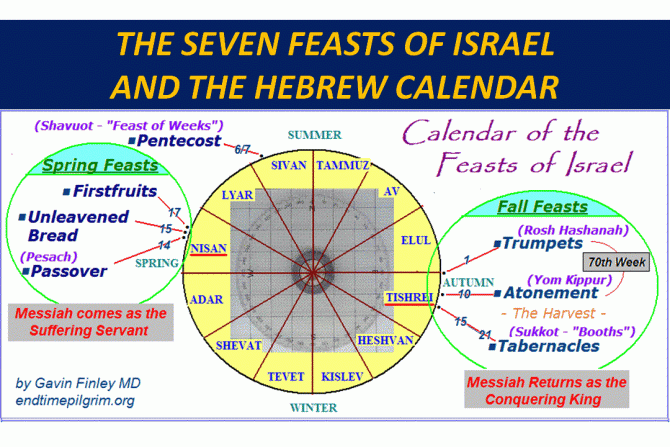
1. A historical meaning in ancient Israel. e.g. The Day of Atonement was when Israel’s annual rite of purification took place in the Tabernacle or Temple (historical meaning).
2. A first-century fulfilment through the work of the Messiah. e.g. The Messiah made atonement for our sins, a point that the book of Hebrews establishes by drawing heavily from the Day of Atonement sections of Leviticus (first-century fulfilment)
3. A future fulfilment tied to end-time events and the Messiah’s second coming. The Day of Atonement foreshadows what the Messiah will do in and for Israel, and by extension for all the nations of the earth, after His Second Coming (future fulfilment).
The same can also be said about the other feasts besides the Day of Atonement. Every feast carries these multiple layers of meaning.
Paul taught that the biblical feasts in Leviticus 23 will only reach their final prophetic fulfilment after the Messiah returns. Most New Testament scholars accept that when Paul refers to the festivals and Sabbath days in this passage, he has the holy days of Leviticus 23 in mind. With that point established, notice how Paul also says here that these festivals are a “shadow of what is to come.” This phrase “what is to come” is used numerous times in the New Testament to refer to the end times, the Second Coming, and the kingdom of God. Paul is indicating that these Sabbaths and festivals foreshadow prophetic events that will take place in the future.
“Therefore let no one pass judgment on you in questions of food and drink, or with regard to a festival or a new moon or a Sabbath. These are a shadow of the things to come, but the substance belongs to Christ.” Colossians 2:16-17
 LIVING ETERNAL NOW