
Although FIFA is finished for 2026, when the replays begin, this year’s tournament should be remembered as the World Cup for Christ. FIFA WC26 saw a record number of Christian players put their faith on the field.
From German players praying with the “Cool Runnings” Curaçao team, to Team America uniting in prayer, the cross was put before the cup.
These “crown down” soccer sermons preached Soli Deo Gloria and included players from Ghana, Croatia and Congo, among others.
This list included Leo Messi, Felix Nmecha, Mark McKenzie, Jonathan Tah and Kenji Gorré.
All of whom unashamedly lived out Psalm 115:1, declaring, “not to us, O LORD, not to us, but to your name be the glory, because of your love and faithfulness.”
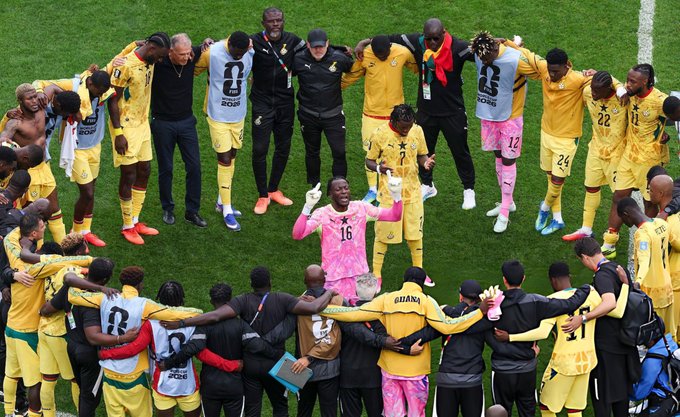
Media Mystified by Christian Public Declarations
The flood of public declarations directed by faith in Christ was so significant it bewildered a post-truth globalist press, whose dominant response was to downplay it.
When this didn’t work, legacy media shifted. Seemingly paralysed by political correctness, legacy media downplayed FIFA’s Jesus Movement, and elevated Islam instead.
Doubling down on the distraction, the media then massaged in pro-mass immigration and anti-monoculturalism messages.
Such as the anti-One Nation (somewhat taxpayer-funded) SBS, which injected “diversity is our strength” like medicine into its post-game reflections.
Just like legacy media tap-dancing around FIFA’s undeniably Christian groundswell, SBS used soccer to insinuate that the majority didn’t matter. For example, the media organisation proclaimed “Over 17 million Australians tuned in, celebrating our national pride in the Socceroos and the ethnic minorities that make us so special.”
The only noticeable legacy media exception to the disdain for faith and FIFA’s pair-up was The Financial Times, which at least acknowledged that God had made a World Cup comeback, albeit through gritted teeth.
Despite an obvious contempt for Christians driving dead air in legacy media’s coverage, FIFA’s Christian players continued to pray on the field anyway. This public display of Christianity wasn’t for the cameras. It was for Christ. That defiance proved their prayers weren’t for show. For instance, even in the finals, players from France and England gathered to pray after battling it out in the bronze round.
Although official stats haven’t been released yet, it’s safe to say well over 100 million watched the 3rd place decider. It’s also safe to say that for those on the field, neither fear of the mob nor the media’s disapproval factored into the decision to pray.
As reported by The Independent, “certain players set their differences aside to pray together.”
For context, France lost, England won. “England’s Saka, Eberechi Eze, Marc Guehi and Trevoh Chalobah joined the French contingent of Dayot Upamecano, Jean-Philippe, and Maxence Lacroix.”
This was one of the few moments where FIFA’s Christians won the world’s applause.
The Independent then republished comments from UK Classic FM DJ and UK reporter Dan Walker, who wrote on X, “This is such a beautiful moment from the World Cup. 7 men, from 2 rivals, praying together at the end of their journey this summer. Opponents on the pitch. Together in their faith.”
“Two are better than one, because they have a good return for their labour: If either of them falls down, one can help the other up. ” Ecclesiastes 4 v 9–10.
It’s worth noting that scoring goals for the gospel (Jesus Christ) wasn’t just for soccer players. Justin Bieber read the room correctly. Contributing to half-time entertainment, he sang “Everything Hallelujah” before a packed stadium that quickly went quiet.
The openly Christian 32-year-old pop icon helped end FIFA 2026 by repeatedly proclaiming a “World Cup Hallelujah” on the field in an unplugged version of the song. A song originally written with his wife, Haley Baldwin, and their faith in mind.
As if to prove just how much contempt legacy media has for Christians, Rolling Stone stated the choice of song was a “confusing headscratcher.” Yet, even the Stone’s moss-gathering anarchist kingmakers were forced to admit there’s been a culture shift.
“As it turns out, [Bieber’s] strange choice paid off: the 2025 song just saw a 240 per cent spike in global streams on Spotify, according to data shared with Rolling Stone.” The song also hit “the top two queries under the musician’s name on Google Trends.”
In snarky fashion, the music magazine dismissed the powerful response. They suggested that “folks were turning to Spotify to confirm that the Swag II was, in fact, part of Bieber’s discography and not some obscure Christian rock track.”
Sharing only criticism from spectators, Rolling Stone seemed to agree with one social media user who said, “Justin Bieber saw people having fun and said, ‘Let me do a boring song and ruin the vibe for everyone.’”
Unaware they were helping prove the point, Rolling Stone did what the majority of legacy media has done the entire FIFA tournament: downplay the strong Christian element that helped make FIFA WC26 more than a soccer match.
This element was obvious right into the 2026 finals.
FIFA’s last round saw Spain and Argentina, two majority-Catholic countries, compete for first place.
As an example of how close they hold their Christian faith, Spain’s head coach, Luis de la Fuente, said, “God gives me security and strength.” Speaking to El Resurgir de Madrid before the European Championship in 2024, Fuente added that he wasn’t superstitious. “I am free,” he said, “and I can choose what I have to do, and both my experience and my intelligence invite me to believe in God.” For Spain’s head coach, prayer is enough. Being a Christian, Fuente appeared to clarify, “allowed him to be the person he is today.”

