With Pentecost Sunday coming up, it is an appropriate time for us to reconsider what Jesus made it possible for our Heavenly Father to do when He went to the Cross and died on our behalf.
Our Heavenly Father sends the Holy Spirit to indwell every believer to make it possible for us to live the Christian life.
“Now we have received, not the spirit of the world, but the Spirit who is from God, so that we may know the things freely given to us by God, which things we also speak, not in words taught by human wisdom, but in those taught by the Spirit, combining spiritual thoughts with spiritual words.” – 1 Corinthians 2:12-13.
If we have the Spirit, our hearts will be gentle and kind.
If we have the Spirit, our intentions will be pure.
If we have the Spirit, our words will show compassion and not judgment.
If we have the Spirit, our lives will exhibit the fruit of spirit: love, joy, peace, faithfulness, gentleness, goodness, kindness and self control.
AndGod will give us the right words if we heed His Spirit. He will guide and guard our every step.
When we allow God’s word and His Spirit to shape our actions and our words, we are walking in the Spirit and pleasing God.
“But I say, walk by the Spirit, and you will not gratify the desires of the flesh. For the desires of the flesh are against the Spirit, and the desires of the Spirit are against the flesh, for these are opposed to each other, to keep you from doing the things you want to do.” Galatians 5:16-17
“Now the works of the flesh are evident: sexual immorality, impurity, sensuality, idolatry, sorcery, enmity, strife, jealousy, fits of anger, rivalries, dissensions, divisions, envy, drunkenness, orgies, and things like these. I warn you, as I warned you before, that those who do such things will not inherit the kingdom of God.” Galatians 5:19-21
How are you living your life? According to the works of the flesh or will you follow Jesus and commit your life to walking in the Spirit. It is never too late to make the right decision!
“The Son of Man did not come to be served, but to serve, and to give His life as a ransom for many.” – Mathew 20:28, Mark 10:45.
“Have this mind among yourselves, which is yours in Christ Jesus, who, though he was in the form of God, did not count equality with God a thing to be grasped, but emptied himself, by taking the form of a servant, being born in the likeness of men. And being found in human form, he humbled himself by becoming obedient to the point of death, even death on a cross.” Philippians 2:5-8
Prior to the advent of Christianity individuals belonged to the city, body and soul. If an individual had any value at all it was only by reference to some organised collective. Christianity changed all of that, the proclamation by the apostles that God had become man obliterated this view that individuals had no value that had predominated in the ancient world.
If Jesus is a person as the apostolic and patristic fathers of the early church proclaimed and He died and was raised as a representative of the entire human race then we are infinitely more valuable than society and the state makes of us. Suddenly, our identity is in view, we were created by our Heavenly Father in His image.. Our separation from Him was of our own making i.e. our rejection of His lordship over our lives.
How liberating is the following verse.
“There is neither Jew nor Greek, there is neither slave nor free, there is no male and female, for you are all one in Christ Jesus.” Galatians 3:28
This concept of the value of the individual is being attacked as society increasingly rejects God and His followers. People are increasingly identifying themselves and others in terms of the groups they belong to. The God group is of course being increasingly marginalised. It is from the group they obtain their solidity and source of meaning. Critical Race Theory and Black Lives Matter are good examples of this onslaught. The unique person made in God’s image that is underneath these labels, the person Jesus died on The Cross to redeem is lost. Jesus said that in the last days lawlessness will abound and that Christians will be persecuted. Sadly, many will fall away but the one who endures will be saved.
“Then they will deliver you up to tribulation and put you to death, and you will be hated by all nations for my name’s sake. And then many will fall away and betray one another and hate one another… And because lawlessness will be increased, the love of many will grow cold. But the one who endures to the end will be saved.” Matthew 24:9-10, 12-13
Start living your lives now with an eternal perspective. Trust God and His promises and He will use you for His purposes in these last days. The Holy Spirit will direct your steps and you will move in power with the gifts of the Spirit evident. You will truly be a light in a dark place. Many will be saved through your witness and acts of kindness.
Baucham relies on the writings of Critical Race Theory co-creator Richard Delgado, who argues racism “is ordinary, normal, and embedded in society” and that it “advances the interests of both white elites (materially) and working-class people (psychically), [therefore] large segments of society have little incentive to eradicate it.”
CRT recognizes that racism is engrained in the fabric and system of the American society. The individual racist need not exist to note that institutional racism is pervasive in the dominant culture. This is the analytical lens that CRT uses in examining existing power structures. CRT identifies that these power structures are based on white privilege and white supremacy, which perpetuates the marginalization of people of color. CRT also rejects the traditions of liberalism and meritocracy. Legal discourse says that the law is neutral and colorblind, however, CRT challenges this legal “truth” by examining liberalism and meritocracy as a vehicle for self-interest, power, and privilege. CRT also recognizes that liberalism and meritocracy are often stories heard from those with wealth, power, and privilege.
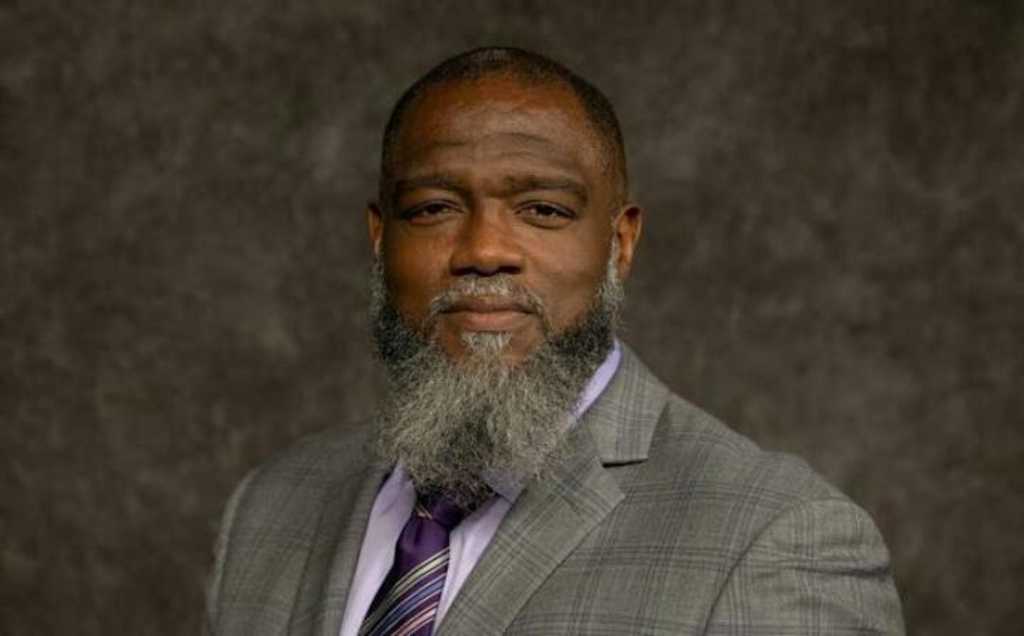
photo provided by Voddie Baucham
During a recent interview with Faithwire, the 52-year-old preacher also addressed the religious philosophies of prominent critical race theorist Ihram X. Kendi, who espouses “liberation theology,” which says Christians are tasked with “liberating society from the powers on earth that are oppressing humanity” and rejects “saviour theology,” which says it is the job of believers “to go out and save these individuals who are behaviorally deficient … and heal them.”
“CRT is a religious movement,” Baucham said. “It has all the trappings of a religion. It has its own cosmology, it has its own saints, it has its own liturgy, its own law. It has all of those elements. And a lot of those things are very subtle, which makes them rather attractive to religious people.” He explained that, because Christians are rightly concerned with fighting injustice, condemning racism, and promoting equality of opportunities, philosophies like CRT are appealing, even when their underpinnings are “absolutely” in contradiction to Scripture.
At the core of Baucham’s concern, though, is what accepting CRT as the pathway to moral betterment says of the sufficiency of Scripture.
“We don’t need critical race theory to teach us on race, on partiality, on the sin of partiality,” he said. “I can understand if people want to say that we want to use scientific text, for example, that speaks to an issue that the Bible doesn’t speak to. The Bible is not a mathematics textbook. There’s a whole lot of things that the Bible is not, but, when it comes to the relationships between people, when it comes to sins based on partiality, the Bible is absolutely a textbook on that.”
CRT, according to Baucham, warps our understanding of objective truth. He explained that narrative storytelling — sharing one’s experiences — becomes paramount in the search for truth.
“In critical race theory, if you want to know the truth when it comes to race and racism, you have to elevate black voices, you have to listen to the voice of the marginalized — and this is what people are talking about in church today, right?” Baucham argued. “With critical race theory, we do this because that’s the way you know truth. Not through knowing God, not through knowing God’s Word, but through listening to the voices and the experiences of the people who we determine to be marginalized.”
It is God’s Word that is being marginalised. God is no longer relevant. As I have mentioned many times before the teaching of evolution in our schools has raised a generation that does not know God. We are living in the prophesied last days before Jesus will return to judge a world that has rejected there Creator and His amazing offer of grace and mercy available to all through His Son.
Joel interviews Tim Mahoney, creator and director of the Patterns of Evidence films. The most recent being the second of the films in the Red Sea Miracle film series. Tim has been on a crusade to show that the books of the Bible that Moses wrote are true history. Jesus said, “if you won’t believe Moses and the prophets then you won’t believe me.”
“And beginning with Moses and all the Prophets, He interpreted to them in all the Scriptures the things concerning himself.” Luke 24:27
“He (Jesus) said to him, ‘If they do not hear Moses and the Prophets, neither will they be convinced if someone should rise from the dead.’” Luke 16:31
These books are foundational to the Gospel message. Tim understands this, hence his dedication to the Patterns of Evidence series. His first film was The Exodus then The Moses Controversy and now the Red Sea Miracle Series. I believe God has raised up Tim to produce these films for this hour to prove He is the miracle working God that established Israel for His purposes and the Bible is His inerrant Word.
You need to not only watch these films yourself but to promote them as widely as possible both to church members and to use them in promoting the truth of God’s Word.
In this interview with Stansberry Research Institute’s Daniela Cambone, Miguel Vias, a former executive for Ripple and CME Group, weighs the benefits of owning gold and crypto. Vias also talks about the future of decentralized finance (DeFi). He does a creditable job of explaining why Bitcoin and DeFi have made such a difference to traditional finance and how it is likely to develop. The billionaire Mark Cuban has called DeFi possibly the greatest thing since the Internet.
The fact that governments and so called financiers are operating in fantasy land means we are in unchartered territory, no one has travelled this way before. In fact, commonsense tells us that governments cannot keep printing money to spend on whatever and not expect tragic consequences.
Put this together with a godless generation, the Zoomers (Generation Z, the youth of today) and the Millennials (Generation Y) and you have a recipe for chaos and lawlessness. The end times scenario as prophesied in Scripture.
The world sees Gen Z as more tech-savvy, politically active, globally engaged, more realistic. In fact, they are pessimistic about the future (global warming, Covid 19, dismal economic outlook and there is no meaning or purpose to life). Gen Z has the highest suicide rateand it is increasing..
Let us look at a few Scriptures relating to life on God’s earth. This first Scripture makes it clear that God knows each one of us before we were born and He knows how we will live out our days.
“Your eyes saw my unformed substance; in your book were written, every one of them, the days that were formed for me, when as yet there was none of them.” Psalms 139:16
“So teach us to number our days that we may get a heart of wisdom.”Psalms 90:12
David asked God to teach Him. We need to have prayer filled lives and teachable hearts. Note: David wanted a heart of wisdom.
“For if, because of one man’s (Adam) trespass, death reigned through that one man , much more will those who receive the abundance of grace and the free gift of righteousness reign in life through the one man Jesus Christ.” Romans 5:17
There is only one way we can reign in this life. It is when we receive through Jesus Christ the abundance of grace (Holy Spirit) and the free gift of righteousness.
“For to me to live is Christ, and to die is gain. If I am to live in the flesh, that means fruitful labor for me. Yet which I shall choose I cannot tell. I am hard pressed between the two. My desire is to depart and be with Christ, for that is far better.” Philippians 1:21-23
It really does come down to how much do we treasure our Lord Jesus Christ. Do we treasure Him above all life’s earthly pleasures? Note the two life options for Christians: fruitful labour for Jesus on this earth which Paul obviously enjoyed or to depart and be with Jesus Christ which he acknowledged was the better option.
“And just as it is appointed for man to die once, and after that comes judgment, so Christ, having been offered once to bear the sins of many, will appear a second time, not to deal with sin but to save those who are eagerly waiting for him.” Hebrews 9:27
We all face death but how different is the fate of those that reject God’s offer of eternal life through His Son. Judgement, the Lake of Fire, punishment and eternal death. Unbelievers should be fearful of the fate that awaits them after death. If they knew perhaps some would repent. Let us do our best to reach as many as God brings across our path with the Gospel of Christ.
Skillet frontman John Cooper is calling out what he described as the “woke ideology” permeating the church, arguing it’s “wrecking Christianity.”
He said, “You can’t believe in God and not believe in absolute truth, obviously, because one negates the other. Yet, that is what’s actually happening in Christianity.”
Cooper said he went through something of an awakening around 2016, recalling reading nearly 200 books in hopes of understanding the rapidly changing culture in which we live. Ultimately, Cooper explained, he came to the realization that people “don’t believe in absolute truth anymore.”
That conclusion led him to become “outspoken” about what he sees as a problematic cultural shift that is infiltrating Christian communities.
In his book, “Awake and Alive to Truth,” Cooper argues we “are living in a time that can best be described as a philosophical stew,” suggesting it’s highly influenced by postmodern thought. He relies on the following definition of postmodernism from Encyclopedia Britannica editor Brian Duigan:
A late 20th century movement characterized by broad skepticism, subjectivism, or relativism; a general suspicion of reason; and an acute sensitivity to the role of ideology in asserting and maintaining political and economic power.
The data seems to bear out the presumption that society is trending toward moral relativism and postmodernism. A recent study from the Barna Group found that a majority of teens and young adults — 65% — agreed with the claim that “many religions can lead to eternal life.” In addition, 31% of the survey’s participants said they “strongly agree” that what is “morally right and wrong changes over time, based on society.” Forty-three percent said they “somewhat” agree with that claim.
Cooper urged Christians to “be extremely vigilant about the Word of God,” suggesting a relativistic worldview will encourage some to reinterpret Scripture based on a cultural understanding untethered from absolute truth.
Of course this is exactly what is happening and it is what the Bible prophesied would happen in the last days before Jesus returns, first to take the Saints to heaven, and then to pour out His wrath on an unbelieving world with the trumpet and bowl judgements.
When He (Jesus) opened the sixth seal, I looked, and behold, there was a great earthquake, and the sun became black as sackcloth, the full moon became like blood, and the stars of the sky fell to the earth as the fig tree sheds its winter fruit when shaken by a gale. The sky vanished like a scroll that is being rolled up, and every mountain and island was removed from its place. Then the kings of the earth and the great ones and the generals and the rich and the powerful, and everyone, slave and free, hid themselves in the caves and among the rocks of the mountains, calling to the mountains and rocks, “Fall on us and hide us from the face of Him who is seated on the throne, and from the wrath of the Lamb, for the great day of their wrath has come, and who can stand?”Revelation 6:12-17
Sadly, Jesus tells us that prior to His return people will be like they were in Noah’s day when God judged the world and all but eight people perished in a worldwide flood, lawlessness will abound.
“And because lawlessness will be increased, the love of many will grow cold.” Matthew 24:12
The American middle class is shrinking… and not in a good way. Millions of folks are sinking below the poverty line. As this massive socioeconomic shift continues, a shrinking sliver of the population controls an ever-larger portion of the national wealth.
Consider that in 1980, the richest 1% of Americans owned about 30% of all household wealth in the country. At the same time, the bottom 90% owned about 24% of all household wealth.
By 2012, the share of all household financial wealth owned by the top 1% had skyrocketed to more than 60%… and the share owned by the bottom 90% had plummeted below 10%.
Now the top 1% now own more wealth than the bottom 92%, and the 50 wealthiest Americans own more wealth than the bottom half of American society – 165 million people. While millions of Americans have lost their jobs and incomes during the pandemic, over the past year 650 billionaires have seen their wealth increase by $1.3 trillion.
Socialists like Sen. Bernie Sanders pins the blame for income inequality on his usual suspect – capitalism: “the most powerful and well-financed entities in the country, including Wall Street, the health insurance industry, the drug companies, the fossil fuel industry, and the military-industrial complex.” However, the truth is very different.
THE TECHNOCHASM – This term from Eric Fry a highly successful money manager refers to the role that technology plays in our increasingly wealth-divided society.
Year after year – and especially during the last pandemic year – dynamic, upstart companies topple established businesses that seem fairly sturdy and dominant in their markets.
In many cases, these dying businesses employ tens of thousands of workers. But the seeming strength of these businesses often hides their underlying weakness.
Companies that fail to adapt die a slow but certain death. Consider the following:
In less than seven years, Uber Technologies Inc. (UBER) demolished the “old” taxi industry while making its founders billionaires.
Around 2007, Netflix Inc. (NFLX) began transitioning into America’s No. 1 movie and television “streaming” service. This innovation crushed traditional brick-and-mortar rental companies like Blockbuster.
Since early 2009, shares of Amazon.com Inc. (AMZN) soared more than 5,000%. Meanwhile, dozens of old-school brick-and-mortar retailers shuffled slowly into bankruptcy.
A study of the newspaper industry conducted by the University of North Carolina reported that 1,810 newspapers ceased publication from 2004 to 2018 thanks, in great part, due to vast amounts of cheap – or free – online content.
The destruction of much of the old-school economy wasn’t a concerted effort from Sanders’ usual suspects. It was due to the fact that technology advances so quickly that, thanks to a phenomenon known as the Law of Accelerating Returns, the rate at which these huge disruptions occur keeps speeding up.
Those disruptions will make the wealth gap grow wider every year. Exponential progress – the kind taking place in research labs and tech businesses right now – radically accelerates the pace of change we see in the world… and radically accelerates the wealth gap.
WHAT IS THE SOLUTION TO THIS PROBLEM?
Sen. Sanders’ solution to this problem is predictable.
We must raise the minimum wage from the current starvation wage of $7.25 an hour to a living wage of at least $15 an hour…
We need to make it easier, not harder, for workers to join unions…
We need to create millions of good-paying jobs rebuilding our crumbling infrastructure…
We need to do what virtually every other major country does by guaranteeing healthcare to all people as a human right…
We need to make the wealthiest people and most profitable corporations in America start paying their fair share of taxes.
Some of the senator’s prescriptions might be helpful, at least short term. But they would cost trillions of dollars and the government is already in trillions of dollars of debt that will eventually make the US dollar worthless. I wish I could tell you this situation will be resolved soon. But it won’t. The destruction of industries is accelerating as all technology is changing exponentially and its adoption is also growing exponentially. Consider robotics and its impact on employment, e.g. Amazon warehouses without employees. Companies can now operate with far fewer employees than ever before and this is only going to escalate.
Governments are not up to the challenge as we see more unrest and radical organisations and Critical Race Theory taking hold. Civil unrest is already rampant in the USA and will only escalate and the stage is being set for the Antichrist to come on the scene. The end time scenario prophesied in God’s Word is beginning to play out. Christians that hold to God’s moral values are already being ridiculed and ostracised. Institutional Churches are increasingly compromising with the world’s values (apostasy) exactly as prophesied.
Just before Jesus went to The Cross on our behalf and the disciples were overwhelmed with the events unfolding at the time. Jesus had already told them that He was going to die and be resurrected but this was beyond their comprehension. They wanted to know what was happening and asked Jesus to tell them.
“Tell us, when will these things be, and what will be the sign of your coming and of the end of the age?
“And Jesus answered them, “See that no one leads you astray. For many will come in my name, saying, ‘I am the Christ,’ and they will lead many astray. And you will hear of wars and rumors of wars. See that you are not alarmed, for this must take place, but the end is not yet…. Then they will deliver you up to tribulation and put you to death, and you will be hated by all nations for my name’s sake. And then many will fall away and betray one another and hate one another. And many false prophets will arise and lead many astray. And because lawlessness will be increased, the love of many will grow cold.” Matthew 24:4-6, 9-12
How many churches are preparing their brothers and sisters for the coming tribulation? Sadly, not many.
God is using the tribulation that is already upon us to purify His church. Only those saints that have been born again with the Holy Spirit will be empowered to serve Jesus and live lives that bring glory to God the Father. For those Christians this will be an exciting time as they serve God in the power of the Holy Spirit with all of the ministry gifts of the Spirit being manifested just as they were in the early church as described in the Book of Acts.
The Parable of the Wheat and Tares is a rapture timing key. It is also controversial and misunderstood. However, Jesus not only explained it to his disciples but told 3 additional parables to help them understand it. The Wheat and the Tares is not only a key to Rapture timing but also to who is saved and who is not, and who will be taken and who is left in the end time. So many theories surround the events of the end times, especially the rapture. How will you know when it is time? What does it look like to live with a hopeful expectancy? In this episode Nelson will help you learn about the timing of the rapture and how to be prepared for the return of Jesus.
In just 11 minutes Francis Chan describes what the Bible says about church and then he describes the short comings of church today. And even more importantly what we can do to get back on track.