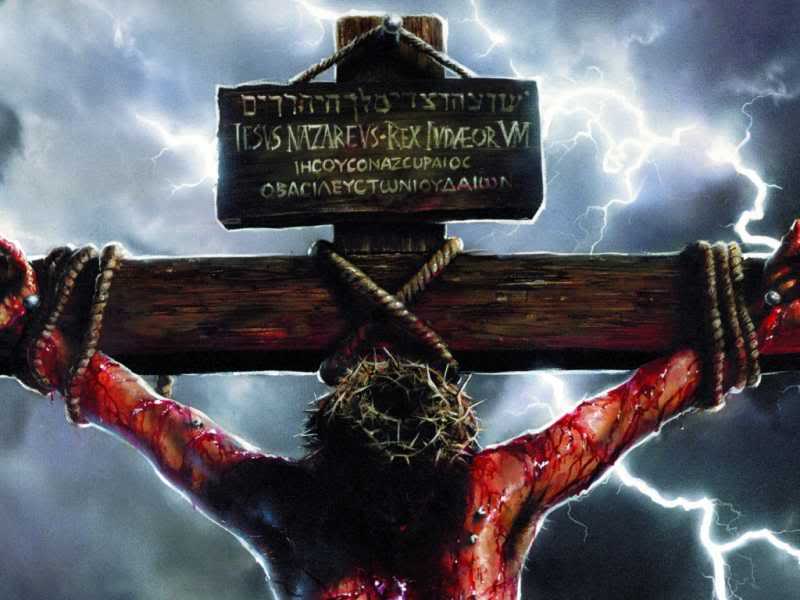
WHY BELIEVE IN SOMETHING YOU CANNOT SEE?

“Science unequivocally requires that all things are composed of matter and energy. Therefore, immaterial substances—such as God or the human soul—cannot exist.”

However, science itself does not provide any substantiation for the premise. After all, if science can deal only with matter and energy, it can’t possibly show that other things can’t exist. Rather, this claimed requirement is a philosophical position called materialism, and there are substantial grounds for doubting it. ‘Materialism’ in philosophy doesn’t mean striving for material goods, but the belief that matter (or mass/energy) is all there is.

Immaterial Creator of the universe

Among the reasons for rejecting materialism are the compelling arguments that support the existence of an immaterial Creator of the universe. These include the design of living things, the fine-tuning of the universe for life, and the evidence that it has a finite age, among other arguments.

These features of reality are best explained by the biblical teaching that God is the Creator. If these arguments are successful, materialism fails.

Humans are more than mere machines

If materialism were true, humans would consist merely of organized matter, which we have reason to doubt. The renowned atheist Richard Dawkins eloquently articulates his perspective on human nature:

On one planet [Earth], and possibly only one planet in the entire universe, molecules that would normally make nothing more complicated than a chunk of rock, gather themselves together into chunks of rock-sized matter of such staggering complexity that they are capable of running, jumping, swimming, flying, seeing, hearing, capturing, and eating other such animated chunks of complexity; capable in some cases of thinking and feeling, and falling in love with yet other chunks of complex matter.

However, this materialistic perspective faces serious philosophical and scientific challenges. If humans are reduced to purely physical objects devoid of any immaterial aspect, it becomes exceedingly difficult to explain many basic truths about human beings.

Intrinsic value

The first of these is a person’s value. Physical objects have value only because we assign value to them. They are tools, not ends in themselves. Their value is extrinsic and dependent on changeable factors. Human beings, on the other hand, possess intrinsic value merely by virtue of being human, independent of external factors. We do not lose our value even if we lose significant capabilities—declining mentally or becoming comatose, to give a couple of examples.

Christians know that our intrinsic value comes from being made in God’s image We are not merely bodies but souls that can relate to God. Yet even non-Christians will often recognize the value of human beings, whether they recognize the source of that value or apply it consistently to all people.

Without intrinsic value, it would be hard to make sense of human rights, for example. We know it’s wrong to treat people as mere objects. But the evolutionary materialism of our age insists we have emerged unaided from animals, which originally arose randomly from simple chemicals. That means that people lack souls and do not bear the image of God. In other words, they can only be mere physical objects. In such a view, the intrinsic nature of our value cannot be accounted for.

First-person perspective

Second, physical objects lack a first-person perspective. They lack consciousness and self-awareness and are incapable of having a truly subjective point of view, using the self-reflexive pronoun ‘I’. Even complex computers and robots with artificial intelligence lack real awareness.

In contrast, human beings do possess a first-person perspective. We are conscious agents, capable of not only awareness but even self-awareness and the ability to articulate our point of view. It is difficult to explain this universal experience if humans are merely physical objects.
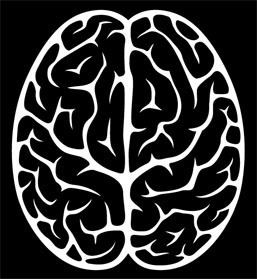
image of brain

“DAILY, WE ENCOUNTER MENTAL STATES THAT CANNOT BE EXPLAINED BY BRAIN MATTER ALONE.”

Intentional mental states

Third, humans possess intentional mental states. ‘Intentionality’ is a technical term in philosophy that refers to the power of the mind to represent or refer to other things. That is, some mental states can be ‘of’ or ‘about’ something else. Whenever people think, believe, desire, fear, or wonder, they direct their thoughts toward a specific subject or concept. They may think about breakfast, or experience a fear of spiders, for example. Physical events by themselves are not ‘of’ or ‘about’ other things in that same sense, so what happens in our minds is not physical. Daily, we encounter mental states that cannot be explained by brain matter alone.

Human emotion and other ‘felt’ experiences

Fourth, when a person feels joyful, upset, or anxious, the brain is part of the neural circuitry that plays a role in giving that person such experiences. The brain itself, though, is not joyful, upset, or anxious; the person is. The brain is only a complex organ—a physical object with physical properties, similar in that sense to a computer. A computer might be programmed to say, “I’m sad”, but the computer would not really feel sadness. Emotions like happiness, sadness, and fear are not material entities. They can only be experienced by conscious, sentient creatures who have a non-material aspect to their being, like humans and many animals. This is evidence that we are not merely brains in bodies.

Brain research subjects

Empirical studies show results consistent with the above philosophical arguments. For example, pioneering neuroscientist Wilder Penfield conducted over 1,100 brain surgeries in which he stimulated areas of the brain while patients were awake, and noted their responses. He was able to induce bodily movements, sensations, emotions, and memories. But the patients invariably testified that the response was like a reflex, not an action they chose to do. Penfield found he could not stimulate their will. Also, he could not cause them to draw conclusions, make decisions, or even think abstract thoughts (about, say, mathematics). Such experiments suggest that it is the immaterial self which is ultimately responsible for these activities, rather than the physical brain.

IMAGE BEARERS

God developed and populated the earth, which was initially empty (“without form and void”), as described in Genesis 1:2. He executed this task with exceptional precision and skill, thereby establishing a magnificent stage upon which to showcase His most significant creative accomplishment, humankind. Not only did God reserve the best for last, but He also created humans in a manner that distinguished them from animals. According to Genesis 1:26, humans were created to have a unique relationship to God. This was accomplished through the divine plan (“let us make man”), the divine pattern (“in our image”), and the divine purpose (“let them have dominion”). The attribute of being in the image of God (imago Dei) is not merely bestowed by God and retained by humans. It is what gives people special value (Genesis 9:6; James 3:9), and it is part of God’s design for human beings, who were specifically created to represent God on Earth and reflect many of His attributes.

KNOWING GOD IS IN CONTROL

I am God, and there is none like me, declaring the end from the beginning and from ancient times things not yet done, saying, My counsel shall stand, and I will accomplish all my purpose. Isaiah 46:10

Sometimes, we need the reminder that God knows the future and can do what is humanly impossible. He knows what is eternally best in ways we cannot. God can see ultimate purposes and plans that we can’t. We also need to understand that God is in control.

Countries where the people once honoured God, recognising that “God was in Christ reconciling the world to Himself2 Corinthians 5:19, experienced unprecedented security and prosperity. These same countries today are crumbling as people turn their backs on God. ” Righteousness lifts up a nation, but sin is a shame to any people.” Proverbs 14:34.

As nations turn their backs on God, living as if He does not exist, sin abounds; political corruption, lying, slander, public displays of debauchery, violent crime, abortion, theft, adultery, drug taking, drunkenness, gambling, and greed of all kinds. Economic woes follow as taxes increase and governments borrow money to pay for bigger police forces, gaols, and social security systems to fix the problems. Underpinning this abandonment of faith in God is the widespread acceptance of evolutionary thinking – that everything made itself by natural processes and that God is not necessary. The complex design we see in the world designed itself. God says they are without excuse if they ignore the obvious.

For what can be known about God is plain to them, because God has shown it to them. For his invisible attributes, namely, his eternal power and divine nature, have been clearly perceived, ever since the creation of the world, in the things that have been made. So they are without excuse.Romans 1:19-20

Sadly, such thinking abounds in universities and governments today. As a result, some of the greatest evil ever seen perpetrated was by those who adopted an evolutionary approach to morality: Lenin, Hitler, Stalin, Mao Zedong, and Pol Pot. Many millions have suffered terribly and lost their lives because of this atheistic way of thinking. Atheism kills because, without God, there are no rules – anything goes. Atheists are at the forefront of efforts to legitimise abortion, euthanasia, drug taking, prostitution, pornography, and promiscuity. All these things cause misery, suffering, and death. Atheism is the philosophy of death, and it comes from the great deceiver, Satan, who is intent on our destruction.

The Bible reveals that God knew this would happen and that before Jesus returns to restore righteousness, His followers will be persecuted for His namesake.

Then they will deliver you up to tribulation and put you to death, and you will be hated by all nations for my name’s sake. And then many will fall away and betray one another and hate one another. And many false prophets will arise and lead many astray. And because lawlessness will be increased, the love of many will grow cold. But the one who endures to the end will be saved. And this gospel of the kingdom will be proclaimed throughout the whole world as a testimony to all nations, and then the end will come.Matthew 24:9-14

You need to be living eternal now, ready for Jesus’ return. My book is available on Amazon.

MUSLIM TURNED RIGHTS ACTIVIST AYAAN HIRSI ALI NOW A CHRISTIAN

Ayaan Hirsi Ali, a former Muslim and renowned critic of Islam, has revealed her conversion to Christianity, describing her journey from Islam to atheism and ultimately to Christianity.

On Nov. 11, 2024, activist and author Ayaan Hirsi Ali published an essay titled “Why I am Now a Christian.” Her declaration has understandably made waves. For 20 years, Ali has written, spoken, and acted as a committed atheist. Rejecting the Islamic teachings she was indoctrinated with during her teenage years, she has long argued for secularism as the needed lens for furthering humanity and countering the world’s evils so often perpetrated by religious dogma. Hence, her conversion to Christianity is not being well received by the media.

Ali grounds the explanation for her conversion on the usefulness of Christianity. I do not mean “useful” in a trite way, as one might find a spoon more helpful to eat soup than a fork. Ali sees the use of Christianity as fundamental on a societal and personal level. In this way, Ali grounds her turn to Christianity on the same principles that led her to reject God and organized religion. She now sees Christianity not as a foe to her cause but as a needed ally.

Hirsi Ali traces her initial disillusionment with Islam following the 9/11 terrorist attacks when she questioned the justifications for the attacks in the name of Islam. During her teenage years in Nairobi, Hirsi Ali says she was influenced by the Muslim Brotherhood, which instilled in her a strict interpretation of Islam.- This period was characterized by a strict adherence to religious practices and a deep-seated disdain for non-Muslims, particularly Jews. However, her later exposure to atheism through figures like Christopher Hitchens and Richard Dawkins provided a stark contrast to her previous beliefs.

Hirsi Ali attributes her turn to Christianity to a broader concern for the challenges facing Western civilization. She cites threats from authoritarian regimes, global Islamism, and “woke” ideology as catalysts for seeking a unifying force. Christianity, in her view, offers a foundation of values and traditions that uphold human life, freedom, and dignity, and counters the divisiveness she associates with atheism.

Responding to her embrace of the Christian faith, conservative Christian philosopher Dr. Robert George wrote on Facebook: “Two decades ago, under the influence of the writings of Bertrand Russell, she became an atheist. Her thought was that atheism was smart and sophisticated — it was allegedly what really intelligent people believed (the ‘brights,’ as Daniel Dennett embarrassingly labeled himself and his fellow unbelievers). It was the way to a world of rationality and civil liberty. Hirsi Ali is not the first to have gone down that misguided path. She now sees that it is indeed misguided and that there is, if I may quote scripture, a more excellent way.

Hirsi Ali’s embrace of Christianity also stems from a personal quest for spiritual solace and meaning in life.

Hirsi Ali critiques atheism as leaving a “God hole,” which she believes has led to the rise of irrational ideologies and the erosion of Western values. She argues that Christianity provides a unifying story and foundational texts, similar to those in Islam, that can engage and mobilize people.

Christians should be thankful for Ali’s essay. It no doubt took plenty of courage to make, given her past commitments and social circle. The author of this article Adam Carrington, an associate professor of politics at Hillsdale College made the following comment. “We also should exercise cautious support of her. She mentions at the end of her essay that “I still have a great deal to learn about Christianity. I discover a little more at church each Sunday.” Judging by her essay, she still might need guidance in seeing the centrality of grace in Christianity and how that grace is most manifest in the person and work of the Son of God, made flesh. Sometimes, those truths take time to know and to feel. In some sense, we spend our entire lives trying to rest in God’s grace, not save ourselves as is the normal human inclination.

But we also should be thankful that Ali sees the political and social goods of Christianity, historically and today. In its witness, we see the dignity of humanity made in the image of its Creator. In its doctrine, we see the need for politics that protects the innocent, punishes the guilty, and guards the right. In Christianity, we also see the need for mercy, not just from God, but with each other as neighbors and citizens.

That such commitments to dignity, law, and mercy seem obvious to so many of us is not the insight of secular humanism. Ali has joined us in seeing its origins in the God revealed in the Bible.

‘MEN HAVE FORGOTTEN GOD; THAT’S WHY ALL THIS HAS HAPPENED’

In 1983 Solzhenitsyn said, “If I were asked today to formulate as concisely as possible the main cause of the ruinous revolution that swallowed up some 60 million of our people, I could not put it more accurately than to repeat: ‘Men have forgotten God; that’s why all this has happened.’

Marxist ideology places no moral constraints on those in power. All those regarded by the ideology as ‘reactionary’ could be arrested, sent to labour camps and worked to death. Families were separated.

There was no recourse to ‘justice’. Anyone judged to be an ‘enemy of the revolution’ was, effectively, dehumanised, but that category was infinitely expandable. One suspect conversation or joke might condemn you. Children were encouraged to inform on their parents. One of the ‘heroes’ of the Soviet Union was Pavlik Morozov, who allegedly informed on his father to the Party in 1932. His father was sent to a work camp and then executed. Pavlik was, in turn, murdered (under disputed circumstances). Four members of the family were accused of his death, rounded up, and shot. A statue was erected in Pavlik’s honour. Children were taken to the statue and shown Pavlik as a hero of the Revolution because he had informed on his father and they must do likewise if necessary for the sake of the Party.

We are in the same situation today but for different reasons. During the twentieth century, first universities, then all the institutions of Western society, were invaded by the ‘virus’ of radical doubt built upon the theory of evolution that argues the Cosmos derived from the Big Bang. Critical theory hijacked certainty about everything. This theory was built on a lie. It began with the false premise that there is no transcendent reality – no Creator God. From that, they concluded that the world of perception is a product of human activity. We make our own reality. According to critical theory, all hierarchies are oppressive. The world is descending into chaos as a result and Christians will experience tribulation even great tribulation just as Biblical prophecy said they would prior to Jesus’ return to first rapture the Saints, pour out His wrath upon unrepentant earth, and then return to earth with glorified Saints to defeat the Antichrist’s army and begin His 1000-year reign on this earth.

For nation will rise against nation, and kingdom against kingdom, and there will be famines and earthquakes in various places. All these are but the beginning of the birth pains.
“Then they will deliver you up to tribulation and put you to death, and you will be hated by all nations for my name’s sake. And then many will fall away and betray one another and hate one another. And many false prophets will arise and lead many astray. And because lawlessness will be increased, the love of many will grow cold. But the one who endures to the end will be saved. And this gospel of the kingdom will be proclaimed throughout the whole world as a testimony to all nations, and then the end will come.
Matthew 24:7-14

Blessed and holy is the one who shares in the first resurrection! Over such the second death has no power, but they will be priests of God and of Christ, and they will reign with him for a thousand years. Revelation 20:6

WHAT IS YOUR WORLDVIEW BASED ON?

Armand Nicholi, the Harvard psychiatrist and the author of The Question of God says that our worldview informs our personal, social, and political lives. It helps us understand our purpose. Further, he said that our worldview determines our ethics, our values, and our capacity for happiness. It helps us answer the big questions of life: How did I get here? How am I to live? Where do I find meaning in life? What is my ultimate destiny? Basically, Nicholi is telling us that our worldview is more telling than perhaps any other
aspect of our lives.

Another way to understand our worldview is to see it as a map, a mental map that helps us navigate life effectively. As author Nancy Pearcey says, “…we need some creed to live by; some map by which we chart our course.” This is a worldview. In forming our worldviews, Dr. Nicholi says that we make one of two assumptions about life. The first is that we live in a godless universe; we are a product of nature that has evolved over time. This is a secular worldview that emphasizes scientific knowledge and its motto is “What do science and nature have to say?”
The second assumption is that there is a supernatural intelligence (God). He gives the universe order and life meaning. This is a spiritual worldview that is rooted in Biblical revelations. It places emphasis on spiritual truth and wisdom and its motto is: “What does God have to say about this?”

I have concluded that every person has an opinion on God and spiritual reality, even if it is a belief that He is non-existent. We all have a faith view of reality and it trickles down into our lives and influences the choices we make.

Author Tim Keller says, “How we relate to God is the foundation of our thinking because it determines the way we view the world. Whether you believe God exists or not, this belief is the foundation on which all of your reasoning proceeds. For instance, if you do not believe that God exists, it is a belief taken by faith and it becomes your faith view of reality. Whether you realize it or not, all your reasoning proceeds from this belief. You end up screening out all that does not fit with this view of life.”

Your worldview will ultimately explain where life originated, what life means, and what we are supposed to be doing with the years we are given. English mathematician John Lennox says: “What divides us is not science . . . but our worldviews. No one wants to base their life on a delusion, but which is the delusion? Christianity or atheism? This is what God has to say about the issue.

For what can be known about God is plain to them, because God has shown it to them. His invisible attributes, namely, his eternal power and divine nature, have been clearly perceived, ever since the creation of the world, in the things that have been made. So they are without excuse. For although they knew God, they did not honor him as God or give thanks to him, but they became futile in their thinking, and their foolish hearts were darkened. Claiming to be wise, they became fools, and exchanged the glory of the immortal God for images resembling mortal man and birds and animals and creeping things.Romans 1:19-23

THE RESULT OF REJECTING GOD AND HIS HELP

Ollie Davies was 26 years old and at the lowest ebb of his life when he made a decision to come out as a trans woman.

Estranged from his family, he was suffering from depression, anxiety, and behavioural problems as well as a crisis of self-identity. He existed in what felt like a dissociative state. “I felt as if I had no free will,” Mr. Davies says. “I was completely nihilistic and lonely and self-­hating and had no self-esteem. I was experiencing a total loss of identity and lack of sense of self.”

Mr. Davies, who was openly ­bisexual, had never questioned his gender identity as a child or young adult. But when people within his group of queer activist friends repeatedly suggested to him that he was trans, he began to believe it was true. “Ultimately it came from suggestions from others, people just started suggesting that I question my gender,” Mr. Davies said.

When Mr. Davies announced his decision to transition, the ­affirmation was immediate and intoxicating.

“Everyone I knew put trans people on a pedestal,” Mr. Davies says. “It was fashionable. I knew it would be celebrated and ­promoted. At first, it was euphoric. I felt like coming out as trans was my coming home and the key to everything that was wrong in my life.”

But, despite signing up for hormone therapy enthusiastically, being a woman never felt right. “These feelings of negative self-image and negative self-reflection became a downward spiral, and I kept trying to solve the problem further by being more of a woman,” he says. “And it just became more and more incongruent with who I am and what is natural for me. I came to realise it was a waste of time and a delusion.”

Ollie and Genevieve

In 2019, while still living as a woman, Mr. Davies met Genevieve Hassett and fell in love at first sight. “We were both fairly deep into the woke trans ideology,” Ms. Hassett says. “But the more I got to know Ollie the more I realised there was a lot of underlying stuff. I think he felt shame about being a man.”

There are no reliable statistics on how many people identify as transgender in Australia, but there is no doubt the numbers are on the rise. The number of children presenting at gender clinics has exploded in recent years and some predict Australia will begin to see legal actions as in the UK from those who allege they have been harmed by affirmative care.

Mr. Davies has now completed his transition back to being a man. He and Genevieve want to have a baby, but he is infertile from the ­effects of oestrogen on his body. “It’s devastating,” Ms. Hassett says. Mr. Davies now wants to ­publicly challenge what he describes as an activist-driven ­approach to diagnosing and treating gender dysphoria.

He questions the Australian Professional Association for Trans Health (AusPath) standards of care that gender-­affirmative doctors follow, which specify clinicians should take a ­patient-led, “affirmation enablement” informed consent approach “that recognises the patient is the final authority on their own gender”.

“The gender-affirming approach in medicine I think is a complete mistake,” Mr. Davies says. “I’ve seen an enormous amount of anecdotal evidence, ­including in my own life, that there are inadequate safeguards. I think that what has happened to me is just the thin edge of a massive iceberg.

“In my experience, people are inadequately educated about the risks when they initiate the process of transitioning, or even not told about them at all. It seems to me that to just say ‘we must affirm’ is just utterly failing those people and actually causing harm.

Trans health doctors under AusPath insist a mental health assessment is not required in order to facilitate a person to transition because “being trans is not a ­pathology”. But in the fallout from the ordered closure of London’s Tavistock Transgender Clinic, there is now active debate in medicine in Australia about how to care for young people raising gender concerns.

But Mr. Davies believes if doctors had properly assessed his mental health, probed his motivations, and taken an ordinary ­exploratory clinical approach, he may have taken a different path. “I think that in Australia there are hundreds of people like me who now regret it,” he says. “And I think that soon there will be thousands.”

HOPE FOR ATHEISTS

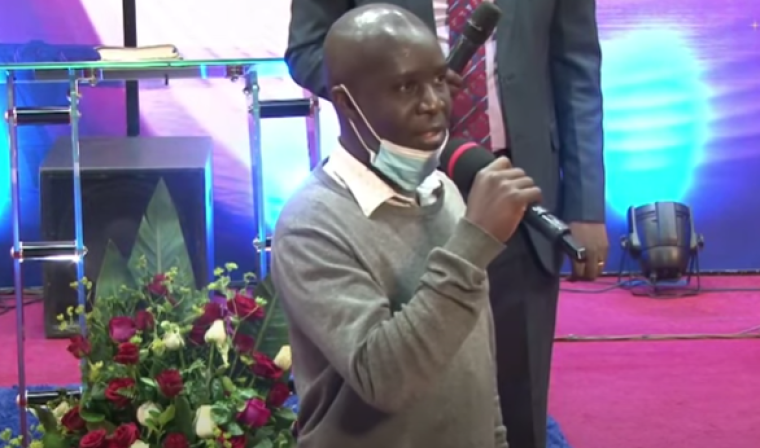
Image
Seth Mahiga
attends a service at Life Church International in Nairobi, Kenya, after resigning from his post as secretary of the group Atheists in. | Screenshot: YouTube/Elevate TV

Of course, in addition to Seth Mahiga, many other atheists have come forward to share their conversion stories. During an appearance on a podcast earlier this year, Chet Hanks, son of actor Tom Hanks, detailed how an encounter with God during a day hike in Utah when he was 17 led to his conversion from atheism.

Another former atheist, Lee Strobel, wrote an entire book detailing his conversion to Christianity called The Case for Christ. Strobel, a former Chicago Tribune reporter, had initially sought to disprove the existence of Jesus Christ but ultimately failed to do so and ended up becoming a Christian. In 2017, a film adaptation of his popular book was released.

Like Lee Strobel many former atheists go on to serve Jesus mightily. They know the difference; from a life of hopelessness, no purpose or meaning to life, to knowing God loves them and a vibrant relationship with Him.

Prayer is the language of a love relationship with your Heavenly Father. Prayer is exciting, intimate and joyful. When you discover God answers heartfelt prayers, your life will change forever.

This book changed my life. Love to Pray is all about loving the one to whom you pray and learning to express that love in a continuing dialogue with God. This book will help you discover how to become devoted to prayer as a way of life rather than a duty.

Be blessed on your journey with God.

SOCIETY IS PAYING FOR LOSS OF ITS CHRISTIAN IDEALS

I have assembled this post from a great article by Greg Sheridan in The Weekend Australian, “Respect for women: Society will pay for loss of its Christian ideals”.

As we have moved away from our traditional Judaeo Christian roots our cultural leaders have been telling us now for more than five decades, that we can transition into a neo-pagan culture and this will somehow be good for women. Obviously, when it comes down to survival of the fittest men are going to be the winners. The teaching of evolution in our schools has undermined the very foundation of those Judaeo Christian roots and yet the latest science reveals that this highly complex universe was created. Life itself is built on highly complex codes (DNA) and the laws governing the universe can only derive from a highly intelligent mind beyond our comprehension.

In Australia, this past five weeks, from the shocking accounts of the alleged rape of Brittany Higgins and other disgraceful sexual assaults in Parliament House to the overwhelmingly powerful National Press Club address of abuse survivor and Australian of the Year, Grace Tame, have provided a wrenching examination of the national soul.

The problem with sexual assault lies with men. They are the perpetrators. But all of this — men and women — exist within a culture. And what’s happening to the culture affects what happens to the human beings within the culture.

The progressive orthodoxy, that we used to be overwhelmingly sexist and we’ve made great progress but we’ve still got a long way to go, is only about a quarter right. On some things we have made progress. On most we’ve gone backwards.

My father, and countless men of his generation, did not treat women with disrespect. Nor did the culture mandate that he should. Our culture, right now, has the greatest trouble treating anybody with respect.

“Therefore a man shall leave his father and his mother and hold fast to his wife, and they shall become one flesh. And the man and his wife were both naked and were not ashamed.” Genesis 2:24

We are on the brink of becoming a majority atheist nation. The loss of religious belief in society affects the way we see human beings, men and women. It goes without saying that Christians frequently do not remotely live up to their ideals, but Christian ideals nonetheless have a lot to offer the culture in this moment of truth-telling and contradiction.

Elements of popular culture today work to degrade women, and men as well. This is beyond politics. The big mistake of the Me-too movement is not to become too sharply critical of men, but to turn their movement into a left versus right culture wars battleground. Abuse and disrespect transcend ideological lines.

The astonishing abusiveness of Twitter is dehumanising. While everybody who ventures into that sewer faces some foul level of abuse, it is far worse for women because so often the abuse is sexualised and violent in its imagery.

The ubiquity of ever more degrading pornography propounds implicitly the idea that women are primarily objects. Conservatives should welcome the Me-too movement in its late discovery of pornography’s damage.

John Dickson, the historian and popular Christian author, and presenter of Australia’s No 1 religious podcast, Undeceptions, wrote a book, A Sneaking Suspicion, about Christianity, in which in the first chapter he made a measured, gentle, friendly and wise argument for sexual fidelity within marriage and even a culture of purity. About six years ago, the culture had become so intolerant of this outlook that some anti-religion zealots managed to get it banned from NSW government schools for a month or so on the grounds it was “dangerous” (the ban was later overturned).

Dangerous? Maybe Christianity has some useful things to say about men and women and how they relate to each other. Rodney Stark, the foremost sociologist of religious history, argues in The Triumph of Christianity that it was Christianity’s pro-woman stance which more than anything led to its rapid expansion 2000 years ago.

Paul’s statement of universality in his letter to the Galatians was revolutionary: “There is neither Jew nor Greek, slave nor free, male and female. For you are all one in Christ Jesus.”

Larry Siedentop, the great Oxford scholar, in his history of liberalism, Inventing the Individual, judges Paul’s interpretation of Christian universalism as being directly responsible over the centuries for the evolution of liberalism. Destroying the religious distinction between men and women led eventually to destroying the civic distinction between them.

Given that the problem of sexual assault in particular, and domestic violence, of which there is a plague in Australia, is a problem with men, men could do much worse than look to Jesus as to how a man should behave towards women.

Throughout the Gospels, Jesus rebukes male power and patriarchy. In the Gospel of John there is one of the most affecting of all the scenes in the New Testament. A woman caught in adultery is brought before Jesus. The sexism inherent in the ancient world is evident in the fact that the man she was presumably caught with is not brought for punishment. Her accusers want Jesus to command death by stoning, which was the punishment in the law.

Instead, Jesus is mostly silent. He writes on the sand in the ground, and ancient tradition has it he is writing some of the crimes committed by the accusers. He then says: “Let he among you who has not sinned be the first to throw a stone.” The crowd, which had been menacing and unruly and full of that sense of violence a mob can possess, dissipates. I do not condemn you, Jesus tells the woman, go and sin no more.

If you’re not familiar with the Gospels, the best place to start is with Luke. His is the loveliest of the Gospels, because it has the most women in it, and has the most about women. Luke recounts a dinner Jesus attends at the home of a local big shot named Simon. A “notorious” woman shows up uninvited and Simon is furious. But Jesus rebukes him and defends the woman. She is welcome in my company. She is the recipient of Jesus’ love.

There are women, too, of great heroism and agency in the Gospels. Mary, the mother of Jesus, is one. She is an activist, an agent of history, she takes charge of her unexpected pregnancy. I have always liked the idea that she gave Luke all his great scoops about the incarnation of Jesus, which would show Mary already directing her story and directing history.

All the way through the Gospels the women are more faithful and more courageous than the men. The first human being to proclaim Jesus was a woman. At the cross, when Jesus was dying, there were three women, among them Mary, and only one man, John. And when Jesus rises from the dead, the first person to see him is Mary Magdalene, who tells the apostles. She is the apostle to the apostles. But with Easter soon approaching, let’s return to how Jesus treats women. As he is dying on the cross, over three hours in the most excruciating death we can imagine, as his body grows cold, as the birds find he is defenceless, as each breath is an agonising struggle to lift his shoulders and grasp some air, at that time, the last words he addresses to a human being are concern for Mary, his mother.

He tells his best friend John to look after Mary: “This is your mother.” Forget the theology of this, look just at the human love that is there.

Part of the Christian sexual revolution was to make marriage, for the first time, an institution of mutual love and respect, which was not the way it was conceived in the ancient world. Perhaps the central word in Christianity is respect, respect for human beings and human dignity. Christianity allowed its portrayal of human sexuality to become way too negative over the past 150 years. But its understanding that sex is really a big deal was a rejection of a central element of the barbarism of the pagan world.

Dr Emma Woods, in a fascinating piece on the ABC Religion and Ethics website, argued recently that just teaching the importance of consent, while obviously absolutely essential, is not enough to get respect back into relationships; there is a need to teach a morality of sexual ethics.

She contrasts the dominant cultural paradigm of today that sex is mainly recreational with the traditional human moral intuition that sex is a matter of great significance. Men’s brains are a little inferior because it’s easier for them to fall into the mistake of thinking it’s just recreation. Women are more hard-wired, according to Woods, to treat sex as something of great significance.

If it is something of no significance then it is naturally much harder for women and girls to say no — not legally or ethically harder, but psychologically. Yet this paradigm ultimately offends the innate nature of humanity.

One of the most important Christian elucidations of human sexuality is the Theology of the Body, which John Paul II, the greatest of the modern popes, produced. It is too little studied and promoted by Christians, even, weirdly, by Catholics. It is a profoundly rich meditation which cannot be easily summarised.

It starts with the inherent human dignity of each person, created in the likeness and image of God. It also sees the sexual relationship as an intrinsically divine element of human nature. Christians understand God as one being, but also, as the Holy Trinity, as a divine community of love. Both the Old Testament and the Gospels talks of marriage meaning that “the two shall become one flesh”. JP II sees this as a divine likeness in humanity to the community of love in the Trinity.

The Bible, Old Testament and New, is full of love, and the celebration of love, human as well as divine. Just read The Song of Solomon. But there is always the sense of the need for restraint, in order to respect oneself and to respect other people. Christian churches need to preach their positive vision of human relationships much more clearly. And the secular culture, racing to the confused and disastrous entropy of its neo-paganism, would do well to listen.

GOD EXISTS – SO WHAT?

The People who best articulate the answer to the “so what” question of God are the atheistic existentialist philosophers. Nietzsche had the courage to admit that the rejection of God ends in nihilism (existence is senseless and useless). Another, Jean-Paul Sartre, well describes existence without God with the chosen title of his book Nausea and the portrayal of life as “an empty bubble floating on a sea of nothingness”.

Sartre’s study partner, Albert Camus, tells us in “An Absurd Reasoning” (contained in The Myth of Sisyphus: And Other Essays) that a God-less life leads to there being “only one really serious philosophical question, and this is suicide. Judging whether life is or is not worth living amounts to answering the fundamental question of philosophy.” It’s what Daryl on The Walking Dead calls “opting out”.

Fred Hoyle, famous British mathematician and astronomer said “the probability of the formation of just one of the many proteins on which life depends is comparable to that of a solar system packed full of blind people randomly shuffling Rubik’s cubes all arriving at the solution at the same time” which of course is absurd. In fact, life without God is absurd.

Despite all of the above most people live their lives as if God does not exist. They do their best to live life on God’s planet, enjoying all that He has provided but not wanting to even know their Creator, in fear that they will not be able to “call the shots”, i.e., be God of their own little world. You only realise how sad this is when you know that our Creator loves us so much that He sent His Son, Jesus, to die in our place that we might be restored into a right relationship with our Heavenly Father.

For the wages of sin is death, but the free gift of God is eternal life in Christ Jesus our Lord.” Romans 6:23

For God so loved the world, that he gave his only Son, that whoever believes in him should not perish but have eternal life. For God did not send his Son into the world to condemn the world, but in order that the world might be saved through him. Whoever believes in him is not condemned, but whoever does not believe is condemned already, because he has not believed in the name of the only Son of God.” John 3:16-18

In their case the god of this world has blinded the minds of the unbelievers, to keep them from seeing the light of the gospel of the glory of Christ, who is the image of God. For what we proclaim is not ourselves, but Jesus Christ as Lord, with ourselves as your servants for Jesus’ sake. For God, who said, “Let light shine out of darkness,” has shone in our hearts to give the light of the knowledge of the glory of God in the face of Jesus Christ.2 Corinthians 4:4-6

Jesus said, “No one can come to me unless the Father who sent me draws him.” John 6:44.

Our first job: We need to pray that the unsaved we are connected to will be drawn by the Father.

Our second job: We need to pray that those that hear the Gospel will understand it. “When anyone hears the word of the kingdom and does not understand it, the evil one comes and snatches away what has been sown in his heart.” Matthew 13:19

Our third job: We need to pray that the eyes of unbelievers will be opened so they can see the light. Opening spiritual eyes is, of course, God’s business. But releasing God’s power to open blinded eyes is prayer business, to which God calls us.

Dave Rubin: Why I’m no longer an atheist

Dr. Erik Strandness is a physician and Christian apologist who has practiced neonatal medicine for more than 20 years. He continues to practice neonatal medicine and engage in apologetics through speaking, writing, and blogging. He is passionate about helping Christians understand their faith so that they can effectively engage their critics as well as winsomely proclaim the Gospel to others with gentleness and respect.

This post which I have abbreviated is taken from his excellent article Dave Rubin: Why I’m no longer an atheist published on http://www.patheos.com

Dave Rubin is one of the bright lights of the intellectual dark web. He occupies that unique niche inhabited by the likes of Jordan Peterson and Douglas Murray, where the sacred and secular rub shoulders. Tired of living in a contentious world of non-overlapping magisteria, these men seek a parley. They aren’t puppets of a particular ideology but a curious audience who just wants to know who is really pulling the strings. 

Rubin, while raised in a conservative Jewish home, considered himself a cultural Jew content to adopt the atheist label. However, things began to change during one of his yearly self-imposed technology sabbaticals when he began to realize that he was no longer an atheist. 

Rubin already knew that a political or cultural agenda without a foundation is not only unworkable but dangerous. He recognized that this bedrock must be outside of us because only then can we hope to find universal truth. He acknowledges that the biggest threat to foundational unity is the wrecking ball of postmodernity. 

“The postmodern project calls each of us to create our own purpose, live by our own rules, and do what makes us happy. It insists that we become the master of our fates, the captain of our souls. In other words, it tells us we must sail alone. I would suggest that the source of the problem is the original sin of wanting to become like God. Thinking we can create our own personal kingdom without boundaries we also end up with no citizens. We are forced to be king, handyman, and chief bottle washer, which is great as long as you don’t have to fix a broken faucet or clean up after a night of hard-drinking. The world becomes millions of kingdoms ruled by “divine” despots who are constantly stepping across the line and gerrymandering the boundaries of their personal fiefdoms.”

Postmodernism reduces metanarrative to improvisation and instead of being characters in a grand drama, we are reduced to comics taking suggestions from the audience. One group finds their place in the greatest story ever told while the other creates their own personal reality. 

Unfortunately for our postmodern friends, improvisation just becomes a “theater of the absurd,” amusing to watch, but practically useless as a way to understand the world in which we live. 

Postmodernism, however, encountered a problem as it wielded its wrecking ball of deconstruction: how could it hold the crumbling cultural structure together while simultaneously trying to destroy it? The answer was the flimsy duct tape of tolerance, a concept that appears quite friendly and inviting on the surface but is fraught with all sorts of difficulties. Rubin weighed in on the problem of tolerance: 

Who are the most intolerant people in society right now? It’s the people that are constantly telling you how tolerant they are; that’s the irony – it’s the people that tell you you’re a bunch of racists and bigots and homophobes and the rest of it. And that’s the real bizarre flip that we have happening in society, and I think that is linked to – however, you want to phrase it – either a post-Christian world or a post-Judeo-Christian world or a post-modern world, however, you want to define that. 

Postmodernism has not only destroyed political, scientific, philosophical and historical foundations but has ushered in a crisis of meaning. It’s no mystery to our young people that the world is a lonely place. They know they are spiritually broken, but their schools tell them that spirit doesn’t exist. They feel a crushing darkness and then are told to light the divine spark within even though they know that it has always been a fire hazard. Told they are just molecules in motion, they turn to happy chemicals to numb them to the blind pitiless indifference of the universe. 

In this digital age, our young people have unprecedented access to sexual partners, mates, and friends? So why are they so lonely? The internet promised us a global village but ended up building a digital monastery. I would argue that the loneliness that plagues our young people isn’t due to a lack of personal contacts but a lack of a cosmic presence. They don’t feel alone in their communities but rather feel alone in the universe. 

You can play video games all day, you can do whatever it is to fill up that hole, if it’s an existential hole or a hole in belief or in whatever it is. But there are a lot of ways to fill that hole. Jordan, in my opinion, has given the best set of beliefs that take from a religious tradition and blend what I would say are Enlightenment values or basically secular values, Judeo-Christian values – and he’s blended them in the most effective way.

While Rubin has been outspoken on political and cultural issues, he has been a bit reticent to share his personal thoughts on religion, which makes this Unbelievable? show so interesting. He clearly recognizes that the world has a problem and that problem is due to a foundation that lacks spiritual concrete. 

Rubin has graciously given us a ticket to join him on his spiritual journey and while we hope that he makes Jesus the conductor we are grateful that he has let us come along for the ride.